Mookata and Suki in Bangkok: Thai Hot Pot, Grill Nights and How to Build a Balanced Pot
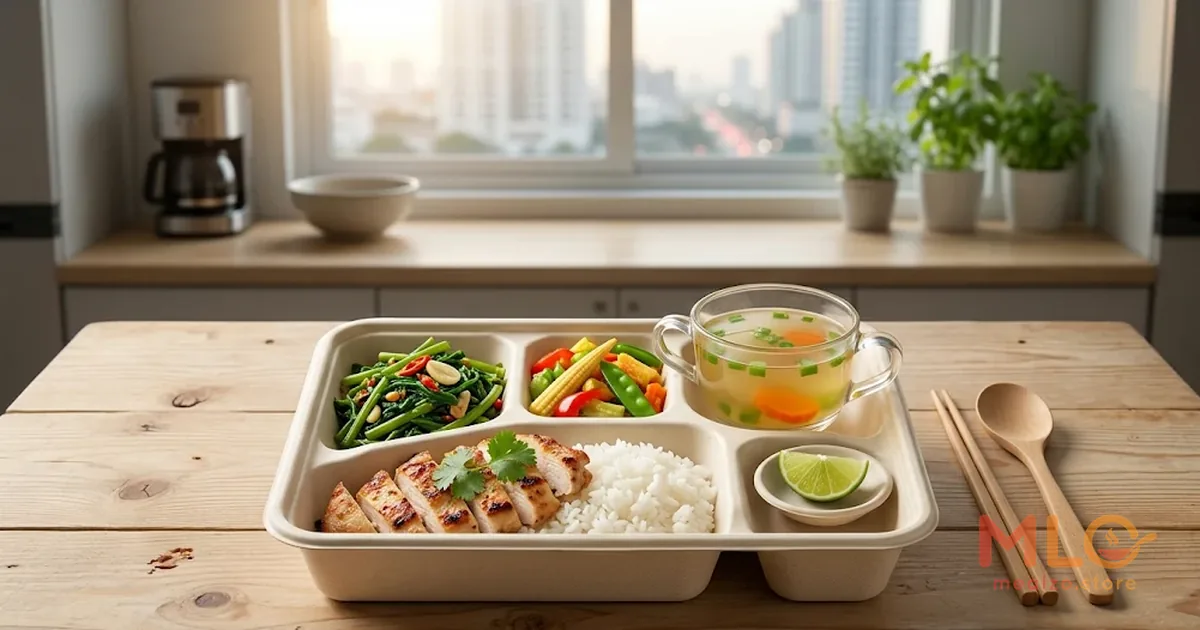
A mookata dinner in Bangkok rarely ends after one plate. There is meat sizzling on a domed grill, vegetables bubbling in broth around the edge, someone reaching for another bowl of dipping sauce, and a friend insisting there is still room for noodles. The cooking happens at the table, and the meal moves at the pace of the people sharing it.
For anyone searching for mookata Bangkok restaurants, the appeal is easy to understand. You can grill pork, cook shrimp, add mushrooms and Chinese cabbage to the soup, and choose exactly what goes onto your plate. Many restaurants offer all-you-can-eat buffets, making these evenings a familiar choice for groups of friends, colleagues and families.
Suki offers a related experience, usually with ingredients cooked in broth rather than on a grill. It also appears as individual bowls of suki nam or plates of suki haeng at ordinary Bangkok noodle shops. These are different ways of eating, with different amounts of oil, broth, vegetables and sauce.
Neither mookata nor suki needs to become a carefully measured dinner. Understanding what happens to the broth, which ingredients carry extra salt or sugar, and why the last round often feels heavier than the first can help you make choices that still leave room for the food you came to enjoy.
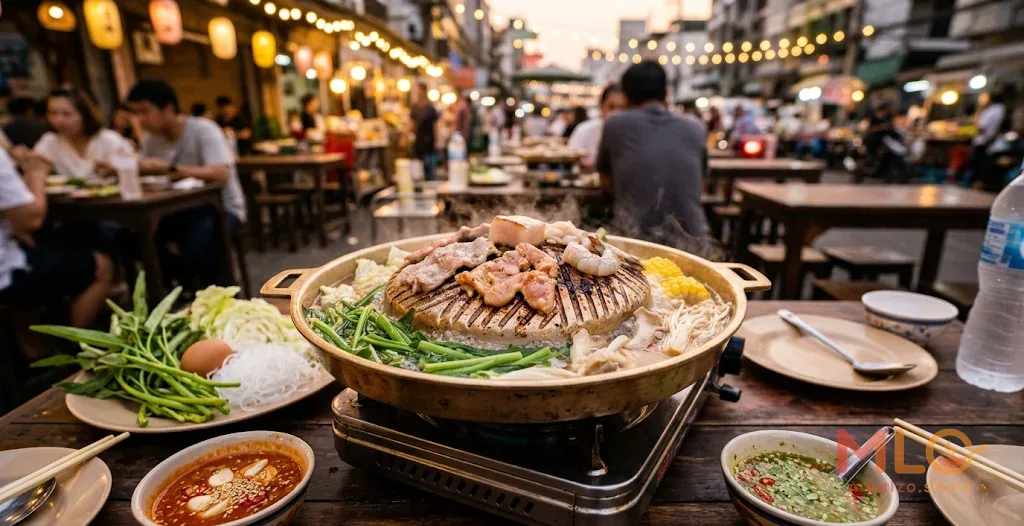
1. Mookata and Suki in Bangkok: Two Ways to Cook at the Table
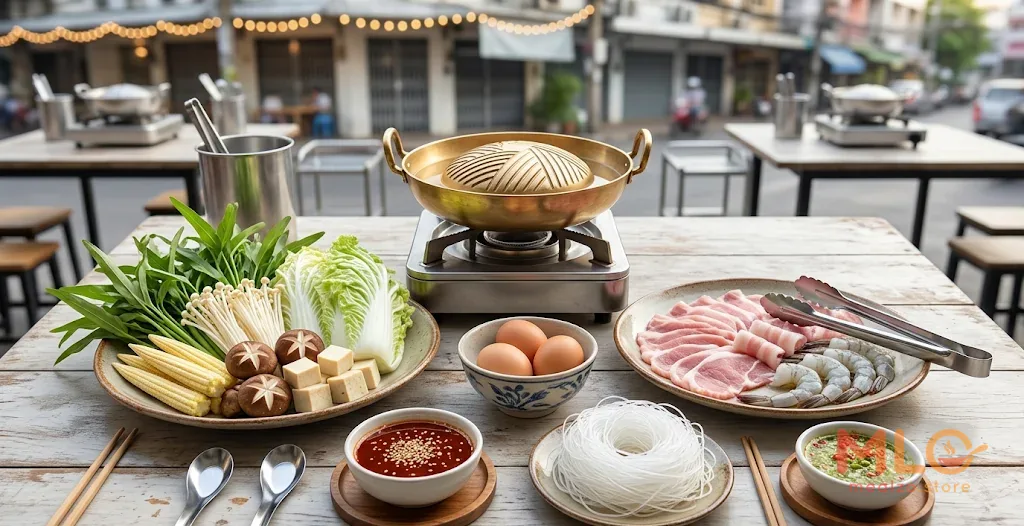
Mookata, sometimes written as mu kratha, combines grilling and hot pot cooking in one pan. A raised metal dome sits in the centre, surrounded by a shallow channel of broth. Thin meat slices cook against the hot metal while vegetables, seafood and noodles simmer in the liquid.
Suki is more focused on cooking ingredients in broth. At a shared suki restaurant, diners add meat, seafood, tofu, leafy vegetables and noodles to a communal pot. The finished ingredients are usually eaten with a dipping sauce, especially the familiar red Thai suki sauce.
Both styles suit Bangkok's social dining culture. Around Bang Na, Sukhumvit and other residential areas, people may choose a casual neighbourhood mookata restaurant for a long evening or a more structured suki restaurant for a family meal.
A typical mookata table might include:
- Thinly sliced pork, marinated pork, chicken or beef for grilling.
- Shrimp, squid and fish balls for cooking in broth.
- Morning glory, Chinese cabbage, mushrooms and sweet corn.
- Eggs, tofu, glass noodles and sometimes rice.
- Red suki sauce, green seafood sauce and other house condiments.
The cooking method gives diners considerable control, but that control is only useful when you know what you are adding. Two tables ordering similar ingredients can finish with quite different meals because of the amount of fatty meat, sauce, noodles and drinks consumed.
The same applies to barbecue skewers and other Thai grilled foods. Our guide to grilled pork, chicken and skewers in Bangkok explores how marinades, fat and cooking methods affect these familiar dishes.
2. The Mookata Pan: Pork Fat, Broth and What Changes During Dinner
The distinctive mookata pan explains much of the experience.
Before cooking begins, a small piece of pork fat is often placed near the top of the dome. As the metal heats, the fat melts and spreads over the cooking surface, helping prevent meat from sticking.
Some of that melted fat, along with meat juices and seasoning, runs into the surrounding broth. The liquid gradually develops a richer flavour.
As the meal continues, water evaporates. If the broth is not replenished, dissolved salt and other seasonings become more concentrated. Marinated meats and salty processed ingredients can contribute additional seasoning.
This means the soup at the end of a mookata evening may be quite different from the soup served at the beginning.
There are several reasonable approaches:
- Eat some vegetables and broth earlier, before the liquid becomes heavily concentrated.
- Add plain water or fresh broth when the level drops, where the restaurant permits it.
- Use the broth mainly for cooking ingredients rather than drinking several bowls.
- Enjoy the richer final broth if that is what you prefer, while recognising how it has changed.
None of these approaches is a rule. Some diners specifically enjoy the intensely flavoured broth that develops after several rounds of grilling.
The distinction is useful because reducing the amount of visible pork fat does not necessarily remove the fat already incorporated into the liquid.
Key takeaway: The mookata broth becomes richer as meat juices and melted fat collect in it, while evaporation concentrates its seasonings.
3. Plain Meat, Marinated Pork and Seafood: What Goes on the Dome
Thinly sliced pork is one of the most familiar mookata ingredients. Depending on the cut, it can be relatively lean or contain substantial visible fat.
Plain slices provide a straightforward starting point because most of the seasoning comes from the dipping sauce or broth.
Marinated pork and chicken are different. Marinades may contain soy sauce, sugar, garlic, pepper, oyster sauce or other seasonings. These improve flavour and tenderness, but they also make it harder to judge how much salt and sugar is already present.
Beef varies similarly by cut and preparation.
Seafood gives the table another set of options. Shrimp and squid cook quickly, while fish and other seafood can contribute variety without relying entirely on heavily marinated meats.
For more on preparation differences, see grilled, steamed and fried seafood in Bangkok.
| Common ingredient | What it brings to the meal | Lighter or heavier tendency | Simple way to use it |
|---|---|---|---|
| Plain sliced pork | Protein, with fat varying by cut | Lean cuts tend to be lighter | Grill small batches with vegetables |
| Pork belly | Protein and a larger proportion of fat | Usually richer | Enjoy a few slices alongside leaner items |
| Marinated pork or chicken | Protein plus seasoning, often including sugar and salt | Depends on marinade and cut | Alternate with plain meat |
| Plain beef | Protein and varying fat | Depends on cut | Choose the portion you want rather than assuming all beef is lean |
| Shrimp and squid | Protein with relatively little fat when plain | Often lighter before sauce | Cook thoroughly in smaller batches |
| Fish balls and crab sticks | Processed protein or starch mixtures with added seasonings | Often saltier and sometimes starchier | Treat as additions rather than the whole meal |
| Sausages | Processed meat, fat and seasoning | Often richer and saltier | Share a portion |
| Tofu and eggs | Protein with different fat profiles | Depends on preparation and quantity | Add to a vegetable-heavy round |
| Glass noodles | Concentrated carbohydrate once prepared | Portion-dependent | Take a modest serving and assess before adding more |
This table describes common tendencies, not a nutritional ranking of every restaurant product. Recipes, cuts, brands and preparation methods vary.
A particularly useful strategy is to order some ingredients without marinade. You can then decide how much dipping sauce to add after cooking.
4. Processed Balls, Vegetables, Tofu and Eggs: Building Each Round
Mookata buffets often offer a colourful selection of fish balls, meat balls, crab sticks, sausages and other prepared items.
These are convenient because they require little preparation and add different textures to the meal. However, processed products frequently contain added salt, starch, sugar or fat. A fish ball is not nutritionally identical to a piece of fresh fish, even if both are placed in the same broth.
There is no need to avoid them completely. A few pieces can be part of dinner without making them the main source of protein.
Vegetables provide a practical counterbalance.
Morning glory softens quickly in hot broth. Chinese cabbage becomes tender and absorbs flavour. Mushrooms contribute a substantial savoury character, while corn adds sweetness and carbohydrates.
Eggs and tofu provide other options for building a satisfying round, particularly when you want a break from grilled pork.
One useful pattern is to build each round around vegetables plus a protein:
- Add Chinese cabbage, morning glory or mushrooms to the broth.
- Grill a small amount of sliced meat or cook seafood or tofu.
- Move the cooked ingredients to your plate.
- Add sauce according to taste rather than coating everything automatically.
- Decide whether you want another round after finishing the first.
The purpose is not to create a rigid ratio. It is simply easier to notice what you have eaten when the meal develops in smaller, varied rounds.
Key takeaway: Starting each round with vegetables and a protein makes it easier to enjoy different ingredients without filling the table with meat and processed items alone.
5. Nam Jim Suki and Seafood Sauce: Where the Extra Sugar and Salt Come From
The dipping sauces are a major part of both mookata and suki.
Nam jim suki is commonly a red, sweet-sour chilli sauce with garlic, sesame and a chilli sauce base resembling sriracha. Different restaurants may adjust the sweetness, acidity, saltiness and heat.
Nam jim seafood is usually sharper, combining green chillies, lime, garlic and salty seasonings. It often contains less sugar than sweet red suki sauce, although this depends on the recipe.
Neither sauce is automatically low in sodium.
A diner who dips each bite lightly can consume considerably less sauce than someone who repeatedly coats meat and vegetables or pours several spoonfuls over their plate.
The amount matters because sauces are concentrated accompaniments. They may contribute relatively little visible volume while adding substantial seasoning.
For a closer look at these ingredients, read Thai dipping sauces and nam prik in Bangkok. Our separate article on sodium and salt in everyday Thai food explains why sauces, marinades and broths should be considered together.
Consider three ways to eat exactly the same piece of grilled pork:
- Plain, directly from the grill.
- Lightly dipped in red suki sauce.
- Thoroughly coated in sauce, with extra sauce added to the plate.
The meat has not changed, but the total seasoning has.
This becomes more noticeable when sweet iced tea, soft drinks or a sweet marinade are also part of dinner.
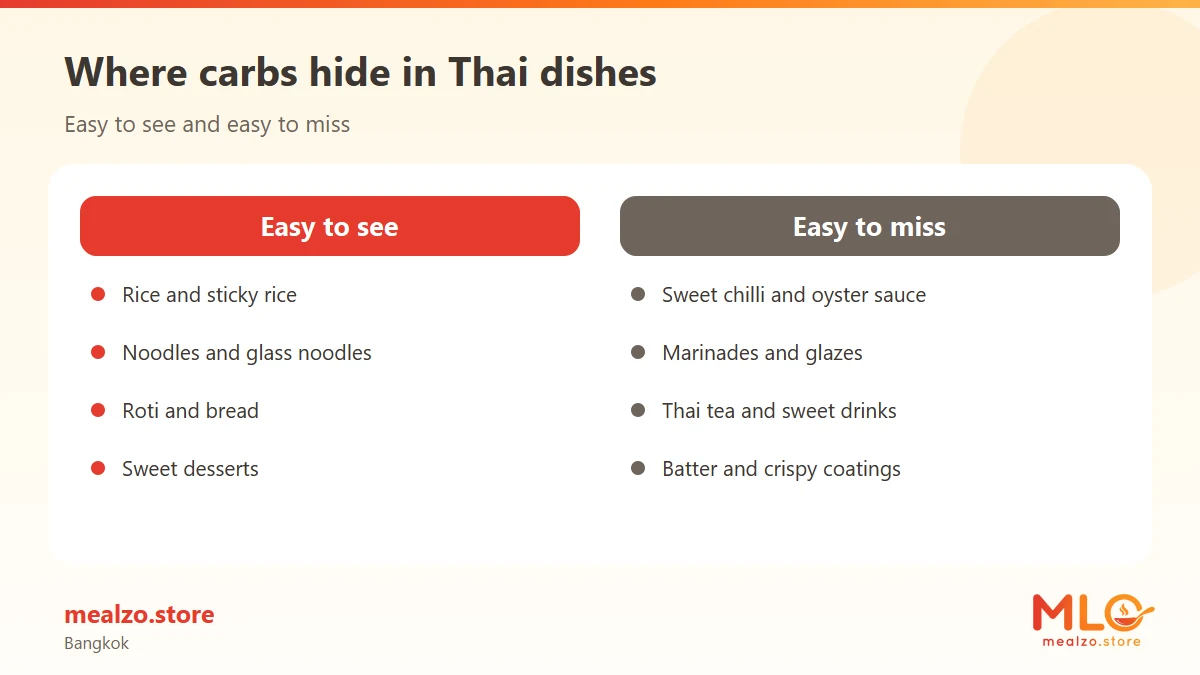
The graphic illustrates how carbohydrates and added sugar can enter a meal through sauces, drinks and other additions, even when the main plate appears to contain mostly meat and vegetables.
You do not need to measure every spoonful. Start with a little sauce, taste the food, and add more if you want it. If your sauce is particularly sweet or salty, alternating between dipped and undipped bites is a straightforward compromise.
6. Glass Noodles, Rice and the Last Round: When a Light Meal Gets Heavy
Glass noodles are a familiar ingredient in suki and mookata. They absorb liquid readily, taking on the flavour of broth, meat juices and seasonings.
Although they may look lighter than thick wheat noodles, glass noodles are primarily a carbohydrate food, often made from mung bean starch or other starches.
Their translucent appearance does not make them carbohydrate-free.
Rice works differently but brings a similar portion decision. A modest serving can complete the meal, particularly with vegetables and protein. Several large servings alongside noodles, sweet sauce and rich broth produce a much larger meal.
The issue is rarely one ingredient in isolation.
Imagine a mookata dinner that begins with shrimp, leafy vegetables and grilled pork. Later comes a bowl of glass noodles, followed by rice, processed fish balls and the final concentrated broth.
Each addition may be enjoyable. Together, however, they can make the meal substantially more filling than intended.
A practical approach is to decide whether noodles or rice will be your main starch, or to take smaller amounts of both.
The balanced plate concept still works at a shared grill, even if ingredients arrive at different times. Think about the overall meal rather than trying to arrange everything perfectly on one plate.
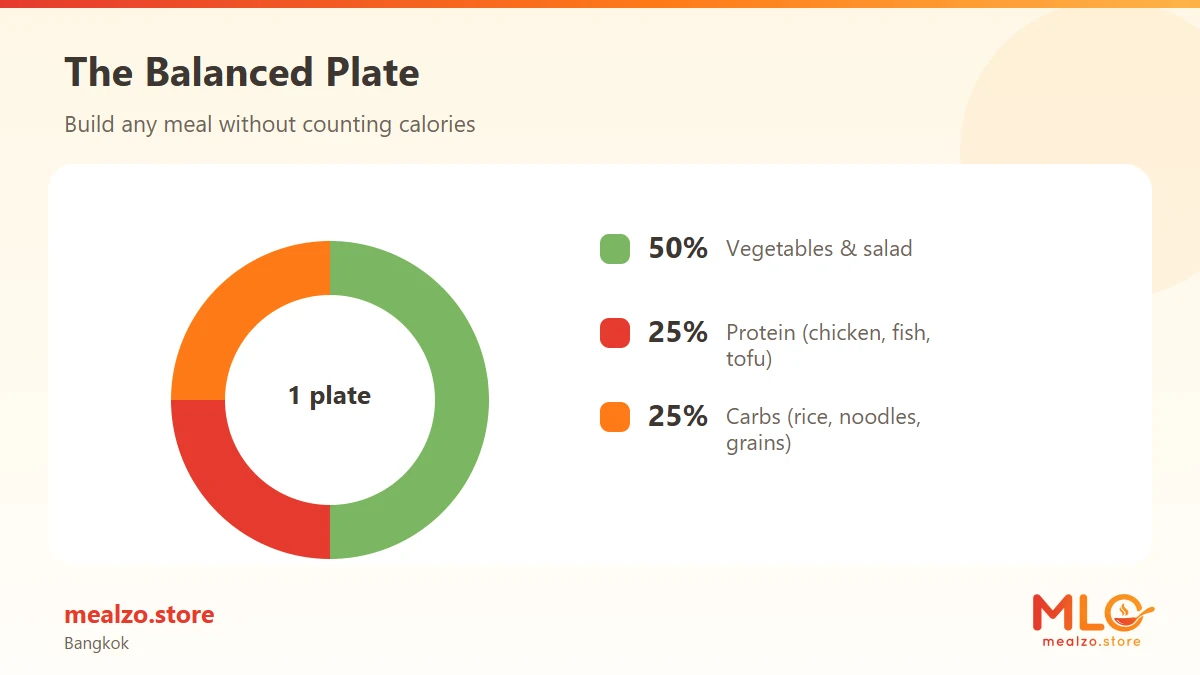
Key takeaway: Glass noodles and rice are not unusually problematic foods, but their portions matter because they absorb broth and can add substantially to the meal's total carbohydrates.
7. Suki Nam and Suki Haeng: Everyday Alternatives at Bangkok Noodle Shops
You do not need a shared hot pot to eat Thai suki.
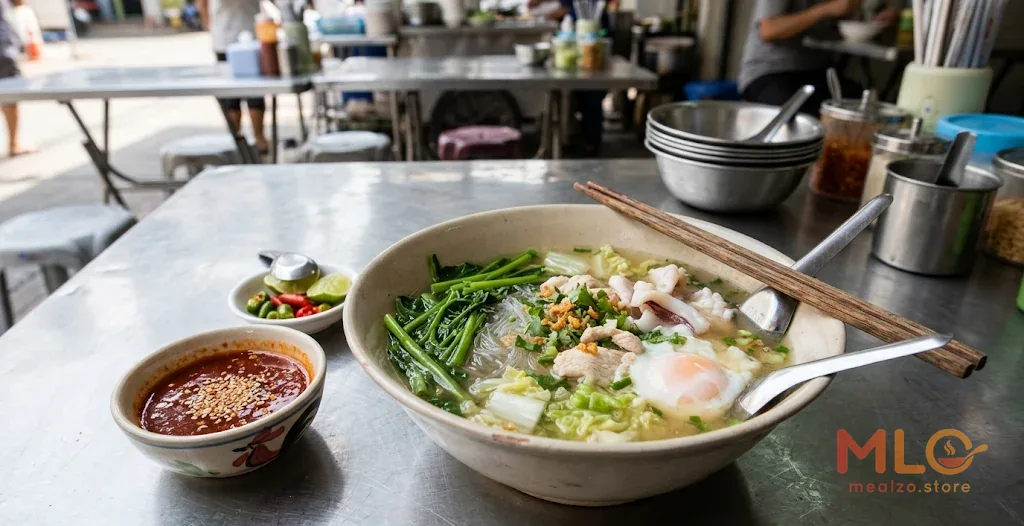
Throughout Bangkok, noodle shops and casual restaurants serve individual portions of suki nam and suki haeng.
Suki nam is a soup-based dish containing vegetables, glass noodles and a choice of protein. It is commonly served with red suki dipping sauce, either mixed into the bowl or provided separately.
Suki haeng is the dry version. Rather than serving the ingredients in soup, the cook stir-fries them, often with egg, vegetables, noodles and sauce.
The difference matters when considering the finished dish.
Suki nam generally relies more on broth, although that broth may contain substantial sodium. Suki haeng can include additional cooking oil and sauce, depending on the kitchen.
Neither version is automatically lighter.
| Ordering option | What you can choose | What changes | When it suits |
|---|---|---|---|
| Shared mookata | Meat, seafood, vegetables, noodles and sauces | Fat from grilling enters the broth over time | A relaxed group dinner with different preferences |
| Shared suki pot | Protein, vegetables, tofu and noodles | Ingredients cook mainly in broth | Groups that prefer soup-based cooking |
| Suki nam | Protein, noodles, vegetables and sauce amount where adjustable | Broth contributes liquid and seasoning | A convenient individual meal |
| Suki haeng | Protein, vegetables, noodles and sauce | Stir-frying may introduce additional oil | When you prefer a drier, more intensely seasoned dish |
| Mookata buffet | Selection of items and repeat servings | Total intake depends heavily on rounds and pace | A long social meal with appetite for variety |
| À la carte hot pot | Selected dishes and quantities | Easier to see what has been ordered | Smaller groups or diners who want specific ingredients |
At a noodle shop, you may be able to request extra vegetables, fewer noodles or sauce served separately. Availability depends on the restaurant.
A bowl of suki nam with chicken, egg, Chinese cabbage and a moderate noodle portion can be a practical everyday meal. Suki haeng with generous vegetables can also fit comfortably into an ordinary eating pattern.
Choose based on the actual ingredients, not simply the word "soup" or "dry" on the menu.
8. Mookata Buffets in Bangkok: Pricing, Time Limits and Eating Pace
Many Bangkok mookata restaurants operate on an all-you-can-eat basis.
The advertised price may cover a fixed selection of ingredients for a limited dining period. Some restaurants offer different buffet tiers, while drinks, certain premium ingredients or service charges may be handled separately.
Prices, included items and time limits vary, so check the current terms before ordering.
The buffet format creates an understandable incentive to eat more. When payment is fixed, an extra plate may feel like better value. A time limit can also encourage diners to order rapidly before they know how hungry they are.
This does not mean buffets are inherently a poor choice.
They are particularly convenient when several people want different foods and do not want to negotiate every individual dish.
The challenge is pace.
A large first order may spend a long time waiting on the table while the grill catches up. Diners can also continue eating simply because unused food remains.
A more comfortable approach is to order enough for one or two cooking rounds, finish those, and then decide what comes next.
There is a financial reason to pay attention too. Some buffet restaurants apply charges for significant leftovers, although their policies differ.
For a wider discussion, our guide to portion control at Bangkok buffets covers practical ways to enjoy buffet dining without treating the advertised price as a target for how much to eat.
You can still order the pork belly, sausages or sweet sauces you particularly enjoy. Smaller rounds simply make it easier to distinguish genuine appetite from the pressure of a ticking clock.
9. Beer, Soft Drinks and Thai Iced Tea: The Other Half of Dinner
Mookata is often an evening social occasion, and drinks can become as much a part of it as the food.
Beer, soft drinks and sweet Thai iced tea are familiar accompaniments. Each changes the meal in a different way.
Beer adds alcohol and energy without contributing much to the main meal's protein or vegetable content. Drinking several beers can noticeably increase overall energy intake.
Regular soft drinks provide sugar in liquid form. Sweet iced tea may also contain considerable added sugar, depending on the recipe and serving size.
The combination deserves attention rather than any single drink being labelled forbidden.
A table with marinated pork, sweet red suki sauce, sausages and several sweet drinks has more sources of sugar and salt than the visible grilled meat might suggest.
If you want a simpler drink choice, plain water, unsweetened tea or an unsweetened alternative can reduce the amount of added sugar.
If you prefer beer or sweet tea, have it because you enjoy it rather than ordering automatically every time the glass is empty.
Alcohol also affects judgement and coordination, which matters when everyone is handling raw ingredients beside a hot cooking surface.
10. Cooking Safely at a Shared Table: Raw Meat, Seafood and Allergens
The interactive cooking is part of the attraction, but raw and cooked ingredients sit close together.
This makes basic food handling especially important.
Use separate tongs or utensils for raw meat and seafood. Do not use the same raw-meat tongs to lift cooked food onto a plate or handle food you are about to eat.
Cook pork and chicken thoroughly. Raw or partially cooked poultry and pork should not be treated like ready-to-eat food.
Shrimp, squid and other seafood also need appropriate cooking. Avoid leaving perishable raw ingredients sitting unnecessarily on the table while concentrating on other dishes.
The grill can develop heavily charred residues after several rounds. It is sensible not to eat badly burnt pieces and to ask for the grill surface to be cleaned or replaced where that service is available.
Allergens including shellfish, soy, sesame, egg and gluten in marinades or sauces can be difficult to verify at a buffet counter.
If you need reliable ingredient information, ask the restaurant directly and recognise that shared utensils, sauces and cooking surfaces complicate cross-contact control.
The point is not to make a social dinner feel technical. Keeping raw and cooked utensils separate and paying attention to cooking are simple habits that allow everyone to concentrate on eating.
11. How Mealzo Bangkok Fits Around a Mookata Night
A mookata evening is often something people look forward to because of the company as much as the food.
There is no reason for a meal delivery plan to replace that experience.
A more realistic approach is to enjoy the shared dinner and keep a predictable eating routine on other days. That removes some of the daily decisions about what to cook or order while leaving space for restaurants, family gatherings and spontaneous meals.
Mealzo Bangkok operates a kitchen in Bang Na, with meals cooked fresh daily and delivered across Bangkok. Its meal plans combine Thai and international dishes within the same plan, rather than offering separate cuisine selections.
Customers can choose from 12 plans: Balanced, Weight Loss, High Protein, Vegetarian, Vegan, Keto, Low-Carb, Gluten Free, Easy-to-Digest, Pescatarian, No Fish & Seafood, and Dairy & Egg Free.
Available configurations include six daily calorie levels ranging from 1200 to 2500 kcal, either 3 or 5 meals per day, and packages lasting 3, 7, 14 or 30 days.
There are two delivery windows, 06:00-09:00 in the morning and 17:00-20:00 in the evening. The customer selects one window.
The website and mobile app support Thai, English, Polish, German, French, Russian, Simplified Chinese and Burmese.
Customers can declare allergens from nine allergen groups. Dishes containing a declared allergen are excluded from assignment to that customer. This is an ingredient-based selection mechanism, not a guarantee that meals are free from allergen cross-contact.
The app also includes a calorie calculator based on the Mifflin-St Jeor formula. Its result is an estimate of energy needs, not medical advice or a promise of a particular outcome.
You can explore Mealzo Bangkok meal plans and available packages if planned meals would make your weekday routine easier.
For example, someone who regularly eats prepared lunches during the working week may still choose mookata on Saturday with friends. The restaurant meal does not need to be compensated for with extreme restriction the following day.
What matters is the overall pattern: sufficient variety, sensible portions, and meals that fit personal preferences and practical schedules.
Key takeaway: A planned weekday meal routine and an occasional mookata night can coexist without treating one dinner as something that needs to be corrected.
FAQ
Is mookata in Bangkok always an all-you-can-eat buffet?
No. Many Bangkok mookata restaurants use buffet pricing, but others offer individual dishes or ingredient sets. Buffet menus may have time limits, different price tiers and separate charges for some drinks or ingredients. Check the restaurant's current terms before ordering rather than assuming that everything on the table is included.
Is suki healthier than mookata?
Neither cooking style is automatically healthier. Suki generally cooks ingredients in broth, while mookata combines grilling and soup. However, suki broth and dipping sauces may be salty, and a large serving of noodles or processed ingredients can change the overall meal. With mookata, fatty meat and melted pork fat can make the broth richer. The ingredients, portions and sauces are more informative than the dish name alone.
Can I eat glass noodles when trying to keep dinner lighter?
Yes. Glass noodles can be part of a meal that includes vegetables and protein. They are made primarily from starch, so the portion contributes carbohydrates even though the noodles look translucent. A smaller serving, combined with Chinese cabbage, mushrooms, tofu, chicken or seafood, may suit someone who wants to avoid a particularly large meal. The amount of sauce and broth absorbed also affects the finished dish.
Which mookata dipping sauce contains less sugar?
Green nam jim seafood often contains less sugar than sweet red nam jim suki, but recipes vary considerably. Seafood sauce can still be high in sodium because of ingredients such as fish sauce or salt. If sugar intake is your main consideration, try a small amount first and ask about ingredients when possible. Using less of either sauce can make a greater difference than assuming one is always the lighter option.
How can I avoid feeling overly full after a mookata buffet?
Start with modest rounds of vegetables and protein, then add noodles, rice, richer meats and sauces according to appetite. Give yourself time between rounds instead of ordering everything immediately. Consider how many sweet drinks or beers accompany the meal, and remember that the broth can become richer during cooking. These choices may help you manage the size of dinner, although how full someone feels varies with the individual and the meal.
Mealzo Bangkok is a kitchen and meal delivery service operating exclusively in Bangkok, Thailand. We are not affiliated with similarly named services outside Thailand.
Find a Meal Plan That Fits
Compare Mealzo plans or use the calculator to explore meal options for your needs.