Khao Rat Kaeng Bangkok: How to Order Rice and Curry and Build a Balanced Plate | Mealzo Bangkok
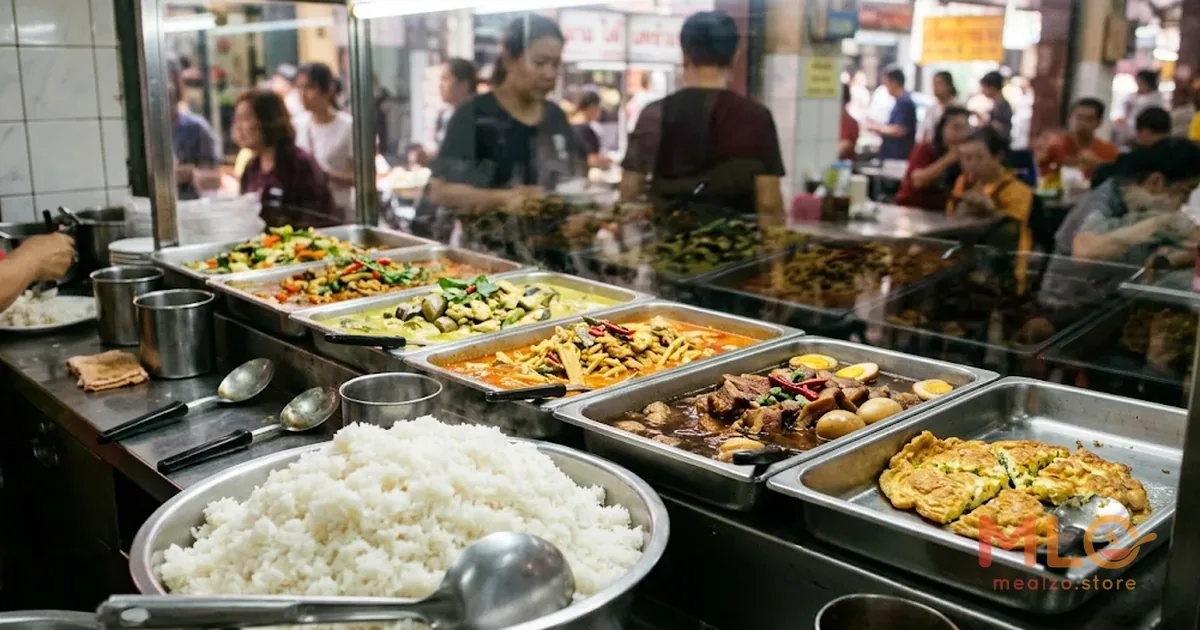
Lunch at a Bangkok rice-and-curry counter can be decided in two seconds. You point at a tray, the server scoops, and something fragrant lands beside a mound of jasmine rice. The next choice often happens before you have looked at the other end of the counter.
That speed is part of the appeal. So is the variety: green curry beside braised pork, stir-fried cabbage beside crisp fish, a pot of clear soup behind them. You can eat differently every day without learning a new menu.
But variety on the counter does not automatically become variety on your plate. Two rich toppings, extra gravy, a fried egg and a bag of iced tea can arrive almost by habit.
A more balanced lunch starts with noticing what each scoop contributes. You can keep the curry you enjoy while making a deliberate choice about vegetables, rice and sauce.
1. Read the counter before you point
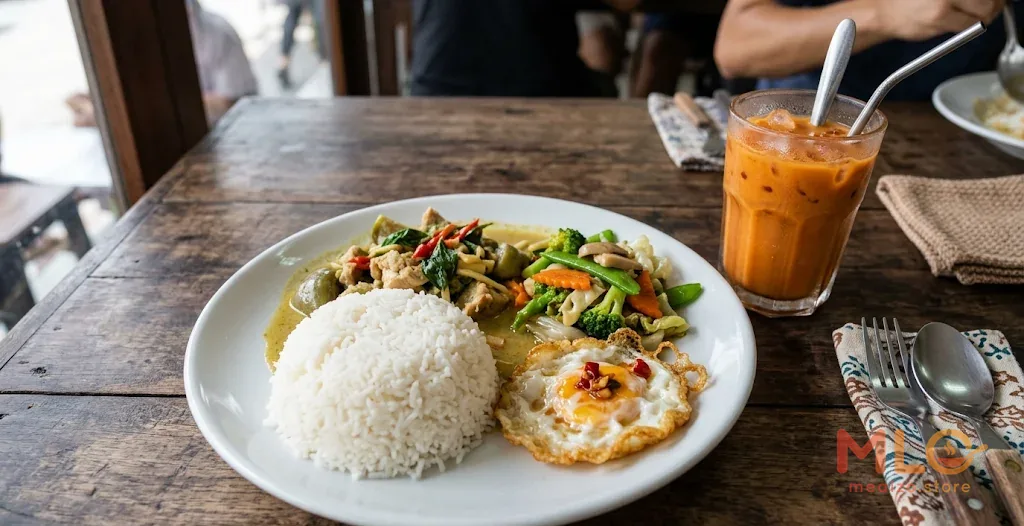
Khao rat kaeng means rice with curry poured over it, although the toppings extend well beyond curry. Khao gaeng is another familiar name for this style of shop. The attraction is practical: cooked dishes are ready to serve, whether lunch happens near an office, a market or a neighbourhood shophouse.
Rice plus two toppings is a common starting point. Three toppings can add variety, but the extra scoop might simply add more of what is already there. Before ordering, locate a protein dish and a vegetable dish, then decide which curry you actually want.
With two toppings, a curry containing meat or tofu and a vegetable dish is a workable combination. With three, decide what the extra scoop adds: more vegetables, protein missing from a thin curry, or simply something you particularly want. Three small portions also differ from three generous ones.
Look at the food beneath the sauce. A tray full of gravy may yield little meat; a vegetable dish may contain more cabbage than the handful visible at the surface suggests.
| Tray item | What is usually in it | Lighter or heavier? | Simple ordering choice |
|---|---|---|---|
| Green curry, panang, massaman | Coconut milk, curry paste, meat or other ingredients | Richer sauce; portion matters | Pair one curry with vegetables |
| Kaeng som or jungle curry | Water-based curry, vegetables, fish or meat | Usually less fat from the liquid | Check solids and added oil |
| Pad kra pao | Basil, meat, oil and seasoning sauces | Depends on meat and oil | Add vegetables rather than another meat dish |
| Pad phak ruam | Mixed vegetables, oil and sauces | Adds fibre and volume | Ask for more vegetables, less pooled sauce |
| Moo palo | Braised pork, egg and seasoned broth | Fatty pork and sweet gravy can make it richer | Choose a modest pork portion |
| Omelette or fried fish | Egg or fish cooked in oil | Frying adds fat | Make it one topping, not an automatic extra |
| Kaeng jued | Clear broth with vegetables and other ingredients | Often less fatty, potentially salty | Eat the solids; leave unwanted broth |
These are comparisons, not fixed nutrition ratings. Recipes and serving spoons vary.
Key takeaway: Choose the combination before the server starts scooping, so the second topping fills a gap in the first.
2. Coconut curries: enjoy the flavour, notice the sauce
Green curry, panang and massaman-style curries use coconut milk to carry flavour and give the sauce body. Coconut milk also contributes fat. A generous ladle therefore adds more than moisture, even when the curry contains plenty of vegetables.
The oil floating on top is part of the dish. It may come from coconut fat separating during cooking, added oil or other ingredients. A glossy surface does not tell you the exact amount, but pouring all the sauce over the rice means eating it with the rice.
Ask for a little less sauce before serving, or leave some behind if the dish comes separately. This changes what you consume without requiring a different recipe. It does not remove the fat already inside the food.
Massaman may also contain potatoes and peanuts, so its solids need attention too. A plate with rice, potatoes and little meat is different from one with a substantial protein portion. Our guide to coconut milk and different Thai curries explains those distinctions.
3. Sour curry, jungle curry and clear soup
Kaeng som, the sour curry, and jungle curry offer alternatives without a coconut-milk base. Their liquid is generally less fatty than coconut curry sauce, although meat, added oil and accompaniments can change the comparison.
Check what is actually in the ladle. Kaeng som with vegetables and fish differs from a version containing pieces of fried omelette. Jungle curry may provide vegetables and meat, but its chilli heat can be substantial. Choosing it only because it looks lighter makes little sense if you cannot comfortably eat it.
Kaeng jued is the clear-soup option. Depending on the tray or pot, it may contain vegetables, tofu, pork or other ingredients. A separate bowl can add variety beside rice and one topping.
Clear does not mean low in salt. Broth can carry plenty of seasoning, and a bowl with only a few vegetables is not a substantial vegetable portion. Look beyond the colour of the liquid.
4. Stir-fries and braises: sauce travels with the solids
Pad kra pao gives a plate a strong flavour and a recognisable protein component. Its balance depends on the meat, the cooking oil and the seasoning. A tray version has already been cooked, so asking for less oil cannot undo what happened in the wok.
A useful request is less pooled sauce when the food is served. Pairing the basil dish with vegetables also changes the combination more than adding a second meat topping. The same principle applies to other Bangkok one-plate dishes such as pad kra pao.
Moo palo, the braised pork-and-egg dish, needs a different look. Soft, stewed food is not necessarily lean. A piece of pork belly carries fat even when no frying crust is visible, while the braising liquid can contain sugar and salty seasonings.
Choose the pieces you want where possible, and notice how much gravy follows them. An egg can contribute protein, but it does not make the surrounding pork and sauce disappear from the meal.
5. Omelettes, fried fish and the extra egg
A plain omelette can be a straightforward topping when you want egg rather than another meat dish. Plain, however, means fewer additions, not necessarily less oil. A fluffy Thai omelette can absorb considerable cooking oil, so its preparation matters as much as its filling.
Fried fish contributes protein too, alongside the oil used in cooking. If steamed fish is available, choosing it instead changes the cooking method and usually reduces added frying oil. It may still arrive with a salty or sweet sauce.
The optional fried egg deserves a separate decision. It might make a small plate more substantial, particularly when the main scoop contains little protein. On a plate already holding pork, curry and omelette, it adds another portion rather than solving a missing component.
You do not have to avoid fried food to order thoughtfully. Decide which fried item you want, then build the rest of lunch around it.
6. Give vegetables more than a decorative role
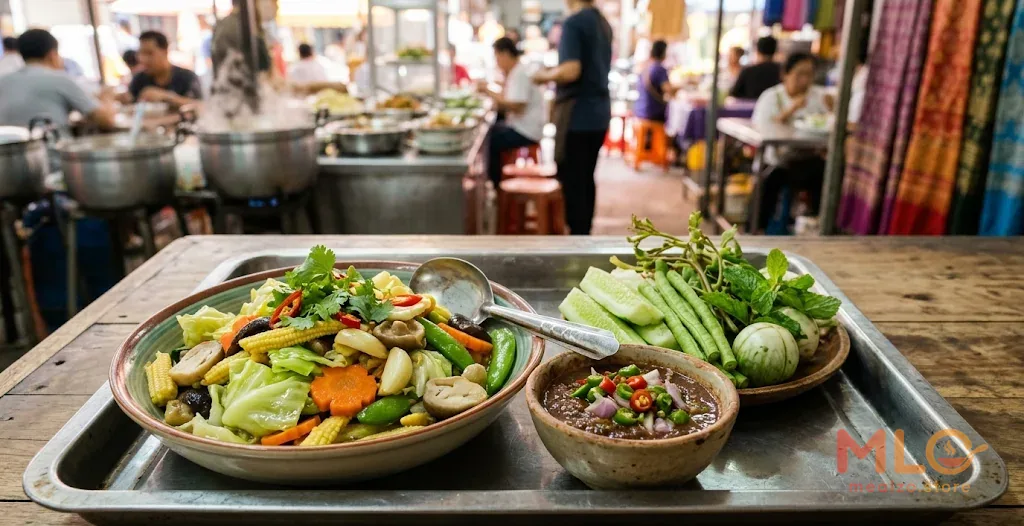
A spoonful of cabbage tucked under curry is easy to overlook. So is the difference between that spoonful and a proper serving of pad phak ruam.
Vegetable-based trays add fibre and food volume, even when they are cooked with oil and sauce. The useful question is how much vegetable reaches the plate. A generous scoop of mixed vegetables can complement a rich curry without requiring you to abandon either dish.
Try one of these combinations when the counter offers them:
- Rice, green curry and a substantial serving of mixed vegetables.
- Rice, pad kra pao and a vegetable dish with less pooled sauce.
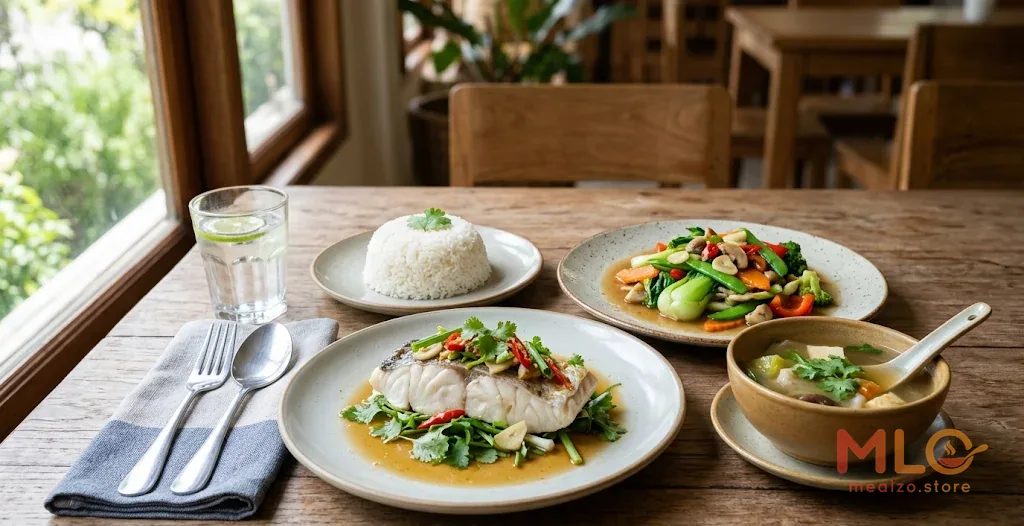
- Rice, steamed fish and fresh or cooked vegetables with a little nam prik.
Nam prik makes vegetables appealing, but the dip is a seasoning in its own right. It can contain salty ingredients, sugar or oil, depending on the recipe. Dip lightly instead of coating everything.
For more everyday options, see vegetables and fibre in Thai food. A vegetable tray also needs an ingredient check if you avoid animal products.
7. Adjust the rice scoop to the whole lunch
The scoop of jasmine rice anchors the meal. It supplies carbohydrate, carries the sauces and makes a small selection of toppings feel like lunch.
Asking for less rice is a simple way to reduce the amount served. It is not automatically the right choice. If you have a long afternoon ahead, have been active or know that a small lunch leaves you hungry, cutting the rice sharply may work against what you need.
Notice how your usual order suits your afternoon. If it repeatedly leaves you hungry, consider whether the meal needs more food, rather than assuming the smallest portion is the best one. If you regularly leave rice, ask for a smaller scoop next time.
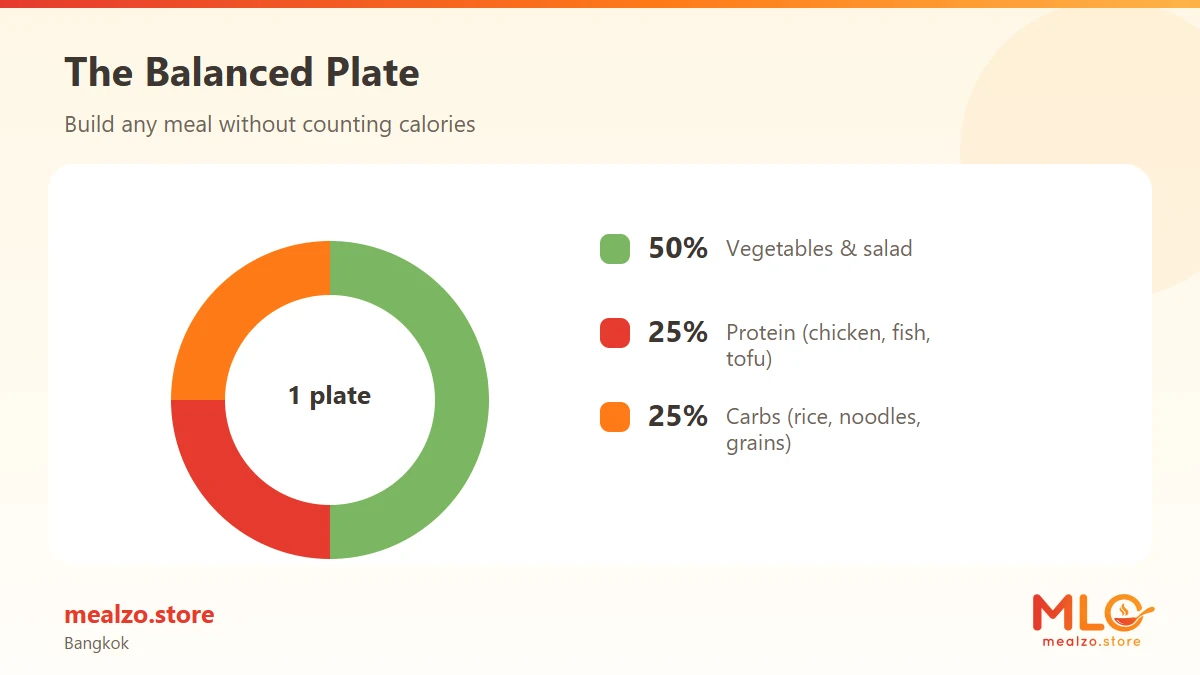
Start by looking at the whole plate. Is rice taking nearly all the space? Are there enough vegetables and a meaningful portion of protein? Make room for those foods before treating the rice scoop as the only thing to change.
| What you can ask for | What changes | When it suits |
|---|---|---|
| A little less rice | Less carbohydrate and total food | The usual scoop exceeds your appetite |
| More vegetables | More fibre and volume | The plate is mostly rice and meat |
| Less curry sauce | Less of the sauce is served | You want curry without soaking the rice |
| Steamed fish, if available | Avoids added frying oil | You prefer fish with a different preparation |
| A plain omelette | Provides an egg-based topping | You want egg, while allowing for cooking oil |
| Two toppings rather than three | Limits additional scoops | Two dishes already cover what you want |
Requests depend on what the shop can serve. An already prepared tray cannot be reformulated at the counter.
For help judging the starch portion, read jasmine, sticky and brown rice portions.
Key takeaway: Keep enough rice to make lunch satisfying, then use vegetables and protein to give the plate a broader balance.
8. Notice the sauce that spreads across the rice
Sauce does not stay neatly beside its original topping. Curry runs into stir-fry juices; braising liquid soaks into the rice. By the last few bites, you may be eating several seasonings together.
Fish sauce, soy-based seasonings and other condiments can contribute sodium. Sugar may also be present in a savoury dish, even when chilli, sourness or salt makes sweetness less obvious. Visible oil is only one part of that mixture.
Taste before adding table condiments. Ask for less liquid before the ladle tips, and leave a puddle behind when there is one. These steps reduce the sauce you eat, but cannot tell you exactly how much sodium or sugar remains.
Rice that has absorbed sauce cannot be separated from it. This is why a serving request can be more useful than trying to correct everything afterwards. Our guide to salt and sodium in Thai food looks more closely at the seasonings.
9. Count the iced tea and the small extras
The bag of iced tea beside the plate belongs in the lunch decision. Sugar and sweetened milk can add substantially to a drink, while the ice makes the serving look deceptively light.
Ask for less sweetness if the drink is made to order. If it comes from a premixed batch, the seller may not be able to remove sugar already dissolved in it. An unsweetened drink is a different choice; extra ice simply dilutes what is there unless the amount of sweetened drink also changes.
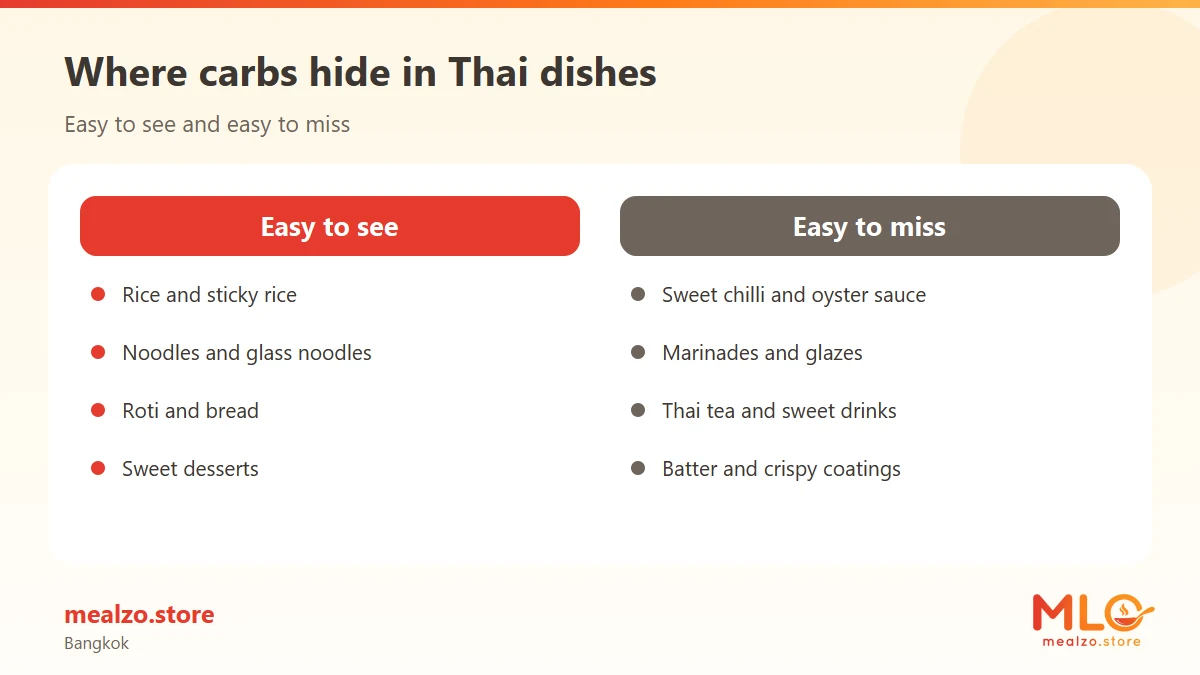
Other carbohydrates can be easy to miss beside the obvious rice scoop:
- Potatoes within a massaman-style curry.
- Sugar in braising liquid, dipping sauces and some curry recipes.
- Flour-based coatings on battered items, where used.
- Sugar or sweetened milk in the accompanying drink.
These foods are not interchangeable, and potatoes are not the same thing as added sugar. The point is to notice the whole meal.
Key takeaway: Changing the drink or skipping an unnecessary extra may suit you better than making the rice portion too small.
10. Choose carefully in the heat
Trays may remain on display throughout the lunch period. In Bangkok's heat, a busy shop with fast turnover is a sensible starting point, especially when you can see fresh batches arriving. A queue alone cannot confirm safe handling or holding temperatures.
Look for clean serving utensils, food protected from contamination and dishes being kept appropriately hot or cold. Lukewarm food sitting for an unknown period deserves caution. Appearance and smell cannot reliably establish that a dish is safe.
If taking lunch back to an office, eat it promptly or refrigerate it promptly when saving it for later. Leaving a takeaway bag on a desk through the afternoon does not improve its keeping conditions.
Shrimp paste, fish sauce, peanuts and egg are common allergen-containing ingredients across curries and dips, and they can be hard to verify at a busy counter.
If you have a food allergy, ask about the actual ingredients and shared utensils rather than relying on appearance. When staff cannot confirm what is present or how it was handled, choose food whose preparation can be checked.
11. Let a planned meal take care of another part of the day
A meal plan can sit alongside the lunch shop. You might still enjoy choosing from trays near work while having another meal arranged beforehand. That reduces the days when pointing at the counter is your only food decision.
Mealzo Bangkok cooks meals fresh daily in its Bang Na, Bangkok kitchen and delivers across Bangkok. Customers choose one delivery window: morning 06:00-09:00 or evening 17:00-20:00.
Each plan combines Thai and international dishes in one mixed cuisine. There is no separate cuisine choice.
The 12 plans are Balanced, Weight Loss, High Protein, Vegetarian, Vegan, Keto, Low-Carb, Gluten Free, Easy-to-Digest, Pescatarian, No Fish & Seafood, and Dairy & Egg Free. Options include six daily calorie levels from 1200 to 2500 kcal, three or five meals per day, and packages lasting 3, 7, 14 or 30 days.
Customers declare allergens from nine groups, and dishes containing a declared allergen are not assigned to them. This describes the assignment mechanism, not a guarantee of an allergen-free meal.
You can review Mealzo Bangkok meal plans around your routine. Planning gives you another opportunity to decide portions and food choices before hunger takes over, while keeping a place for the curry counter you enjoy.
FAQ
Is khao rat kaeng a balanced lunch?
It can be. Rice with a protein-containing topping and a substantial vegetable serving offers a practical starting point. The final balance still depends on portions, cooking oil, sauces and the accompanying drink. Two topping names alone cannot tell you how much of each ingredient reaches the plate.
Which curry is usually lighter?
Kaeng som and jungle curry generally contain less fat from their liquid because they do not use a coconut-milk base. Ingredients still matter. Fried omelette in sour curry or fatty meat in jungle curry can change the comparison, while either dish may contain plenty of salt.
Should I always ask for less rice?
No. Adjust the scoop to your appetite, activity and the rest of lunch. A smaller portion may suit you when the usual serving is excessive. If it leaves you hungry, keep more rice and consider changing the quantity of sauce, the drink or an extra fried item.
Can I ask the shop to make a tray dish less salty?
Usually the batch is already seasoned. Staff may be able to serve less gravy, but they cannot remove salt absorbed into the ingredients. Avoid adding more condiments automatically, and remember that a dry-looking dish can still contain salty seasoning.
Is a plain omelette lighter than a curry?
Not necessarily. An omelette cooked in plenty of oil may be richer than a modest serving of water-based curry. Egg provides protein, but the oil and portion still count. Choose the topping you want and consider what else is already on the plate.
Mealzo Bangkok is a kitchen and meal delivery service operating exclusively in Bangkok, Thailand. We are not affiliated with similarly named services outside Thailand.
Find a Meal Plan That Fits
Compare Mealzo plans or use the calculator to explore meal options for your needs.