Street Snacks in Bangkok: Satay, Sai Krok, Tod Mun and How to Fit Them Into a Balanced Day
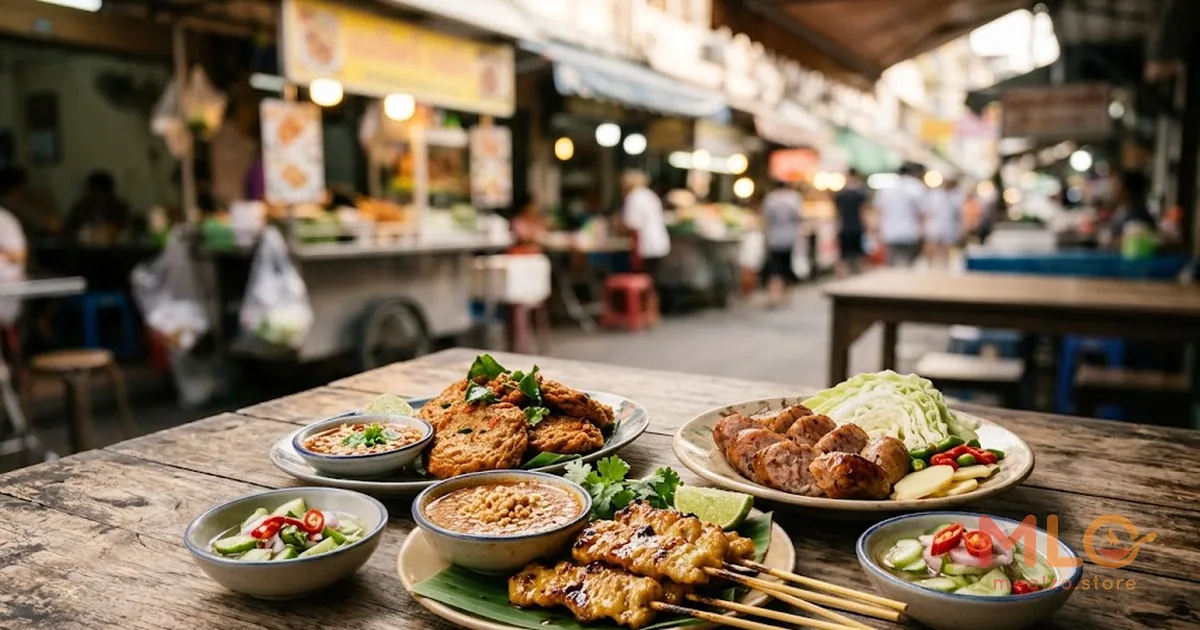
Bangkok street snacks are woven into everyday life. A few pork skewers on the walk home, grilled meatballs outside a convenience store, or warm coconut pancakes from a street stall can easily become part of a normal afternoon. For people who live in the city, these small bites are often more familiar than an occasional restaurant meal.
The variety is part of their appeal. Bangkok street snacks, Thai favourites in particular, range from smoky grilled meats and spicy fermented sausages to crisp fish cakes, fried bananas and sweet roti. They are inexpensive ways to explore different flavours, but their ingredients and preparation methods can vary considerably.
The interesting question is not whether street snacks belong in a balanced day. They already belong in Bangkok life. The question is what each snack contributes, how several small purchases add up, and what happens to the rest of your meals when you snack between them.
With a little awareness of sauces, frying oil, starch, sugar and portion size, it becomes easier to enjoy street food without treating every bite as a separate dietary decision.
1. When a Small Bangkok Street Snack Becomes a Meal
The word "snack" suggests something minor. On Bangkok streets, however, it often describes the way food is sold rather than the amount of food eventually eaten.
A street stall might sell individual grilled skewers, a paper bag of fried chicken, a small tray of coconut pancakes or a portion of fish cakes. Each purchase feels like a small extra, particularly when eaten while walking, commuting or browsing a night market.
The situation changes when those purchases accumulate.
Imagine stopping for moo satay after work. The pork skewers come with peanut sauce, cucumber relish and perhaps toast. Farther along the street, the smell of fried chicken encourages another purchase. Later, a freshly cooked roti with condensed milk looks appealing.
Although these foods were bought separately, together they may contribute as much substance as a full meal.
That does not automatically create a problem. It means the food deserves to be considered together rather than dismissed as a collection of insignificant bites.
| Eating situation | How the snack fits into the day | What to consider |
|---|---|---|
| Grilled pork skewers between lunch and dinner | A small extra before the next planned meal | Peanut sauce, marinade and whether you remain hungry |
| Fish cakes with cucumber relish in the afternoon | A savoury snack with fish, starch and frying oil | Sauce sweetness and the effect on dinner appetite |
| Fried chicken followed by coconut pancakes | Several snacks that may become a substantial eating occasion | Oil, starch, sugar and whether another full meal is needed |
| Satay, fried chicken and sweet roti at a night market | A collection of snacks that can function as the evening meal | The combined food matters more than each separate purchase |
| Fresh fruit during a hot afternoon | A lighter addition to the day's eating | Fruit preparation, added syrup and what else has been eaten |
The most practical habit is to mentally combine foods eaten during the same outing. A collection of small portions can be a substantial meal, even without a plate or table.
Key takeaway: Count street snacks as part of what you have eaten, not as food that disappears from the day because it was bought from a stall.
2. Moo Satay, Sai Krok Isaan and Tod Mun Pla: What Is Actually in Them?
Bangkok's savoury street snacks often combine protein with seasoning, starch, fat and sauces. The balance depends on the dish.
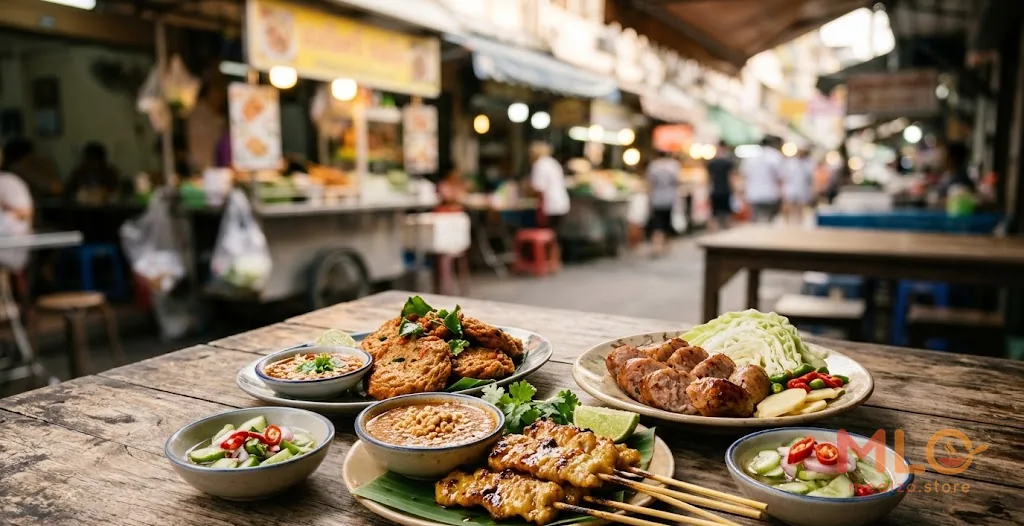
Moo satay is grilled pork served on skewers, typically accompanied by peanut sauce and ajat, a cucumber relish with vinegar, sugar and chilli. Some vendors also serve toast.
The pork contributes protein, while the marinade may contain sugar and other seasonings. Peanut sauce adds richness through peanuts and sometimes coconut milk and sugar. Toast brings additional starch.
The cucumber relish provides a sharp, refreshing contrast, although its dressing also usually contains sugar.
Sai krok Isaan is a fermented sausage made with pork and rice. Its characteristic tang comes from fermentation, while garlic and seasonings contribute much of the flavour.
It is commonly served with fresh cabbage, ginger and chillies. These accompaniments create a useful contrast to the rich sausage, adding crunch and strong flavours without requiring another fried component.
The important distinction is that sai krok Isaan is not simply grilled pork. Its mixture includes rice and pork fat, and its saltiness depends on the preparation.
Tod mun pla consists of Thai-style fish cakes, commonly prepared using fish paste, red curry paste, herbs and seasonings. They are fried and frequently served with a sweet cucumber relish.
Fish provides protein, but the finished cakes also carry frying oil. The relish may introduce additional sugar.
Goong hom pa is another familiar street snack, with prawns wrapped in a thin pastry and fried until crisp. The prawn filling contributes protein, while the wrapper and absorbed frying oil change the composition of the finished bite.
The same principle applies across these dishes: the central ingredient tells only part of the story. Cooking method, filling and accompaniments complete it.
3. Grilled Meatballs, Fried Chicken and the Difference Cooking Makes
Grilled food and fried food can look equally convenient at a Bangkok street stall, but they bring different ingredients and preparation considerations.
Lukchin ping, or grilled meatballs, are usually served on skewers with a chilli-based dipping sauce. Depending on the recipe, meatballs may contain meat or fish, starch, seasoning and other ingredients that help bind the mixture.
Grilling creates a smoky surface without the same immersion in oil used for deep-frying. Still, the meatball mixture and the sauce matter.
Sweet chilli sauce may contain substantial added sugar, while savoury sauces contribute salt. A glossy coating can also make it difficult to judge how much sauce has been added.
Gai tod, Thai fried chicken, is another regular sight along Bangkok streets. Chicken pieces may be marinated, coated or dredged before frying. The finished food contains protein alongside fat from the chicken and frying oil, with additional starch if a coating is used.
Fried pork follows a similar pattern. Depending on the cut and preparation, it may include a considerable amount of pork fat, a seasoned coating and absorbed oil.
Neither grilling nor frying tells the complete nutritional story.
A grilled skewer covered in sweet sauce is different from a lightly seasoned grilled piece of meat. A fried chicken portion with a thick coating is different from one with a thinner crust.
For a closer look at the practical differences, see how frying oil changes everyday Bangkok food.
| Street snack | What it is mostly made of | Where extra oil, salt or sugar can come from | Practical adjustment |
|---|---|---|---|
| Moo satay | Marinated grilled pork | Marinade, peanut sauce and accompanying toast | Keep peanut sauce separate and use according to taste |
| Sai krok Isaan | Fermented pork, rice and seasonings | Pork fat and sausage seasoning | Eat it with the cabbage and ginger provided |
| Tod mun pla | Seasoned fish paste, sometimes with additional binders | Frying oil and sweet cucumber relish | Use less dipping sauce if preferred |
| Goong hom pa | Prawn filling wrapped in pastry | Fried wrapper and dipping sauce | Share the portion with someone |
| Gai tod | Chicken, sometimes with a seasoned coating | Chicken skin, frying oil and coating | Pair with fresh vegetables rather than another fried snack |
| Lukchin ping | Processed meat or fish mixture | Seasoning and sweet chilli sauce | Request sauce on the side |
| Kanom krok | Coconut milk, rice flour and sugar | Coconut cream and sweetened batter | Enjoy as the sweet part of the eating occasion |
| Kluay tod | Banana coated in batter | Frying oil, batter and sometimes added sugar | Share a bag rather than automatically finishing it |
| Grilled corn | Corn with optional seasonings | Butter, sweet glaze and salty toppings | Ask for fewer added toppings |
| Roti | Wheat-flour dough cooked with fat | Cooking fat, sugar and condensed milk | Request less condensed milk |
4. Peanut Sauce, Sweet Chilli and Relish: The Extras Matter
Dipping sauces are deeply integrated into Bangkok street food. They provide sweetness, acidity, heat and richness, sometimes transforming an otherwise simple grilled ingredient.
Consider moo satay. The pork is central to the dish, but peanut sauce can be a substantial addition rather than a minor garnish.
Peanuts supply fat and some protein. Depending on the recipe, coconut milk, sugar and other ingredients may make the sauce particularly rich.
There is nothing unusual about enjoying that combination. It is part of what makes satay recognisable. The point is to notice that meat and sauce contribute different things.
Sweet chilli sauce presents another example. It tastes spicy, but its sweetness frequently comes from sugar. The chilli flavour does not cancel out that contribution.
Cucumber relish is generally less rich than peanut sauce, although sugar and salt may still be present in its dressing.
The quantity served varies from stall to stall. Some vendors coat skewers before handing them over, while others supply sauce separately in a small bag or container.
If you want more control over what you eat, ask for the sauce on the side.
That approach allows you to taste the original seasoning, add sauce gradually and decide how much you actually enjoy.
Salt also deserves attention in marinades, processed meatballs and fermented sausages. For more context, read where salt and sodium appear in Thai food.
The practical point is straightforward: the most visually prominent ingredient is not necessarily the source of all the oil, sugar or seasoning in the finished snack.
Key takeaway: When choosing grilled street food, look beyond the meat or fish and consider the marinade, dipping sauce and accompanying starch.
5. Kanom Krok, Fried Banana and Roti: Understanding Sweet Street Snacks
Bangkok's sweet snacks are especially tempting because they are frequently prepared in front of customers.
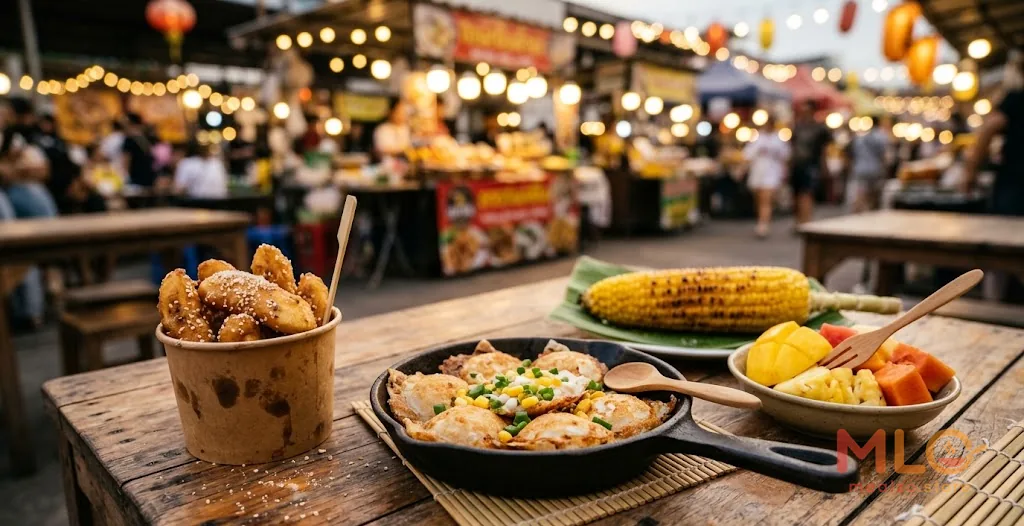
Kanom krok, the small coconut-rice pancakes cooked in a dimpled pan, have a soft interior and lightly crisp edges. Their characteristic richness comes from coconut milk or coconut cream, while rice flour provides starch.
Sugar may be mixed directly into the batter. Depending on the preparation, toppings can include corn, spring onion or other ingredients.
Because kanom krok is served in small pieces, it is easy to regard it as an insignificant dessert. A full portion, however, brings together starch, coconut fat and sweetness.
Kluay tod, fried banana, combines fruit with batter and frying oil. The banana provides naturally occurring sugars, while the coating may contain flour, sugar and other ingredients.
The result is different from eating a plain banana. Frying and batter contribute to the snack's texture and composition.
Fried sweet potato follows a similar pattern when coated in batter. Plain roasted or grilled sweet potato, by contrast, relies more directly on the starchy vegetable itself.
Roti is another familiar option. Its dough is usually prepared from wheat flour and cooked on a hot surface with fat. Sugar and condensed milk are popular additions.
Condensed milk delivers concentrated sweetness, while the dough and cooking fat contribute starch and fat. Extra toppings can change the balance further.
These ingredients do not need to be avoided simply because they contribute sugar or fat. They are useful to recognise when deciding what else to eat that day.
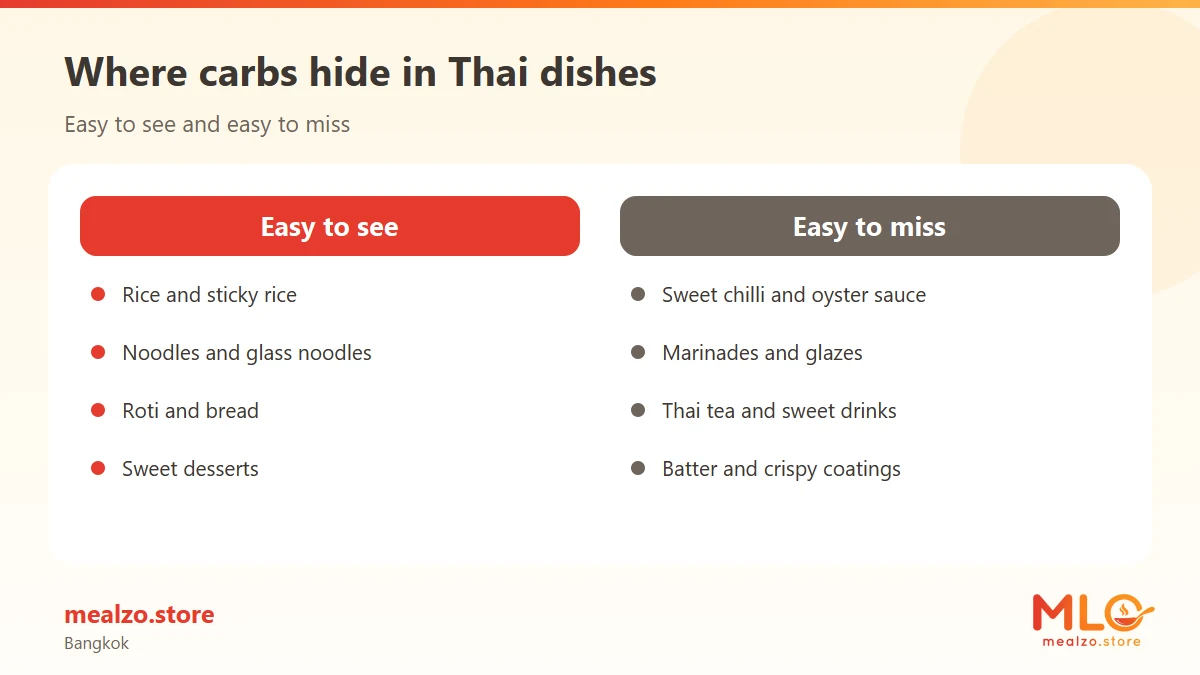
Where carbohydrates can be easy to overlook
Carbohydrates in street snacks do not always look like a serving of rice or noodles. They also appear in:
- Rice flour in coconut pancakes and fish-cake mixtures.
- Rice mixed into fermented sai krok Isaan sausage.
- Wheat flour in roti, fried dough and pastry wrappers.
- Batter surrounding fried banana and sweet potato.
- Sugar in peanut sauce, sweet chilli sauce and sweetened relish.
- Condensed milk, syrup and sweet glazes added after cooking.
For practical purposes, consider whether the snack is primarily a sweet treat, a substantial starchy food or a small addition to another meal.
That distinction is more useful than assuming a food contains little sugar simply because the portion looks small.
6. Choosing Between Protein-Based Snacks and Starch-and-Fat Snacks
Sometimes the decision is not about a particular Thai dish. It is about what you want the snack to contribute.
If you have a long interval between main meals and are looking for something substantial, a protein-containing choice may suit the situation.
Grilled pork, grilled chicken, grilled fish and boiled eggs are examples. They differ in seasoning and preparation, but each offers a recognisable protein source.
Grilled corn is another option, although it is primarily a starchy vegetable rather than a protein-rich snack. It can provide substance, especially when eaten alongside a protein-containing food.
A plain piece of grilled sweet potato similarly contributes starch without the batter and frying oil of a fried version.
By contrast, roti, fried dough and coconut pancakes tend to bring more starch and fat relative to their protein content.
This does not mean that a savoury snack is automatically more suitable than a sweet one. It means the foods serve different purposes.
A simple way to choose is to ask yourself:
- Do I want something substantial? Consider a grilled protein source or a combination of protein and starchy vegetables.
- Am I mostly interested in the flavour? Choose the snack you genuinely want and enjoy it without treating it as a substitute for every other part of a meal.
- Have I already eaten several fried or sweet foods? Fresh fruit, vegetables or a plainly prepared food may provide variety.
- Am I buying something because I am hungry or because it is available? Either reason can be valid, but recognising the difference helps you decide whether to continue browsing.
Fresh fruit in plastic cups is common around food courts, shophouse kitchens and roadside stalls. Pineapple, guava, watermelon and other seasonal choices offer a contrast to rich fried snacks.
Fruit sold with syrup, sweetened coatings or sugar-based dipping mixtures is different from plain cut fruit. Check how it is served rather than assuming every fruit cup is prepared identically.
Key takeaway: Choose a snack according to what the rest of your day already contains, whether that means adding protein, enjoying a sweet food or bringing in fresh produce.
7. Snacking Between Meals and Late at Night
Bangkok creates plenty of opportunities to eat outside conventional mealtimes.
Someone may buy grilled meatballs during an afternoon break, pick up fried chicken while travelling home and then stop for dessert after dinner.
The effects are individual. A substantial afternoon snack may reduce appetite at dinner, while a small sweet snack may leave someone ready for their usual meal. Neither response can be predicted simply by looking at the food.
This is why rigid rules about snack timing are often less useful than observing your own routine.
When snacks become substantial, the next meal may naturally be smaller or take place later. Alternatively, if the snack was chosen mainly for flavour, a complete meal may still feel appropriate.
The aim is not to compensate automatically for everything eaten earlier. It is to recognise the combined eating pattern.
Late-night street food adds another consideration: people are often buying food because of social plans, work schedules or the pleasure of visiting stalls after dark.
Night markets make it easy to purchase different items in succession. Each stop feels separate, even when the food is being eaten during the same outing.
Rather than imposing a rule that forbids eating late, think about whether the outing is an additional snack occasion or your actual evening meal.
A dinner assembled from street snacks can be enjoyable, although it may contain fewer vegetables and more fried or sweet components than the main meals you normally prepare.
Our guide to late-night eating and Bangkok night-market routines explores that situation in more detail.
8. Freshness, Food Handling and Bangkok's Heat
Bangkok's climate changes the practical considerations around street food.
Warm temperatures and humidity make food handling, storage and serving conditions particularly relevant, especially for meat, seafood, cooked rice and foods containing coconut milk.
A busy stall with quick turnover is generally a sensible choice. Food that is cooked frequently and served promptly spends less time sitting on display.
Still, popularity alone cannot establish how safely ingredients have been stored or handled.
Look at the immediate preparation environment. Are raw ingredients separated from cooked food? Are cooked items protected from contamination? Are cold ingredients actually kept chilled?
For grilled meat and fried snacks, food being cooked thoroughly and served promptly is preferable to cooked portions sitting for an uncertain period.
For fruit cups, consider whether cut fruit has been kept cool, protected and handled with clean utensils.
Sauces also deserve attention. Containers left exposed in the heat may not be handled in the same way as sauces prepared and stored under controlled conditions.
If a stall's handling practices are visibly questionable, choosing another stall is reasonable.
Peanuts, shrimp, fish, egg and wheat are common allergens in Bangkok street snacks and their sauces or coatings.
Anyone with high blood pressure, diabetes, an eating disorder or another medical condition affecting diet should follow their own doctor's guidance.
Water is also a straightforward accompaniment during hot-weather outings, particularly when eating salty or strongly seasoned snacks. See practical hydration and water choices in Bangkok's heat for more everyday context.
Street food can remain a familiar part of city life while freshness and handling receive the attention they deserve.
9. Building a Balanced Plate Around a Street Snack
A balanced eating pattern does not require every eating occasion to contain exactly the same food groups.
If you enjoy a fried snack in the afternoon, the rest of the day's meals can include foods that contribute different ingredients.
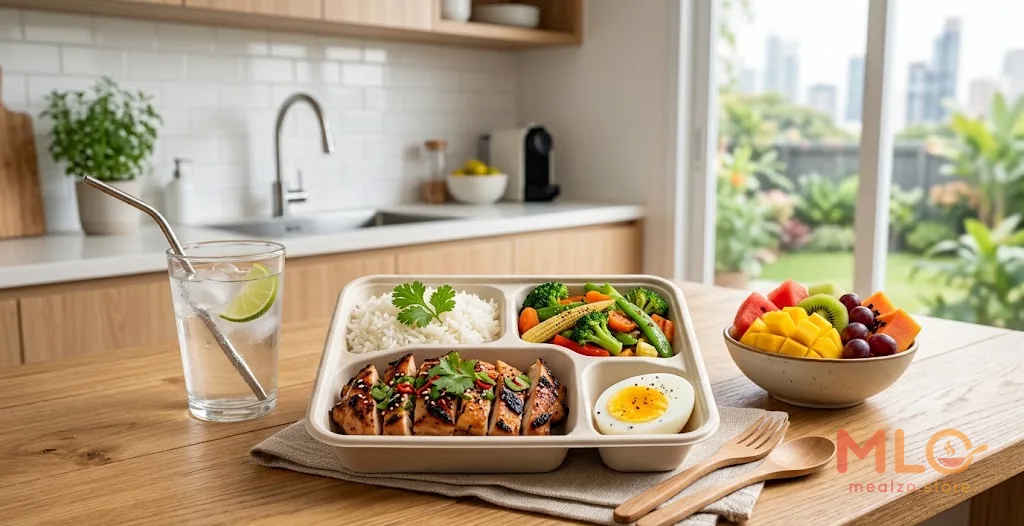
For example, gai tod may provide chicken protein, fat and a seasoned coating. A later meal with vegetables, an appropriate starch portion and a different preparation method can create variety.
If the snack was kanom krok or roti, a subsequent main meal containing vegetables and a recognisable protein source may provide a different mix of foods.
The principle also works in reverse. If lunch already contained vegetables, rice and protein, enjoying a coconut pancake afterward does not erase those components.
Consider these practical combinations:
- After moo satay with peanut sauce: A later meal could feature vegetables, rice or another starch as desired, and a protein source prepared differently.
- After sai krok Isaan: Keep the cabbage, ginger and other fresh accompaniments, then consider vegetable variety in the next meal.
- After fried chicken: A later meal with steamed or freshly prepared vegetables may offer contrast to the fried coating.
- After roti with condensed milk: Choose the next meal according to hunger, with attention to protein and vegetables rather than automatically adding another sweet snack.
- After fruit and grilled corn: Consider whether you also want a protein-containing food, depending on how substantial the eating occasion needs to be.
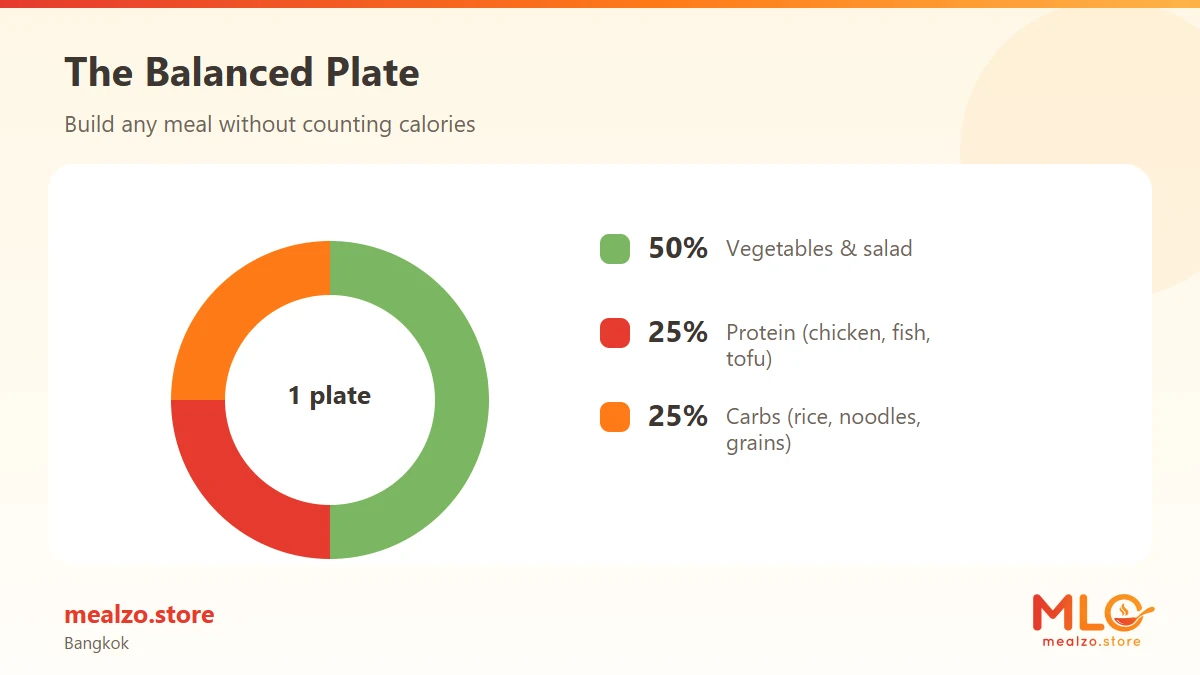
These are examples of combinations, not formulas that need to be followed at every meal.
Thai salads can also bring a useful contrast in textures and ingredients. Some contain meat or seafood, vegetables, herbs and noodles, while their dressings may include sugar and salty seasonings.
For examples, see how yam woon sen and yam nua fit into a balanced day.
The broader idea is to view the day as a collection of eating occasions instead of judging a single snack in isolation.
10. Small Adjustments That Still Let Street Food Taste Like Street Food
Street snacks are often bought because they are convenient, aromatic and enjoyable. Changing every ingredient would defeat much of that purpose.
Fortunately, practical adjustments do not require redesigning a traditional dish.
Start with the additions you can control.
Asking for peanut sauce or sweet chilli sauce separately allows you to choose the amount. It also makes the flavours of the grilled ingredients easier to appreciate.
Sharing a portion works particularly well with fried bananas, coconut pancakes and roti. It lets you enjoy a food without automatically making the entire serving part of your own eating occasion.
Fresh accompaniments are another simple option. Cabbage with sai krok Isaan, cucumber relish with satay, or fresh vegetables alongside fried chicken can introduce different textures and flavours.
You might also choose plain fruit after a savoury snack instead of purchasing another fried item.
Drinking water with street food is a practical alternative to automatically ordering a sweetened drink, particularly during a warm Bangkok afternoon.
There are limits to these adjustments. Some snacks are already coated in sauce, while others have sweetness or fat incorporated directly into their dough or batter.
Removing an external topping does not remove what was mixed into the food during preparation.
And not every stall can accommodate a special request, especially during a busy period.
That is fine. A flexible approach means making adjustments when they are convenient and enjoying the food as served when they are not.
Key takeaway: The easiest changes at a street stall are usually controlling sauces, sharing portions and choosing what to eat alongside the snack.
11. How Mealzo Bangkok Fits Around Everyday Street Snacks
For Bangkok residents who regularly snack between meals, the challenge is often not knowing what street snacks contain. It is having enough structure around those spontaneous eating occasions.
When main meals are improvised throughout the day, a snack may unexpectedly become lunch, dinner or an addition to both.
A prepared meal plan offers a different starting point.
Mealzo Bangkok operates a kitchen in Bang Na, Bangkok, where meals are cooked fresh daily and delivered across Bangkok. The service provides organised main meals, allowing street snacks to remain an optional part of the day rather than the default solution whenever food is needed.
Mealzo Bangkok offers 12 meal plans: Balanced, Weight Loss, High Protein, Vegetarian, Vegan, Keto, Low-Carb, Gluten Free, Easy-to-Digest, Pescatarian, No Fish & Seafood, and Dairy & Egg Free.
Every plan uses a mixed cuisine, combining Thai and international dishes within the same plan. Customers do not need to choose between separate cuisine categories.
There are 6 daily calorie levels, ranging from 1200 to 2500 kcal, with options for 3 or 5 meals per day. Packages are available for 3, 7, 14 or 30 days.
These options provide a framework for selecting organised meals, but the selected daily level is not automatically the total amount someone eats if street snacks are added.
That distinction matters. A satay stop, an afternoon fruit cup or an evening roti remains part of the day's overall food intake, even when the main meals are prepared in advance.
The service offers morning delivery from 06:00-09:00 or evening delivery from 17:00-20:00, with the customer selecting one delivery window.
Mealzo Bangkok also provides an allergen declaration process covering 9 allergen groups. Customers declare the relevant allergens, and dishes containing a declared allergen are not assigned to them. This describes the dish-assignment mechanism, not a guarantee that meals are allergen-free.
The website and mobile app are available in 8 languages: Thai, English, Polish, German, French, Russian, Simplified Chinese and Burmese.
The app includes a calorie calculator based on the Mifflin-St Jeor formula. Its output is an estimate rather than medical advice, and it cannot account for spontaneous street snacks unless those foods are considered separately.
People interested in a more organised daily routine can explore Mealzo Bangkok meal plans and available options.
A meal plan does not need to replace the pleasure of Bangkok street food. Its practical role is to make the main meals more predictable, leaving room to make flexible decisions when a favourite street snack appears along the way.
FAQ
Can Bangkok street snacks fit into a balanced day?
Yes. The practical question is what the snacks contribute and how they fit alongside the rest of your food. Grilled meat, fried snacks, sweet pancakes and fruit all have different ingredient profiles. Several snacks eaten together may amount to a substantial meal rather than a minor extra.
Is moo satay a protein snack or a complete meal?
Moo satay provides protein from grilled pork, but the peanut sauce, marinade and optional toast add other components. Whether it functions as a snack or a meal depends on the serving and what accompanies it. The cucumber relish adds freshness, although its dressing may contain sugar.
Are grilled Bangkok street snacks always lower in fat and sugar than fried snacks?
Not necessarily. Grilling avoids the immersion in oil involved in deep-frying, but grilled meat may contain fat, and marinades or sauces may add sugar. Fried foods carry additional considerations from oil and coating. The overall ingredients and preparation are more informative than the cooking method alone.
What can I eat alongside fried bananas, kanom krok or roti?
These foods primarily contribute combinations of starch, sugar and fat, depending on their recipes. If you want something more substantial, a protein-containing food can complement them. At another meal, vegetables and a different protein source can add variety. There is no need to treat the sweet snack as something that must be cancelled out afterward.
Can I follow a Mealzo Bangkok meal plan and still eat street snacks?
Yes. Mealzo Bangkok prepares organised meals in advance, while street snacks remain a separate choice. When adding snacks, consider their contribution to the day and how they affect your appetite for the next planned meal. The meal plan does not automatically account for food purchased outside the service.
Mealzo Bangkok is a kitchen and meal delivery service operating exclusively in Bangkok, Thailand. We are not affiliated with similarly named services outside Thailand.
Find a Meal Plan That Fits
Compare Mealzo plans or use the calculator to explore meal options for your needs.