Thai Herbs in Bangkok: Lemongrass, Galangal, Holy Basil and Balanced Eating | Mealzo Bangkok
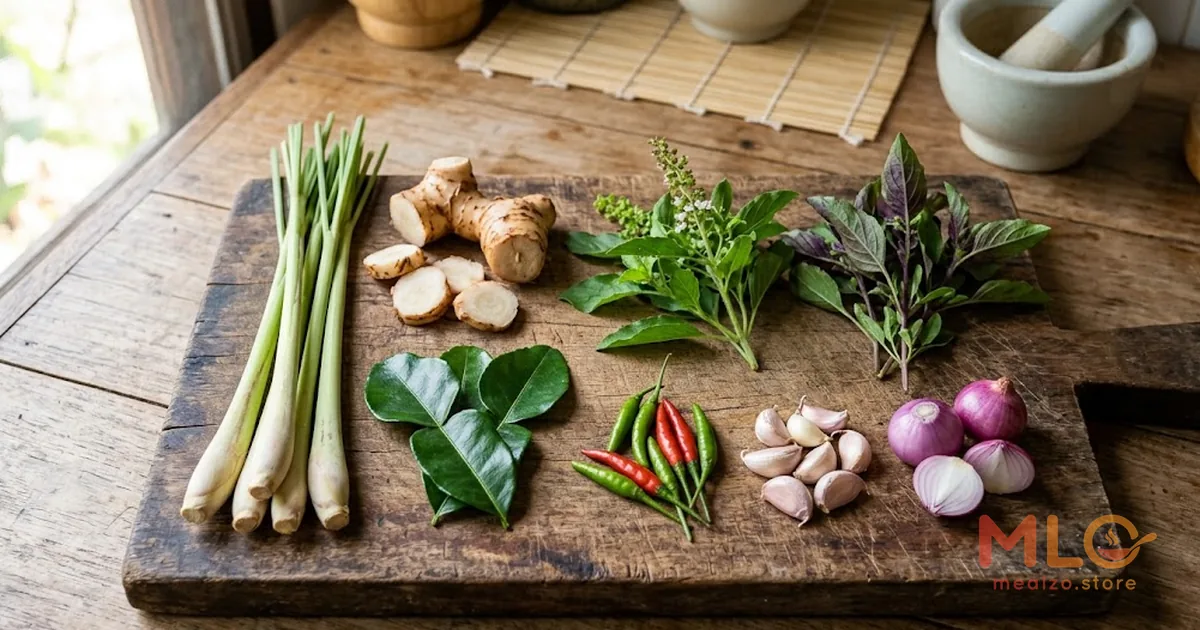
Bangkok food has a remarkable ability to taste bright, deep, hot and fragrant in the same mouthful. A bowl of tom yum can smell of lemongrass before it reaches the table. A plate of pad kra pao gets much of its character from holy basil added near the end of cooking. A spoonful of curry carries the scent of freshly pounded roots, leaves and spices.
Many of these flavours come from ingredients that are used generously but contribute relatively little energy in the quantities normally eaten. The aromatic ingredients do much of the work, often before the cook reaches for extra sugar, oil or seasoning.
Understanding Thai herbs in Bangkok is useful whether you cook at home, buy lunch from a neighbourhood food stall or order prepared meals throughout the week. You start recognising what creates the flavour, which ingredients are meant to be eaten and which simply perfume the dish.
This guide covers the herbs and aromatics commonly found in Bangkok kitchens, how they are prepared, and practical ways to enjoy them within a balanced day without assuming that every fragrant Thai dish is automatically light.
1. Where Bangkok Food Gets Its Aromatic Flavour
Thai cooking often builds flavour differently from cuisines that depend on long reductions, roasted stocks or large amounts of fat.
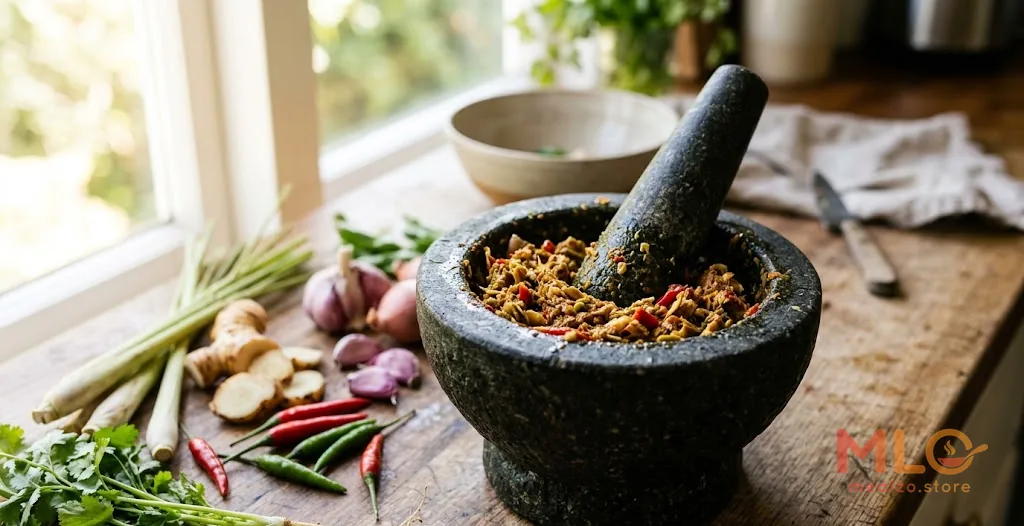
A cook might pound garlic, shallots, chilli, coriander root and other aromatics in a mortar until their fibres break down and their fragrance becomes noticeable. That paste may then be fried briefly, stirred into soup or combined with other ingredients.
Pounding matters because it ruptures plant cells and releases aromatic compounds. Slicing, bruising, tearing and crushing have similar effects, although the result changes with the ingredient.
Lemongrass releases fragrance when bruised. Lime leaves become noticeably aromatic when torn. Basil is often added near the end of cooking because prolonged heat changes its fresh character.
These techniques can make food taste complex without depending entirely on added sugar, salt or oil. They do not eliminate the need for seasoning, and they do not automatically reduce the quantities used by a restaurant.
Consider the difference between two approaches:
- A soup gets much of its aroma from lemongrass, galangal, lime leaves, fresh chilli and lime juice.
- Another dish builds intensity with a salty sauce, added sugar and a generous amount of cooking oil.
Both may taste strong. Their nutritional composition, however, can be quite different.
Key takeaway: Fresh aromatics can create strong flavour through fragrance, acidity and heat, but the amount of salt, sugar and oil still depends on how the dish is prepared.
2. Lemongrass: The Fragrance Behind Tom Yum
Lemongrass, known in Thai as takrai, is one of the most recognisable aromatics in Thai cooking.
Its flavour is citrus-like, herbal and slightly woody. Unlike lime juice, which provides direct acidity, lemongrass contributes fragrance without making the dish noticeably sour.
In Bangkok, you will encounter lemongrass in tom yum, fish dishes, curry pastes and some salads.
The preparation determines how you eat it.
For soup, the cook usually crushes the lower part of the stalk and cuts it into larger sections. These pieces simmer in the broth to release their aroma. They are often too tough and fibrous to eat comfortably.
In a finely sliced lemongrass salad, the tender inner portions are cut into extremely thin pieces and eaten as part of the dish.
This distinction is useful for visitors unfamiliar with Thai food: leaving large lemongrass pieces in the bowl is normal.
At home, remove the tougher outer layers, bruise the lower stalk with the side of a knife and add it to a simmering broth. You can develop a fragrant soup base without automatically adding more oil.
Tom yum is an especially useful example. Lemongrass, galangal and lime leaves contribute aroma, while lime juice and chilli provide acidity and heat. Fish sauce or other seasonings usually supply saltiness.
For a closer look at these different soup styles, see how tom yum, tom kha and clear Thai soups are prepared.
3. Galangal, Ginger and Turmeric: Three Different Rhizomes
Galangal, ginger and turmeric are often grouped together because they grow underground and have similar-looking forms. They are not interchangeable.
Galangal, called kha in Thai, has a sharp, pine-like, peppery fragrance. It appears frequently in tom kha, tom yum and curry pastes.
The slices commonly found floating in soup are generally intended to flavour the broth rather than be eaten. Mature galangal is firm and fibrous.
Ginger, or khing, tastes warmer, sharper and more familiar to people who cook with ginger in other Asian cuisines. Young ginger is less fibrous and may be eaten in thin slices.
Ginger appears in dishes such as steamed fish with ginger, stir-fried chicken with ginger and certain dipping sauces.
Turmeric, known as khamin, brings earthy flavour and a distinctive yellow-orange colour. It is especially relevant in Southern Thai cooking, including some curries, fish preparations and soups.
Fresh turmeric can be grated or pounded into a paste. Dried turmeric powder is another option, although its flavour differs from the fresh rhizome.
When buying these ingredients, look for firm pieces without extensive soft or mouldy areas. Refrigeration helps slow deterioration after purchase.
A simple home-cooking approach is to choose the rhizome according to the dish rather than treating all three as a general-purpose spice.
Galangal works particularly well in coconut-based soups. Ginger suits stir-fries and steamed fish. Turmeric can support the characteristic flavour of Southern-style preparations.
4. Kaffir Lime Leaves and Pandan: Aroma Without Much Bulk
Kaffir lime leaves, also known as makrut lime leaves or bai makrut, are intensely fragrant.
Their aroma is citrus-like, floral and slightly bitter. They are often torn into curries, added to soup or finely shredded into fish cakes and certain salads.
Whole leaves are usually left uneaten because they can be tough. Very finely sliced leaves, however, can be eaten when incorporated into a dish.
Pandan, called bai toey, plays a different role.
Its fragrance is often described as grassy, sweet and reminiscent of fragrant rice. Pandan is commonly used in Thai desserts, coconut preparations and rice dishes.
Long pandan leaves may be knotted and placed in cooking liquid, then removed before serving. They can also be used to wrap food.
Neither ingredient should be confused with sweetness itself. Pandan smells sweet, but a pandan dessert gets most of its sugar from the actual sweetening ingredients.
This matters when choosing snacks. A fragrant pandan custard or coconut dessert can still contain substantial sugar or fat.
Common Bangkok herbs and aromatics at a glance
| Herb or aromatic | Characteristic flavour | Common Bangkok dishes | Eaten or mainly used for flavour |
|---|---|---|---|
| Lemongrass | Citrusy, herbal | Tom yum, salads | Large stalks usually left; tender fine slices eaten |
| Galangal | Pungent, peppery, pine-like | Tom kha, curry pastes | Soup slices usually left; pounded paste incorporated |
| Makrut lime leaf | Intense citrus fragrance | Curries, fish cakes | Whole leaves often left; fine shreds eaten |
| Holy basil | Peppery, pungent | Pad kra pao | Leaves eaten |
| Thai basil | Anise-like, sweet-herbal | Curries, noodle dishes | Leaves eaten |
| Coriander leaf | Fresh, green, citrus-like | Soups, noodles, garnishes | Eaten |
| Coriander root | Earthy, concentrated | Marinades, curry pastes | Pounded and incorporated |
| Culantro | Strong coriander-like flavour | Soups, larb | Eaten |
| Mint | Cooling, fresh | Larb, yam salads | Eaten |
| Garlic and shallot | Savoury, pungent | Curry pastes, stir-fries | Eaten, often cooked or pounded |
| Fresh and dried chilli | Heat, fruity or roasted notes | Curries, dips, stir-fries | Usually eaten, depending on preparation |
| Pandan | Sweet-smelling, grassy | Rice, desserts | Whole leaves generally removed |
| Ginger | Warm, sharp | Fish, chicken stir-fries | Usually eaten when sliced finely |
| Turmeric | Earthy, mildly bitter | Southern curries, fish dishes | Incorporated into cooking |
5. Holy Basil Versus Thai Basil: Why the Name Matters
One of the most common misunderstandings about Thai herbs concerns basil.
Holy basil and Thai basil are different plants, with different aromas and different culinary uses.
Holy basil, called kra pao, has a peppery, somewhat clove-like character. It is the defining herb in pad kra pao, a familiar Bangkok stir-fry commonly prepared with minced or chopped meat, garlic, chilli and sauce.
Thai basil, called horapha, is sweeter-smelling, with an anise-like note. It is frequently used in Thai curries, certain noodle dishes and as a fresh accompaniment.
Replacing holy basil with Thai basil changes the flavour significantly.
The difference becomes especially noticeable in pad kra pao, where holy basil should provide much of the dish's characteristic fragrance.
Both types of basil are normally eaten, unlike the woody pieces of lemongrass or galangal found in soups.
For home cooking:
- Add holy basil toward the end of a hot stir-fry and cook it briefly until wilted.
- Add Thai basil near the end of cooking a curry, or serve fresh leaves alongside appropriate noodle dishes.
- Avoid treating ordinary European sweet basil as a perfect replacement for either variety.
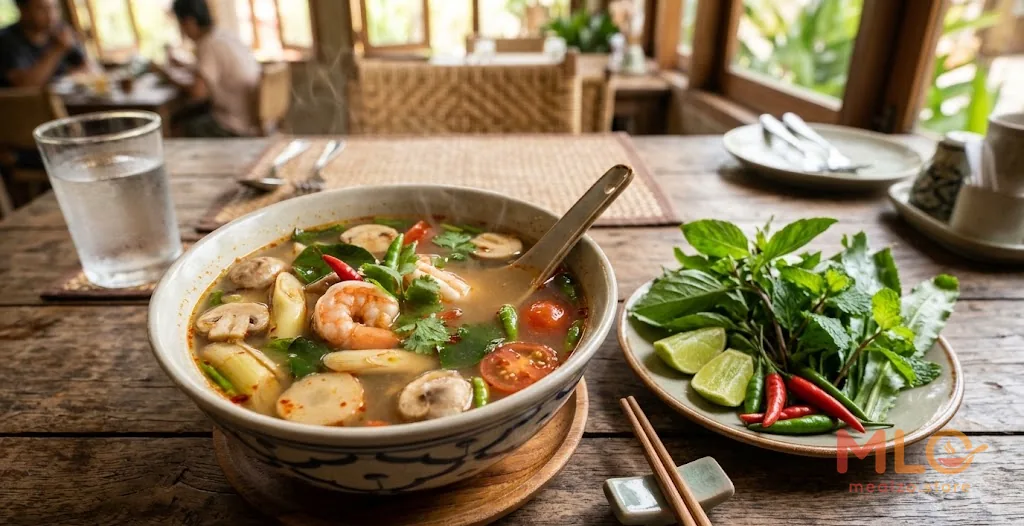
A restaurant serving pad kra pao may use plenty of holy basil, yet the final plate can still contain considerable sodium or oil from the stir-fry sauce and cooking method.
The herb provides flavour. It does not determine the entire nutritional profile.
6. Coriander, Culantro, Garlic, Shallots and Chilli
Several of Bangkok's most useful aromatics are hidden in pastes rather than visible as leaves on the finished plate.
Coriander is a good example.
Fresh coriander leaves, called phak chi, are commonly scattered over soups, noodles and other dishes just before serving.
Coriander roots are another ingredient entirely in practical cooking terms. Thai cooks pound them with garlic and white pepper to create a fragrant base for marinades, soups and other preparations.
The roots contribute depth without needing to remain visible.
Culantro, sometimes called sawtooth coriander and known in Thai as phak chi farang, has long leaves with serrated edges. Its flavour resembles coriander but is often more forceful.
It appears in some soups, larb and fresh herb accompaniments.
Garlic and shallots provide another foundation. When pounded together with chilli and other ingredients, they help create the savoury base of curry pastes, chilli dips and stir-fries.
Chilli is worth understanding separately.
Fresh chillies contribute immediate heat and sometimes a green or fruity character. Dried chillies can provide deeper, roasted or smoky notes, especially when toasted before pounding.
Using more chilli does not necessarily mean using more salt. However, some spicy sauces contain substantial sodium, sugar or oil.
For practical advice about managing heat without losing the character of a dish, see how chilli heat works in Bangkok Thai food.
The broader principle is that fresh ingredients, pounded together, create layers of flavour. Their aromatic compounds interact, making the result more complex than simply adding more seasoning.
7. Mint, Fresh Herb Plates and Building a Balanced Meal
Mint, commonly called saranae in Thai, is especially noticeable in larb and certain yam salads.
Its cool, fresh aroma contrasts with chilli, lime juice and savoury ingredients.
Unlike galangal slices or tough lemongrass stalks, mint leaves are intended to be eaten.
Another useful Bangkok food habit is the fresh herb and vegetable plate served beside certain dishes.
Depending on the food and the establishment, you may receive cabbage, cucumber, long beans, herbs and other fresh vegetables alongside nam prik, a Thai chilli dip.
Some noodle soups also come with fresh herbs, bean sprouts or vegetables that diners add themselves.
These accompaniments are more than decoration. They give you an easy way to add edible plant foods to the meal.
A practical balanced plate can include:
- A protein source such as fish, chicken, tofu or another suitable option.
- Rice, noodles or another carbohydrate source in a portion appropriate to the meal.
- Cooked vegetables or a generous serving of fresh vegetables and edible herbs.
- A sauce or dip used in an amount that suits the dish, rather than assuming the entire serving must be consumed.
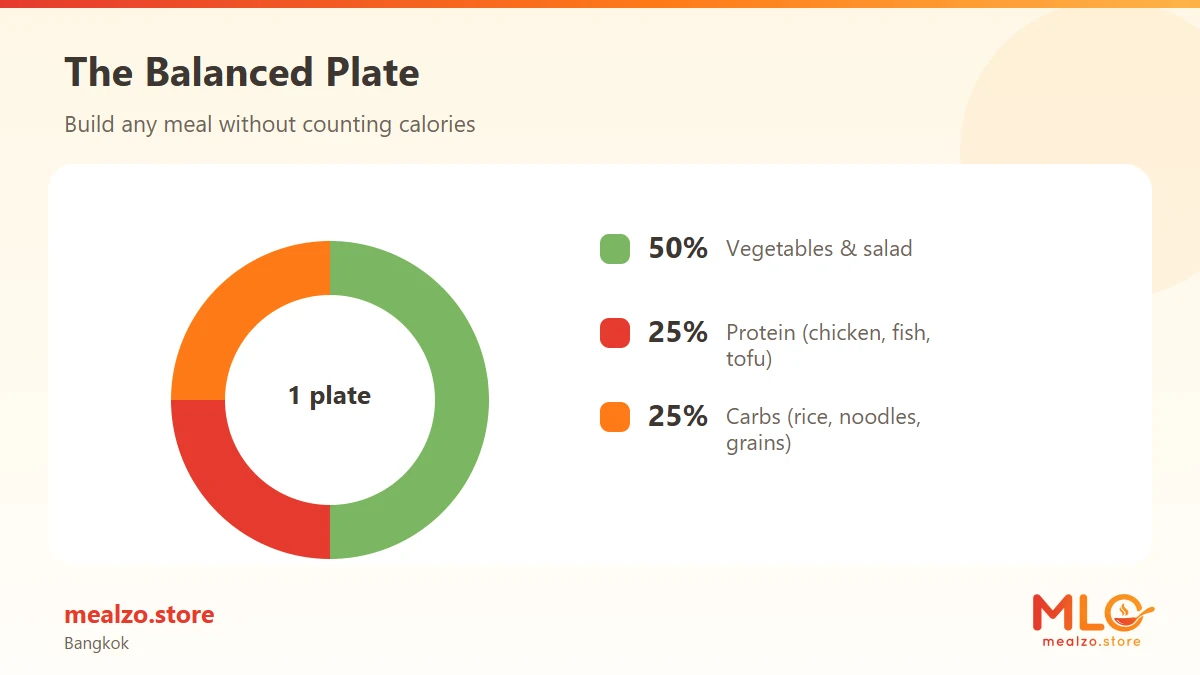
A handful of mint or basil does not replace a substantial vegetable portion. Herbs contribute variety and flavour, while larger servings of vegetables provide more meaningful bulk and dietary fibre.
The distinction is explained further in vegetables and fibre in everyday Bangkok meals.
Fresh herb plates are especially helpful when ordering food that otherwise contains little visible greenery.
For people who enjoy chilli dips, how nam prik and Thai dipping sauces fit into meals provides additional context about the vegetables, accompaniments and sauces involved.
Key takeaway: Eat the fresh herbs and vegetables served alongside suitable dishes, but treat small herb garnishes as additions to a vegetable portion, not replacements for it.
8. Which Herbs Should You Eat and Which Should Stay on the Plate?
A first encounter with aromatic Thai soup can be confusing.
The bowl contains leaves, roots, stalks and edible ingredients. Not everything is intended to be swallowed.
Large lemongrass sections are generally used to perfume the liquid. Thick galangal slices serve a similar purpose. Whole makrut lime leaves are often added for fragrance and left behind.
This is normal Thai cooking, not a preparation mistake.
By contrast, chopped coriander, mint, holy basil, Thai basil and finely sliced tender aromatics are usually part of the food itself.
The preparation matters more than a simple rule about the plant.
Finely shredded lime leaf in a fish cake is edible. A whole lime leaf floating in curry may be left aside.
The same principle applies to lemongrass. Extremely finely sliced tender lemongrass can be pleasant in a salad, while a large boiled stalk is stringy and uncomfortable to chew.
For someone ordering Bangkok food regularly, three questions help:
- Is the ingredient finely chopped or incorporated into a paste?
- Is it a tender leaf served as part of the dish?
- Is it a large, woody piece used mainly to flavour the cooking liquid?
When uncertain, there is no reason to force yourself to eat a tough aromatic.
9. Why Herb-Rich Food Is Not Automatically Light
Fragrant Thai cooking can make a meal satisfying without depending on heavy seasoning, but the finished dish needs to be considered as a whole.
A curry paste might contain lemongrass, galangal, garlic, shallots, chilli and lime leaves. Those ingredients contribute powerful flavour.
The curry prepared from that paste may also contain coconut milk, fish sauce, palm sugar and added oil.
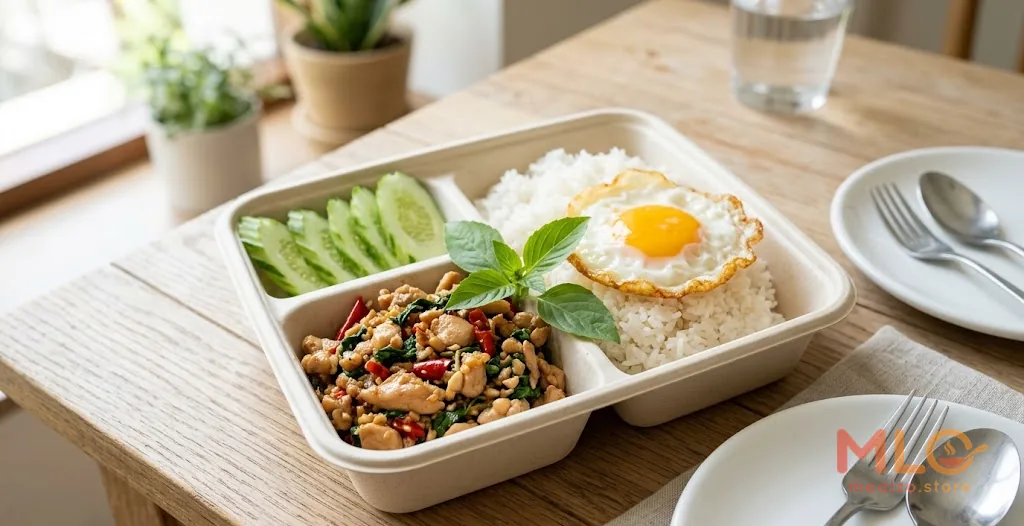
Similarly, a pad kra pao stir-fry can include a generous handful of holy basil while still relying on salty sauces and oil.
A chilli dip may be full of herbs and fresh chilli, yet contain shrimp paste or other sodium-rich ingredients.
This is why judging food solely by the presence of herbs is misleading.
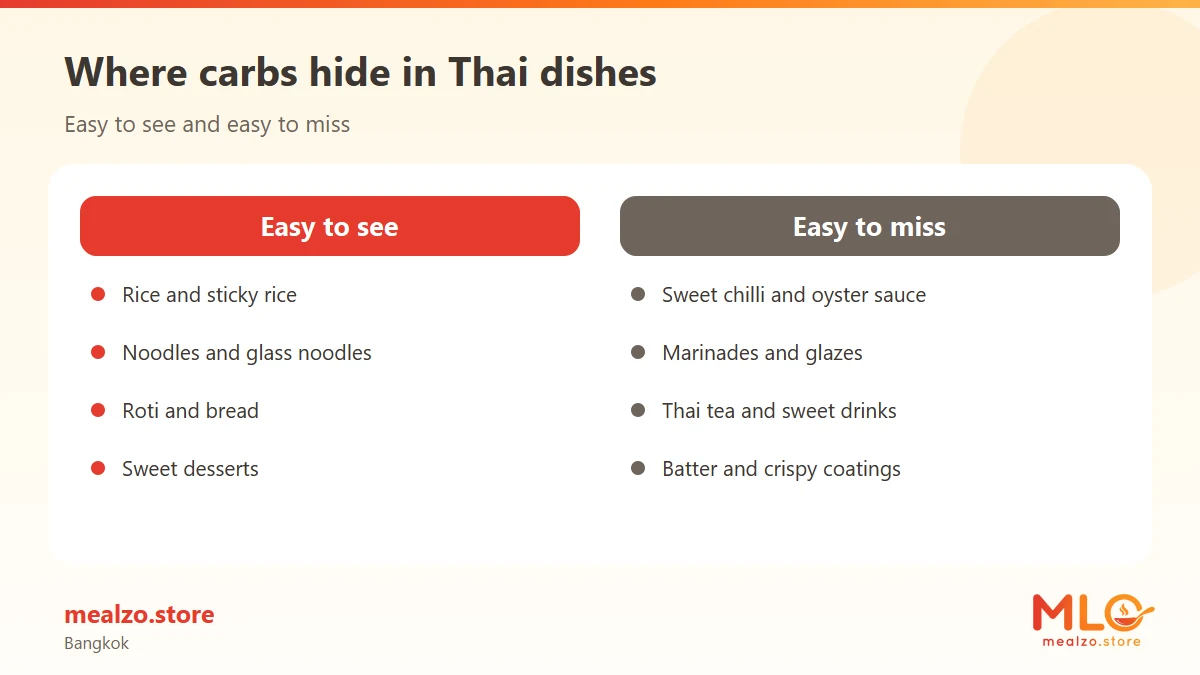
When thinking about carbohydrates, look beyond the herbs. Rice, noodles, added sugar and sweet sauces often contribute much more carbohydrate than the aromatic ingredients.
Coconut milk and added cooking oil are more relevant to the fat content of many dishes.
The sodium content can depend heavily on fish sauce, soy sauce, fermented ingredients and prepared pastes.
For a more detailed explanation, read where salt and sodium come from in Bangkok Thai food.
Aromatic herbs do not cancel out these ingredients. They simply offer another way for cooks to develop flavour.
When ordering or cooking, the following adjustments can sometimes help.
| What you can ask for or do | What it changes | When it suits |
|---|---|---|
| Ask for less added sugar | May reduce sweetness and added sugar | Sweetened salads and stir-fries |
| Request less sauce where practical | May reduce some sodium or sugar | Sauce-heavy rice and noodle dishes |
| Use extra fresh herbs | Adds aroma and edible plant variety | Noodles, larb, salads |
| Use less cooking oil at home | Changes the amount of added fat | Stir-fries and some paste-based dishes |
| Serve fresh vegetables with nam prik | Adds vegetable volume | Dip-based meals |
| Choose a clear aromatic soup | Usually changes the fat-rich base compared with coconut soup | When seeking a lighter soup style |
| Control the portion of rice or noodles | Adjusts the carbohydrate serving | Meals with large starch portions |
Requests are not always practical. A premade curry or batch-prepared sauce may already contain the seasoning.
Likewise, reducing oil too far can affect how curry pastes fry and how their aromatic compounds develop. Some recipes depend on a particular cooking technique.
There is also a food allergy consideration: most herbs are not among the major allergen groups, but prepared pastes can contain shrimp paste or peanuts.
Key takeaway: Judge a Thai dish by its complete recipe, including sauces, oil, coconut milk, added sugar and portion sizes, rather than by how many fresh herbs it contains.
10. Buying and Keeping Fresh Herbs in Bangkok's Heat
Bangkok's warm climate affects how quickly herbs lose freshness after harvesting.
Tender herbs such as mint, coriander and basil can wilt quickly when left in direct sunlight or a hot kitchen.
This makes ingredient turnover relevant when buying fresh produce or choosing where to eat.
A busy stall preparing food regularly may have fresh ingredients moving through its kitchen quickly. That is useful, although a busy stall alone does not prove that ingredients have been stored safely.
At the market, look for leaves that are reasonably firm, without extensive sliminess, dark decay or an unpleasant smell.
For home storage, a few basic habits help:
- Refrigerate tender herbs promptly rather than leaving them in Bangkok's heat.
- Remove visibly damaged leaves before storing.
- Keep herbs in a clean container or loosely wrapped with a dry paper towel to manage excess surface moisture.
- Wash herbs appropriately before use and dry them gently when needed.
- Keep cut herbs chilled and use them while their aroma and texture remain good.
Cool and dry storage generally helps, but drying herbs completely in open air is not necessary. The aim is to prevent excess moisture accumulation while avoiding wilting.
Basil can be sensitive to very cold conditions, so avoid leaving it pressed against freezing-cold refrigerator surfaces.
For tougher aromatics such as galangal, ginger and turmeric, refrigeration in a suitable container or wrapping can slow moisture loss.
Lemongrass can also be frozen in usable portions for later cooking, although its texture may change.
One practical approach for a Bangkok household is to prepare small quantities of frequently used aromatics in advance.
Keep cleaned garlic and shallots ready for cooking, portion lemongrass for soup and avoid chopping delicate basil until shortly before use.
That makes it easier to prepare a fragrant dish without relying entirely on bottled sauces or premixed seasonings.
11. How Thai Aromatics Fit Into a Balanced Day With Mealzo Bangkok
A balanced day does not require every meal to be Thai, every dish to contain herbs or every recipe to follow a rigid formula.
A person might eat an aromatic Thai soup at lunch, an internationally styled meal in the evening and fruit or another suitable snack between meals.
What matters is the overall pattern: appropriate energy intake, protein, carbohydrates, fats, vegetables and sufficient variety according to individual needs.
Fresh herbs contribute flavour and plant diversity. They are not substitutes for complete meals.
For people who have limited time to shop, prepare ingredients and cook, a structured meal plan offers another approach.
Mealzo Bangkok prepares meals fresh daily in its Bang Na kitchen and delivers across Bangkok. Its meals are balanced in advance, reducing the need for customers to plan and cook each meal themselves.
Every Mealzo Bangkok plan combines Thai and international dishes within the same mixed-cuisine plan. There are no separate cuisine selections.
There are 12 meal-plan categories: Balanced, Weight Loss, High Protein, Vegetarian, Vegan, Keto, Low-Carb, Gluten Free, Easy-to-Digest, Pescatarian, No Fish & Seafood, and Dairy & Egg Free.
Customers can select from six daily calorie levels ranging from 1,200 to 2,500 kcal, with three or five meals per day and packages lasting 3, 7, 14 or 30 days.
These options allow people to select a structure that suits their preferences and estimated energy requirements. The plan name alone does not establish whether a particular calorie level is suitable for an individual.
The app includes a calorie calculator using the Mifflin-St Jeor formula. It provides an estimate of energy needs, not medical advice or a guarantee of outcomes.
For allergen handling, customers declare from nine allergen groups. Dishes containing a declared allergen are not assigned to that customer. This describes the dish-assignment process and should not be interpreted as a guarantee of an allergen-free meal.
Delivery operates in two customer-selected windows: morning from 06:00 to 09:00 or evening from 17:00 to 20:00.
The website and mobile app are available in eight languages: Thai, English, Polish, German, French, Russian, Simplified Chinese and Burmese.
Customers can review the available options through Mealzo Bangkok meal plans.
The practical benefit of meal planning is not that fresh herbs automatically make food healthier. It is that meals can be organised around defined portions and a chosen daily energy level, rather than improvised repeatedly.
You can still enjoy Bangkok street food and home cooking alongside a planned approach. Learning what makes a dish fragrant helps you make more informed choices, whether someone else prepares your meal or you cook it yourself.
FAQ
What are the most common Thai herbs used in Bangkok food?
Lemongrass, galangal, makrut lime leaves, holy basil, Thai basil and coriander are among the most familiar. Garlic, shallots and chilli are equally important aromatic foundations. Mint, culantro, ginger, turmeric and pandan appear in particular dishes. Some are eaten as leaves or finely chopped ingredients, while tougher pieces are used mainly to flavour soups and curries.
Is holy basil the same as Thai basil in pad kra pao?
No. Holy basil, or kra pao, has a pungent, peppery character and is the traditional herb associated with pad kra pao. Thai basil, or horapha, has a sweeter, anise-like fragrance and is common in curries and some noodle dishes. Substituting one for the other changes the flavour, even though both belong to the broader basil family.
Can Thai herbs make a meal lower in salt, sugar or oil?
They can help a cook build strong flavour with less reliance on added seasoning or fat, but the outcome depends on the actual recipe. A soup can gain fragrance from lemongrass and galangal, while a stir-fry can use basil, garlic and chilli for intensity. However, many restaurant dishes also contain fish sauce, soy sauce, sugar, coconut milk or cooking oil. The presence of herbs does not establish that the finished dish is low in any of these ingredients.
Should I eat the lemongrass, galangal and lime leaves in Thai soup?
Usually not when they are served as large pieces. Lemongrass stalks, thick galangal slices and whole makrut lime leaves commonly flavour the broth and may be left in the bowl. Finely sliced tender lemongrass and finely shredded lime leaves can be eaten in preparations designed for that purpose. Soft basil, mint and coriander leaves are generally intended to be eaten.
How can I include Thai herbs in a balanced day without cooking every meal?
Use edible herbs with dishes you already enjoy, such as mint in larb, fresh basil with noodles or a vegetable and herb plate alongside nam prik. Keep the rest of the meal in mind, including protein, vegetables, carbohydrate portions and sauces. For days when cooking is impractical, a structured meal plan can provide pre-planned meals while leaving room for other food choices according to your needs and schedule.
Mealzo Bangkok is a kitchen and meal delivery service operating exclusively in Bangkok, Thailand. We are not affiliated with similarly named services outside Thailand.
Find a Meal Plan That Fits
Compare Mealzo plans or use the calculator to explore meal options for your needs.