Vegetarian, Vegan or Pescatarian? Complete Guide to Choosing a Meal Plan
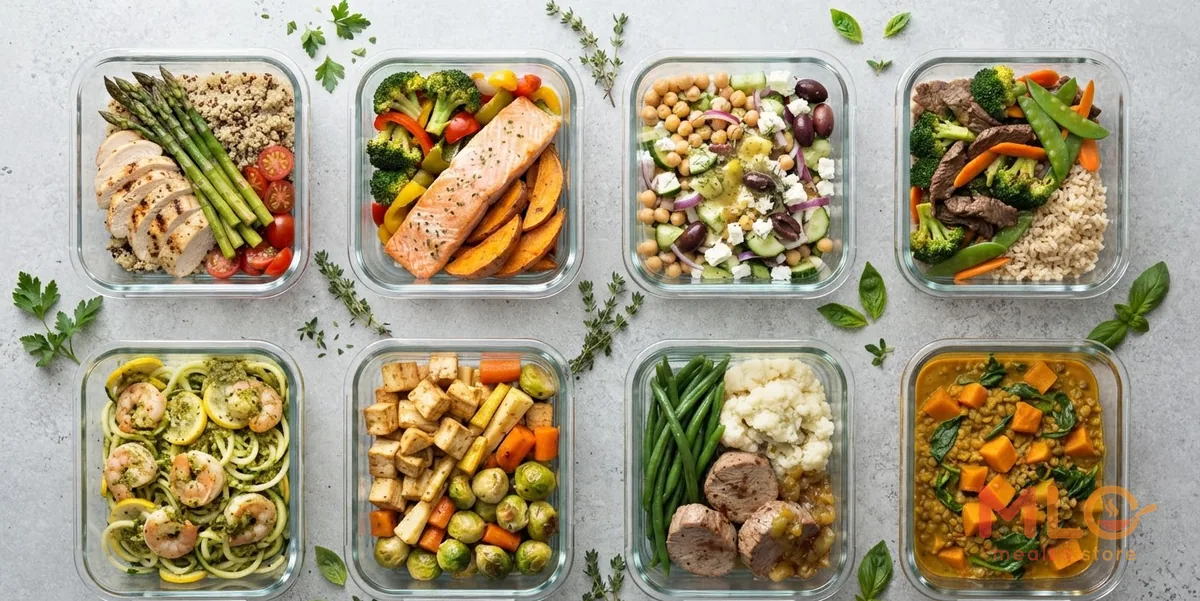
Choosing between vegetarian, vegan and pescatarian eating can look simple from a distance. One avoids meat, another removes all animal-derived foods, and the third keeps fish and seafood. In practice, the differences affect shopping, protein sources, restaurant choices, meal preparation and how much attention you need to give to certain nutrients.
For people in Bangkok, the practical question is often less philosophical: which option can you actually follow while working, commuting, eating with other people and dealing with days when cooking feels unrealistic? A theoretically perfect plan is not especially useful if it repeatedly collapses on busy Tuesdays.
This guide compares vegetarian vs vegan vs pescatarian eating without treating any of them as the default winner. Each can be built around varied, satisfying food. Each can also become repetitive or poorly planned. The right choice depends on what you want to exclude, what you enjoy eating, how much planning you are willing to do and what makes sense in your normal week.
The aim is not to choose the strictest option. It is to find an approach whose rules you understand and can realistically maintain.
1. Vegetarian vs vegan vs pescatarian: the basic differences
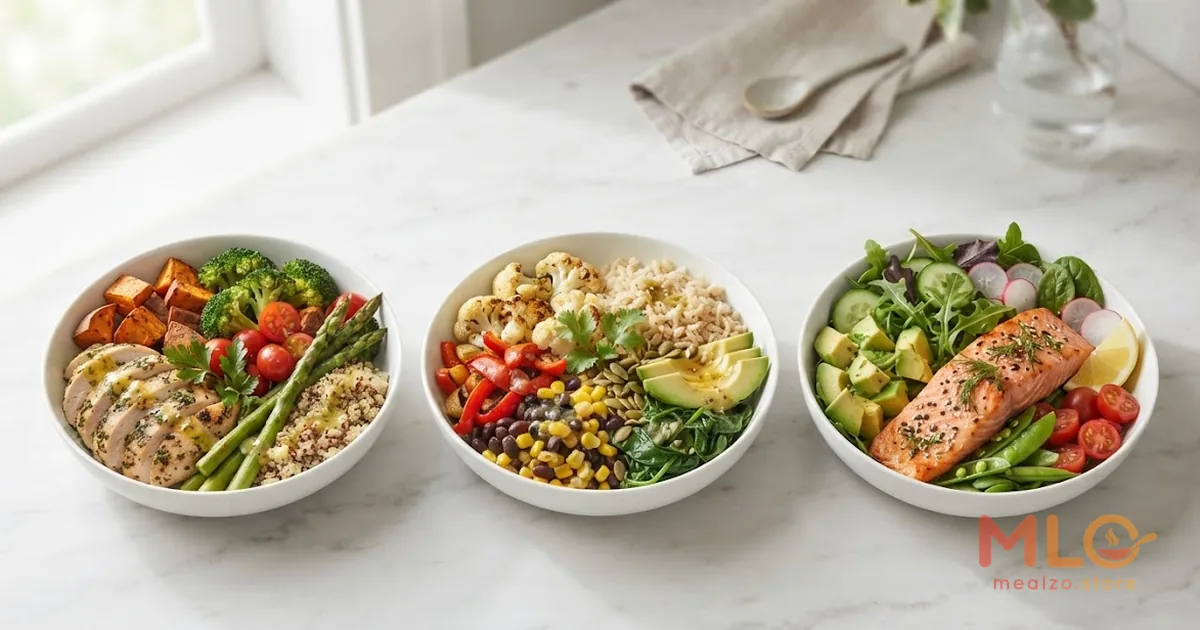
The three approaches overlap because they can all place vegetables, fruit, grains, legumes, nuts, seeds and other plant foods at the centre of meals. The difference is what happens around that plant base.
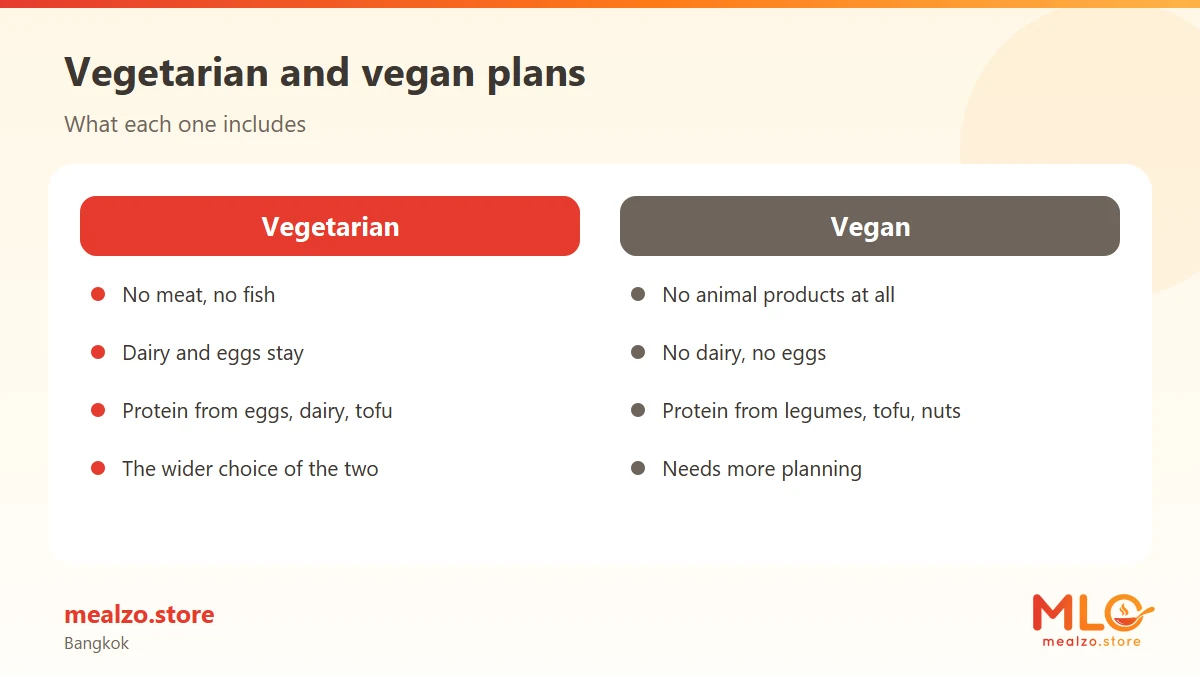
A vegetarian plan generally excludes meat and fish while potentially including eggs and dairy. A vegan plan removes animal-derived foods altogether. A pescatarian plan excludes meat such as chicken, pork and beef but includes fish and seafood, and may also include eggs or dairy depending on the person.
That distinction matters because removing a food group changes more than the ingredient list. It changes where convenient protein comes from, which restaurant dishes are suitable, how labels need to be checked and how meals are assembled.
| Approach | Usually includes | Usually excludes | Main planning question |
|---|---|---|---|
| Vegetarian | Plant foods, often eggs and dairy | Meat, fish and seafood | Are meals varied enough beyond eggs, cheese and simple carbohydrates? |
| Vegan | Plant foods only | Meat, fish, seafood, dairy, eggs and other animal-derived foods | Are protein and key nutrients being planned deliberately? |
| Pescatarian | Plant foods, fish and seafood, often eggs and dairy | Meat such as beef, pork and poultry | Is the plan balanced between seafood and varied plant foods? |
Individual definitions can differ. Some people use “vegetarian” while avoiding eggs; others include them. Some pescatarians avoid dairy. If you are ordering prepared meals, the practical definition used by the kitchen matters more than the label you personally prefer.
Key takeaway: The difference between vegetarian, vegan and pescatarian eating is defined by what is included as well as what is excluded.
2. Start with foods you actually want to eat
Before comparing nutrients or meal-plan labels, look at your normal preferences.
If you dislike fish, choosing pescatarian meals because they appear easier on paper makes little sense. If eggs and dairy are foods you rely on regularly, moving straight to vegan eating requires more adjustment than choosing vegetarian meals. If you already cook with tofu, beans, lentils and plant-based dishes most days, vegan eating may require fewer changes than you expect.
A useful exercise is to think about ten meals you genuinely enjoy. Not meals you think you should eat. Real meals you would willingly order again.
Then ask:
- How many are already vegetarian?
- How many are vegan or could easily become vegan?
- How many depend on fish or seafood?
- Which ingredients would be difficult for you to replace?
- Which foods make meals feel complete and satisfying?
This quickly exposes the difference between an attractive idea and a workable eating pattern.
Someone who enjoys tofu curries, vegetable stir-fries, bean dishes and rice-based meals may find plant-only eating relatively intuitive. Someone whose usual meals revolve around eggs, yoghurt and cheese may prefer vegetarian eating. Someone who enjoys seafood but rarely eats other meat may already be close to pescatarian without using the label.
3. Protein changes, but it does not disappear
One of the first questions people ask when reducing animal foods is where protein will come from. The useful answer depends on which approach you choose.
Vegetarian meals can use legumes, tofu and other plant proteins while also drawing on eggs and dairy where included. Vegan meals rely on plant sources, so variety and meal construction become more deliberate. Pescatarian meals can combine plant proteins with fish and seafood.
The mistake is to think in terms of a single “protein food.” A meal is a combination of ingredients. Rice may contribute some protein, but a plate based mostly on rice and vegetables will usually be structured differently from one built around tofu, beans, eggs or fish.
Vegetarian protein planning
Vegetarian eating offers a broad set of possibilities because plant proteins can sit alongside eggs and dairy if those foods are included.
That convenience can also become a trap. A vegetarian menu based repeatedly on cheese, eggs and refined carbohydrates may technically meet the definition while offering little variety.
A stronger approach is to rotate ingredients such as tofu, legumes, beans, eggs, dairy foods where appropriate, whole grains, nuts and seeds rather than relying on one familiar option.
For a more detailed look at this approach, see vegetarian meal planning for protein and variety.
Vegan protein planning
Vegan eating removes several concentrated protein sources people commonly depend on, so meal structure deserves more attention.
Instead of simply removing chicken, eggs or fish from a mixed meal, build the plate around an actual plant protein source. Tofu, legumes, beans and other suitable plant foods should be part of the design rather than an afterthought.
The supporting guide on vegan protein, iron and B12 planning goes deeper into the practical issues that become more relevant when all animal-derived foods are excluded.
Pescatarian protein planning
Pescatarian eating gives you two broad directions: seafood-based meals and plant-based meals.
That flexibility is useful, but there is no reason every meal needs fish. A varied pescatarian week can still include tofu, legumes, vegetables, grains and other plant foods.
For more detail, balancing fish, plants and protein in a pescatarian plan covers how to avoid turning pescatarian eating into “fish plus side dish” every day.
4. Think beyond protein
Protein receives most of the attention because it is easy to conceptualise: remove one source and replace it with another. Nutrition is more complicated than that.
When an eating pattern becomes more restrictive, the range of foods supplying vitamins, minerals and other nutrients may change. That does not automatically make the plan inadequate. It means exclusions need to be replaced thoughtfully rather than simply deleted.
For vegan eating in particular, vitamin B12 requires deliberate planning because relying casually on an otherwise varied plant diet is not a sensible strategy. Iron also deserves attention, especially because food source and meal composition affect how it is obtained from the diet.
Vegetarian eaters can have similar issues if their menu becomes narrow. Pescatarians have access to seafood, but a pescatarian label alone does not guarantee a varied diet.
A useful rule is simple: every major restriction creates a planning responsibility.
| If you remove or limit... | Pay more attention to... | Practical response |
|---|---|---|
| Meat | Alternative protein sources and overall meal structure | Rotate legumes, tofu, eggs, dairy or seafood depending on the plan |
| Eggs and dairy | Replacement foods rather than simple omission | Build meals deliberately around suitable plant ingredients |
| All animal-derived foods | Protein variety and nutrients that need specific planning | Use a structured vegan approach rather than improvising meal by meal |
| Most plant proteins | Overall dietary variety | Avoid depending on one animal-derived protein source repeatedly |
| Fish and seafood | Alternative proteins where those foods previously played a major role | Use legumes, tofu, eggs or dairy where compatible with the chosen plan |
Key takeaway: A food restriction works best when you replace the role of the removed food instead of merely leaving an empty space on the plate.
5. How restrictive do you want your rules to be?
There is a practical difference between a preference and a strict exclusion.
You might prefer plant-based meals most of the time but still eat eggs. You might avoid meat but happily eat fish. You might want a fully vegan plan because clear rules are easier for you than deciding meal by meal.
None of these positions needs to be defended as morally superior. The question is whether the rule helps you eat consistently.
Stricter rules can reduce decision-making. If something contains an animal-derived ingredient, a vegan eater knows it does not fit the plan. That clarity is useful for some people.
The same strictness can make restaurants, travel and spontaneous meals more complicated. A vegetarian or pescatarian framework may offer more flexibility in mixed social situations.
Consider how you react to food rules. Some people prefer precise boundaries. Others do better with a broader range of acceptable meals. Choose accordingly.
6. What changes when you eat out in Bangkok?
Bangkok offers a huge variety of food, but the name of a dish does not always tell you every ingredient used to prepare it.
A vegetable dish may still contain ingredients derived from fish, seafood, eggs or other animal products. A noodle or curry dish that looks suitable at first glance may be prepared differently from one restaurant to another.
For vegetarians, the key question is often whether fish or seafood-derived ingredients are present. Vegan eaters need to check more broadly for all animal-derived ingredients. Pescatarians generally have a wider range of options but still need to distinguish seafood from meat ingredients when that matters to them.
This is less about memorising a list of “safe” dishes and more about learning to ask what is actually inside the meal.
Social meals matter too
Your eating plan does not exist only at home.
If colleagues regularly choose restaurants with limited suitable options, that affects how easy a plan is to follow. The same applies to family meals, dates, travel days and late evenings when your preferred food is unavailable.
That does not mean you should abandon a more restrictive approach. It means the social cost is part of the decision.
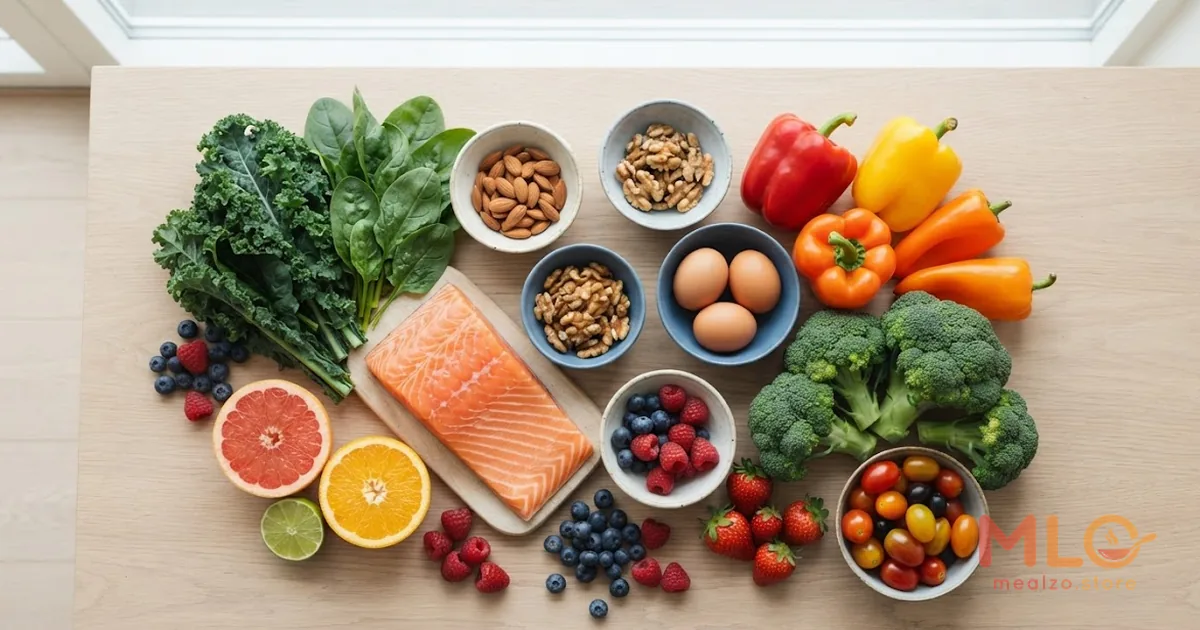
7. Convenience is part of nutrition planning
People often treat convenience as a weakness, as though the best eating plan should require constant cooking and preparation. That is unrealistic for many adults in Bangkok.
Long commutes, unpredictable meetings and evening commitments affect what gets eaten. If your plan assumes you will prepare several ingredients from scratch every night, test that assumption against your actual calendar.
Convenience can come from batch cooking, simple repeatable meals, prepared ingredients or meal delivery. The best system is the one that reduces the number of moments where hunger meets zero preparation.
For broader strategies around this problem, staying consistent with plant-based eating on busy Bangkok days focuses specifically on workdays and disrupted schedules.
Key takeaway: Convenience is not separate from a meal plan; it is one of the conditions that determines whether the plan survives a normal week.
8. Meal variety matters more as restrictions increase
A common problem with restrictive eating is not necessarily lack of food. It is repetition.
A new vegetarian may eat the same egg dishes repeatedly. A new vegan may cycle through tofu and rice. A pescatarian may eat fish at nearly every main meal simply because it is the most obvious protein option.
Technically, each person is following the chosen plan. Practically, the menu may become boring and increasingly dependent on a narrow set of ingredients.
A better rotation might vary several dimensions:
- protein source;
- vegetables;
- grains or other carbohydrate sources;
- cooking method;
- sauces and seasoning;
- texture;
- hot and cold meals.
Variety is partly nutritional, but it is also behavioural. People are more likely to resent a meal plan when every day feels like a minor variation of yesterday.
9. Vegetarian may suit you if you want flexibility without meat
Vegetarian eating is often the middle ground for people who want to remove meat and seafood without excluding eggs or dairy.
It can work particularly well if those foods already play a regular role in your meals. Breakfasts, snacks and restaurant choices may require less adaptation than they would on a vegan plan.
The main caution is complacency. Removing meat does not automatically create balanced meals. It is easy for vegetarian eating to drift toward bread, noodles, cheese-heavy dishes, desserts and other foods that meet the definition without creating much variety.
A practical vegetarian pattern still benefits from planned protein sources, vegetables, legumes, whole foods and rotation.
Vegetarian may be worth considering if:
- you want to avoid meat and fish;
- you still enjoy eggs or dairy;
- you want relatively broad restaurant flexibility;
- fully plant-only eating feels unnecessarily restrictive for your goals;
- you are prepared to build meals around more than cheese and eggs.
10. Vegan may suit you if you want a fully plant-based framework
Vegan eating has the clearest boundary of the three approaches discussed here: animal-derived foods are excluded.
For some people, that simplicity is appealing. There is no repeated negotiation about whether fish counts, whether eggs are acceptable or how often dairy fits.
The trade-off is that meal planning needs to be more deliberate. Foods previously providing protein and certain nutrients need suitable replacements. Eating out can also require more ingredient checking.
Vegan eating may suit you if:
- you specifically want to exclude all animal-derived foods;
- you already enjoy a broad range of plant foods;
- you are willing to plan rather than simply remove ingredients;
- checking restaurant ingredients does not feel overly burdensome;
- you prefer a clear rule rather than a flexible boundary.
It may be less suitable if you dislike most plant protein sources or expect the plan to work by simply subtracting meat, eggs and dairy from your current meals.
11. Pescatarian may suit you if seafood fits your normal diet
Pescatarian eating can be a relatively natural transition for people who already eat little meat but enjoy fish and seafood.
Because seafood remains available, protein planning may feel less restrictive than on vegetarian or vegan plans. At the same time, plant foods can still form most of the diet if that is what you prefer.
The risk is relying too heavily on seafood simply because it is convenient. Pescatarian eating does not have to mean fish at breakfast, lunch and dinner.
A more varied plan can alternate seafood with tofu, legumes, eggs or dairy where those foods are included.
Pescatarian eating may suit you if:
- you want to remove meat but keep fish and seafood;
- seafood is already a food you enjoy;
- you want more flexibility than a vegetarian or vegan plan provides;
- you still want plant-based meals to play a major role;
- you prefer having several different protein categories available.
12. A practical decision framework
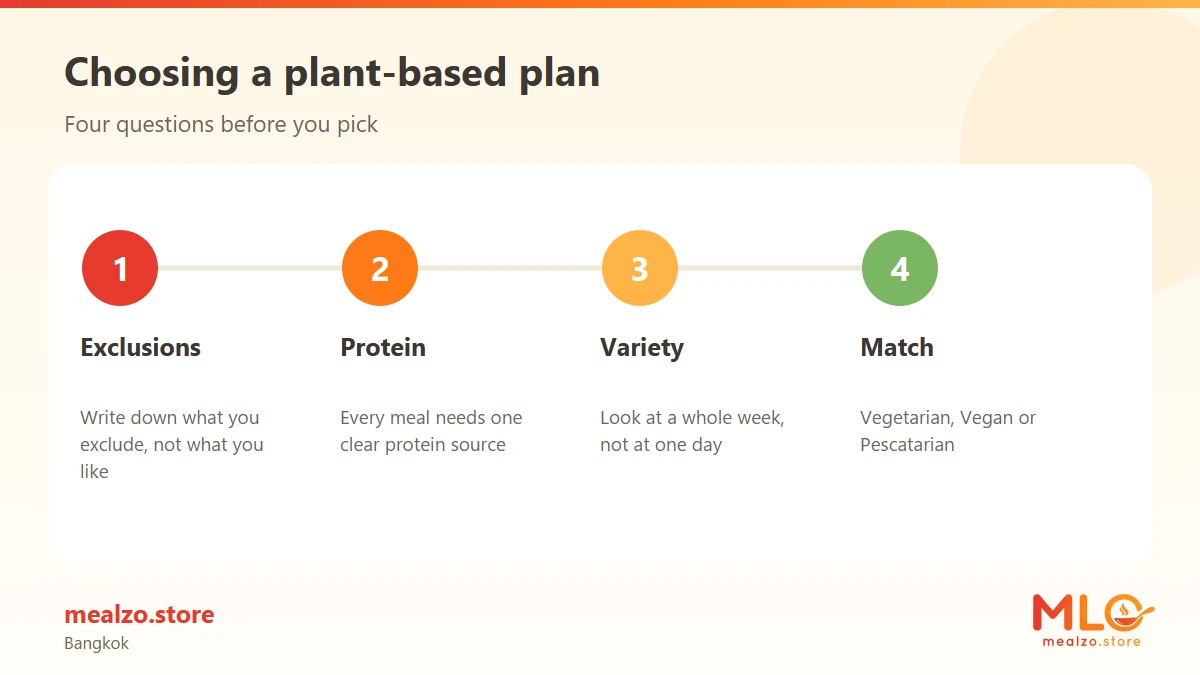
If you are still undecided, forget the labels for a moment and answer a few concrete questions.
First, what do you genuinely want to stop eating? There is a difference between foods you intend to reduce and foods you want excluded completely.
Second, which foods are you unwilling to give up? If eggs are part of breakfast almost every day, that tells you something. If seafood is one of your favourite foods, that matters too.
Third, how much ingredient checking are you comfortable doing? Vegan eating generally requires the most attention to hidden animal-derived ingredients. Vegetarian eating may require checking for fish-based ingredients. Pescatarian eating usually allows the widest range of the three, although meat ingredients still matter.
Fourth, how much food preparation do you realistically do?
Finally, how stable is your schedule? A plan that works only when you cook every evening may not survive weeks dominated by work and commuting.
You can think of the choice this way:
| Your priority | Option that may fit | What to verify before choosing |
|---|---|---|
| Avoid meat and fish but keep eggs or dairy | Vegetarian | Whether you enjoy enough non-meat protein sources |
| Avoid all animal-derived foods | Vegan | Whether you are ready for deliberate meal and nutrient planning |
| Avoid meat but keep seafood | Pescatarian | Whether you will still include enough plant-food variety |
| Maximum flexibility among these three approaches | Pescatarian, depending on your exclusions | Whether seafood is something you genuinely want to eat |
| Clear plant-only rule | Vegan | Whether that rule works socially and practically |
| Moderate change from a typical mixed diet | Often vegetarian or pescatarian | Which animal foods you actually want to retain |
There is no requirement to choose the most restrictive category available.
Key takeaway: Choose the narrowest set of food rules that genuinely reflects what you want, not the strictest label you think you should be able to follow.
13. How Mealzo can fit into the decision
Meal delivery can remove some of the daily preparation burden, but it does not decide which eating pattern is right for you.
Mealzo offers 12 meal plans: Balanced, Weight Loss, High Protein, Vegetarian, Vegan, Keto, Low-Carb, Gluten Free, Easy-to-Digest, Pescatarian, No Fish & Seafood, and Dairy & Egg Free.
For the three plans discussed here, the useful starting point is to decide your food exclusions first. Then choose the calorie level and package structure that fits how you want to use the service.
Available calorie levels are 1200, 1500, 1800, 2000, 2200 and 2500 kcal per day. You can choose 3 or 5 meals a day, with packages of 3, 7, 14 or 30 days.
Mealzo delivers across Bangkok in two delivery windows: morning from 06:00-09:00 or evening from 17:00-20:00.
The app also includes a calorie calculator using the Mifflin-St Jeor formula. It gives an estimate rather than medical advice, so it should be treated as a practical starting point rather than a diagnosis or prescription.
You can review Mealzo meal plans and package options once you know which dietary structure fits you best.
What about allergens?
Dietary preferences and allergens are separate issues.
In Mealzo, customers declare allergens from nine allergen groups. Dishes containing a declared allergen are then not assigned to that customer. This describes the assignment mechanism; it should not be interpreted as a guarantee that a meal is allergen-free.
If you have a medical allergy or a condition requiring clinical dietary management, a general meal-plan guide is not a substitute for appropriate professional advice.
14. Give yourself permission to choose based on practicality
People sometimes approach vegetarian, vegan and pescatarian eating as though they are levels in a progression. Vegetarian becomes the entry point, vegan the final destination, and pescatarian sits somewhere outside the sequence.
That framework is unnecessary.
These are different eating patterns with different boundaries. A pescatarian does not need to “advance” to vegetarian. A vegetarian is not an incomplete vegan. A vegan does not need to persuade anyone else to adopt the same rules.
Your decision can be based on taste, convenience, personal values, ingredient preferences, social circumstances or simply what makes everyday meals easier to manage.
It is also reasonable to discover that your first choice does not fit as well as expected. You may find vegan eating requires more restaurant planning than you want. You may find vegetarian meals easier than expected and decide seafood is unnecessary. You may move from vegetarian to pescatarian because including fish makes travel or social meals simpler.
Changing the plan is not failure. It is information.
The most useful question is not “Which category is best?” It is “Which set of food rules gives me enough structure without making normal life unnecessarily difficult?”
FAQ
Is vegetarian healthier than vegan or pescatarian?
Not automatically. The label tells you which foods are excluded, not the overall quality or variety of the diet. A varied, well-planned version of any of the three can look very different from a repetitive version built around a narrow range of foods.
Can I get enough protein without meat?
Meat is not the only source of dietary protein. Vegetarian plans can use plant proteins and, where included, eggs and dairy. Vegan plans use plant sources, while pescatarian plans can also include fish and seafood. The practical issue is meal structure and variety.
Is vegan eating harder than vegetarian eating?
It usually involves more exclusions, so it can require more ingredient checking and more deliberate meal planning. Whether it feels harder depends on your current diet, cooking habits, preferred foods and how often you eat outside the home.
Do pescatarians eat eggs and dairy?
Many do, but the definition can vary from person to person. The defining feature is generally that fish and seafood are included while meat such as beef, pork and poultry is excluded. If you are ordering prepared meals, check how the provider defines the plan.
Which option is easiest for eating out in Bangkok?
Pescatarian eating often allows the broadest ingredient range of the three, followed by vegetarian eating, while vegan meals typically require the most checking. However, restaurant preparation varies, so the name of a dish alone may not confirm whether it fits your exclusions.
How do I choose between vegetarian, vegan and pescatarian Mealzo plans?
Start with the foods you want excluded rather than the plan name. Choose Vegetarian if you want to avoid meat and seafood while retaining foods such as eggs or dairy where included, Vegan if you want animal-derived foods excluded, or Pescatarian if you want to exclude meat while keeping fish and seafood. Then choose the calorie level, number of daily meals and package length that suit your routine.
Find a Meal Plan That Fits
Compare Mealzo plans or use the calculator to explore meal options for your needs.