Northern Thai Food in Bangkok: Khao Soi, Sai Ua and Eating Lanna Dishes in Balance
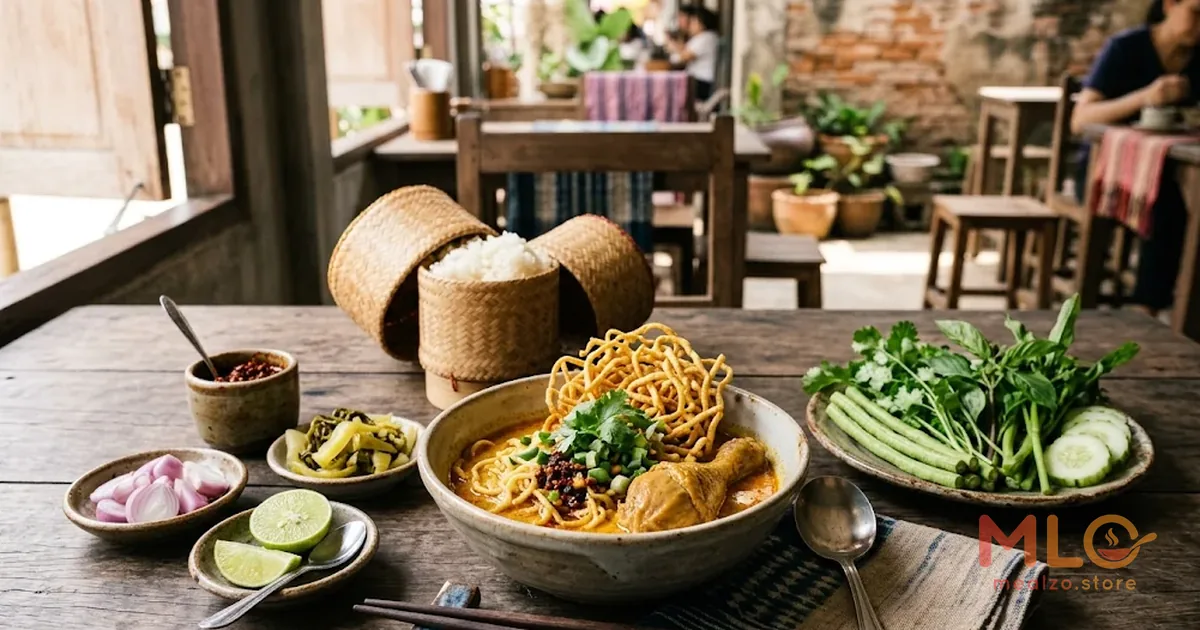
Northern Thai food brings a different character to Bangkok's dining scene. Instead of the coconut-rich curries and sweeter sauces associated with much of central Thai cooking, Lanna cuisine often relies on herbs, roasted chillies, fermented ingredients, dry spices and slow cooking. The result can be fragrant, savoury and surprisingly varied.
A bowl of khao soi, a plate of grilled sai ua sausage and a basket of sticky rice may all come from the same northern Thai restaurant, but they are very different meals in terms of fat, carbohydrates, salt and portion size. Some dishes are built around vegetables and broth. Others depend on fatty pork, fried toppings or generous portions of rice.
For people exploring northern Thai food in Bangkok, the useful question is not whether Lanna cuisine is healthy or unhealthy. It is what goes into each dish, how it is served and how the different components add up across a meal.
You can enjoy the traditional flavours without treating every restaurant visit as a dietary calculation. Understanding a few familiar dishes makes ordering easier, especially when you eat Thai food regularly rather than occasionally.
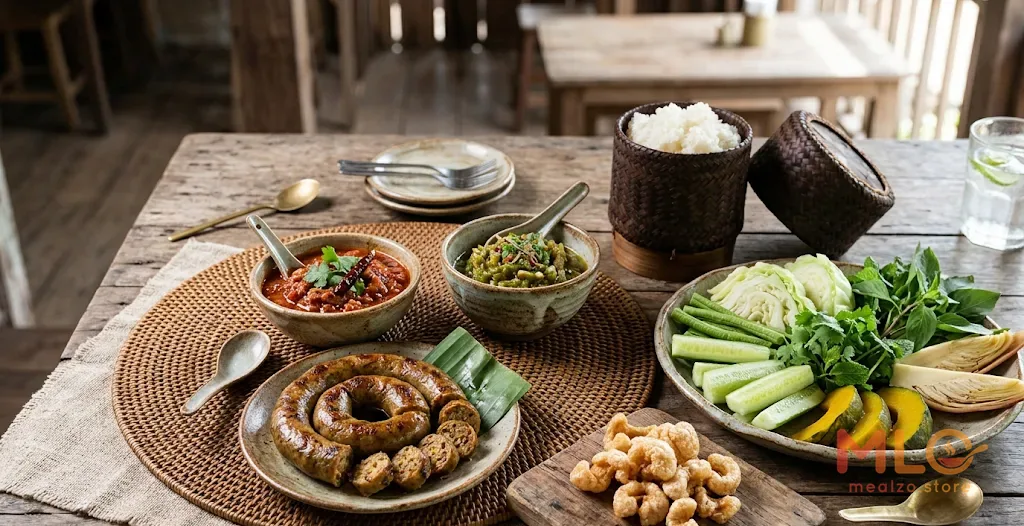
1. What Makes Northern Thai Food Different?
Northern Thai cuisine, often called Lanna food, developed around Chiang Mai, Chiang Rai, Lampang and neighbouring provinces. Its traditional cooking reflects local herbs, seasonal vegetables, pork, fermented ingredients and influences from nearby regions.
Compared with many central Thai dishes, northern preparations are generally less sweet and often use less coconut milk. Southern Thai cooking frequently features intense chilli heat, turmeric, seafood and distinctive curry pastes, although both regions have considerable variation.
For a closer comparison of those regional flavours, see southern Thai curries and everyday dishes in Bangkok.
Northern food is not automatically light. Some preparations contain substantial amounts of pork fat, while sausages, fermented seasonings and dips can be salty. The absence of coconut milk does not necessarily mean a curry contains little fat.
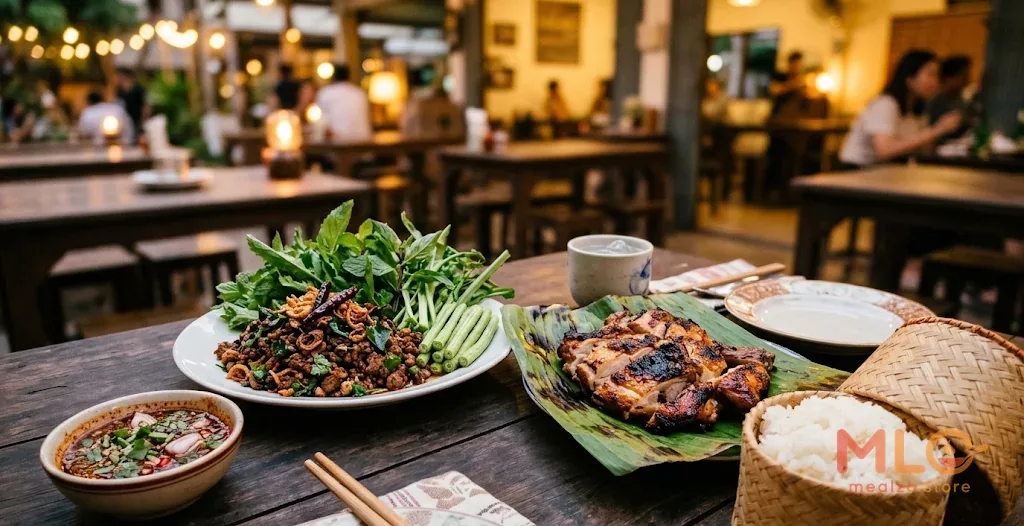
Typical northern Thai restaurant dishes include:
- Khao soi, egg noodles in coconut curry broth with crispy noodles.
- Sai ua, grilled pork sausage seasoned with herbs and spices.
- Nam prik noom and nam prik ong, chilli dips served with vegetables.
- Kaeng hang lay, slow-cooked pork curry with ginger and tamarind.
- Kaeng khae, a vegetable and herb curry usually made without coconut milk.
- Khanom jeen nam ngiao, rice noodles with pork and tomato broth.
- Larb muang, northern-style minced meat with roasted spices.
In Bangkok, northern restaurants commonly offer several of these dishes alongside sticky rice, pork crackling and grilled meats. A meal becomes heavier or lighter depending on the combination, not simply the name of the cuisine.
Key takeaway: Northern Thai cooking often uses less coconut milk than central Thai cooking, but pork fat, sausage, crackling and rice portions still determine how substantial a meal becomes.
2. Khao Soi: The Rich Exception to Northern Thai Cooking
Khao soi is one of Chiang Mai's best-known dishes and a familiar introduction to northern Thai food in Bangkok.
A traditional serving combines soft egg noodles with a fragrant curry broth, usually containing coconut milk, curry paste and meat. Crispy fried noodles sit on top, while pickled mustard greens, sliced shallots and lime are served alongside.
The attraction is the contrast. The soft noodles absorb the broth, the fried noodles provide crunch, and the pickles and lime cut through the richness.
That richness also explains why khao soi can be a substantial meal.
The coconut milk contributes fat, the noodles provide carbohydrates, and the crispy topping adds further starch and frying oil. Depending on the preparation, the broth may also contain considerable salt.
Chicken khao soi is common, but choosing chicken does not remove the coconut milk or crispy noodles. Nor does ordering a smaller bowl necessarily make the broth itself less rich.
A practical way to enjoy it is to eat the soft noodles and meat, use the crispy topping according to appetite, and decide how much broth you want rather than automatically finishing everything.
Adding lime and pickled mustard greens changes the flavour balance, although the pickles also contribute sodium.
If you are comparing coconut-based dishes across Bangkok, understanding coconut milk and richness in Thai curries provides useful context.
Khao soi deserves to be enjoyed as khao soi. Removing every ingredient that gives it character is not necessary. On a day when you want something lighter, choosing a different northern dish may make more sense.
3. Northern Curries Without Coconut: Hang Lay and Kaeng Khae
Two northern curries illustrate why cooking technique matters more than the word curry.
Kaeng hang lay is a slow-cooked pork curry traditionally flavoured with ginger, tamarind and aromatic spices. Unlike many central Thai curries, it generally contains no coconut milk.
That does not make it low-fat. Pork belly or other fatty cuts may be used, and fat released during long cooking becomes part of the sauce. Its dense texture and concentrated flavour make a modest serving satisfying, particularly alongside rice and vegetables.
Kaeng khae takes a different approach. It is generally a broth-based curry built around vegetables, herbs, chillies and sometimes meat.
Depending on the recipe, it may include eggplant, leafy greens, mushrooms, bamboo shoots and seasonal herbs. The lack of coconut milk and its vegetable-heavy composition often make it less rich in fat than khao soi or pork-heavy hang lay.
Still, cooking oil, meat choices and seasoning vary between kitchens.
| Northern Thai dish | What is typically in it | Usually lighter or heavier? | Simple way to order |
|---|---|---|---|
| Khao soi | Coconut curry broth, egg noodles, meat, crispy noodles | Richer in fat and carbohydrates | Enjoy the crispy topping in moderation |
| Sai ua | Pork, herbs, chilli, lemongrass and spices | Fatty and often salty | Share a portion with vegetables |
| Nam prik noom | Roasted green chillies, garlic, shallots, seasonings | Dip itself is often relatively light in fat, but salty | Eat with plenty of vegetables |
| Nam prik ong | Pork, tomatoes, chillies and seasonings | Depends on pork fat and oil | Pair with vegetables and a modest rice portion |
| Kaeng hang lay | Slow-cooked pork, ginger, tamarind and spices | Often rich from fatty pork | Take a smaller curry portion with greens |
| Kaeng khae | Herbs, vegetables, broth, sometimes meat | Often lighter in fat | Choose a vegetable-forward preparation |
| Khanom jeen nam ngiao | Rice noodles, pork, tomato broth | Often less rich than coconut noodle curry | Adjust the noodle portion |
| Larb muang | Minced meat, dry roasted spices, herbs | Depends on meat fat and added oil | Pair with fresh vegetables |
| Khaep moo | Fried pork skin and fat | Very rich in fat and often salty | Treat as a small side |
These descriptions are practical comparisons, not fixed nutritional ratings. Two Bangkok restaurants can prepare the same dish quite differently.
4. Sai Ua and Khaep Moo: The Traditional Rich Sides
Sai ua is northern Thailand's aromatic grilled pork sausage. Its flavour comes from ingredients such as lemongrass, kaffir lime leaves, galangal, chilli and other herbs and spices.
It can smell intensely herbal while still being a fatty meat product. Pork fat helps create the sausage's characteristic texture and juiciness, while salt and seasonings provide much of its savoury taste.
Khaep moo, or pork crackling, is another traditional companion to northern meals. It is especially popular with chilli dips, where the crunchy, fatty texture contrasts with soft vegetables.
Neither food needs to be avoided simply because it is rich. The issue is how easily they become additional portions rather than deliberate parts of the meal.
A plate containing sausage, pork crackling, sticky rice and a fatty pork curry brings several concentrated sources of fat and energy together.
For a more balanced combination, order a smaller amount of sai ua, share the crackling and include a generous vegetable plate. You still experience the traditional flavours without making every component equally large.
This approach is particularly useful when eating with friends and sharing several northern dishes.
5. Nam Prik Noom, Nam Prik Ong and the Vegetable Plate
Northern Thai chilli dips are among the easiest ways to appreciate Lanna flavours without building an entire meal around meat or fried food.
Nam prik noom is a roasted green chilli dip commonly made with chillies, garlic, shallots and seasonings. Roasting gives it a smoky character, while the level of heat depends on the chillies and recipe.
Nam prik ong is different. It is a pork and tomato dip, with a savoury, slightly tangy character. The minced pork gives it more substance, while its fat content depends on the pork and cooking oil used.
Both are traditionally served with vegetables. Raw cucumber, cabbage and other fresh vegetables may sit alongside steamed greens, beans or seasonal produce.
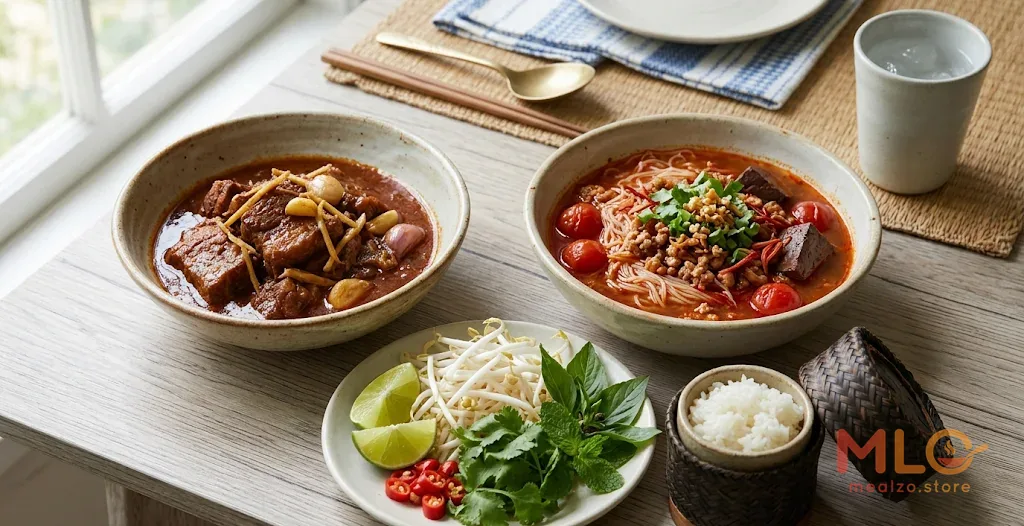
The vegetable plate changes how the meal works.
Instead of eating only rice and meat, you alternate between crunchy or tender vegetables and concentrated dips. Vegetables provide fibre, water and volume, making the plate larger without relying entirely on fatty or starchy ingredients.
The dips themselves may contain significant sodium, including from salt, fish sauce or fermented seasonings. More vegetables do not eliminate that sodium, but they help spread a smaller amount of dip across more food.
Some restaurants add pork crackling or sausage to the platter. These are traditional accompaniments, not compulsory additions.
For more detail on Thai dipping sauces, see how nam prik and Thai condiments change a meal.
Key takeaway: A northern chilli dip served with generous vegetables can create a satisfying plate, but the salt in the dip and fat in accompanying pork products still count.
6. Larb Muang: Northern Minced Meat and Roasted Spices
Larb muang is different from the lime-forward larb commonly associated with northeastern Thailand.
Northern versions rely more heavily on complex roasted spice mixtures, which may contain dried chillies, pepper and other aromatic ingredients. The result is earthy, warming and intensely savoury.
Some preparations are relatively dry, while others contain more oil or rendered meat fat. Pork is common, although recipes and meat choices differ.
Fresh herbs and vegetables are useful accompaniments because the spice mixture is concentrated and the meat can be rich.
If you are familiar with northeastern larb, compare the regional approaches in Isaan larb, som tam and sticky rice in Bangkok.
One further distinction matters when ordering: some traditional northern minced meat preparations may use raw meat or blood. Anyone who prefers fully cooked meat should ask directly and choose an appropriately cooked version.
Northern spice mixtures can also feel hotter or more pungent than expected. Asking for less chilli is normal, although some kitchens prepare their spice mixture in advance and cannot substantially change it.
7. Khanom Jeen Nam Ngiao and Other Broth-Based Bowls
Khanom jeen nam ngiao is a northern noodle dish built around rice noodles and a pork and tomato broth.
Its characteristic flavour comes from tomatoes, spices and savoury ingredients, with variations that may include pork ribs, minced pork, fermented seasonings and blood curds.
Unlike khao soi, nam ngiao does not usually rely on coconut milk. This generally makes its broth less rich in fat, although fatty pork, cooking oil and toppings can change the result.
The rice noodles remain a significant carbohydrate source.
That means a large bowl can still be substantial even when the broth is relatively light. A smaller noodle portion with the usual broth and vegetables may suit someone who wants the flavour without a very large rice-noodle serving.
Broth-based cooking also makes sodium worth considering. A clear-looking soup is not necessarily lightly seasoned.
For readers comparing noodle choices around the city, Bangkok noodle dishes and how their ingredients differ explores other common preparations.
When choosing between khao soi and nam ngiao, think about what you want from the meal. Khao soi offers coconut richness and fried crunch. Nam ngiao generally gives you a tomato-based, savoury broth without the same coconut component.
Both belong on a northern Thai menu, but they serve different appetites.
8. Sticky Rice, Portion Sizes and Building a Balanced Plate
Sticky rice, or khao niao, is central to many northern Thai meals.
Its texture makes it easy to pinch off small portions by hand and dip them into nam prik or eat them with sausage and meat. That is part of the pleasure, and also why portions can become difficult to judge.
Sticky rice is compact and carbohydrate-dense. A small basket may look less substantial than a plate of loose rice, particularly when shared dishes encourage repeated handfuls.
At the same time, sticky rice provides energy and contributes to the satisfying character of the meal. It is not an ingredient that needs to be excluded automatically.
A useful plate-building approach is to combine:
- A generous serving of raw or steamed vegetables.
- A moderate portion of grilled meat, larb or another protein dish.
- A deliberate amount of sticky rice.
- Chilli dip for flavour rather than as an unlimited sauce.
- A small portion of sausage or crackling if desired.
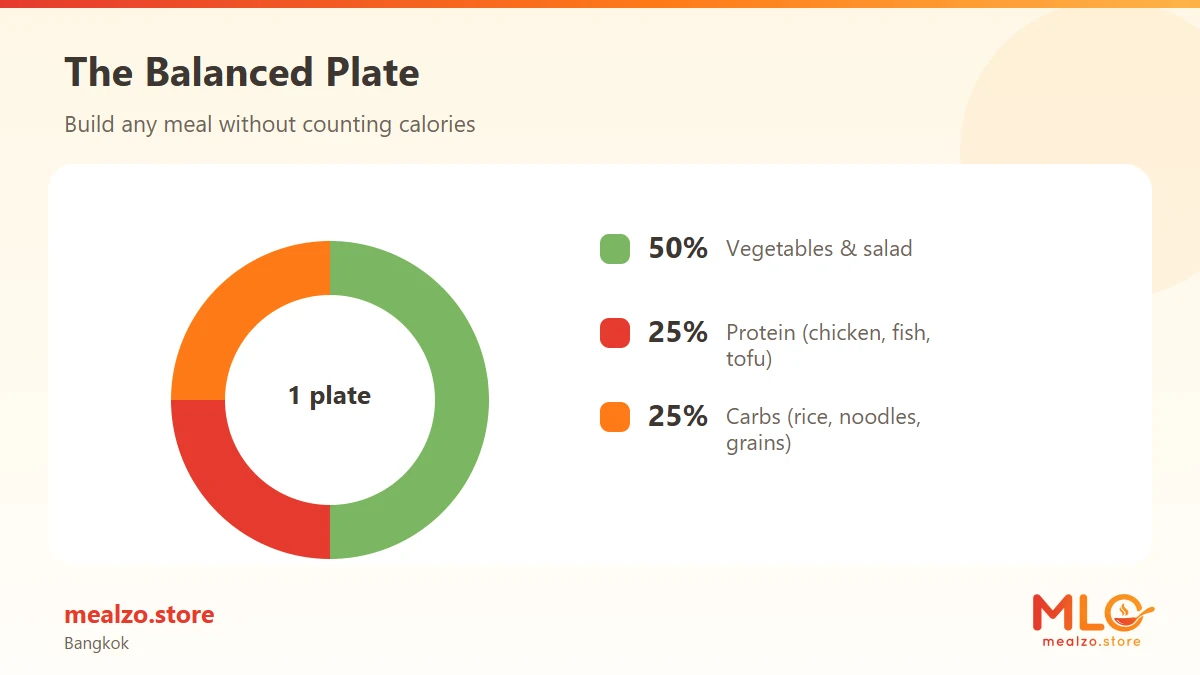
This is a practical visual guide, not a rigid rule for every person. Someone with higher energy needs or a physically demanding day may reasonably want more rice.
The challenge is often not the sticky rice alone. It is the combination of sticky rice, noodles, sweet drinks and fried accompaniments within the same meal.
Key takeaway: Sticky rice is both filling and easy to eat repeatedly by hand, so choosing a portion deliberately is more useful than treating it as either forbidden or unlimited.
Practical Changes When Ordering Northern Food
| What you can ask for | What changes | When it suits |
|---|---|---|
| A smaller sticky rice basket | Reduces the initial rice portion | When several dishes already contain noodles or starch |
| Extra fresh or steamed vegetables | Adds fibre and volume | With nam prik or rich meat dishes |
| Khaep moo on the side | Makes the crackling portion easier to control | When sharing dips |
| Less crispy noodle topping | Reduces some fried starch and oil | With khao soi |
| A broth-based curry | Usually avoids coconut richness | When wanting a less fatty main dish |
| Less chilli where possible | Changes perceived heat | For people who prefer milder food |
| Sauce or dip served separately | Gives more control over quantity | When managing strongly seasoned additions |
Requests depend on how the restaurant prepares its food. A pre-cooked curry or ready-made chilli dip may not be adjustable.
9. Gai Yang, Grilled Meat and Choosing the Main Protein
Although gai yang, or grilled chicken, is not exclusively northern Thai, grilled items can appear alongside Lanna dishes on Bangkok menus.
Grilling provides a different eating experience from a sausage or slow-cooked fatty pork curry. Chicken with skin removed after cooking may contain less fat than sausage or pork belly, although the cut and preparation still matter.
Marinades can include sugar, salt, fish sauce and other seasonings. Charcoal grilling does not make these ingredients disappear.
The most useful comparison is therefore between complete dishes, not labels such as grilled, steamed or traditional.
Grilled chicken with vegetables and a moderate sticky rice portion can be a relatively straightforward meal. Add a large serving of crackling, extra sausage and several dipping sauces, and the overall balance changes.
Likewise, grilled pork may be lean or fatty depending on the cut.
There is no need to make every meal as lean as possible. Choosing a richer main course and keeping the sides simpler is a reasonable alternative to ordering several rich components at once.
10. Drinks, Sweet Extras and Where Carbohydrates Hide
Northern Thai dishes often bring attention to fat and salt, but carbohydrates can accumulate less obviously.
Khao soi contains noodles in the soup and fried noodles on top. Nam ngiao contains rice noodles. Sticky rice may be added separately, even when the main dish already provides a substantial starch portion.
Some marinades, dipping sauces and bottled condiments contain added sugar. The quantity varies, and northern food is not uniformly sweet, but seasonings still deserve consideration.
Sweet iced tea, flavoured drinks or desserts can add another source of sugar to a meal that already contains rice or noodles.
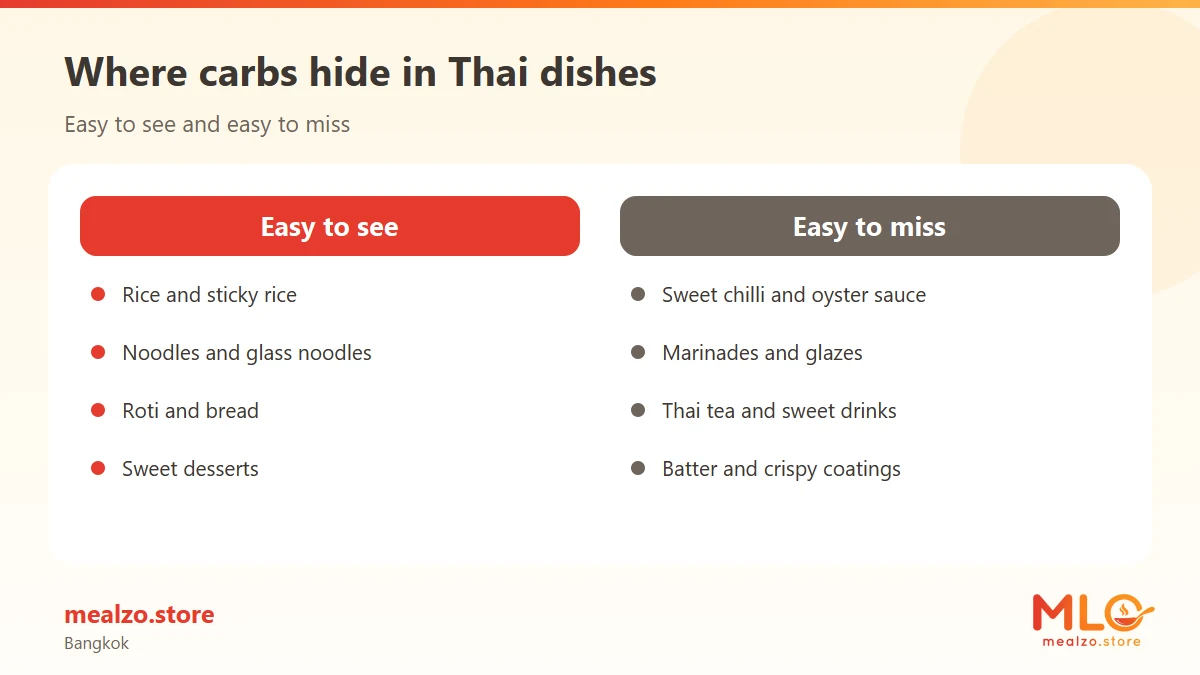
The same applies to drinks that seem light because they are served cold or have a tea base. The amount of added syrup, condensed milk or sugar matters more than the drink's name.
Oil is another less visible ingredient. Fried noodles, pork crackling and cooking oil in curries add fat without necessarily increasing the visible size of the portion very much.
Salt may come from fish sauce, fermented ingredients, curry pastes, sausage seasonings and dips.
A few simple habits help:
- Choose an unsweetened drink when the meal already contains several starches.
- Taste the food before adding extra sauce or seasoning.
- Treat fried toppings as part of the meal rather than free extras.
- Consider whether dessert is something you genuinely want after a rich main course.
These decisions are flexible. A sweet drink or dessert is not inherently a mistake. The point is understanding what it adds.
11. Eating Northern Thai Food Safely and Making Meal Planning Work
Bangkok's heat makes basic food handling worth considering, particularly at open-air stalls and markets.
Busy places with fast turnover are often sensible choices because cooked dishes are less likely to sit for long periods. Look for food served hot, ingredients handled cleanly and prepared items protected from insects and unnecessary exposure to heat.
Allergens and ingredients can be difficult to verify at a counter, particularly shrimp paste, fish sauce, pork blood in some dishes and fried items cooked in shared oil.
Anyone with a serious food allergy should not rely on a dish name or visual appearance to determine suitability.
Food preferences are another matter. You can ask whether a dish contains pork, request less chilli or choose vegetables over crackling. Not every preparation can be modified, especially when ingredients are already mixed into the paste or broth.
Where Mealzo Bangkok Fits Into Everyday Eating
Eating northern Thai food at a restaurant and using a structured meal plan are not competing choices.
For someone living in Bangkok, a khao soi lunch or a weekend Lanna meal can be an enjoyable part of the week. The difficulty comes when every busy workday ends with whatever rich takeaway is easiest to order.
Mealzo Bangkok operates from a kitchen in Bang Na, where meals are cooked fresh daily and delivered across Bangkok.
Customers choose one of two delivery windows, 06:00-09:00 in the morning or 17:00-20:00 in the evening.
The service offers 12 meal plans: Balanced, Weight Loss, High Protein, Vegetarian, Vegan, Keto, Low-Carb, Gluten Free, Easy-to-Digest, Pescatarian, No Fish & Seafood, and Dairy & Egg Free. There are six daily calorie levels ranging from 1200 to 2500 kcal, with three or five meals per day and packages of 3, 7, 14 or 30 days.
Every plan uses one mixed cuisine, combining Thai and international dishes in the same plan rather than offering separate cuisine selections.
Customers declare allergens from nine allergen groups. Dishes containing a declared allergen are not assigned to that customer. This describes the assignment mechanism, not a guarantee that any meal is allergen-free.
The app also includes a calorie calculator based on the Mifflin-St Jeor formula. Its result is an estimate, not individual medical advice.
The website and mobile app support Thai, English, Polish, German, French, Russian, Simplified Chinese and Burmese. An Android app is available through Google Play, and enquiries can be sent to the public contact email listed on the service.
For available packages and meal configurations, see Mealzo Bangkok meal plans and delivery options.
The practical benefit of planning is predictability. Having meals arranged for ordinary days can reduce the occasions when a very rich restaurant dish becomes the only convenient choice.
It does not mean abandoning local food. A planned weekday meal and a proper northern Thai dinner can sit comfortably within the same routine.
Key takeaway: Meal planning does not need to replace northern Thai restaurant meals; it can make everyday eating more predictable while leaving room for traditional dishes.
FAQ
Is northern Thai food generally lighter than central Thai food?
Some northern dishes are less rich because they use broth, herbs and vegetables instead of coconut milk. However, pork sausages, crackling, fatty curries and generous sticky rice portions can make a meal substantial. The ingredients and serving sizes matter more than the region.
Is khao soi a heavy meal?
Khao soi is commonly rich because it combines coconut curry broth, soft egg noodles and fried crispy noodles. Meat and additional toppings affect the overall composition. You can adjust the amount of crispy topping and broth you consume, but its traditional richness is part of the dish.
Which northern Thai dishes are good choices when I want something lighter?
Kaeng khae, khanom jeen nam ngiao and vegetable platters with nam prik noom are useful options to consider. Their composition varies by restaurant, and sauces or broth may still be salty. Portions of rice, noodles and fatty accompaniments also affect the complete meal.
Can I eat sticky rice regularly as part of a balanced diet?
Sticky rice can fit into a varied diet. It provides carbohydrates and contributes to a satisfying meal. Portion size matters, especially when the meal also contains noodles or several starch-rich dishes. Individual energy requirements differ, so there is no single correct portion for everyone.
How can I enjoy northern Thai restaurants while following a meal plan in Bangkok?
Treat restaurant meals as part of your overall eating pattern rather than something to avoid. Choose the traditional dishes you genuinely enjoy, pay attention to rich extras and use planned meals when regularity is helpful. Mealzo Bangkok offers structured meal packages, but it does not need to replace the experience of eating Lanna food at a Bangkok restaurant.
Mealzo Bangkok is a kitchen and meal delivery service operating exclusively in Bangkok, Thailand. We are not affiliated with similarly named services outside Thailand.
Find a Meal Plan That Fits
Compare Mealzo plans or use the calculator to explore meal options for your needs.