Southern Thai Food in Bangkok: Khua Kling, Kaeng Tai Pla and Khao Yam in Balance
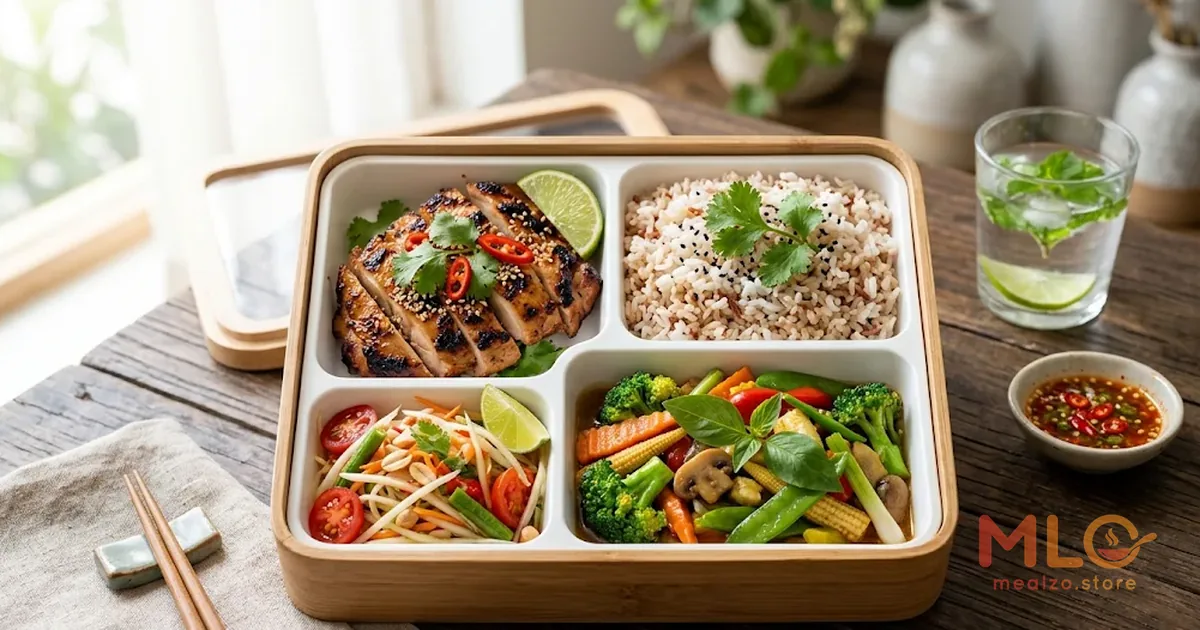
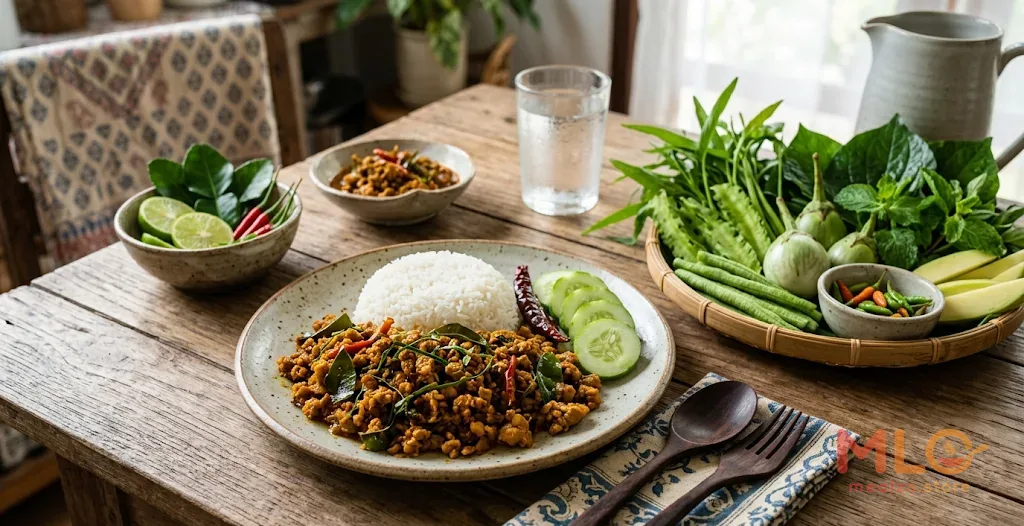
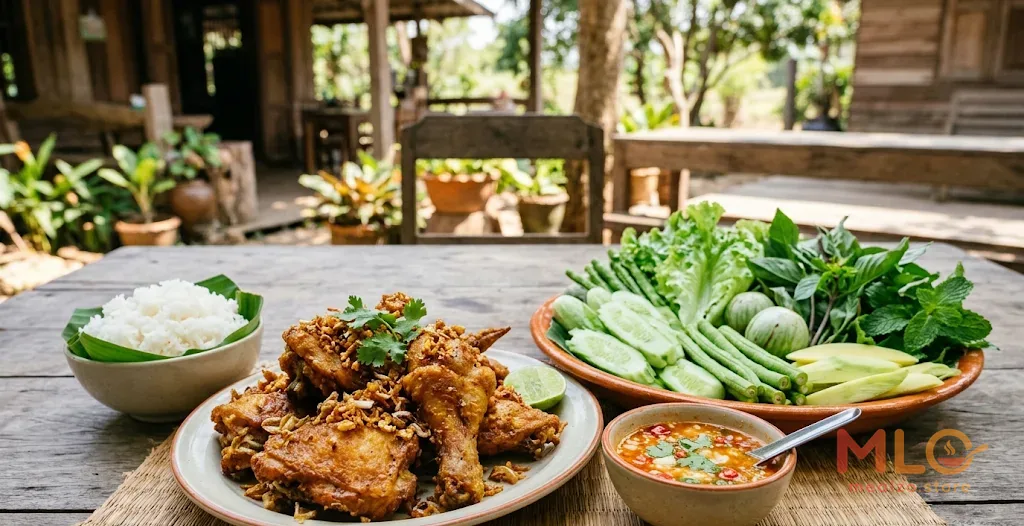
A spoonful of khua kling can flavour a surprising amount of rice. Beside it, sour yellow fish curry brings a sharp contrast, while a platter of fresh vegetables offers crunch between hot mouthfuls. This is a southern Thai meal working as a whole.
The intensity is deliberate. Chilli, turmeric, fermented fish and shrimp paste belong to a regional flavour tradition, and their strength is part of the pleasure.
Heat tells you little about richness, though. A fierce broth can contain less fat than a mild coconut curry. Dry minced meat may carry more fat and concentrated seasoning than its small serving suggests.
For anyone eating southern Thai food regularly in Bangkok, the useful questions are practical: how was it cooked, what comes alongside it, and how much makes a satisfying meal?
1. Read the whole southern Thai table
Southern Thai, or pak tai, cooking has many local accents. Seafood, sour ingredients, turmeric and fermented seasonings appear alongside dishes shaped by Muslim and Thai-Chinese cooking traditions. A menu can move from fiery fish curry to gently spiced braised pork.
The southern Thai food Bangkok residents eat at a curry counter is one expression of that variety. Choosing several dishes over rice follows the same practical rhythm explained in our guide to ordering at Bangkok rice-and-curry shops.
The comparisons below describe typical ingredients and cooking methods. Recipes and serving sizes vary too much to turn dish names into reliable calorie rankings.
| Dish | What is usually in it | What makes it lighter or heavier | A simple ordering approach |
|---|---|---|---|
| Khua kling | Minced meat and concentrated curry paste | Meat fat and any added oil | Take a smaller helping with vegetables |
| Kaeng som | Fish, vegetables and sour turmeric broth | Usually less fat than coconut curry | Include fish and vegetables |
| Gai tod kamin | Chicken fried with turmeric seasoning | Frying oil, skin and any coating | Pair with fresh vegetables |
| Pad sator with shrimp | Stink beans, shrimp and often shrimp paste | Cooking oil and salty seasoning | Request less oil if cooked to order |
| Khao yam | Rice, herbs, vegetables, coconut and dressing | Rice quantity, toppings and dressing | Add dressing gradually where possible |
| Massaman with roti | Coconut curry, meat, potatoes, often peanuts, and flatbread | Coconut fat, cooking fat and combined starches | Portion the curry and bread together |
2. Khua kling: dry curry, concentrated flavour
Khua kling is minced or finely chopped meat cooked with a fragrant curry paste until little liquid remains. Turmeric, chilli and aromatic herbs run through the meat rather than floating in a sauce.
That dry texture can be misleading. Fat from the meat remains in the dish, and some cooks add oil while others rely on the meat's own fat. With little liquid to spread them out, fat, salt and chilli arrive in concentrated mouthfuls. A leaner version and a fatty pork version are different meals despite sharing a name.
Try a modest spoonful with rice and vegetables before ordering another meat dish. At a counter, ask for a smaller serving if that suits your appetite; the cook cannot remove seasoning already mixed through the tray.
Requesting less chilli is normal when food can be adjusted. Tolerance varies, and there is no reason to force yourself through discomfort. This is food-ordering guidance, not medical advice.
Salt also comes from paste and sauces, not just the shaker. Our guide to salt and sodium in Thai food explains how those layers accumulate.
Key takeaway: Chilli heat does not tell you how much fat, salt or sugar a dish contains.
3. Kaeng som and the appeal of sour broth
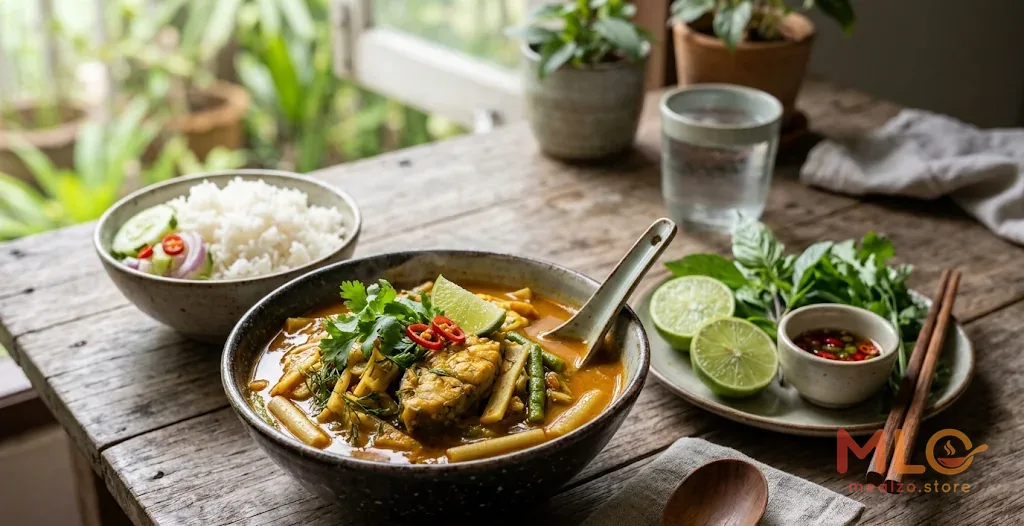
Southern kaeng som is commonly a yellow, turmeric-coloured sour curry with fish and vegetables. In Bangkok, you may also see it described as kaeng lueang. Its sourness and chilli can be forceful even when the broth looks thin.
Because it is usually made without coconut milk, it is often lighter in fat than a coconut curry. The fish used, the recipe and the portion still matter. A large bowl is not automatically a light meal simply because you can see through the broth.
Nor does sourness mean low sodium. Shrimp paste, salt and other seasonings may still be present. Taking fish and vegetables with some broth gives you the dish's flavour without automatically pouring every spoonful over your rice.
At a shared dinner, kaeng som can sit comfortably beside one richer dish. Ordering it alongside fried chicken gives a different overall meal from ordering chicken, a rich curry and fried seafood together.
4. Coconut curries, massaman, roti and moo hong
Coconut milk gives a curry body and carries its aromatic flavours. It also contributes fat. A creamy sauce can therefore be rich even when the chilli level feels gentle.
Massaman commonly brings together coconut milk, meat, potatoes and peanuts with warm spices. The potatoes contribute starch, while the meat cut, coconut milk and nuts affect richness. Our guide to coconut curries and massaman in Bangkok looks more closely at those differences.
Roti adds another layer. It is a flour-based flatbread usually cooked with fat, so dipping it into massaman adds both bread and curry sauce to the meal. Rice and roti can both fit, but their portions belong in the same decision. Sharing bread makes sense when everyone already has rice.
Moo hong reaches richness by another route. This southern braised pork dish, strongly associated with Phuket, commonly uses pork belly with soy-based seasoning and sweetness. Slow cooking softens the meat; it does not remove the belly's fat.
A smaller shared portion of moo hong with vegetables and rice can be satisfying. Its relatively gentle chilli level should not be mistaken for a low-fat preparation.
5. Gai tod kamin and other fried dishes
Gai tod kamin, turmeric fried chicken, has the fragrance and colour of turmeric alongside the appeal of crisp skin or coating. Frying adds oil, and the amount eaten depends partly on the cut and how much skin or crust is on the plate.
The same applies to turmeric fried fish and other fried seafood. Fish is not automatically a lighter choice once cooking oil and a generous coating enter the picture.
If fried chicken is what you came for, let it be the main rich item. Add the vegetable platter and enough rice to make a proper meal. A second fried side may add less variety than a sour curry or plain vegetables would.
Keeping sweet dipping sauce separate also lets you decide how much you want. It does not change the oil already in the chicken.
Key takeaway: Fresh vegetables add fibre and volume beside fried food, but they do not remove its oil.
6. Kaeng tai pla, pad sator and fermented flavours
Kaeng tai pla gets its name and character from fermented fish viscera. Fish, vegetables and a powerful curry paste may join that base. Its deep savoury flavour, aroma and heat are intentional, and a small amount can season several mouthfuls of rice.
It is often made without coconut milk, yet that says little about its salt content. Treat a strongly seasoned serving as something to eat alongside other foods, with the amount of broth you actually enjoy.
Pad sator with shrimp brings a different pungency. The beans have their own unmistakable smell and bite; shrimp paste, chilli and garlic often deepen the flavour. Shrimp supplies protein, but the beans do not make the dish equivalent to a plain vegetable side. Cooking oil and sauce still count.
Nam budu is another southern fermented fish preparation, used in dips and in dressings for dishes such as khao yam. Prepared versions can combine saltiness with sweetness.
For other fish and seafood dishes, ask about the preparation. Steamed or grilled fish with sauce served separately gives more control over added sauce than fish already coated in a rich dressing. Marinades and cooking seasonings may still be present.
7. Give the vegetable and herb platter a proper place
The accompanying vegetables and herbs, phak neam, are part of how the meal comes together. In southern usage, the accompaniment is also known as phak no. A platter might contain cucumber, long beans, small eggplants and leafy shoots, depending on the kitchen and season.
These bring fresh textures, fibre and volume. Some leaves are bitter or aromatic, adding another flavour rather than simply filling empty space on the plate.
Nam prik and related southern dips give the vegetables a salty, spicy accompaniment. A vegetable platter covered in dip contains more seasoning than the vegetables alone. The guide to nam prik and Thai dipping sauces explains why the amount of dip matters.
A few useful habits:
- Put some vegetables on your own plate when the main dishes arrive.
- Try unfamiliar leaves in small amounts so you can find the textures you enjoy.
- Dip individual bites instead of pouring the whole bowl over the platter.
- Ask for plainly cooked vegetables if raw ones do not suit you.
Vegetables broaden the meal, but they cannot cancel the salt in curry or the fat in pork belly.
8. Khao yam, rice portions and a balanced plate
Khao yam looks different from a plate of curry rice: cooked rice surrounded by finely sliced herbs, vegetables and other toppings, ready to be mixed. Toasted coconut, dried seafood and a prepared nam budu dressing can all contribute to the finished dish.
The herbs give it fragrance and texture, but the word salad does not establish its calorie content. A large rice mound, generous coconut topping and sweetened dressing create a different plate from a smaller rice portion with plenty of vegetables.
Ask for dressing separately when the dish is assembled to order. Mix in enough to bring the ingredients together, taste, then decide whether it needs more. If the seafood is only a scattering of dried topping, do not assume the plate contains a substantial protein portion.
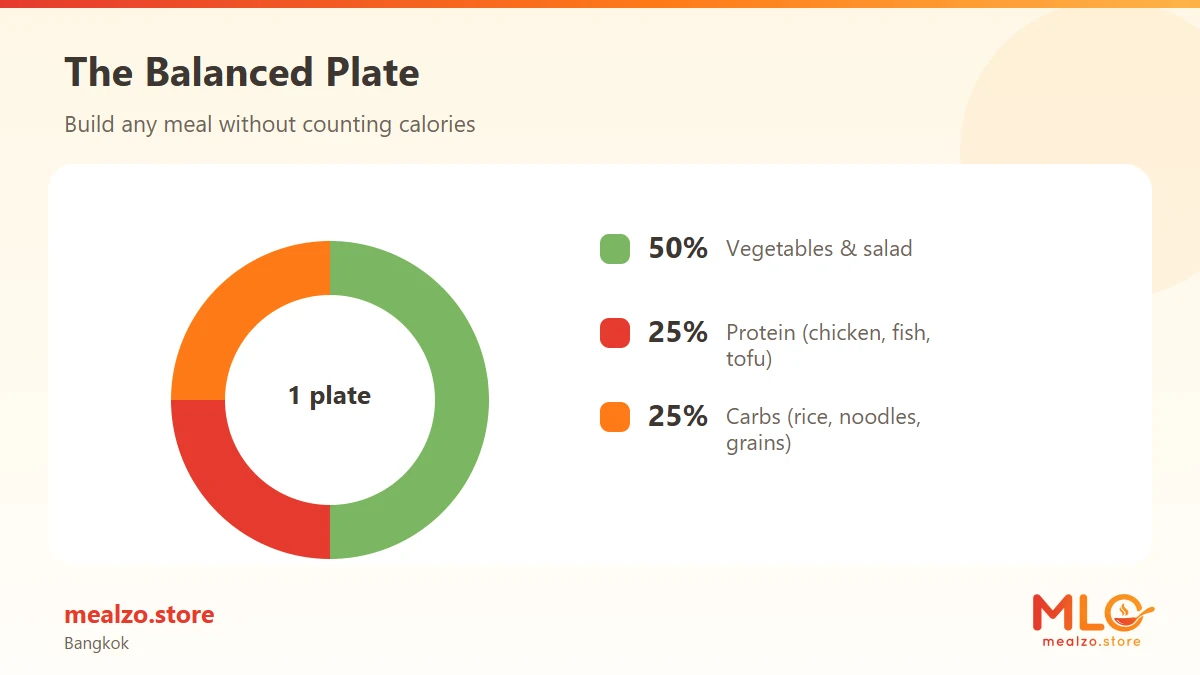
Rice deserves the same attention beside curry. Salty, pungent mouthfuls can encourage repeated spoonfuls of plain rice, sometimes beyond what you initially intended. Rice also supplies energy and helps make the meal filling. Cutting it automatically can leave lunch unsatisfying.
Start with an amount that suits your hunger and the rest of the meal. A more active day may call for more. Our guide to choosing rice portions in Bangkok explores that decision without treating every bowl alike.
| What you can ask for | What changes | When it suits |
|---|---|---|
| Dressing or dipping sauce separately | You control the added amount | Khao yam or seafood assembled to order |
| Less oil | The cook may reduce cooking fat | A stir-fry made fresh for you |
| Less chilli | The cook may reduce added heat | Dishes without a fixed spicy base |
| A smaller curry serving | Less of the already-seasoned dish | A prepared curry counter |
| Extra plain vegetables | More volume and fibre | A meal dominated by meat or fried items |
Requests have limits. A vendor serving from a finished pot cannot make its paste unsalted or remove its chilli. Choosing another dish is sometimes the useful adjustment.
Key takeaway: Choose rice with your appetite and the whole meal in mind, including any roti, potatoes or rice already in khao yam.
9. Sauces, sweet drinks and the extras around the meal
Southern food may taste predominantly hot, sour or salty while still containing added sugar. Prepared budu dressing, braising sauces and sweet chilli dips can bring sweetness that becomes less obvious among stronger flavours.
Carbohydrate also comes from familiar starches: rice, roti, potatoes and flour coatings. Oil contributes fat, while salt contributes sodium. They are separate parts of the meal, even when all appear in the same sauce or fried dish.
A sweet iced tea or coffee adds another source of sugar, particularly when made with sweetened milk or syrup. Asking for less sweetness can help where the drink is mixed individually; a premixed base may offer less flexibility. Water or unsweetened tea keeps that choice straightforward.
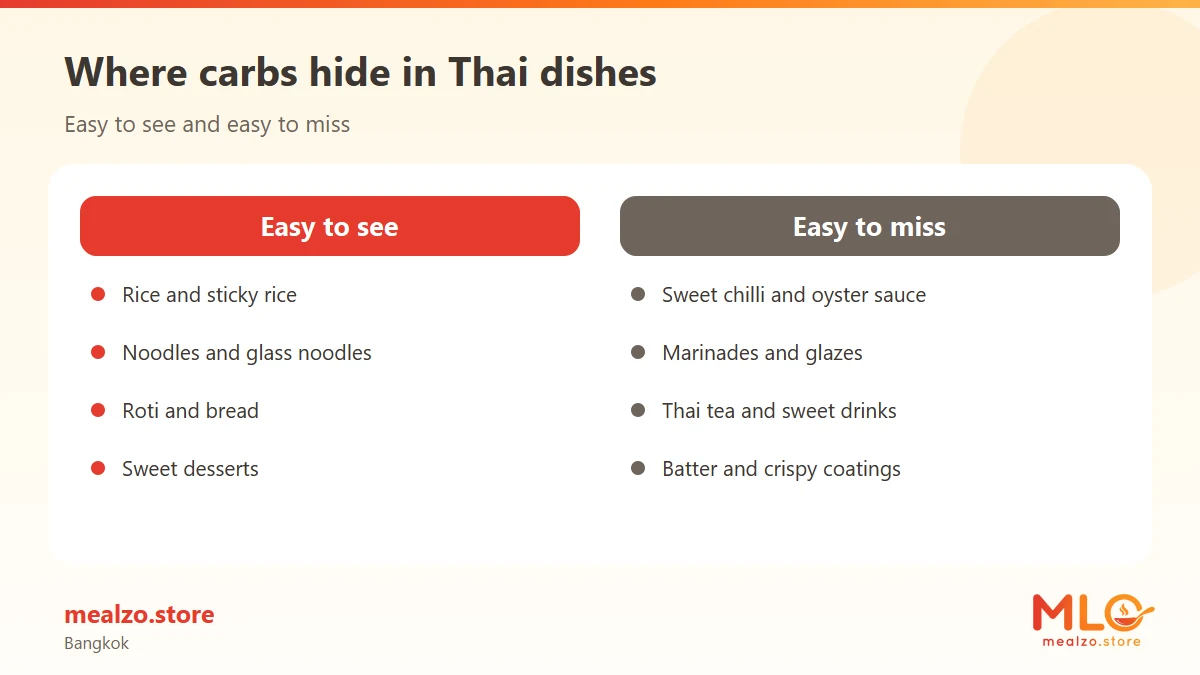
If you want a sweet roti or dessert after dinner, allow for it when choosing the meal. You do not need a rule against sweet extras. It helps to notice when sweet sauce, a sweet drink and dessert have all arrived through separate decisions.
10. Food safety and allergens at the counter
In Bangkok's heat, a busy restaurant with fast turnover is a sensible starting point. It suggests food may spend less time waiting, but a queue cannot tell you whether everything has been held safely.
Look at what you can actually observe:
- Freshly cooked dishes arriving hot, with hot food kept hot during service.
- Covered ingredients and vegetables protected from handling and insects.
- Separate utensils for raw ingredients and ready-to-eat food.
- Perishable ingredients kept chilled until needed.
Eat takeaway meals promptly, and refrigerate food you are keeping for later. Chilli, sourness and fermentation do not make a finished meal safe to leave warm indefinitely.
Fish-based pastes, shrimp paste and nuts can be difficult to identify or verify at a busy counter.
If you have an allergy, ask specifically about curry paste, dressing, garnish and shared equipment. A server removing visible shrimp cannot remove shrimp paste already in the sauce. If the ingredients or preparation cannot be confirmed, choose somewhere that can answer the question.
11. Where a planned meal fits between dinners out
A southern Thai dinner can remain something to look forward to. Having another meal planned simply reduces the days when a heavy, salty dish becomes the only convenient option.
Mealzo Bangkok cooks meals fresh daily in its kitchen in Bang Na, Bangkok, and delivers across Bangkok. Customers choose one delivery window: morning 06:00-09:00 or evening 17:00-20:00.
Every plan uses one mixed cuisine, with Thai and international dishes together in the same plan. There are 12 meal plans, six daily calorie levels from 1200 to 2500 kcal, three or five meals per day, and package lengths of 3, 7, 14 or 30 days.
For allergen handling, customers declare allergens from nine groups, and dishes containing a declared allergen are not assigned to them. This describes the assignment mechanism; it does not guarantee an allergen-free meal.
You can explore Mealzo Bangkok meal plans with your usual eating routine in mind, including the meals you expect to eat out. Account for how many meals each day you will actually use.
A planned lunch does not erase a salty dinner, and there is no need to treat eating out as something to compensate for. It gives you another deliberate choice during the week.
FAQ
Is southern Thai food always heavy?
No. Cooking method, ingredients and portion matter more than regional identity. Sour fish curry is usually lighter in fat than coconut curry or fried chicken, while a small serving of rich food can fit alongside rice and vegetables. Chilli heat alone tells you very little.
Can khua kling be a lighter choice?
It can be, depending on the meat, added oil and serving size. Dryness does not mean fat-free. A modest helping with rice and vegetables makes a different meal from a large mound of fatty mince accompanied by several fried sides.
Is khao yam suitable for vegetarians?
Do not assume so. Nam budu dressing is fish-based, and toppings may include dried shrimp or fish. Ask about the dressing and every topping. A version specifically prepared with suitable ingredients may work, but removing visible seafood is not enough.
How can I order less spicy food at a southern restaurant?
Ask whether the dish is made to order and whether its paste is already spicy. Less added chilli may be possible, but prepared curries cannot be made mild after cooking. Choosing a naturally gentler dish is a reasonable option when the kitchen cannot adjust it.
Can I use a meal plan and still eat southern Thai dinners?
Yes. A meal plan can fit into a routine that includes eating out. When comparing packages, account for the three or five meals supplied per day so you choose an amount you expect to use. Mealzo Bangkok offers morning and evening delivery windows, with Thai and international dishes combined in each plan.
Mealzo Bangkok is a kitchen and meal delivery service operating exclusively in Bangkok, Thailand. We are not affiliated with similarly named services outside Thailand.
Find a Meal Plan That Fits
Compare Mealzo plans or use the calculator to explore meal options for your needs.