Dim Sum in Bangkok: Salapao, Khanom Jeeb and a Balanced Day
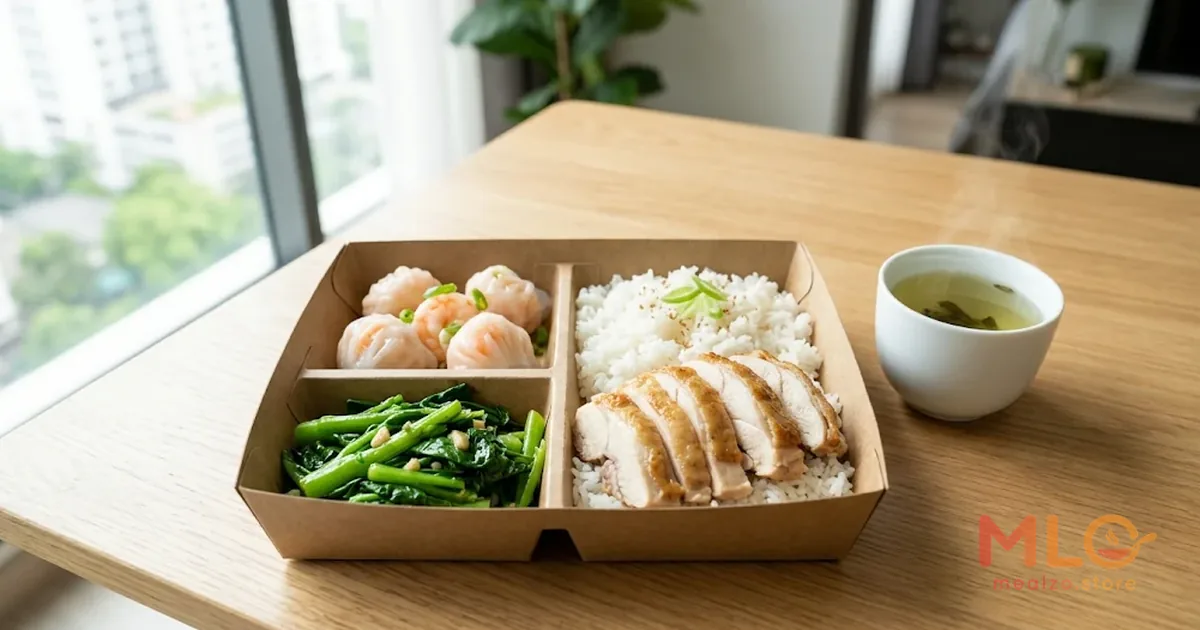
Dim sum in Bangkok can mean a slow Sunday morning in Chinatown, a few bamboo baskets shared over Chinese tea, or a hot salapao bought on the way to work. The setting changes, but the appeal is similar: small portions, familiar fillings and the freedom to try several dishes without committing to one large plate.
The difficulty is knowing how much you have eaten. Three baskets of dumplings look modest. Add two steamed buns, a plate of fried wontons, sweet dipping sauce and iced milk tea, and breakfast becomes considerably more substantial than it first appeared.
For people searching for dim sum Bangkok offers everything from traditional Chinese-Thai shops around Yaowarat to neighbourhood breakfast counters and convenience stores selling reheated buns. The food is not automatically light because it is steamed, nor automatically excessive because it contains pork or refined flour. The ingredients, portions and accompaniments matter more than the bamboo basket.
This guide explains what goes into Bangkok's common dim sum dishes, where the extra fat, starch, sugar and salt come from, and how to enjoy a proper dim sum breakfast without treating the rest of the day as a nutritional accounting exercise.
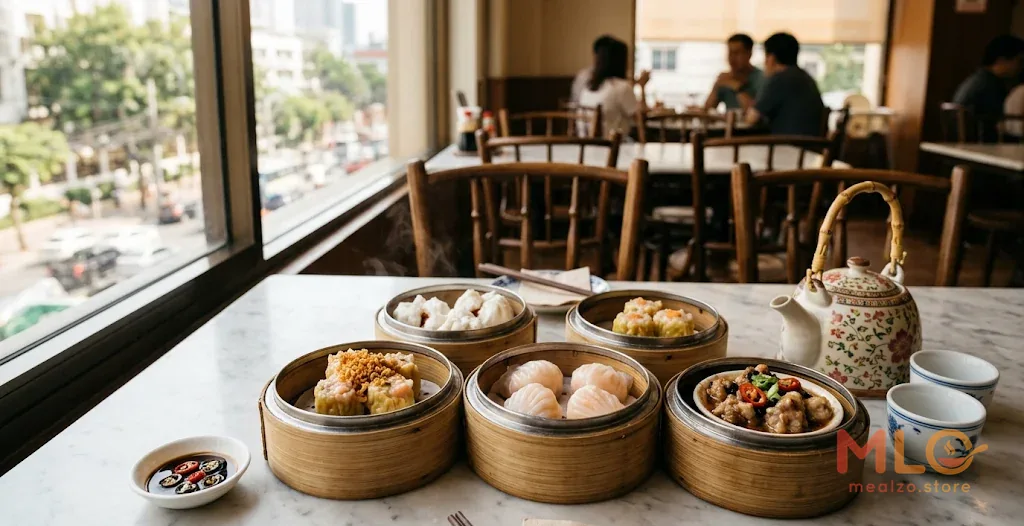
1. What Dim Sum Looks Like in Bangkok
Dim sum has Chinese roots, but Bangkok has developed its own everyday versions. Around Yaowarat in Chinatown, traditional Chinese-Thai restaurants may serve steamed dumplings, pork ribs, chicken feet and tea alongside other breakfast dishes. Elsewhere, small neighbourhood shops offer trays of ready-prepared dumplings that are steamed when ordered.
There is also the Thai street-food version of dim sum: khanom jeeb sold from a cart, salapao kept warm in a steamer, or a few dumplings bought as a snack rather than a sit-down meal.
These experiences overlap, but they are not identical. A restaurant serving delicate har gow in bamboo baskets may have a different portion size and price structure from a local shop selling khanom jeeb individually.
Bangkok's Chinese-Thai food culture extends well beyond dim sum. Roast duck, red pork, braised pork leg and chicken rice belong to the same broad culinary landscape, although their cooking methods and meal structures differ. For more context, see Chinese-Thai dishes commonly eaten around Bangkok.
Dim sum is particularly convenient for breakfast and brunch because it can be shared. One person orders shrimp dumplings, another wants pork buns, and someone else adds chicken feet or spare ribs.
The result is a table full of small dishes. That variety is enjoyable, but it also makes portion sizes less obvious than ordering one plate of rice with a clearly defined main dish.
2. How Bamboo Baskets, Pieces and Pricing Work
At many Bangkok dim sum shops, dishes are priced by the basket or by the individual piece. A basket might contain two, three or more dumplings, depending on the restaurant and the item. Some shops display prepared dishes and steam your selections; others use an ordering sheet or menu.
The first practical question is not simply how many baskets to order. It is how many pieces those baskets contain.
Four baskets with three dumplings each means twelve dumplings, before adding buns, fried snacks, congee or drinks. Because individual pieces are small, it is easy to keep ordering while talking, especially when several people are sharing.
A sensible pattern for a casual breakfast is to:
- Check the number of pieces in each basket before ordering.
- Start with a small selection that includes a protein-rich filling.
- Decide whether a bun, congee or rice noodle rolls will be the main starch.
- Share richer fillings and fried items instead of ordering one portion of everything per person.
- Order more only after eating the first selection.
These are flexible habits, not universal serving limits. Someone who needs a larger breakfast may reasonably eat more than someone buying a quick snack before work.
| Ordering option | What you can choose | What changes | When it suits |
|---|---|---|---|
| Individual pieces | A specific number of dumplings | More direct portion control | Quick breakfast or snack |
| Steamed baskets | Several pieces of one dish | Easy sharing, less obvious total | Sit-down dim sum brunch |
| Mixed selection | Shrimp, pork, buns and vegetables if offered | Broader variety of ingredients | Breakfast with friends |
| Dumplings with congee | A smaller dim sum order plus rice porridge | More starch and a different meal texture | Traditional breakfast |
| Bun with an extra protein item | One salapao plus dumplings or egg | More protein than a bun alone may provide | Breakfast on the move |
Key takeaway: Count the pieces and buns you intend to eat, not just the number of baskets on the table.
3. Steamed Versus Fried: What Actually Changes
Steaming is one reason dim sum can fit comfortably into a balanced day. The cooking process uses water vapour rather than immersing food in oil, so it generally adds little fat during cooking.
But steaming does not remove the fat already present in a filling.
A steamed dumpling made with fatty minced pork can contain more fat than a shrimp dumpling made with a relatively lean filling. A steamed bun containing sausage or salted egg custard can also be rich despite never touching a frying pan.
Fried dim sum changes the calculation. Spring rolls, fried wontons and taro puffs absorb some cooking oil. How much depends on the food's surface, batter or wrapper, frying conditions and preparation.
Here is a practical comparison of familiar dishes.
| Common dim sum item | Cooking method | Main filling or ingredient | Generally lighter or heavier | Simple way to use it |
|---|---|---|---|---|
| Khanom jeeb | Steamed | Pork or shrimp | Varies with pork fat | Pair with vegetables |
| Har gow | Steamed | Shrimp, starch wrapper | Often lighter in fat than fried items | Choose as a protein-containing item |
| Salapao moo daeng | Steamed | Sweet red roast pork, wheat bun | Starch-heavy, filling varies | Treat one bun as a main starch |
| Sausage salapao | Steamed | Sausage and bun dough | Can be richer and saltier | Pair with a vegetable dish if available |
| Salted egg custard bun | Steamed | Egg yolk, sugar and fat | Rich, sweet filling | Share as a dessert-style item |
| Chicken feet | Steamed or braised then steamed | Skin, connective tissue, sauce | Depends on preparation | Count as an additional dish |
| Spare ribs in black bean sauce | Steamed | Pork ribs, black beans | Often relatively fatty and salty | Share a small basket |
| Cheung fun | Steamed | Rice noodle sheet, sometimes meat or shrimp | Starch-heavy, sauce-dependent | Avoid automatically adding another large starch |
| Spring rolls | Deep-fried | Vegetables, meat or mixed filling | More added oil | Share alongside steamed dishes |
| Taro puffs | Deep-fried | Taro-based filling and pastry | Often rich in oil and starch | Treat as an occasional extra |
Fried food is not automatically unsuitable for breakfast. A few shared spring rolls can be part of an otherwise varied meal. The issue is cumulative: fried wontons, taro puffs and a fried side dish together add substantially more cooking oil than a mainly steamed order.
For a closer explanation of frying and oil absorption in local dishes, read how frying oil changes the food we eat in Bangkok.
4. Inside the Dumpling: Shrimp, Pork, Sausage and Salted Egg
The word "dumpling" tells you surprisingly little about the nutritional composition of a dish.
Khanom jeeb, the Thai-style relative of Chinese shumai, is commonly filled with pork, shrimp or a combination of both. The open-topped dumplings are often finished with fried garlic and served with a sweet, dark soy-based dipping sauce.
The pork mixture may contain lean meat, fatty pork or added fat for texture. Two khanom jeeb that look nearly identical can therefore differ in their fat content.
Har gow uses a translucent wrapper made from starches, traditionally including wheat starch and tapioca starch, surrounding shrimp. It provides some protein from the shrimp, but the wrapper still contributes carbohydrates.
Chicken feet are valued for their soft skin and gelatinous connective tissue. Their protein composition differs from that of a substantial serving of lean muscle meat, so they are not a direct nutritional substitute for a lean meat dish.
Steamed spare ribs in black bean sauce bring another combination: pork fat, protein and a strongly seasoned sauce. Depending on the restaurant, the marinade may include soy sauce, fermented black beans, sugar and other seasonings.
Sausage fillings add another consideration. Processed sausages can contain considerable sodium and fat, although recipes vary.
Salted egg custard deserves its own category. A lava-style filling typically combines salted egg yolk with sweet and fatty ingredients to produce its flowing texture. The bun is steamed, but the filling makes it closer to a rich sweet snack than a lean protein dish.
The useful distinction is between cooking method and composition. Choose both deliberately.
5. Salapao: Savoury Breakfast or Sweet Treat?
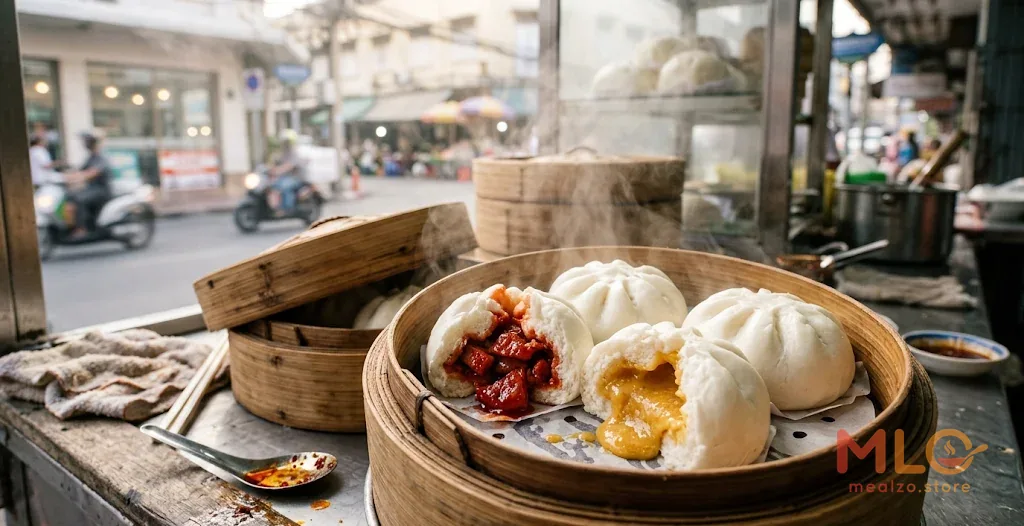
Salapao are among Bangkok's most convenient Chinese-Thai snacks. The soft white dough is filling, easy to carry and widely sold without the need for a full restaurant meal.
The common varieties include:
- Salapao moo daeng: steamed bun filled with red roast pork in a typically sweet, savoury sauce.
- Salapao sai krok: a bun with sausage, sometimes accompanied by other seasonings.
- Salapao khai kem or salted egg lava: a sweet, rich filling built around salted egg yolk.
- Custard salapao: a sweet egg-based custard filling, which is not necessarily the same as salted egg lava.
- Sweet bean salapao: a bean paste filling, commonly sweetened.
- Taro salapao: a mildly earthy taro filling, frequently prepared as a sweet paste.
The important point is that a bun contains two nutritional components: the dough and the filling.
The dough supplies much of the carbohydrate. A meat filling may contribute protein, but the quantity of meat is often modest relative to the bun's size. Sweet bean, custard and taro fillings generally add more carbohydrate and sugar.
Even moo daeng, which sounds like a straightforward meat filling, commonly contains sugar in its roast pork sauce.
One savoury bun can be a practical breakfast when time is limited. Two or three large buns, especially sweet varieties, create a very different meal.
For someone who buys salapao regularly on the way to work, alternating between a bun-only breakfast and one with a separate protein source can introduce more variety without abandoning a familiar routine.
6. The Refined Starch Behind Buns, Wrappers and Rice Rolls
Dim sum is often described primarily in terms of its fillings. Yet much of what is visible on the table is flour or starch.
Salapao dough is usually made from refined wheat flour. Har gow wrappers commonly rely on refined starches. Khanom jeeb wrappers generally contain wheat flour, while cheung fun is made from a thin rice-based batter that becomes soft and slippery when steamed.
These ingredients provide carbohydrate, but relatively little fibre compared with whole grains, legumes and vegetables.
That does not make refined starch inherently bad. It does mean that a breakfast built around several buns, rice rolls and congee may have a large carbohydrate component without providing much fibre or protein.
Congee is another familiar companion. Bangkok breakfast menus often include jok, a thick rice porridge, or khao tom, a looser rice soup. Both can be satisfying, especially with meat or egg, but rice remains the main starch.
The guide to Thai breakfasts including jok, khao tom and pa thong go explores how these everyday breakfast choices differ.
For a more balanced dim sum meal, think about the main components rather than trying to eliminate carbohydrates:
- Choose one principal starch, such as a bun, rice noodle rolls or congee.
- Include a meaningful protein source, such as shrimp, pork or egg, accounting for the actual filling size.
- Add vegetables or a vegetable-containing soup where the menu allows.
- Keep sweet buns and fried pastry as optional extras rather than the foundation of breakfast.
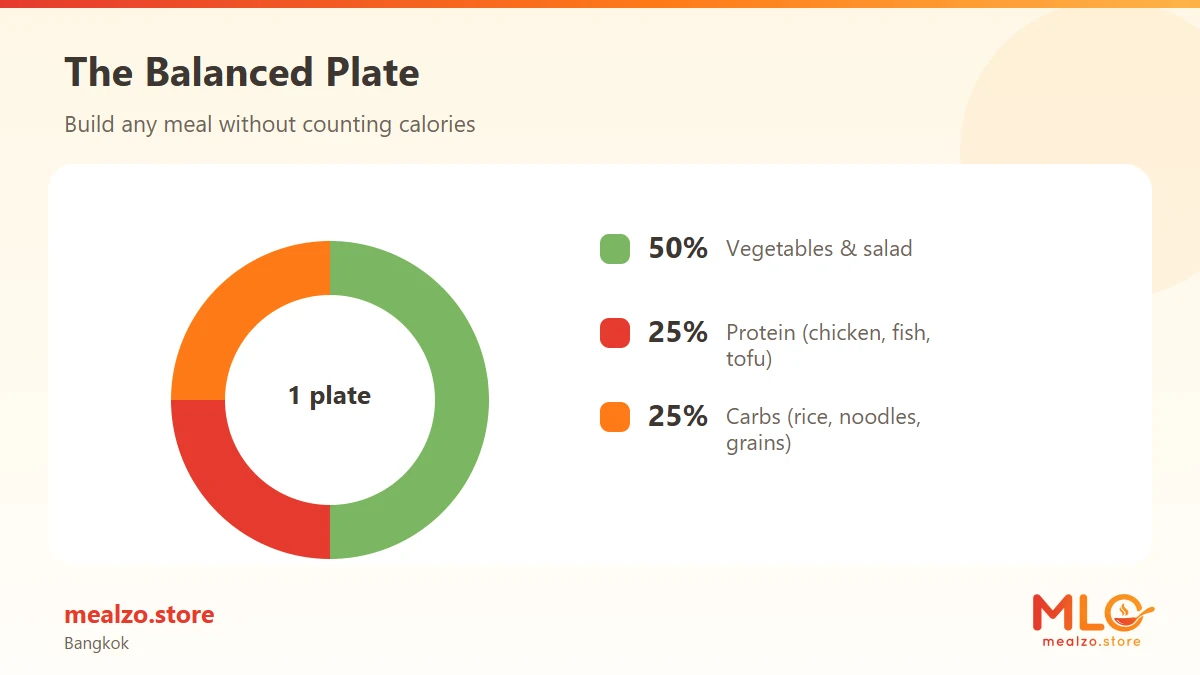
A balanced plate is a useful visual model, but dim sum rarely arrives on one plate. The same principle can be applied across several small dishes.
A person who prefers a larger carbohydrate breakfast, for example before prolonged physical activity, may reasonably choose differently. The objective is understanding what the meal provides, not enforcing one fixed ratio.
Key takeaway: Several steamed buns can supply plenty of carbohydrate while still leaving the meal relatively short on vegetables, fibre and substantial protein.
7. Sauces, Sugar and Salt: The Less Visible Ingredients
Sauces can substantially change a dim sum meal without making the food look different.
Khanom jeeb often comes with sweet dark soy sauce. Rice noodle rolls are typically dressed with a soy-based sauce. Chilli sauce may add sweetness as well as heat, while black bean preparations contribute a salty, fermented flavour.
The composition varies by shop, but several patterns are common.
Soy sauce and fermented seasonings contain sodium. Sweet dark soy and some chilli sauces contain added sugar. Restaurant-prepared dips may combine both.
A small amount of sauce can improve flavour without dominating the meal. Pouring a generous serving over every basket, then adding more while eating, increases the total salt or sugar consumed.
The fillings matter too. Red roast pork is typically sweetened, sausage is processed and seasoned, and salted egg custard contributes salt alongside sugar and fat.
These are reasons to pay attention, not reasons to avoid every strongly flavoured dish.
One useful method is to taste a dumpling before adding sauce. If the filling is already well seasoned, extra soy may contribute relatively little beyond additional salt.
Another is to dip lightly instead of soaking every piece.
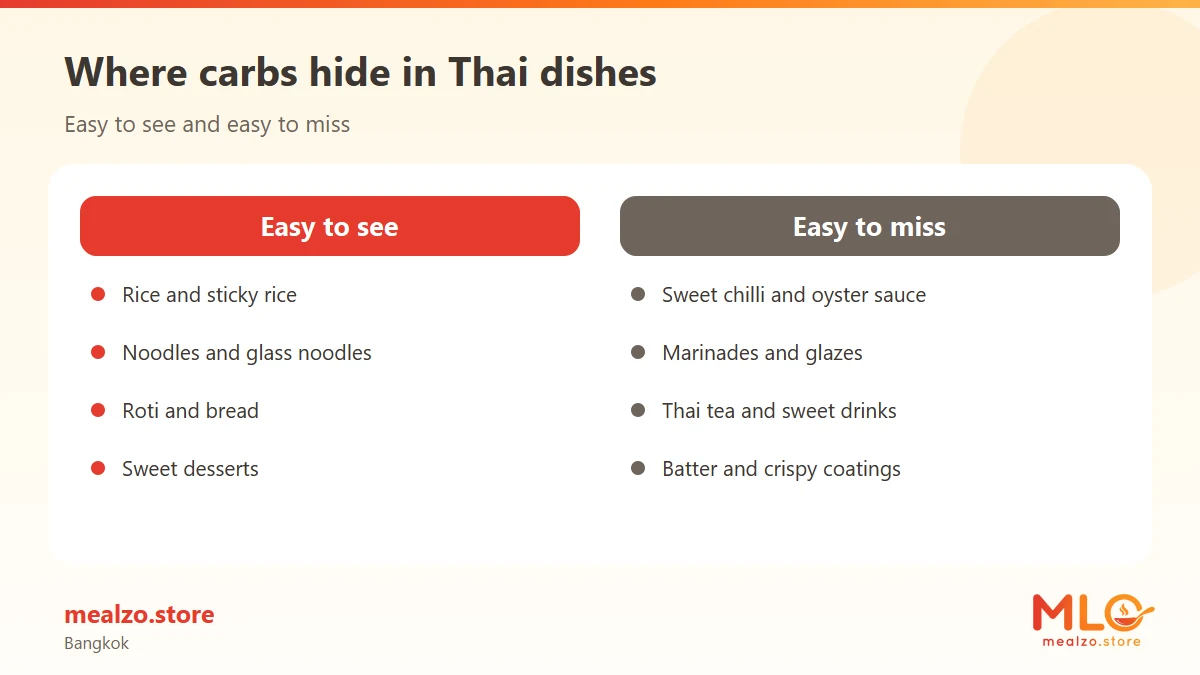
Sugar can also come from the drink accompanying the food, especially sweetened tea, iced milk tea or a bottled beverage.
If you regularly eat salty restaurant meals, the guide to salt and sodium in Thai food explains how seasoning and prepared ingredients can contribute to your intake.
8. The Missing Vegetables on a Dim Sum Table
Look across a typical dim sum table and you will see plenty of wrappers, meat, shrimp and sauces. Vegetables may be present in small amounts inside a filling, but they rarely occupy much space.
A little cabbage or spring onion in a dumpling does not turn the basket into a substantial vegetable serving.
One practical response is to order a separate dish.
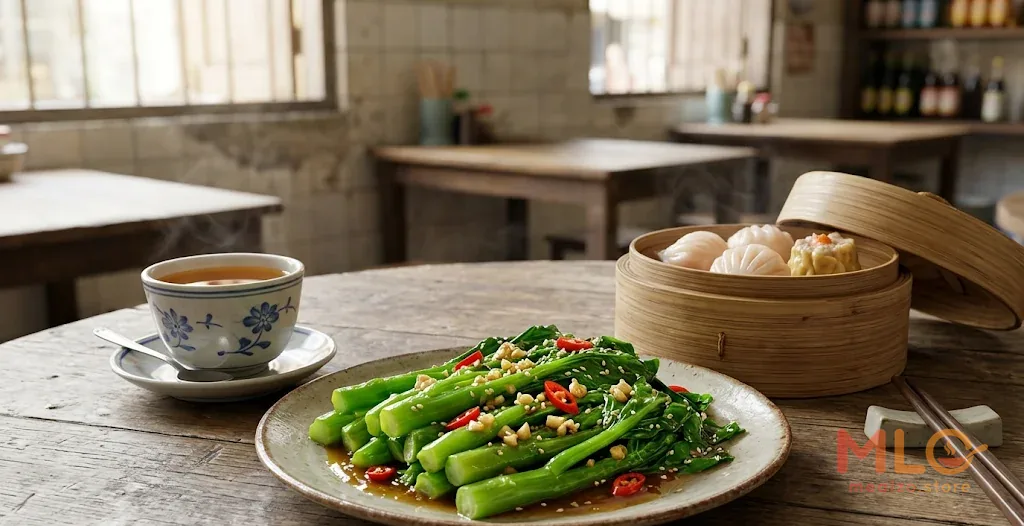
Kai lan, Chinese broccoli, is a familiar option in Chinese-Thai restaurants. It may be served stir-fried with garlic or oyster sauce. Other shops might have leafy greens, cabbage, mushrooms or a simple clear vegetable soup.
The availability depends on the restaurant. A small breakfast counter selling only buns and dumplings may have no vegetable dishes at all.
Where greens are available, they add a different texture and provide fibre and micronutrients. Oyster sauce and stir-frying oil also contribute to the dish, so a plate of greens is not necessarily free of added salt or fat.
A clear soup may add vegetables and fluid, although a salty broth is not automatically a low-sodium choice.
If the shop offers no vegetables, there is no need to force an awkward order. Eat the dim sum you came for, then include vegetables in another meal that day.
This is particularly sensible for a weekend brunch when the social experience matters as much as the precise composition of each plate.
Key takeaway: Dim sum fillings rarely supply a substantial vegetable portion, so add greens when available or account for them later in the day.
9. Chinese Tea, Sweet Drinks and a Longer Breakfast
Unsweetened Chinese tea is a traditional companion to dim sum. Its slightly bitter or aromatic character works well with rich pork, sweet buns and oily fried dishes.
Tea also makes a long breakfast feel natural. People can sit, talk and order several rounds without needing a sugary drink.
Plain Chinese tea contributes little energy when served without milk or sugar. It does contain caffeine, with the amount varying according to the tea and brewing method.
There is no need to claim that tea cancels out fat or prevents the absorption of a rich meal. It does not make a basket of fried taro puffs nutritionally disappear.
Its practical advantage is straightforward: unsweetened tea adds no significant sugar to a meal that may already contain sweet fillings and dipping sauces.
Sweet iced tea, sweetened coffee, milk tea and bottled drinks change the calculation. Some contain sugar from syrups, condensed milk or other sweeteners, although the quantity varies by recipe.
For a quick workday breakfast, water or unsweetened tea may be the simplest choice. At a leisurely brunch, choosing a sweet drink is still a choice, but it is useful to recognise it as another part of the meal.
A long dim sum breakfast can also lead to repeated ordering. People often return to the menu because they are still seated, not necessarily because they are hungry.
A short break before ordering another basket gives appetite a chance to catch up with what has already been eaten.
10. Convenience Store Salapao and Frozen Dim Sum
Not every Bangkok morning allows time for Chinatown or a neighbourhood dim sum restaurant.
Convenience stores sell ready-to-heat salapao and other Chinese-style snacks, while frozen dumplings and buns are available for heating at home. The selection varies between stores, locations and suppliers.
These foods can be practical, especially for commuters or people who leave home before most sit-down breakfast options are convenient.
The main difference is not necessarily that packaged food is always worse than restaurant food. It is that the ingredients, filling proportions and serving sizes may be different.
A packaged bun might contain a comparatively small amount of pork inside a large portion of dough. Another could contain more filling. A frozen dumpling may use leaner meat, fatty pork or a mixture of meat and starch.
Where a label is available, check:
- Serving size and number of pieces in the package.
- Energy, protein, carbohydrate and fat per serving.
- Sodium and sugar, particularly in processed meat or sweet fillings.
- Ingredient and allergen information.
- Heating instructions, including whether the product is fully cooked or requires thorough cooking.
A nutritional label is useful only when interpreted against the amount actually eaten. A package containing two servings does not become one serving because it is sold in a single tray.
For products without accessible nutritional details, precise calorie estimates are unreliable. The size of the bun, its filling and the amount of sauce can vary considerably.
The practical guide to eating from Bangkok convenience stores covers how packaged meals and snacks can fit into everyday eating.
For a more complete breakfast, a packaged bun can be combined with another suitable item, such as eggs, unsweetened soy milk or fruit, depending on personal preferences and availability.
This is not equivalent to a restaurant brunch, but it can make a rushed morning less dependent on refined flour alone.
11. Food Safety, Allergens and Planning Around Dim Sum
Steamed dim sum should arrive properly hot. A basket that has been sitting at room temperature for an uncertain period deserves more caution than food freshly removed from a steamer.
For frozen items, follow the package's heating instructions and ensure the food is heated thoroughly throughout. A hot exterior does not necessarily mean the centre has reached an appropriate temperature.
Shellfish, soy, sesame, egg and gluten from wrappers or sauces can be difficult to verify at a dim sum counter, so people with relevant allergies should not assume an item is safe without reliable ingredient and cross-contact information.
Food safety and nutrition are separate questions. A freshly steamed, correctly handled custard bun can still be high in sugar and fat. A shrimp dumpling with a relatively lean filling still requires proper storage and preparation.
Fitting a Dim Sum Brunch Into the Rest of the Week
There is no need to treat dim sum as something to earn through restriction or compensate for afterwards.
A weekend meal shared with friends is part of living in Bangkok. Enjoying favourite dishes, including a fried item or sweet bun, can coexist with more predictable meals during the working week.
The useful question is what happens across several days.
If breakfast is usually rushed and lunch decisions are improvised, a regular meal structure may help make the range of foods eaten more consistent. That is where Mealzo Bangkok can fit into the routine without attempting to replace a traditional dim sum brunch.
Mealzo Bangkok operates a kitchen in Bang Na, where meals are cooked fresh daily and delivered across Bangkok. Customers select a morning delivery window of 06:00-09:00 or an evening window of 17:00-20:00.
The service offers 12 meal plans: Balanced, Weight Loss, High Protein, Vegetarian, Vegan, Keto, Low-Carb, Gluten Free, Easy-to-Digest, Pescatarian, No Fish & Seafood, and Dairy & Egg Free.
Every plan uses one mixed cuisine combining Thai and international dishes. There are no separate cuisine selections.
Customers can choose from six daily calorie levels ranging from 1200 to 2500 kcal, with three or five meals per day and package lengths of 3, 7, 14 or 30 days.
The mobile app includes a calorie calculator based on the Mifflin-St Jeor formula. Its output is an estimate of energy requirements, not medical advice or a guarantee that a particular calorie level is appropriate for everyone.
For allergens, customers declare relevant restrictions from nine allergen groups, and dishes containing a declared allergen are not assigned to them. This describes the meal-assignment mechanism, not a guarantee that meals are free from allergens or cross-contact.
The website and mobile app support Thai, English, Polish, German, French, Russian, Simplified Chinese and Burmese.
For those considering a more structured routine, explore Mealzo Bangkok meal plans and package options provides the available choices.
The practical approach is to keep the weekend brunch and organise ordinary meals around it. One enjoyable dim sum breakfast does not define the nutritional quality of an entire week.
Key takeaway: A planned weekday routine can coexist with a flexible weekend dim sum brunch without requiring food restrictions or compensation afterwards.
FAQ
Is dim sum in Bangkok healthy because it is steamed?
Not necessarily. Steaming adds little fat during cooking, but the ingredients determine much of the nutritional composition. Shrimp dumplings, fatty pork dumplings, sausage buns and salted egg custard buns can differ substantially. Fried sides, sauces, vegetables and portion size also influence the overall meal. A mainly steamed selection can be a useful option, but the cooking method alone does not define a balanced breakfast.
How many baskets of dim sum should one person order?
There is no universal number because basket sizes, piece sizes and individual energy needs vary. Start by checking how many dumplings each basket contains. A few baskets shared between people can quickly amount to many pieces, particularly when buns and rice rolls are added. Decide on an initial selection, eat it, and order more if you are still hungry rather than assuming every basket is a single small serving.
Is salapao moo daeng a good breakfast on its own?
It is convenient and contains some protein from the red roast pork, but the bun dough supplies a substantial share of its carbohydrate, and the pork sauce is commonly sweetened. The quantity of meat varies. One bun may be enough for a small breakfast, while another person may need something more substantial. Adding a protein-rich item or having fruit and vegetables elsewhere in the morning can improve variety.
What should I drink with dim sum in Bangkok?
Unsweetened Chinese tea is a traditional choice and adds little energy to the meal. Water is another straightforward option. Sweet iced tea, milk tea and bottled drinks can add sugar, sometimes alongside sweet buns and dipping sauces. The amount depends on how each drink is prepared. Tea does not neutralise the fat or sodium in the food, but choosing it without sugar avoids adding another sweet component.
Can I eat dim sum while following a Mealzo Bangkok meal plan?
Yes, provided you manage your meal choices in a way that suits your plan and personal requirements. A weekend dim sum brunch can remain a social occasion, while planned meals provide structure on other days. Mealzo Bangkok offers packages of 3, 7, 14 or 30 days with three or five meals per day. The service does not need to replace every restaurant meal, and a single brunch does not require skipping subsequent meals or making extreme adjustments.
Mealzo Bangkok is a kitchen and meal delivery service operating exclusively in Bangkok, Thailand. We are not affiliated with similarly named services outside Thailand.
Find a Meal Plan That Fits
Compare Mealzo plans or use the calculator to explore meal options for your needs.