Thai Breakfast in Bangkok: Jok, Khao Tom, Pa Thong Go and How to Fit Them Into a Balanced Day
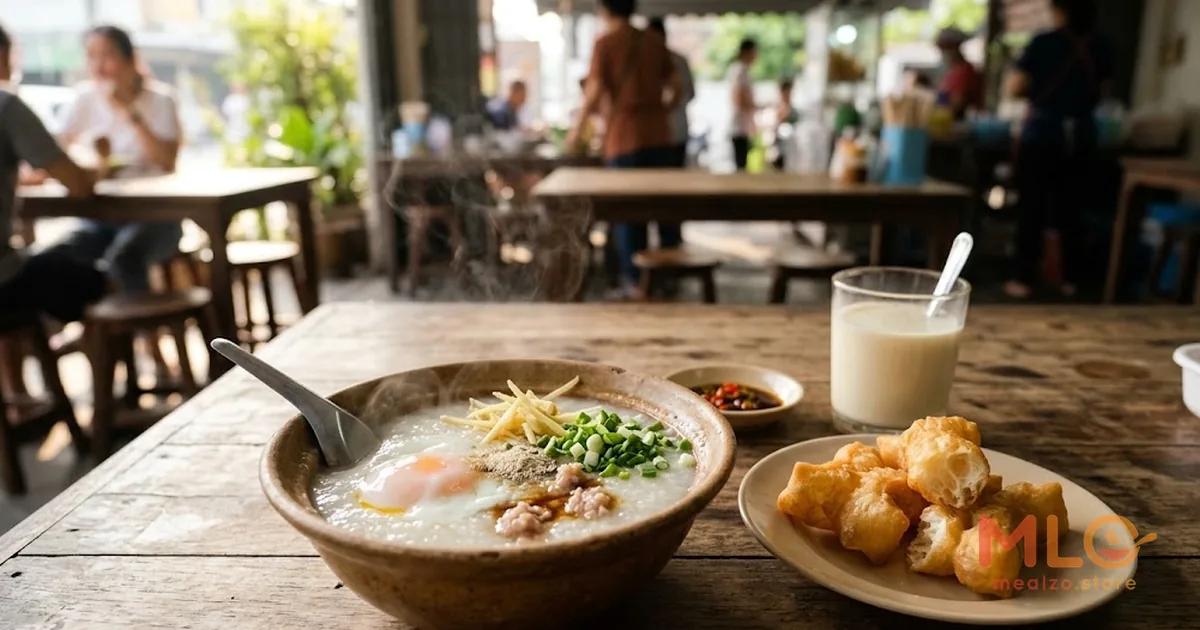
Breakfast in Bangkok rarely requires much planning. A steaming bowl of jok from a street cart, grilled pork with sticky rice near a bus stop, or warm soy milk with pa thong go can be bought on the way to work. These meals are familiar, affordable in everyday terms, and deeply connected to how the city starts its morning.
But when breakfast comes from a different cart several days a week, it becomes harder to see how those choices fit into the rest of the day. A rice porridge may look light but contain a substantial amount of rice. Two fried dough sticks can seem like a small breakfast, yet provide mostly refined flour and oil. A packet of grilled pork and sticky rice offers protein, although the balance depends heavily on the portions.
The useful question is not whether traditional Thai breakfast is healthy or unhealthy. It is what each meal contributes, what it may be missing, and whether lunch, dinner and snacks can comfortably fill those gaps.
This guide to Thai breakfast in Bangkok looks at common street-food choices, from jok and khao tom to kai krata, moo ping, khanom pang and nam tao hu. It also explains practical ordering adjustments and how a planned breakfast from Mealzo Bangkok can fit into mornings when making another food decision is the last thing you want.
1. Why Breakfast Out in Bangkok Can Be Hard to Balance
Street breakfasts work because they are convenient. Vendors prepare familiar dishes quickly, portions are easy to carry, and many people already know what they want before reaching the counter.
The complication is that convenience does not necessarily produce a complete meal.
A typical Bangkok breakfast may contain a generous portion of rice, bread or dough alongside a smaller amount of pork, egg or another protein. Vegetables may be limited to ginger, spring onion, coriander or a few pieces served as garnish.
That combination is not automatically a problem. Rice and bread provide carbohydrates, which the body uses for energy. But when a meal is mostly starch and contains little protein or fibre, some people find that their hunger returns sooner than expected.
For a person who eats breakfast at 7:00 and cannot take lunch until 13:00, that difference matters.
Another issue is that breakfast foods often contain ingredients that are easy to overlook. Fried garlic contributes oil. Seasoned pork contributes sodium. Sweet custard adds sugar, while a drink purchased alongside breakfast may add more.
Rather than judging dishes by their names, look at their components.
| Common Bangkok breakfast | Main components | Where starch, oil or salt comes from | Practical adjustment |
|---|---|---|---|
| Jok moo | Rice porridge, pork balls, ginger, sometimes egg | Cooked rice, seasoned pork, sauces and fried garlic | Add egg or pork and use less seasoning |
| Khao tom | Rice soup with meat or seafood | Rice, broth, sauces and optional side dishes | Include a protein portion and limit salty condiments |
| Pa thong go | Fried wheat dough | Refined flour, absorbed frying oil and sweet dips | Keep the portion modest and pair with unsweetened soy milk |
| Kai krata | Pan-cooked eggs, sausage or other meat, bread | Bread, processed meat, oil and sauces | Prioritise the eggs and reduce sauce |
| Moo ping with khao niao | Grilled pork and sticky rice | Sticky rice, marinade and fat in the meat | Adjust the sticky rice portion |
| Khanom pang with sangkaya | Bread and sweet custard | Refined flour and sugar in the custard | Treat it as a sweet breakfast component |
| Nam tao hu | Soy milk, sometimes sweetened | Added sugar when sweetened | Ask for no sugar or less sugar |
Key takeaway: A Bangkok breakfast is easier to balance when you look at the proportions of rice, bread, protein and added ingredients rather than relying on the dish name.
2. Jok: Comforting Rice Porridge With More Rice Than It Appears
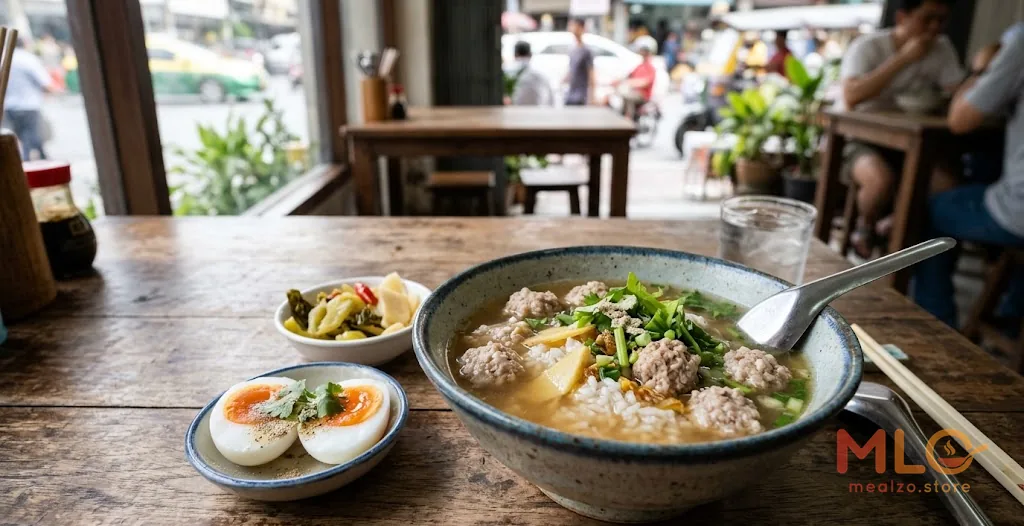
Jok is one of Bangkok's most recognisable morning meals. Rice is cooked until the grains break down into a thick, smooth porridge, commonly served with pork balls, ginger, spring onion and sometimes a soft egg.
It is warm, soft and easy to eat, which helps explain its popularity before work or on mornings when a heavier meal seems unappealing.
The texture can also make the portion difficult to judge.
Because the rice absorbs water and breaks down during cooking, a bowl of jok looks different from a plate of steamed rice. That does not mean the rice carbohydrates have disappeared. The amount depends on how much rice went into the serving, not simply how watery or smooth the finished porridge looks.
The pork balls contribute protein, but the quantity varies between vendors. A few small pieces scattered through a bowl may not provide as much protein as the appearance suggests.
Adding an egg changes that balance. A soft egg adds protein and fat without requiring another large serving of starch. Asking for extra pork is another option when the vendor offers it.
Seasoning deserves attention too. White pepper and fresh ginger add flavour, while soy sauce, seasoned sauces and fried garlic can add sodium or oil.
A practical jok order might include an egg, the usual ginger and spring onions, and a lighter hand with additional sauce.
That does not mean everyone needs a bigger protein portion. Someone who prefers a small breakfast and eats a substantial lunch soon afterward may be perfectly comfortable with an ordinary bowl.
3. Khao Tom: Rice Soup, Broth and the Side-Dish Question
Khao tom is often grouped with jok, but the two meals have different textures.
Where jok is thick and creamy, khao tom usually contains recognisable rice grains suspended in a thinner broth. It may be prepared with pork, chicken, fish or other ingredients.
The soup can feel particularly light because much of the bowl is liquid. Again, the important distinction is between the volume of the finished dish and the amount of rice and protein it contains.
A bowl with a reasonable serving of meat may provide a different balance from one dominated by rice and broth.
Khao tom is also eaten with side dishes. Some shops serve preserved vegetables, salted ingredients, eggs or prepared dishes alongside the rice soup. These additions can turn a simple bowl into a more varied meal, but they may also considerably increase sodium intake.
That is why the answer depends on the shop and the order.
If your khao tom already contains plenty of meat, extra protein may be unnecessary. If the bowl is mostly rice and broth, adding an egg or another protein component may make it more satisfying.
When ordering sides, choose them for what they contribute, not merely because they are traditionally served with rice soup.
For more detail on how different rice types and serving sizes affect everyday meals, read the guide to jasmine rice, sticky rice and brown rice portions in Bangkok.
4. Pa Thong Go: Fried Dough, Soy Milk and Sweet Custard
Pa thong go is an everyday Bangkok breakfast with a straightforward appeal. The dough is fried until the outside becomes crisp while the inside stays soft, then eaten on its own or dipped into something sweet.
It pairs particularly well with hot nam tao hu, the soy milk commonly sold by morning vendors.
Nutritionally, the central ingredients are refined wheat flour and frying oil. The dough provides carbohydrates and fat, but relatively little protein compared with an egg- or meat-based breakfast.
Dipping it into sangkaya, a sweet custard, introduces another element: sugar.
None of these ingredients makes pa thong go forbidden. It simply occupies a different place in a balanced day from a breakfast built around eggs, vegetables and a moderate serving of starch.
Consider two possible orders.
The first is several pieces of fried dough with a generous portion of sweet custard and sweetened soy milk. The second is a smaller serving of fried dough alongside unsweetened soy milk.
Both are recognisably the same type of breakfast. Their proportions of added sugar, oil and other nutrients are different.
Soy milk can contribute plant protein, although the amount varies with its preparation and concentration. Sweetened versions may contain substantial added sugar, so it is sensible to ask how the vendor prepares the drink.
Useful Thai phrases include mai sai nam tan for no added sugar and wan noi for less sweet. Whether the vendor can adjust a prepared batch is another matter.
Pa thong go may also be part of a larger breakfast rather than the entire meal. That can make more sense for someone who enjoys it regularly but needs a more substantial morning meal.
Key takeaway: Pa thong go is primarily a refined-flour and fried-food choice, so portion size, dipping custard and the sweetness of the accompanying drink all matter.
5. Kai Krata: Pan Eggs, Sausage and Bread
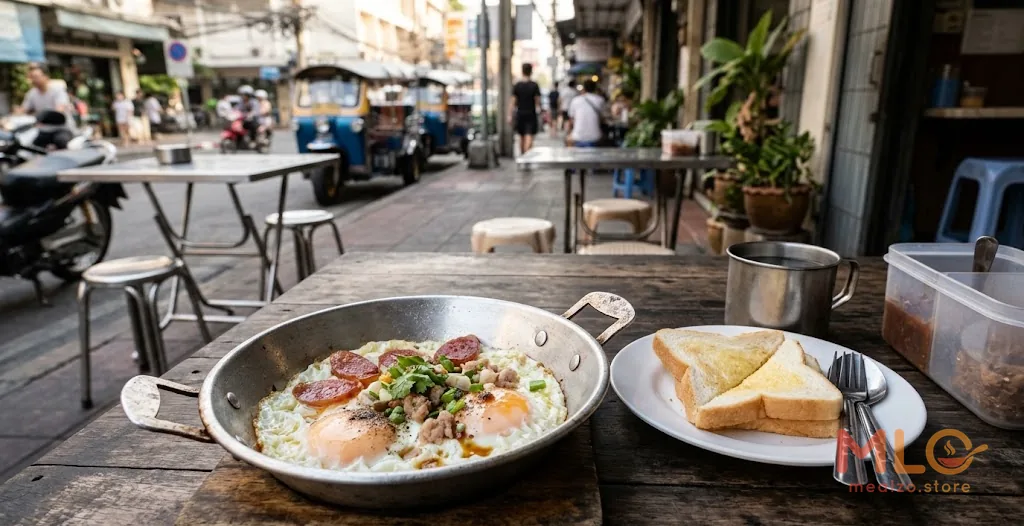
Kai krata offers a different starting point because eggs are central to the meal.
Typically prepared in a small metal pan, the dish contains eggs with additions such as sausage, minced pork or other seasoned meat. Bread may be served alongside it.
This combination offers protein from the eggs and meat, carbohydrates from bread, and fat from the eggs, meat and cooking oil.
However, the balance is not fixed.
A serving with two eggs and a modest amount of bread differs from one with a large bread portion, considerable processed meat and generous sauce.
Sausage and other processed meat toppings can also add sodium. Sauces poured over the finished pan may add further salt or sugar, depending on the product.
Eggs are useful because they are easy to recognise as a protein component. They are not a complete meal by themselves, and the wider diet still matters, but they can make a breakfast more substantial without relying exclusively on rice or bread.
When ordering kai krata, consider these adjustments:
- Ask whether an additional egg is available when you need a larger protein portion.
- Keep the bread portion consistent with how much other starch you intend to eat.
- Add sauces gradually rather than automatically using everything provided.
- If the meal contains plenty of processed meat, consider reducing those toppings when the vendor allows it.
Egg-based choices also appear elsewhere in Thai cooking. The article eggs in Thai food, including khai jiao and khai dao explains how cooking methods and additions change what ends up on the plate.
6. Moo Ping and Khao Niao: Why the Sticky Rice Portion Matters
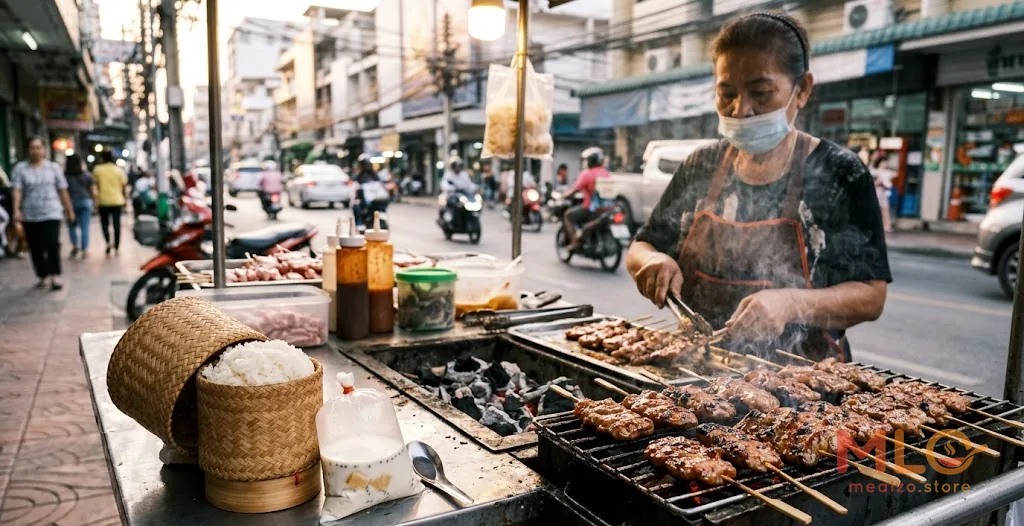
Moo ping with khao niao is a classic grab-and-go breakfast. Grilled pork skewers are wrapped or bagged alongside a compact serving of sticky rice.
It is portable, familiar and satisfying for many people, particularly those who prefer a savoury breakfast.
The pork provides protein, although the precise amount depends on the cut, skewer size and proportion of fat. Marinades commonly contain salty and sweet ingredients, but recipes vary.
Sticky rice supplies most of the meal's starch.
Unlike rice soup, sticky rice is compact. A small-looking packet can contain a meaningful portion of cooked rice because the grains are packed together without much liquid.
That density makes visual comparisons unreliable. A packet of sticky rice and a bowl of watery porridge may look dramatically different even when the amount of rice used is closer than expected.
The practical approach is to assess the quantities separately.
How much pork is there? How large is the sticky rice packet? Is the pork mostly lean meat, or does it include substantial fat? Is the marinade particularly sweet?
If you are hungry again shortly after breakfast, simply purchasing more sticky rice may not be the most useful adjustment. Adding a suitable protein portion, or including fruit or vegetables elsewhere in the morning, may provide a different balance.
There is also no reason to remove sticky rice automatically. People with different appetites, activity levels and daily energy needs may require different carbohydrate portions.
The same principles apply to other Bangkok rice-and-meat combinations. Our guide to Chinese-Thai dishes such as khao man gai, roast duck and khao kha moo explores how rice portions, meat choices and sauces interact across a complete meal.
7. Where the Carbohydrates and Sugar Hide in a Bangkok Breakfast
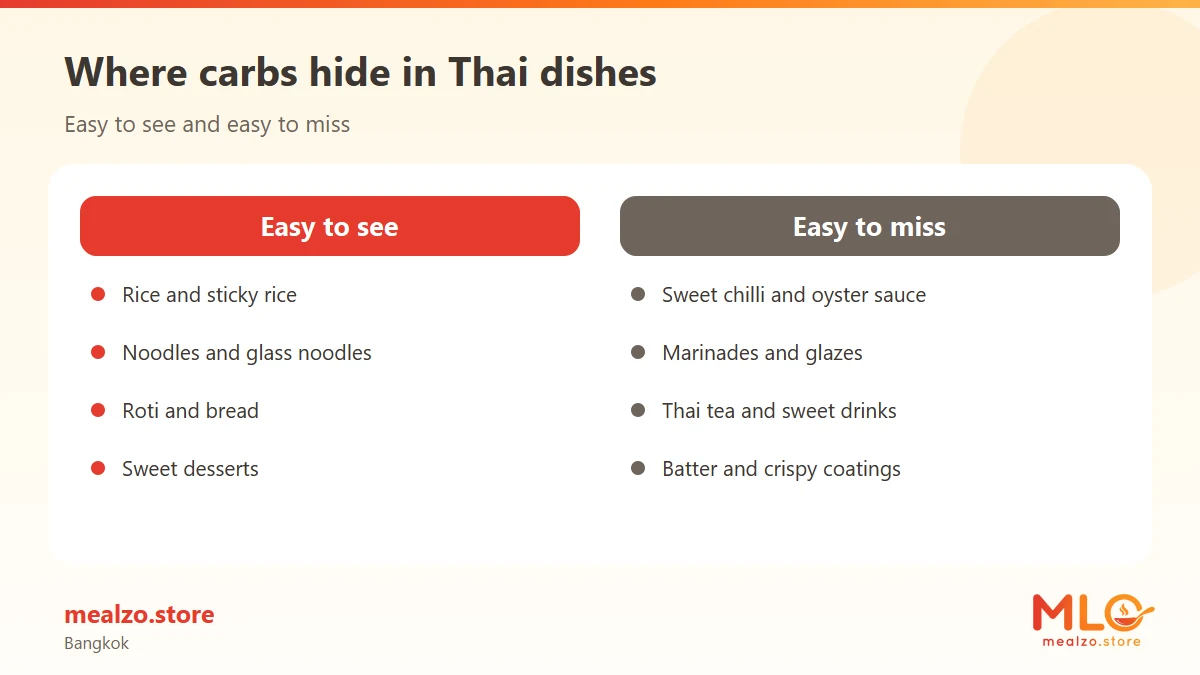
Rice and bread are obvious carbohydrate sources. The less obvious contributions often arrive as accompaniments.
A breakfast might combine sticky rice with a sweet pork marinade, followed by soy milk containing added sugar. Another might include bread, sweet custard and a bottled drink purchased from the next stall.
Each item can seem small when considered separately.
Together, they change the composition of breakfast.
Common places to check include:
- Rice and rice porridge: Both contain carbohydrates, regardless of whether the rice is steamed, sticky or cooked into soup.
- Bread and fried dough: Khanom pang and pa thong go rely mainly on wheat flour, with pa thong go also containing oil from frying.
- Sweet custard: Sangkaya adds sweetness and can contain sugar alongside other ingredients.
- Marinades: Grilled pork and other seasoned meats may contain sugar as well as salt.
- Soy milk: Unsweetened and sweetened versions differ, particularly in added sugar.
- Morning drinks: Thai iced coffee, cha yen and fruit drinks may contribute additional sugar beyond the breakfast itself.
This does not mean all carbohydrates should be avoided. Rice and bread can fit into a balanced eating pattern, and fruit contains carbohydrates alongside water, fibre and other nutrients.
The distinction is between understanding the amount and treating every carbohydrate source as interchangeable.
A whole fruit portion is not nutritionally equivalent to a sweet custard. Similarly, a bowl of rice soup with meat is not equivalent to fried dough simply because both contain starch.
For a closer look at what drinks contribute, see Thai drinks in Bangkok, from cha yen and iced coffee to fruit shakes.
Key takeaway: Count the bread, rice, sweet dips and drinks as parts of the same breakfast rather than treating the extras as separate from the meal.
8. Salt, Sauces and Seasoning at Breakfast
Salt deserves its own discussion because a breakfast does not have to taste intensely salty to contain substantial sodium.
Jok may include seasoned pork, soy sauce and fried garlic. Khao tom may contain seasoned broth, sauces and preserved side dishes. Kai krata can include sausage and other processed meat.
Moo ping marinade is another possible source.
The difficulty is that street-food recipes are not standardised. Two vendors can prepare dishes with the same name using different quantities of salt, sauces and other ingredients.
As a result, estimating sodium from appearance alone is unreliable.
One useful adjustment is to taste the meal before adding more sauce. Another is to ask for sauces separately where possible.
Reducing added sauce will not remove sodium already present in a broth, marinade or processed topping. It can, however, reduce the additional amount you control at the counter.
There are situations where general advice is insufficient. People who have been given specific sodium restrictions by a clinician need to follow those instructions rather than assuming a street-food adjustment makes a dish suitable.
Our guide to salt and sodium in Thai food in Bangkok explains the common sources of sodium in local dishes in more detail.
9. Adding Protein Without Making Breakfast Complicated
One of the simplest ways to assess breakfast is to identify its main protein source.
In jok, it may be pork balls and an egg. In khao tom, it may be meat or fish. In kai krata, eggs usually take the lead. In moo ping, the pork is the main source.
With pa thong go or sweet bread, the protein contribution may be comparatively small.
This matters because a breakfast built mainly around refined starch may not keep everyone satisfied until lunch. Protein can contribute to fullness, although responses differ and total meal size, fat, fibre and individual appetite also influence hunger.
The aim is not to make every breakfast exceptionally high in protein. It is to avoid overlooking protein entirely when the next meal is several hours away.
| Ordering option | What you can ask for | What changes | When it may suit |
|---|---|---|---|
| Jok | Add egg or extra pork | Increases the protein component | When a plain bowl leaves you hungry early |
| Khao tom | Include more meat or an egg | Raises the protein proportion relative to rice and broth | When the serving contains mostly rice |
| Pa thong go | Pair a modest portion with unsweetened soy milk | Adds some plant protein without added sugar in the drink | When you want to keep fried dough in your breakfast |
| Kai krata | Add an egg and reduce processed toppings | Changes the protein sources and potentially the sodium contribution | When you prefer a savoury egg breakfast |
| Moo ping and sticky rice | Adjust the rice portion relative to pork | Changes the balance of starch and protein | When the rice packet dominates the meal |
| Khanom pang with sangkaya | Choose a smaller sweet portion and include another protein source | Makes sweet bread one part of breakfast | When bread alone is not satisfying |
| Fruit cup | Combine fruit with a separate protein-containing food | Adds protein to a fruit-based breakfast | When fruit alone is too small a meal |
Not every vendor offers these modifications. A small cart may have fixed portions or limited ingredients, and that is part of the practical reality of eating out.
10. How Breakfast Fits Into the Rest of the Day
Breakfast does not need to contain everything the body requires over an entire day.
If your morning meal is mostly rice with a little pork, lunch can contain more vegetables and a substantial protein portion. If breakfast includes fried dough and sweet custard, the following meals can place greater emphasis on less processed foods, fibre and protein.
This is a question of patterns, not compensation.
There is no need to skip lunch because breakfast contained fried food, or to treat a traditional breakfast as something that must be earned through exercise. The useful approach is to recognise what was eaten and continue with an ordinary, varied day.
A simple way to visualise meal composition is to consider vegetables and fruit, protein foods, and carbohydrate sources together.
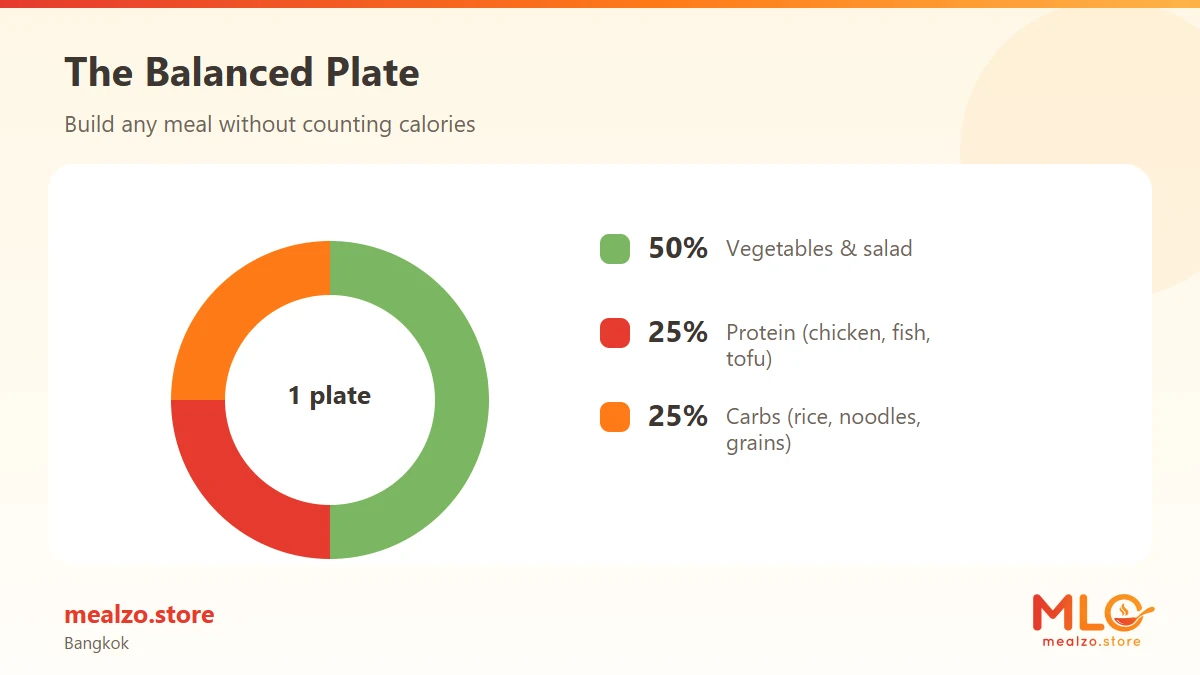
That framework needs flexibility. A bowl of jok cannot be physically divided like a plated lunch, and some people have dietary requirements that call for a different distribution of nutrients.
Still, the underlying questions remain useful.
Did breakfast contain meaningful protein? Was it mainly refined starch? Were vegetables or fruit included? How much seasoning or added sugar came with the meal?
On days when breakfast is small, a more substantial lunch may be appropriate. On days when breakfast is filling, lunch portions can reflect appetite and individual needs without following a rigid rule.
Fruit cups are particularly convenient around Bangkok markets and transport routes. They can contribute fruit, water and fibre, although the amount varies by fruit and serving size. Some vendors offer sweet or salty dipping mixtures, which change the overall choice.
11. Practical Cart Choices and Where a Meal Plan Fits
It is possible to eat breakfast from Bangkok street carts regularly while making deliberate choices.
The most useful adjustments are usually modest. They do not require asking a vendor to redesign a traditional dish or calculating every ingredient while standing on the pavement.
A practical morning routine could follow these steps:
- Start with the main dish. Decide whether you want rice soup, porridge, eggs, grilled pork or bread.
- Identify the protein. Check whether the serving includes enough egg, pork, fish or another protein source for your appetite.
- Look at the starch portion. Consider the rice, sticky rice, bread or fried dough rather than assuming all servings are similar.
- Check the extras. Sauces, sweet custard, fried garlic and drinks can meaningfully change the meal.
- Think about lunch. If breakfast contains little fruit or vegetables, include them later where practical.
Some mornings, however, the issue is not knowing what to order. It is having no time to think about breakfast at all.
That is where advance meal planning offers a different approach.
Mealzo Bangkok operates a kitchen in Bang Na, Bangkok. Meals are cooked fresh daily and delivered across Bangkok. Customers select either the morning delivery window of 06:00-09:00 or the evening window of 17:00-20:00.
For someone who wants breakfast arranged before leaving home, the morning window can remove the daily decision about which cart to visit.
Mealzo Bangkok offers 12 meal plans: Balanced, Weight Loss, High Protein, Vegetarian, Vegan, Keto, Low-Carb, Gluten Free, Easy-to-Digest, Pescatarian, No Fish & Seafood, and Dairy & Egg Free.
Every plan combines Thai and international dishes within one mixed cuisine. Customers do not choose between separate cuisine categories.
There are six daily calorie levels ranging from 1200 to 2500 kcal, options for three or five meals per day, and packages lasting 3, 7, 14 or 30 days.
These choices allow people to organise meals around their preferences and schedules, but the calorie levels are not personal medical recommendations. The app includes a calorie calculator based on the Mifflin-St Jeor formula, which provides an estimate rather than a clinical assessment.
For allergens, customers declare ingredients from nine allergen groups. Dishes containing a declared allergen are not assigned to them. This describes the dish-assignment mechanism and does not guarantee that meals are free from allergen traces or cross-contact.
The website and mobile app are available in Thai, English, Polish, German, French, Russian, Simplified Chinese and Burmese. The Android app is available on Google Play, and questions can be sent to contact@mealzo.store.
You can explore the available options through Mealzo Bangkok meal plans.
A planned breakfast is not inherently superior to freshly prepared street food. It provides another form of convenience, with meal selection organised in advance.
Some people will prefer the flexibility and familiar flavours of a morning cart. Others may find that arranging several days of meals makes their working week easier to manage.
There is room for both. A bowl of jok on Monday and a planned breakfast on Tuesday do not contradict one another. What matters is the overall composition of your meals, the portions that suit you and whether the routine is practical enough to maintain.
Key takeaway: Use street breakfasts when they suit your morning, and planned meals when advance organisation is more useful; neither approach removes the need to consider the whole day's food.
FAQ
Is jok a good breakfast if I am trying to eat a balanced diet?
Jok can fit into a balanced diet. It contains rice as its main carbohydrate source, while pork and egg can contribute protein. The balance depends on the proportions, added seasonings and what you eat later in the day. If your bowl contains little pork, adding an egg may be useful. If you need to manage sodium, remember that the broth, sauces and seasoned ingredients can contribute even before you add condiments.
Is khao tom lighter than jok?
Khao tom usually has a thinner consistency than jok because its rice grains remain more distinct in broth. It may feel lighter, but that does not establish that it contains fewer carbohydrates or less energy. The amount of rice, meat, oil and accompanying side dishes determines the difference. A large bowl of khao tom with several salty or oily sides can be a more substantial meal than a smaller serving of jok.
Can I eat pa thong go for breakfast regularly?
You can include pa thong go in your eating pattern, but frequency and portions matter. Because it is fried dough made mainly from refined flour, it contributes carbohydrates and oil without providing much protein. Sweet custard and sweetened drinks add further sugar. A smaller portion with unsweetened soy milk, alongside more varied meals during the day, offers a different nutritional balance from a large fried-dough breakfast with several sweet accompaniments.
What is a practical Thai breakfast when I need to stay full until lunch?
There is no single breakfast that keeps everyone full for the same length of time. Meals containing a meaningful protein portion, alongside an appropriate amount of carbohydrates and, where possible, fibre, may be more satisfying than refined starch alone. Jok with pork and egg, kai krata with a sensible bread portion, or grilled pork with an appropriately sized serving of sticky rice are practical starting points. Your appetite, activity, total portion size and lunch schedule also matter.
Can Mealzo Bangkok replace my street-cart breakfast every morning?
Mealzo Bangkok offers meal plans with three or five meals per day and a morning delivery window of 06:00-09:00, which may suit customers who want to organise their food in advance. The available plans, calorie levels and package durations provide several ways to structure a routine. Whether a particular plan fits your breakfast preferences depends on its meals and your individual needs. You can also combine planned meals on busy days with street breakfasts on mornings when you prefer to choose food locally.
Mealzo Bangkok is a kitchen and meal delivery service operating exclusively in Bangkok, Thailand. We are not affiliated with similarly named services outside Thailand.
Find a Meal Plan That Fits
Compare Mealzo plans or use the calculator to explore meal options for your needs.