Diet Meal Delivery vs Regular Food Delivery: Which Fits Your Goals?
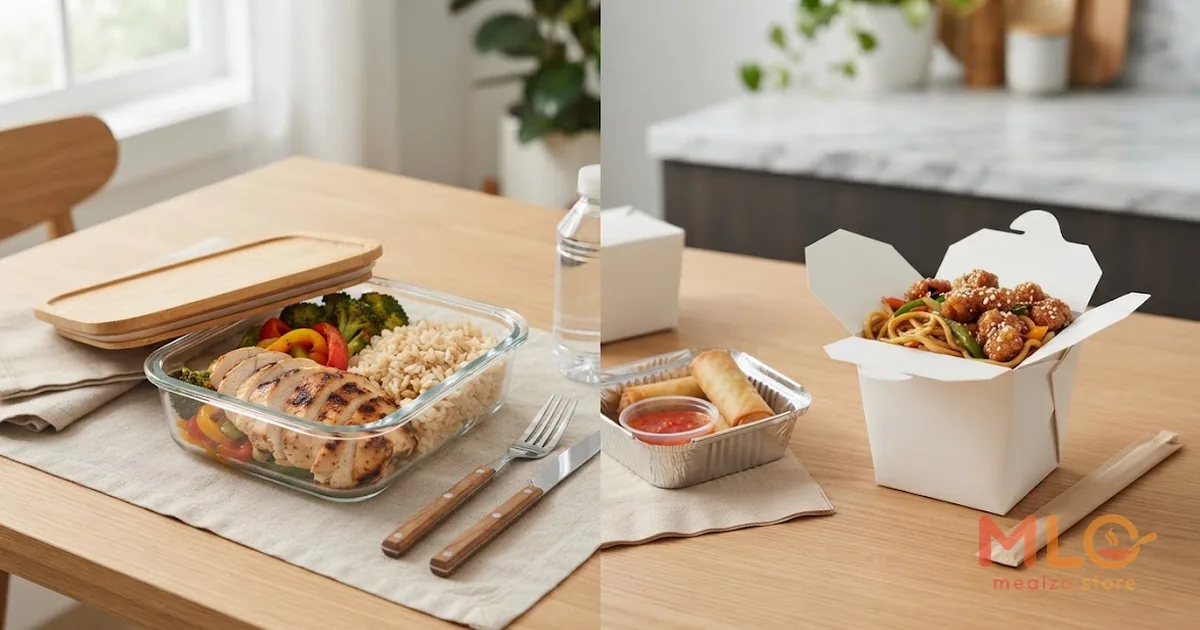
Bangkok makes ordering food almost effortless. Open GrabFood, LINE MAN, foodpanda, or another delivery app and you can have pad krapao, noodles, Japanese food, fried chicken, salad, burgers, curry, or dessert heading toward your condo within minutes.
That convenience solves one problem: getting food.
It does not necessarily solve another problem: eating in a way that supports a specific goal.
If you are trying to lose weight, control calories, eat more protein, improve meal consistency, or simply stop making last-minute food decisions every day, ordinary takeaway delivery and structured diet meal delivery serve very different purposes.
That is the real question behind diet meal delivery vs food delivery. Both are convenient. Both bring food to you. But one is mainly designed around immediate choice, while the other is designed around repeatable eating habits and nutritional structure.
The better option depends on what you are trying to achieve, how much control you want over your nutrition, and how much mental energy you want to spend deciding what to eat.
What Is Regular Food Delivery?
Regular food delivery is the familiar on-demand model used across Bangkok. You open an app, browse restaurants, choose whatever appeals to you at that moment, place an order, and wait for it to arrive.
Its biggest strength is freedom.
You can order Thai food for lunch, sushi for dinner, coffee in the afternoon, and something completely different tomorrow. You are not committed to a menu or eating schedule. If your plans change, you simply do not order.
For many people, that flexibility is exactly what they need.
The difficulty appears when food delivery becomes your primary eating system rather than an occasional convenience.
Restaurant menus are generally designed around taste, popularity, value perception, and customer satisfaction. They are not necessarily designed around your daily calorie target, protein intake, fat intake, or portion-control goals.
Even dishes that look relatively healthy can vary significantly depending on preparation methods, sauces, oils, serving size, and optional extras.
Regular food delivery is therefore excellent at answering:
“What do I feel like eating right now?”
It is much less consistent at answering:
“What should I eat today to stay aligned with my nutritional goal?”
What Is Diet Meal Delivery?
Key takeaway: Diet meal delivery is strongest when consistency, calorie control and fewer daily food decisions matter most.
Diet meal delivery works differently.
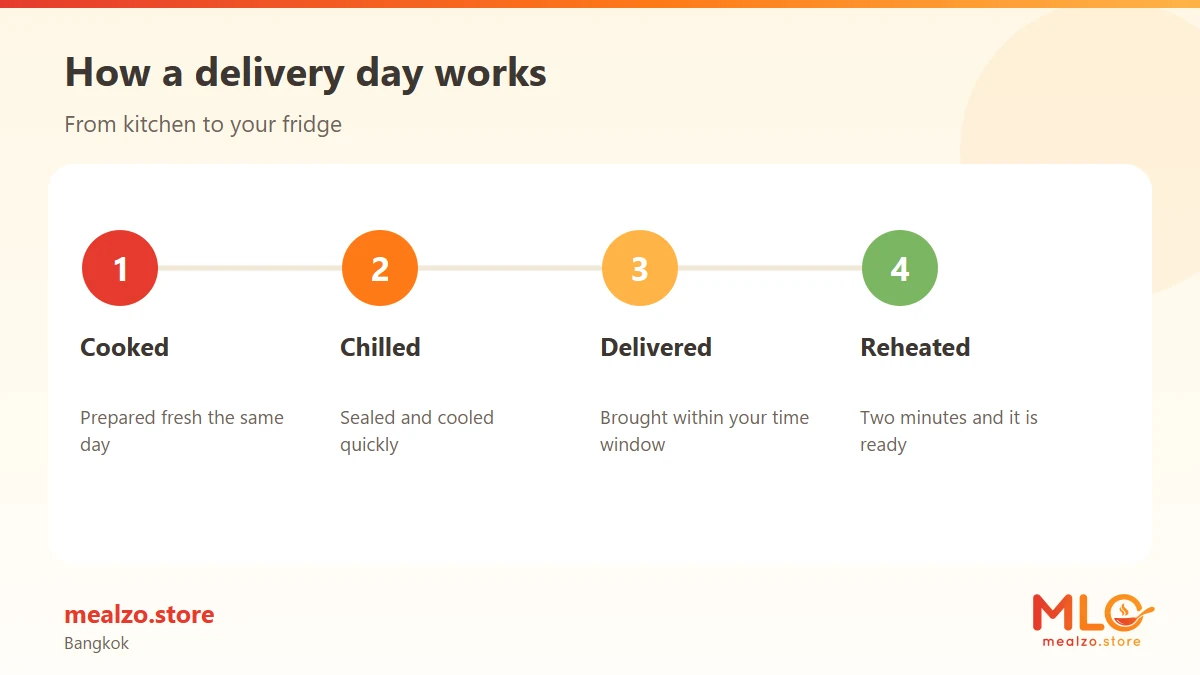
Instead of choosing every meal independently from an open restaurant marketplace, you receive prepared meals built around a more structured eating plan.
The purpose is not simply to deliver food. It is to reduce nutritional guesswork.
Depending on the service and plan, meals may be organized around calorie ranges, macronutrient balance, dietary preferences, meal frequency, or specific eating styles.
A good meal-plan service therefore gives you a framework.
You know what you are eating. Portions are planned. Calories are more predictable. Meals fit within a broader daily structure instead of existing as unrelated restaurant orders.
This does not mean that diet meal delivery is automatically “better” than normal food delivery. They solve different problems.
If you want complete spontaneity, ordinary delivery is difficult to beat.
If you want consistency, structured meal delivery has a clear advantage.
For a broader explanation of the different healthy-food delivery models available locally, see our complete guide to healthy meal delivery in Bangkok.
Diet Meal Delivery vs Food Delivery: The Core Difference
At first glance, both models seem almost identical: food arrives at your door.
The important difference is what happens before the delivery.
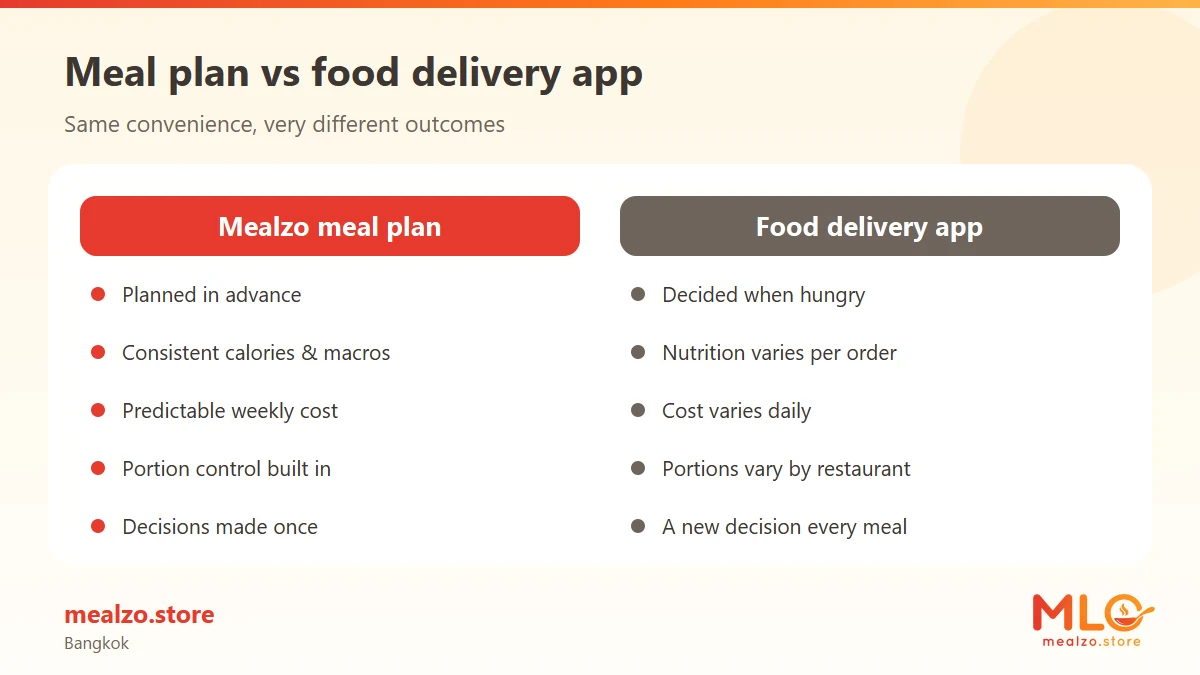
With ordinary food delivery, the customer usually makes the nutritional decisions.
You decide which restaurant to choose, which dish to order, how large the portion should be, whether to add sides, and whether the meal fits with everything else you have eaten that day.
With diet meal delivery, much of that decision-making happens earlier.
Meals are selected or structured within a plan, portions are established, and nutritional consistency becomes part of the product itself.
That creates two very different experiences.
Regular delivery prioritizes choice and immediacy.
Diet meal delivery prioritizes structure and consistency.
Neither priority is universally superior. Your goals determine which matters more.
Cost Predictability: A Bigger Difference Than It Seems
| Aspect | Diet meal delivery | Food delivery apps |
|---|---|---|
| How meals are chosen | Planned around a defined meal plan | Chosen order by order |
| Nutrition consistency | More consistent across meals | Depends on each restaurant and dish |
| Calorie control | Portions and calories can be controlled | Often harder to estimate |
| Cost predictability | Easier to plan across a package | Varies with each order |
| Decision effort | Low once the plan is selected | Requires repeated daily choices |
| Variety | Structured rotation within the plan | Very wide restaurant and cuisine choice |
| Best use case | Consistent nutrition and routine | Flexibility and spontaneous meals |
People often compare the advertised price of one restaurant meal with the cost of one prepared diet meal.
That comparison can be misleading.
On-demand delivery spending is highly variable.
A normal order may include the main dish, a drink, an appetizer, a dessert, delivery charges, platform fees, small-order fees, or impulse additions. Premium restaurants and longer delivery distances can push the final amount higher.
The next day, your order may cost much less.
This makes food-delivery spending difficult to forecast if you order frequently.
There is also a psychological effect. When you make several individual purchasing decisions every day, you repeatedly expose yourself to upsells and impulse choices.
A structured meal plan is usually easier to budget because the number of meals and the plan duration are decided in advance.
That does not automatically mean it is cheaper.
Regular food delivery can certainly be inexpensive, especially when ordering simple local dishes. But meal plans can provide something different: predictability.
When comparing services, do not look only at the headline price. Consider the number of meals, portion sizes, plan duration, nutritional information, delivery arrangement, and what is actually included.
Our what to compare before subscribing guide covers those points in more detail.
Nutrition Control: Restaurant Choice vs Planned Intake
This is where the two systems begin to separate clearly.
Imagine ordering chicken with rice from two different Bangkok restaurants.
The dishes may look similar, but the calorie difference can be substantial.
One kitchen may use significantly more oil. Another may serve twice as much rice. One sauce may contain more sugar. Another portion may include more chicken.
None of these differences makes the food inherently bad.
The problem is uncertainty.
If your goal is simply to eat something enjoyable and filling, uncertainty may not matter.
If you are trying to maintain a consistent calorie intake, uncertainty becomes more important.
Diet meal delivery reduces that variability because meals can be prepared according to standardized portions and nutritional targets.
That makes daily intake easier to manage without manually estimating every ingredient.
For people who track nutrition carefully, that reduction in uncertainty can be more valuable than having hundreds of restaurants to choose from.
Calorie and Macro Consistency
Key takeaway: Regular food delivery offers more spontaneous choice, but nutrition and portion sizes can vary considerably from one order to the next.
A single higher-calorie restaurant meal will not destroy a healthy diet.
Consistency matters far more than one isolated meal.
The difficulty with frequent on-demand ordering is that calorie variation can accumulate across the week.
A meal you estimate at 600 calories may contain considerably more because of oil, sauce, toppings, or portion size. Repeat that uncertainty across lunch and dinner for several days and your actual intake can drift noticeably away from your intended target.
Protein intake can vary just as much.
One lunch may contain a generous serving of chicken. The next may be mostly noodles, rice, or sauce.
Structured diet meals can reduce those swings.
When portions and recipes are prepared consistently, calories and macros become more predictable from one meal to the next.
That matters particularly for people whose goals depend on repeatable intake rather than occasional “healthy” choices.
A meal can look healthy and still not fit your nutritional target.
Consistency makes the difference.
Portion Control Without Constant Self-Monitoring
Portion control sounds simple until you have to practice it every day.
Restaurant portions are not standardized around your personal needs. Some meals are small. Others are large enough to cover a substantial part of your daily calorie intake.
When you order food while hungry, you may also add sides or choose a larger portion than you originally intended.
Diet meal delivery changes the environment.
Instead of deciding how much to eat each time, the portion has already been established.
That removes a surprisingly demanding daily decision.
You are no longer asking:
“Should I finish this?”
“Was that too much rice?”
“Should I order something extra?”
“Does this portion fit my target?”
For people trying to improve eating consistency, removing those repeated negotiations can make adherence easier.
Time Saved: Delivery Is Only Part of the Equation
| Your situation | Better fit | Why |
|---|---|---|
| Trying to lose weight | Diet meal delivery | Calorie-controlled meals make intake easier to manage |
| Training regularly | Diet meal delivery | Consistent meals can support a structured eating routine |
| Very unpredictable schedule | Food delivery apps | You can order only when and where you need food |
| Want maximum food choice | Food delivery apps | You can choose from many cuisines and restaurants |
| Always short on time | Diet meal delivery | Planned meals reduce ordering and decision-making |
| Eating with family/friends | Food delivery apps | Everyone can choose food that suits them |
Both systems save cooking time.
But there is another category of time that is easy to overlook: decision time.
Regular delivery still requires you to choose.
Open the app. Browse restaurants. Compare menus. Check ratings. Decide what sounds good. Change your mind. Compare another restaurant. Choose a dish. Customize it. Wait for the order.
Doing this once is trivial.
Doing it once or twice every day becomes a routine.
Structured meal delivery reduces that cognitive workload because food planning is handled ahead of time.
Instead of deciding what to eat every few hours, you already know what your next meal is.
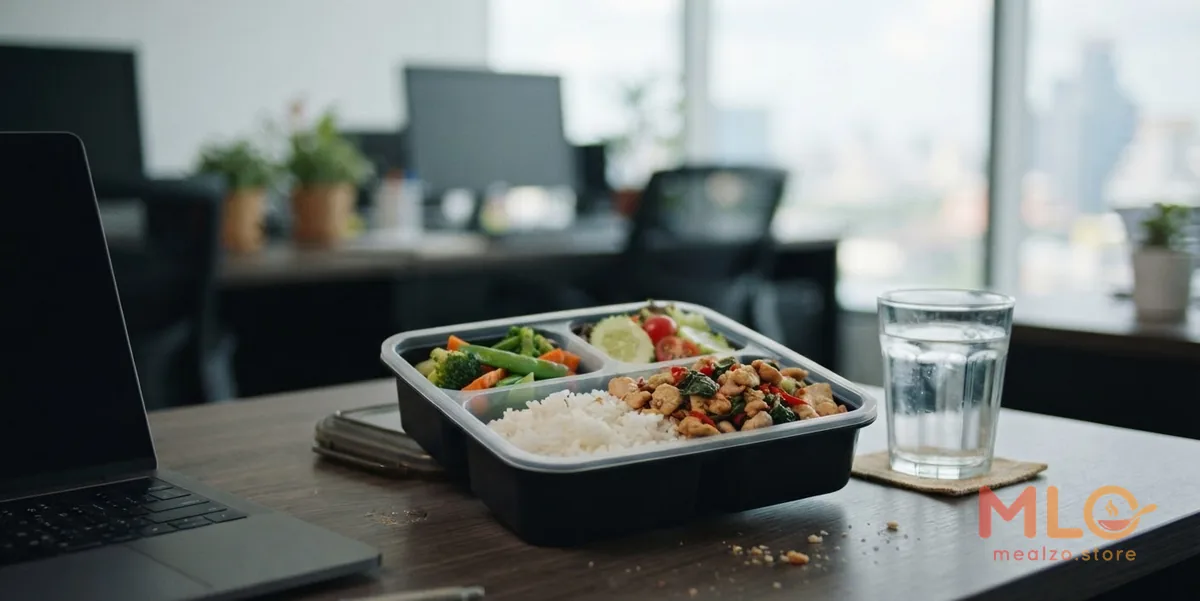
This can be particularly useful in Bangkok for people with long working hours, unpredictable meetings, commutes, or days split between offices, condos, coworking spaces, and appointments.
The time advantage is therefore not limited to cooking.
It includes shopping, planning, deciding, ordering, and cleaning.
That is why how box diets save time in Bangkok can be useful even for people who are perfectly capable of preparing their own food.
Convenience Means Different Things in Each Model
Regular food delivery wins when convenience means:
“I want exactly what I feel like eating right now.”
You can change cuisine, restaurant, portion, and price every time you order.
Diet meal delivery wins when convenience means:
“I do not want to think about my meals today.”
That distinction matters.
One model removes the effort of physically getting food.
The other can remove much of the planning involved in eating consistently.
Consider a busy Wednesday.
With restaurant delivery, you may have hundreds of options nearby.
That sounds convenient, but you still have to choose one.
With a meal plan, you may have fewer immediate choices, yet the decision has already been made.
Depending on your personality and schedule, fewer choices can actually feel more convenient.
Variety: Where Regular Delivery Clearly Wins
Key takeaway: You do not have to choose one system exclusively; structured meal delivery can cover routine meals while regular delivery remains useful for flexible or social occasions.
Bangkok is an extraordinary city for food variety.
A single delivery app can give you access to Thai regional cuisine, Korean food, Japanese food, Middle Eastern dishes, pizza, burgers, salads, Indian curries, Vietnamese dishes, desserts, bakeries, and dozens of specialist restaurants.
Structured meal plans cannot realistically compete with that level of immediate variety.
If exploring different foods is an important part of your lifestyle, regular delivery has an obvious advantage.
However, unlimited choice is not always helpful when you are trying to establish a repeatable eating routine.
The real question is not simply:
“Which option has more variety?”
It is:
“How much variety do I need to stay satisfied without making my eating pattern harder to control?”
Some people enjoy having a planned weekday routine and keeping restaurant meals for weekends.
Others prefer diet meals for lunch but use ordinary delivery for dinner.
You do not necessarily need to choose one system exclusively.
Food Quality Depends on the Provider, Not the Category
“Diet food” is not automatically high quality.
“Restaurant food” is not automatically unhealthy.
Both assumptions are too simplistic.
A good restaurant can prepare excellent food from fresh ingredients. A poor meal-plan provider can produce repetitive or disappointing meals.
The reverse is also true.
Quality depends on ingredient sourcing, kitchen standards, preparation, recipe design, freshness, storage, transportation, and execution.
When evaluating diet meal delivery, look beyond calorie numbers.
A meal that technically fits a calorie target still needs to taste good enough that you actually want to keep eating it.
Likewise, when ordering from restaurants, the presence of vegetables or grilled protein does not tell you everything about the cooking method or nutritional composition.
Judge the food itself, not just the label attached to the service.
When Regular Food Delivery Makes More Sense
There are plenty of situations where ordinary food delivery is the better tool.
It makes sense when your schedule changes constantly and you cannot predict when or where you will eat.
It also works well if you enjoy exploring Bangkok's food scene and do not want your meals predetermined.
People who eat out socially several times per week may also find a full meal plan unnecessary.
And if you already understand nutrition well, track portions accurately, and consistently choose meals that support your goals, standard delivery can fit perfectly well into a healthy lifestyle.
You may simply need a few reliable restaurant options rather than a subscription.
Cooking part of the week is another alternative. If that approach suits you better, simple meal-prep alternatives for busy people can help you build a practical middle ground between cooking everything yourself and ordering every meal.
When Diet Meal Delivery Makes More Sense
Diet meal delivery becomes more useful when the main challenge is not access to food but consistency.
You may benefit from a structured plan if you repeatedly find yourself ordering whatever looks appealing when you are hungry.
It can also make sense if you want more predictable calories, more consistent macros, simpler portion control, or fewer daily food decisions.
This is particularly relevant when you have a defined nutritional objective.
For example, someone trying to maintain a controlled calorie intake may care much more about predictable portions than someone simply ordering lunch between meetings.
Likewise, a person trying to eat sufficient protein throughout the day may prefer meals built around nutritional consistency rather than estimating protein from restaurant menus.
Diet meal delivery can also be useful during busy periods when cooking temporarily becomes unrealistic.
The value is not that the food is delivered.
Bangkok already has excellent delivery infrastructure.
The value is that the nutrition is organized before the food reaches you.
A Hybrid Approach Often Works Best
You do not have to turn food into an all-or-nothing system.
For many people, combining both models is more realistic.
You might use planned meals during the working week and restaurant delivery on Friday night.
You might keep structured lunches because your afternoons are busy while leaving dinner flexible.
You might use meal-plan delivery during a period of focused weight management and return to more spontaneous eating later.
This approach preserves some of Bangkok's food variety while maintaining nutritional structure where you need it most.
It can also improve adherence.
A routine that allows intentional flexibility is often easier to maintain than one that demands perfection every day.
The important distinction is between planned flexibility and constant improvisation.
Ordering your favorite restaurant meal because you chose to enjoy it is different from ordering randomly because you reached 8 p.m. with no food plan.
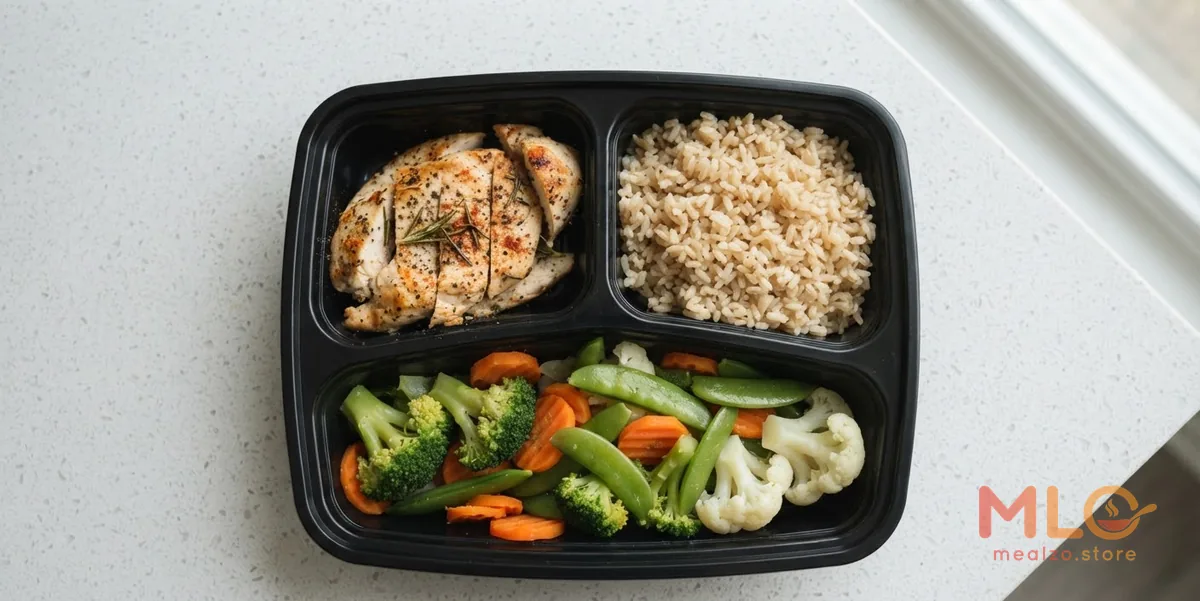
Where MEALZO Fits Into the Choice
If the structured side of the diet meal delivery vs food delivery comparison matches what you need, MEALZO is designed specifically for meal-plan delivery in Bangkok.
MEALZO provides chef-prepared, balanced meals through flexible meal plans, with calorie and macro consistency built into the system.
The objective is straightforward: make structured eating easier without requiring you to calculate every meal yourself.
Instead of opening a delivery app several times per day and rebuilding your nutrition from individual restaurant orders, you can follow a defined meal plan and know that your meals are being prepared within a consistent framework.
That can be useful for people managing calorie intake, people who want more predictable macros, or simply busy Bangkok residents who would rather spend less time planning food.
You can see Mealzo's meal plans to compare the available options rather than relying on invented averages or generic price assumptions.
How to Choose Between Diet Meal Delivery and Regular Delivery
Start with your actual problem.
If your biggest frustration is lack of choice, a diet plan will probably not make you happier. Bangkok's regular delivery apps are built precisely to maximize choice.
If your biggest frustration is that you keep making inconsistent food decisions, structured meals may solve the more important problem.
Ask yourself a few practical questions.
How often do you currently order food?
Do you know approximately how many calories you eat each day?
Do your meals contain consistent amounts of protein?
Are your portion sizes deliberate or mostly determined by the restaurant?
How much time do you spend deciding what to order?
Do you frequently add drinks, desserts, sides, or snacks because they appear while you are browsing?
Do you enjoy choosing every meal, or has food selection started to feel like another daily task?
Most importantly, what is your goal?
If your goal is simply to enjoy convenient food, ordinary delivery may already be doing exactly what you need.
If your goal requires repeatable nutrition, portion control, or better calorie and macro consistency, a structured meal plan is likely to fit more naturally.
The Best Delivery Model Is the One That Supports Your Real Routine
Bangkok gives you almost unlimited access to food.
The harder part is creating an eating pattern that works repeatedly.
Regular food delivery offers freedom, variety, spontaneity, and enormous choice. It is ideal when you value flexibility and are comfortable managing nutrition yourself.
Diet meal delivery trades some of that spontaneity for structure. It can give you more predictable portions, better calorie and macro consistency, easier planning, and fewer daily decisions.
Neither model needs to replace the other completely.
The useful question is not which service category is universally healthier.
It is which system makes your desired behavior easier.
If you can order restaurant food regularly while staying aligned with your nutritional goals, there may be no reason to change.
If the constant cycle of browsing, choosing, estimating, and adjusting makes consistency difficult, a structured meal-delivery plan may remove exactly the friction that has been getting in your way.
Frequently Asked Questions
Can you use diet meal delivery and regular food delivery together?
Yes. Many people use planned meals for the part of the week when they want consistency and use regular food delivery for social meals, cravings or schedule changes. The two options can complement each other rather than compete.
Which is cheaper over a week?
There is no universal answer because it depends on what you order, how often you order and which meal plan you choose. A structured meal plan can make weekly food spending easier to predict, while individual food-delivery orders can vary considerably. MEALZO does not need to replace every meal you eat during the week.
Does diet meal delivery get boring?
It does not have to. A well-planned meal service rotates dishes while keeping portions and nutrition structured. MEALZO uses chef-prepared balanced meals within flexible meal plans, so consistency does not mean eating the exact same meal every day.
What about weekends and social meals?
You can keep weekends or selected meals open for restaurants, family meals or social plans. A meal plan works best when it supports your routine rather than making normal life difficult. Flexible planning lets you combine structured meals with meals outside the plan.
Which option supports weight loss better?
Diet meal delivery usually provides a stronger framework because calorie-controlled portions reduce some of the uncertainty around how much you are eating. Regular food delivery can still fit a weight-loss goal, but calories, portions and preparation methods may be harder to assess. Long-term results still depend on your overall calorie intake and habits.
How does diet meal delivery work in Bangkok?
With MEALZO, customers in Bangkok choose a meal plan that fits their needs and receive chef-prepared meals through the delivery service. Plans can be calorie-controlled and selected according to different dietary preferences and routines. Instead of choosing a restaurant and dish for every meal, the meal-plan structure handles more of that daily planning for you.
Know someone who'd like Mealzo?
If you know someone in Bangkok who might enjoy Mealzo Bangkok, you can share it with them through our referral programme.