Meal Frequency and Weight Loss: Does Eating More Often Help?

Meal frequency has been argued about for years. Some people swear by eating every few hours, while others feel better with three larger meals and little or no snacking. For weight loss, the interesting question is not whether one pattern sounds more disciplined. It is whether eating more often actually changes how much energy you consume and how well you can stick to your plan.
For most people, meal frequency is better treated as a practical tool than as a metabolic shortcut. Eating five times a day does not automatically make a calorie deficit easier, and eating three times a day does not automatically make it harder. The structure has to fit your appetite, working hours, training, commute and social life.
That matters in Bangkok, where a normal day can involve an early start, long travel times, food courts, office lunches, convenience stores and dinners that happen later than planned. A theoretically perfect eating schedule is not very useful if it collapses every time your day changes.
This guide looks at meal frequency weight loss from that practical angle: what changes when you eat more often, what does not, and how to choose a pattern that you can repeat without turning your day into a food-management project.
1. Meal frequency does not replace a calorie deficit
Weight loss requires the body to draw on stored energy over time because energy intake is lower than energy expenditure. Meal frequency can influence how easy or difficult that becomes, but it does not replace the underlying energy balance.
Eating six small meals will not create a deficit if the total amount of food still provides more energy than you use. Likewise, someone eating three substantial meals can lose weight if those meals collectively fit their energy needs.
This is why discussions about meal frequency sometimes become more complicated than they need to be. People compare three meals with five meals while overlooking the portions, drinks, snacks, cooking fats and extras inside those patterns.
For a fuller explanation of the mechanism, see how a calorie deficit works in practice.
Key takeaway: Meal frequency may change how you manage hunger and portions, but total calorie intake remains central to weight loss.
2. Why eating more often can feel easier for some people
There are legitimate reasons to prefer smaller, more frequent meals. Someone who becomes extremely hungry between lunch and dinner may find that a planned afternoon meal prevents the evening from turning into uncontrolled grazing.
Smaller meals can also suit people who simply dislike feeling very full. Instead of forcing a large lunch, they may prefer a moderate lunch followed by something later.
A higher meal frequency may be useful when:
- long gaps between meals lead to intense hunger
- large portions feel uncomfortable
- your workday has several predictable breaks
- you train and prefer food before or after activity
- planned eating reduces impulsive snacking
But none of these advantages are universal. For another person, eating frequently means thinking about food all day and creating more opportunities to eat beyond hunger.
That distinction matters. More meals are useful when they provide structure. They are less useful when they simply create more eating occasions.
3. Why fewer meals can work just as well
Three meals a day remains a perfectly reasonable structure for many adults. Larger meals can feel more satisfying, and fewer eating occasions can make calorie management simpler.
Consider a person who enjoys a substantial breakfast, lunch and dinner and rarely feels hungry between them. Adding two snacks because a diet plan says they "should" eat five times a day may not solve any actual problem. It may simply add food.
Fewer meals also reduce the number of daily decisions. That can matter when work is busy and you would rather know that breakfast, lunch and dinner are already accounted for.
| Pattern | Potential advantage | Possible drawback |
|---|---|---|
| 3 meals | Larger, more satisfying meals | Long gaps may increase hunger for some people |
| 4 meals | Adds one strategic eating point | Requires another planned portion |
| 5 meals | Smaller portions spread through the day | More opportunities to snack beyond the plan |
| Frequent grazing | May feel flexible | Portions can become difficult to track |
There is no universally correct row in that table. The useful pattern is the one that helps you control total intake with the least unnecessary friction.
4. Hunger is where meal frequency becomes personal
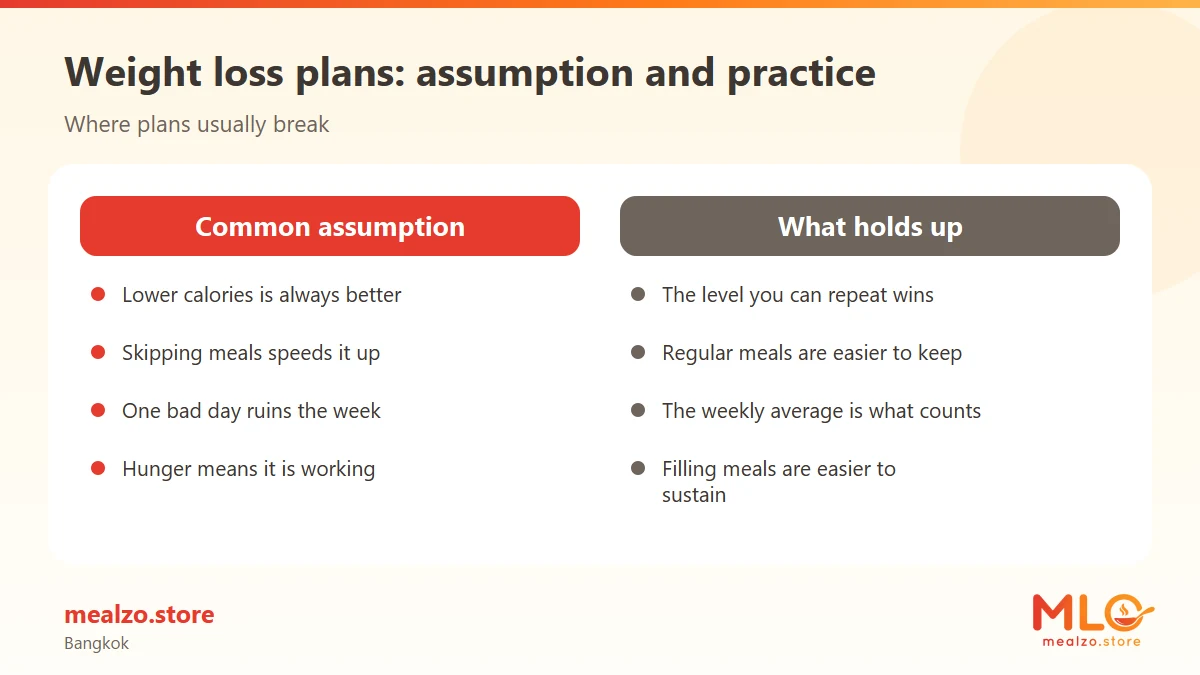
People experience hunger differently. Some are comfortable going several hours without food. Others find that a long gap makes concentration difficult and makes the next meal much harder to regulate.
This is one reason blanket rules about meal timing are unreliable.
Imagine two people eating approximately the same daily calories. One divides them across three meals and feels satisfied. The other tries exactly the same schedule but spends the afternoon thinking about food, then arrives at dinner ravenous. The second person may do better by shifting some calories into an afternoon meal.
The opposite also happens. Someone eating five times a day may never feel properly satisfied because each portion feels too small. Moving to three larger meals may make the same calorie intake easier to live with.
Instead of asking, "How often should people eat?", ask a more useful question: "At what points in my day does hunger make my plan harder to follow?"
That idea connects closely with why consistency matters more than a perfect diet.
Key takeaway: The best meal frequency is often the one that prevents your most predictable hunger problems without adding unnecessary food.
5. Five meals do not automatically speed up metabolism
One persistent idea is that frequent eating keeps the metabolism "running" and therefore causes greater fat loss. That interpretation is misleading.
Digesting food does require energy, but spreading the same amount of food across more meals does not create a meaningful advantage simply because digestion happens more often. What matters more is the total amount and composition of food consumed over the day.
This does not mean five meals are pointless. They can still be a useful behavioural structure. The mistake is treating the schedule itself as the mechanism of weight loss.
A practical comparison looks like this:
| Question | 3 meals | 5 meals |
|---|---|---|
| Can it support a calorie deficit? | Yes | Yes |
| Can portions be controlled? | Yes | Yes |
| Can hunger become a problem? | For some people | For some people |
| Does the schedule alone cause weight loss? | No | No |
| Can it fit a busy Bangkok routine? | Yes, if breaks are limited | Yes, if eating times are predictable |
The question is not which column wins. It is which one matches your actual day.
6. Snacking is not the same as planned meal frequency
This distinction is easy to miss.
A five-meal plan means five portions that are part of the day's intended intake. Grazing means repeatedly adding food without clearly accounting for it. Those are very different behaviours.
A planned afternoon meal might contain part of your daily calories and help you reach dinner comfortably. An unplanned series of coffees, pastries, office snacks and convenience-store stops can quietly sit on top of breakfast, lunch and dinner.
Bangkok makes this particularly relevant because food is easy to find almost everywhere. That is one of the pleasures of living here, but constant availability can blur the difference between hunger and opportunity.
Useful questions before adding a snack include:
- Am I physically hungry or simply taking a break?
- Was this eating occasion already part of my day?
- Will this make dinner easier to manage?
- Am I hungry enough that a proper portion would make more sense than grazing?
- Does this happen repeatedly at the same time?
If the same hunger appears every afternoon, planning for it is often more realistic than repeatedly trying to ignore it.

7. Three versus five meals is mostly a scheduling decision
For many people, the practical choice comes down to whether they prefer fewer substantial meals or smaller portions distributed more evenly.
A three-meal schedule may suit someone who starts work early, has a fixed lunch break and eats dinner at home. Five meals may suit someone who is awake for a long day, trains in the evening or feels uncomfortable with large portions.
There is no reason to treat either structure as more serious or disciplined.
Mealzo, for example, offers both 3- and 5-meal daily formats. That distinction is useful because the same calorie target can feel very different depending on how it is distributed. Someone choosing 1,800 kcal does not necessarily want to eat it in the same pattern as someone else choosing the same level.
If this is the decision you are currently making, compare 3 or 5 meals based on your schedule.
8. Meal size matters as much as meal count
When people increase meal frequency, each eating occasion generally needs to become smaller if daily calories are meant to stay similar.
That sounds obvious, but it is where many plans go wrong.
If you move from three meals to five while keeping breakfast, lunch and dinner almost unchanged, the two new meals become additional calories rather than redistributed calories.
Suppose your existing structure is:
- breakfast
- lunch
- dinner
A five-meal version is not necessarily those same three meals plus two full snacks. It may mean smaller breakfast and lunch portions, with some of those calories shifted into a mid-morning or afternoon meal.
This is why meal frequency should be planned together with portion size rather than separately.
Key takeaway: Adding eating occasions only helps if calories are redistributed rather than simply added on top of existing meals.
9. Bangkok routines can make consistency more important than theory
Meal timing advice often assumes people have stable schedules. Bangkok does not always cooperate.
A commute can take longer than expected. Meetings move. Lunch becomes late. An evening plan appears. Food delivery arrives at a different point in your routine than eating at a restaurant would.
A workable plan needs enough structure to guide you and enough flexibility to survive those changes.
For example, a person who normally eats five meals does not need to panic because one day becomes four. Nor does someone following three meals need to avoid dinner with friends because it happens later than usual.
Over time, the bigger question is whether your usual pattern keeps portions and total intake reasonably predictable.
For a broader look at structuring a realistic diet around daily life, read the complete Bangkok weight loss meal-plan guide.
10. Protein, vegetables and meal composition affect satiety too
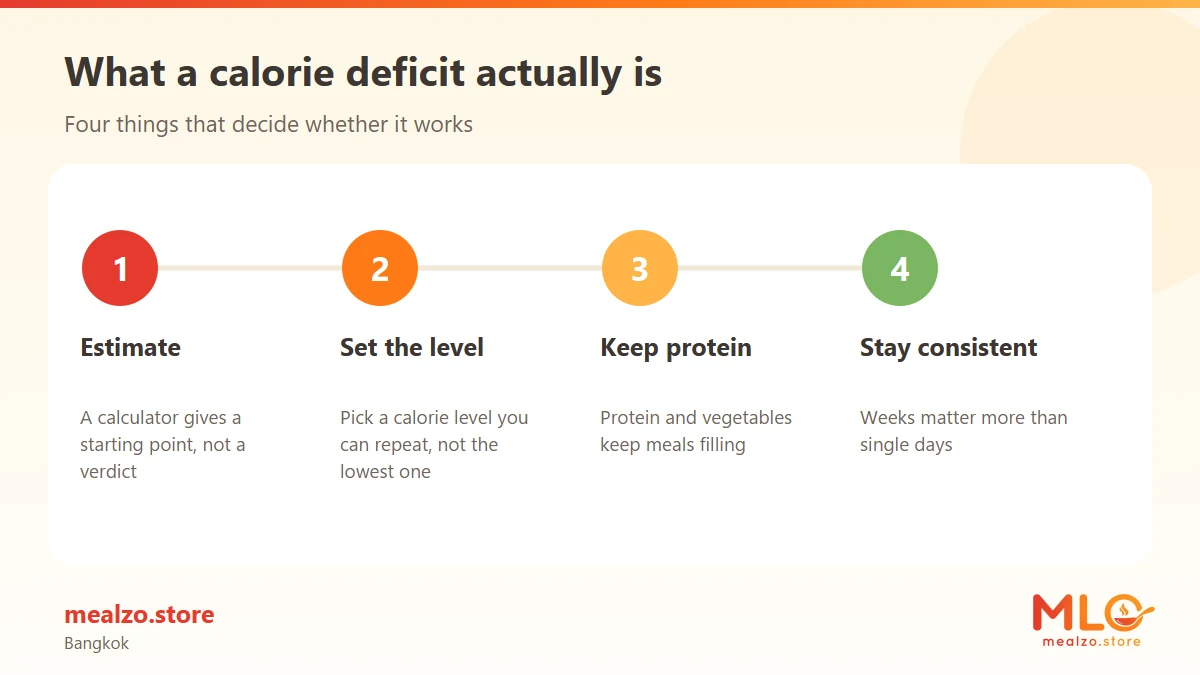
Meal frequency is only one part of hunger management. What is actually on the plate matters.
Two meals with similar calories can feel very different depending on their composition and volume. Meals containing a meaningful protein source, vegetables or other fibre-containing foods, and an appropriate amount of carbohydrate or fat may provide a different eating experience from a small portion built mainly around highly energy-dense snack foods.
This is one reason changing meal frequency without considering meal composition sometimes disappoints people. If five meals leave you constantly hungry, the problem may not be that five is the wrong number. The portions may simply be too small or poorly matched to your appetite.
Likewise, three meals may feel difficult if breakfast is very light and lunch does not carry you through the afternoon.
Meal frequency should be adjusted alongside the actual food rather than treated as an isolated variable.
11. What to test before changing your meal schedule
You do not need to redesign your entire diet to find out whether another meal pattern works better.
Try observing your current routine for several ordinary days. Look for repeated problems rather than one unusual day.
Pay attention to:
- when genuine hunger usually appears
- whether you regularly arrive at meals excessively hungry
- whether snacks are planned or impulsive
- whether your portions feel satisfying
- whether your work schedule allows reliable eating breaks
- whether weekends behave very differently from weekdays
Then change one thing.
If afternoons are difficult, introduce a planned portion there and slightly reduce another meal if necessary. If five meals leave you unsatisfied, test three larger meals instead.
The purpose is not to find a universal optimum. It is to reduce the parts of your routine that repeatedly push you away from the intake you intended.
12. Using calorie targets without becoming overly rigid
Calorie estimates can help define a starting point, but they should not be treated as laboratory measurements.
Mealzo's in-app calorie calculator uses the Mifflin-St Jeor formula to estimate calorie needs. It is an estimate rather than medical advice, and real energy requirements can differ between people.
Mealzo offers six daily calorie levels: 1200, 1500, 1800, 2000, 2200 and 2500 kcal. Those levels can be combined with either 3 or 5 meals per day and packages lasting 3, 7, 14 or 30 days.
The useful part of this structure is predictability. Instead of deciding separately how large every meal should be, the total daily allocation is already defined.
That does not mean the lowest calorie option is automatically the best choice. A more aggressive deficit can also mean more hunger, lower flexibility and a plan that is harder to maintain. Individual needs vary, and people with medical, nutritional or special dietary concerns may need personalised professional guidance.

13. Meal frequency should fit the rest of your food preferences
A meal schedule becomes easier to maintain when it also fits what you are willing and able to eat.
Mealzo currently offers 12 plan types: Balanced, Weight Loss, High Protein, Vegetarian, Vegan, Keto, Low-Carb, Gluten Free, Easy-to-Digest, Pescatarian, No Fish & Seafood, and Dairy & Egg Free.
Customers also choose one of six spice levels for the package: not spicy, mild, medium, standard, hot or Thai-spicy, with the option to change that choice later.
Allergen handling is based on declarations from nine allergen groups. When a customer declares an allergen, dishes containing that declared allergen are not assigned to them. This describes the assignment mechanism and should not be interpreted as a guarantee that any meal is completely allergen-free.
Delivery is available across Bangkok from the kitchen in Bang Na, with morning delivery from 06:00-09:00 or evening delivery from 17:00-20:00.
For someone who wants their calorie level and meal frequency organised in advance, explore Mealzo meal plans in Bangkok.
14. The best frequency is the one you can repeat
There is no strong practical reason to force yourself into five meals because it sounds metabolically superior, or into three meals because it sounds simpler.
Use your routine as the deciding factor.
If five planned meals reduce hunger, prevent random snacking and fit naturally into your day, that is a sensible structure. If three larger meals keep you satisfied and require less attention, there is little reason to add more.
What matters is whether your eating pattern supports the calorie intake you intend while leaving enough room for work, training, family meals and the occasional change of plan.
That is where meal frequency weight loss becomes less of a diet rule and more of a logistics problem. Solve the logistics, and the nutrition becomes much easier to repeat.
Key takeaway: Choose meal frequency for appetite control and repeatability, not because one number of meals is supposed to be inherently superior.
FAQ
Is eating five meals a day better for weight loss?
Not automatically. Five meals may help someone who prefers smaller portions or struggles with hunger between meals, but they still need to fit within an appropriate daily calorie intake. Three meals can work equally well when they provide enough satisfaction and structure.
Does eating more often increase metabolism?
Eating causes a temporary rise in energy expenditure because digestion requires energy, but splitting the same daily food intake into more meals does not make frequent eating a reliable weight-loss shortcut. Total intake and overall dietary pattern matter more.
Is three meals a day enough when trying to lose weight?
For many people, yes. If three meals keep hunger manageable and allow you to maintain an appropriate calorie intake, there is no requirement to add snacks or extra meals. Others may prefer four or five eating occasions.
What if I become very hungry between lunch and dinner?
A planned afternoon meal may be useful. Instead of adding food on top of your normal intake, you can redistribute part of your daily calories into that time period. The goal is to make the evening easier to manage rather than simply increasing the number of calories eaten.
Should I eat at exactly the same times every day?
Exact timing is usually less useful than having a reasonably predictable routine. Work, traffic, training and social plans can shift meal times. A structure that tolerates occasional changes is often easier to maintain than one that depends on eating at precise times.
Should I choose 3 or 5 meals with a Mealzo plan?
Choose based on how you prefer to eat. Three meals may suit people who like larger portions and fewer eating breaks, while five may suit those who prefer smaller portions spread through the day. Mealzo offers both formats across its available calorie levels.
People who are pregnant, breastfeeding, under medical treatment, managing an eating disorder or dealing with another condition affecting nutrition should not rely on a general calorie article to set an intake target. Individual professional advice is more appropriate.
Find a Meal Plan That Fits
Compare Mealzo plans or use the calculator to explore meal options for your needs.