The Complete Guide to Weight Loss Meal Plans in Bangkok
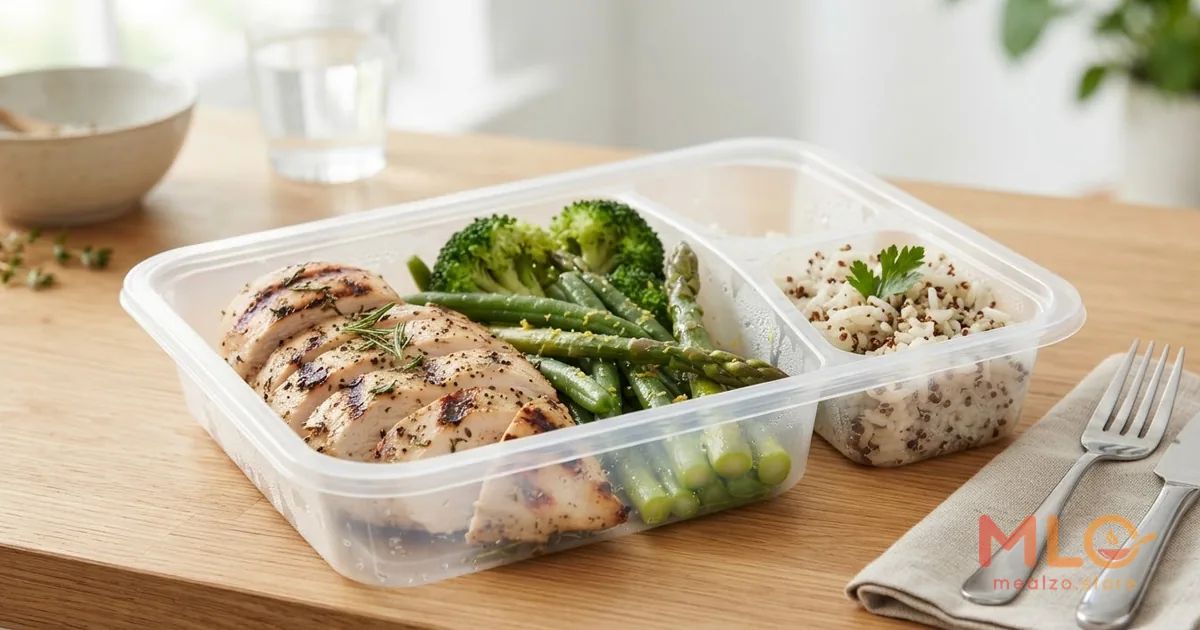
Losing weight in Bangkok does not require giving up rice, avoiding Thai food, surviving on salads, or treating every restaurant meal as a failure. A useful weight-loss plan is much less dramatic: it creates a manageable calorie deficit while still giving you enough protein, vegetables, fibre, carbohydrates, fats and food variety to make normal life possible.
That matters in a city where food is everywhere. Office lunches, delivery apps, street stalls, cafés, convenience stores and late dinners can make eating feel spontaneous even when you started the morning with a plan. The answer is not stricter rules. It is better structure.
A well-designed weight loss meal plan Bangkok residents can actually follow should help control total energy intake without turning every meal into a calculation. It should also fit the realities of Bangkok: rice-based meals, shared dishes, sweet drinks, sauces, eating out, long workdays and social weekends.
This guide explains how to build that structure without chasing extremes or expecting perfection.
1. What Is a Weight-Loss Meal Plan, Really?
A weight-loss meal plan is simply a way of organising food so that your average calorie intake is lower than the amount of energy your body uses over time.
That sounds basic because it is basic. The difficult part is making the plan satisfying, practical and consistent enough that you can continue following it.
A useful plan normally answers several questions:
- Roughly how many calories should your day contain?
- Where will your protein come from?
- How will vegetables and fibre appear across the day?
- How many meals suit your appetite and schedule?
- How will you handle restaurant meals, weekends and social occasions?
- Which foods do you genuinely enjoy enough to keep eating?
A meal plan therefore should not be a punishment menu. It is a framework for making an energy deficit easier to maintain.
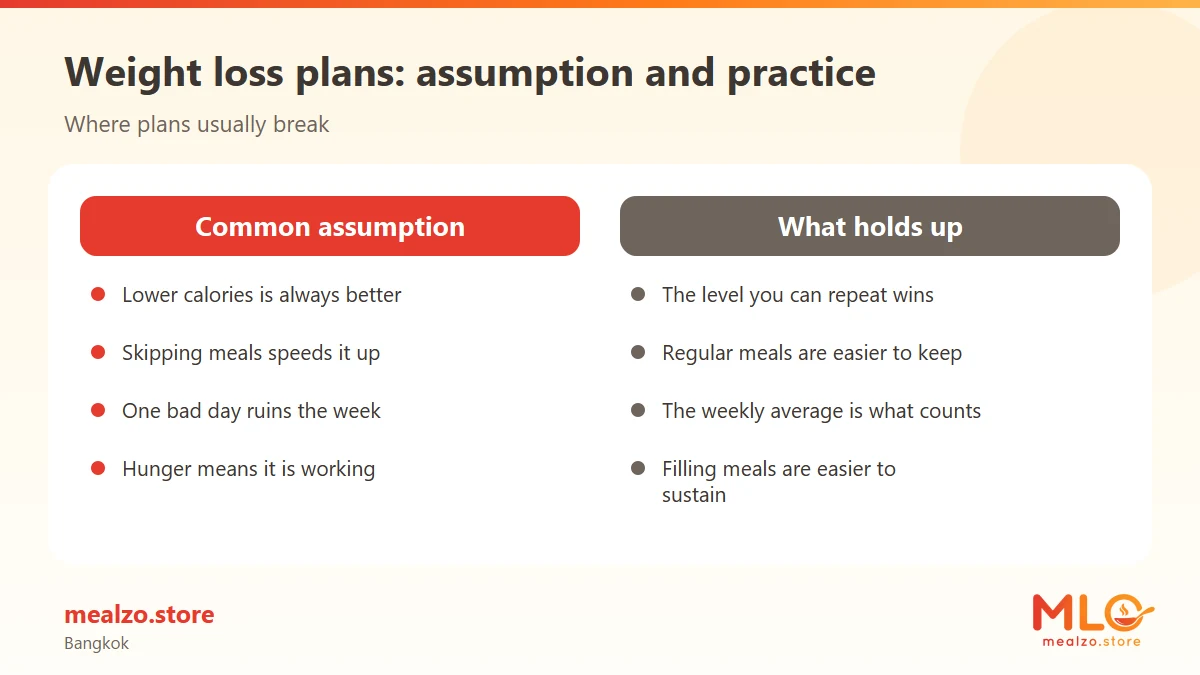
The best plan is not necessarily the one that produces the lowest possible calorie number. It is the one that reduces intake enough to move you toward your goal while leaving enough food, flexibility and enjoyment for ordinary life.
2. Energy Balance Matters More Than Any Single Food Rule
Almost every popular weight-loss diet contains a rule: stop eating carbohydrates, avoid dinner after a certain hour, remove sugar, eat only whole foods, skip breakfast or avoid rice.
Some of those rules may reduce calorie intake indirectly. None replaces energy balance.
If your average intake remains above what you use, removing one particular food category does not guarantee fat loss. Conversely, foods such as rice, noodles or fruit do not automatically stop progress if the overall diet remains appropriately portioned.
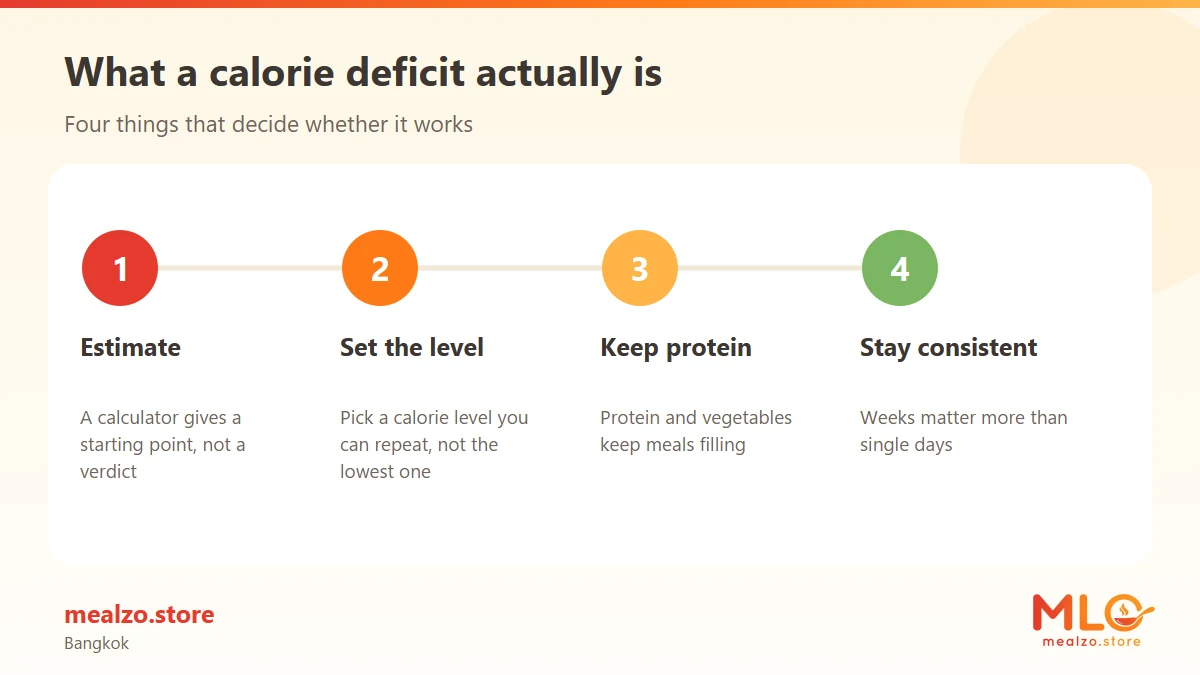
how a calorie deficit actually works
This is why thinking in terms of patterns is more useful than labelling individual foods as “good” or “bad.” Calories from sauces, snacks, cooking oil, sugary drinks and large restaurant portions can accumulate even when the main ingredients seem healthy.
Energy balance also works over time rather than resetting magically every midnight. One higher-calorie dinner does not destroy a week, just as one very light lunch does not automatically create meaningful progress.
Key takeaway: Weight loss is driven mainly by a sustainable calorie deficit across time, not by banning one food or macronutrient.
3. Choosing a Calorie Level Without Guessing
One of the easiest mistakes is choosing a calorie target based on impatience rather than actual energy needs.
A larger, active person may lose weight while eating considerably more than a smaller, less active person. Someone training several times per week may also need more food than someone working long hours at a desk.
choosing the right calorie level
estimate your daily calorie needs
The numbers below are examples of how different calorie levels might fit different situations. They are not prescriptions. Individual requirements vary according to body size, activity, age, appetite, training and other factors.
| Daily calories | Often suits | Meals per day | Notes |
|---|---|---|---|
| 1500 kcal | Smaller people with relatively low energy needs | 3 or 5 | Can feel restrictive for some; food quality and protein matter |
| 1800 kcal | People with moderate daily energy needs | 3 or 5 | Often allows more flexibility and larger portions |
| 2000 kcal | Moderate-to-higher energy needs | 3 or 5 | May still create a deficit depending on individual expenditure |
| 2200 kcal | Larger or more active people | 3 or 5 | Useful when a lower intake would be unnecessarily aggressive |
| 2500 kcal | Highly active or higher-energy individuals | 3 or 5 | Can still be compatible with weight loss if maintenance needs are higher |
Do not automatically interpret the lowest number as the “best” choice. A calorie level that leaves you constantly hungry, tired of the plan and thinking about food all evening may be harder to sustain than a slightly higher target.
4. Protein Helps With Fullness and Muscle Retention
Protein deserves attention during weight loss because it solves several practical problems at once.
First, protein-rich meals tend to be more filling than meals built mainly around refined carbohydrates and added fats. A chicken-and-rice meal with vegetables, for example, may keep you satisfied longer than a similar-calorie snack-based meal with very little protein.
Second, adequate protein is useful when trying to retain lean mass while losing body weight, especially if you also do resistance training.
Good everyday protein sources can include chicken, eggs, fish, seafood, tofu, tempeh, lean meat, dairy foods and legumes. You do not need to eat enormous amounts or build every meal around protein powder.
A simple habit is to identify the protein source before deciding what else goes on the plate. Then add vegetables, an appropriate carbohydrate portion and whatever fats or sauces the meal needs.
This approach tends to create more balanced meals automatically.
5. Vegetables and Fibre Make a Calorie Deficit Easier
Calorie control becomes much harder when meals are physically small.
Vegetables help because they add volume, texture and variety for relatively modest energy. Fibre-rich foods can also slow down the eating experience and improve satiety.
That does not mean every meal needs to be an enormous raw salad. In Bangkok, vegetables can appear in stir-fries, soups, curries, steamed sides, som tam, mixed rice dishes or vegetable-heavy noodle meals.
Fruit can play a similar role as a snack or dessert alternative, although portions still matter.
Other useful fibre sources include whole grains, oats, legumes, beans, seeds and less-refined carbohydrate choices.
The important idea is not “eat vegetables because vegetables are healthy.” It is more practical: if your meals contain protein and generous plant volume, staying within a sensible calorie range often becomes easier because the plate feels like a real meal.
6. Why Extreme Calorie Deficits Often Backfire
Eating less can produce a calorie deficit. Eating dramatically less does not automatically produce a better plan.
Very aggressive restriction can create predictable problems: persistent hunger, low energy, irritability, reduced training quality and a growing desire to abandon the diet completely.
There is also a behavioural problem. If Monday to Friday feels like deprivation, Saturday can quickly become compensation.
You may spend several days eating very little, then arrive at the weekend so hungry that one restaurant meal becomes dinner, dessert, drinks, late-night snacks and an unplanned Sunday recovery day.
A moderate approach is less exciting, but it usually fits real life better.
Instead of asking, “How little can I eat?” ask, “What level of intake can I repeatedly maintain while still feeling functional?”
Key takeaway: A modest deficit you can repeat is generally more useful than an aggressive deficit followed by repeated rebound eating.
7. Thai Food Can Absolutely Fit a Weight-Loss Plan
Thai food is not inherently incompatible with weight loss. The issue is usually the combination of portions, cooking methods, sauces and extras rather than the nationality of the cuisine.
Rice is a good example. Rice contains calories, but that does not make it a problem. A measured portion of rice alongside grilled chicken, fish, tofu, vegetables or a lighter stir-fry can fit very comfortably into a structured plan.
how Thai food fits weight loss
The same principle applies to noodles.
What changes total calorie intake quickly are things such as large rice portions, generous cooking oil, coconut-rich curries, fried toppings, sweet sauces and multiple dishes eaten together without noticing how much has accumulated.
You therefore do not need to replace Thai meals with imported “diet food.”
You may simply need a different meal structure: a clear protein portion, plenty of vegetables, a sensible amount of rice or noodles and greater awareness of the calorie-dense extras.
That is far easier to maintain when you live in Bangkok.
8. Street Food, Sauces and Drinks: The Calories That Hide Easily
Street food can fit a weight-loss plan, but estimating portions is harder because preparation varies from one vendor to another.
Oil is one of the biggest variables. Two visually similar stir-fries can contain very different amounts depending on the cooking process. Sauces may also contribute sugar and calories that are difficult to judge by appearance.
This does not mean you must stop eating street food. Instead, treat it as a meal with more uncertainty.
You can balance that uncertainty by choosing simpler dishes, avoiding automatic extras and keeping other meals relatively predictable.
Drinks deserve particular attention. Thai milk tea, sweet coffee, fruit drinks, soft drinks and other sweetened beverages can add significant energy without providing the fullness you would get from an equivalent amount of solid food.
Water, unsweetened tea, black coffee or lower-sugar versions can therefore make calorie control much easier without shrinking your meals.
9. Eating Out and Social Meals Without “Starting Again Monday”
Bangkok makes social eating difficult to avoid, and there is no reason you should avoid it.
The goal is to stop treating restaurant meals as either perfectly controlled or completely unrestricted.
Before eating out, keep the rest of the day normal. Skipping breakfast and lunch to “save calories” can make it harder to manage dinner calmly.
At the restaurant, focus on the biggest variables first:
- Choose a clear protein source.
- Include vegetables where practical.
- Order rice or noodles deliberately rather than automatically.
- Share richer dishes if the table is ordering family-style.
- Decide whether alcohol, dessert or another extra matters most instead of assuming you need everything.
Then eat the meal and move on.
One dinner rarely creates the problem. The problem appears when a higher-calorie dinner becomes a reason to abandon structure for the remainder of the weekend.
10. Weekend Patterns Matter More Than People Think
Many people follow a reasonably controlled diet from Monday to Friday and still see little change because their weekends operate under completely different rules.
Consider a simple pattern.
Five weekdays create a moderate calorie deficit. Then Friday night includes drinks and late food. Saturday includes brunch, snacks, dinner and dessert. Sunday becomes another restaurant day because the weekend already feels “off plan.”
The weekly deficit can shrink substantially.
The answer is not staying home and eating plain chicken all weekend. Instead, keep a few anchors consistent.
You might maintain your normal breakfast, choose one social meal rather than an entire unrestricted day, keep protein intake steady and avoid drinking calories simply because it is Saturday.
Weekends become easier when they are treated as normal days with more flexibility rather than a scheduled break from every habit.
11. The Plateau Problem: When Progress Appears to Stop
Weight does not move downward in a perfectly straight line.
Water retention, sodium, carbohydrate intake, digestive contents, training and normal day-to-day variation can all affect scale weight.
That is why reacting to a single weigh-in can be misleading.
If you choose to track body weight, looking at the broader trend is usually more useful than comparing one morning with the next.
A genuine plateau also does not automatically mean you need a dramatic calorie cut. First check whether anything else has changed.
Are portions slowly becoming larger? Have restaurant meals become more frequent? Are weekends less structured? Have you reduced your daily movement? Are oils, drinks or snacks appearing more often?
Sometimes the original plan still works; execution has simply drifted.
Changing everything at once makes it harder to identify what actually needs adjustment.
12. Tracking Without Turning Food Into a Full-Time Job
Tracking can be useful, but you do not have to weigh every ingredient forever.
For some people, logging food for a short period teaches useful portion awareness. It reveals how much energy comes from rice portions, oils, snacks, drinks and sauces.
For others, detailed tracking becomes tedious very quickly.
A simpler system can work too.
You might keep breakfast and lunch relatively consistent, estimate restaurant meals rather than trying to calculate them perfectly and monitor overall progress across several weeks.
Another option is using repeatable portions: a similar serving of protein, rice and vegetables each day without measuring every gram.
The purpose of tracking is feedback.
If the method creates more work than value, simplify it. You want enough information to make sensible decisions, not a flawless record of everything you have eaten.
13. Sleep and Stress Are Underrated Weight-Loss Factors
Sleep does not override energy balance, but poor sleep can make energy balance harder to manage.
After a short night, hunger may feel stronger, highly palatable food may become more appealing and the motivation to prepare a structured meal may disappear.
Stress can create a similar pattern.
A demanding Bangkok workday may end with delivery food, snacks and dessert not because you suddenly forgot how nutrition works, but because tired people naturally prefer easy decisions.
This is why a good meal plan should account for difficult days rather than assuming every day will be ideal.
Keep useful food available. Have a default lunch. Know what you will order when you do not want to think. Avoid making your whole plan depend on evening willpower.
Weight management becomes more realistic when food structure works alongside sleep, stress management and everyday routines.
14. Six Common Weight-Loss Mistakes
Most unsuccessful plans do not fail because of one forbidden food. They fail because the structure is too difficult to repeat.
| Mistake | Why it backfires | Better approach |
|---|---|---|
| Choosing the lowest possible calorie target | Hunger and fatigue can make adherence harder | Use a moderate calorie target suited to your needs |
| Cutting rice or carbs completely | Creates unnecessary restriction for many people | Control portions and keep foods you enjoy |
| Ignoring cooking oil and sauces | Calories accumulate without adding much food volume | Pay attention to calorie-dense extras |
| Being strict all week and unrestricted all weekend | Weekend intake can erase weekday deficits | Keep a few consistent habits every day |
| Trying to eat perfectly | One deviation can feel like total failure | Aim for a reliable overall pattern |
| Changing the plan after every weigh-in | Normal fluctuations can trigger unnecessary adjustments | Judge trends across a longer period |
Notice that none of the better approaches requires perfection.
They mostly reduce unnecessary friction.
The easier the plan is to execute on an average Tuesday, a stressful Thursday and a social Saturday, the more useful it becomes.

15. Why Consistency Beats a Perfect Diet
The theoretical best diet is irrelevant if you can only tolerate it for ten days.
A slightly less aggressive approach followed consistently for months is often more useful than repeated cycles of strict dieting followed by giving up.
why consistency beats a perfect diet
Consistency also changes what a “mistake” means.
If you normally eat structured meals, one dessert is simply dessert. A birthday dinner is a birthday dinner. A larger lunch does not require fasting the following day.
You return to your usual pattern at the next meal.
That mindset prevents small deviations from becoming multi-day periods of overeating.
It also gives you more useful information. When the basic structure remains stable, you can see whether portions, calorie levels or activity genuinely need adjustment.
Key takeaway: The most effective plan is the one you can return to immediately after normal life interrupts it.
16. How Meal Delivery Removes Daily Food Decisions
One of the hardest parts of weight loss is not understanding nutrition. It is making hundreds of food decisions while busy, hungry or tired.
This is where structured meal delivery can be useful.
MEALZO provides chef-prepared meal-plan delivery in Bangkok with calorie-controlled options designed to make everyday eating more predictable. Plans can be selected at 1200, 1500, 1800, 2000, 2200 or 2500 kcal, with either 3 or 5 meals per day. Every plan uses one mixed menu that combines Thai and international dishes.
The value of this kind of structure is not that prepared meals somehow change the biology of weight loss.
They reduce variables.
Instead of deciding what to order, estimating the portion, wondering how much oil was used and negotiating with yourself while hungry, a planned meal is already defined.
MEALZO also offers multiple dietary plan options, including a dedicated weight-loss plan, as well as package lengths of 3, 7, 14 or 30 days.
Meal delivery does not remove social meals, weekends or personal responsibility. It simply makes a large part of the week easier to keep consistent.
17. A Realistic Four-Week Starting Framework
You do not need to transform everything on day one. A four-week progression can make the process much easier to evaluate.
Week 1: Establish structure. Choose a sensible calorie level, decide whether three or five meals suits you better and create a repeatable meal schedule. Do not try to optimise every detail yet. Your first goal is simply to stop making food decisions from scratch every few hours.
Week 2: Improve meal quality. Pay attention to protein, vegetables and fibre. Look at the meals that leave you hungry soon afterwards and ask what is missing. Sometimes the answer is more protein; sometimes it is more food volume; sometimes the portion is simply too small.
Week 3: Audit your real week. Look at restaurant meals, weekends, drinks, snacks and “small extras.” Do not judge them. Identify which habits meaningfully change your weekly intake and which ones are harmless.
Week 4: Review the trend. Evaluate how the plan feels and how consistently you followed it. If you track weight or measurements, look at the broader trend rather than one isolated result. Adjust only what actually needs adjustment.
The objective after four weeks is not to have discovered the perfect diet.
It is to have built a system you understand well enough to continue.
Frequently Asked Questions
Can I eat rice on a weight-loss meal plan?
Yes. Rice can fit perfectly well within a calorie-controlled diet. Portion size and the rest of the meal matter more than treating rice itself as a problem.
Is three meals or five meals better for weight loss?
Neither frequency is automatically better. Three meals may suit people who prefer larger meals, while five can work well for people who prefer smaller, more frequent portions. Total energy intake and overall adherence matter more than meal frequency alone.
Do I need to stop eating Thai food to lose weight?
No. Thai meals can work well when portions, cooking methods, sauces and calorie-dense extras are considered. Protein, vegetables and a controlled serving of rice or noodles can form a very practical weight-loss meal.
How do I know whether my calorie target is too low?
If a plan feels extremely restrictive, leaves you persistently hungry or is difficult to maintain, that is a practical sign that the approach may be too aggressive for you. Calorie needs vary significantly, so a lower number should never be chosen simply because it promises faster progress.
What should I do after a high-calorie restaurant meal?
Return to your normal eating pattern at the next meal. You generally do not need to punish yourself with fasting or extreme restriction because of one social meal.
Can meal delivery help with weight loss in Bangkok?
It can help by making portions, calorie levels and daily meal choices more predictable. The main advantage is convenience and consistency: fewer unplanned decisions can make a structured eating pattern easier to maintain.
People who are pregnant, breastfeeding, under medical treatment, managing an eating disorder or dealing with another condition affecting nutrition should not rely on a general calorie article to set an intake target. Individual professional advice is more appropriate.
Find a Meal Plan That Fits
Compare Mealzo plans or use the calculator to explore meal options for your needs.