Storing and Reheating Your Meal Boxes in Bangkok: Heat, Fridges and Food Safety
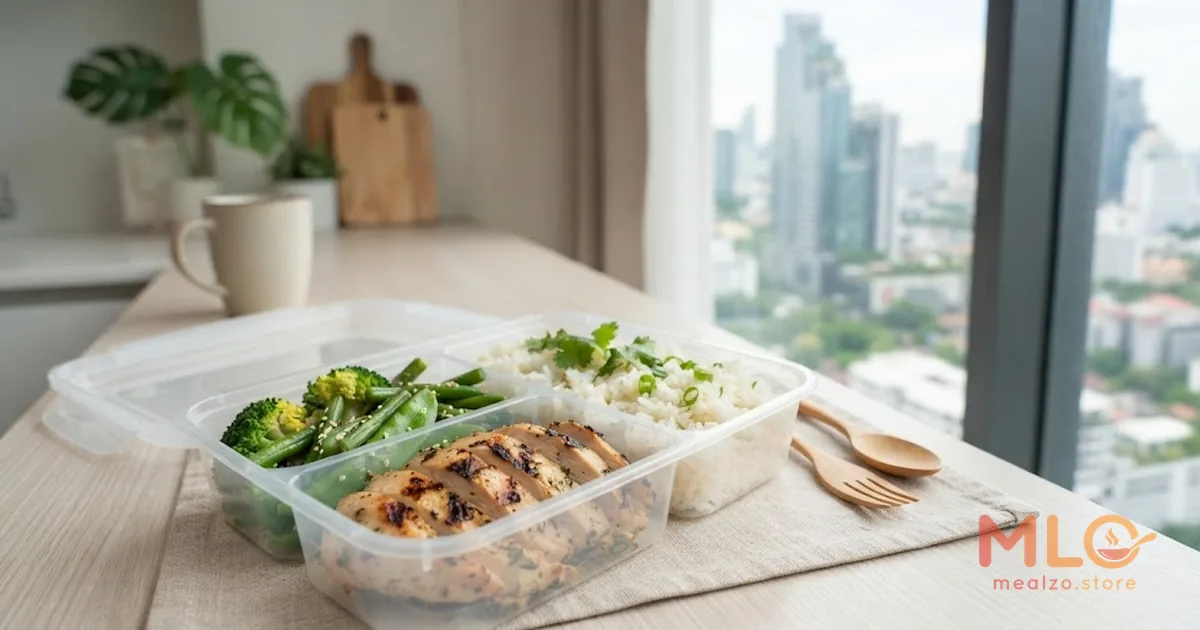
A meal box delivered in the morning is not finished just because the courier has handed it over. What happens next depends on where you put it, how long it stays there, and when you plan to eat it.
For people in Bangkok, this matters more than it might in a cooler climate. A box left in a condo lobby, office corridor or vehicle is dealing with heat and humidity while you are busy with the rest of your day.
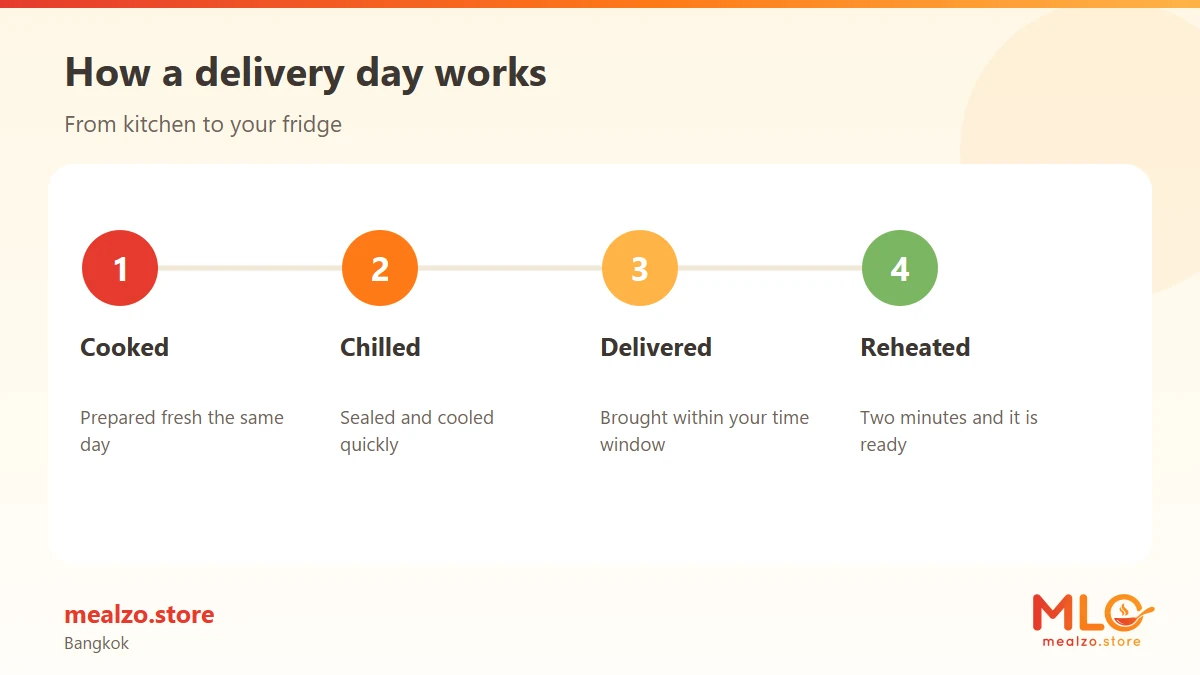
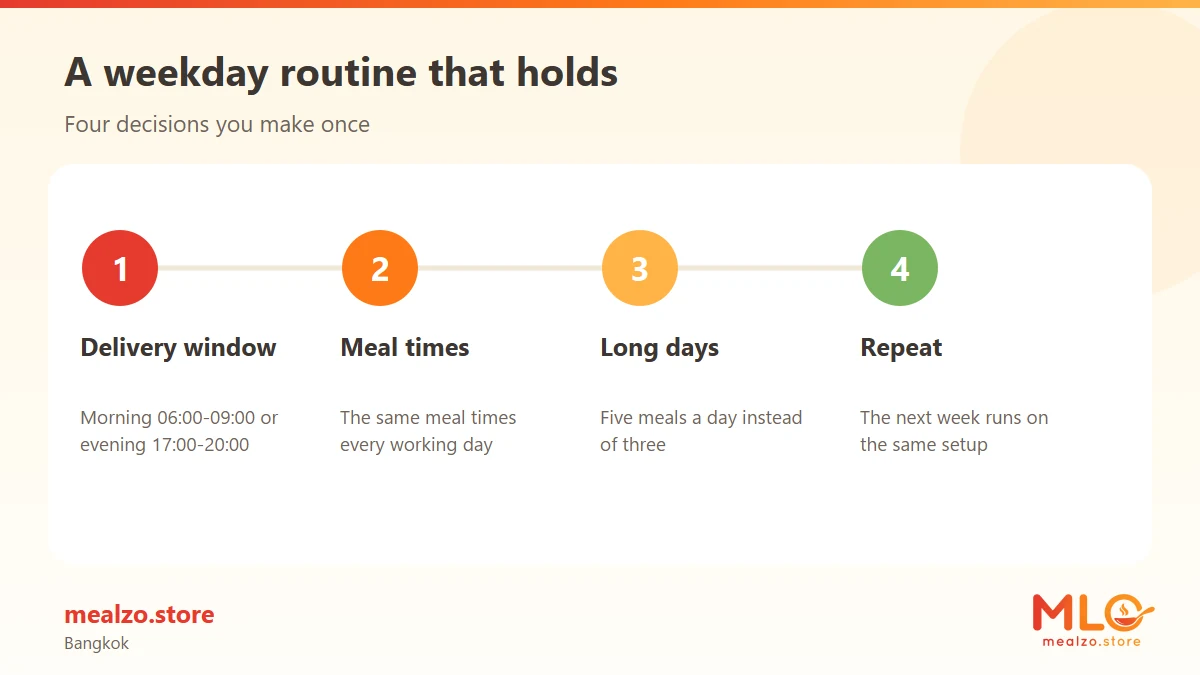
Mealzo Bangkok offers a morning delivery window from 06:00 to 09:00 and an evening window from 17:00 to 20:00. You choose the window that fits your routine, but you also need a realistic plan for storing the food once it arrives.
This guide explains how to store and reheat meal boxes in Bangkok, with practical advice for condos, offices, commuting and days when there is no microwave nearby.
1. What actually happens to a meal box after delivery
Once the box leaves the courier's hands, the storage conditions are largely under your control. That sounds obvious, but it is easy to overlook when a delivery arrives before you are ready to eat.
A morning delivery can arrive several hours before lunch. If your delivery is between 06:00 and 09:00 and you normally eat at 13:00, the food has to be kept appropriately chilled during that gap. Dinner creates an even longer gap if you receive the morning window.
The most useful question is not simply, "When was it delivered?" Ask instead, "Where has it been sitting since delivery?"
A chilled meal placed promptly into an appropriate refrigerator is a very different situation from the same meal left on a reception counter, inside a parked car or in a warm office.
Key takeaway: After delivery, the location of the meal box matters more than the fact that it arrived in the morning.
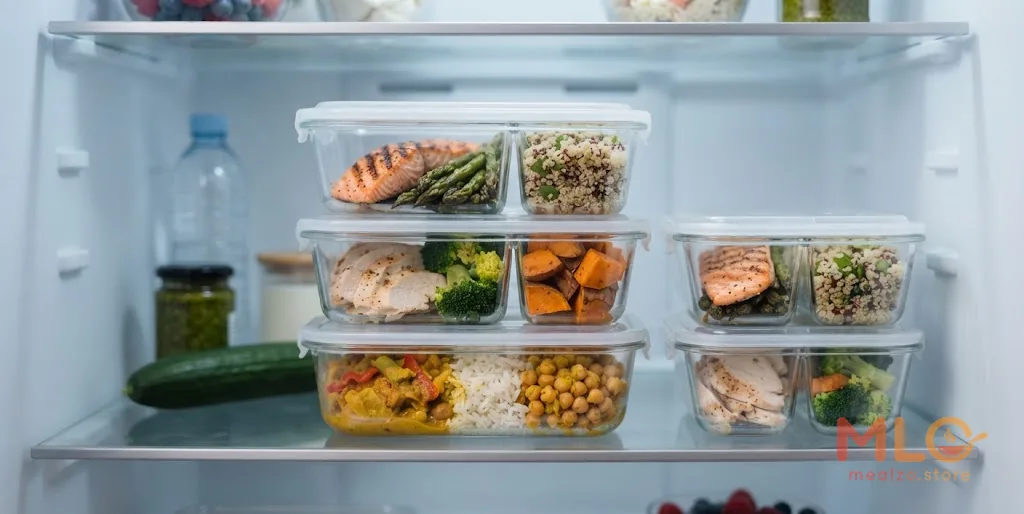
If you work from home, storage is usually straightforward. Put the meals away as soon as practical and organise the fridge so that the boxes can remain properly chilled.
If you are leaving for work immediately, think about storage before ordering a morning window. A meal plan removes the cooking decision, not the storage responsibility.
2. Why Bangkok's climate changes the usual advice
Bangkok is hot and humid for much of the year. Standard food advice often uses the idea of "room temperature", but a Bangkok lobby, office corridor or vehicle can be considerably warmer than the indoor environment people imagine when reading that phrase.
Heat changes the practical situation because chilled food warms more quickly when it is left somewhere warm. Humidity also affects handling, packaging and condensation.
The rainy season does not solve this problem. Rain can make the weather feel cooler to you, but it should not be treated as refrigeration for food. A wet Bangkok afternoon is still not a substitute for keeping chilled food cold.
The same principle applies during a short journey. Walking from a condo entrance to a taxi, riding a motorbike, or carrying a meal across a large office complex all expose the box to conditions that may be warmer than your refrigerator.
That does not mean every minute outside a refrigerator creates the same level of risk. Conditions vary. The useful habit is to minimise unnecessary exposure to heat and put chilled food into proper storage as soon as possible.
3. Where the box goes between delivery and eating
The best storage location is the one that keeps the meal appropriately chilled until you are ready to eat it.
In practice, that means planning the handover rather than treating delivery as the end of the process.
| Storage situation | What the risk is | Practical fix |
|---|---|---|
| Refrigerator at home | Chilled food is stored in the environment intended for it | Put the box away promptly and make enough space before delivery |
| Office refrigerator | The fridge may be full, frequently opened or warmer than expected | Check the available space and condition before relying on it |
| Condo reception desk | The area is not refrigerated storage | Arrange to collect the box and move it to a refrigerator |
| Mail room | It may be warm and may not have suitable chilled storage | Do not treat the mail room as a food refrigerator |
| Security counter | Food can remain exposed while you are away | Arrange a handover that lets you move the meal to cold storage |
| Shoe rack outside a door | Heat and humidity can accumulate, especially in enclosed corridors | Bring the box inside and refrigerate it |
| Car or taxi | Interior temperatures can rise quickly, particularly without effective air conditioning | Minimise the journey and use an insulated bag when carrying meals |
| Motorbike top box | It can become very warm in Bangkok conditions | Use an insulated bag and keep the journey as short as practical |
The key distinction is simple: a convenient place is not automatically a suitable storage place.
4. The reception desk problem and how to solve it
Condo living creates a very specific problem. Morning deliveries may arrive while you are asleep, getting ready for work or already on the way out.
A reception desk is convenient for collecting a package, but it is not food storage unless there is appropriate refrigeration. The same applies to a mail room or security counter.
Leaving a box outside your door on a shoe rack is also not a good substitute. The corridor may feel cooler than the street, but that does not make it a refrigerator.
If you cannot personally receive a morning delivery, build a storage plan around the handover. For example:
- Arrange access so you can collect the box promptly.
- Confirm where the delivery can be placed without confusing a reception area with refrigerated storage.
- Make space in your refrigerator before the delivery window.
- If morning storage is impossible, consider the evening delivery window instead.
- If you need building-specific access arrangements, plan them in advance rather than improvising after delivery.
For more practical planning around condo access and storage, see the Bangkok condo and office delivery checklist.
Key takeaway: A condo reception desk, mail room, security counter or shoe rack is a delivery point, not a refrigerated storage solution.
5. Office fridges and their real failure modes
An office refrigerator sounds like the obvious answer for a morning meal plan. Sometimes it is. Sometimes it is the weakest link.
Shared office fridges are often packed. People open the door repeatedly throughout the day. Some appliances are poorly maintained or simply do not stay as cold as expected. A fridge can also be so full that cold air cannot circulate properly.
Before relying on an office refrigerator, look at the practical reality.
Can you fit the meals without crushing or leaving them in an awkward position? Is the appliance functioning normally? Is it constantly being opened? Do people regularly leave the door open?
If space is the problem, do not assume you can solve it by squeezing another box into an already overloaded shelf. Plan which meals you will take in, clear the required space, and keep the refrigerator organised.
If your workplace has no dependable refrigerator, a morning delivery may not match a lunch or dinner routine. The evening delivery window can be a more practical choice.
Another option is to organise your working day around the meals you can eat soon after delivery, rather than expecting a warm office corridor to function as temporary refrigeration.
6. Condo fridges and planning for a few days at once
Small condo refrigerators create a different problem. You may have a perfectly functional fridge but nowhere near enough convenient shelf space for a large meal-plan delivery.
A few days of meals can occupy a noticeable portion of a compact refrigerator, particularly if you receive three or five meals per day. A five-day stretch at five meals per day means planning for many individual portions. Even a three-day package can take more room than expected once drinks, ingredients and other food are included.
The solution is organisation, not simply trying to make everything fit.
Before a delivery, check how much space you actually have. Remove old food, consolidate items where appropriate and decide where the meal boxes will go. Avoid blocking the refrigerator's normal airflow.
If you are ordering a longer package, think about the physical storage requirements before delivery day. The plan length can be 3, 7, 14 or 30 days, but that does not mean you need to keep the entire package inside a small condo refrigerator at once if your delivery arrangement does not require it.
Your own fridge capacity should influence which delivery routine makes sense for you.
7. Carrying a box across Bangkok without cooking it
Sometimes the problem is not storage at home or at work. You need to move the meal.
A short walk in strong Bangkok sunshine is different from carrying a box directly from one chilled environment to another. A motorbike ride adds heat exposure, and a taxi without effective air conditioning can create a warm enclosed space.
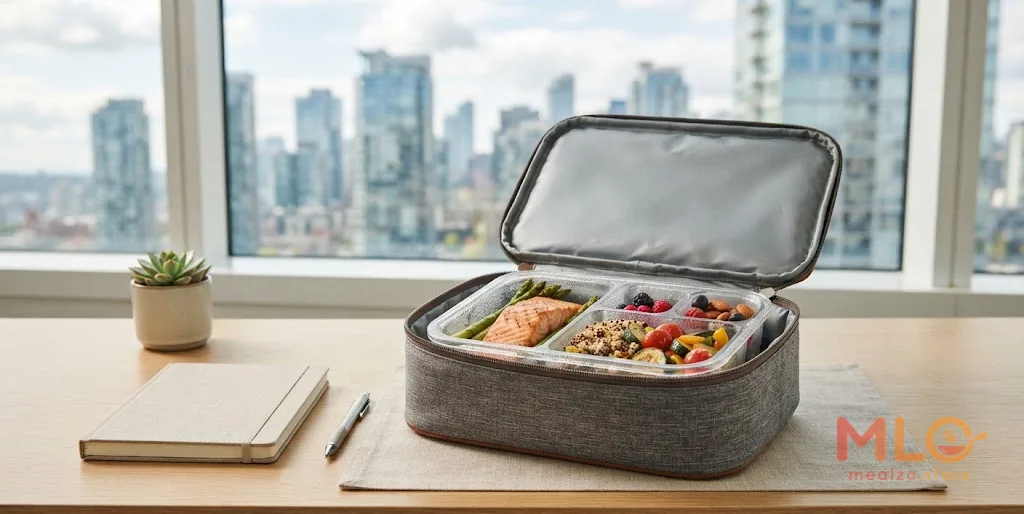
For short transfers, an insulated bag is a simple and inexpensive practical solution. It reduces exposure to ambient heat while you move the meal from one place to another.
The bag does not magically make food refrigerated, so it should not be treated as a replacement for proper cold storage. Think of it as a way to make a necessary transfer less exposed to Bangkok's heat.
If you regularly commute between a condo and office, plan the route around storage. The fewer unnecessary stops between collection and refrigeration, the easier the routine becomes.
For more context on deliveries and movement through the city, read how meal delivery works in Bangkok traffic.
8. Reheating in a microwave without ruining the food
For most Bangkok condos and offices, the microwave is the realistic reheating tool.
The basic goal is even heating rather than simply making the outside of the meal very hot. Depending on the dish and the microwave, the centre can heat differently from the edges.
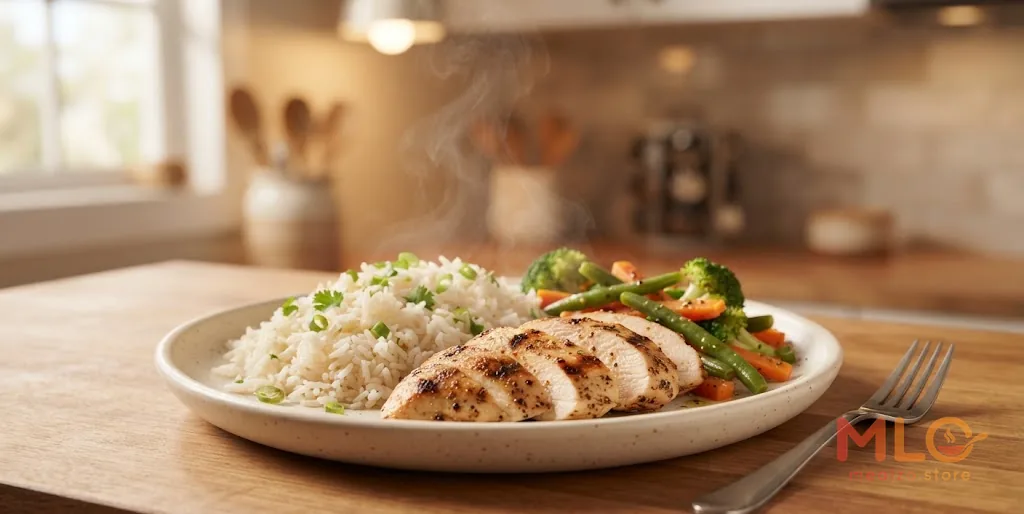
If appropriate for the meal and its packaging, shorter heating intervals can give you more control. Stirring or rearranging the food halfway through can help distribute heat. Covering suitable food can help retain moisture. Letting the meal stand briefly after heating allows heat to spread through it.
The actual meal label and packaging instructions always take priority. Do not assume every container, lid or component should be treated identically.
A practical routine is:
- Check the meal instructions before heating.
- Remove components that should not be heated.
- Arrange the food so it can heat evenly.
- Use shorter bursts rather than automatically using one long cycle.
- Stir or rearrange where appropriate.
- Cover suitable food if the instructions allow it.
- Let it stand briefly after heating.
- Check the result before eating.
Reheating thoroughly is part of general public-health food-safety guidance. The exact heating method depends on the meal, equipment and instructions.
The quality side is different. Microwave reheating can change texture even when the heating itself is handled correctly.
9. Components that reheat badly and what to do about them
Not every part of a meal benefits from being reheated.
Rice can dry out or become hard. Fried foods can lose their crisp texture. Leafy salads should generally stay out of the microwave. Sauces can separate. Seafood can overcook quickly, while eggs can become rubbery.
These are primarily quality issues. A meal that does not reheat beautifully is not automatically a food-safety problem, and food-safety handling does not guarantee that the texture will remain unchanged.
| Component | What happens | Adjustment that helps |
|---|---|---|
| Rice | It can dry out or become hard | Add a small spoon of water if appropriate and use shorter heating intervals |
| Fried or crisp food | The coating can become soft | Remove it before reheating other components where possible |
| Leafy salad | Leaves wilt and lose their fresh texture | Keep it cold and do not heat it |
| Sauce | It can separate or change consistency | Heat gently and stir where appropriate |
| Seafood | It can become overcooked quickly | Use shorter heating intervals and avoid unnecessary reheating |
| Eggs | They can become rubbery | Reheat gently and avoid excessive heating |
| Protein | It can dry out when overheated | Use shorter bursts and separate it from other components if useful |
| Starchy sides | Texture can become dry or heavy | Add a little moisture where suitable and avoid prolonged heating |
One of the easiest improvements is to treat the box as separate components rather than one solid meal. Heat the protein and starch, keep fresh ingredients cold, and remove anything that is supposed to remain crisp.
For rice, a spoon of water can help restore some moisture. For fried components, taking them out before microwaving can prevent unnecessary softening.
If a dish is designed to be eaten cold, there is no reason to reheat it simply because you own a microwave.
10. Meals that are better cold
Some meals are genuinely better when eaten cold. That is a matter of texture, freshness and how the ingredients work together.
A crisp salad is a straightforward example. Leafy vegetables can lose their appeal when heated. Some sauces are also more balanced when served chilled. Fresh components can provide contrast against a hot main dish, so heating everything in the same container can actually make the meal less enjoyable.
Eating a meal cold is not a failure of the reheating process. It can be the deliberate choice that gives you the best texture.
This is particularly useful if you work somewhere without a microwave. Instead of trying to find a way to heat every component, choose meals you are comfortable eating cold when the meal instructions allow it.
The important distinction is between quality and safety. Texture, crispness and flavour are questions of eating quality. Storage and temperature handling are food-safety considerations. Do not use good texture as proof that food has been stored appropriately, and do not assume that poor texture means the food was handled incorrectly.
11. What to do when there is no microwave
A microwave is convenient, but it is not essential for every meal-plan routine.
If your office has no microwave, you have several practical options. First, choose meals that you are happy to eat cold when that fits the meal instructions. Second, structure your routine around eating soon after delivery when appropriate. Third, choose the evening delivery window if that works better with your home setup.
This is where delivery timing becomes part of food handling rather than simply a scheduling preference.
If your workday begins early and you leave home before the morning delivery, there may be little value in selecting a morning window if you have nowhere suitable to store the food. The evening window from 17:00 to 20:00 may fit better, particularly if you can refrigerate the meals at home.
If you have no microwave, no refrigerator and no realistic cold-storage option at work, do not build your meal plan around the assumption that the box can simply sit in the office until lunchtime.
The practical choice is to match the plan to the facilities you actually have.
12. Choosing the delivery window that matches your storage
Mealzo Bangkok has two delivery windows: morning from 06:00 to 09:00 and evening from 17:00 to 20:00. You choose the one that fits your routine.
The right choice depends less on which time sounds convenient and more on what happens immediately after delivery.
Choose the morning window when you have a clear way to receive the food and put it into appropriate cold storage. This can work well for people who work from home, have reliable refrigerator access at the office or can organise their morning around the delivery.
The evening window can make more sense when you spend the day away from home and do not have reliable chilled storage at work.
For practical information about the two delivery windows, see morning and evening meal delivery times in Bangkok.
If you want to understand how the meals are prepared before delivery, see inside the Bang Na kitchen and meal preparation process.
Mealzo Bangkok's plans use one mixed cuisine, combining Thai and international dishes within the same plan. There are 12 plan types, six daily calorie levels from 1200 to 2500 kcal, and options for 3 or 5 meals per day. Package lengths are 3, 7, 14 or 30 days.
The app's calorie calculator uses the Mifflin-St Jeor formula as an estimate, not as medical advice.
Allergen handling works through the customer's declarations from nine allergen groups. Dishes containing a declared allergen are not assigned to that customer. This describes the assignment mechanism and should not be interpreted as a guarantee that a meal is allergen-free.
If you are ready to review the available plans, use Mealzo Bangkok meal plans.
General food-safety principles and where to check the specifics
The following points are general public-health food-safety guidance, not Mealzo Bangkok-specific shelf-life guarantees.
Widely published food-safety guidance uses a temperature danger zone of roughly 5°C to 60°C. The general principle is to keep chilled food cold, avoid unnecessary time in warm conditions, reheat food thoroughly when reheating is appropriate, and avoid repeatedly reheating the same meal.
The WHO Five Keys to Safer Food provide another useful general framework: keep clean, separate raw and cooked foods, cook food thoroughly, keep food at safe temperatures, and use safe water and raw materials.
These principles are useful for understanding why storage matters, but they do not tell you exactly how long a particular Mealzo Bangkok meal can be kept. That information depends on the specific meal and its instructions.
Nothing in this article overrides the instructions on the actual meal label. If the label says something different from a general rule described here, follow the label.
If you are unsure about a specific box, check the label and the in-app information for that meal. If something remains unclear, Mealzo Bangkok support can confirm the relevant handling information. The public contact email is [contact@mealzo.store](mailto:contact@mealzo.store).
The same principle applies to reheating. General guidance can explain why even heating matters, but the actual meal instructions remain the authority for that particular dish.
The simplest routine is therefore also the most useful one: receive the meal, move it to suitable storage, follow the meal-specific instructions, and choose your delivery window according to the facilities you actually have.
A meal plan removes the cooking decision, not the storage responsibility. That responsibility is small, but it is real, and someone who has nowhere at all to keep a box should think about the evening window instead of the morning one.
FAQ
How long can I leave a meal box at my condo reception desk?
A reception desk should not be treated as refrigerated food storage unless suitable refrigeration is actually provided. Bangkok's ambient conditions can be much warmer than the environment assumed by generic references to room temperature. Arrange to collect the box and move it to appropriate storage as soon as practical.
What should I do if my office refrigerator is full?
Do not rely on an overcrowded refrigerator simply because it is technically switched on. Make space before delivery, organise the meals so they fit properly, and check that the appliance is functioning normally. If reliable cold storage is not available, consider whether the evening delivery window fits your routine better.
Can I carry my meal box on a motorbike?
A short journey is different from leaving the box exposed to Bangkok's heat for hours. When you need to transport chilled food, an insulated bag is a practical way to reduce exposure during the journey. Keep the transfer as direct as possible and move the meal into appropriate storage afterward.
Should I microwave the entire meal box?
Not necessarily. Some components are better cold or suffer when reheated. Leafy salads should not be heated, while fried foods can become soft, seafood can overcook and eggs can become rubbery. Where the meal allows it, heat suitable components separately and follow the instructions on the actual meal label.
What if I do not have a microwave?
You can plan around that. Choose meals you are happy to eat cold when appropriate, structure your routine around eating at a suitable time, or select the evening delivery window if it gives you better access to your home kitchen. The absence of a microwave is mainly a planning issue.
Where should I check if I am unsure about a specific meal?
The meal label and the in-app information for that meal are the authority for specific handling instructions. General food-safety advice cannot replace meal-specific instructions. If the information is unclear, contact Mealzo Bangkok support at [contact@mealzo.store](mailto:contact@mealzo.store).
Mealzo Bangkok is a kitchen and meal delivery service operating exclusively in Bangkok, Thailand. We are not affiliated with similarly named services outside Thailand.
Find a Meal Plan That Fits
Compare Mealzo plans or use the calculator to explore meal options for your needs.