Benefits of Eating Balanced Meals Every Day

Eating balanced meals every day does not mean eating perfectly. It does not mean weighing every ingredient, avoiding street food or saying no every time somebody brings cake into the office.
It means giving most meals a sensible structure often enough that your day becomes easier to manage.
That distinction matters in Bangkok, where food is everywhere and schedules are rarely predictable. You might leave home early, grab breakfast near the BTS, eat lunch with colleagues in a food court, stop for an iced coffee in the afternoon and get home too late to feel like cooking. When every meal is decided at the last minute, convenience tends to make the decisions for you.
Balanced eating changes that by giving the day a framework.
The benefits are not dramatic overnight transformations. They are quieter and much more useful: steadier energy, better control over hunger, fewer random snacks, easier weight management, clearer thinking during long workdays and less time spent wondering what to eat next.
If you want the full framework behind calories, macros, portions and food variety, start with the complete guide to balanced meal plans.
Balanced Meals Give the Day More Stability
One of the biggest practical benefits of balanced meals is that they make the day feel less chaotic.
A meal built mostly around one component can work for a while, but it often leaves something missing.
A breakfast that is almost entirely sweet pastry and coffee may be quick, but it gives you a very different start from a breakfast that includes a clear protein source, some carbohydrates and fruit.
The same applies at lunch. A huge serving of rice with very little protein and few vegetables is not the same as a meal where those elements are more deliberately balanced.
The difference is not about labelling one meal “good” and another “bad”. It is about how predictable the rest of the day becomes.
Energy becomes easier to manage
People often describe their energy as if it were random: good in the morning, terrible after lunch, then somehow back again late at night.
Food is not the only factor involved. Sleep, stress, caffeine, heat, activity and workload all matter. But meal structure can still make daily energy easier to manage.
If you regularly go too long without eating and then have a very large meal, you may feel heavy and unproductive afterwards. If breakfast is tiny and lunch gets delayed by meetings, the afternoon can turn into a search for coffee, snacks or anything fast.
A more balanced structure reduces those extremes.
That might mean a breakfast with eggs, rice and fruit. It could mean yoghurt, oats and fruit. Lunch might be chicken or tofu with jasmine rice and vegetables. The exact cuisine matters less than having enough structure to carry you into the next part of the day.
In Bangkok, this is especially useful on long office days. A 45-minute commute on the BTS or a traffic-heavy ride home feels very different when you are reasonably fed than when lunch happened six hours ago and dinner is still uncertain.
Balanced Meals Can Make Hunger More Predictable
Key takeaway: Balanced meals make daily eating easier by combining enough protein, carbohydrates, fats and vegetables in a practical routine.
Hunger is easier to manage when meals are built to feel like actual meals.
That sounds obvious, but many people spend large parts of the day eating foods that are convenient without ever feeling that they have properly eaten.
A sweet drink on the way to work. A small bakery item at the desk. Coffee. A few snacks during a meeting. Then suddenly it is 14:30 and hunger becomes urgent.
That is when food choices usually get less deliberate.
A balanced meal gives hunger a clearer rhythm.
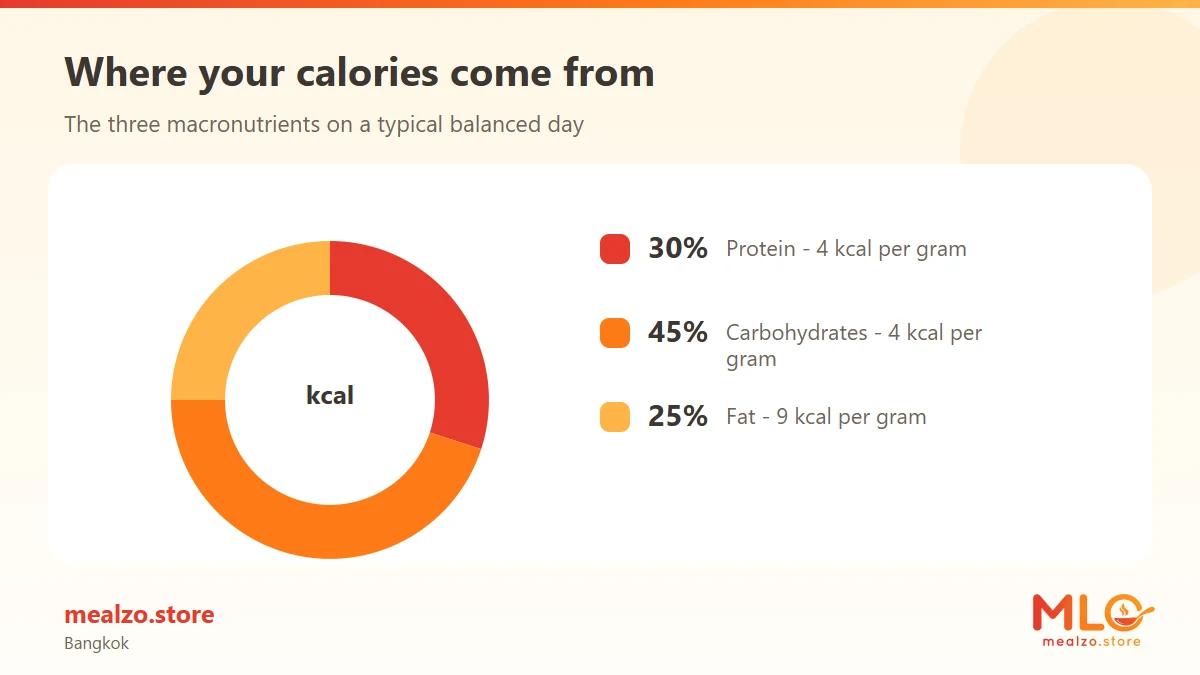
Protein, carbohydrates, fats and food volume all contribute to how a meal fits into the day. You do not need every meal to hit an identical formula, but a plate that contains a recognisable protein source, a sensible amount of carbohydrate and vegetables usually has more staying power than one built almost entirely around refined carbohydrates or snacks.
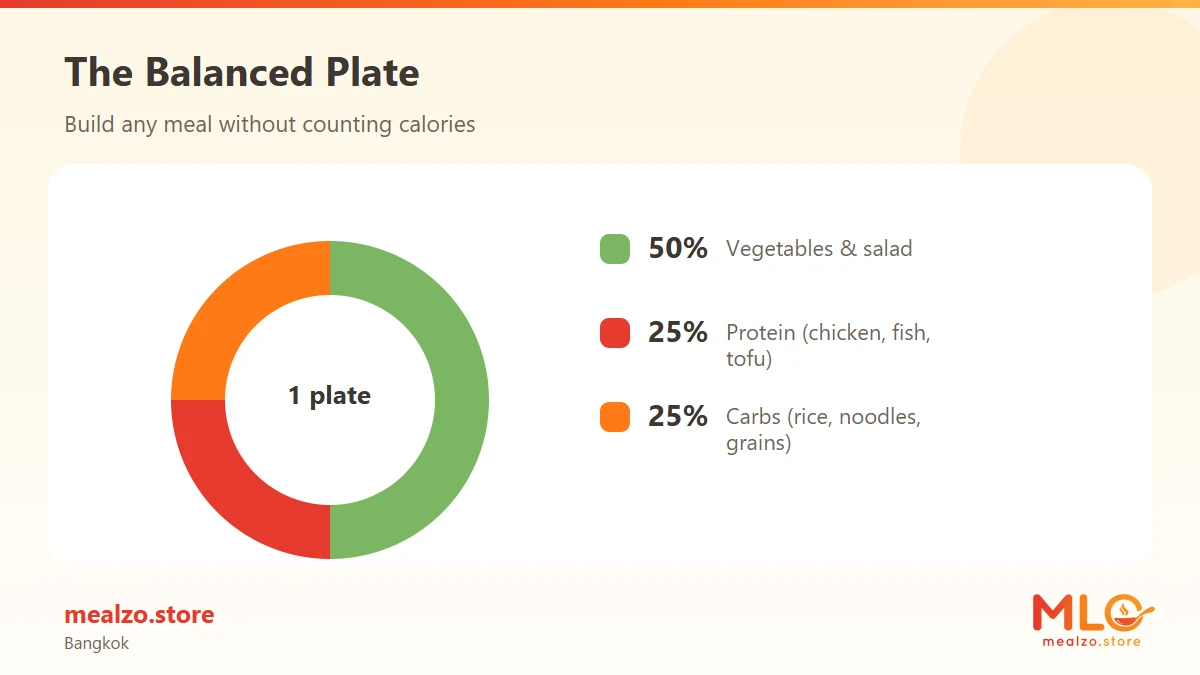
For a simple visual approach, see how to build a balanced plate without overthinking it.
Fewer “emergency snacks” can be a side effect
The goal is not to eliminate snacks.
A planned afternoon snack may fit your routine perfectly, especially if you prefer five eating occasions rather than three larger meals.
The more useful distinction is between planned eating and reactive eating.
Planned eating might be fruit and yoghurt at 16:00 because dinner will be late.
Reactive eating is standing in 7-Eleven at 18:30 after a long day, extremely hungry, buying whatever looks fastest because lunch was too small.
That difference sounds minor. Over weeks, it matters.
When main meals are structured properly, many people find that they spend less of the day negotiating with hunger.
Weight Management Becomes Less About Extreme Diets
Balanced eating can also make weight management more practical because it shifts attention away from short-term extremes.
A common cycle looks like this:
Eat very little for several days. Avoid rice. Cut snacks completely. Choose the lowest calorie option possible. Then reach a busy or social day and abandon the whole system.
That approach feels disciplined in the beginning, but it is difficult to maintain.
Balanced meals offer a less dramatic route.
You still need to pay attention to overall intake and portions. Calories do not stop mattering simply because a meal contains vegetables. But you also do not need every meal to look like a punishment.
A reasonable portion of rice can fit.
A Thai lunch can fit.
A dinner with carbohydrates can fit.
Eating with friends can fit.
The benefit is that weight management becomes part of a normal eating structure rather than a separate “diet mode” that starts on Monday and ends at the first difficult day.
Consistency matters more than a few perfect days
A plan only helps if it survives normal life.
Bangkok is full of situations that make rigid diets inconvenient: office lunches, street food, late meetings, delivery apps, weekend social meals, cafés and constant access to snacks.
Trying to control every variable is exhausting.
A better approach is to have a repeatable baseline.
Most meals follow a sensible structure. Portions are broadly appropriate. There is variety. Less predictable meals happen occasionally without turning into an excuse to abandon the week.
That is also why consistency matters more than a perfect diet is such an important principle. A workable pattern repeated over time is more useful than a flawless three-day plan.
Better Meal Structure Can Help With Focus at Work
| Everyday problem | Unbalanced eating | With balanced meals |
|---|---|---|
| Afternoon energy dips | Lunch may be too light or mostly refined carbs | Protein, carbs and vegetables create a more satisfying meal |
| Constant snacking | Meals may not feel filling for long | More complete meals can reduce the urge to keep grazing |
| Decision fatigue | Every meal requires another food choice | Planned meals remove several daily decisions |
| Uneven protein intake | Most protein may end up in one meal | Protein can be spread more consistently across the day |
| Weekend overeating | Restrictive weekdays can lead to compensating later | A steadier routine leaves more room for flexibility |
| Irregular meal times | Meals are skipped or delayed until hunger takes over | A simple meal schedule makes eating more predictable |
Food is not a productivity hack, and no lunch will magically turn a difficult afternoon into a perfect one.
But poor meal planning can certainly make office work harder than it needs to be.
Imagine two typical Bangkok workdays.
On the first day, breakfast is only coffee. Lunch gets pushed back because of meetings. At 14:00 you finally eat a large meal very quickly. By mid-afternoon, you feel heavy, thirsty and ready for another coffee.
On the second day, breakfast is more substantial. Lunch happens at a reasonable time and contains protein, rice and vegetables in a manageable portion. Later, there is either a planned snack or nothing at all, depending on hunger.
The second day is not guaranteed to be perfect. But there is less food-related disruption.
Fewer decisions means more attention for other things
There is another benefit that has little to do with nutrients themselves: decision fatigue.
What should I eat?
Where should I order?
Is this too heavy?
Do I need more protein?
Should I avoid rice today?
What did I eat yesterday?
When those questions appear several times every day, food starts using more mental space than necessary.
A balanced routine reduces that.
You might know that weekday lunches usually follow a basic pattern: protein, rice or another carbohydrate, vegetables. The dish can change without the structure changing.
That frees you from solving the same problem from zero at every meal.
For busy professionals, that simplicity may be one of the most valuable benefits of all.

Balanced Eating Makes Food Choices Simpler, Not Stricter
Healthy eating advice often becomes complicated very quickly.
One person tells you to avoid carbs.
Another says breakfast is essential.
Someone else insists meal timing matters more than food choice.
Then social media adds superfoods, fasting windows and dozens of contradictory rules.
A balanced meal framework cuts through much of that noise.
Instead of asking whether a single food is “good” or “bad”, ask:
Does this meal contain a useful protein source? Is the carbohydrate portion reasonable for my needs? Are there vegetables or fruit somewhere in the day? Where is the fat coming from? Am I eating enough variety over the week?
These questions are flexible enough to work with Thai food, international food and mixed eating patterns.
They also make daily choices easier in places where you cannot control every ingredient.
At a Bangkok food court, you may not know the exact amount of oil in a stir-fry. But you can still choose a meal with a visible protein source, control the rice portion and add vegetables where possible.
That is a much more realistic skill than expecting every meal outside the home to come with perfect nutrition data.
A More Relaxed Relationship With Food Is Easier to Maintain
Key takeaway: Consistency matters more than making every individual meal nutritionally perfect.
One of the less obvious benefits of balanced eating is that it creates room for normal food.
When people divide everything into “clean” and “bad”, eating becomes unnecessarily moral.
Rice is bad today, acceptable tomorrow. Dessert means failure. A restaurant meal needs to be compensated for. Monday becomes the day to start again.
That kind of thinking makes food more stressful than it needs to be.
A balanced approach is less dramatic.
One rich dinner does not cancel a week of normal meals. A dessert does not require skipping breakfast the next morning. Street food does not automatically ruin a plan.
The next meal can simply be normal again.
This does not mean ignoring portions or eating without any structure. It means judging your diet over a longer period instead of treating every plate like a test.
Variety helps here too
People are more likely to resent a plan when it feels repetitive or restrictive.
Eating the same plain chicken and vegetables every day may make tracking easy, but it can also make every restaurant meal look increasingly attractive.
Variety keeps structured eating closer to normal eating.
Thai basil chicken one day, fish and rice another, tofu with vegetables, pasta with chicken, a mixed bowl, eggs at breakfast: the underlying structure can stay balanced while the food itself changes.
That matters because nutritional variety is not only about macros. Different foods also provide different micronutrients and fibre. understand the difference between macros and micronutrients
What Changes When Balanced Eating Becomes Your Default?
The biggest benefits are usually not visible in one meal.
They appear when balanced eating becomes the default rather than a temporary project.
You spend less time trying to “fix” yesterday.
You are less likely to reach the evening extremely hungry because lunch was inadequate.
You do not need to restart your diet every Monday.
You have a few reliable meal structures instead of making dozens of food decisions every week.
And when life gets messy, you have something simple to return to.
That is the real value of routine.
Not control for the sake of control. Fewer unnecessary decisions.
Where Meal Delivery Can Fit Into That Routine
| Meal | Focus | Simple example |
|---|---|---|
| Breakfast | Protein + steady carbs | Eggs, rice and fresh fruit |
| Lunch | Complete main meal | Basil chicken, rice and vegetables |
| Afternoon meal | Light but satisfying | Chicken wrap with vegetables |
| Dinner | Protein + vegetables + moderate carbs | Grilled fish, jasmine rice and stir-fried greens |
Some people can create this structure by cooking most of their meals themselves. Others combine home cooking, food courts, restaurants and prepared meals.
There is no single correct system.
The practical question is whether the system still works during busy weeks.
Meal planning involves more than cooking. You have to decide what to make, buy ingredients, store them, prepare them, portion the food and clean up afterwards. In a calm week, that may be easy. During a long run of workdays, it may be the first routine to disappear.
For people who want more structure without making every food decision themselves, a prepared meal plan can take over part of that work.
MEALZO offers balanced as one of its 12 diet plans with delivery in Bangkok.
The available calorie levels are:
- 1,200 kcal
- 1,500 kcal
- 1,800 kcal
- 2,000 kcal
- 2,200 kcal
- 2,500 kcal
You can choose 3 or 5 meals per day, with packages for 3, 7, 14 or 30 days.
Cuisine can be selected as:
- thai
- international
- mixed
Menus are arranged by an algorithm, so the service is built around a structured plan rather than requiring customers to select each individual dish from an à-la-carte marketplace.
That structure may suit someone who already understands the basics of balanced eating but wants fewer daily decisions.
You can compare the available options here: explore MEALZO diet plans.

The Benefit That Matters Most: You Can Keep Going
Balanced meals do not need to be exciting every day.
They need to work.
A useful routine should survive normal Bangkok life: hot afternoons, BTS commutes, office deadlines, street food, 7-Eleven runs, social dinners and evenings when cooking feels impossible.
That is why the benefits of balanced meals are less about one “perfect” plate and more about what happens when the pattern becomes normal.
Energy becomes easier to manage. Hunger becomes more predictable. Weight management requires less drama. Workdays involve fewer food-related decisions. And food itself stops feeling like something that constantly needs to be controlled or corrected.
A good plan does not make eating the centre of the day.
It helps food fit into the day you already have.
##
Frequently Asked Questions
What does “balanced” actually mean?
A balanced meal usually combines a source of protein, carbohydrates, vegetables or fruit, and some dietary fat. The exact portions depend on the person, their appetite, goals and overall eating pattern.
Does balanced eating mean giving up my favourite Thai dishes?
No. Thai food can fit comfortably into balanced eating. A dish such as pad kra pao, grilled chicken, curry or noodles can be part of the day while you pay attention to portions, protein, vegetables and what you eat alongside it.
How can balanced meals help with energy levels?
Meals that include a mixture of protein, carbohydrates and fats tend to be more substantial than meals built around only one component. That can make it easier to maintain a steady eating routine instead of alternating between skipping meals and reaching for quick snacks.
Do I have to cook every meal myself?
No. Balanced eating is about the composition of your meals, not who prepares them. You can cook, eat out, buy prepared food or use a meal-plan service such as MEALZO.
How long does it take to notice a difference?
There is no fixed timeline because routines, meal patterns and individual needs vary. Many people first notice practical changes such as feeling better prepared for the day, making fewer last-minute food decisions and following meal times more consistently.
How does a meal plan make balanced eating easier?
A meal plan removes much of the planning, shopping and daily decision-making involved in choosing meals. MEALZO provides chef-prepared, calorie-controlled balanced meals in Bangkok with flexible plan options, making it easier to follow a structured eating routine.
Find a Meal Plan That Fits
Compare Mealzo plans or use the calculator to explore meal options for your needs.