Easy-to-Digest Meals: What Makes a Meal Gentler on Digestion?
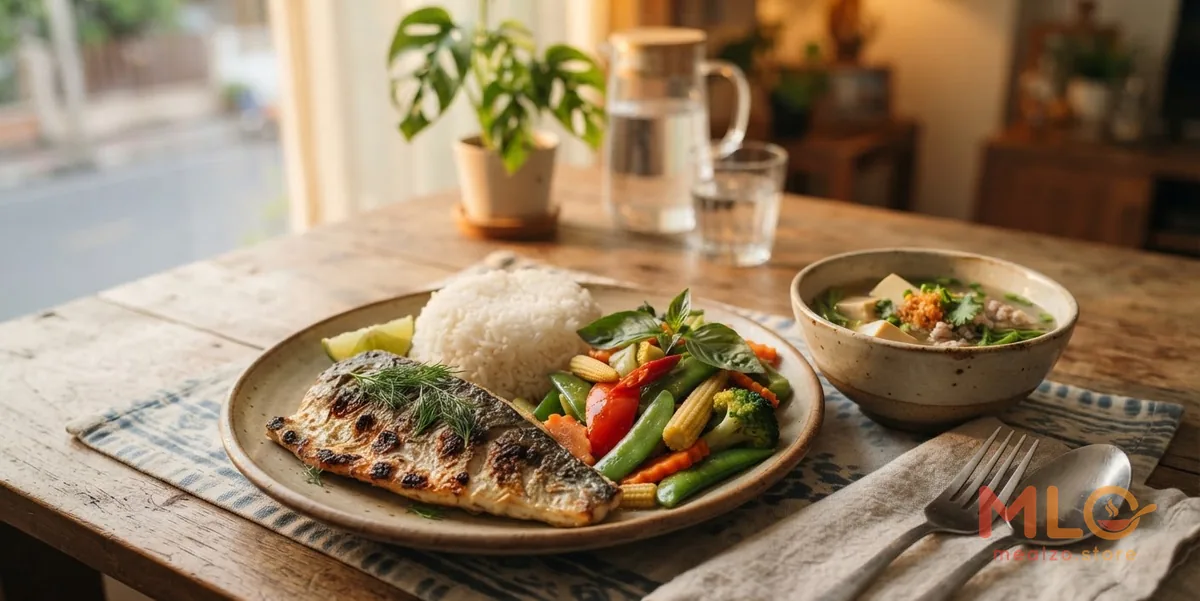
Some meals feel straightforward. Others seem much heavier than their ingredients suggest. The difference is often not one single food but the way the meal is built: how it is cooked, how much fat it contains, how spicy it is, how large the portion is, and even when and how quickly it is eaten.
That makes the idea of easy to digest meals more practical than it first sounds. You do not need a complicated list of forbidden ingredients. It is often more useful to look at preparation and meal structure, then compare a rich, fried or heavily seasoned version with a simpler version of the same basic dish.
Bangkok makes those contrasts particularly visible. A chicken-and-rice meal can be steamed and lightly seasoned, or fried and covered with a rich sauce. A curry can be relatively light or built around generous coconut milk. Dinner can happen at 19:00 or well after midnight.
People differ in what suits them, and anything persistent belongs with a doctor.
1. “Easy to digest” is mostly about how the meal is put together
There is no single cooking style that automatically makes every dish appropriate for every person. What you can compare are measurable properties of the food itself.
A meal may be:
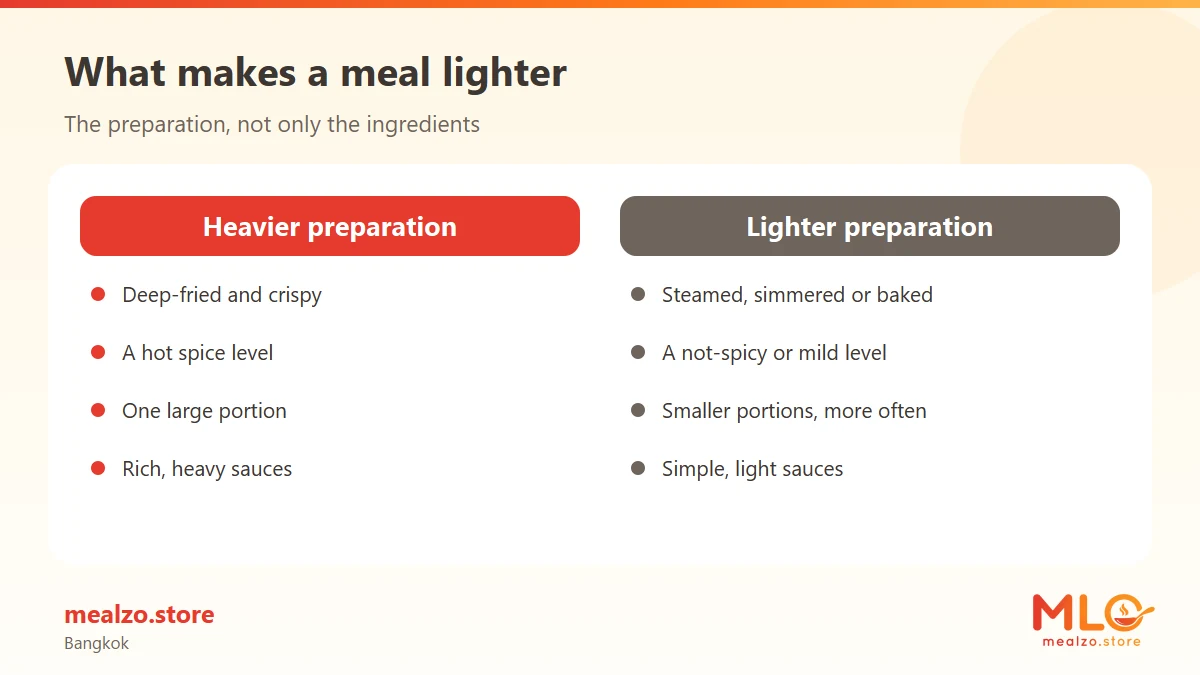
- steamed rather than deep-fried
- moderate in portion size rather than very large
- lightly seasoned rather than intensely spicy
- lower in added fat rather than coated in oil or a rich sauce
- built with moderate amounts of fibre rather than several fibre-heavy ingredients at once
- eaten earlier rather than as a very large late-night dinner
That is a more useful way to think about easy to digest meals than dividing the entire menu into “good” and “bad” foods.
It also leaves room for normal eating. Rice does not have to disappear. Thai food does not have to become bland. Fat and fibre do not have to be removed completely. The question is how much is present in one meal and what else appears alongside it.
Key takeaway: A gentler meal is usually created through preparation, portion and balance rather than one supposedly perfect ingredient.
2. Cooking method can change the character of the same dish
Steaming, boiling and baking generally produce a different meal from deep-frying, even when the main ingredient stays the same.
Take chicken. Steamed chicken with rice is fundamentally different from battered chicken cooked in hot oil. The protein may be similar, but the finished meal has a different coating, fat level and texture.
The same applies to fish, vegetables, tofu and potatoes.
| Food | Heavier preparation | Gentler preparation |
|---|---|---|
| Chicken | Breaded and deep-fried | Steamed or baked |
| Fish | Deep-fried with a rich sauce | Steamed with light seasoning |
| Vegetables | Fried in generous oil | Steamed or boiled |
| Potatoes | French fries | Boiled or baked |
| Tofu | Deep-fried cubes | Steamed or lightly cooked tofu |
This does not mean fried food is automatically off limits. It means frying changes the finished dish, and that difference matters when you are deliberately choosing a lighter style of meal.
In Bangkok, the distinction is especially useful because many familiar dishes exist in several forms. One stall may serve deep-fried chicken over rice, while another kitchen serves steamed chicken with rice and broth. Looking at the cooking method often tells you more than the name of the main ingredient.
3. Fat content matters beyond whether a food is “healthy”
Fat is part of normal food. The relevant question here is not whether fat is good or bad but how much is concentrated in one meal.
A plate can become substantially richer through:
- deep-frying
- coconut milk
- large amounts of cooking oil
- creamy sauces
- fatty cuts of meat
- several rich components served together
Thai food provides clear examples. Coconut milk is central to many curries and desserts, but a coconut-heavy curry creates a very different meal from grilled chicken with rice and a clear soup. Likewise, stir-fried noodles cooked with generous oil are different from boiled rice noodles in a lighter broth.
You do not have to remove every source of fat to make a meal gentler. Often the simpler adjustment is avoiding a pile-up: fried protein, oily noodles and a creamy side dish on the same plate.
For a broader way to think about combining protein, carbohydrates, vegetables and fats, the balanced plate approach is a useful companion to this discussion.
4. Portion size can matter as much as the recipe
A carefully prepared meal can still be very large.
Restaurant portions, food-court combinations and late-night delivery orders can easily turn into several dishes eaten together: rice, a main course, a side, fried snacks and dessert. Even if each component is familiar, the complete meal is much larger than a single plate.
A more moderate serving makes the meal itself simpler.
That may mean:
- one main dish with rice instead of several rich dishes
- a smaller serving of curry with a larger share of plain rice
- choosing either a fried side or a rich dessert rather than both
- dividing a very large takeaway portion rather than treating the container as one automatic serving
This is not about eating as little as possible. The point is simply that portion size is one of the properties that changes how heavy a meal is.
Meal plans can make this easier to structure because the daily energy level is chosen in advance. Mealzo offers 1200, 1500, 1800, 2000, 2200 and 2500 kcal levels, with either 3 or 5 meals per day. Those are fixed planning options, not medical prescriptions.
Key takeaway: A simple recipe served in a very large portion is still a large meal.
5. Spice level is adjustable, not all-or-nothing
Bangkok diners are used to the question: how spicy?
That question deserves a more precise answer than simply “Thai spicy” or “not spicy.” A dish can use chilli as a small accent, a noticeable part of the seasoning, or the dominant flavour.
If you are trying to keep meals gentler, reducing chilli intensity is one straightforward variable to experiment with. You can still keep herbs, ginger, garlic, lime, coriander, basil or other seasonings where the recipe uses them. Less chilli does not have to mean flavourless food.
Mealzo offers six spice levels, from not spicy up to Thai-spicy. That makes spice intensity something the customer can deliberately choose rather than accept as a fixed property of the dish.
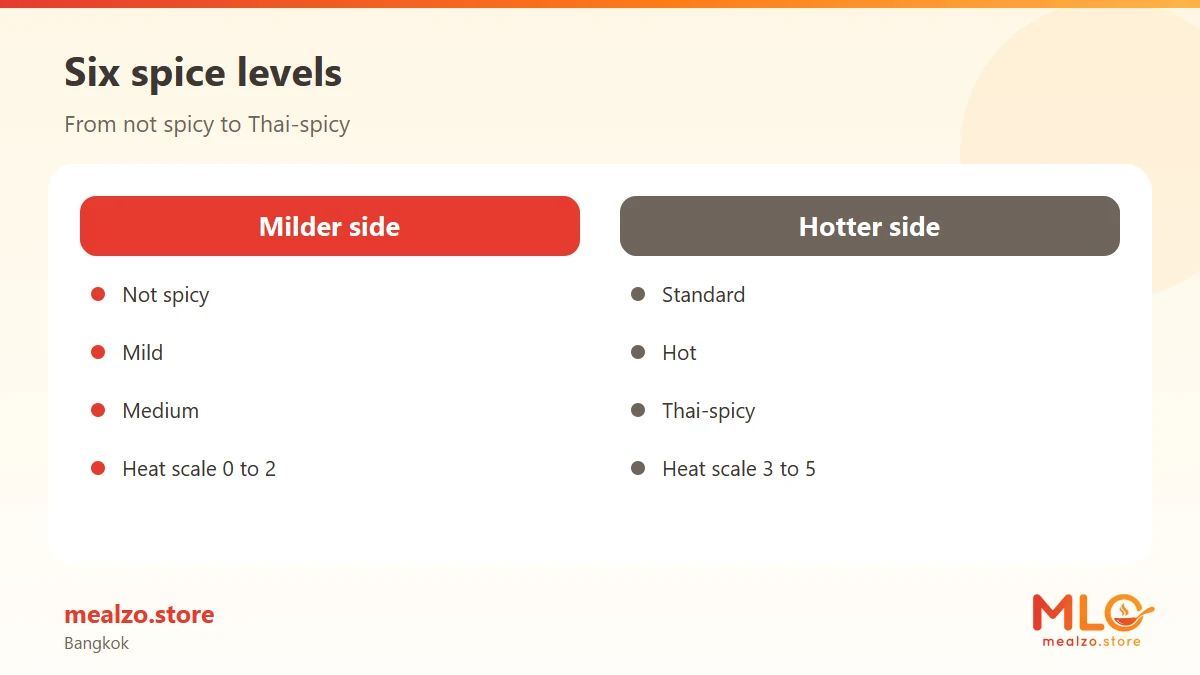
A useful way to think about the scale is:
| Spice approach | What changes in the meal |
|---|---|
| Not spicy | Chilli heat is removed |
| Low spice | Chilli remains restrained |
| Medium range | Heat becomes a more obvious part of the dish |
| Higher spice | Chilli becomes increasingly prominent |
| Thai-spicy | The meal is prepared for a strong chilli preference |
The exact experience still depends on the recipe, but the practical principle is simple: spice can be treated as a variable.
6. Fibre is not a contest to see how much fits on one plate
Fibre is another area where meal composition matters more than slogans.
Vegetables, whole grains, legumes, fruit, nuts and seeds can all contribute fibre. A meal does not become automatically better simply because it contains the maximum possible amount of all of them at once.
Compare two lunches. One might contain rice, cooked vegetables and chicken. Another might combine a large whole-grain portion, beans, raw vegetables, seeds and fruit. Both are legitimate meals, but they are built very differently.
If you are looking for easy to digest meals, it can be useful to pay attention to the concentration and texture of fibre in one sitting rather than trying to classify fibre itself as something to avoid.
Cooked vegetables also create a different meal from a very large raw salad. Again, this is a description of preparation and structure, not a rule that everyone needs to follow.
The same principle applies when choosing prepared food. Ingredient lists often reveal whether a meal is based on a few straightforward components or combines many rich, fibrous or strongly seasoned elements. The guide to reading ingredient and allergen information explains what to look for when comparing prepared meals.
7. The same dish can be made heavier or gentler
One of the easiest ways to understand the concept is to compare two versions of a familiar meal.
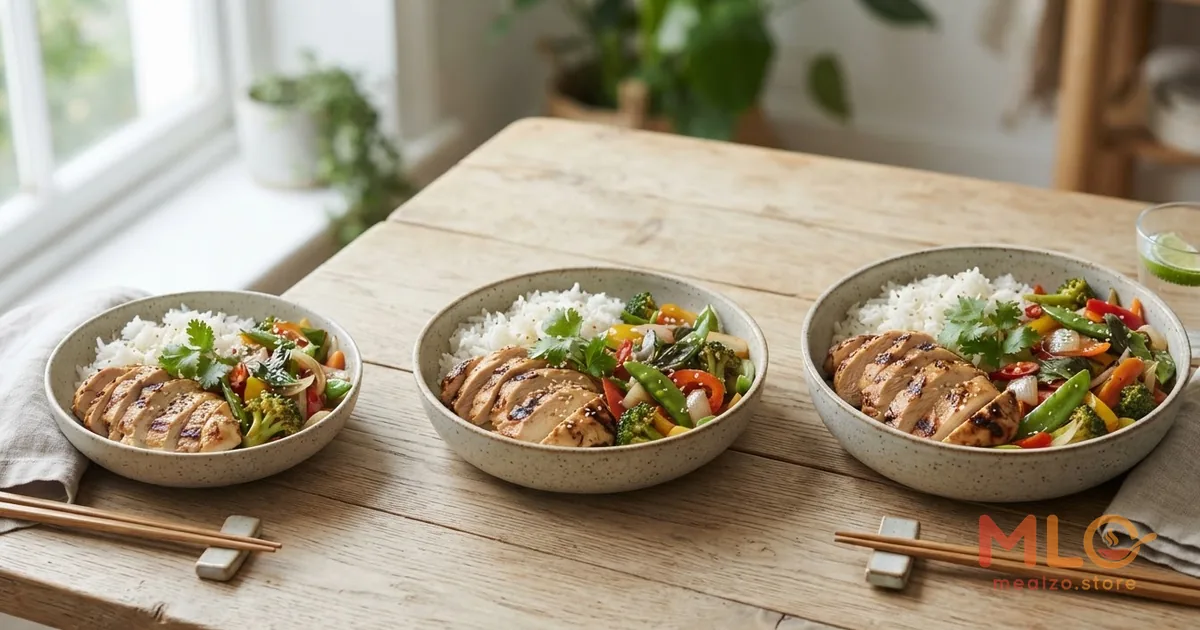
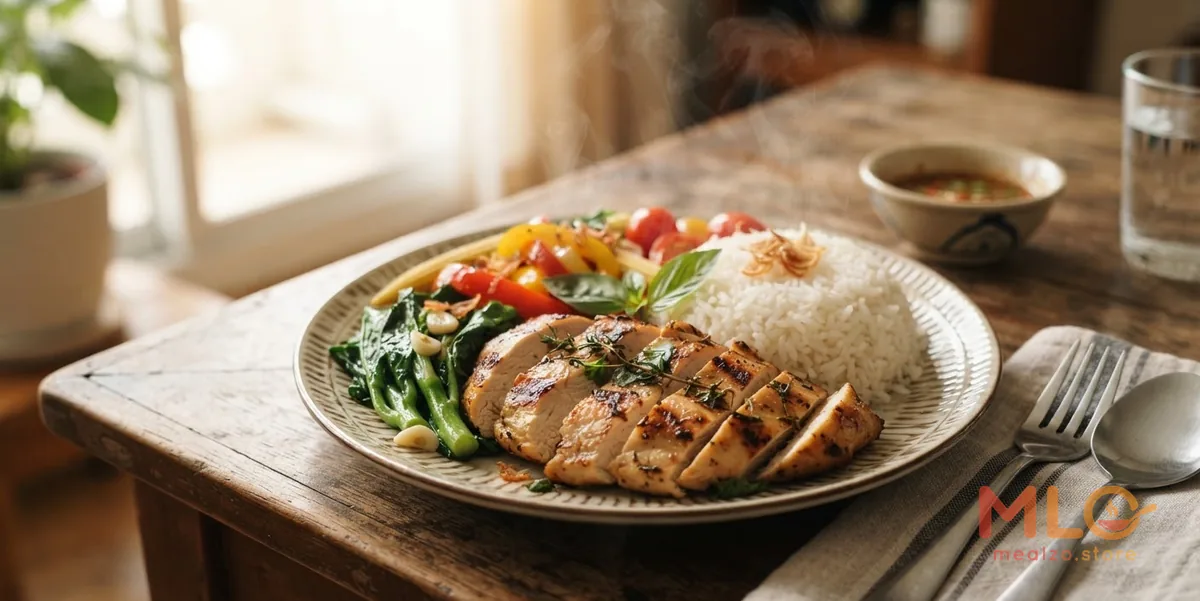
Consider chicken with rice. You do not need to replace both ingredients. Changing the cooking method, sauce and side dishes can produce a substantially different plate.
| Part of the meal | Heavier version | Gentler version |
|---|---|---|
| Chicken | Deep-fried chicken | Steamed or baked chicken |
| Rice | Fried rice | Plain steamed rice |
| Sauce | Rich, oily or creamy sauce | Light seasoning or a smaller amount of sauce |
| Vegetable side | Deep-fried vegetables | Steamed or boiled vegetables |
| Extra | Fried snack on the side | Clear soup or no extra side |
The comparison works with Thai dishes too. Grilled or steamed proteins, plain rice and cooked vegetables create one style of meal. Deep-fried proteins, coconut-rich sauces, oily noodles and fried sides create another.
Neither description requires labelling the food as universally “safe” or “unsafe.” It simply gives you a practical set of differences to notice when ordering.
Key takeaway: When two meals use similar ingredients, cooking method and added fat can make them very different meals.
8. Meal timing changes the context of what you eat
A large dinner eaten very late at night is not the same eating pattern as the same food eaten earlier as part of a normal evening meal.
This matters in Bangkok because late dinners are easy to fall into. Long commutes, extended office hours, shopping malls open into the evening and food delivery can push the main meal later and later.
If your goal is a gentler eating routine, it can be useful to separate two decisions:
- what you are eating
- when you are eating it
A rich meal does not become lighter because it is eaten late. Likewise, a moderate meal does not require a special hour on the clock. The useful point is simply that meal timing is another part of the overall pattern.
Prepared meal delivery can remove some of the last-minute decision-making. Mealzo deliveries are available across Bangkok in either the 06:00-09:00 morning window or the 17:00-20:00 evening window, with the kitchen in Bang Na.
9. Eating speed is part of the meal, even though it is not an ingredient
Food writers spend a lot of time discussing ingredients and almost none discussing the pace of eating.
Yet two people can sit down to the same bowl of rice and chicken and eat it very differently. One finishes in a few minutes while answering messages. The other eats at an ordinary table pace.
If you are trying to understand which meals feel heavier than others, it makes sense to keep eating speed in the picture rather than blaming every difference on a particular ingredient.
A few practical habits are uncomplicated:
- put the meal on a plate rather than eating directly from multiple takeaway containers
- avoid treating a short work break as a race
- pause before automatically adding a second portion
- separate the main meal from snacks that happened to arrive in the same order
These are routine choices, not treatments. They simply make the eating occasion more deliberate.
10. Bangkok food choices can be adjusted without abandoning Thai food
Thai cooking includes everything from clear soups and steamed fish to coconut curries, fried chicken and chilli-heavy stir-fries. Saying “Thai food is heavy” or “Thai food is light” therefore tells you very little.
It is more useful to look dish by dish.
If you want a gentler style of meal, you might compare:
- steamed rice with fried rice
- grilled chicken with battered fried chicken
- a clear soup with a coconut-rich curry
- steamed fish with deep-fried fish
- lightly seasoned vegetables with very spicy stir-fried vegetables
- an earlier moderate dinner with a very large late-night meal
This approach keeps the food recognisably Thai. The adjustment happens through cooking method, richness, chilli intensity and portion size rather than replacing the cuisine.
The broader guide to meal plans for different food restrictions also explains how prepared-meal systems can handle different eating requirements without treating every preference as the same thing.
11. What an Easy-to-Digest meal plan can actually control
A meal-plan service cannot determine what every individual will prefer, but it can control the way its menu is assembled.
Mealzo includes an Easy-to-Digest plan among its 12 plans, alongside Balanced, Weight Loss, High Protein, Vegetarian, Vegan, Keto, Low-Carb, Gluten Free, Pescatarian, No Fish & Seafood, and Dairy & Egg Free.
Customers choose a calorie level, 3 or 5 meals per day, and a package of 3, 7, 14 or 30 days. The menu for the package is then assembled automatically from the chosen plan, calorie level and meal count.
Spice can also be adjusted through the six available levels, from not spicy to Thai-spicy.
Allergen selection is handled separately. A customer declares from nine allergen groups, and dishes containing a declared allergen are not assigned to that customer. That mechanism should not be interpreted as a guarantee that a meal is allergen-free.
If you want to compare the available configurations directly, the Mealzo meal plans and package options show the current plan structure.
Key takeaway: A meal plan can control preparation rules and menu selection, but individual food preferences still vary.
FAQ
What makes a meal easier to digest?
There is no universal formula, but the practical variables include cooking method, portion size, spice level, fat content, fibre concentration, meal timing and eating speed. A steamed or baked meal with moderate seasoning and a reasonable portion is structurally different from a very large, deep-fried or coconut-rich meal.
Are steamed foods always better than fried foods?
Not in every possible sense. For this specific comparison, steaming usually produces a meal with less added cooking fat than deep-frying. That makes it a useful preparation to consider when you are deliberately choosing a gentler style of food.
Do easy to digest meals have to be bland?
No. Chilli intensity can be reduced without removing every seasoning. Herbs, aromatics and other flavouring ingredients can still be part of the recipe. The main distinction is between flavour and very high chilli heat.
Should I avoid fibre completely?
No general rule like that is needed. Fibre-containing foods vary widely, and the amount included in one meal can also vary. Looking at the overall composition of the plate is more useful than treating all fibre as one category.
Is coconut milk incompatible with a gentler meal?
Not automatically. Coconut milk simply makes a dish richer and increases its fat content compared with many broth-based or lightly seasoned alternatives. Portion size and the other foods served with it also affect the character of the complete meal.
Does Mealzo offer an Easy-to-Digest plan?
Yes. Easy-to-Digest is one of Mealzo's 12 meal plans. Customers can choose from six daily calorie levels, 3 or 5 meals per day, packages of 3, 7, 14 or 30 days, and six spice levels.
Find a Meal Plan That Fits
Compare Mealzo plans or use the calculator to explore meal options for your needs.