Eggs in Thai Food in Bangkok: Khai Jiao, Khai Dao, Century Eggs and Balanced Everyday Meals
In Bangkok, adding an egg to a meal is almost effortless. A street stall can place a crispy fried egg over pad kra pao, a food court can serve a fluffy Thai omelette on rice, and a shophouse kitchen can stir an egg into a steaming bowl of jok. The egg is familiar, affordable and easy to fit into an ordinary meal.
But not every egg dish works the same way. A boiled egg brings something different to the plate than a deep-fried omelette. A fried egg sitting on a generous serving of rice is different from an egg served alongside vegetables and another protein. The sauces, cooking oil and accompaniments often matter as much as the egg.
For people living in Bangkok, the practical question is not whether to stop eating eggs. It is how to recognise what the egg adds, what the rest of the dish contains, and what might be missing.
This guide looks at everyday Thai egg dishes, from khai jiao and khai dao to century eggs and slow-cooked egg stews, with straightforward ways to make them fit into a varied day of eating.
1. Why Eggs Are Everywhere in Everyday Bangkok Food
An egg is among the easiest additions to a Bangkok rice plate. It requires no complicated preparation, is widely available and works with many dishes already being cooked at a street stall.
Order pad kra pao and ask for khai dao. Buy plain rice and add khai jiao. Choose a bowl of porridge and have an egg stirred into it. The basic meal stays familiar, but the egg changes its composition.
That matters particularly when the original plate consists mainly of white rice, noodles or another carbohydrate-rich base. The egg contributes protein and fat without requiring an entirely separate dish.
There is also a cultural reason eggs appear so frequently. Thai cooking uses them in several roles: as a topping, a main ingredient, a thickening addition, a component of fried rice, or something preserved and served for its distinctive flavour.
In a busy food court, the egg is often the simplest part of an order to customise. You can ask for it fried, choose an omelette or add it to a dish you already enjoy.
The limitation is equally straightforward. Adding an egg does not automatically supply vegetables, and it does not remove the oil or sauces already present in the dish.
Key takeaway: An egg can add protein to a rice-based meal, but the cooking method and everything surrounding it determine the character of the complete plate.
2. Khai Jiao and Khai Dao: Bangkok's Familiar Egg Plates
Khai jiao: The fluffy Thai omelette
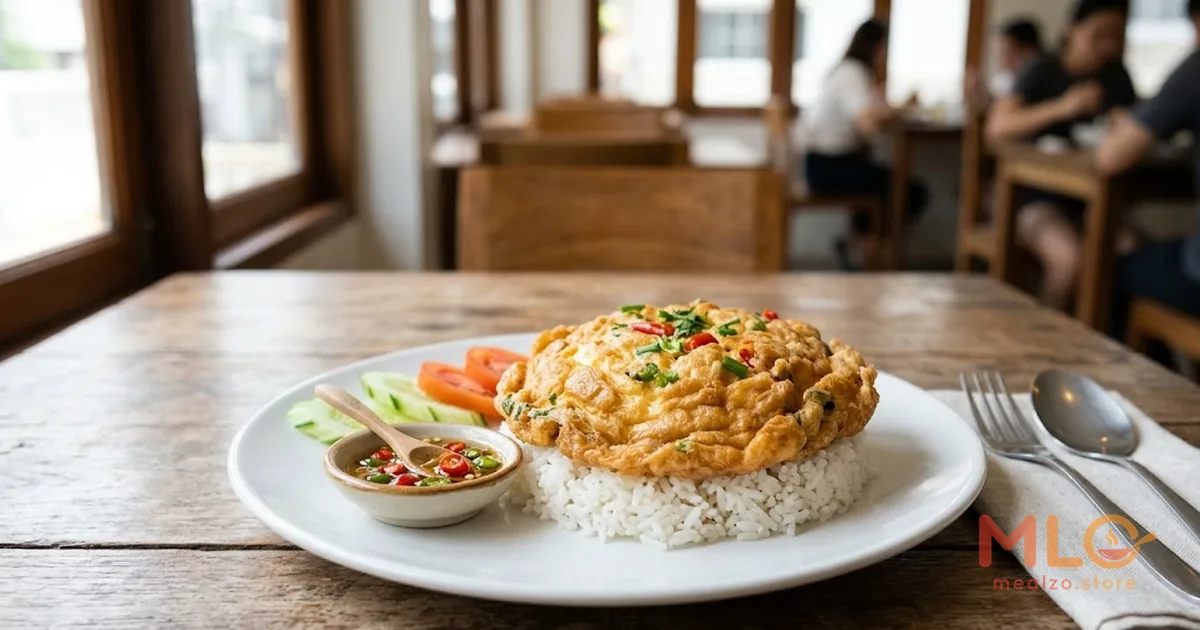
Khai jiao is a Thai omelette that is typically beaten with seasoning, often fish sauce, then fried in hot oil until it develops a puffy shape and golden exterior.
Unlike an omelette cooked gently with relatively little oil, street-style khai jiao often relies on hot oil for its characteristic texture. The surface becomes irregular and crisp while the centre stays tender.
Served over white rice, it makes a quick, filling meal. The trade-off is that a fluffy omelette can retain cooking oil, especially when its edges and folds have been fried extensively.
Khai jiao does not need to disappear from the menu. It helps to recognise that the finished dish contains more than egg and rice. Consider adding cucumber, tomato or a separate vegetable dish rather than relying on the omelette alone.
Khai dao: The crispy fried egg
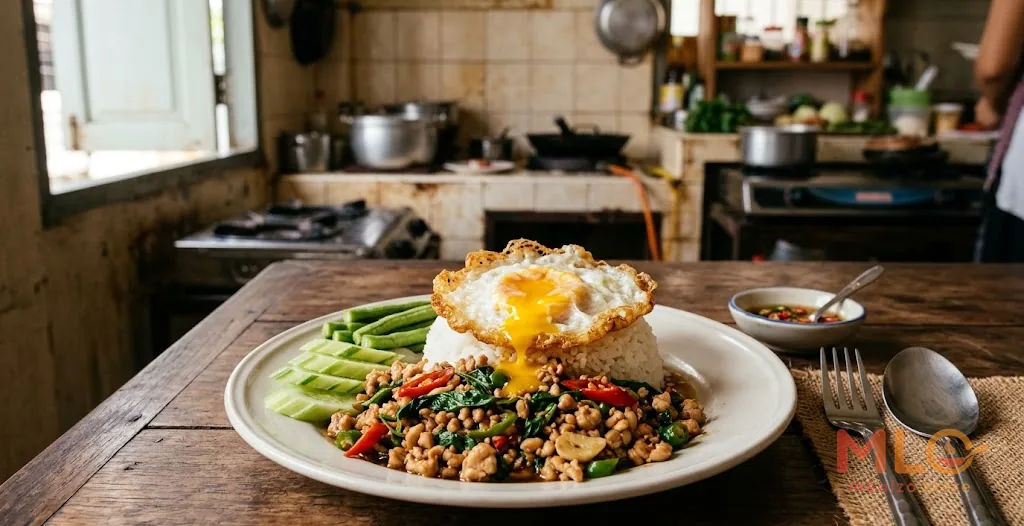
Khai dao is the fried egg commonly added to pad kra pao, fried rice and other rice plates.
The familiar street-style version has crisp, browned edges and a soft yolk that breaks over the rice. Some kitchens cook it more firmly, depending on the order.
Its role is different from khai jiao. The fried egg is usually a topping rather than the central dish, although a simple plate of rice and fried egg is also common.
When added to pad kra pao, khai dao contributes protein and richness, while the stir-fried meat, basil, rice, oil and sauces remain part of the same meal.
For more context on these combinations, see everyday rice plates and one-plate dishes in Bangkok.
3. Beyond Fried Eggs: Khai Luak, Khai Look Koei and Khai Pa Lo
Not every familiar Thai egg preparation involves frying an egg directly in oil.
Khai luak, a soft-boiled egg, is often served as a simple breakfast accompaniment. Its texture depends on the cooking time, with a softer white and yolk than a firmly boiled egg.
Because the egg is cooked in water rather than fried, it does not acquire additional frying oil. Any sauces or seasonings added afterward are a separate consideration.
Khai look koei, often called son-in-law eggs, starts with boiled eggs that are fried and served with a sweet-sour tamarind sauce. Fried shallots commonly complete the dish.
The sauce is an important part of its character. Tamarind contributes sourness, while sweet and savoury ingredients create the contrast that makes the dish distinctive.
Although the eggs begin boiled, the finished preparation also involves frying and sauce.
Khai pa lo takes another direction. Boiled eggs simmer with pork in a fragrant, sweet-savoury broth, often seasoned with soy sauce and spices.
The eggs absorb flavour from the surrounding liquid. The complete meal therefore includes the broth, the pork and usually rice, not simply the eggs.
For a more balanced plate, look at what accompanies these preparations. Vegetables can provide a useful contrast to the rich sauce or stew, without changing the traditional flavours.
4. Century Eggs, Rice Porridge, Noodles and Wok Dishes
Some Bangkok egg dishes are less obvious because the egg is mixed into other ingredients rather than sitting visibly on top.
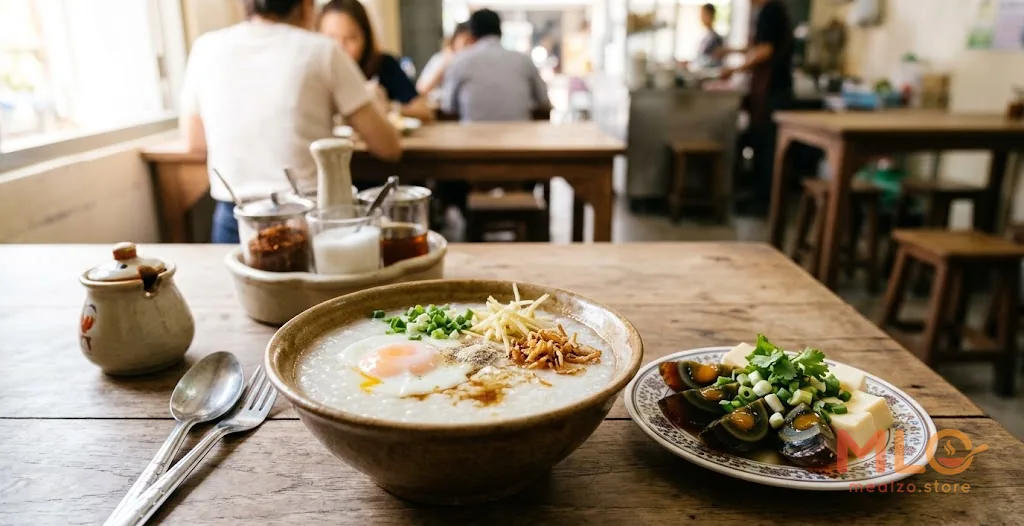
Khai yiao ma, or century egg, is preserved through an alkaline curing process that changes the colour, texture and flavour of the egg. Its dark, translucent white and creamy yolk have a distinctive savoury character.
Century eggs commonly appear with tofu, in porridge or in strongly seasoned dishes. Their flavour can be pronounced, so they often work better as an accent than as the only substantial protein component.
At breakfast, egg may be stirred into jok, a thick rice porridge, or added to khao tom, a looser rice soup. The egg changes the texture and adds substance, but the dish remains largely based on rice.
Noodle soups may contain a boiled egg, a soft egg or egg mixed into the broth. Fried rice incorporates egg throughout the wok-cooked dish, while some versions of pad thai are served wrapped in a thin layer of cooked egg.
The preparation matters more than the presence of egg alone.
| Bangkok egg dish | How the egg is prepared | Where added oil or salt may come from | Practical adjustment |
|---|---|---|---|
| Khai jiao over rice | Fluffy omelette fried in hot oil | Frying oil, fish sauce | Add cucumber or a vegetable side |
| Khai dao | Fried, often with crispy edges | Frying oil, sauces on the rice dish | Check the full rice plate |
| Khai luak | Soft-boiled | Sauces added afterward | Pair with vegetables or another food |
| Khai look koei | Boiled, fried, then sauced | Frying oil, seasoned tamarind sauce | Use the sauce deliberately |
| Khai pa lo | Boiled and simmered in broth | Soy-based seasonings, stew ingredients | Balance the stew with vegetables |
| Khai yiao ma | Preserved rather than freshly cooked | Preservation and accompanying seasonings | Treat as a flavour accent |
| Egg in jok or khao tom | Stirred in or added during cooking | Broth, condiments and toppings | Consider what protein and vegetables are present |
| Egg in fried rice | Cooked with rice in a wok | Stir-frying oil and sauces | Add vegetables alongside |
5. Cooking Oil and Seasoning: What the Egg Picks Up
Egg is naturally mild in flavour. Much of the pronounced taste of Thai egg dishes comes from the ingredients used to cook or season it.
Khai jiao may be seasoned with fish sauce before frying. Khai dao may arrive over meat cooked with fish sauce, soy sauce and other savoury ingredients. Khai pa lo absorbs the seasoned broth in which it simmers.
This makes it useful to separate the egg itself from everything added to it.
Cooking oil is another variable. A boiled or steamed egg does not pick up frying oil, while a crispy fried egg and a fluffy Thai omelette rely on oil to achieve their textures.
The amount retained can vary with the cooking technique, heat, shape and draining. An omelette with irregular, airy folds behaves differently in hot oil from an egg fried flat in a pan.
Seasoning is easier to overlook because several sources can appear together: fish sauce in the omelette, sauce on the rice and extra condiments placed on the table.
If the food already tastes strongly seasoned, more sauce may not add much beyond additional saltiness.
Our related guide to salt and sodium in everyday Thai food explains how sauces and condiments contribute to the finished dish.
Key takeaway: Look beyond the egg itself. Frying oil, seasoned broth and sauces often explain the biggest differences between Bangkok egg dishes.
6. Is the Egg an Add-On or the Main Protein?
An egg can change a meal, but its role depends on what was already on the plate.
Consider pad kra pao made with meat. Adding khai dao supplies additional protein and richness, yet the meal already contains a substantial protein ingredient.
Compare that with plain rice topped with khai jiao. Here, the omelette may be the principal protein food, while rice makes up much of the dish.
These are different meal structures, even though both prominently feature egg.
| Eating situation | Role of the egg | What to consider |
|---|---|---|
| Khai dao over meat pad kra pao | Additional protein and richness | Rice, cooking oil, sauce and vegetables |
| Khai jiao over plain rice | Main protein component | Rice serving and missing vegetables |
| Egg stirred into rice porridge | Protein added to a rice-based bowl | Other ingredients and accompaniments |
| Century egg with tofu | Strong flavour alongside another protein | Seasonings and vegetable sides |
| Egg in fried rice | Ingredient distributed through the dish | Overall balance of rice, protein and vegetables |
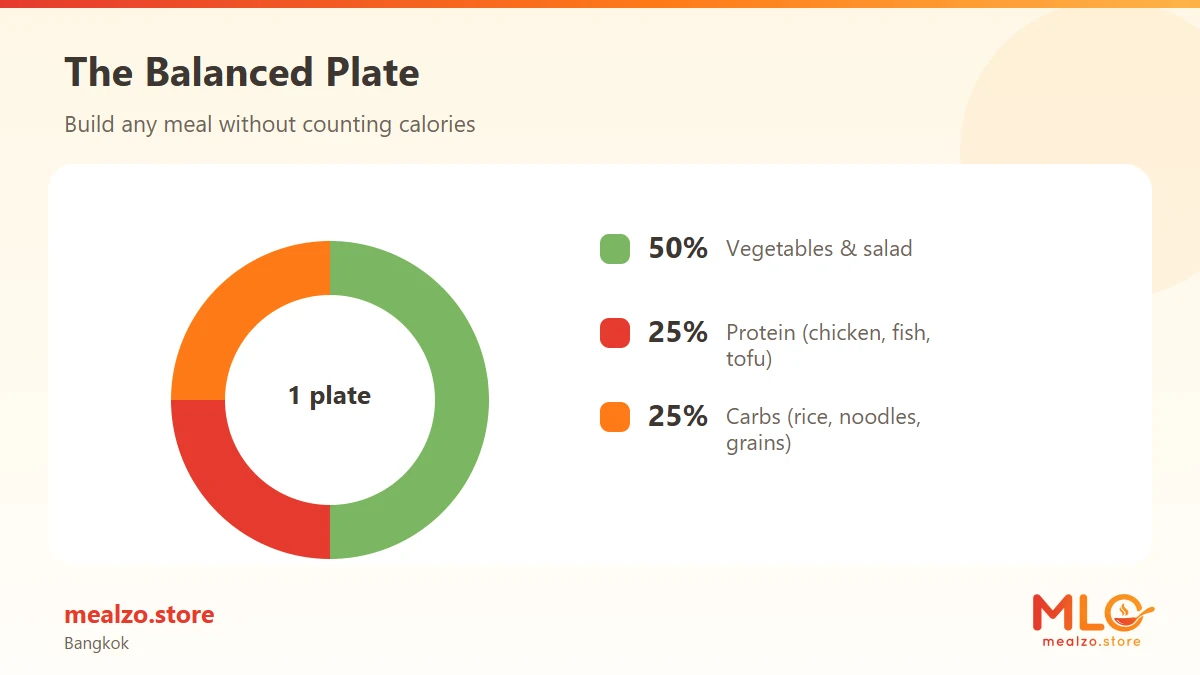
A practical way to build the plate is to think about the rice, protein and vegetables together rather than treating the egg as a complete meal by itself.
If the dish already contains meat, fish or tofu, an extra egg is optional. If the egg is the main protein, consider whether the rest of the plate provides enough variety.
The same approach applies beyond eggs. Our guide to grilled meats and street skewers in Bangkok looks at other familiar protein foods and the accompaniments that complete their meals.
7. The Vegetable Gap in Egg and Rice Meals
Khai jiao over rice is satisfying partly because it is simple. The cook does not need to prepare a complicated combination of ingredients.
That simplicity often means vegetables are missing.
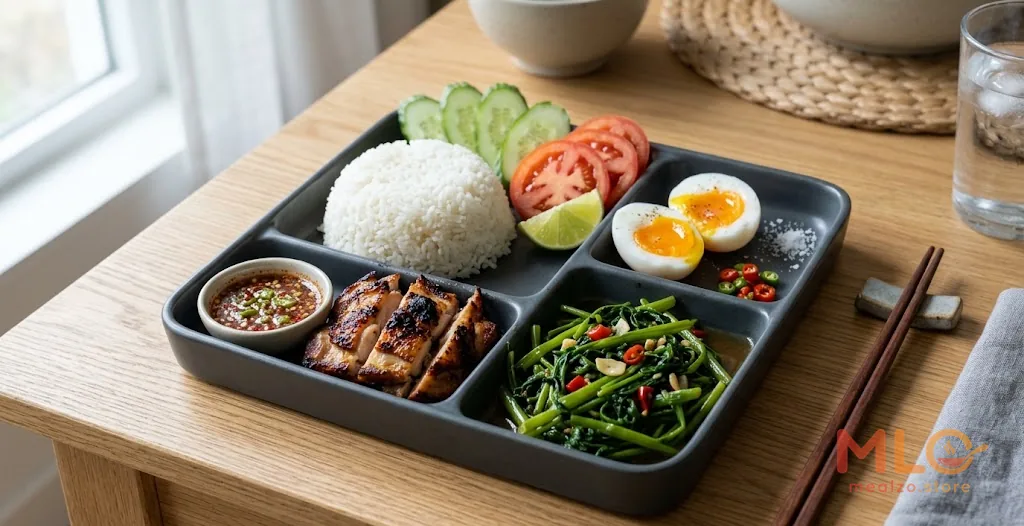
Some rice plates arrive with cucumber slices, while others contain little beyond rice, egg and sauce. A handful of cucumber provides a fresh contrast, but it is not equivalent to a more substantial vegetable accompaniment.
This is where small changes to the order can be useful.
- Add cucumber or tomato when available.
- Order cooked greens as a side dish.
- Include vegetables in another main meal if the egg plate offers very little.
- Pay attention to the rice serving instead of assuming the egg dominates the dish.
Vegetables contribute fibre and variety, qualities that a plate of white rice and fried egg may otherwise lack.
The base also matters. Rice porridge, fried rice, noodles and white rice are different preparations, but each can supply much of the carbohydrate in a meal. Sweet sauces can contribute additional carbohydrates even when they are used primarily for flavour.
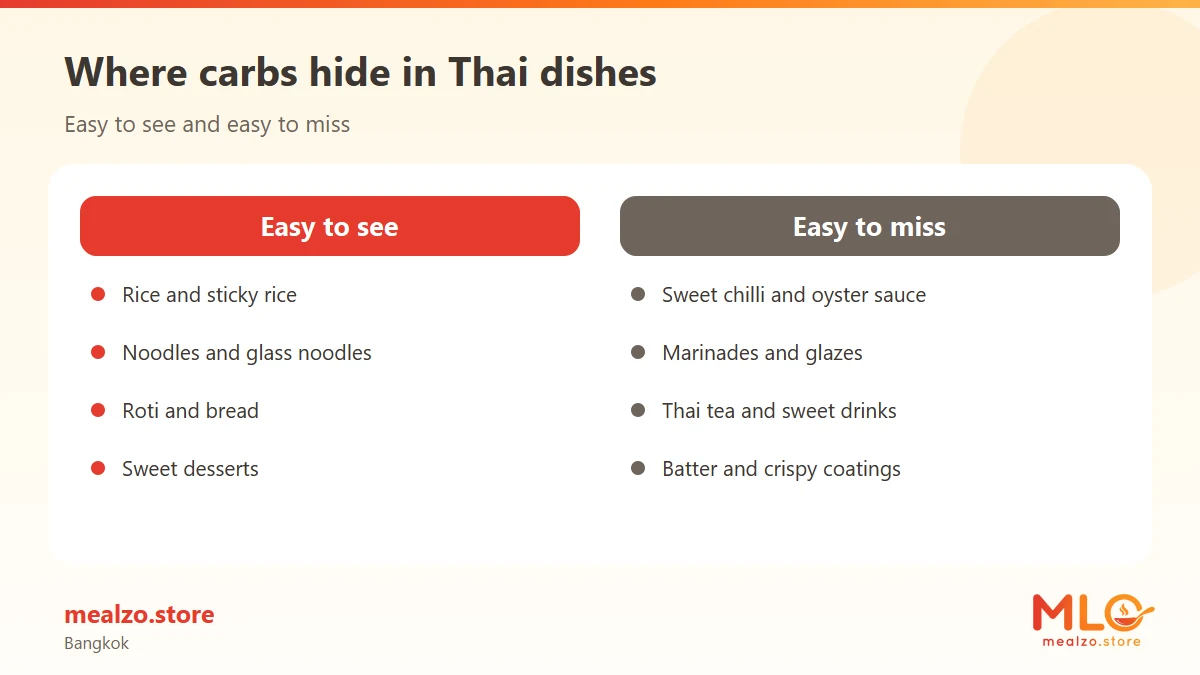
A person who enjoys rice with egg does not need to replace the dish with a completely different cuisine. Often the useful adjustment is to keep the familiar centre of the meal and change the accompaniments.
For ideas that apply across Bangkok food courts and street stalls, read vegetables and fibre in Thai food.
8. How to Think About Century Eggs and Strongly Seasoned Egg Dishes
Century eggs deserve separate attention because their flavour and use differ from those of a freshly boiled or fried egg.
Khai yiao ma has a rich, distinctive taste created through preservation. It is often combined with tofu, porridge or assertively seasoned ingredients that balance its character.
The preservation process changes the egg, but it does not make the finished dish interchangeable with every other egg preparation.
A small amount can have a noticeable effect on flavour. That makes century egg particularly useful as an accompaniment rather than something that must carry the whole meal.
Khai pa lo and khai look koei raise a related issue. Their appeal comes not only from the eggs but also from the sweet-savoury broth or tamarind sauce.
Both can bring considerable flavour to plain rice. The sauce is part of the eating experience, so removing it entirely may change the dish more than intended.
Instead, consider the whole combination. A strongly flavoured egg dish, plain rice and vegetables can provide contrast without requiring extra condiments.
9. Freshness, Cooked-to-Order Eggs and Bangkok Heat
Bangkok's heat makes food handling relevant, particularly when cooked dishes or prepared ingredients sit exposed for extended periods.
An egg cooked directly after ordering is different from an egg dish that has been sitting unrefrigerated in warm conditions.
At a street stall or food court, pay attention to visible preparation practices rather than assuming that every egg dish is handled the same way.
Useful signs include eggs being cooked to order, prepared food being handled appropriately, and busy kitchens replacing food regularly rather than leaving it standing for long periods.
A soft or runny egg also differs from a firmly cooked egg in how thoroughly it has been heated. Personal preferences about texture should be considered alongside food-handling conditions.
Century eggs are preserved products, but preservation does not remove the need for suitable handling after opening or preparation.
The same general awareness applies to accompanying rice, sauces, meat and vegetables.
Bangkok's climate also affects everyday routines beyond food storage. Our guide to drinking water and hydration in Bangkok's heat covers practical considerations around daily fluid intake.
Food preferences and safety are separate questions. A dish can be appealing and familiar while still requiring reasonable attention to preparation and storage.
10. Simple Ways to Adjust an Egg Dish at a Bangkok Stall
The most practical adjustments are usually the ones that leave the dish recognisable.
A person ordering khai jiao probably wants its fluffy texture and fried edges. Someone ordering khai dao over pad kra pao may specifically enjoy breaking the yolk into the rice. There is little value in pretending these qualities are incidental.
Instead, decide what you want from the dish and make adjustments around it.
- Keep the egg, change the side. Add vegetables alongside rice and omelette when the stall has them available.
- Choose the cooking method deliberately. A boiled egg differs from a crispy fried egg in its use of cooking oil.
- Consider the sauce already present. Taste the dish before adding more fish sauce, soy sauce or other condiments.
- Look at the complete order. A fried egg added to a meat and rice dish serves a different purpose from an omelette served as the main protein.
- Adjust the rice to your appetite. A large mound of rice is not automatically necessary simply because that is how the dish is normally plated.
- Think across the day. A vegetable-light street meal can be followed by a main meal containing a wider range of ingredients.
There will also be times when no adjustments are practical. A street stall may prepare food in a fixed way or have no vegetables available.
That does not make the meal a failure. Eating in Bangkok involves convenience, culture, cost, appetite and pleasure, not simply assembling an ideal plate every time.
Key takeaway: Keep the Thai egg dishes you enjoy and use rice, vegetables, sauces and the surrounding meals as flexible ways to create variety.
11. How Mealzo Bangkok Fits Around Street Egg Dishes
A street egg dish can fit into a day that also contains organised meals. The question is how much of the day's eating you want to leave to spontaneous food choices.
Mealzo Bangkok prepares meals in advance as part of structured meal plans. The kitchen is located in Bang Na, Bangkok. Meals are cooked fresh daily and delivered across Bangkok.
The plans provide an organised framework for main meals, while leaving the practical question of how street food fits into a person's own routine.
For example, someone might enjoy khai dao over rice when eating out, then rely on an already prepared meal later rather than having to plan and cook every remaining dish.
The service offers 12 meal plans: Balanced, Weight Loss, High Protein, Vegetarian, Vegan, Keto, Low-Carb, Gluten Free, Easy-to-Digest, Pescatarian, No Fish & Seafood, and Dairy & Egg Free.
Every plan uses a single mixed cuisine, combining Thai and international dishes within the same plan. Customers do not select separate Thai or international cuisines.
There are 6 daily calorie levels from 1200 to 2500 kcal, with 3 or 5 meals per day and packages lasting 3, 7, 14 or 30 days.
Customers choose a delivery window: morning 06:00-09:00 or evening 17:00-20:00.
The website and mobile app are available in 8 languages: Thai, English, Polish, German, French, Russian, Simplified Chinese and Burmese. The Android app is available on Google Play.
Customers declare allergens from 9 allergen groups. Dishes containing a declared allergen are not assigned to that customer. This describes how dishes are assigned, rather than guaranteeing that food is free from all allergens.
The app also includes a calorie calculator using the Mifflin-St Jeor formula. Its result is an estimate, not medical advice.
Egg is among the declared allergen groups, and vegetarian eating and egg-free eating are not the same thing.
Anyone with high blood pressure, diabetes, an eating disorder or another medical condition affecting diet should follow their own doctor's guidance.
For people who regularly eat at Bangkok stalls, Mealzo Bangkok meal plans offer a way to organise prepared main meals without requiring every familiar street dish to disappear from their routine.
FAQ
Is khai jiao over rice a complete meal?
Khai jiao over rice contains an egg-based protein component together with a carbohydrate-rich base. However, a typical serving may contain few vegetables and can retain oil from frying. Adding cucumber, cooked greens or another vegetable accompaniment makes the plate more varied. If the omelette is the main protein, consider the composition of the rest of the meal rather than judging it by the presence of egg alone.
Is khai dao less oily than khai jiao?
The preparations are different. Khai dao is a fried egg that can develop crisp edges, while khai jiao is a beaten omelette often fried in hot oil until fluffy. The omelette's folds and surface can retain oil, but the finished result depends on how each dish is cooked and drained. Neither name tells you exactly how much cooking oil remains in the served food.
Can I add an egg to pad kra pao without changing the rest of the meal?
Yes. Adding khai dao changes the meal by contributing additional protein and fat, while the rice, stir-fried ingredients and sauces remain. The egg does not replace the existing components. If the plate already contains a protein ingredient, think of the fried egg as an addition. Vegetables and the amount of rice served are separate aspects to consider.
Are century eggs the same as ordinary boiled eggs?
No. Century eggs are preserved through an alkaline curing process, which changes their colour, flavour and texture. Ordinary boiled eggs are cooked in water without undergoing this preservation process. Century eggs often appear in dishes with tofu, porridge or savoury seasonings. Their distinctive taste makes them useful as a flavour accent, particularly alongside ingredients with milder flavours.
How can I fit Bangkok street egg dishes into a meal plan?
Start by considering what the street dish contributes. A plate of rice and khai jiao combines a rice base with an egg preparation that has been fried in oil, while khai dao added to a meat dish plays a different role. Prepared meals can help organise the rest of the day without requiring you to change every street-food habit. Mealzo Bangkok provides structured meal plans, but the choice to include additional street dishes remains part of your own eating routine.
Mealzo Bangkok is a kitchen and meal delivery service operating exclusively in Bangkok, Thailand. We are not affiliated with similarly named services outside Thailand.
Find a Meal Plan That Fits
Compare Mealzo plans or use the calculator to explore meal options for your needs.