High-Protein Meals for Muscle Gain: What to Look For
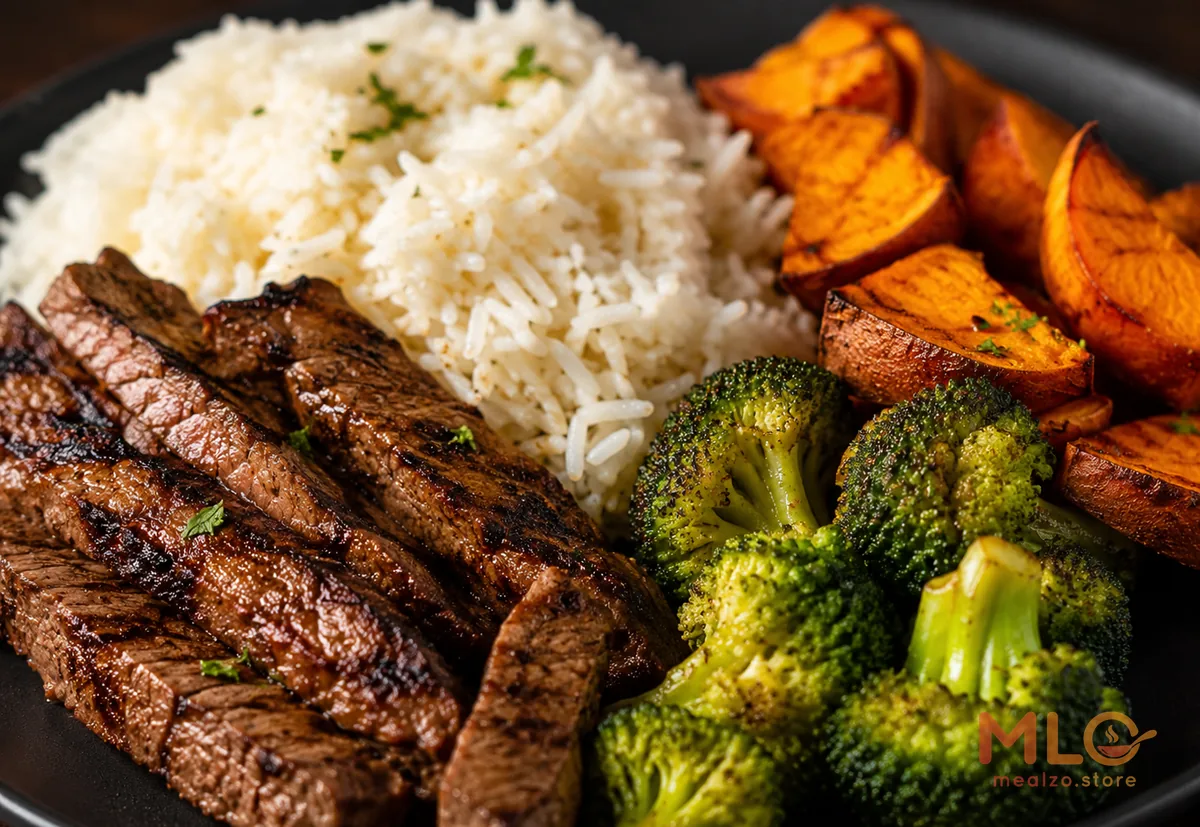
Building meals around protein sounds simple until you try to do it consistently. A plate can look substantial and still contain less protein than expected, while another meal may be protein-heavy but too small overall to support a demanding training schedule.
For people training in Bangkok, the practical problem is rarely just knowing that protein matters. It is fitting enough protein, total energy and useful carbohydrates into normal working days, commutes, training sessions and social life without turning every meal into a calculation exercise.
Good high protein meals for muscle gain should therefore be judged as complete meals rather than protein numbers in isolation. The protein source matters, but so do portion size, total calories, carbohydrate, fat, vegetables and how the meal fits into the rest of the day.
There is also no single meal that guarantees muscle gain. Resistance training provides the physical stimulus, while food supplies energy and raw materials. Sleep, recovery, training consistency and total daily intake remain part of the picture.
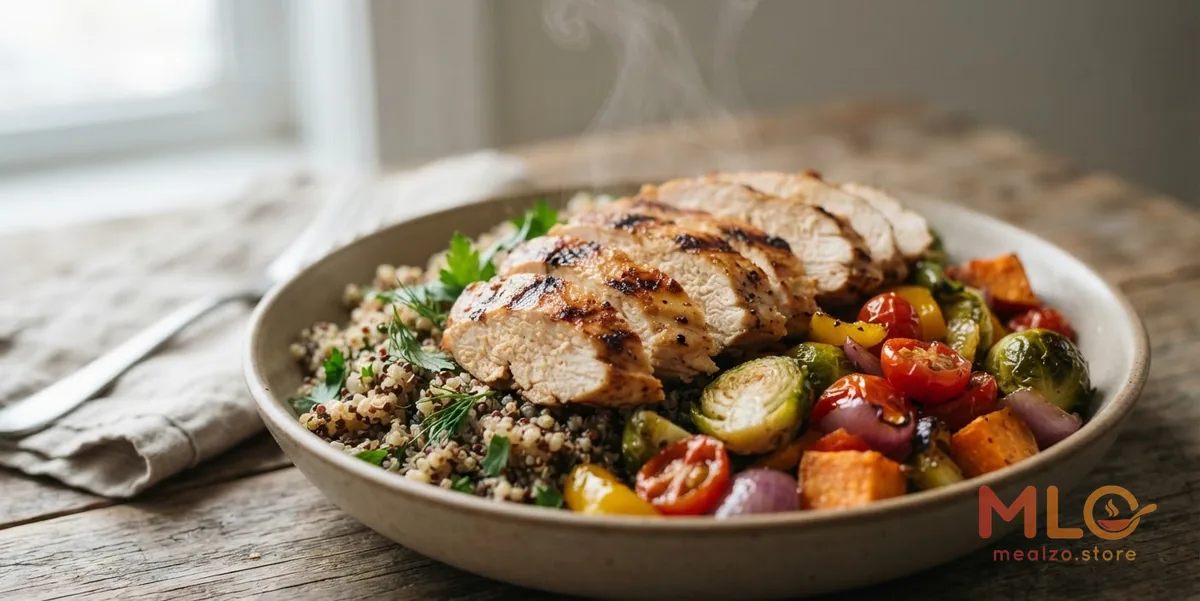
1. Start With the Whole Day, Not One High-Protein Meal
A single protein-heavy dinner cannot compensate for an entire day built mostly around foods that contribute little protein.
The more useful question is how protein is distributed across breakfast, lunch, dinner and any additional meals. Someone who eats a reasonable amount at several points during the day has a different pattern from someone who consumes almost everything at night.
Your daily eating pattern might include:
- protein at each main meal
- a larger protein serving after a long gap between meals
- smaller protein-containing meals when eating five times a day
- enough total food to match your broader energy needs
This does not mean every meal needs to contain the same amount. Appetite, training time and meal size naturally vary.
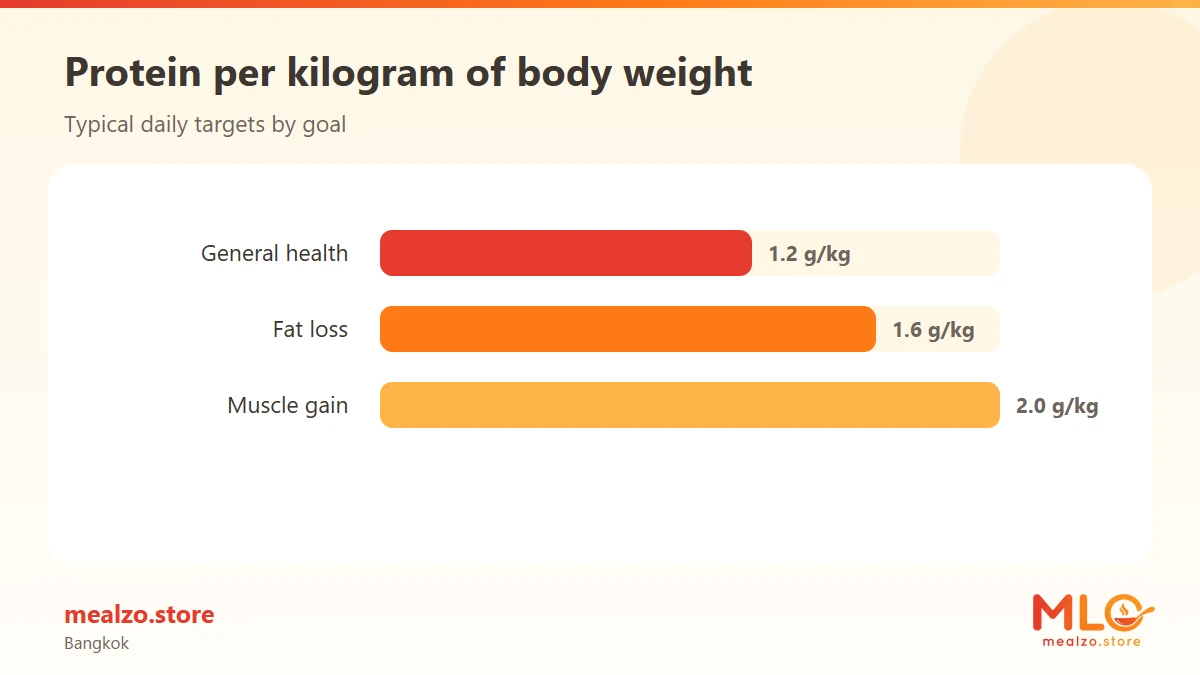
If you are unsure how much protein you are trying to reach in the first place, this guide to daily protein requirements is a more useful starting point than simply looking for the meal with the biggest chicken breast.
Key takeaway: Judge a high-protein meal by how it contributes to your full day of eating, not as an isolated plate.
2. Protein Quality Matters, but Variety Still Has Value
Protein is made from amino acids. Different foods provide different amino acid profiles and different amounts of protein relative to their total volume.
Animal foods such as meat, fish, eggs and dairy are commonly used in protein-focused diets because they can provide substantial protein in practical serving sizes. Plant foods can also contribute meaningful protein, although the overall meal may need to be structured differently.
That does not make one category automatically better in every situation. Preference, dietary restrictions, digestion, cost, meal variety and total intake all matter.
| Protein source type | Practical strength | What to consider |
|---|---|---|
| Lean meat or poultry | High protein concentration | Can become repetitive if used in every meal |
| Fish and seafood | Protein with a different flavour and texture profile | Not suitable for people avoiding fish or seafood |
| Eggs and dairy | Convenient in many meal formats | Not suitable for dairy- or egg-free diets |
| Legumes and soy foods | Useful plant-based protein sources | Meals may require larger portions or combinations |
| Mixed meals | Can combine several protein sources | Total protein depends on the actual serving sizes |
If you want to compare these options more closely, the differences between animal and plant protein explains the practical trade-offs without reducing the issue to a simple winner and loser.
3. Look Beyond the Word “Protein” on the Menu
A dish can be marketed or described as protein-focused while still being relatively modest in actual protein if most of its volume comes from rice, noodles, sauce or vegetables.
That does not make it a bad meal. It simply means the name alone does not tell you how the plate is built.
When assessing a meal, look at the proportions:
- Is there a clearly identifiable protein component?
- Is the protein portion substantial enough to anchor the meal?
- Does the meal also provide enough food overall for your needs?
- Is most of the energy coming from sauces, fried coatings or added fats?
- Does the meal fit the rest of your day rather than duplicating what you already ate?
A large serving of meat is not automatically ideal either. Very protein-heavy meals can crowd out carbohydrate, vegetables and other foods that may be useful depending on your training and total calorie target.
The better approach is to think in terms of balance rather than chasing the highest possible protein content at every opportunity.
4. Muscle Gain Also Requires Enough Total Energy
Protein gets most of the attention, but building new tissue is not only a protein problem. The body also needs sufficient energy to support training and recovery processes.
Someone eating high-protein meals while consistently eating too little overall may find that the diet does not match the demands of their training routine. On the other hand, eating substantially more simply because the goal is muscle gain can add energy far beyond what the training actually requires.
That is why calorie intake still matters.
Mealzo offers six daily calorie levels: 1200, 1500, 1800, 2000, 2200 and 2500 kcal. These are fixed plan levels rather than individually prescribed targets. The calorie calculator in the app uses the Mifflin-St Jeor formula to provide an estimate, not medical advice.
| Situation | What deserves attention |
|---|---|
| Hard training with low total food intake | Protein alone may not solve the energy mismatch |
| High calorie intake with little training stimulus | Extra energy is not automatically directed toward muscle |
| Changing activity level | Previous calorie assumptions may no longer fit |
| Appetite much lower or higher than expected | Review the overall meal structure rather than only protein |
Key takeaway: Protein supports the process, but total energy intake still has to make sense for your training and daily activity.
5. Carbohydrates Still Belong in the Conversation
High-protein eating is sometimes treated as if protein should replace everything else. For people training regularly, that can be too simplistic.
Carbohydrates provide a readily available source of energy and can be particularly relevant around demanding training sessions. Rice, potatoes, noodles, grains and other carbohydrate foods can therefore have a practical place in meals designed around resistance training.
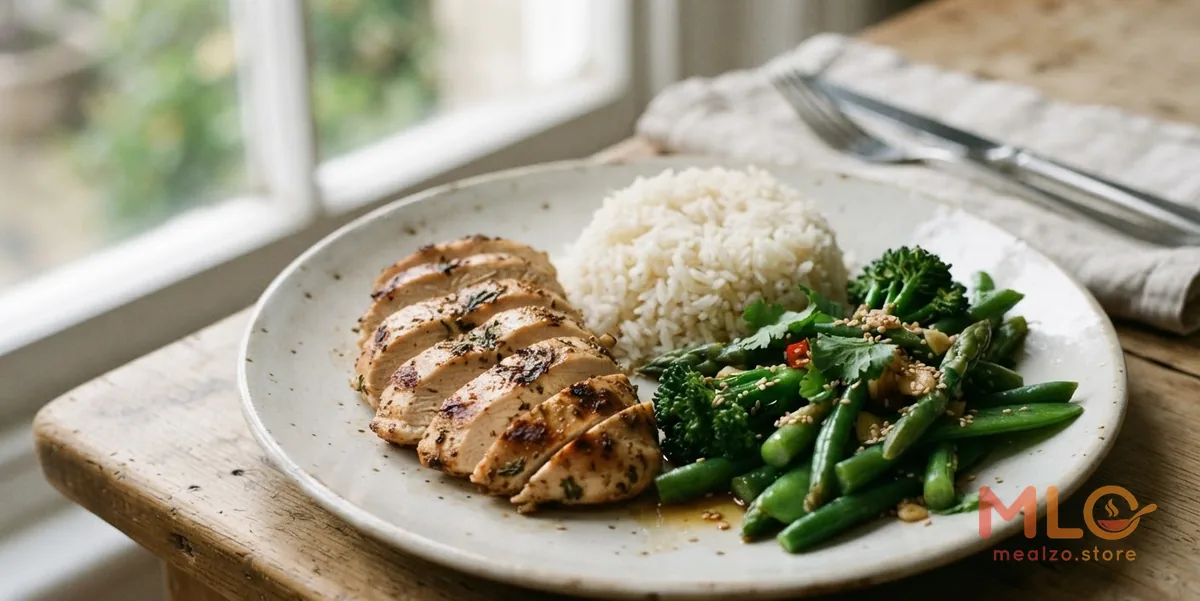
The appropriate amount depends on the person, the workout and the rest of the day. Someone doing a short, light session does not necessarily need the same meal structure as someone completing a long, demanding workout.
A useful high-protein meal may therefore include:
- a substantial protein source
- a carbohydrate portion appropriate to the meal and activity
- vegetables or other plant foods
- enough fat for flavour, cooking and the overall meal structure
Removing carbohydrates simply because a meal is labelled “high protein” is not automatically more appropriate.
6. Pre-Workout and Post-Workout Meals Have Different Practical Jobs
Meal timing matters less than some fitness discussions suggest, but it is not completely irrelevant either.
Before training, many people prefer food that supplies energy without feeling excessively heavy. After training, a meal containing protein and enough total energy can fit naturally into the recovery period.
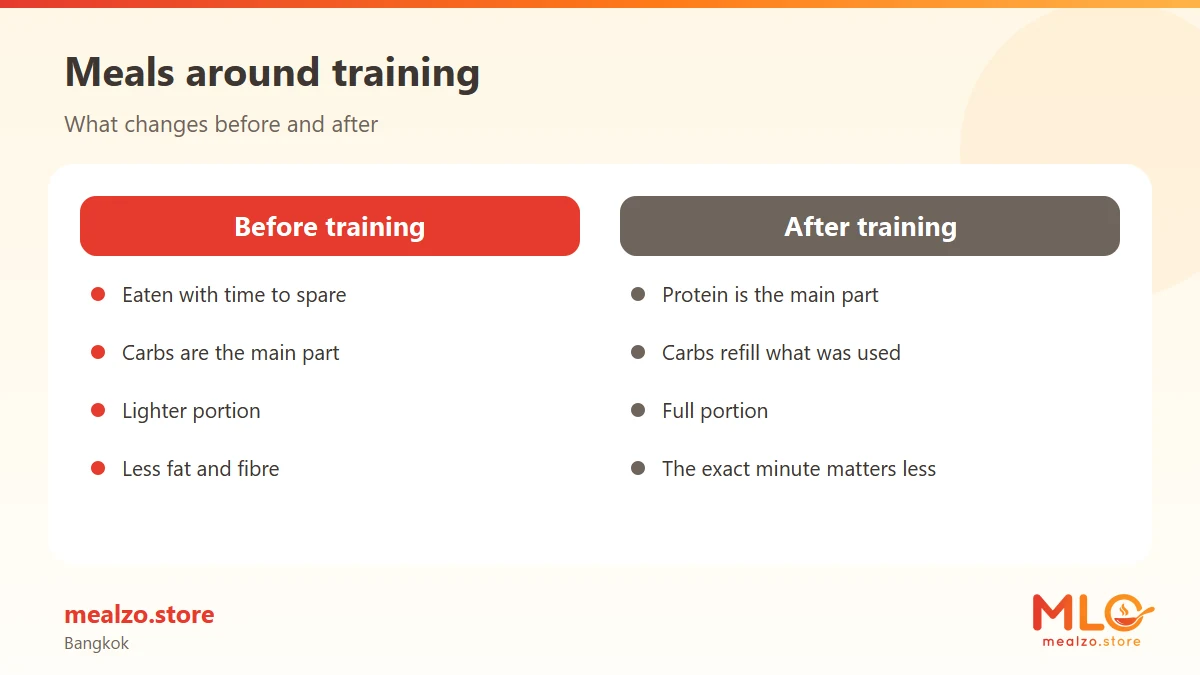
The exact choice depends on how close the meal is to training, how large it is and what you tolerate comfortably. A large meal shortly before an intense session may feel impractical, while a very small meal after a demanding workout may leave you needing more food soon afterward.
For a fuller comparison, see this guide to pre-workout and post-workout meals.
There is no requirement to eat the second a workout ends. The broader daily pattern remains more important than treating a narrow timing window as a deadline.
7. Portion Size Matters More Than Food Labels
“Chicken meal,” “protein bowl” and “fitness plate” do not tell you enough by themselves.
The actual serving sizes determine how much protein, carbohydrate, fat and total energy the meal provides. Two chicken-and-rice dishes can be completely different in practice if one contains a small amount of chicken and a large mound of rice while the other reverses those proportions.
This is especially relevant with prepared meals, where consistency is part of what customers are paying for.
When choosing Mealzo meal plans, the High Protein plan is one of 12 available plans alongside Balanced, Weight Loss, Vegetarian, Vegan, Keto, Low-Carb, Gluten Free, Easy-to-Digest, Pescatarian, No Fish & Seafood, and Dairy & Egg Free.
The label should still be understood as a meal-plan format rather than a promise that one particular diet is necessary for muscle gain.
Key takeaway: The name of a meal matters less than the size and composition of the food actually on the plate.
8. Three Meals or Five Can Both Work
There is no universal meal frequency required for muscle gain.
Some people prefer three substantial meals because they fit naturally around work. Others find that five smaller meals make it easier to distribute protein and total food without making any single meal too large.
Mealzo offers both 3-meal and 5-meal formats. The better choice depends on routine rather than ideology.
A three-meal structure may suit someone who:
- has predictable meal breaks
- prefers larger portions
- dislikes frequent eating
- can comfortably fit enough food into three meals
A five-meal structure may suit someone who prefers smaller portions, has long days or finds large meals inconvenient around training.
Neither format automatically produces a better training outcome. The daily totals and the ability to follow the plan consistently matter more.
9. High Protein Does Not Have to Mean Dry and Repetitive
One reason people abandon protein-focused eating is boredom.
Chicken breast, plain rice and broccoli can be useful foods, but there is no requirement to eat the same combination every day. Different cooking methods, herbs, sauces, vegetables and protein sources can make meals more varied without changing the basic role of the meal.
Spice preference matters too, especially in Bangkok. Mealzo offers six spice levels: not spicy, mild, medium, standard, hot and Thai-spicy. Customers select one for the package and can change it later.
This is more than a small detail. A nutritionally suitable meal that you consistently dislike is unlikely to fit comfortably into normal life.
Variety also helps prevent a high-protein diet from becoming unnecessarily narrow. Protein can come from multiple sources, and meals can still contain carbohydrates, vegetables and fats rather than being built almost entirely around one ingredient.
10. Dietary Restrictions Change What a High-Protein Meal Looks Like
Not everyone can or wants to build meals around chicken, beef, fish, eggs or dairy.
Vegetarian, vegan, pescatarian, dairy-free and egg-free eating patterns require different ways of reaching a protein-focused meal structure. That can affect portion sizes, combinations and the foods used as the centre of the meal.
Mealzo includes Vegetarian, Vegan, Pescatarian, No Fish & Seafood, and Dairy & Egg Free among its 12 plan types.
Allergen handling is a separate issue. Customers declare from nine allergen groups, and dishes containing a declared allergen are not assigned to them. This is a dish-assignment mechanism, not a guarantee that meals are completely free of allergens.
The practical lesson is that “high protein” is not one fixed menu template. The suitable approach depends partly on what foods are available to the individual.
11. Convenience Matters When Training Has to Fit Around Bangkok Life
A theoretically perfect diet is not very useful if it requires a daily routine you cannot maintain.
Bangkok adds its own practical friction: commuting, long workdays, traffic, heat and evening training can make regular meal preparation difficult. That does not mean meal prep is impossible, but convenience becomes part of the decision.
Mealzo delivers across Bangkok in two windows: 06:00-09:00 in the morning or 17:00-20:00 in the evening. The kitchen is in Bang Na.
Packages are available for 3, 7, 14 or 30 days. That lets someone choose a short or longer period depending on how much structure they want in their week.
For people specifically comparing protein-focused prepared food, this guide to high-protein meal delivery in Bangkok looks at the practical side of ordering rather than cooking every meal yourself.
Convenience should not be confused with nutritional perfection. It simply reduces some of the planning and preparation involved in eating consistently.
12. What to Look For in a High-Protein Muscle-Gain Meal
A useful high-protein meal is not defined by one ingredient. It is defined by whether the whole plate fits the broader goal.
A practical checklist is:
- a meaningful serving of protein
- enough total food for the person's calorie needs
- carbohydrates when appropriate for activity and training
- vegetables or other plant foods
- fats in an amount that fits the rest of the meal
- portion sizes that are realistic to eat regularly
- enough variety that the pattern does not become monotonous
It is also worth asking what the meal is replacing. A balanced prepared lunch that replaces a random snack-heavy afternoon may be useful even if it is not the highest-protein meal imaginable.
At the same time, people with low appetite, digestive issues, food restrictions or unusually high training demands may need a more individual approach than a standard prepared plan can provide.
High-protein eating works best as part of a coherent day, not as a contest to maximise one nutrient in every meal.
FAQ
How much protein should a muscle-gain meal contain?
There is no single amount that suits everyone because the useful meal size depends on total daily protein needs, how many times you eat and what the rest of the day contains. It is usually more useful to establish a daily protein target first and then distribute it across meals.
Are high-protein meals enough to build muscle?
No. Protein provides amino acids used in normal tissue-building and repair processes, but resistance training supplies the stimulus. Total energy intake, recovery and the overall consistency of the routine also matter.
Is chicken better than plant protein for muscle gain?
Chicken is a concentrated and convenient protein source, but it is not the only workable option. Plant proteins can also contribute substantially when the overall diet is structured appropriately. Food preference and dietary restrictions matter.
Should I eat protein before or after training?
Either can fit into a sensible eating pattern. A pre-workout meal may provide energy before training, while a post-workout meal can contribute protein and energy afterward. The full day's intake matters more than treating one narrow timing window as mandatory.
Is the Mealzo High Protein plan only for people who train?
No. High Protein is one of Mealzo's 12 meal-plan options. Choosing it depends on how someone prefers to structure their meals, not on membership in a particular training group.
Can I gain muscle while eating three meals a day?
Three meals can be a workable structure if they provide enough total protein and energy for the individual. Five meals may simply make distribution easier for some people; it is not automatically superior.
Find a Meal Plan That Fits
Compare Mealzo plans or use the calculator to explore meal options for your needs.