Pre-Workout vs Post-Workout Meals: Protein, Carbs and Timing

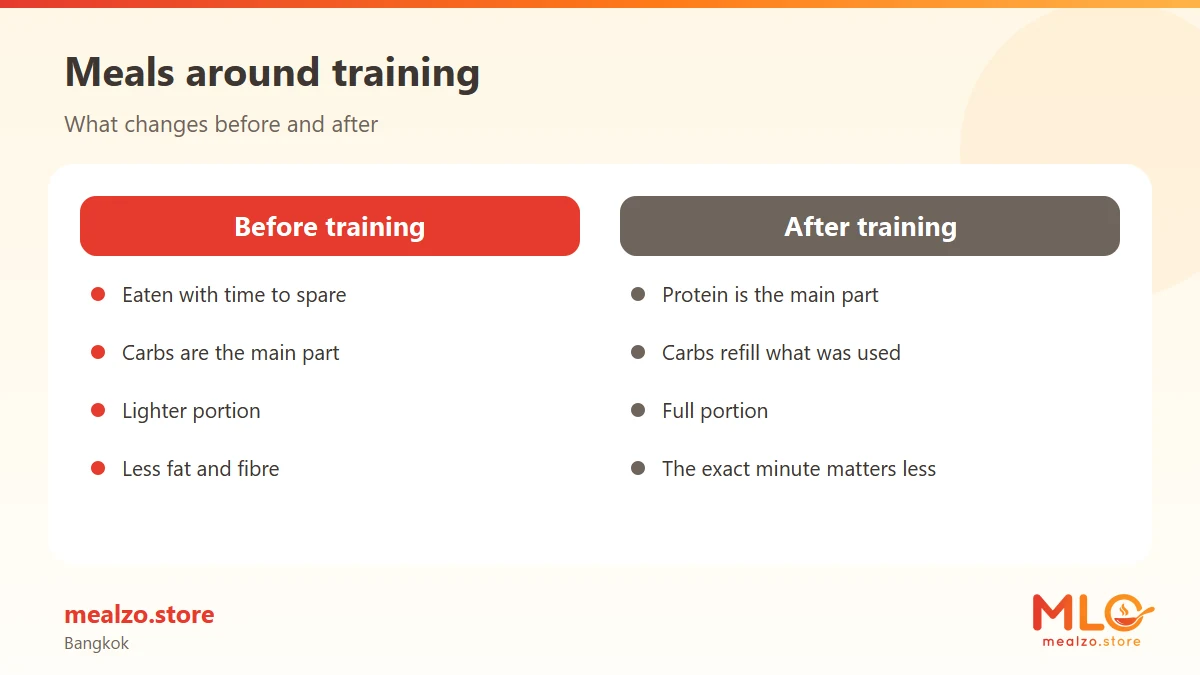
The difference between a pre workout vs post workout meal is mostly about purpose. Before training, food needs to support the session without sitting too heavily. After training, the focus shifts toward replacing some of the energy used and giving the body protein for recovery and adaptation.
That does not mean every workout needs two specially designed meals. If you train between normal meals, your breakfast, lunch or dinner may already cover one side of the equation. The more useful question is how your workout fits into the rest of your day.
Protein matters on both sides. Carbohydrates are especially useful when training is demanding, long or repeated frequently. Fat and fibre are not “bad” around workouts, but large amounts close to exercise can make some people feel uncomfortable.
Timing matters, but usually less than consistency. A sensible daily intake of protein, carbohydrates and total calories is more important than trying to hit a perfect minute on the clock.

1. What is the main difference between a pre-workout and post-workout meal?
A pre-workout meal is mainly there to support training, while a post-workout meal is mainly there to support recovery and replenish what was used.
Before exercise, the practical goal is to arrive with enough available energy without feeling overly full. For many people, that means a meal containing carbohydrates, some protein and a moderate overall portion.
After exercise, the emphasis changes. Protein becomes useful for providing amino acids, while carbohydrates can help replace some of the stored carbohydrate used during training. The exact balance depends on what kind of session you did and what the rest of your day looks like.
| Meal timing | Main purpose | Useful components | Common mistake |
|---|---|---|---|
| Before training | Support energy and comfort during exercise | Carbohydrates, protein, fluids | Eating too much too close to the session |
| After training | Support recovery and restore energy | Protein, carbohydrates, fluids | Treating the meal as permission to overeat |
| Normal meal near training | Can serve both roles | Balanced mix of protein, carbs and other foods | Assuming a special fitness meal is always necessary |
For people who train recreationally, these meals often overlap with normal eating rather than existing as separate “sports nutrition” events.
Key takeaway: The pre-workout meal prepares you for the session, while the post-workout meal helps you recover from it.
2. What should you eat before a workout?
A useful pre-workout meal usually contains digestible carbohydrates, some protein and a portion size that feels comfortable during training.
Carbohydrates are relevant because they provide an accessible source of energy for exercise, particularly when the session involves running, cycling, classes, repeated lifting sets or other work that feels moderately to highly demanding.
Protein can be included before training as well. It does not need to be a huge portion. A normal protein-containing meal before exercise can contribute to your overall daily protein intake and means you do not have to depend entirely on what happens afterward.
Examples of practical pre-workout meals include:
- rice with grilled chicken and vegetables
- oats with yoghurt and fruit
- eggs with toast and fruit
- tofu with rice or noodles
- a light sandwich with a protein filling
- a smaller portion of a normal meal eaten before training
The closer the meal is to the workout, the more personal tolerance matters. Some people can eat a full meal and train comfortably soon afterward. Others feel sluggish, bloated or nauseous unless they leave more time.
That is one reason pre-workout eating should be practical rather than theoretical. The “best” meal on paper is not useful if it makes your training unpleasant.
3. How important are carbohydrates before training?
Carbohydrates before training are most useful when the workout depends heavily on repeated or sustained effort.
You do not need to load every workout with a large amount of carbohydrate. A short, easy gym session may feel perfectly normal after an ordinary mixed meal. A harder session, however, can feel quite different when you have eaten very little carbohydrate beforehand.
This is especially relevant for people who train after work in Bangkok. If lunch was many hours earlier and the afternoon consisted only of coffee, arriving at the gym hungry can make the session feel harder than necessary.
A practical carbohydrate choice does not need to be complicated:
- rice
- noodles
- oats
- bread
- potatoes or sweet potatoes
- fruit
The amount depends on appetite, workout length, intensity and what else you have eaten that day.
If you are following a lower-carbohydrate eating pattern, this advice may need adjustment. You can still train, but the way you distribute your available carbohydrates may matter more around the sessions that are most demanding.
4. How much protein matters before and after training?
Protein matters both before and after training, but your total daily intake is more important than treating one meal as uniquely decisive.
Muscle protein turnover happens across the day, not only in the minutes after a workout. That is why spreading protein across several meals is generally more practical than eating very little protein all day and trying to compensate with one enormous dinner.
A protein-containing meal before training gives your body amino acids from that meal. A protein-containing meal afterward provides another opportunity to support recovery and adaptation.
Good food sources can include:
- chicken
- fish
- eggs
- dairy foods if you eat them
- tofu and other soy foods
- legumes
- leaner cuts of meat
- protein-rich mixed meals
If you are unsure how much protein to aim for overall, how much protein you may need per day gives a broader explanation of daily intake rather than focusing only on the workout window.
For people specifically trying to build muscle, practical high-protein meals for muscle gain looks at the wider meal structure beyond training itself.
Key takeaway: Protein before and after training can both be useful, but daily protein intake and regular meal structure matter more than a single “perfect” protein feeding.
5. What should you eat after a workout?
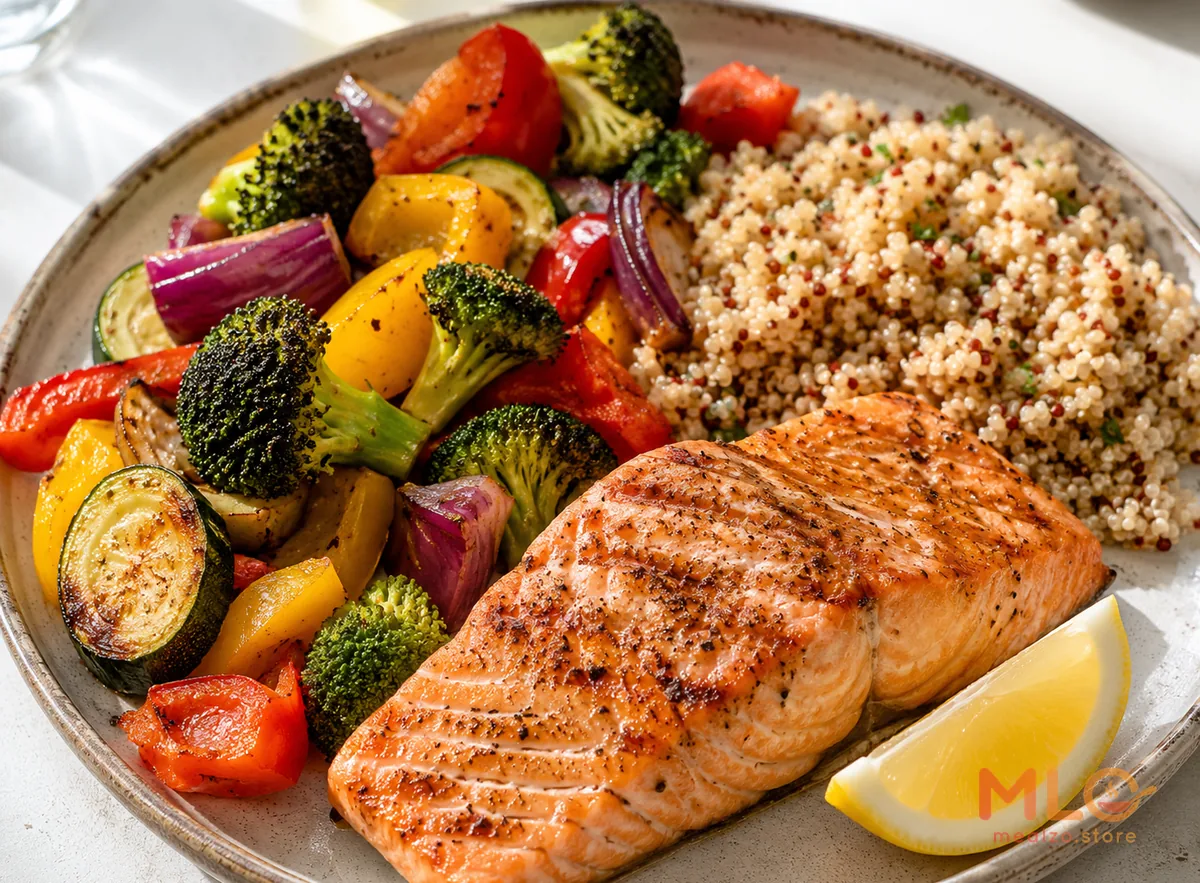
A useful post-workout meal usually contains protein, some carbohydrate and enough food to fit your overall calorie needs.
The protein component helps provide amino acids after training. Carbohydrates can help restore some of the carbohydrate stored in muscle and liver, especially if the workout was demanding or if you plan to train again relatively soon.
A normal meal can do this perfectly well. You do not necessarily need a shake, bar or special recovery product.
| Post-workout option | Protein source | Carbohydrate source | Practical note |
|---|---|---|---|
| Chicken with rice | Chicken | Rice | Easy to scale up or down |
| Fish with potatoes | Fish | Potatoes | Works well as a full meal |
| Tofu with noodles | Tofu | Noodles | Suitable for plant-based eating |
| Eggs with toast and fruit | Eggs | Bread and fruit | Useful for breakfast-style training schedules |
| Yoghurt with oats and fruit | Yoghurt | Oats and fruit | Lighter than a full cooked meal |
Fat can also be part of the meal. There is no need to eliminate it. The main reason some people keep very fatty meals smaller around training is comfort and digestion, not because fat becomes suddenly “bad” after exercise.
6. Do you need to eat immediately after training?
You usually do not need to eat the moment your workout ends if you have eaten reasonably before training and will have a normal meal afterward.
The idea that recovery is lost unless food arrives within a very narrow window makes nutrition more stressful than it needs to be for most recreational exercisers.
Timing becomes more relevant when the gap between meals is very long, when you trained after not eating for an extended period, or when you have another demanding session later.
For example, if you had lunch, trained in the early evening and plan to eat dinner afterward, dinner can simply become your post-workout meal.
If you trained first thing in the morning without eating and then have several hours before your next proper meal, eating sooner afterward makes more practical sense.
The body does not operate like a stopwatch. What matters is that protein and energy arrive across the day in a pattern that supports the amount of training you are doing.
7. Should pre-workout and post-workout meals be different for fat loss?
For fat loss, pre-workout and post-workout meals should still support training and recovery, but they also need to fit within your total calorie intake.
Exercise can increase hunger for some people. That creates a common problem: a workout feels demanding, so the post-workout meal becomes much larger than normal, followed by snacks because the person feels they have “earned” them.
There is nothing wrong with being hungry after training. The practical issue is whether the meal matches your actual daily energy target.
This can be handled by keeping the same basic structure:
- protein at the meal
- a measured carbohydrate portion
- vegetables or other higher-volume foods where suitable
- fats and sauces in sensible amounts
If fat loss is the main goal, high-protein meals designed around fat-loss eating discusses how protein can fit into a calorie-controlled day without turning meals into diet food.
A pre workout vs post workout meal does not need to become dramatically smaller during fat loss. The total day usually matters more than making one specific meal unusually restrictive.
8. What changes if your goal is muscle gain?
For muscle gain, both pre- and post-workout meals can be more generous because total energy intake needs are usually higher.
Protein still matters, but carbohydrates also become useful because harder training often benefits from having enough available energy. A larger carbohydrate portion before training may help the session feel better, while a substantial meal afterward can help cover the day’s total energy intake.
The common mistake is to treat “muscle gain” as permission to eat without structure. Extra energy can be useful, but an unlimited amount is not automatically more helpful.
For someone training regularly, a sensible approach might involve:
- a normal mixed meal before training
- a protein-containing meal afterward
- enough carbohydrate across the day to support training
- total food intake matched to the intended goal
People in Bangkok who want less meal planning can also look at high-protein meal delivery options in Bangkok for a more structured way to cover protein-containing meals.
9. What if you train early in the morning?
If you train early in the morning, you can either eat a small pre-workout meal or train first and make breakfast your post-workout meal.
There is no single correct choice. Some people feel good training before breakfast. Others feel noticeably better after eating something small.
If you prefer to eat first, keep it simple. A banana with yoghurt, toast with eggs, a small bowl of oats or another light meal may be easier than a large breakfast.
If you prefer not to eat, it becomes more useful to make breakfast reasonably complete afterward rather than delaying food for most of the morning.
This is also where routine matters. Someone doing an easy 30-minute session may not need much food beforehand. Someone doing a longer or harder workout may notice a much bigger difference.
10. What if you train after work or late in the evening?
If you train after work, a planned afternoon meal or snack can prevent you from arriving at the gym overly hungry.
This is common in Bangkok because workdays, commuting and evening training can leave a large gap between lunch and exercise. By the time the workout starts, the problem may be hunger rather than lack of motivation.
A smaller meal before training can be useful if dinner will come later. It might contain some carbohydrate and protein without being so large that it feels heavy.
Late-evening training raises another question: do you need to avoid eating at night? Not necessarily. If dinner happens after training, it can simply be your normal evening meal.
There is no need to force a second dinner just because you exercised. Equally, there is little value in refusing to eat when you are genuinely hungry simply because the clock is late.
The practical aim is to make the meal fit your overall daily intake and your sleep routine.
11. How can a meal plan make workout nutrition easier?
A meal plan can make workout nutrition easier by reducing the number of decisions you need to make around training.
Mealzo offers 12 meal plans: Balanced, Weight Loss, High Protein, Vegetarian, Vegan, Keto, Low-Carb, Gluten Free, Easy-to-Digest, Pescatarian, No Fish & Seafood, and Dairy & Egg Free.
There are six daily calorie levels: 1200, 1500, 1800, 2000, 2200 and 2500 kcal, with either 3 or 5 meals per day in packages of 3, 7, 14 or 30 days.
That structure can be useful if you want to place one meal before training and another after training without calculating every meal from scratch.
Mealzo also offers six spice levels: not spicy, mild, medium, standard, hot and Thai-spicy. One level is selected for the package and can be changed later.
Customers can declare allergens from 9 groups, and dishes containing a declared allergen are not assigned to them. This is a dish-assignment mechanism rather than a guarantee that any meal is allergen-free.
Delivery is available across Bangkok from the kitchen in Bang Na, with morning delivery from 06:00-09:00 and evening delivery from 17:00-20:00.
The app also contains a calorie calculator using the Mifflin-St Jeor formula. It provides an estimate rather than medical advice. If you want to compare the available formats, see Mealzo meal plans for different calorie and meal schedules.
Key takeaway: A structured meal plan can make workout nutrition simpler by giving your day predictable meals that can be placed before or after training.
12. How should you choose between a pre-workout and post-workout meal?
Choose based on where your workout sits between your normal meals rather than assuming you always need two separate fitness meals.
If you ate a proper meal before training and will eat dinner afterward, you already have both sides covered. If you train early and skip breakfast beforehand, the post-workout meal becomes more important. If you train late after a long gap from lunch, the pre-workout meal may deserve more attention.
The simplest decision framework is:
- If you are hungry before training, eat something digestible.
- If you have not eaten for a long time, include protein and carbohydrate.
- If you ate recently, you may not need another meal before training.
- After training, eat a normal protein-containing meal when it fits your schedule.
- Adjust carbohydrate portions according to training demand and your overall eating pattern.
A pre workout vs post workout meal is therefore less about choosing one “winner” and more about matching food to the timing and demands of your day.
FAQ
Is a pre-workout meal more important than a post-workout meal?
Neither is automatically more important. If you have eaten properly before training, the post-workout meal can happen later as a normal meal. If you have not eaten for many hours, eating before training may have a bigger effect on how the session feels.
Can I train without eating first?
Yes, some people prefer training without a pre-workout meal, particularly for shorter or easier sessions. Others feel better after eating. Your training type, previous meal, appetite and personal tolerance all matter.
Should I eat protein before or after a workout?
Protein can be useful both before and after training. The broader priority is getting enough protein across the day rather than relying on one meal immediately around the workout.
Are carbohydrates necessary after every workout?
Not necessarily. Carbohydrates become more relevant after demanding sessions or when another workout is coming relatively soon. After an easier session, a normal balanced meal may be sufficient.
Is a protein shake required after the gym?
No. A normal meal containing enough protein can serve the same practical purpose. Shakes can be convenient, but they are not mandatory.
What is the best pre workout vs post workout meal for evening training?
For evening training, a moderate meal or snack with carbohydrate and protein before exercise can work well, followed by a normal protein-containing dinner afterward. The exact portions should fit your total daily intake.
Find a Meal Plan That Fits
Compare Mealzo plans or use the calculator to explore meal options for your needs.