High-Protein Meals for Fat Loss: Protein, Fullness and Calorie Control
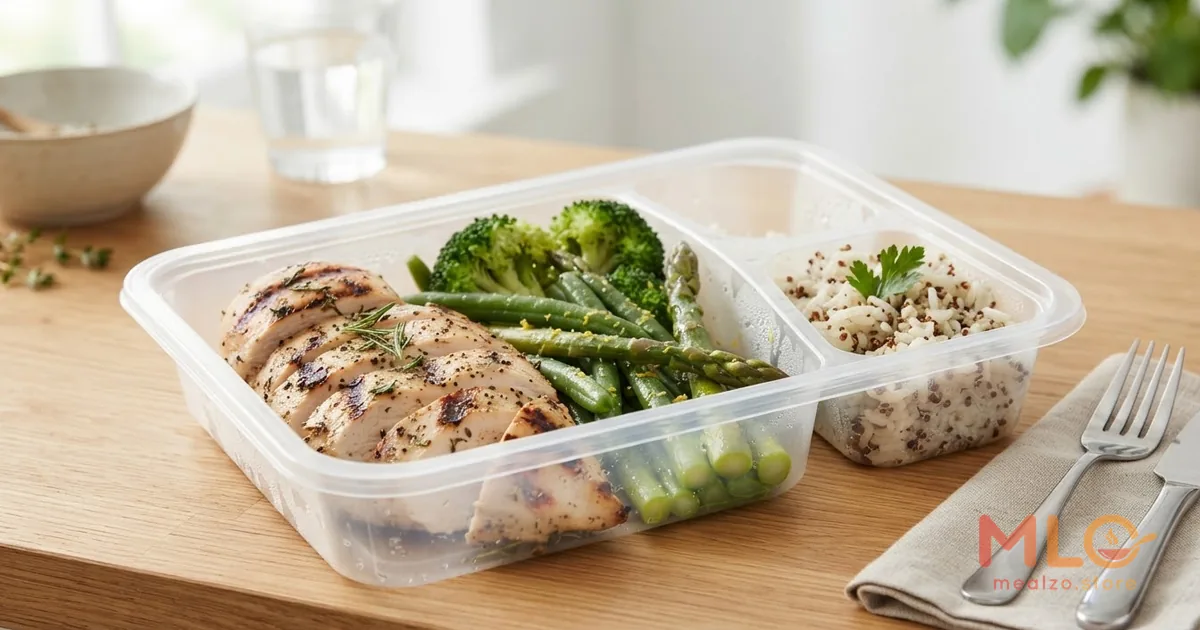
High-protein meals for fat loss are useful for a simple reason: protein can make a calorie-controlled way of eating easier to live with. That does not mean protein burns fat on its own, nor that adding more chicken, eggs or tofu automatically turns a meal into a weight-loss meal.
The bigger picture still matters. Portions, cooking fats, sauces, drinks, snacks and overall calorie intake can outweigh the advantage of choosing a protein-rich main ingredient. A very high-protein meal can also be very high in calories.
For people living in Bangkok, practicality matters just as much as nutrition theory. Work schedules shift, meals happen outside the home, food is available almost everywhere, and dinner may be later than planned. A useful eating pattern has to survive that reality.
The goal is therefore not to eat as much protein as possible. It is to build meals with enough protein to support fullness and structure while keeping total calories, vegetables, carbohydrates and fats in proportion to your actual needs.
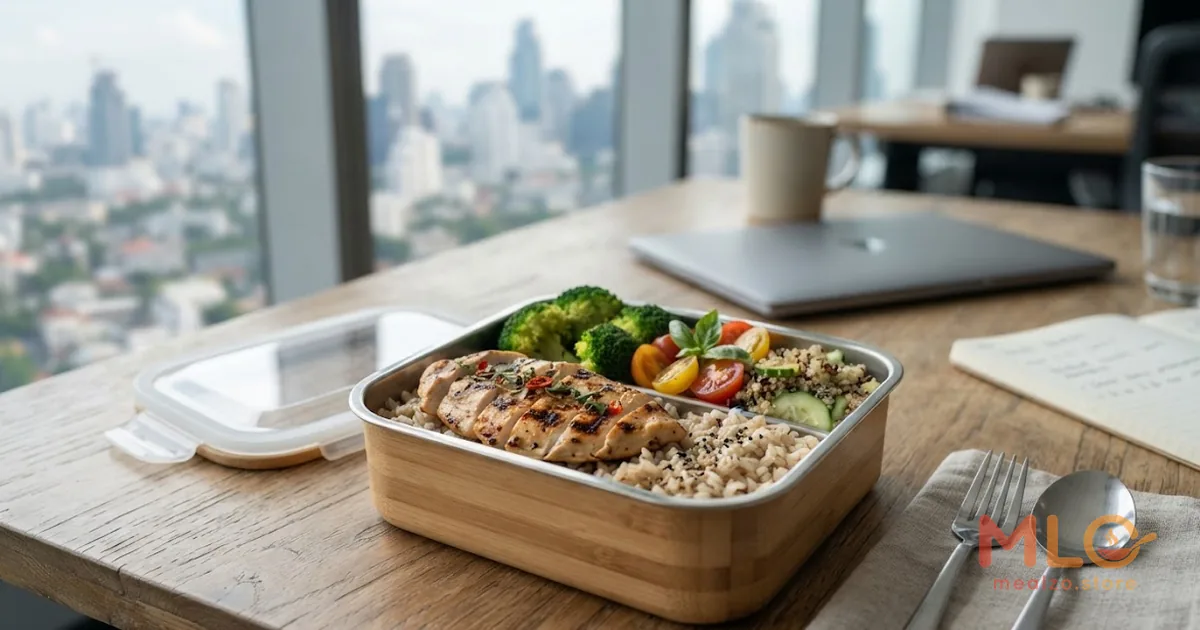
1. Why can high-protein meals help with fat loss?
High-protein meals can help with fat loss mainly by making calorie control and hunger management easier for some people.
Protein tends to make a meal feel substantial. When a meal contains a clear protein source rather than being built mostly around refined carbohydrates, added fats or snack foods, it may be easier to finish the meal feeling satisfied rather than immediately looking for something else to eat.
That matters because fat loss still depends on energy balance over time. Protein does not bypass that process. Its value is more practical: it can help create meals that are easier to fit into a controlled daily intake.
There is also a food-structure advantage. When you start planning a meal around protein, it often becomes easier to organise the rest of the plate intentionally rather than eating whatever happens to be available.
For a broader look at the role of protein itself, including how needs can differ between people, see how much protein you may need per day.
Key takeaway: Protein supports fat-loss eating mainly by helping build satisfying, structured meals rather than by overriding calorie balance.
2. How does protein affect fullness?
Protein can support fullness because it generally takes longer to digest than a meal built mostly from rapidly eaten, low-volume snack foods.
That does not mean every high-protein meal will keep everyone full for the same amount of time. Fullness also depends on the size of the meal, fibre, food volume, fat, carbohydrate, eating speed and individual appetite.
A grilled chicken breast on its own may contain plenty of protein but still feel incomplete. Add vegetables and a sensible portion of rice or another carbohydrate, and the meal may become much easier to live with.
This is why protein works best as part of a complete meal rather than as an isolated target.
Useful signs that a meal is structured well include:
- a clear protein source
- enough food volume to feel like a real meal
- vegetables or another source of fibre where appropriate
- carbohydrate or fat in a portion that fits the overall calorie target
- enough flavour and variety that the meal does not feel like punishment
A meal that technically contains a lot of protein but leaves you unsatisfied may not be a good practical choice, even if its macro profile looks impressive on paper.
3. Does eating more protein automatically create a calorie deficit?
Eating more protein does not automatically create a calorie deficit.
A calorie deficit exists when energy intake is lower than energy expenditure over time. Protein can help you organise food within that framework, but it cannot replace it.
This distinction becomes important with foods that combine protein with large amounts of fat or calorie-dense extras. A meal can contain steak, cheese, nuts, creamy sauce and oil and still qualify as "high protein", but it may also deliver far more energy than expected.
The same problem appears when people add protein instead of redistributing food. If you keep your usual breakfast, lunch and dinner exactly the same and then add shakes, bars or extra portions on top, total intake can rise rather than fall.
For the underlying mechanism, understanding calorie deficit and weight loss is a useful place to start because the broader weight-loss plan matters more than any single nutrient.
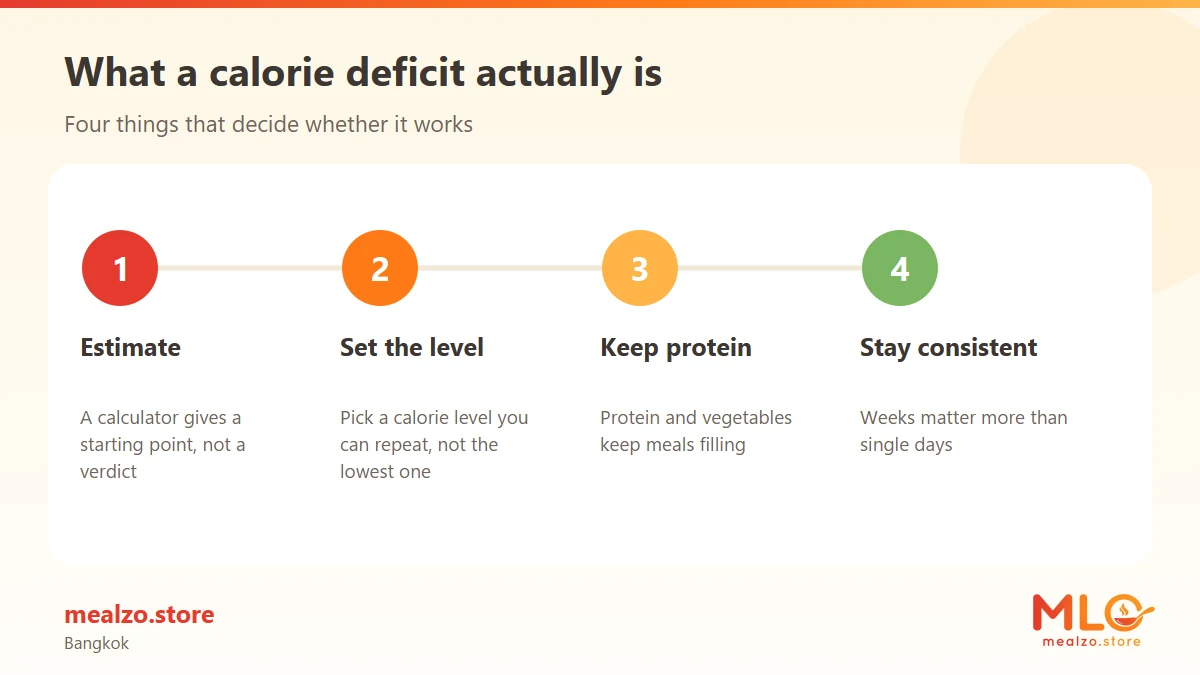
Key takeaway: A high-protein meal can support a calorie deficit, but it does not create one unless total energy intake is also controlled.
4. What should a practical high-protein meal look like?
A practical high-protein meal should combine a meaningful protein source with vegetables and appropriate portions of carbohydrate and fat.
The protein does not need to dominate the entire plate. The purpose is to give the meal a strong centre, then build around it according to appetite, activity and total calorie needs.
| Meal component | Practical role | Examples |
|---|---|---|
| Protein source | Provides the main protein portion | Chicken, fish, eggs, tofu, legumes |
| Vegetables | Adds volume, texture and variety | Leafy greens, broccoli, mixed vegetables |
| Carbohydrate | Adds energy and can make the meal more complete | Rice, potatoes, grains |
| Fat | Adds flavour and energy | Cooking oil, nuts, seeds, sauces |
| Seasoning | Makes the meal enjoyable enough to repeat | Herbs, spices, chilli, light sauces |
The balance between these components can change. Someone with a higher calorie requirement may want more rice or another carbohydrate. Someone eating at a lower calorie level may need a smaller portion of calorie-dense ingredients.
The important point is that "high protein" should not become shorthand for "eat protein and ignore everything else".
5. How much protein should one meal contain?
There is no single protein amount per meal that is correct for everyone.
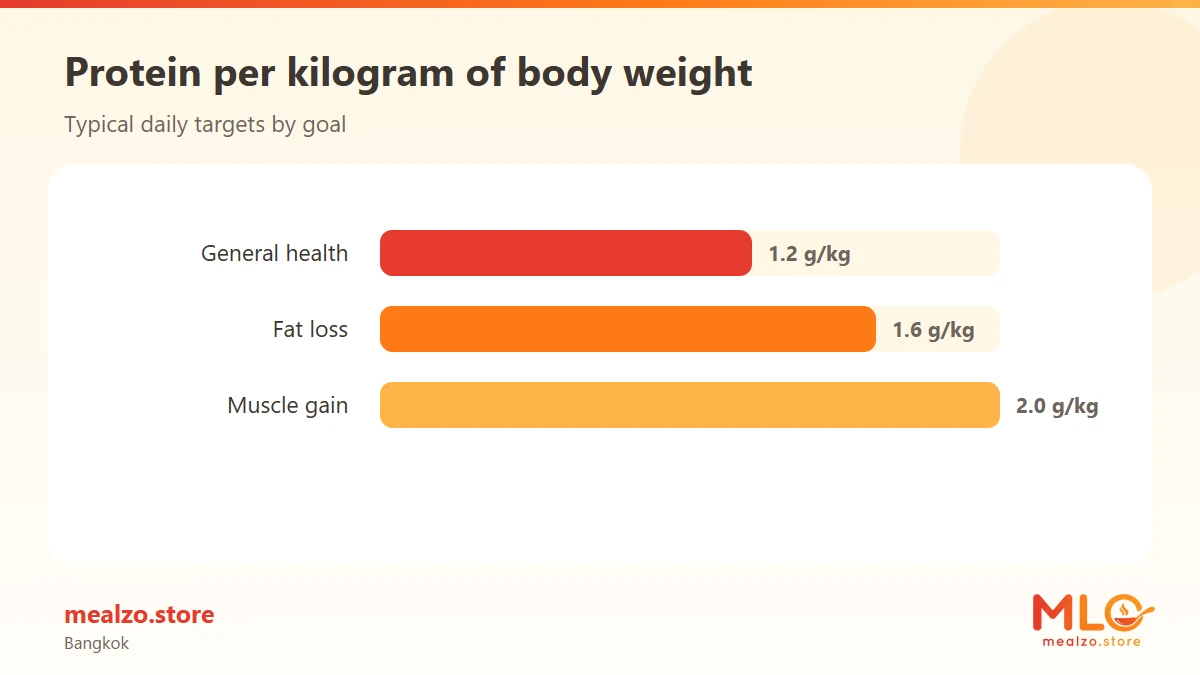
Protein needs depend on factors such as body size, total food intake, activity level, training habits and the rest of the diet. That makes rigid per-meal rules less useful than looking at total daily intake and then distributing it across a schedule that feels realistic.
If you eat three meals a day, each meal may naturally contain a larger share of your daily protein. If you eat five times, the same total could be spread more evenly.
Rather than chasing a perfect number at every sitting, focus first on whether your main meals actually contain a substantial protein source. Many people find that more useful than trying to turn every snack into a protein event.
For a more focused explanation, a practical guide to daily protein intake covers the question directly.
6. How should protein fit with carbohydrates and fat?
Protein should fit alongside carbohydrates and fat rather than replace both of them.
Macro ratios vary depending on the goal, calorie intake, food preferences and individual routine. There is no universal ratio that every person trying to lose fat needs to follow.
Carbohydrates can be useful around training, long workdays or simply because they make meals more satisfying and culturally normal. Fat contributes flavour and energy, but portions matter because calorie-dense ingredients can add up quickly.
A sensible way to think about macros is:
| Nutrient | What it contributes | What to watch |
|---|---|---|
| Protein | Structure and fullness | Do not assume more is always better |
| Carbohydrate | Energy and meal satisfaction | Portion size can vary by calorie target |
| Fat | Flavour and energy density | Oils, sauces and toppings can add substantial calories |
| Fibre-rich foods | Volume and texture | Low-volume meals may be less satisfying for some people |
Different goals may justify different macro arrangements, which is why macro ratios for different nutrition goals is more useful than treating one split as universally correct.
7. What are the common mistakes with high-protein meals for fat loss?
The most common mistake is assuming that anything labelled or perceived as high protein automatically fits a fat-loss diet.
Protein bars, restaurant dishes, cheese-heavy meals, fried meats and creamy sauces may all contain protein, but that tells you only part of the story. Total calories still matter.
Another mistake is making meals too lean and too small. A plate of plain chicken and a few vegetables may look disciplined, but if it leaves you hungry an hour later, it may make the rest of the day harder.
Common problems include:
- adding protein without reducing anything else
- ignoring calories from oils, sauces and toppings
- choosing very small portions that do not satisfy
- removing carbohydrates automatically without considering the whole meal
- relying on snack products instead of proper meals
- making food so repetitive that the plan becomes difficult to sustain
The best high-protein meals for fat loss are not the ones with the highest possible protein number. They are the ones that fit into a realistic day without causing constant hunger or excessive calorie intake.
8. How can high-protein eating work in everyday Bangkok life?
High-protein eating works best in Bangkok when it is designed around real schedules rather than idealised meal timing.
A long commute can delay dinner. Office lunches may be less predictable than meals at home. Food courts, restaurants and convenience stores make eating easy, which is useful but also creates frequent opportunities for unplanned extras.
A practical strategy is to make your main meals predictable where possible, then leave some flexibility around the edges.
For example, if lunch tends to be your most reliable meal, make it substantial enough to carry you through the afternoon. If evenings are unpredictable, avoiding an excessively light lunch may reduce the temptation to arrive at dinner extremely hungry.
Meal preparation can also remove some of the daily decision-making. If that appeals to you, high-protein meal delivery options in Bangkok explains the more specific high-protein format.
Key takeaway: In Bangkok, a useful high-protein plan is one that still works when commutes, meetings and meal times do not go exactly as planned.
9. Do you need high protein at every meal?
You do not need every eating occasion to be aggressively high in protein.
It may be more practical to make the main meals protein-centred and allow smaller meals or snacks to play a supporting role. Trying to maximise protein at every opportunity can make food choices unnecessarily restrictive.
The same principle applies to meal frequency. Someone eating three times a day may prefer larger protein portions at each meal. Someone eating five times may spread them out.
What matters is the daily pattern, not whether every coffee break contains a protein snack.
This flexibility can also make social eating easier. A dinner with friends does not need to look exactly like a meal-prep box to fit within a generally structured week.
10. How can Mealzo structure a high-protein plan?
Mealzo can structure a high-protein plan by combining the High Protein meal plan with a chosen calorie level, meal frequency and package length.
Mealzo offers 12 meal plans: Balanced, Weight Loss, High Protein, Vegetarian, Vegan, Keto, Low-Carb, Gluten Free, Easy-to-Digest, Pescatarian, No Fish & Seafood, and Dairy & Egg Free.
There are six daily calorie levels: 1200, 1500, 1800, 2000, 2200 and 2500 kcal. Customers can choose 3 or 5 meals a day and packages of 3, 7, 14 or 30 days.
The app also includes a calorie calculator based on the Mifflin-St Jeor formula. It provides an estimate rather than medical advice, so the result should be treated as a starting point rather than a precise measurement of individual energy needs.
Customers choose one spice level for the package from six options: not spicy, mild, medium, standard, hot or Thai-spicy. That preference can be changed later.
If you want to compare the available formats directly, browse Mealzo meal plans by calorie level and schedule.
11. What about vegetarian, vegan and other dietary preferences?
High-protein eating can be adapted to different dietary preferences, although the food choices and practical trade-offs will change.
A vegetarian or vegan high-protein approach does not look the same as one built around chicken or fish. Protein may come from combinations of tofu, legumes, grains, seeds or other plant foods, and meals may need more deliberate planning to balance protein with total calories and food volume.
Mealzo's available plan categories include Vegetarian, Vegan, Pescatarian, No Fish & Seafood, Dairy & Egg Free and several other formats alongside High Protein.
Allergen handling is separate from those plan names. Customers declare allergens from 9 groups, and dishes containing a declared allergen are not assigned to them. This describes how the assignment mechanism works; it is not a guarantee that a meal is completely allergen-free.
12. When is more protein not the main solution?
More protein is not the main solution when the bigger problem is total calorie intake, meal structure or consistency.
Someone may already be eating enough protein but still consuming large amounts of calorie-dense extras. Another person may have reasonable meals but repeatedly snack late at night. Someone else may choose meals that are technically balanced but cannot maintain the plan for more than a few days.
In those cases, simply adding more protein may not address the real issue.
It is often more useful to review:
- total daily intake
- portion sizes
- liquid calories
- cooking fats and sauces
- meal timing around known periods of hunger
- whether the plan is realistic enough to repeat
High-protein meals are one useful tool inside a broader eating pattern. They work best when they make calorie control and normal life easier at the same time.
FAQ
Are high-protein meals good for fat loss?
They can be useful because protein can help make meals more filling and structured, which may support calorie control. They do not cause fat loss independently of total energy intake.
Can a high-protein meal still be high in calories?
Yes. Foods such as fatty meats, cheese, oils, nuts and creamy sauces can raise the calorie content substantially even when the meal also contains plenty of protein.
Do I need to cut carbohydrates when eating high protein?
No. High protein does not automatically mean low carbohydrate. Carbohydrate portions can be adjusted according to calorie needs, activity and preference rather than removed by default.
Is three or five meals better for a high-protein plan?
Either can work. Three meals may suit people who prefer larger portions, while five meals may suit those who prefer smaller meals distributed across the day. The daily total matters more than the number itself.
Can vegetarian meals still be high in protein?
Yes, although the food choices are different. Tofu, legumes and other plant foods can contribute protein, and the overall meal still needs to be planned around total calories and satisfaction.
Does Mealzo deliver high-protein meals across Bangkok?
Mealzo delivers across Bangkok from its kitchen in Bang Na. Delivery is available in the morning from 06:00-09:00 or in the evening from 17:00-20:00, depending on the selected delivery window.
People who are pregnant, breastfeeding, under medical treatment, managing an eating disorder or dealing with another condition affecting nutrition should not rely on a general calorie article to set an intake target. Individual professional advice is more appropriate.
Find a Meal Plan That Fits
Compare Mealzo plans or use the calculator to explore meal options for your needs.