Protein, Carbs and Fat: How Macro Ratios Change by Goal

If you have ever looked at a nutrition app, fitness plan or meal-prep service, you have probably seen numbers such as 30% protein, 40% carbohydrates and 30% fat.
Those numbers are your macronutrient ratio.
They can be useful. They can also become unnecessarily complicated.
The important point is that there is no single macro split that is automatically best for everyone. A person trying to maintain their weight while working at a desk has different nutritional priorities from someone training five times a week, trying to gain muscle or managing a calorie deficit.
That is why a useful macro ratio by goal starts with the goal itself rather than copying someone else's percentages.
Before worrying about whether your carbohydrates should be 35% or 40%, it helps to understand what protein, carbohydrates and fat actually do. If you are new to the topic, start with our beginner's guide to macronutrients.
This guide takes the next step: how the balance between those macros can change depending on what you are trying to achieve.
What does a macro ratio actually mean?
A macro ratio describes how your daily calories are divided between three macronutrients:
- protein
- carbohydrates
- fat
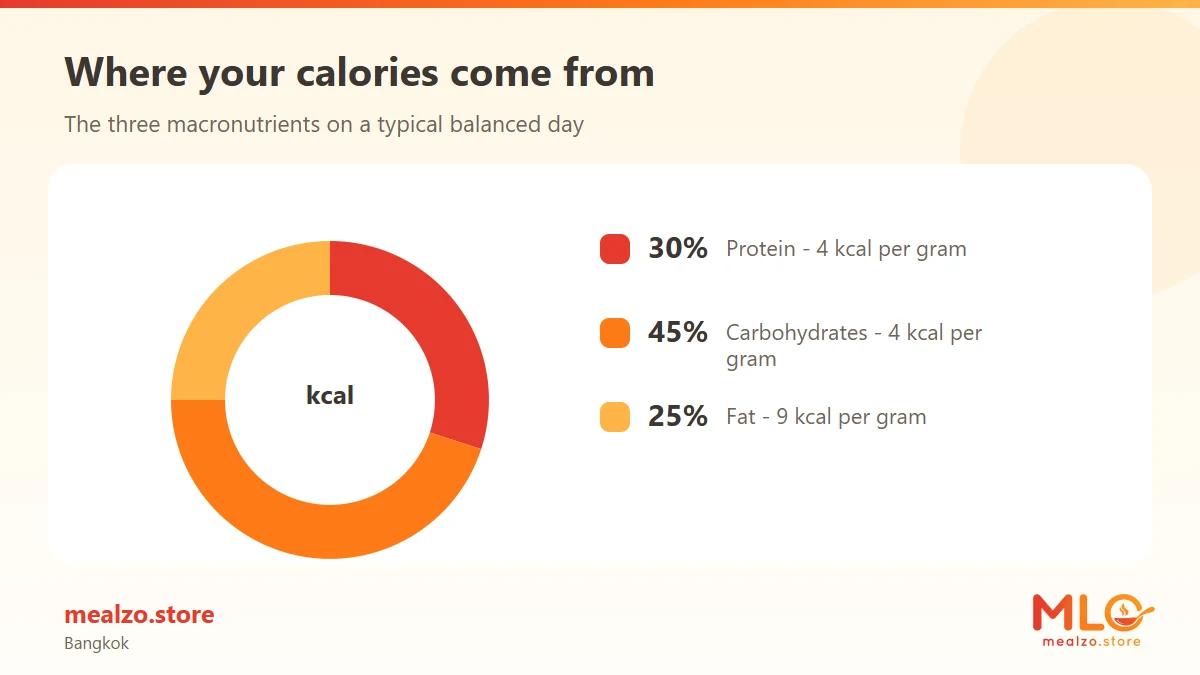
Protein and carbohydrates provide about 4 calories per gram. Fat provides about 9 calories per gram.
So when someone follows a 30/40/30 split, they are not saying that 30% of the physical food on the plate should be protein. They mean that approximately 30% of total calorie intake comes from protein, 40% from carbohydrates and 30% from fat.
At 2,000 calories per day, that example works out roughly as:
- 150 g protein
- 200 g carbohydrates
- 67 g fat
The percentages are simply one way of organising food intake.
They are not magic numbers.
In practice, it is often more useful to think about protein first, establish an appropriate amount of fat, and allow carbohydrates to fill much of the remaining energy requirement.
That is particularly true when activity levels change from one day to another.
Why there is no perfect macro ratio
Key takeaway: The most useful macro ratio depends on your goal, activity level and total calorie intake.
Nutrition discussions online often make macronutrients sound much more precise than they really are.
You may see claims that one ratio is ideal for fat loss, another is essential for muscle gain and another is supposedly optimal for metabolism.
Real life is less tidy.
Two people could eat exactly the same calorie intake with different macronutrient ratios and both have diets that suit their goals.
The right balance can depend on:
- body size
- overall calorie needs
- training frequency
- training intensity
- food preferences
- appetite
- schedule
- tolerance for higher- or lower-carbohydrate meals
- whether someone eats three large meals or several smaller meals
- how active they are outside the gym
Someone who trains Muay Thai in Bangkok five evenings a week may feel much better with more carbohydrates than someone whose main activity is a short walk after work.
Neither person necessarily has the "better" macro split.
Their demands are simply different.
That is why percentages should usually be treated as a range or starting point, not a rigid nutritional identity.
Protein matters across almost every goal
Of the three macronutrients, protein is usually the one worth paying the most attention to.
Protein supplies amino acids used in muscle tissue and many other structures and processes in the body. It is also generally satiating, which is useful when managing appetite.
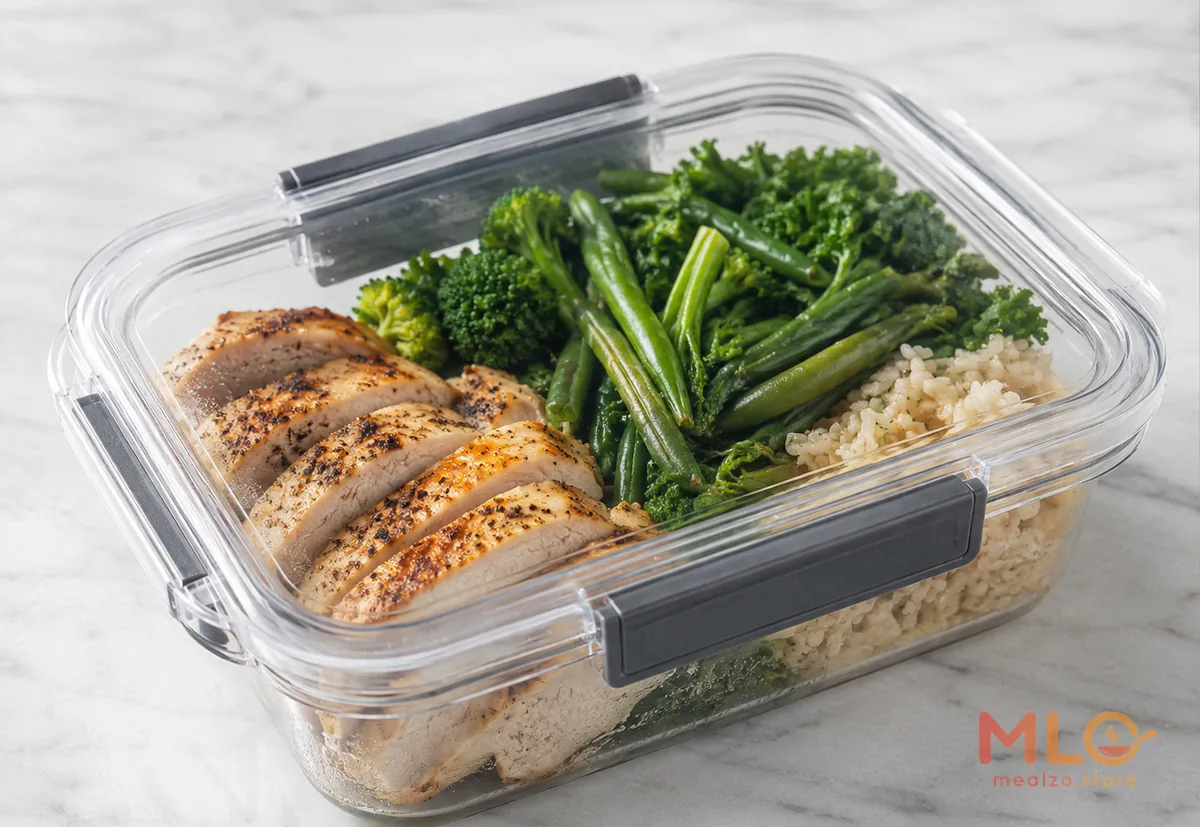
This does not mean that every meal needs to resemble a bodybuilder's chicken-and-rice container.
It means that protein should have a deliberate place in your diet rather than appearing accidentally.
Useful everyday sources include:
- chicken
- turkey
- fish
- seafood
- eggs
- lean beef or pork
- tofu
- tempeh
- Greek-style yoghurt or other suitable dairy products
- beans and lentils
- soy products and other plant-based protein foods
In Thailand, this might mean grilled chicken with rice and vegetables, fish with jasmine rice, tofu stir-fry, a lighter pad kra pao with a clear protein portion, or a mixed international meal such as chicken pasta with vegetables.
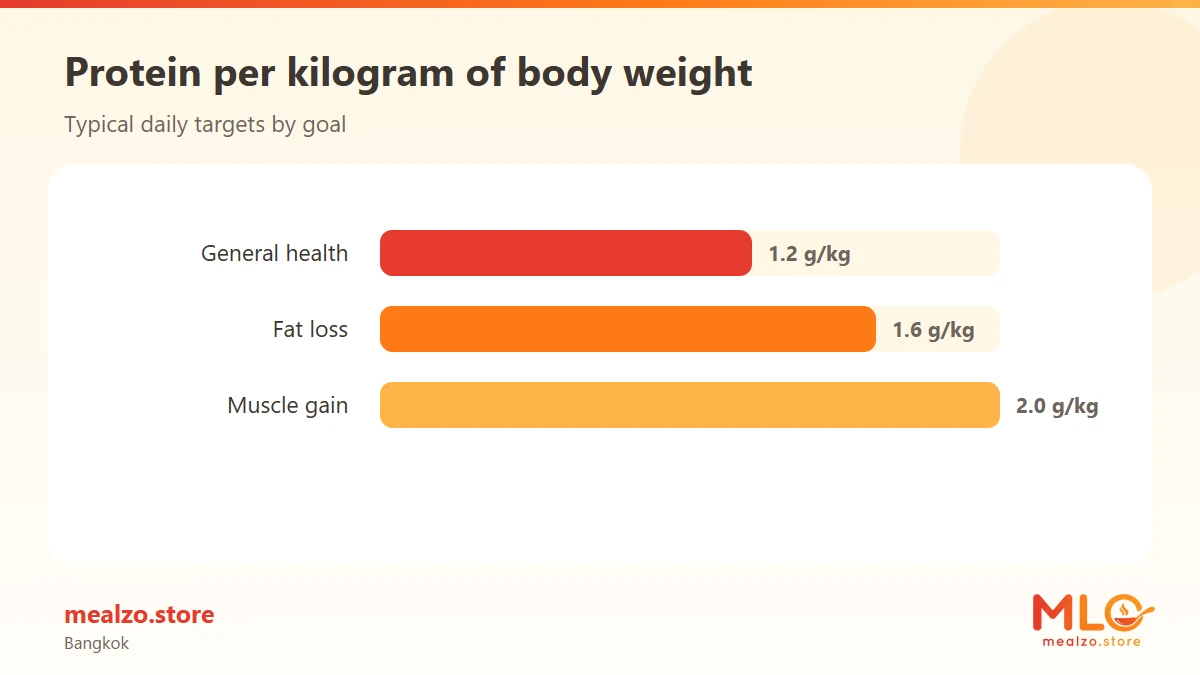
Exactly how much protein you need depends on context. We cover the topic separately in how much protein you need per day.
The useful principle here is simpler: do not reduce protein just because your carbohydrate or fat intake changes.
Protein usually remains a relatively stable anchor while the rest of the macro ratio moves around it.
Macro ratio for weight maintenance
| Goal | Protein | Carbohydrates | Fat | Notes |
|---|---|---|---|---|
| Maintenance | 20-30% | 40-50% | 25-35% | Balanced everyday starting point |
| Fat loss | 25-35% | 30-45% | 25-35% | Prioritize protein and portions |
| Muscle gain | 25-30% | 45-55% | 20-30% | Carbs support harder training |
| Higher activity / endurance | 20-25% | 50-60% | 20-30% | More fuel for activity |
| Desk-based lifestyle | 25-30% | 35-45% | 30-35% | Moderate carbohydrate intake |
Maintenance is often the least complicated goal.
You are not deliberately trying to create a large calorie deficit or surplus. The priority is usually to eat enough to support normal life, activity and recovery while keeping body weight relatively stable over time.
A reasonable starting distribution might look something like:
Protein: 20-30% Carbohydrates: 40-50% Fat: 25-35%
These are not rules.
A highly active person may naturally sit toward the higher end of the carbohydrate range. Someone who prefers avocado, nuts, olive oil, fatty fish or richer Thai dishes may eat a slightly higher proportion of fat.
The main advantage of maintenance is flexibility.
A Bangkok office worker could eat:
Breakfast: eggs, whole-grain toast, fruit and yoghurt Lunch: chicken pad kra pao with rice and vegetables Dinner: salmon, potatoes or rice, and a large vegetable portion
None of those meals needs to match an exact percentage individually.
The overall day matters more.
Macro ratio for fat loss
When the goal is fat loss, total calorie intake becomes especially important. Macro ratios can help organise those calories, but simply switching from one percentage split to another does not automatically cause fat loss.
A common starting range might be:
Protein: 25-35% Carbohydrates: 30-45% Fat: 25-35%
The most noticeable change compared with a general maintenance diet is often the relative emphasis on protein.
That makes sense for several practical reasons.
A higher-protein meal can be more filling than a meal dominated by refined carbohydrates or added fat. Protein also becomes particularly relevant when someone is combining a calorie deficit with resistance training.
That does not mean carbohydrates need to disappear.
Consider two lunches:
Meal A: a small serving of chicken, large portion of rice and a sweet drink.
Meal B: a more substantial chicken portion, moderate rice, vegetables and water or an unsweetened drink.
Meal B may fit a fat-loss plan more comfortably without turning into a "low-carb diet."
Carbohydrates are simply being adjusted rather than banned.
The same applies to Thai favourites. You do not automatically have to remove rice from pad kra pao, avoid noodles forever or replace every carbohydrate with salad.
Portion structure matters.
For a more detailed look at this approach, see high-protein eating for fat loss.
The biggest fat-loss mistake: cutting carbs and forgetting calories
Key takeaway: Protein usually deserves extra attention during fat loss or muscle-focused phases because it helps make each meal more substantial.
Carbohydrates are often the first target when someone decides to lose weight.
Rice disappears.
Noodles disappear.
Fruit gets questioned.
Then those foods are replaced with large quantities of cheese, nuts, nut butter, coconut-based foods or added oils because they are "low carb."
The result may still be a highly energy-dense diet.
Fat contains more than twice as many calories per gram as protein or carbohydrates. That does not make dietary fat bad. It simply means portions matter.
A tablespoon of oil can disappear into a stir-fry without adding much volume. The same is true of creamy sauces, coconut milk and large handfuls of nuts.
So a lower-carbohydrate ratio is not automatically a lower-calorie diet.
The more useful question is:
Does the overall meal structure support the calorie intake, protein intake and eating pattern you can realistically maintain?
Macro ratio for building muscle
Muscle-building nutrition creates a different problem.
Now you need enough protein to support training and enough total energy to make demanding workouts productive.
A practical macro range may look roughly like:
Protein: 25-30% Carbohydrates: 40-55% Fat: 20-30%
Beginners sometimes assume that muscle gain means pushing protein as high as physically possible.
That often leaves too little room for carbohydrates.
Once protein needs are reasonably covered, eating dramatically more does not mean muscle will suddenly appear faster.
Carbohydrates are valuable because strength training itself requires energy.
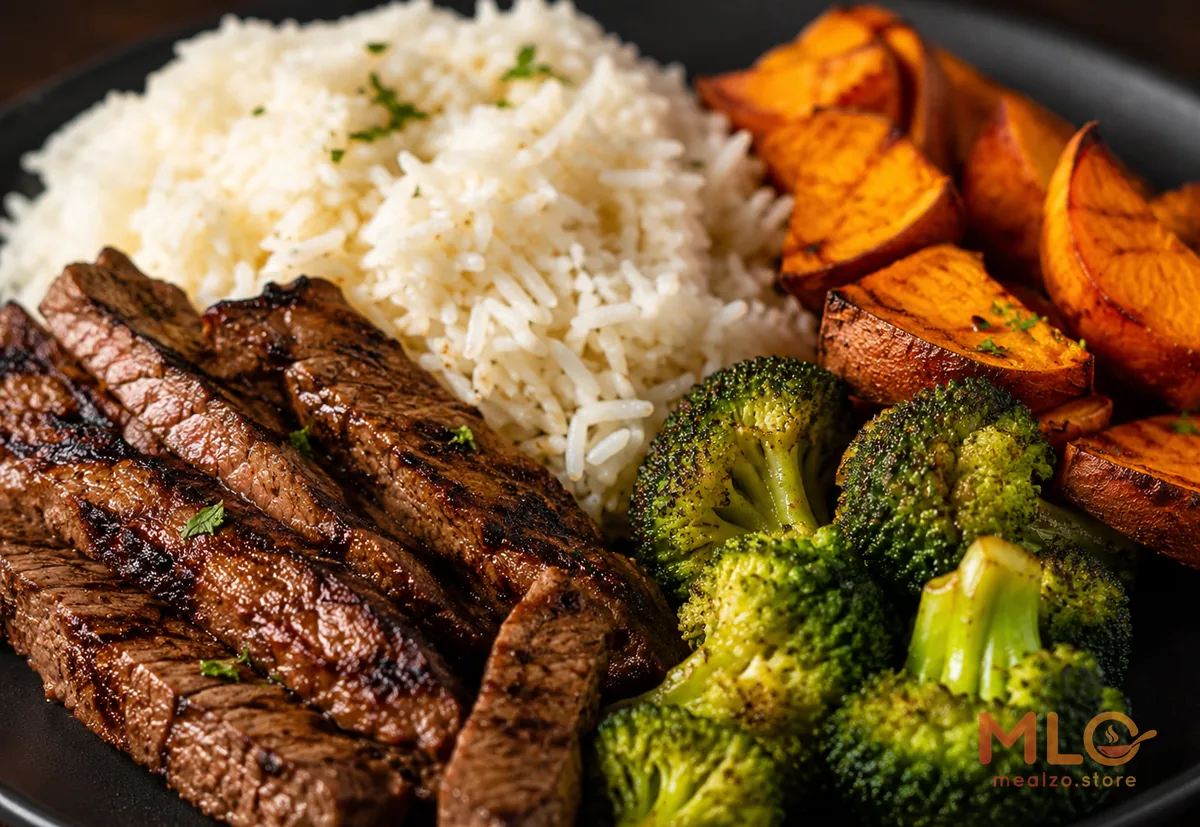
Rice, potatoes, oats, bread, pasta, noodles and fruit can all help make a higher-energy eating pattern easier to manage.
Imagine someone training after work at 18:30.
A lunch consisting only of chicken breast and salad may look extremely "clean," but it may not provide the most useful preparation for a demanding gym session several hours later.
A meal containing chicken, vegetables and a meaningful portion of rice will often make more practical sense.
Later, a post-training dinner could include beef, chicken, fish or tofu with rice, potatoes or noodles.
The objective is not to eat carbohydrates because they magically create muscle. It is to create an eating pattern that supports training quality, recovery and overall energy intake.
More activity usually means more room for carbohydrates
| Macro | Main role | Everyday sources | Per gram |
|---|---|---|---|
| Protein | Builds and maintains tissue | Chicken, fish, tofu, eggs | 4 kcal |
| Carbohydrates | Main everyday energy source | Rice, oats, fruit, vegetables | 4 kcal |
| Fat | Energy and nutrient absorption | Nuts, seeds, oils, avocado | 9 kcal |
Your macro ratio can also change even when your body-composition goal stays the same.
Suppose you normally work from a laptop and train twice per week.
Then you start:
- running three mornings per week
- doing CrossFit
- training Muay Thai
- playing football
- cycling long distances
- spending much more time walking around Bangkok
Your energy demands have changed.
Carbohydrates are the body's most readily useful dietary fuel for many moderate- and high-intensity activities.
That is why active people often benefit from allowing carbohydrates to occupy a larger share of their diet.
A rough higher-activity distribution could be:
Protein: 20-30% Carbohydrates: 45-60% Fat: 20-30%
Again, these are illustrative ranges rather than prescriptions.
What matters is understanding the direction of change.
More demanding activity often means more carbohydrate can be useful.
Carbohydrates around training
You do not necessarily need complicated nutrient timing.
But where carbohydrates appear during the day can make a difference to how practical your diet feels.
If you train in the evening, it may make sense to include a solid carbohydrate source at lunch or in an afternoon meal.
Examples include:
- rice with grilled chicken
- banana with yoghurt
- oats and fruit
- rice with tofu
- a chicken sandwich
- potatoes with lean meat
- noodles with a clear protein source
After training, a meal containing both protein and carbohydrates is another straightforward option.
For someone exercising recreationally, there is rarely a need to turn this into a minute-by-minute system.
Eating enough over the full day remains more important than chasing perfect timing.
Fat should not be pushed toward zero
Key takeaway: Macro percentages are starting points, not rules, so adjust them when your activity level or goal changes.
When people increase protein and carbohydrates, fat sometimes gets squeezed out of the plan.
That is also a mistake.
Dietary fat is necessary for normal physiological functions and helps provide essential fatty acids and fat-soluble nutrients.
The goal is not to make fat as low as possible.
Instead, think of it as a macronutrient that needs a sensible floor.
Foods that contribute fat might include:
- eggs
- oily fish
- avocado
- nuts and seeds
- olive oil
- peanut products
- dairy products
- coconut-based ingredients
Thai food deserves some awareness here because fat can accumulate quickly in meals involving frying, coconut milk or generous amounts of cooking oil.
Green curry, massaman curry or coconut-based soups can fit into a balanced diet, but they may contribute substantially more fat than a grilled chicken and rice dish.
You do not need to label one "good" and the other "bad."
You simply need to know what is on the plate.
What about low-carb and keto ratios?
Low-carbohydrate and ketogenic diets deliberately shift the ratio much further toward fat while reducing carbohydrate intake.
That is a specific dietary structure, not the default progression for everyone trying to manage weight.
A conventional balanced fat-loss diet, a moderate low-carb diet and a ketogenic diet can look completely different in terms of percentages.
That is another reason why searching for one universal "best macro ratio" is misleading.
A dietary strategy should fit the person's objective, preferences and ability to follow it consistently.
You do not need the same ratio every single day
One of the easiest ways to make macro tracking exhausting is trying to hit identical numbers seven days a week.
Real life does not work that way.
Your Monday may involve ten hours at a desk.
Saturday might involve a long run, football match, hike or Muay Thai session.
It is completely reasonable for those days to contain different amounts of carbohydrate and total energy.
Some people naturally do this without tracking anything.
They eat more rice, noodles, fruit or other carbohydrate-rich foods on highly active days and slightly less when they are inactive.
Protein tends to remain fairly stable.
Fat stays adequate.
Carbohydrate moves more noticeably with activity.
That is a very practical way to think about macro ratios.
Turning macro ratios into actual meals
Percentages only become useful when they translate into food.
Consider a fairly balanced lunch:
Grilled chicken + jasmine rice + stir-fried vegetables + small amount of cooking oil
If you want to push the meal slightly more toward protein, increase the chicken portion.
If you want more carbohydrate for a demanding training day, increase the rice.
If you are reducing overall calories, you might slightly reduce the rice or added oil while keeping a substantial protein and vegetable portion.
The same logic works with international food.
Pasta
Start with pasta plus a clear protein source such as chicken, lean beef, tuna or tofu.
Add vegetables.
Then adjust pasta quantity according to your energy requirements.
Noodle soup
Choose a soup containing a meaningful amount of meat, fish, eggs or tofu rather than mostly noodles and broth.
If you need more energy, the noodle portion can be larger.
Thai curry
Think about protein, vegetables, rice and the fat coming from coconut milk.
If the curry is rich, the meal may already contain plenty of fat, so there is little need to add additional fried sides.
Fried rice
Fried rice combines carbohydrate and fat in the same dish.
Adding a decent serving of chicken, shrimp, egg or tofu and vegetables can make the overall meal more balanced.
Rice bowl
Rice bowls are one of the easiest formats to adjust.
Protein stays central.
Vegetables provide volume.
Rice moves up or down depending on activity and calorie needs.
Sauces and oils affect fat and overall calories.
This is macro management without turning lunch into a mathematics exam.
Common macro mistakes
Too little protein
A breakfast based on sweet coffee and pastry, noodles for lunch and a small amount of meat at dinner may provide plenty of calories without much protein.
The fix does not require protein powder in every meal.
Simply make protein a visible component of meals.
Treating carbohydrates as the enemy
Carbohydrates are not automatically responsible for weight gain.
Energy intake matters, and carbohydrate-rich foods range from fruit and rice to highly processed desserts.
Putting all of them into the same category is not useful.
Going extremely low-fat
Reducing obvious excess cooking oil is very different from attempting to eliminate dietary fat.
Some fat belongs in a balanced eating pattern.
Thinking percentages matter more than calories
A perfectly calculated macro ratio can still provide more or less energy than your goal requires.
Ratios organise calories. They do not replace calorie awareness.
Copying an athlete's macros
A person training twice per day may have carbohydrate requirements that make little sense for someone who exercises three times per week.
Macro targets should reflect your life, not someone else's Instagram screenshot.
Changing everything at once
If your diet already contains reasonable foods, small adjustments are often enough.
More protein at breakfast.
A little less cooking oil.
More rice before demanding training.
A slightly smaller carbohydrate portion on inactive days.
Consistency is usually easier when the changes still resemble normal food.
A simple way to choose your starting macro balance
Instead of immediately asking, "Should I eat 40% carbs or 45% carbs?" use this order:
1. Estimate your overall calorie requirement.
You can use the MEALZO calorie calculator as a starting point.
2. Establish a sensible protein intake.
Protein is useful across maintenance, fat-loss and muscle-building goals.
3. Make sure fat is not unnecessarily low.
Leave enough room for normal dietary fat sources.
4. Use carbohydrates to support the rest of your energy requirements.
More activity usually creates more room for carbohydrates.
5. Adjust according to real life.
Energy, appetite, gym performance, routine and food preferences all matter.
You can also step back from percentages completely and start with the broader principles in how to build a balanced nutrition plan.
How MEALZO approaches different nutrition goals in Bangkok
For people who understand the theory but do not want to calculate every meal themselves, structured meal plans can make the process easier.
MEALZO is a subscription diet catering service delivering within Bangkok.
The system offers 12 diet types:
- balanced
- weight_loss
- high_protein
- vegetarian
- vegan
- keto
- low_carb
- gluten_free
- easy_digest
- pescatarian
- no_fish_seafood
- dairy_egg_free
Calorie levels are available at 1200, 1500, 1800, 2000, 2200 and 2500 kcal, with either 3 or 5 meals per day.
Packages are available for 3, 7, 14 or 30 days.
Depending on the plan, menus can be built around Thai food, international food or a mixed style.
MEALZO uses a menu algorithm to organise meals within the selected plan rather than expecting customers to manually construct every day from individual dishes.
The relevant point is that different goals do not necessarily require everyone to eat the same foods in the same proportions.
Someone choosing a high-protein structure has different priorities from someone choosing balanced, low-carb, keto or vegetarian meals.
The diet framework should reflect that.
Macro ratios are a tool, not a target to worship
A useful macro ratio gives your eating pattern structure.
It can help you see why a meal containing almost no protein may need adjusting, why carbohydrates can be useful around training, or why a supposedly "healthy" meal loaded with oils and nuts can still become extremely energy dense.
But the ratio itself is not the goal.
The goal might be maintaining your weight, reducing body fat, supporting muscle growth or simply having enough energy to train properly.
Your macronutrients are there to support that objective.
For most people, a sensible approach looks surprisingly ordinary:
eat enough protein, keep dietary fat at an appropriate level, adjust carbohydrates according to activity and total energy needs, and choose meals you can realistically continue eating.
You do not need to fear rice.
You do not need to live on chicken breast.
And you definitely do not need to panic because today's carbohydrates were 43% instead of 40%.
Use macro ratios to make better decisions, not to turn every meal into a spreadsheet.
**
Frequently Asked Questions
Do you have to track macros?
No. Macro tracking can be useful when you have a specific nutrition goal, but many people do well by focusing on balanced meals and consistent portions. A structured, calorie-controlled meal plan can reduce the amount of daily calculation required.
What is the best macro ratio for fat loss?
There is no single ratio that works for everyone. A practical starting point is around 25-35% protein, 30-45% carbohydrates and 25-35% fat, while keeping overall calorie intake aligned with the goal. Consistency matters more than chasing an exact percentage every day.
How much protein do I need?
Protein needs vary with body size, activity and goals. Rather than relying only on a percentage, it can be useful to include a clear protein source in each main meal. People training regularly or trying to preserve muscle during fat loss often allocate a larger share of their calories to protein.
Do I need to eat low-carb to lose fat?
No. Lower-carbohydrate eating is one possible approach, not a requirement. Fat loss depends more on maintaining an appropriate overall calorie intake, while carbohydrates can remain part of a balanced diet.
When should I adjust my macro ratio?
Adjust it when your goal, training volume or daily activity changes. Someone moving from maintenance to muscle gain may increase carbohydrates and total energy, while a less active period may require a different balance. Make changes gradually and assess whether the new setup fits your routine.
How can meal plans help keep macro ratios steady?
Structured meals make portion sizes and food choices more consistent from day to day. MEALZO provides chef-prepared, calorie-controlled meal plans in Bangkok with flexible plan options, reducing the need to plan every meal yourself. Your preferred macro emphasis can then be considered alongside your calorie and meal-plan goals.
People who are pregnant, breastfeeding, under medical treatment, managing an eating disorder or dealing with another condition affecting nutrition should not rely on a general calorie article to set an intake target. Individual professional advice is more appropriate.
Find a Meal Plan That Fits
Compare Mealzo plans or use the calculator to explore meal options for your needs.