Keto vs Low Carb: Complete Guide to Choosing the Right Approach
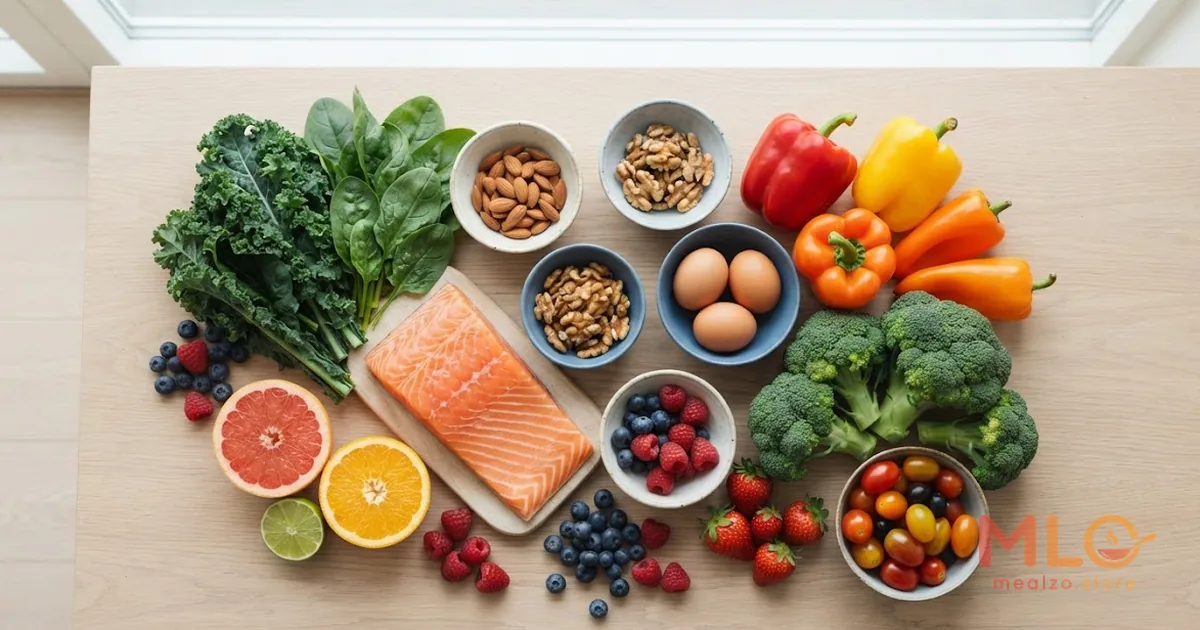
Keto and low-carb diets are often discussed as if they were two names for the same thing. They are not. Both reduce carbohydrate intake, but they do so to different degrees, and that difference changes what you can eat, how much planning is required, and how easily the approach fits around restaurants, workdays and ordinary life in Bangkok.
The more useful question is therefore not whether keto is better than low carb. It is which level of carbohydrate restriction makes sense for the way you actually live. Someone who is comfortable tracking food closely may view keto as a clear framework. Someone who regularly eats with colleagues, travels around Bangkok or wants more flexibility with fruit and rice may find a moderate low-carb plan easier to maintain.
Food quality still matters under either approach. Removing rice while replacing it with large portions of processed meat, cheese and sauces does not automatically create a well-structured diet. Protein, vegetables, fats, overall energy intake, meal composition and variety remain relevant.
This guide compares keto vs low carb from a practical perspective: what changes nutritionally, what foods fit, where Thai meals become complicated, and what to consider before choosing either style.
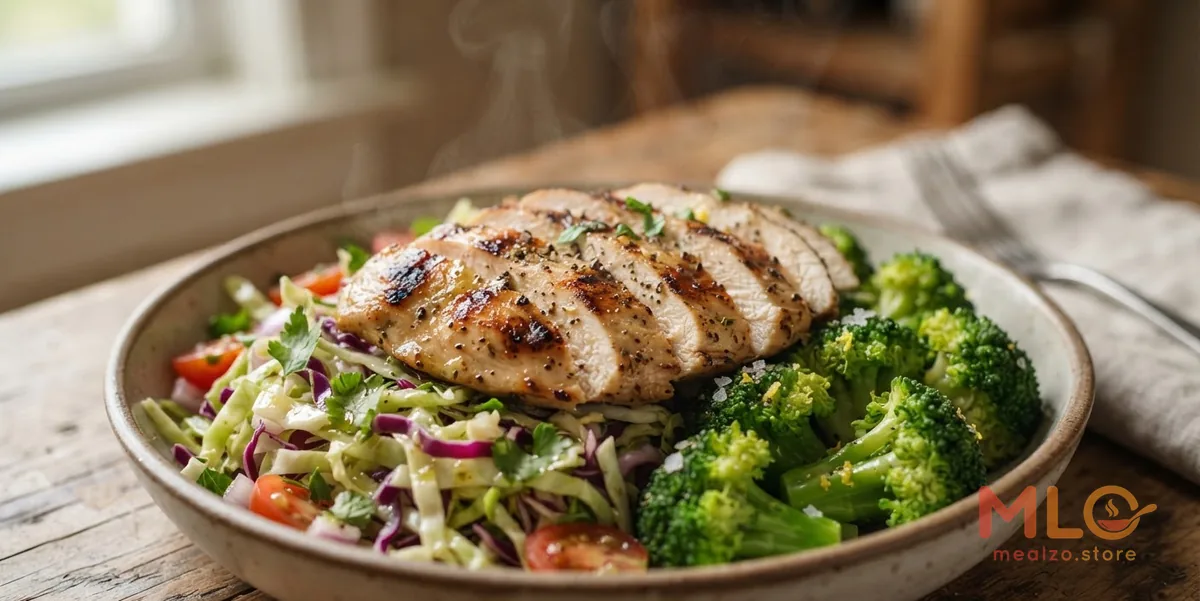
1. Keto vs Low Carb: What Is the Main Difference?
The biggest difference is the degree of carbohydrate restriction.
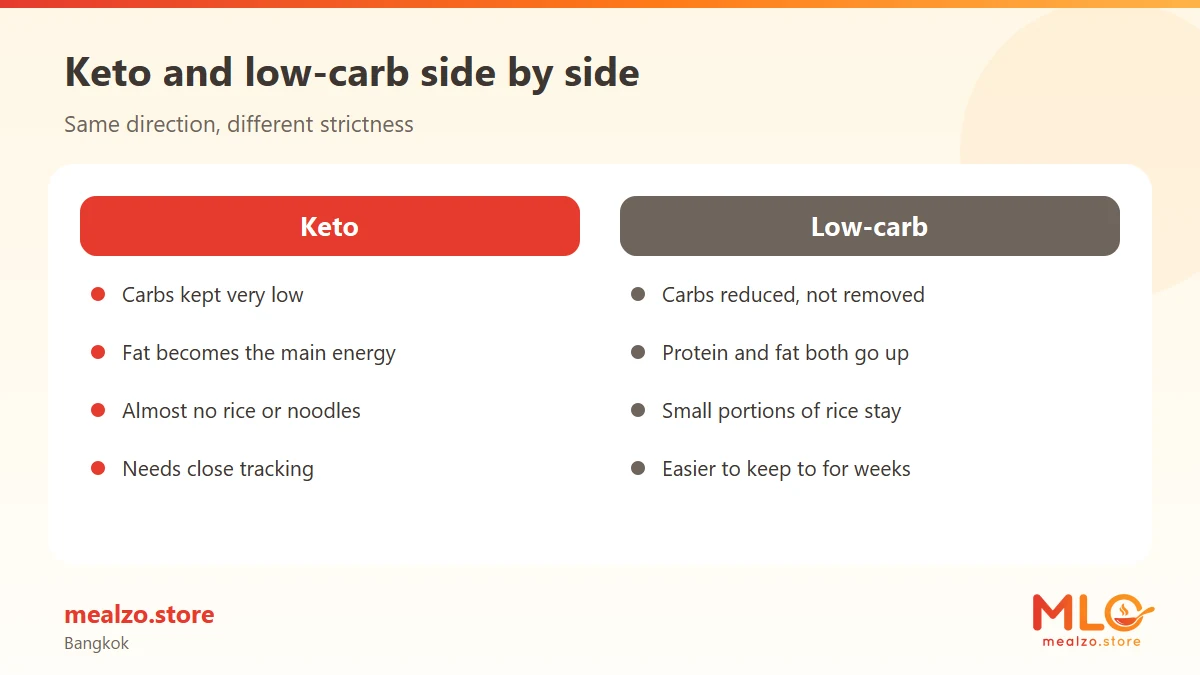
A low-carb diet is a broad category rather than one rigid formula. It generally means eating fewer carbohydrate-rich foods than you normally would while relying more heavily on protein, vegetables and fats. The exact amount can vary considerably. One person may still eat a modest portion of rice at lunch and fruit later in the day, while another may keep carbohydrates much lower.
A ketogenic diet is more restrictive. Carbohydrates are reduced far enough that fat becomes a much larger part of the diet and the body may begin producing ketones from fat. Reaching and maintaining that metabolic state requires tighter control of carbohydrate intake than an ordinary low-carb approach.
That distinction affects day-to-day food choices.
| Area | Keto | Low carb |
|---|---|---|
| Carbohydrate restriction | Very restrictive | Moderate to substantial |
| Rice and noodles | Usually difficult to accommodate | Smaller portions may fit |
| Fruit | More limited | Greater flexibility |
| Starchy vegetables | Usually restricted | Can often fit in controlled portions |
| Fat intake | Typically much higher | Variable |
| Protein | Moderate to substantial depending on plan | Usually an important part of meals |
| Flexibility when eating out | Lower | Higher |
| Need to check sauces and ingredients | High | Still useful, but usually less strict |
The important point is that "low carb" describes a range. Keto occupies the more restrictive end of that range, but not every low-carb diet is ketogenic.
Key takeaway: Keto is a tightly carbohydrate-restricted eating pattern, while low carb allows a wider range of carbohydrate intake and therefore more food flexibility.
For a closer look at how nutritional ketosis changes food choices, see the practical basics of keto macros and food selection.
2. What Actually Happens When You Eat Fewer Carbohydrates?
Carbohydrates are one of the body's available energy sources. Foods containing carbohydrate are digested into smaller molecules, including glucose, which can then be used directly or stored.
When carbohydrate intake falls, the body changes how it supplies energy. Stored carbohydrate can be used first, while fat contributes to energy needs as well. Under sufficiently restrictive ketogenic conditions, the liver produces ketone bodies from fatty acids. These can be used as an alternative fuel by several tissues.
That metabolic adaptation is what separates keto from simply "eating less rice."
Low-carb eating does not necessarily lead to sustained nutritional ketosis. If you still eat enough carbohydrate from vegetables, fruit, dairy, legumes, rice or other foods, your body may continue using a mixture of glucose and fat without entering the metabolic state associated with a ketogenic diet.
This is why the distinction matters when choosing meals. A serving that easily fits a moderate low-carb plan may contain too much carbohydrate for someone trying to remain ketogenic.
Carbohydrate reduction is not the whole diet
People sometimes focus so intensely on carbohydrate numbers that the rest of the plate becomes secondary. That misses several practical questions:
- Where is the protein coming from?
- Are vegetables appearing regularly?
- Is there enough food variety?
- What types of fats dominate the diet?
- Are sauces quietly adding carbohydrate?
- Does the portion size match the person's overall energy needs?
- Can the eating pattern work consistently rather than only for a few days?
A diet can be low in carbohydrate and still be poorly planned. The label alone tells you surprisingly little about the overall quality of the meals.
3. How Food Choices Change on Keto
Keto narrows the range of foods that fit comfortably.
Meat, poultry, fish, eggs, lower-carbohydrate vegetables and various fat sources commonly form the core of meals. Higher-carbohydrate staples are heavily restricted because even seemingly modest portions can materially change the day's carbohydrate intake.
Foods that often become difficult to accommodate include:
- rice
- noodles
- bread and bakery products
- sweetened drinks
- desserts
- large portions of tropical fruit
- potatoes and other starch-heavy sides
- many sweet sauces
- substantial portions of legumes
This creates a different style of meal planning. Instead of thinking of rice or noodles as the centre of the dish, the meal is often built around protein, non-starchy vegetables and fat.
For someone used to standard Thai meals, this can require adjustment. Many familiar dishes are designed around rice, noodles, sugar-containing sauces or combinations of these ingredients.
Keto does not mean unlimited fat
Because ketogenic eating derives a larger share of energy from fat, people sometimes interpret it as a licence to add fat without considering overall intake.
That is not necessary.
Fat is energy-dense, so portions still matter. The useful question is not simply whether a food is "keto." It is how that food fits into the complete meal and into the amount of food someone needs over the day.
Similarly, keto should not become an excuse to ignore vegetables because certain vegetables contain small amounts of carbohydrate. Lower-carbohydrate vegetables can provide bulk, flavour and variety while helping meals feel like complete food rather than plates of protein and added fat.
4. How a Low-Carb Diet Leaves More Room to Adapt
A low-carb approach usually allows more negotiation.
You might choose a smaller amount of rice instead of removing it completely. Fruit may remain part of the day. A little pumpkin or another starchy vegetable may fit into a meal. Some people may include legumes or unsweetened dairy products that would be harder to accommodate under strict keto conditions.
This flexibility is often the strongest practical argument for low carb.
how a flexible low-carb diet differs from strict keto explains the distinction in more detail, but the principle is straightforward: low carb aims to reduce carbohydrate exposure without necessarily trying to maintain ketosis.
That can make ordinary meals easier to arrange.
Instead of treating carbohydrates as prohibited, you can decide which ones are worth keeping and what portion makes sense. Someone might remove sugary drinks and large rice portions while continuing to eat vegetables, some fruit and a controlled amount of rice. Another person may prefer a lower-carbohydrate breakfast and dinner while keeping a modest carbohydrate portion at lunch.
Neither example automatically makes the diet good or bad. The value lies in whether the whole pattern is workable and nutritionally coherent.
Key takeaway: Low carb gives you more room to decide where carbohydrates still add value to your meals instead of requiring near-total restriction.
5. Keto vs Low Carb in Bangkok Restaurants
Bangkok is both convenient and complicated for carbohydrate-conscious eating. Protein and vegetable dishes are everywhere, but carbohydrate can appear in places that are not visually obvious.
Rice and noodles are easy to identify. Sauces are harder.
A stir-fry may contain sugar. A dipping sauce may combine sugar with other ingredients. Marinades can contribute carbohydrate before the food even reaches the wok. Sweet drinks are another obvious source, but even drinks that appear relatively light can contain substantial sweetness depending on how they are prepared.
This matters more on keto because the margin for unexpected carbohydrate is much smaller.
hidden carbohydrate sources in Thai sauces and drinks are worth understanding if you regularly order prepared Thai food.
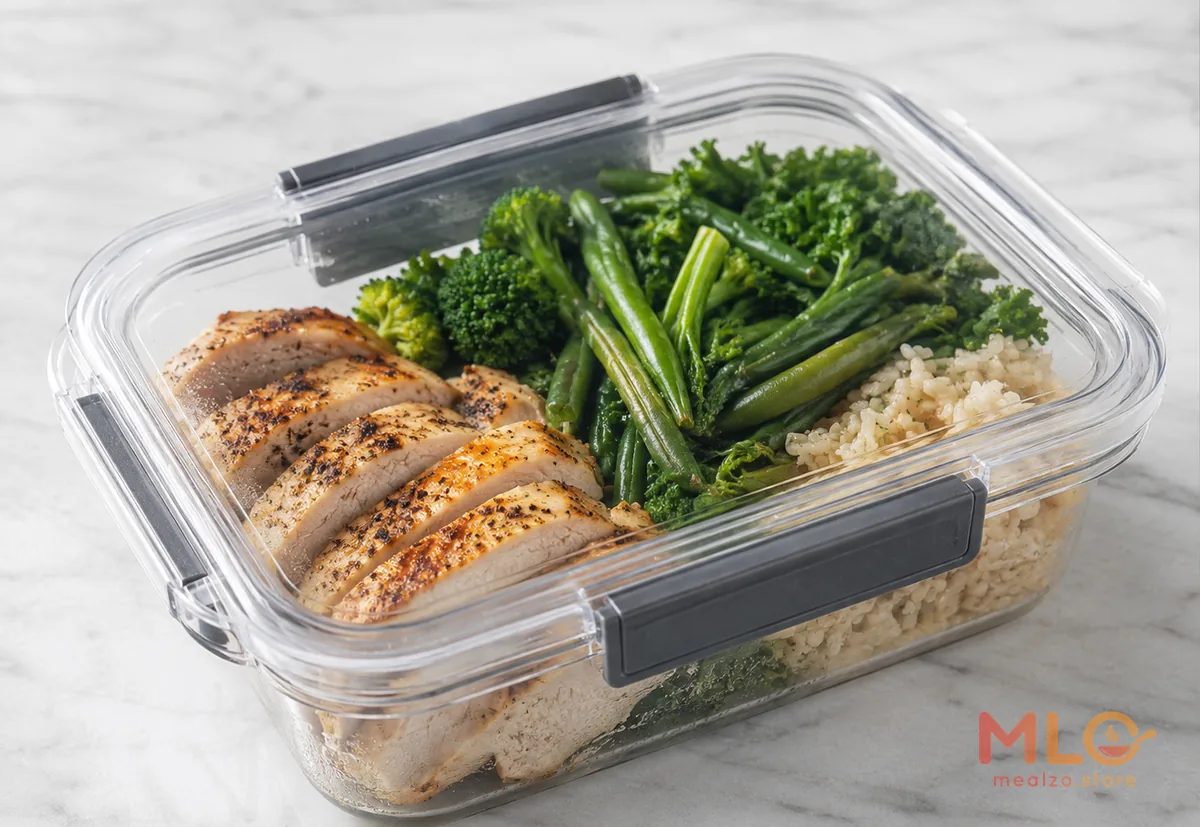
Questions that help when ordering
You do not need to interrogate every restaurant about every gram of carbohydrate. Simple questions can still improve your odds of getting a meal closer to what you intended.
Consider asking whether:
- the dish contains added sugar;
- sauce can be served separately;
- rice or noodles can be removed or reduced;
- vegetables can replace part of the starch;
- drinks can be prepared without sugar or syrup.
The challenge is that restaurant recipes are not always standardized. Even when you ask the right questions, you may not know exact quantities.
That uncertainty may be acceptable for someone following moderate low carb. It can be more significant for a person trying to maintain strict keto.
6. Comparing Everyday Meals
The difference becomes easier to understand when you look at complete meals rather than abstract macronutrient labels.
| Meal situation | Standard version | Lower-carb adjustment | Keto-style adjustment |
|---|---|---|---|
| Thai stir-fry | Protein, vegetables, sauce and rice | Reduce rice and choose less sweet sauce | Remove rice and closely check sauce |
| Grilled chicken meal | Chicken, sticky rice and dipping sauce | Smaller rice portion, more vegetables | Skip rice and check dipping sauce |
| Curry | Curry with rice | Smaller rice serving | Rice removed; curry ingredients still need checking |
| Breakfast | Toast, fruit and sweetened drink | Reduce bread, keep controlled fruit | Replace bread and limit higher-carb fruit |
| Office lunch | Rice-based set | Choose more protein and vegetables, less rice | Build meal around protein, vegetables and suitable fats |
| Café drink | Sweetened coffee or tea | Unsweetened version | Unsweetened version, with other ingredients checked if necessary |
The low-carb column leaves room for controlled portions. The keto column requires tighter exclusions.
That does not make one automatically more disciplined than the other. It simply reflects two different dietary structures.
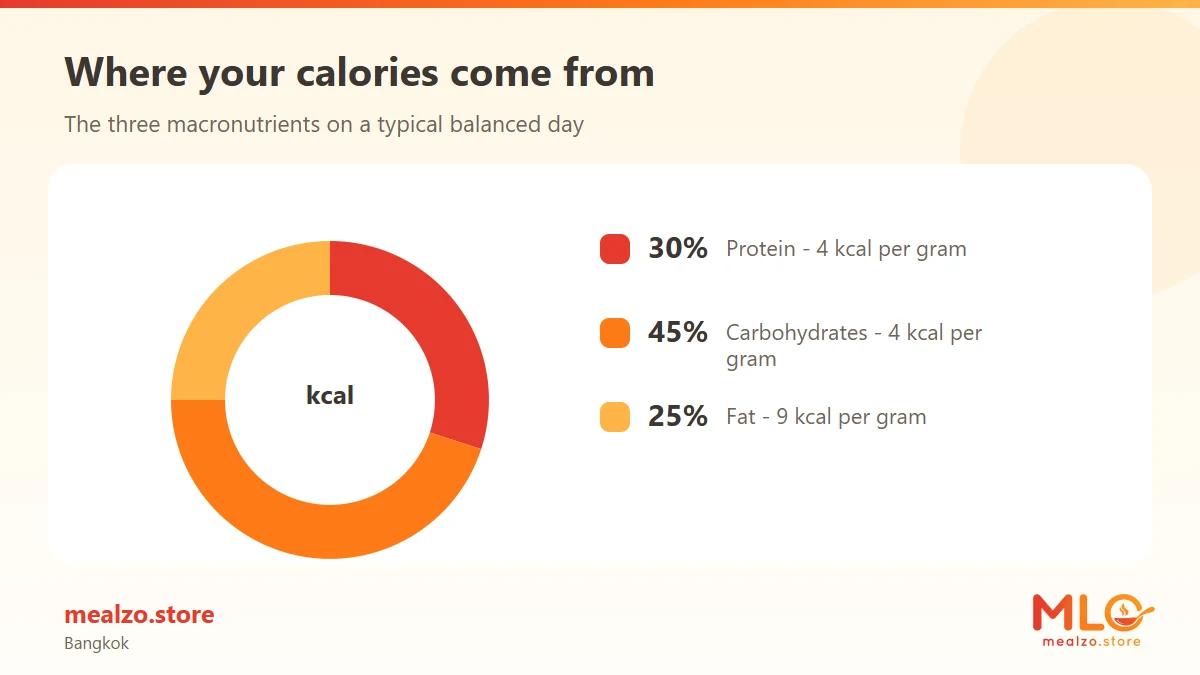
7. Protein, Fat and the Rest of Your Macros
Once carbohydrate intake falls, the rest of the diet has to change. Energy does not disappear because rice was removed from the plate.
Protein usually becomes a prominent part of both keto and low-carb meals. It contributes to meal structure and can come from meat, poultry, fish, eggs, tofu and other foods depending on the overall dietary pattern.
Fat fills a particularly large role in keto because carbohydrates are kept so low. On moderate low carb, fat may rise as well, but it does not need to dominate the diet to the same extent.
Think in complete meals, not isolated nutrients
A useful meal-planning sequence is:
- Choose the main protein source.
- Add a meaningful portion of vegetables.
- Decide whether the meal includes a carbohydrate source and how much.
- Add fats according to the meal rather than automatically.
- Check sauces, drinks and side dishes that may change the carbohydrate load.
That framework works for both approaches. The main difference is step three.
Under keto, the carbohydrate component is kept very limited. Under low carb, it can be adjusted according to the person's preferred degree of restriction.
Mealzo also offers six daily calorie levels: 1200, 1500, 1800, 2000, 2200 and 2500 kcal. The calorie calculator in the app uses the Mifflin-St Jeor formula to provide an estimate rather than medical advice.
| Mealzo option | Available choices |
|---|---|
| Daily calorie levels | 1200, 1500, 1800, 2000, 2200, 2500 kcal |
| Meals per day | 3 or 5 |
| Package length | 3, 7, 14 or 30 days |
| Relevant plans | Keto and Low-Carb |
| Delivery | Across Bangkok |
| Morning delivery | 06:00-09:00 |
| Evening delivery | 17:00-20:00 |
Calorie targets and carbohydrate targets are different things. A person can eat a high-energy keto diet or a lower-energy low-carb diet. Choosing keto does not automatically determine how much food should be eaten.
8. Which Approach Is Easier to Maintain Socially?
This is where the keto vs low carb decision often becomes less theoretical.
Bangkok encourages eating socially. Office lunches, dinners with friends, food courts, cafés and spontaneous restaurant stops are part of normal life for many people. The stricter the dietary framework, the more frequently those situations require planning.
Keto can work in social settings, but it generally asks more from you. You may need to:
- check ingredients more carefully;
- reject or replace common side dishes;
- avoid many shared carbohydrate-heavy dishes;
- be more selective with sauces;
- plan before arriving at certain restaurants.
Low carb usually has more tolerance for imperfect situations.
If colleagues choose a restaurant where every dish comes with rice, you can reduce the portion rather than needing to eliminate it entirely. If a small amount of carbohydrate appears in a sauce, it may not disrupt the overall intention of the day in the same way it could matter to someone following strict keto.
Key takeaway: The stricter the carbohydrate limit, the more your food environment matters, particularly when you eat meals prepared by other people.
This is one reason the most restrictive option is not automatically the most practical option.
9. Hunger, Routine and Meal Frequency
Keto and low-carb diets are sometimes discussed as though they automatically determine when you should eat. They do not.
Meal frequency is a separate decision.
Some people prefer three larger meals. Others prefer five smaller eating occasions because that fits their workday better. The quality and composition of those meals matter more than trying to force everyone into one schedule.
With Mealzo, both 3-meal and 5-meal daily formats are available. That can be useful because the same carbohydrate strategy may feel very different depending on how food is distributed across the day.
For example, a low-carb plan with three meals might include a controlled carbohydrate portion at each main meal. A five-meal plan could distribute food differently, with smaller meals or snacks contributing to the day's totals.
What matters is not how often internet discussions say you "should" eat. It is whether the structure fits your appetite, work schedule, calorie target and preferred level of carbohydrate restriction.
10. Common Mistakes When Comparing Keto and Low Carb
The first mistake is treating both diets as brands rather than nutritional frameworks.
A keto-labelled snack is not automatically a useful food. A low-carb meal is not automatically balanced. The label describes carbohydrate content or dietary positioning; it does not evaluate the whole product.
Another mistake is changing too many variables at once. Someone may remove rice, begin fasting, dramatically increase fat, cut total food intake and change training habits during the same week. If the new routine feels unpleasant, it becomes difficult to know which change caused the problem.
A few other common mistakes are worth avoiding:
- assuming every savoury Thai dish is low in carbohydrate;
- forgetting carbohydrate in sauces and drinks;
- replacing vegetables with extra meat;
- adding large amounts of fat simply because the diet is keto;
- treating fruit as either unlimited or universally forbidden;
- copying someone else's carbohydrate intake without considering your own routine;
- choosing a plan that requires more meal preparation than you can realistically sustain.
Keto requires particularly careful execution because small dietary details matter more when the carbohydrate ceiling is low.
Low carb is more forgiving, but that flexibility can also become vague. If "low carb" means a small breakfast pastry, rice at lunch, sweet coffee in the afternoon and noodles for dinner, the label may no longer describe what you are actually eating.
11. When Low Carb May Be the More Practical Starting Point
Someone who wants to reduce carbohydrate intake without rebuilding every meal from scratch may find low carb easier to understand and maintain.
It can work especially well as a behavioural framework: cut obvious sources first, reduce portions of staple carbohydrates, build meals around protein and vegetables, and then see how the pattern fits your routine.
That allows you to learn where most of your carbohydrates actually come from.
You may discover that rice is not the main problem in your current eating pattern. Sweetened drinks, bakery products, snacks and sauces may contribute more disruption to your intended structure than a controlled serving of rice with a proper meal.
Low carb also gives you room to make context-specific decisions. A carbohydrate portion before or after physical activity, fruit at breakfast, or rice during a social meal can potentially fit without turning the whole day into a failed diet.
This flexibility is precisely what some people need.
For others, however, flexible rules create too much ambiguity. They prefer a clear boundary and find keto easier because the permitted range is narrower. Personal preference matters.
12. When Keto May Suit the Way You Prefer to Eat
Keto may appeal to people who prefer definite dietary rules and are comfortable organising meals around those rules.
It removes much of the daily negotiation around rice, noodles, bread and other obvious carbohydrate sources. Instead of asking how much rice fits, the answer is usually that rice is not part of the meal.
That simplicity comes with a cost: ingredient checking becomes more important.
A person considering keto should think carefully about how often they:
- eat food prepared by restaurants;
- attend social meals;
- travel;
- rely on convenience foods;
- want fruit or starchy side dishes;
- cook for other household members eating differently.
The more often those situations occur, the more planning keto may require.
People with medical conditions, people who are pregnant, and anyone using medication that could be affected by major dietary changes should not treat a general nutrition article as personalised medical guidance. A qualified healthcare professional who knows the individual's circumstances is the appropriate person to assess whether a restrictive dietary approach is suitable.
13. Using Meal Delivery for Keto or Low Carb in Bangkok
Meal delivery does not remove every decision, but it can remove repetitive ones.
Instead of having to source ingredients, estimate portions and prepare several meals each day, you can choose a predefined dietary structure and calorie level. For someone trying to follow keto or low carb while working long hours, that can make consistency simpler.
Mealzo offers both Keto and Low-Carb among its 12 meal plans. Customers can choose from six calorie levels, 3 or 5 meals per day, and packages lasting 3, 7, 14 or 30 days.
Delivery is available across Bangkok during two windows: 06:00-09:00 in the morning or 17:00-20:00 in the evening.
If you are comparing providers rather than cooking everything yourself, what to check before choosing keto meal delivery in Bangkok covers the practical details worth reviewing.
Mealzo also lets customers declare allergens from nine allergen groups. Dishes containing a declared allergen are not assigned to that customer. This is an allocation mechanism, not a guarantee that a meal or preparation environment is allergen-free.
You can compare the available Keto and Low-Carb Mealzo meal plans according to calorie level, meals per day and package length.
14. How to Choose Between Keto and Low Carb
Do not start by asking which diet sounds more powerful. Ask which restrictions you are genuinely willing to live with.
Keto may make sense when you specifically want a ketogenic dietary structure, understand that carbohydrate intake needs tighter control, and are prepared to organise food accordingly.
Low carb may make more sense when you want to reduce carbohydrate intake while retaining some flexibility for rice, fruit, starchy vegetables or restaurant meals.
A simple comparison can help.
| Question | Keto may fit better if... | Low carb may fit better if... |
|---|---|---|
| Do you want strict rules? | You prefer clear limits | You prefer adjustable portions |
| Do you eat out often? | You are willing to check ingredients closely | You want more restaurant flexibility |
| Do you want to keep some rice or fruit? | Usually not, or only very selectively | Yes, in controlled amounts |
| Are you comfortable planning sauces and sides? | Yes | Some attention is enough |
| Is ketosis itself part of your goal? | Yes | No |
| Do you dislike dietary rigidity? | Probably not ideal | Usually easier to adapt |
Neither column proves that one approach will produce a particular result.
The better choice is the one whose rules match the objective and can be followed without turning every meal into a negotiation. Dietary consistency is usually easier when the plan works with your environment rather than constantly fighting it.
Key takeaway: Choose keto when you specifically want the structure of a ketogenic diet; choose low carb when carbohydrate reduction matters more to you than maintaining ketosis.
FAQ
Is keto the same as low carb?
No. Keto is a form of very low-carbohydrate eating designed around maintaining conditions in which the body can produce significant amounts of ketones. Low carb is a broader category and can include considerably more carbohydrate, depending on how the person defines and structures the diet.
Can I eat rice on a low-carb diet?
Potentially, yes. A moderate low-carb approach can allow controlled portions of rice if they fit the overall meal structure. Keto is much less compatible with ordinary rice portions because its carbohydrate restriction is considerably tighter.
Is keto better than low carb for weight management?
Neither label guarantees a particular outcome. Body-weight changes are influenced by overall energy intake, food composition, appetite, behaviour, activity and other individual factors. Keto and low carb are different ways of structuring food intake rather than automatic weight-management solutions.
Is Thai food suitable for keto?
Some Thai dishes can be adapted, particularly meals based on protein and lower-carbohydrate vegetables. Rice, noodles, sweet drinks, marinades and sauces can make strict keto more complicated, so ingredients often need closer attention.
Which diet is easier if I eat at restaurants frequently?
Low carb generally gives you more flexibility because smaller amounts of rice, sauce or other carbohydrate-containing foods may still fit the overall approach. Strict keto usually requires closer ingredient checking and more substitutions.
Can Mealzo accommodate declared allergens on Keto and Low-Carb plans?
Customers can declare allergens from nine allergen groups, and dishes containing a declared allergen are not assigned to them. This describes the Mealzo allocation process and should not be interpreted as a guarantee of an allergen-free meal or preparation environment.
Find a Meal Plan That Fits
Compare Mealzo plans or use the calculator to explore meal options for your needs.