Pork-Free and Allergen-Aware Eating in Bangkok: Hidden Sources and How to Order
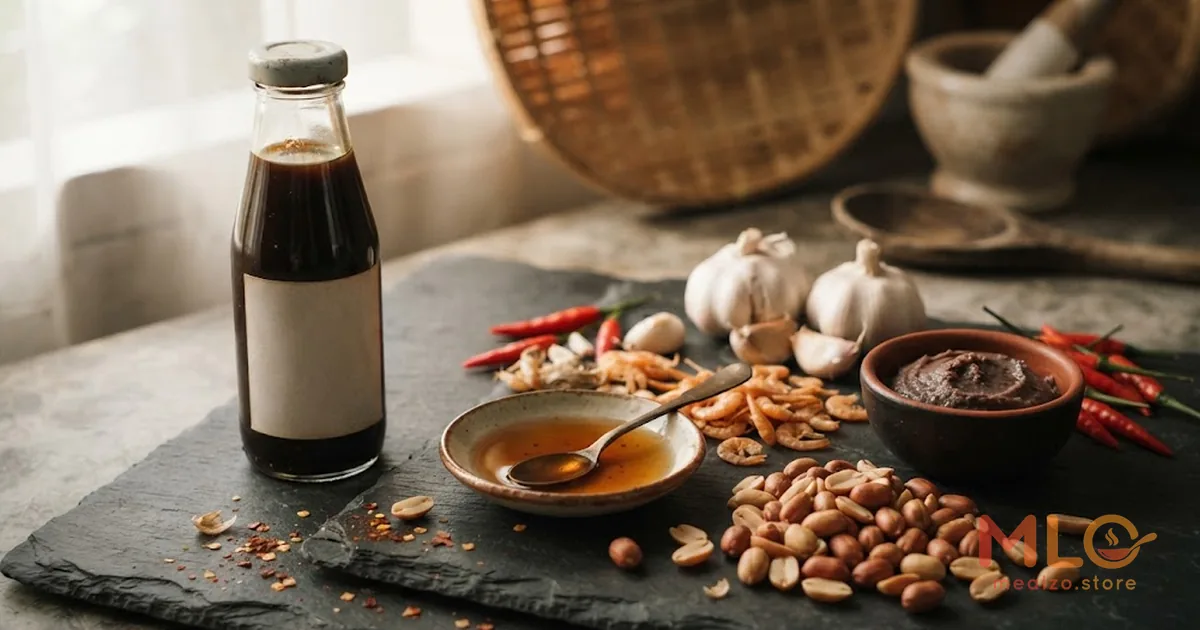
Mealzo Bangkok prepares meals in Bang Na and delivers across Bangkok, but avoiding pork or managing an allergy requires more than choosing a dish that sounds suitable. Thai cooking often relies on sauces, pastes, stocks and garnishes whose ingredients are not obvious from the dish name.
A vegetable stir-fry can contain fish sauce. A noodle soup can have pork stock. Som tam may contain dried shrimp and peanuts. A dish described simply as "chicken" does not necessarily mean every ingredient in it comes from chicken.
For people who need pork free allergen meals Bangkok options, the practical skill is learning to ask about the complete ingredient set rather than relying on the name of the dish.
This guide focuses on those hidden sources, how to communicate restrictions clearly, and how allergen declarations work when ordering a meal plan.
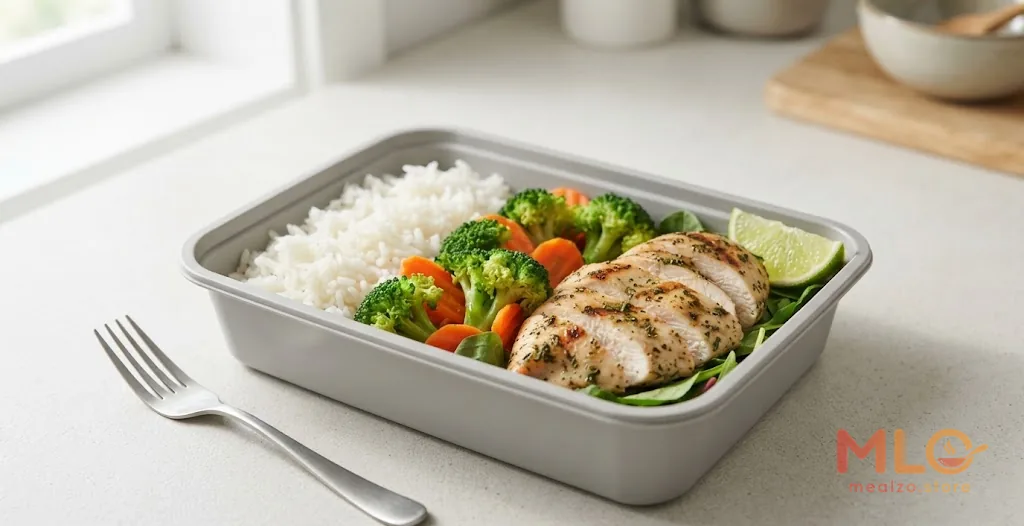
1. Why Thai dish names do not tell the whole story
Thai food is built around layers of seasoning. A dish may have a main ingredient such as chicken, tofu, vegetables or seafood, while its actual recipe also includes sauces, curry pastes, stock, cooking fat and toppings.
That creates two separate problems.
The first is hidden ingredients. Someone avoiding pork might see a vegetable soup and assume it is safe, even though the soup base contains pork stock. Someone avoiding fish might order fried vegetables without realising that fish sauce is part of the seasoning.
The second is cross-contact. Even if a recipe contains none of the ingredient being avoided, the food may be prepared using equipment that has also handled other ingredients.
For ordinary food preferences, this distinction may not matter much. For an allergy, it can matter considerably.
A useful rule is to distinguish between:
- Ingredient restriction: "I cannot have pork, including pork stock or lard."
- Allergy: "I have an allergy to this ingredient and cannot have it."
- Preference: "I do not like this ingredient."
These statements are not interchangeable. "No pork" should be communicated as an ingredient rule when pork must be excluded from the food, including less obvious forms.
Key takeaway: In Thai food, checking the main ingredient is not enough; sauces, pastes, stocks, fats and garnishes can change what a dish actually contains.
2. Hidden pork: lard, stock, minced meat and garnishes
Pork can appear in Thai food in forms that are easy to miss. Lard may be used as a cooking fat. Pork stock may be used to build the base of a noodle soup. Minced pork can be mixed into a dish whose name emphasises vegetables or another main ingredient.
There are also toppings. Pork floss, crispy pork pieces and other pork-based garnishes may be added after the main dish is prepared.
Pork blood is another ingredient that can appear in some noodle soups. It is particularly easy to overlook if someone only asks whether the bowl contains pork meat.
The question therefore should not simply be, "Does this have pork?" A clearer question is whether any pork-derived ingredient is used.
| Dish type | What it is | Where pork may hide | What to ask |
|---|---|---|---|
| Noodle soup | Noodles served with broth and toppings | Pork stock, minced pork, pork blood | "Is the broth made with pork?" |
| Vegetable stir-fry | Vegetables cooked with seasoning | Lard, pork-based seasoning or minced pork | "Is there any pork, lard or pork stock?" |
| Rice dishes | Rice with meat, vegetables or sauce | Minced pork, stock, crispy pork garnish | "Does any part of this contain pork?" |
| Soups | Broth with vegetables, noodles or meat | Pork stock or pork blood | "What is the soup base?" |
| Salads and mixed dishes | Fresh ingredients with dressing | Pork floss or crispy pork pieces | "Are there any pork toppings or garnishes?" |
| Fried dishes | Ingredients cooked in hot oil | Pork pieces or shared preparation | "What ingredients are in it, and what else is fried in this oil?" |
Halal considerations can make this distinction especially relevant. In halal food contexts, the concern is not simply whether a visible piece of pork is present; the ingredients and preparation rules matter. That is a different question from a general dislike of pork, and it should be communicated accordingly.
For a person avoiding pork for any reason, the safest wording is specific: no pork meat, no minced pork, no pork stock, no pork blood, and no lard.
3. Fish sauce and shrimp paste are easy to overlook
Fish sauce, or nam pla, is one of the most important hidden sources to understand in Thai cooking. It is used as a seasoning rather than as the main ingredient, so a dish can look completely unrelated to fish while still containing fish sauce.
Vegetable dishes are a classic example. A plate of stir-fried vegetables may contain no visible seafood but still be seasoned with nam pla.
Shrimp paste, known as kapi, creates a similar problem. It is used in curry pastes and in various nam prik preparations. The quantity may be small, but the ingredient is still present.
This matters for people avoiding fish or crustaceans, and it also demonstrates why simply asking for "vegetarian" food does not always provide enough information unless the preparation is specifically designed around that restriction.
Someone ordering in Bangkok should therefore ask about:
- fish sauce in stir-fries, soups and sauces;
- shrimp paste in curry pastes;
- shrimp paste in nam prik;
- seafood-based seasoning in dishes that otherwise look vegetarian;
- fish or shellfish ingredients in prepared sauces.
A person avoiding fish for dietary reasons should distinguish that restriction from an allergy. The kitchen needs to understand whether the ingredient must be excluded entirely and whether cross-contact is relevant.
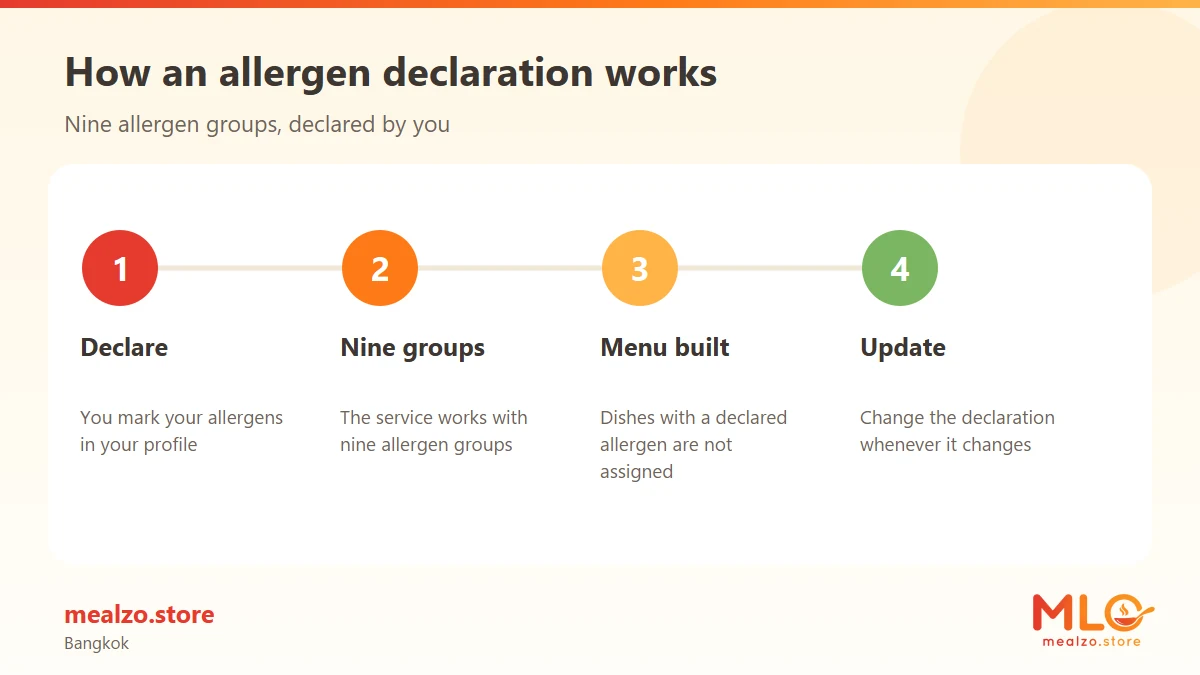
4. Oyster sauce, dried shrimp and seafood-based seasoning
Oyster sauce is another common source that is easy to miss because the dish itself may contain no obvious seafood.
It is frequently associated with stir-fries, where it contributes saltiness, sweetness and savoury depth. A vegetable stir-fry or tofu dish may therefore contain oyster sauce even though vegetables or tofu appear to be the focus.
Dried shrimp is particularly relevant when ordering som tam. The salad may contain dried shrimp alongside its other ingredients. Peanuts are another common som tam ingredient, which means several different restrictions can overlap in one familiar Thai dish.
Crustaceans and molluscs also deserve separate attention. Shrimp, crab and other crustaceans are not the same ingredient category as fish, while molluscs such as shellfish have their own relevance for people managing allergies.
If seafood is a restriction, ask about the entire seasoning system rather than asking only whether the visible food contains seafood.
| Dish or ingredient | Hidden source to check | Why it matters |
|---|---|---|
| Som tam | Dried shrimp, fish sauce, peanuts | Several allergen sources can occur together |
| Vegetable stir-fry | Oyster sauce, fish sauce | The dish may look completely vegetable-based |
| Curry | Shrimp paste in curry paste | The paste can contain seafood even without visible shrimp |
| Nam prik | Shrimp paste, fish sauce | Dips can contain concentrated seafood ingredients |
| Seafood dishes | Crustaceans or molluscs | Specific seafood categories may matter for allergies |
| Noodle dishes | Fish sauce or seafood seasoning | Seafood may be part of the seasoning rather than the topping |
For someone who avoids seafood rather than one specific species, saying "no fish and no seafood" is considerably clearer than naming only one ingredient.
5. Peanuts, cashews and sesame can appear outside obvious dishes
Peanuts are not limited to peanut-based dishes. In Bangkok, they can appear in som tam, satay sauce and as a garnish.
That last category is worth remembering. A garnish can be added after cooking, which means someone who has checked the main ingredients may still encounter an ingredient they intended to avoid.
Cashews are another source to watch in stir-fries. A dish containing chicken and vegetables, for example, may also contain cashews even though nuts are not part of the dish's headline description.
Sesame oil is another ingredient worth declaring when relevant. It may be used for flavour rather than as a prominent component, so the finished dish does not necessarily make its presence obvious.
When ordering, useful questions include:
- Does this contain peanuts?
- Is there peanut sauce?
- Are peanuts used as a garnish?
- Does the stir-fry contain cashews?
- Is sesame oil used?
- Are nuts added after cooking?
The distinction between peanuts and tree nuts can matter. They should not be treated as one generic "nut" category when communicating a food allergy.
Key takeaway: Ask about garnishes and sauces as well as the main recipe, because peanuts, cashews and sesame can be added without appearing in the dish name.
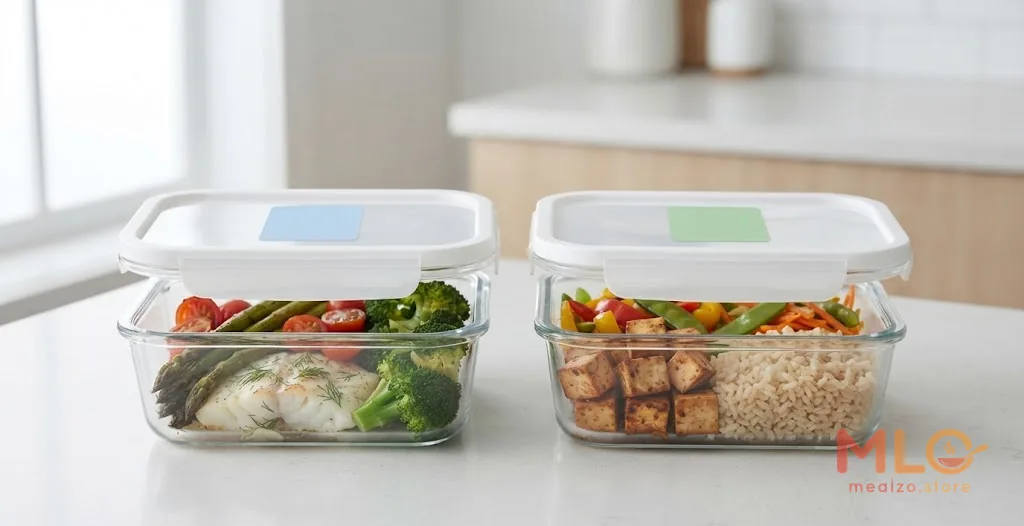
6. MSG is a sensitivity issue, not an allergy
MSG, or monosodium glutamate, is often mentioned in discussions about Thai food allergies. The distinction needs to be made plainly: MSG is not a food allergen in the same sense as a food such as fish, shrimp, egg or peanuts.
Some people nevertheless choose to avoid MSG or report sensitivity to it. That is a separate dietary concern and should be communicated separately from an allergy.
Saying "I am allergic to MSG" can create confusion because the kitchen may interpret the statement through its allergen-handling process rather than as a separate ingredient preference or sensitivity.
A clearer approach is to state the actual requirement: "I avoid MSG" or "Please do not add MSG."
This is also an example of why not every food restriction belongs in an allergen declaration. An allergen system and a broader personal ingredient preference are different mechanisms.
If you are using a meal plan, check what the service's allergen declaration covers and separately communicate any restrictions that are outside that system.
7. Wheat, egg and dairy are not always where you expect them
Thai dishes can contain wheat, egg and dairy through ingredients that are not obvious from the name.
Wheat can enter through soy sauce and through some noodles. Therefore, someone avoiding wheat cannot assume that a rice-based dish is automatically free from wheat.
Egg is common in noodle dishes and other preparations. A dish can contain egg as part of the cooking process even when egg is not the main ingredient.
Dairy is less central to many traditional Thai dishes than fish sauce or coconut-based ingredients, but dairy can still occur in international dishes and some modern preparations. This is particularly relevant to a mixed-cuisine meal plan, where Thai and international dishes are included within the same plan.
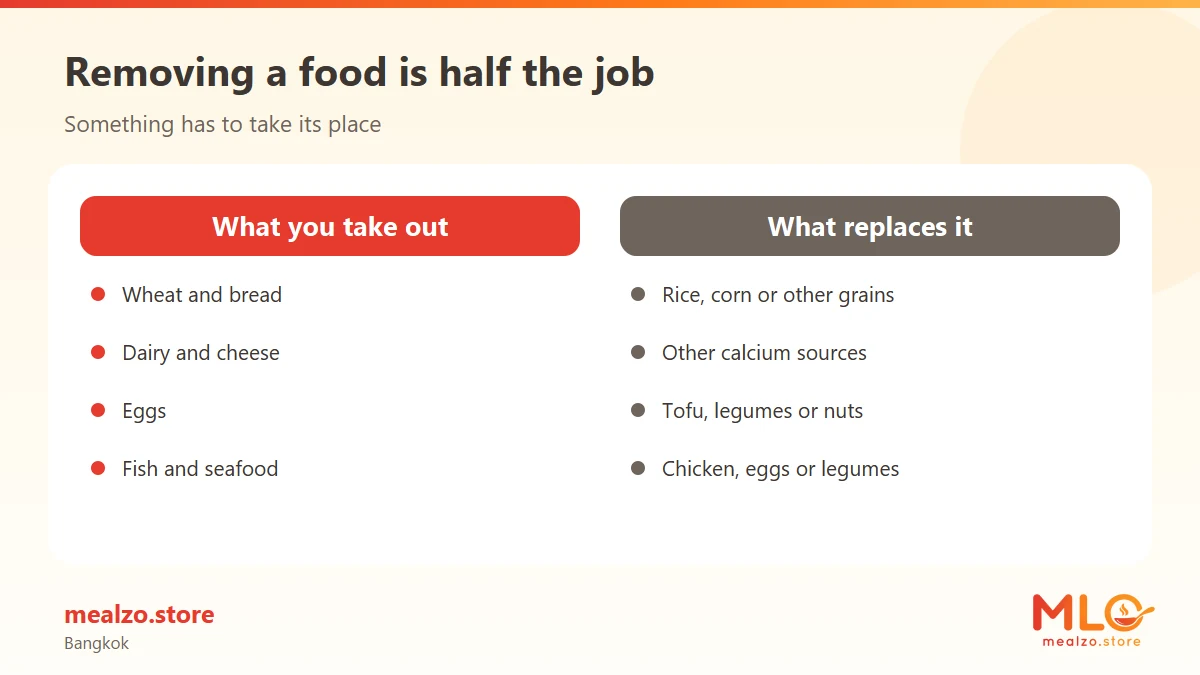
If dairy or egg is your concern, dairy- and egg-free meal planning covers the practical considerations around removing these ingredients while maintaining variety.
Likewise, people choosing between vegetarian, vegan and pescatarian approaches may find vegetarian, vegan or pescatarian meal plans useful because these categories describe different ingredient restrictions rather than one universal definition of "meat-free."
A simple checking system is:
- Identify the ingredient you must avoid.
- Check sauces and seasoning.
- Check noodles and wrappers.
- Check garnishes.
- Ask about the preparation method.
- Treat cross-contact as a separate question.
8. Shared woks, fryers and cutting boards create a separate risk
Ingredient exclusion and cross-contact are not the same thing.
A kitchen may prepare a dish without an allergen while using equipment that has previously handled that allergen. A shared wok, shared fryer or shared cutting board can create this situation.
The fryer is particularly straightforward: if different foods are cooked in the same oil, avoiding the ingredient itself does not automatically mean avoiding contact with residues from other foods.
A wok can also be used repeatedly for different dishes. Likewise, a cutting board used for seafood and vegetables can become part of the cross-contact question.
This applies to meal-plan kitchens as well as restaurants. No shared kitchen, including a meal-plan kitchen, can promise zero traces.
That statement does not mean ingredient declarations are useless. It means they have a defined scope. Declaring an allergen can control which dishes are assigned based on their ingredients, but it cannot turn a shared kitchen into a guaranteed zero-trace environment.
For people without severe allergies, this distinction may simply help them understand how a food service works. For someone with a diagnosed severe allergy or anaphylaxis risk, it becomes a much more significant risk decision.
9. How to communicate an allergy when ordering in Bangkok
The best message is short, specific and unambiguous.
In English, say:
"I have an allergy to peanuts. Please do not use peanuts, peanut sauce or peanut garnish."
For pork avoidance:
"I do not eat pork. No pork, pork stock, lard, pork blood or pork garnish."
For fish:
"I cannot eat fish. Please do not use fish sauce or fish-based ingredients."
For seafood:
"I cannot eat seafood, including shrimp and shellfish."
In Thai, useful phrases include:
- ฉันแพ้ถั่วลิสง: I am allergic to peanuts.
- ฉันแพ้กุ้ง: I am allergic to shrimp.
- ฉันแพ้ปลา: I am allergic to fish.
- ไม่กินหมู: I do not eat pork.
- ไม่ใส่น้ำปลา: Do not add fish sauce.
- ไม่ใส่กะปิ: Do not add shrimp paste.
- ไม่ใส่ซอสหอยนางรม: Do not add oyster sauce.
- ไม่ใส่ถั่วลิสง: Do not add peanuts.
The exact wording should match the restriction. If it is an allergy, use แพ้ ("allergic to") rather than describing the ingredient as something you merely dislike.
Avoid saying "a little bit is fine." Even if you mean to make the conversation easier, that sentence communicates permission to use the ingredient.
If an ingredient must be completely excluded, say so clearly. For additional context on sauces, hidden ingredients and common ordering traps, hidden carbs in Thai sauces and dishes is also useful because sauces can contain ingredients that are easy to overlook.
10. How allergen declarations work in a meal plan
Mealzo Bangkok's meal-plan system uses a declaration mechanism based on 9 allergen groups. The customer declares the groups they need to avoid, and dishes containing a declared allergen are not assigned to that customer.
The mechanism is therefore based on dish assignment.
It does not mean that every meal is independently certified as allergen-free. It does not eliminate the possibility of trace exposure in a shared kitchen, and it does not create a zero-risk environment for someone with a severe allergy.
The nine declarable groups and examples of Thai dishes or ingredients to watch include:
| Declarable allergen group | Thai foods or ingredients to watch |
|---|---|
| Cereals containing gluten | Soy sauce, some noodles and wheat-containing ingredients |
| Crustaceans | Shrimp, dried shrimp, shrimp paste |
| Eggs | Egg noodles and noodle dishes containing egg |
| Fish | Fish sauce, fish-based ingredients |
| Peanuts | Som tam, satay sauce, peanut garnish |
| Soybeans | Soy sauce and soy-based ingredients |
| Milk | Dairy ingredients, particularly in some international dishes |
| Tree nuts | Cashews in stir-fries and nut-based preparations |
| Molluscs | Oyster sauce and dishes containing shellfish or molluscs |
The table is a practical guide, not a complete recipe list. A particular dish may contain several of these groups at once.
For example, som tam may raise questions about fish, crustaceans and peanuts. A stir-fry may involve fish sauce, oyster sauce, soy sauce or cashews. A noodle dish may involve egg and wheat while also using fish sauce for seasoning.
This is why declaration should be made before the plan is assigned rather than trying to inspect each meal after delivery.
Mealzo Bangkok's plans also include both Thai and international dishes within the same mixed cuisine plan. There is no separate Thai-only or international-only plan choice. Customers can select from 12 meal plans, including options such as Vegetarian, Vegan, Gluten Free, Pescatarian, No Fish & Seafood, and Dairy & Egg Free.
There are also six daily calorie levels from 1200 to 2500 kcal, with 3 or 5 meals per day and package lengths of 3, 7, 14 or 30 days. These settings are separate from allergen declarations.
The app's calorie calculator uses the Mifflin-St Jeor formula and provides an estimate, not medical advice.
11. What someone with a severe allergy should treat differently
A diagnosed severe allergy or a history of anaphylaxis changes the practical decision.
Anyone in that situation should treat eating food prepared by a restaurant or shared kitchen as a risk decision and consult their own doctor about their individual circumstances.
An allergen declaration can help prevent dishes containing a declared allergen from being assigned. It cannot guarantee an allergen-free meal or zero traces.
That means the right question is not simply, "Can the service remove this ingredient?" It is also, "Does the level of preparation control and cross-contact risk fit my personal risk tolerance?"
For less severe dietary restrictions, the declaration mechanism may be a useful way to avoid dishes containing specified allergens. For a severe allergy, the limitations need to be understood before ordering.
For more detail on how the Bang Na operation fits into the delivery process, how the Bang Na kitchen prepares meal plans provides additional background.
The kitchen is located in Bang Na, Bangkok. Meals are prepared in the Bang Na kitchen and delivered across Bangkok, with customers selecting either the morning delivery window from 06:00-09:00 or the evening window from 17:00-20:00.
Plans are paid for online in Thai baht using PromptPay via Thai QR through a payment provider. The courier does not collect cash.
The website and mobile app are available in Thai, English, Polish, German, French, Russian, Simplified Chinese and Burmese. The Android app is available on [Google Play](https://play.google.com/store/apps/details?id=store.mealzo.customer), and the public contact email is contact@mealzo.store.
For someone who wants to review the available plans and restrictions, view Mealzo Bangkok meal plans is the appropriate starting point.
The most useful principle is simple: declare the actual restriction, not just the dish you want. "No pork" should cover pork, lard, stock, blood and garnishes when those forms are relevant. "No fish" may need to include fish sauce. "No seafood" may need to include shrimp paste, dried shrimp, oyster sauce and other relevant crustacean or mollusc ingredients.
And when the issue is a serious allergy, ingredient exclusion and cross-contact must be considered separately.
FAQ
Can I order Thai food if I cannot eat pork?
Yes, but you should communicate the restriction as an ingredient rule rather than simply choosing dishes that appear not to contain pork. Ask about pork stock, lard, minced pork, pork blood, pork floss and crispy pork garnishes as well as visible pork meat.
Does fish sauce count if I am avoiding fish?
Yes. Fish sauce is made from fish and is widely used as a seasoning in Thai cooking, including dishes that contain no visible fish. If fish must be avoided, ask specifically about nam pla rather than checking only for fish pieces.
Is shrimp paste the same thing as visible shrimp?
No. Shrimp paste, or kapi, is a concentrated ingredient used in some curry pastes and nam prik. A dish can contain shrimp-derived ingredients without containing recognisable pieces of shrimp.
Are peanuts only a concern in peanut dishes?
No. Peanuts may appear in som tam, satay sauce and as a garnish. Cashews can also appear in stir-fries, while sesame oil is another ingredient that may need to be declared depending on the restriction.
Does MSG count as a food allergy?
MSG is not a food allergen in the same sense as fish, crustaceans, peanuts or egg. Some people nevertheless avoid it or report sensitivity. That should be communicated as a separate ingredient restriction rather than treated as an allergen declaration.
Does an allergen declaration guarantee an allergen-free meal?
No. The meal-plan mechanism prevents dishes containing a declared allergen from being assigned, but it does not guarantee zero traces. Shared kitchen equipment can create cross-contact, so anyone with a severe allergy or anaphylaxis risk should make their own risk decision and consult their doctor.
Mealzo Bangkok is a kitchen and meal delivery service operating exclusively in Bangkok, Thailand. We are not affiliated with similarly named services outside Thailand.
Find a Meal Plan That Fits
Compare Mealzo plans or use the calculator to explore meal options for your needs.