Fruit in Bangkok: Mango, Durian, Fruit Carts and a Balanced Day
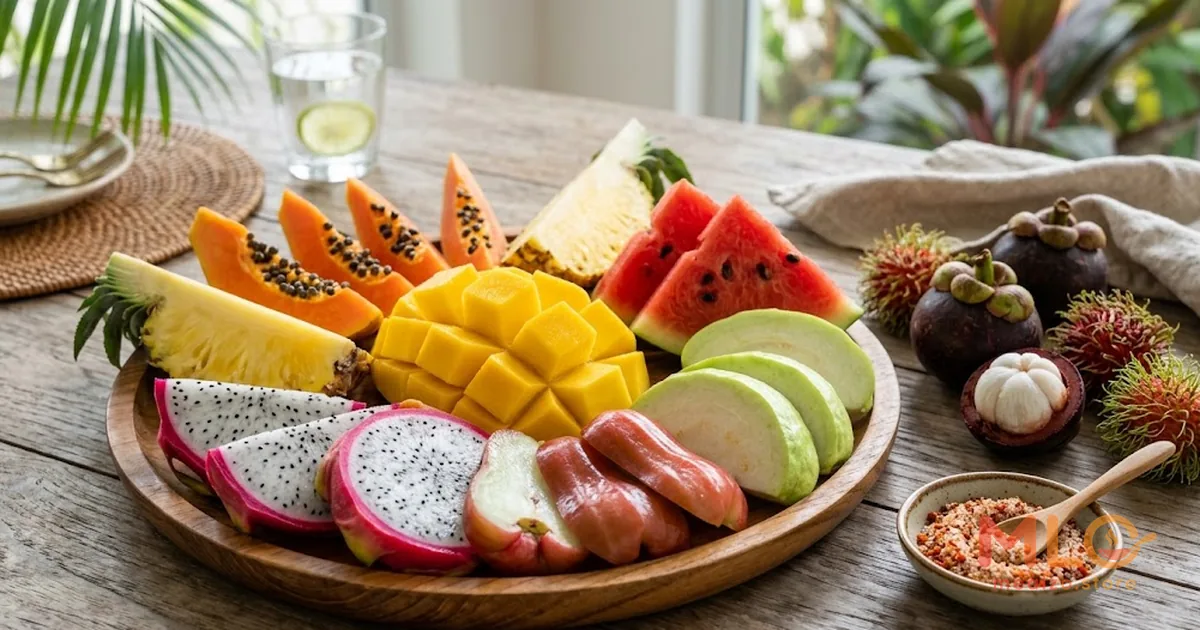
Fruit in Bangkok is almost absurdly easy to find. A cold bag of pineapple appears exactly when the afternoon heat starts to feel heavy. Ripe mango turns up at markets, supermarkets and dessert stalls. Guava, papaya, watermelon and rose apple can be bought already cut, chilled and ready to eat with a wooden skewer.
That abundance is useful, because fruit is genuinely good food. The confusion starts when the same mango becomes a shake with syrup, a packet of dried slices or a plate of sticky rice with coconut cream. The fruit has not suddenly become a problem. The form, portion and extras have changed.
For people trying to eat a balanced day, the useful question is therefore not "Is fruit healthy?" It is "What am I actually eating, and what role is it playing right now?" Mealzo Bangkok takes the same practical view: fruit can fit comfortably into everyday meals and snacks without turning every banana or slice of mango into a nutrition calculation.
Bangkok makes eating more fruit easy. A little awareness simply helps you enjoy that advantage without accidentally treating a drink, dessert and whole fruit as if they were interchangeable.
1. Why fruit in Bangkok is easy, and why people still overthink it
Bangkok is one of the easiest cities in the world in which to make fruit a daily habit. You can buy whole fruit for home, chilled cut fruit from a cart, prepared fruit from a supermarket, or a shake made in front of you.
That convenience matters. Food habits are easier to keep when the food is already there, already appealing and requires almost no preparation.
The problem is that the word "fruit" covers very different experiences.
A bag of cold watermelon eaten with a skewer is not the same thing as a sweetened fruit shake. Fresh mango after lunch is not the same thing as mango sticky rice. Durian is nutritionally different from rose apple. Dried mango is much more concentrated than fresh mango because much of the water is gone.
None of those foods needs to be banned or moralised. They simply deserve different expectations.
A useful starting point for a fruit portion is something around what fits comfortably in a cupped hand, or roughly one typical cart bag. That is not a rule that needs weighing or measuring. It is a visual check.
Watery fruit can usually make up a more generous handful because much of its volume is water. Dense, very sweet fruit is easier to eat in large amounts without noticing, so a smaller handful often makes more sense.
Key takeaway: Eat fruit with confidence, but judge the form and portion rather than treating every food containing fruit as the same thing.
2. Whole fruit, juice and smoothies do not behave the same way
Whole fruit brings several things together at once: water, fibre, natural sugar, vitamins and other micronutrients. You also have to chew it.
That combination changes the eating experience. Chewing takes time, the structure of the fruit remains largely intact, and the fibre helps slow down how quickly you can consume it.
Turn the same fruit into juice and much of that structure disappears. You can drink the equivalent of several pieces of fruit much faster than you could sit down and chew them.
A smoothie sits somewhere in between. If the whole fruit is blended, some fibre remains, but the drink is still much easier to consume quickly. Add syrup, condensed milk or sweetened ingredients and you now have more than blended fruit.
This is why "made with real fruit" does not automatically mean "the same as eating whole fruit."
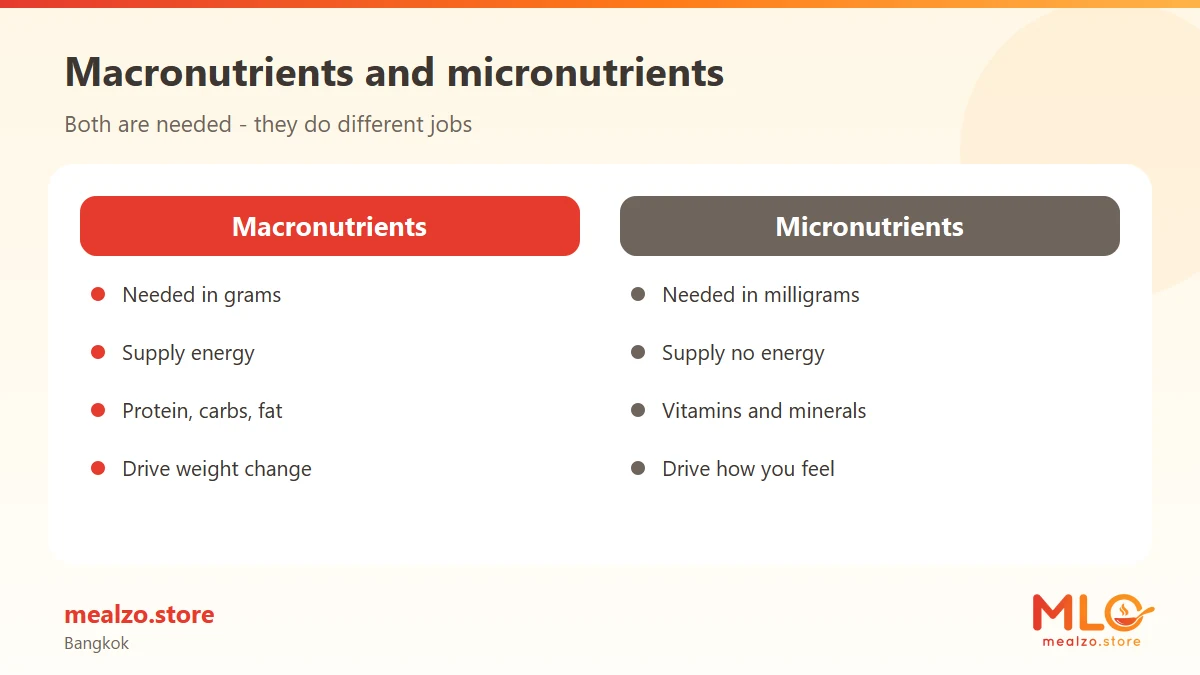
Fruit contributes both macronutrients and micronutrients to the day. Its natural carbohydrate is part of the picture, but so are water, fibre and the range of vitamins and minerals different fruits contain. If you are trying to build meals around plants more broadly, vegetables and fibre in Bangkok looks at why a meal can contain vegetables and still benefit from more fibre overall.
Whole fruit is usually the simplest default because it arrives with its structure intact. Juice and smoothies can still fit. They simply need to be recognised as drinks rather than mentally filed as identical to a piece of fruit.
3. Watery, fibre-rich and dense sweet fruit
Bangkok fruit is easier to navigate when you stop trying to rank individual fruits as "good" or "bad" and instead think about their general character.
Watery fruit includes watermelon, rose apple and cantaloupe. These are refreshing, relatively light in texture and particularly appealing in the Bangkok heat.
Fibre-rich choices include guava, papaya and pomelo. They tend to feel more substantial and can be useful when you want fruit that involves more chewing.
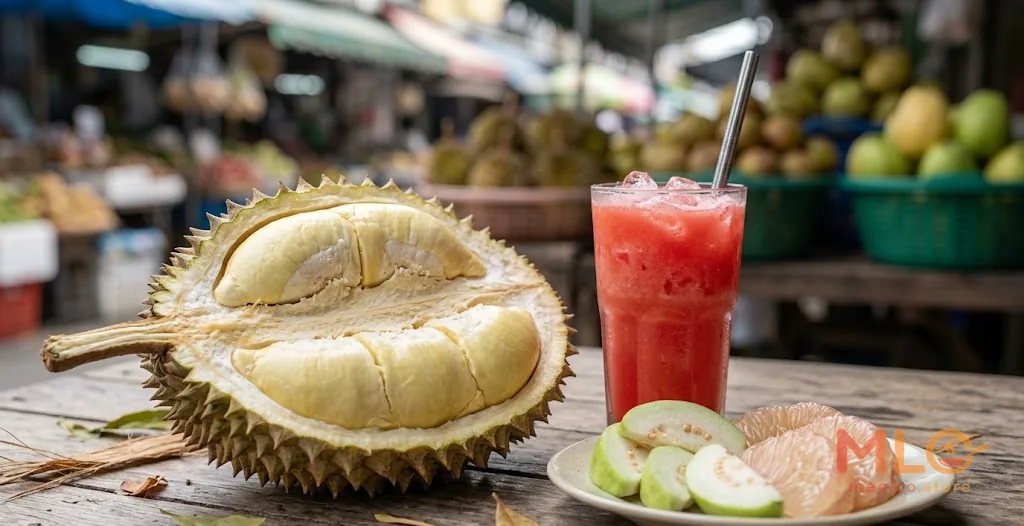
Dense sweet fruit includes ripe mango, banana, jackfruit, longan, lychee and durian. These are still fruit. They are simply easier to eat in a concentrated portion, so the amount matters more.
| Fruit or fruit form | What it mostly brings | Relative density | Easiest way to enjoy it |
|---|---|---|---|
| Fresh cart fruit | Water, fibre, natural sweetness | Usually low to moderate | Eat chilled as a snack or alongside a meal |
| Ripe mango | Sweetness, water and fruit fibre | More dense than watery fruit | Enjoy a modest portion on its own |
| Durian | Sweetness plus naturally occurring fat | Very dense for a fruit | Treat a few pieces as a rich fruit portion |
| Fruit shake with syrup | Blended fruit plus added sweetness | More concentrated | Have it deliberately as a sweet drink |
| Unsweetened fruit shake | Blended whole fruit | Moderate, depending on fruit | Order without added sugar and drink slowly |
| Dried mango | Concentrated fruit with much less water | High | Treat as a compact snack |
| Mango sticky rice | Mango, sweet sticky rice and coconut cream | Dessert-level density | Enjoy it as dessert, not as a plain fruit portion |
Relative density is more useful here than numbers. It tells you whether a large bowl or bag is likely to feel similar to a light piece of fruit or more like a substantial snack.
Key takeaway: Watermelon and durian are both fruit, but the same-sized portion does not play the same role in a day.
4. The Bangkok fruit cart is a very good habit
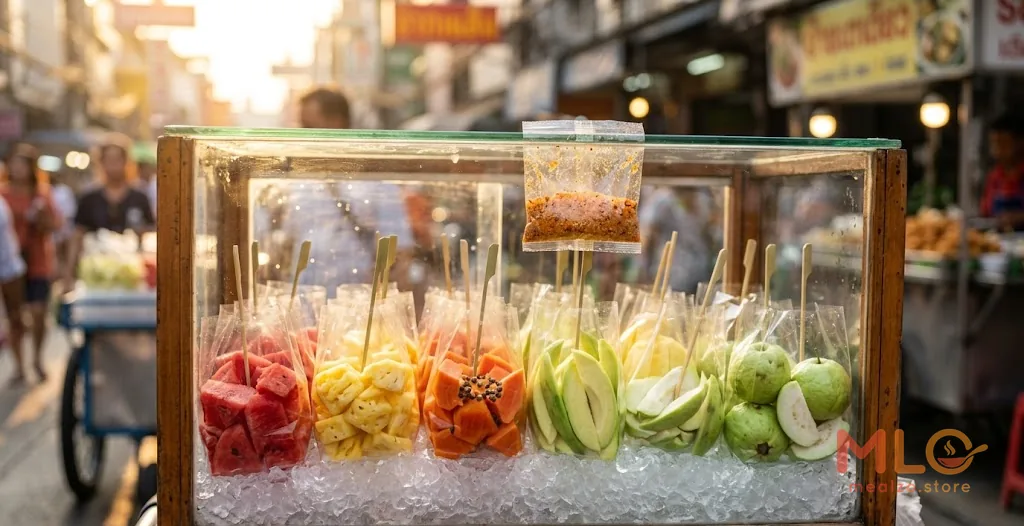
The classic Bangkok fruit cart is one of the city's most practical food options. Pineapple, watermelon, papaya, guava, green mango, cantaloupe and rose apple are commonly prepared in bags and handed over with a skewer.
There is very little nutritional mystery here. It is cut fruit, cold and ready to eat.
Many bags come with a small packet of phrik kluea, the chilli, sugar and salt mixture used as a dip. There is no reason to treat that packet as dangerous. A little adds contrast, especially with tart guava or green mango.
It is still worth noticing how much you use. A light dip is flavouring. Emptying the whole packet over every bag adds more sugar and salt than simply tasting a little with each piece.
A simple way to use the fruit cart well is:
- Pick one watery fruit such as watermelon, cantaloupe or rose apple.
- Add a more substantial fruit such as guava or papaya when available.
- Use the phrik kluea lightly rather than automatically finishing the packet.
- Eat the fruit while it is still cold and fresh.
- Think of one bag as a practical portion rather than buying several bags because each one looks small.
Hygiene does not need to become a source of anxiety. Use the same judgement you would use with any prepared food in a hot city. A busy cart with regular turnover and fruit kept visibly cold on ice is generally a more sensible choice than cut fruit that appears to have been sitting warm in the sun.
At home, wash whole fruit before cutting it and eat prepared fruit reasonably soon rather than leaving it around for hours.
5. Mango is fruit. Mango sticky rice is dessert
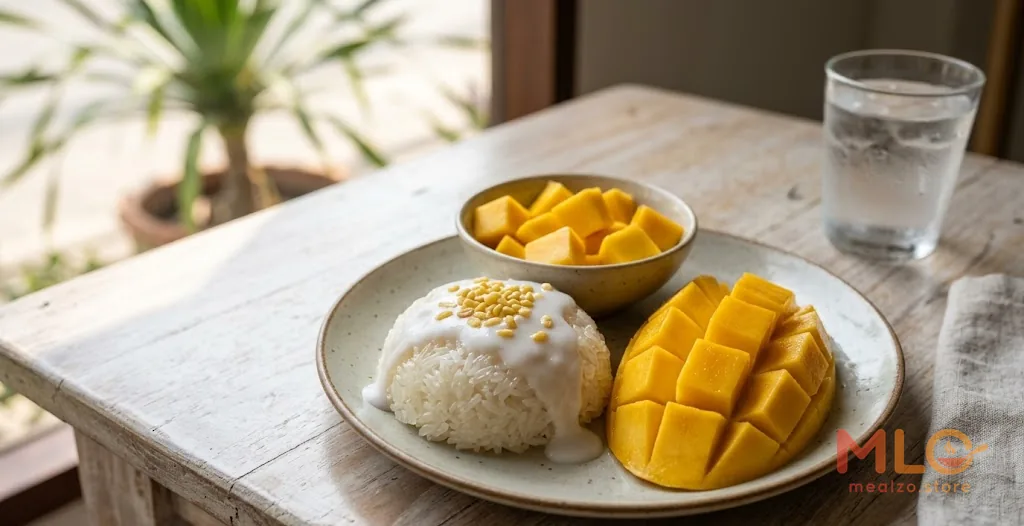
Ripe Thai mango deserves to be enjoyed without qualification. Soft, fragrant mango on its own is simply fruit.
Then there is khao niao mamuang, mango sticky rice.
The mango has not stopped being fruit, but the dish has become something else. Sweet sticky rice and coconut cream turn it into a dessert. That is exactly why it is so satisfying.
Calling mango sticky rice a dessert is not an argument against eating it. Bangkok would be a less interesting place to eat if every enjoyable traditional dessert had to be disguised as a health food.
The useful distinction is intention.
If you want fruit after lunch, eat mango. If you want mango sticky rice, have dessert and enjoy it as dessert. The same principle applies to fruit served in syrup and fruit served in sweet coconut milk preparations.
Trying to label these dishes as "just fruit" makes portions harder to judge. Calling them desserts makes the decision simpler.
Fruit-based desserts can sit comfortably in a balanced day when they are chosen deliberately rather than treated as an invisible extra.
6. Durian deserves its own category
Durian is rich in every sense of the word. The texture is dense and creamy, the flavour is unmistakable, and compared with most common fruit it carries more energy because it contains fat as well as natural sugar.
That does not make durian a fruit to avoid. It makes it a fruit where a smaller portion feels appropriate.
A few pieces can already be a substantial eating experience. Eating a large tray as casually as a bag of watermelon is a different proposition.
There is also a common local custom of not combining durian with alcohol. It is sensible to recognise that custom without turning it into a dramatic health claim.
Anyone managing diabetes, kidney disease, a potassium restriction, taking medication affected by grapefruit or pomelo, or pregnant should follow their doctor rather than an article.
Durian also illustrates why categories help. Watery fruit can be eaten generously for refreshment. Dense fruit is better approached as something richer.
Neither category is morally superior. They simply work differently on the plate.
7. Fruit shakes, juice and how to order without extra sugar
Fruit shake stalls are part of everyday Bangkok. The important detail is that a "fruit shake" may mean fruit blended with ice, or it may also include syrup, condensed milk or other sweetened ingredients.
If you want the fruit without extra sweetness, asking is normal.
A simple ordering guide:
- English: "No added sugar, please."
- Thai transliteration: "Mai sai nam tan."
- If you want it less sweet: "Mai waan."
- If you are unsure, point to the fruit and ask for fruit and ice without syrup.
For a deeper look at how drinks can quietly become a substantial part of the day, see calories you drink in Bangkok.
The same awareness helps with other additions. Sauces, sweet drinks and small extras can accumulate even when the main meal itself looks straightforward. hidden carbs in Thai food covers that broader pattern.
Juice deserves similar treatment. Fresh juice may sound lighter than a shake, but drinking fruit is still different from chewing it. It goes down quickly and provides less of the physical eating experience that makes whole fruit satisfying.
None of this means you need to stop buying fruit shakes. An unsweetened shake on a hot day can be enjoyable. Just order the version you actually want.
8. Dried fruit, preserved fruit, heat and seasonality
Dried mango, tamarind candy and preserved fruit are everywhere from markets to airport shops. They travel well, keep longer and make easy gifts.
They are not the same experience as fresh fruit.
Removing water makes fruit much smaller in volume. It becomes easy to eat a compact handful that represents much more fruit than it appears to. Many preserved products also include added sugar.
That makes dried and preserved fruit better thought of as snacks or sweets rather than substitutes for a fresh fruit portion.
Fresh fruit has a special advantage in Bangkok because cold fruit is genuinely pleasant in the heat. Watermelon, rose apple and cantaloupe can feel particularly refreshing.
They contribute water, but fruit does not replace drinking water. A bag of watermelon on a hot afternoon is useful food. It is not your hydration plan.
Seasonality is also worth using to your advantage. Many Thai fruits have seasons, and those seasons can vary. Buying what is abundant locally often means better quality and a better price without needing to memorise a calendar for every fruit.
Keeping fruit easy at home or at work also helps. Useful options include:
- Whole bananas or other fruit that needs little preparation.
- Washed fruit ready to cut.
- Chilled papaya, melon or pineapple prepared for the next day.
- Guava or pomelo in the office fridge.
- A small container of fresh fruit beside a protein-based snack.
The easier the fruit is to reach, the less often you need to make a deliberate "healthy choice." It simply becomes normal food.
9. Fruit works better beside a meal than instead of one
Fruit can be refreshing and filling for a while, but a bag of fruit alone often does not function like a complete lunch.
The missing piece is usually not more fruit. It is the rest of the meal.
Protein, vegetables, carbohydrates and fats each bring something different to the eating experience. Fruit can sit beside them very comfortably.
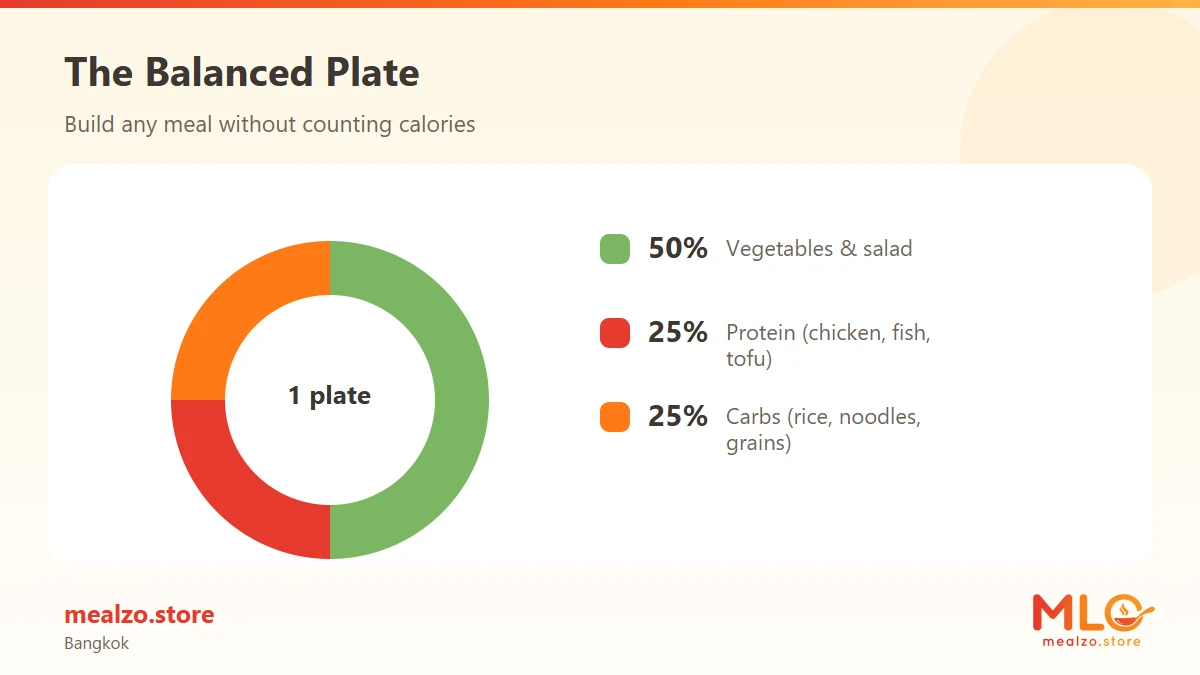
This becomes obvious at breakfast. Fruit beside a breakfast containing protein generally makes more sense than replacing breakfast with fruit and then wondering why another snack sounds appealing soon afterwards. The same idea appears in breakfast in Bangkok and what holds until lunch.
| Situation | Fruit form that works well | What to watch |
|---|---|---|
| Hot afternoon | Cold watermelon, rose apple or cantaloupe | Fruit helps refresh you but does not replace water |
| Breakfast on the go | Banana, guava or cut papaya beside breakfast | Do not expect fruit alone to act like a complete meal |
| Dessert craving | Ripe mango or a deliberate fruit dessert | Mango sticky rice and fruit in sweet coconut preparations are desserts |
| Office snack | Guava, pomelo, papaya or a mixed fruit bag | Keep prepared fruit chilled and eat it fresh |
| After a workout | Whole fruit or an unsweetened shake alongside the rest of your food | Do not assume a sweetened shake is simply a fruit portion |
This is also where portion anxiety becomes less useful. You do not need to calculate every slice of papaya. Look at the whole eating occasion.
If fruit is next to a proper meal, it is playing one role. If several bananas become lunch, that is a different situation. If mango is served with sticky rice and coconut cream after dinner, that is dessert.
Key takeaway: Fruit is usually easiest to balance when it joins a meal or snack rather than being asked to replace everything else.
10. A simple Bangkok routine for eating more fruit
The goal should not be to make fruit complicated. Bangkok already solves the hardest part by making it widely available.
A practical routine might look like this: keep easy fruit at home, use fruit carts when you are out, order shakes without added sugar when that is what you want, and enjoy traditional fruit desserts as desserts.
There is no need to chase perfect combinations.
When buying from a cart, choose something watery and something with more fibre if you want variety. At home, use seasonal fruit. At work, keep something chilled and ready to eat. When you want mango sticky rice, buy mango sticky rice rather than trying to convince yourself it is the same thing as a mango.
Meal planning can make the rest of the day more predictable. A Mealzo Bangkok meal plan portions meals across the day at a chosen calorie level, and fruit can appear in dishes or snacks within that structure.
Mealzo Bangkok prepares meals fresh daily in its Bang Na kitchen and delivers across Bangkok. Customers choose either the morning delivery window from 06:00 to 09:00 or the evening window from 17:00 to 20:00.
The plans use one mixed cuisine combining Thai and international dishes. There are 12 plan types, six daily calorie levels, options for 3 or 5 meals per day, and packages lasting 3, 7, 14 or 30 days.
That structure can organise the meals you receive. It does not make food bought outside the plan disappear.
A fruit bag bought on the way to work still counts as something you ate. So does a shake. So does mango sticky rice on the way home. The point of a plan is to make part of the day easier to see, not to create an imaginary boundary around everything else.
The same applies to fruit itself. It does not need to be restricted into tiny portions or promoted into a miracle food. Eat it often. Keep the form in mind. Let watery fruit be refreshing, let dense fruit be rich, and let dessert be dessert.
Key takeaway: The simplest strategy is to make fresh fruit easy to reach and keep sweet drinks, dried fruit and fruit desserts in their proper category.
FAQ
Is fruit in Bangkok a good everyday snack?
Yes. Fresh fruit is one of the easiest everyday foods to find in Bangkok, especially from fruit carts, markets and supermarkets. Whole fruit brings water, fibre and natural sweetness together. Choose a portion that suits the type of fruit and the rest of what you are eating.
Is a fruit shake the same as eating fresh fruit?
Not quite. Blending changes the physical structure and makes fruit much quicker to consume. Some Bangkok fruit shakes also contain syrup, condensed milk or other sweetened additions. If you want a simpler version, ask for no added sugar with "mai sai nam tan."
Is mango sticky rice a fruit portion?
It contains fruit, but it is best treated as dessert. Ripe mango by itself is fruit. Once it is served with sweet sticky rice and coconut cream, you are eating a traditional dessert. There is no need to avoid it. Just call it what it is.
How much fruit should I buy from a fruit cart?
You do not need to weigh it. A practical visual guide is around what fits in a cupped hand or one cart bag. Watery fruits such as watermelon can comfortably make up a larger volume, while dense fruits such as ripe mango, jackfruit or durian are easier to enjoy in a smaller portion.
Is dried mango as good as fresh mango?
They are different forms of the same fruit. Dried mango contains much less water, so the fruit becomes concentrated into a smaller volume. Some versions are also sweetened. It makes more sense to treat dried mango as a compact snack than as a direct replacement for a serving of fresh mango.
Can a Mealzo Bangkok plan include fruit?
Fruit can appear in dishes and snacks within a Mealzo Bangkok plan and its chosen calorie level. The plan structures the meals provided to you, but fruit, drinks or desserts bought separately remain part of what you eat that day.
Mealzo Bangkok is a kitchen and meal delivery service operating exclusively in Bangkok, Thailand. We are not affiliated with similarly named services outside Thailand.
Find a Meal Plan That Fits
Compare Mealzo plans or use the calculator to explore meal options for your needs.