The Calories You Drink in Bangkok: Cha Yen, Iced Coffee, Smoothies and Boba
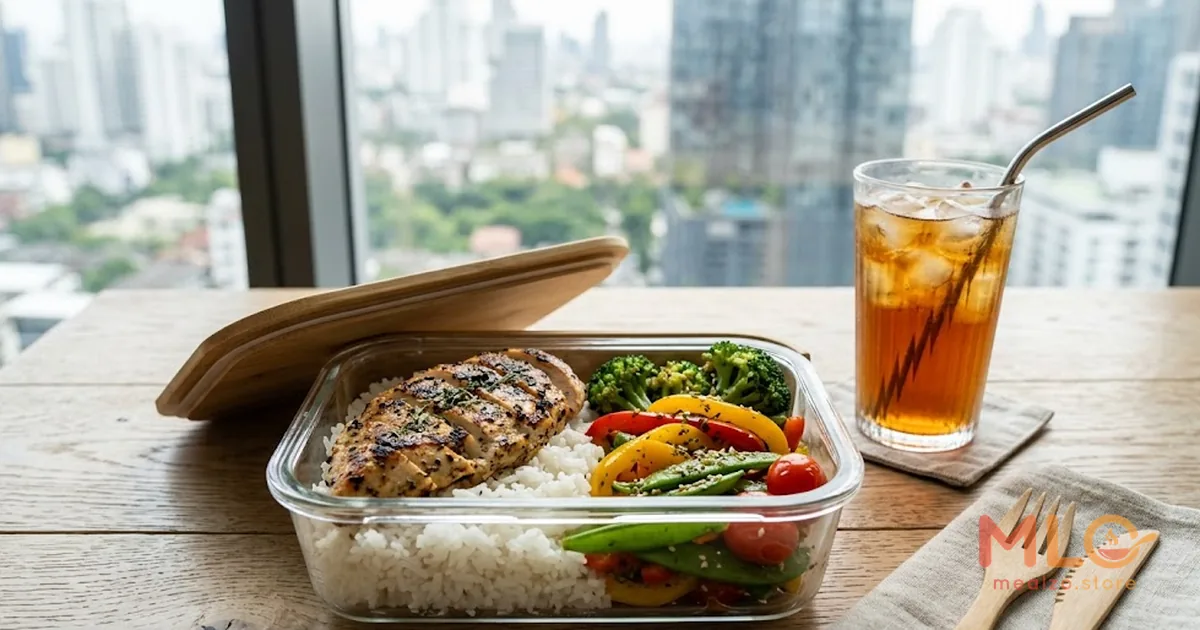
Bangkok makes cold drinks easy to buy and easy to forget. A cha yen from a street cart, an iced coffee on the way to work, a smoothie after the gym, and a bottled tea from the convenience store can all feel like small decisions rather than part of the day's food.
That is where the arithmetic starts to drift. Food gets logged. Drinks often do not. In Bangkok's heat, drinking is not optional, so the issue is rarely whether you should drink. It is what you are drinking repeatedly without counting it.
For people who otherwise eat reasonably well, this can be the missing piece. The drink may be the largest single uncounted item in the day, especially when several sweet drinks accumulate between meals.
The good news is that you do not have to stop drinking cha yen or treat every smoothie as a mistake. The useful question is much simpler: which drink in your normal day carries the most sugar and energy, and what would happen if that one became different?
1. Why the drink is the item nobody counts
A typical Bangkok day creates plenty of opportunities for a sweet cold drink. There is the street cart outside the office, the convenience store fridge, the afternoon coffee, the smoothie shop near the gym and the boba place on the way home.
Each purchase can seem insignificant because it is separate from a meal. That separation is exactly what makes drinks easy to overlook.
A plate of food has a visible beginning and end. You sit down, eat it, and usually know that it was lunch. A drink can be carried around for an hour. You sip it while working, driving, shopping or walking through a hot neighbourhood. It feels more like hydration than food, even when it contains substantial amounts of sugar and other ingredients.
The heat reinforces this habit. A cold sweet drink is immediate relief. You are thirsty, the cart is nearby and the drink is familiar. There is no complicated decision involved.
Key takeaway: If you eat carefully but never count what you drink, your daily intake can contain a sizeable category that your food tracking simply does not see.
The answer is not to make Bangkok's drink culture the enemy. It is to recognise that a sweet drink belongs in the day's arithmetic when it contains sugar, milk, syrup or other energy-containing ingredients.
2. Why liquid sugar is easy to under-count
Sugar inside a meal and sugar dissolved into a drink are not experienced in exactly the same way. A sweet drink arrives quickly and generally provides less of the physical volume, chewing and combination of protein, fibre and solid food that can contribute to fullness.
That does not mean every person responds identically. Satiety varies between people and between drinks. The practical pattern is simply that a sweet drink may add to what you consume without making the next meal disappear.
This matters because a drink often sits outside the normal meal structure. You can have breakfast, lunch and dinner exactly as planned, then add several sweet drinks around them.
Imagine the structure rather than the numbers:
- Breakfast is planned.
- Lunch is planned.
- An iced coffee appears between breakfast and lunch.
- A fruit smoothie appears after exercise.
- Boba appears on the journey home.
- Dinner is still eaten normally.
The drinks have not replaced the meals. They have been added around them.
That is why "I barely eat anything" can coexist with an intake that does not look the way you expected. The problem may not be the food on the plate. It may be the glass in your hand.
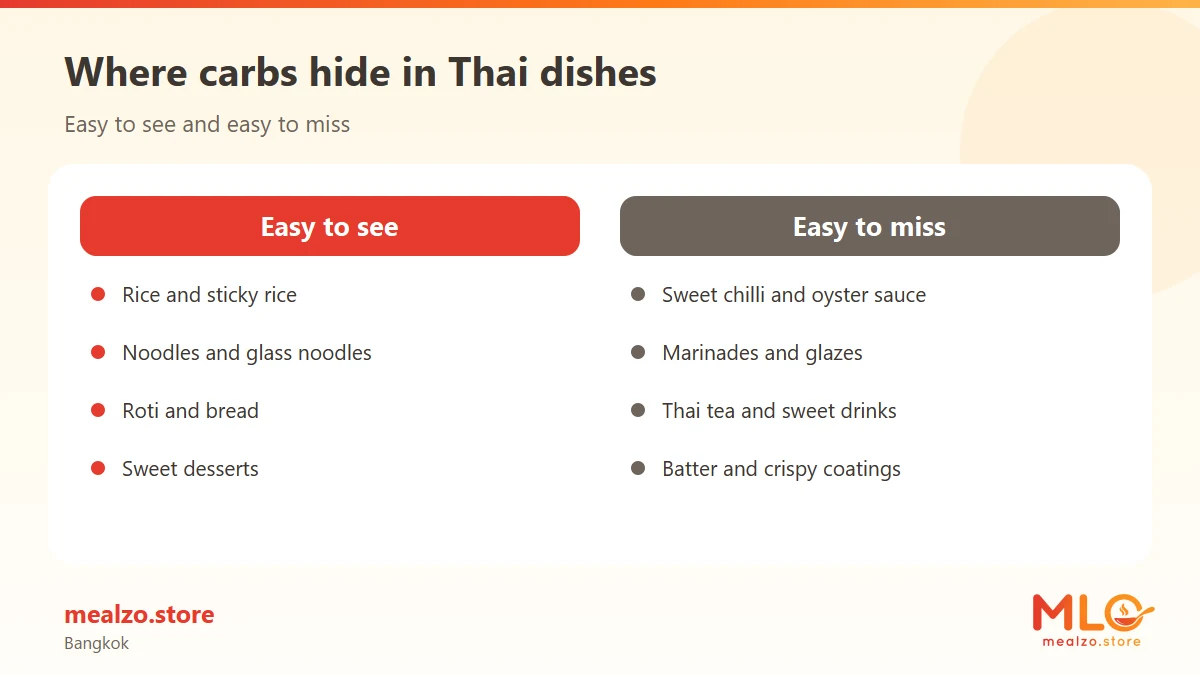
The same principle applies when looking at how hidden carbohydrates can appear in Thai food and drinks. Sauces, sweetened beverages and other additions can be easy to overlook precisely because they are not the main item.
3. Cha yen and the stacked sweetness of Thai milk tea
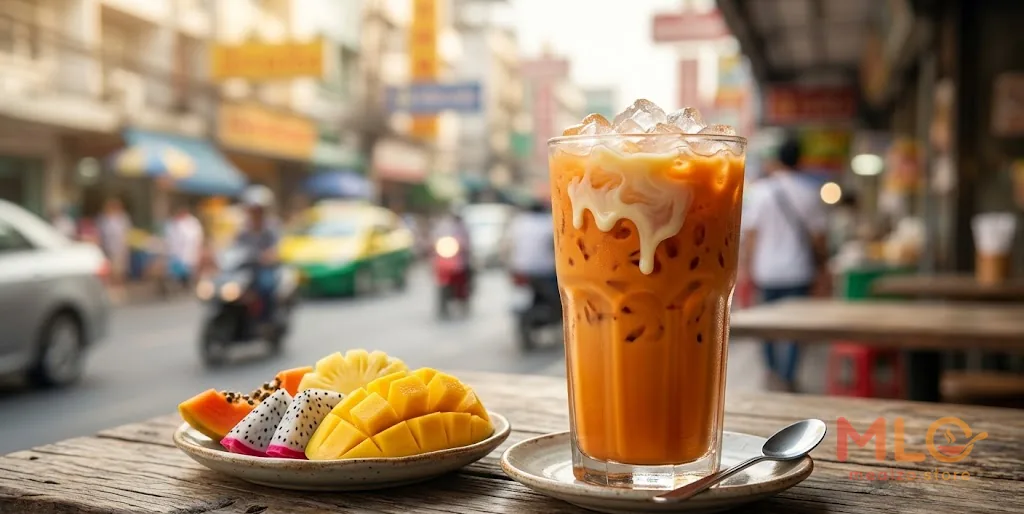
Cha yen is one of the clearest examples of why looking only at the tea itself misses the point.
The tea base is not necessarily the main source of sweetness. A Thai milk tea can be built with sugar, sweetened condensed milk and evaporated milk, with additional sweet elements depending on how the stall prepares it. Ice changes the temperature and volume, but it does not turn those ingredients into plain hydration.
The important concept is stacked sweetness. More than one sweet ingredient can be present in the same cup.
This is also why the exact sugar in Thai drinks can be difficult to know when you buy from a street cart. Unless the vendor measures and labels every ingredient, you do not have a reliable way to calculate exactly how much sugar went into the cup.
A large sweetened milk tea can therefore carry enough energy to matter in the context of a meal plan, but the exact amount depends on the recipe, portion, milk, syrup and preparation. There is no honest universal calorie figure for every cha yen sold in Bangkok.
You can still order one. The practical question is how it is built.
| Drink | Sweet layers commonly involved | A realistic lower-sugar order |
|---|---|---|
| Cha yen | Sweetened condensed milk, evaporated milk, sugar or syrup | Less sweet, less syrup, less or no condensed milk |
| Thai iced coffee | Coffee, sugar or syrup, condensed or evaporated milk | Less sweet, less syrup, no condensed milk |
| Fruit smoothie | Fruit, syrup or sweetener, sometimes flavoured additions | No added syrup, fruit and ice as the base |
| Milk tea | Tea, sugar or syrup, milk or creamer | Less sweet, unsweetened tea base if available |
| Honey lemon | Lemon, honey or syrup | Less sweet, more lemon, no extra syrup |
| Boba tea | Tea, sweetener, milk or creamer, tapioca pearls | Lower sweetness and fewer or no pearls |
The useful lesson is not "never drink cha yen." It is that the recipe matters.
4. Iced coffee: black coffee is not the issue
Coffee itself is not the problem. A plain black coffee contains no added sugar unless something is put into it.
The Bangkok iced coffee ordered from a street stall can be a different drink altogether. Depending on the stall and your order, it may contain sugar syrup and condensed or evaporated milk. The coffee is still there, but so are the additions.
This is why saying "I only drink coffee" does not tell you enough.
If you like milk in your coffee, you do not necessarily need to remove it. Start with the sweetener. Ask for less syrup or less sweet. If condensed milk is part of the normal preparation, ask whether it can be left out.
At a busy cart, there is a practical limitation: your request may not always be followed exactly. A vendor working quickly may use a standard scoop or bottle because that is how the drink is normally prepared. If the result is still very sweet, you have useful information for the next order.
Black coffee, plain tea and unsweetened drinks also make good defaults because they remove the need to negotiate sweetness every time.
5. Smoothies, juice and the "healthy" drink assumption
The word "healthy" can make people stop asking what is actually in the glass.
Fresh fruit is a useful food. That does not mean every fruit-based drink is automatically equivalent to eating the fruit. A smoothie can contain fruit plus syrup, sweetened yoghurt, flavoured ingredients or other additions. Juice can contain naturally occurring sugars while providing a very different eating experience from whole fruit.
The same applies to cold-pressed juice, honey lemon drinks and yoghurt drinks. Their ingredients can be perfectly ordinary, but "natural" or "fresh" does not mean sugar and calories disappear.
A smoothie made with fruit and ice is one thing. A smoothie made with fruit, syrup and additional sweet ingredients is another.
The simplest question at the counter is: "What is being added?"
For a smoothie, you can ask for no added syrup. For a juice, check whether anything sweetened is added. For honey lemon, remember that honey is still a source of sugar even though it sounds less processed.
None of this makes these drinks bad. It simply puts them in the same category as other drinks that deserve to be counted when they contain energy.
6. Boba, toppings and pearls are part of the drink
Boba is particularly easy to underestimate because the tapioca pearls can look like a topping rather than food.
They are not just decoration. Tapioca pearls are cooked and commonly served in a sweet syrup, while the drink itself can contain sweetened tea, milk or creamer and additional syrup.
There are therefore several separate variables:
- The sweetness of the tea base.
- The milk or creamer.
- The sweetness level selected at the counter.
- The tapioca pearls and their syrup.
- Any additional topping.
Reducing the sweetness of the tea does not necessarily remove the sugar associated with the pearls. Conversely, removing the pearls does not automatically make a highly sweetened milk tea a low-sugar drink.
If boba is part of your routine, change one part first. Lower the sweetness or remove the pearls. You do not need to redesign every drink at once.
Key takeaway: In boba, the pearls are not an energy-free garnish. They are another sweet component of the drink.
The same principle applies to other toppings. Once you start looking at the drink as a combination of ingredients rather than a single beverage, the arithmetic becomes much easier to understand.
7. The convenience store fridge is where the labels finally exist
Bangkok convenience stores make one part of this problem easier: packaged drinks have labels.
The fridge can contain bottled tea, canned coffee, isotonic drinks, yoghurt drinks and flavoured milk. Unlike a street-cart drink, these products generally provide nutrition information that you can inspect before buying.
The trick is reading the right line.
Check whether the sugar information is given per serving or per 100 ml. Then check how many servings are actually in the bottle. A bottle can contain more than one serving, so the number on the front of the nutrition panel may not describe the entire container.
The same applies when comparing two drinks. Looking only at the large headline number can be misleading if the serving sizes are different.
This is one situation where you can be more precise because the manufacturer has provided information. Street drinks are different. If the vendor does not provide measured ingredients or nutrition information, the exact amount cannot be known.
8. Sports drinks, yoghurt drinks and flavoured milk
Sports drinks are often associated with exercise, which can make them feel automatically appropriate after the gym. They can still contain sugar. Whether that matters to your personal intake depends on what you are doing and what else you consume, but the label is there to check.
Yoghurt drinks and flavoured milk have a similar problem with perception. They sound more substantial or nutritious than a soft drink, but that does not make them exempt from counting their sugar and energy.
The point is not to rank drinks from good to bad. It is to stop giving certain categories a free pass because of the image attached to them.
A useful habit is to ask the same question of every packaged drink: how much sugar is in the whole bottle?
For someone drinking several beverages during a Bangkok workday, this small check can reveal more than trying to memorise calorie values for dozens of individual products.
9. Alcohol and the drink at the end of the day
Alcohol belongs in the same conversation because it is liquid energy and is rarely treated like food.
After a long hot day, a beer or mixed drink can feel like part of the evening rather than part of the day's intake. Mixers can add another layer of sugar on top of the alcohol itself.
This does not require moralising. If you drink, simply include it in the picture.
The problem is the same one as with iced coffee or boba: something consumed as a drink can sit outside the meal structure and therefore outside the mental accounting.
If your usual day already contains sweet coffee, a smoothie and a boba drink, adding an alcoholic drink at night means there are several separate drink occasions to consider.
10. How to order less sweetness at a Thai drink stall
You do not need a perfect Thai phrase or a detailed nutrition lecture at the counter. The useful requests are straightforward:
- Ask for less sweet.
- Ask for less syrup.
- Ask for no condensed milk.
- Ask for milk on the side where that is practical.
- Ask for an unsweetened tea base.
- If the stall offers sweetness levels, choose the lower one.
The important word is "realistic." A busy street cart may follow your request precisely, approximately or not at all. Recipes are often built around a standard preparation, and the person making your drink may be working quickly.
Taste is useful feedback. If you ask for less sweet and the drink still tastes very sweet, you have not failed. You have learned something about that particular stall.
For regular drinks, consistency matters more than getting one perfect order. If one stall reliably gives you a less sweet version that you enjoy, that can become your regular stop.
You can also make the change smaller. If full unsweetened tea tastes nothing like the drink you want, reduce the sweetness gradually. A drink you actually enjoy with less added sugar is more useful than a drink you order once and never want again.
11. Choose your default all-day drink
The single most effective habit for many people is deciding what counts as their normal all-day drink.
In Bangkok's heat, you need to drink regularly. That makes the default choice more important, not less.
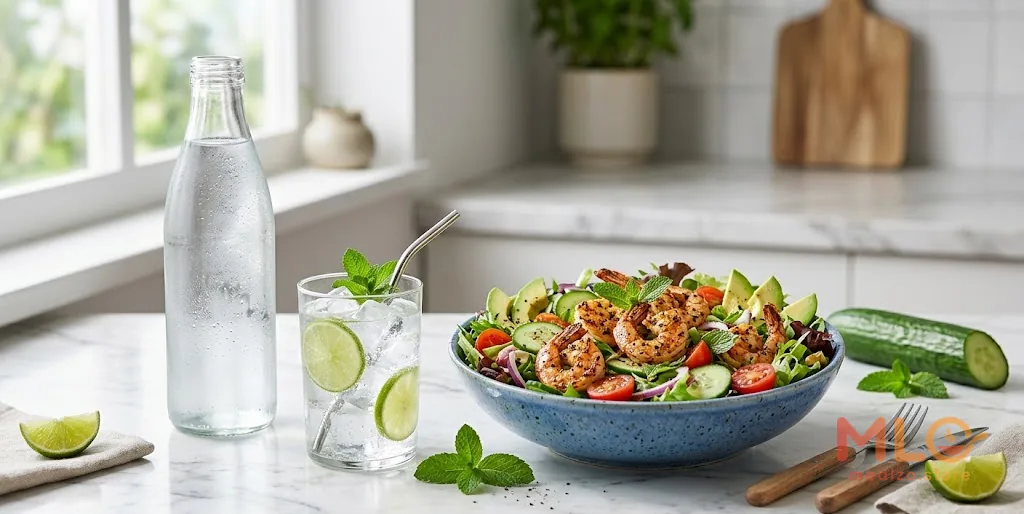
Water is the obvious example. Plain tea, black coffee and unsweetened soda water can also serve as regular options depending on what you enjoy.
The key distinction is between hydration and a deliberate extra.
Your default all-day drink should be something you can have repeatedly without turning every glass into another sweet item to account for. Sweet drinks can still exist, but they become choices rather than automatic hydration.
| Drinking situation | Common trigger | Swap that can survive the heat |
|---|---|---|
| Morning commute | Iced coffee from a street cart | Less sweet iced coffee or black coffee |
| Office break | Cha yen run with colleagues | Less-sweet cha yen or plain tea |
| After exercise | Fruit smoothie | Fruit and ice without added syrup |
| Afternoon heat | Bottled flavoured drink | Water or unsweetened tea |
| Journey home | Boba craving | Lower sweetness and fewer or no pearls |
| Evening socialising | Sweet mixed drink | A less-sweet option or an unsweetened mixer where suitable |
Key takeaway: Make one drink your default hydration, then treat sweet drinks as counted extras rather than invisible extensions of your water intake.
This approach is more practical than trying to eliminate every sweet drink. Bangkok is hot, cold drinks are part of daily life, and advice that ignores that reality is unlikely to last.
12. Hydration in Bangkok heat without turning it into advice
You sweat more in Bangkok's heat. You may also feel thirsty throughout the day, particularly when walking between the BTS, MRT, office, shops and home.
That makes drinking plenty of fluid a normal part of getting through the day. It also means that a sweet beverage can easily become your automatic answer to thirst.
Separating those two ideas is useful.
Drink because you are thirsty. Do not assume that every drink you use for thirst needs to contain sugar.
Water can be cold. Tea can be unsweetened. Coffee can be unsweetened. Soda water can be plain. You do not have to sacrifice cold, refreshing drinks to reduce how often you consume added sugar.
This article is not a substitute for medical or individual hydration advice. It is simply about the arithmetic of everyday drinks.
13. Zero-sugar options and where they honestly sit
Diet and zero-sugar drinks remove sugar from the equation. That is useful information, but it does not automatically make a drink a health food.
There is also no need to campaign for or against them. If you like a zero-sugar option and it helps you avoid an automatically sweetened drink, that is one practical choice. If you prefer water or unsweetened tea, those are choices too.
The important distinction is that removing sugar answers one question. It does not turn the drink into something that needs no thought at all.
For packaged drinks, read the label. For street drinks, ask what has been added. Then decide whether the drink fits what you want from that moment.
14. How a portioned meal plan interacts with drinks you buy yourself
A portioned meal plan gives you a defined structure for meals. Mealzo Bangkok plans are built around a chosen daily calorie level, with options covering six daily levels from 1200 to 2500 kcal, and customers can choose three or five meals per day.
The arithmetic becomes simple once drinks are considered separately.
If the meals are portioned to a chosen calorie level, but you buy several sweet drinks during the day, those drinks sit outside the planned meals. They do not become part of the meal portions just because you consumed them alongside the plan.
That is not a matter of blame. It is simply arithmetic.
Mealzo Bangkok's kitchen is in Bang Na, Bangkok. Meals are prepared in the Bang Na kitchen and delivered across Bangkok. Plans use one mixed cuisine, combining Thai and international dishes in the same plan. There are 12 plan types, including Balanced, Weight Loss, High Protein, Vegetarian, Vegan, Keto, Low-Carb, Gluten Free, Easy-to-Digest, Pescatarian, No Fish & Seafood, and Dairy & Egg Free.
The drinks are not part of the plan. That distinction is exactly why they deserve attention.
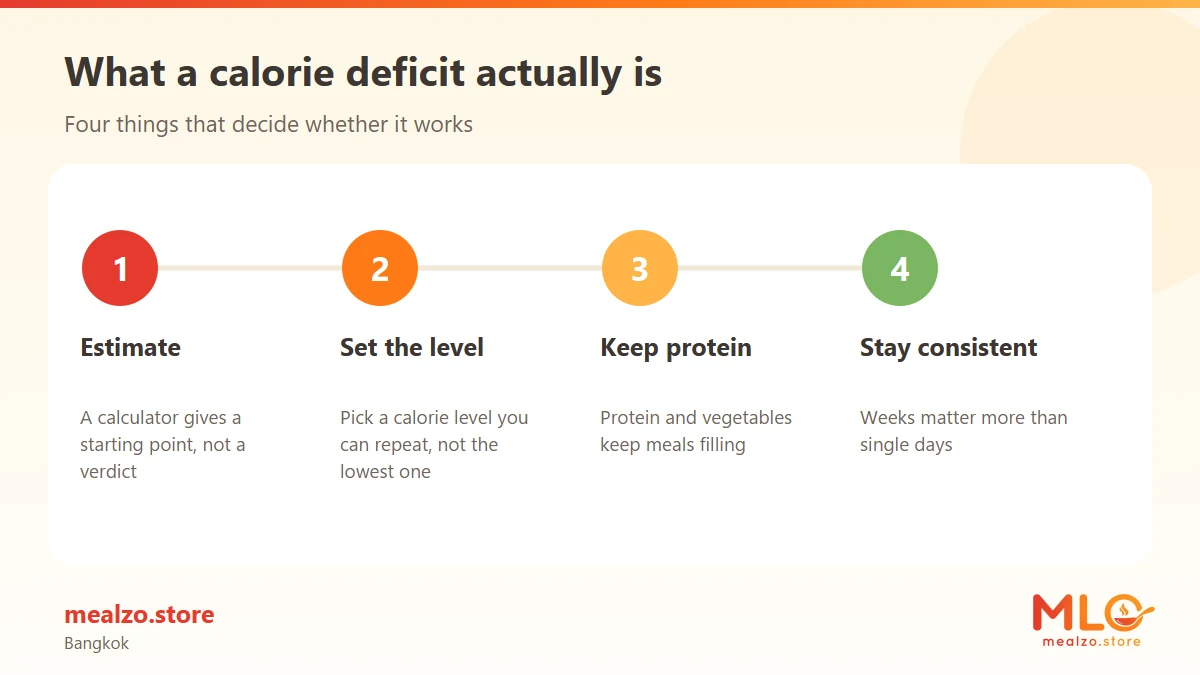
If you are trying to understand how a calorie deficit actually works, think about the total rather than treating drinks as a separate category that somehow does not count. A planned meal structure controls the food it provides. The glass you buy at the street stall remains your decision.
That does not mean you need to remove every sweet drink. It means you can identify the largest one and change that one first.
If your normal day contains four drinks, there is no requirement to transform all four. Maybe the morning coffee is the drink you care about most. Maybe it is the afternoon boba. Maybe it is the smoothie that contains added syrup.
Find the big one.
Mealzo Bangkok offers three- or five-meal structures and different daily calorie levels, so the meals can be organised around the plan you select. The drinks you purchase independently remain outside that structure. Treating them honestly gives you a clearer picture of the day.
For broader context on eating Thai dishes while keeping track of portions, see how Pad Thai, Som Tam and Tom Yum fit into a calorie-aware diet. Drinks follow the same basic principle: what is added still belongs in the arithmetic.
If you want to estimate your needs, the Mealzo Bangkok app includes a calorie calculator based on the Mifflin-St Jeor formula. It is an estimate, not medical advice: calorie calculator.
Mealzo Bangkok plans are available in package lengths of 3, 7, 14 or 30 days. Payment is online through PromptPay using Thai QR, processed by a payment provider. Delivery has two windows, morning from 06:00 to 09:00 and evening from 17:00 to 20:00, with the customer choosing one.
For customers managing declared allergens, the system uses nine allergen groups. The customer declares the relevant allergens and dishes containing a declared allergen are not assigned to them. This is a mechanism for meal assignment, not a guarantee that a meal is allergen-free.
The website and mobile app are available in Thai, English, Polish, German, French, Russian, Simplified Chinese and Burmese. Mealzo Bangkok also provides an Android app through Google Play.
One final practical point is worth making: if you are looking at salt and sodium in Thai food and where it can hide, use the same habit here. Look at the whole meal and the whole day rather than assuming that the obvious main dish is the only thing that matters.
15. Who should talk to a doctor instead
This article is general information about everyday drinks, sugar and calorie accounting. It is not medical advice.
Anyone with diabetes, insulin resistance, kidney disease or who is pregnant should follow their doctor's advice rather than using this article to make dietary decisions.
For everyone else, the central point remains deliberately simple. Bangkok's heat makes drinking unavoidable. Sweet drinks are easy to buy, easy to enjoy and easy to forget when you count your food.
You do not need to turn cha yen into a forbidden drink. You do not need to declare smoothies unhealthy. You do not need to stop drinking coffee or boba.
Start by finding the drink that appears most often and carries the most sweetness. Make that one less sweet, smaller in its sweet ingredients, or replace it with your default all-day drink. Then see what the rest of the day actually looks like.
The goal is not to fix Bangkok's drink culture. It is to stop pretending that the glass does not count.
FAQ
Is sugar in Thai drinks really something I need to count?
If a drink contains sugar, syrup, condensed milk, sweetened milk or another energy-containing ingredient, it contributes to what you consume that day. Street drinks are often not labelled, so the exact amount cannot be known without knowing the recipe and quantities. The useful habit is to recognise sweet drinks as part of the day's intake rather than treating them as hydration only.
Is cha yen automatically high in sugar?
There is no single reliable sugar figure for every cha yen. Recipes and preparation vary between stalls. Cha yen can contain several sweet layers, including sugar or syrup and sweetened condensed milk, with milk ingredients also contributing to the final drink. Asking for less sweet and less syrup can reduce the added sweetness, although a busy stall may not always follow the request exactly.
Is a fruit smoothie better than a sweet tea?
It depends on what is actually in the smoothie. Fruit, ice and no added syrup create a different drink from fruit combined with syrup or other sweetened ingredients. The word "fruit" does not automatically mean a drink contains no added sugar. Ask what is added and consider the whole recipe.
What should I drink most of the day in Bangkok?
Choose a default drink that works as regular hydration without automatically adding sugar, such as water, plain tea, black coffee or unsweetened soda water. The exact choice is personal. The important distinction is that sweet drinks become deliberate extras rather than your automatic response to thirst.
Do zero-sugar drinks solve the problem?
They remove sugar from the drink, which can be useful if sugar is the specific issue you are trying to reduce. They are not automatically health foods, and there is no need to treat them as either universally good or universally bad. Read the label and decide what fits your preferences and overall intake.
Why do drinks matter if my meals are already portioned?
Because the drinks you buy yourself sit outside the meal portions. If your meals are organised around a chosen calorie level but sweet drinks are added during the day, those drinks are additional intake rather than part of the planned meals. The point is arithmetic, not blame.
Mealzo Bangkok is a kitchen and meal delivery service operating exclusively in Bangkok, Thailand. We are not affiliated with similarly named services outside Thailand.
Find a Meal Plan That Fits
Compare Mealzo plans or use the calculator to explore meal options for your needs.