What Is Clean Eating? Principles and Food Choices for Everyday Life in Bangkok
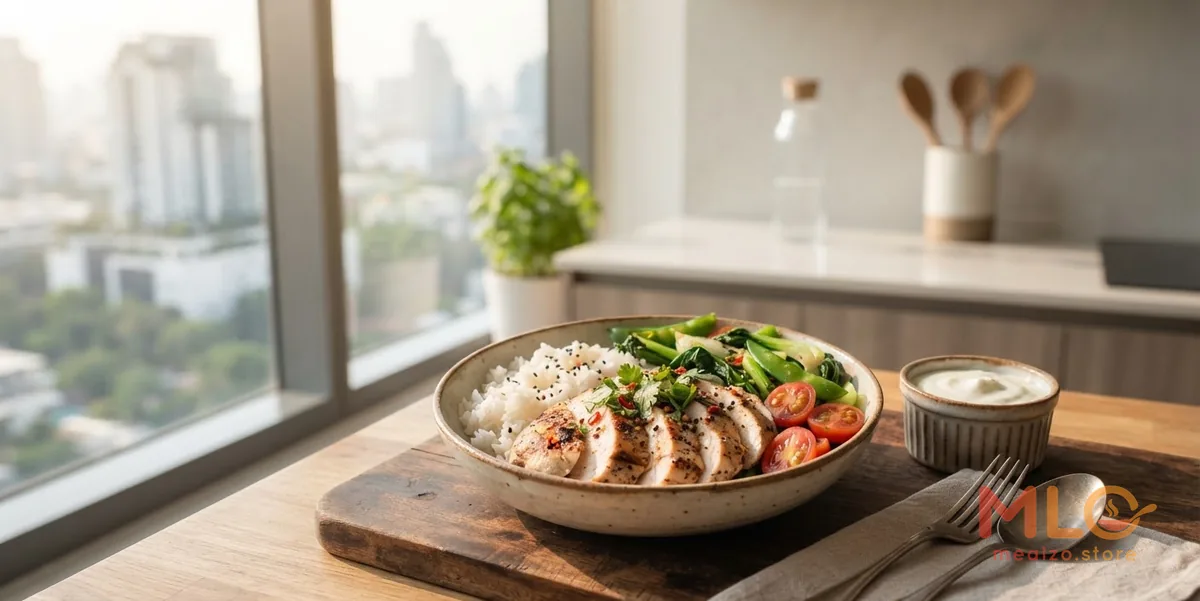
“Clean eating” sounds simple until you try to define it. In Bangkok, the phrase appears on café menus, meal-prep boxes, fitness accounts, supermarket products and social media posts. One person uses it to mean grilled chicken and brown rice. Another means avoiding sugar. Someone else thinks clean eating requires organic vegetables, no packaged food and absolutely no street food.
So, what is clean eating, really?
There is no official medical or nutritional definition. At its most useful, clean eating is simply a way of describing a diet built mainly around minimally processed, nutrient-dense foods while still leaving room for convenience, pleasure, culture and normal life.
That last part matters. A healthy diet does not become healthier because you are afraid of noodles, curry paste, bottled sauce or a dessert with friends. Nor does one “perfect” salad repair an otherwise unbalanced week.
For people living in Bangkok, a practical version of clean eating needs to work with rice, noodles, curries, food courts, office lunches, delivery apps, convenience stores and evenings out. It should make eating easier to understand, not turn every ingredient into a moral test.
1. What Does Clean Eating Actually Mean?
The most sensible interpretation of clean eating is choosing foods closer to their basic form more often, without demanding that every food be completely unprocessed.
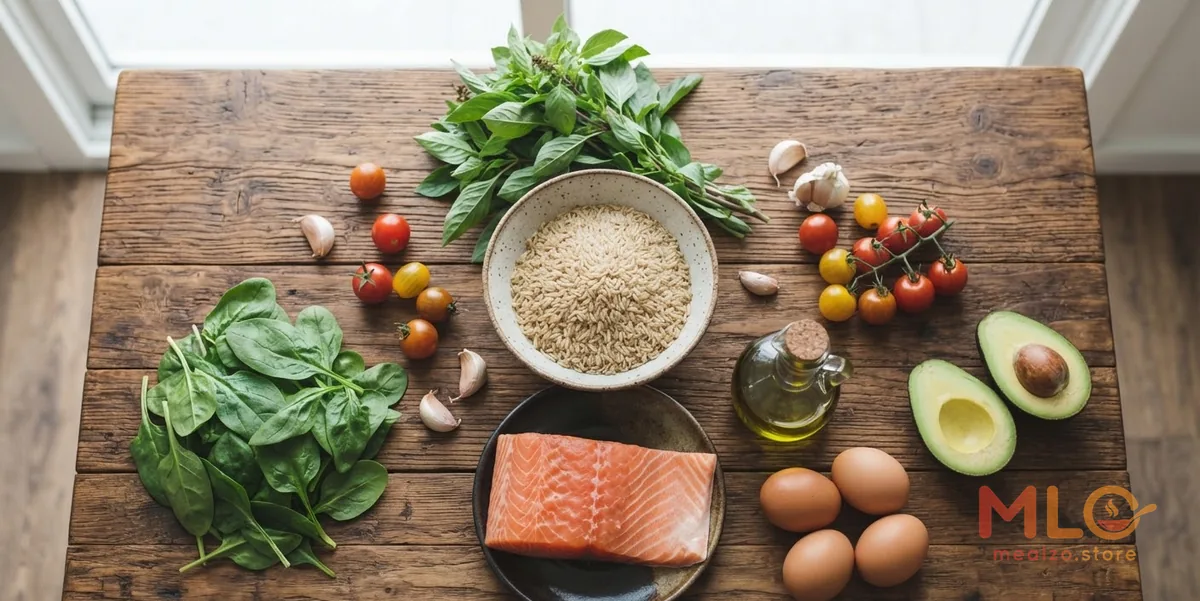
That usually means giving plenty of space to foods such as:
- vegetables and fruit;
- rice, oats, potatoes and other carbohydrate sources;
- eggs, fish, chicken, tofu, legumes and other protein foods;
- nuts and seeds;
- dairy or suitable alternatives;
- minimally processed foods that make balanced eating easier.
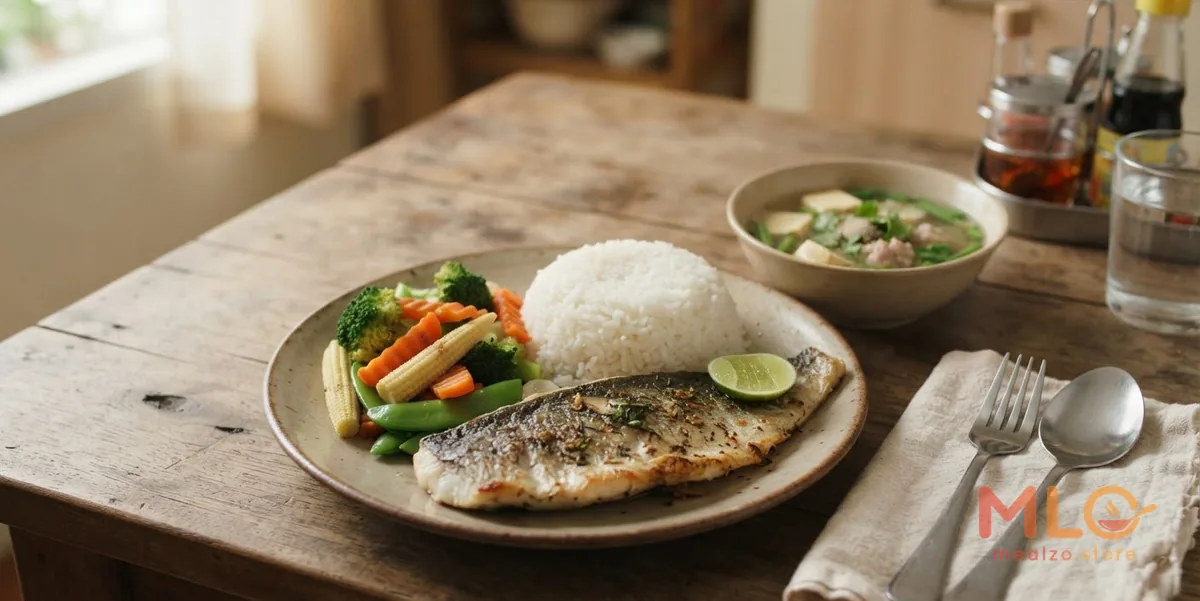
A bowl containing jasmine rice, grilled fish, stir-fried vegetables and fruit can fit this idea perfectly well. So can oatmeal with yogurt and banana. So can a Thai soup made with herbs, vegetables and protein.
Clean eating becomes less useful when it turns into a rigid list of “allowed” and “forbidden” foods.
The real nutritional questions are broader: Are you getting enough protein? Enough vegetables and fruit? Is your overall calorie intake appropriate for your needs? Do your meals contain enough variety? Are you eating in a way you can realistically maintain?
For a wider framework, our balanced meal plan guide explains how calories, macronutrients and food variety work together.
Key takeaway: Clean eating is most useful when it means eating mostly nutrient-dense, minimally processed foods, not trying to achieve dietary perfection.
2. What Clean Eating Does Not Mean
Clean eating does not automatically mean:
- zero sugar;
- zero carbohydrates;
- gluten-free;
- dairy-free;
- organic-only;
- raw food;
- vegetarian or vegan;
- no sauces;
- no packaged foods;
- no restaurant meals;
- no Thai street food.
Those are separate choices, some of which may be appropriate for particular preferences or circumstances, but they are not requirements for a balanced diet.
The word “clean” can also create an unintended problem. If certain foods are described as clean, people may start thinking of other foods as “dirty.” Nutrition rarely works that neatly.
A chocolate bar and a papaya are nutritionally different, but eating chocolate does not make your diet, or you, dirty. Likewise, brown rice contains more fibre and certain micronutrients than white rice, but white rice can still be part of a nutritious meal.
It is more useful to think in terms of frequency, portions and overall dietary pattern.
You might eat vegetables at lunch and dinner most days, choose water as your main drink, include protein regularly and still enjoy mango sticky rice occasionally. Those choices can coexist.
3. Where Did the Term “Clean Eating” Come From?
Clean eating did not emerge from one scientific guideline or one specific nutrition authority. The phrase developed gradually through health, fitness and wellness culture, particularly as interest grew in whole foods and reducing highly processed foods.
The basic idea had reasonable foundations: eat more vegetables, cook more meals from recognisable ingredients, reduce excessive intake of sugary drinks and heavily processed snack foods, and pay attention to food quality.
Problems appeared when the concept became increasingly restrictive.
Online versions of clean eating sometimes turned ordinary ingredients into supposed toxins, promoted unnecessary elimination diets, or implied that foods containing additives, carbohydrates, seed oils, gluten or sugar were inherently harmful.
That is where a useful principle can drift into nutritional mythology.
Evidence-based nutrition tends to focus less on whether one ingredient is “clean” and more on the overall dietary pattern. Diet quality depends on what you eat repeatedly over weeks, months and years, not on whether every item passes a wellness checklist.
4. Whole Foods vs Processed Foods: It Is a Spectrum
One of the most common clean-eating rules is “avoid processed food.” The problem is that almost everything we eat has undergone some form of processing.
Washing and freezing vegetables is processing. Turning milk into yogurt is processing. Cooking rice is processing. Canning beans is processing. Grinding peanuts into peanut butter is processing.
Processing is therefore better understood as a spectrum.
At one end are foods that remain very close to their original form: fresh fruit, vegetables, eggs, fish, plain rice, nuts and fresh meat.
In the middle are useful processed foods such as:
- frozen vegetables;
- canned fish;
- tofu;
- yogurt;
- whole-grain bread;
- tomato paste;
- nut butter;
- canned beans;
- pre-cut vegetables.
At the other end are products formulated with combinations of refined starches, fats, sugars, flavourings and other ingredients, often designed to be extremely convenient and highly palatable.
Even then, context matters. A packaged protein-rich yogurt eaten during a busy workday may contribute more positively to your diet than skipping lunch because you could not find something “clean enough.”
The goal is not to eliminate processing. It is to make nutritionally useful foods the foundation of your diet.
5. How to Read Food Labels Without Becoming Obsessed
Food labels can be useful, but you do not need to analyse every product as though you are conducting a laboratory investigation.
Start with the information that matters for your actual goals.
If you want a filling breakfast, look at protein and fibre. If you are comparing sweetened drinks, look at sugar. If you are watching overall energy intake, compare calories per realistic serving.
The ingredient list can also provide context. Ingredients normally appear in descending order by weight, so the first few ingredients tell you a lot about what the product mainly contains.
But a long ingredient list does not automatically make a food unhealthy.
Some perfectly reasonable foods contain stabilisers, fortifying vitamins, spices, acidity regulators or other ingredients that sound unfamiliar. Their chemical-sounding names are not evidence that they are dangerous.
Likewise, “natural,” “organic,” “no refined sugar” and “clean” on the front of a package do not guarantee superior nutrition.
A snack made with dates, coconut oil and nuts can still be extremely calorie-dense. A conventional frozen vegetable mix can still be an excellent food choice.
Use labels to answer practical questions, not to search for reasons to fear food.
6. Can Thai Food Be Part of Clean Eating?
Absolutely. Thai cuisine provides plenty of ingredients that fit comfortably within a whole-food-oriented eating pattern: herbs, vegetables, seafood, eggs, tofu, rice, fruit and numerous protein-rich dishes.
The challenge is that the nutritional profile of Thai meals varies enormously.
A clear soup with vegetables and lean protein is very different from a heavily fried dish with a sugary sauce. A plate of rice with grilled chicken and vegetables is different from a large portion of rice topped with fatty meat and very little produce.
That does not make one meal morally better than another. It simply means that dish composition matters.
Useful choices around Bangkok can include:
- grilled chicken or fish with rice and vegetables;
- tom yum with seafood or lean protein;
- clear vegetable soups;
- stir-fried vegetables with tofu, chicken or seafood;
- som tam paired with a protein source and rice;
- rice dishes where you can control the amount of sauce;
- fresh fruit as part of a meal or snack.
Street food can fit too. You do not need an expensive health café for every lunch.
A street stall cooking food to order may allow you to request extra vegetables, less oil, a smaller amount of sauce or an additional egg. Those small adjustments often matter more than whether the meal carries a “healthy” label.
For more examples, how Thai food fits weight loss looks at how traditional Thai dishes can fit into calorie-aware eating without abandoning local food.
7. Rice, Noodles and Curries Are Not Automatically “Unclean”
Carbohydrates often become the first casualty of overly restrictive clean-eating plans.
That makes little nutritional sense.
Rice is a staple food across Thailand and much of Asia. It provides carbohydrate, which the body can use for energy. White jasmine rice contains less fibre than brown rice, but that does not make it an unhealthy food.
What matters is the complete meal.
Rice eaten with grilled chicken, vegetables and a broth creates a different nutritional picture from an oversized portion of rice accompanied mainly by deep-fried food.
The same applies to noodles. A noodle soup containing vegetables and protein can be a practical lunch. The portion, broth, toppings and side dishes all influence the meal.
Thai curries deserve similar nuance. Coconut milk is energy-dense because it contains significant fat, while curry pastes and sauces may contribute sodium. But curries can also provide vegetables, herbs and quality protein.
Instead of asking, “Is curry clean?” ask:
- How large is the serving?
- What protein does it contain?
- Are there vegetables?
- How much rice am I eating with it?
- What does the rest of my day look like?
That produces a much more useful answer.
8. Cooking Oils and Sauces in Thai Cuisine
Oil is another ingredient that often gets labelled as either good or bad. The reality is more straightforward: dietary fat is necessary, but fat is calorie-dense, so quantities matter.
Thai cooking frequently uses oil for stir-frying and frying. You may not be able to see exactly how much goes into a restaurant meal, particularly when eating outside the home.
That does not mean stir-fried food needs to disappear from your diet.
If you eat out regularly, practical adjustments may include choosing grilled, steamed or soup-based meals more often, alternating richer dishes with lighter options, or asking for less oil when food is cooked to order.
Sauces deserve the same measured approach.
Fish sauce, soy sauce, oyster sauce, sweet chilli sauce and other condiments can contribute significant sodium, while some sauces also contain sugar. Yet these ingredients are fundamental to the flavour profile of many Thai dishes.
You do not need to remove them entirely.
Use enough to make food enjoyable, pay attention to overall quantity, and remember that flavour also comes from lime, chilli, garlic, ginger, lemongrass, basil and other herbs and aromatics.
A meal nobody enjoys is rarely a sustainable meal.
9. Hydration and Drinks Matter More Than “Detox” Products
Bangkok's heat and humidity make hydration especially important, but drinking well does not require specialised detox waters or expensive wellness beverages.
For most everyday situations, water should do much of the work.
Other drinks can fit depending on your preferences: unsweetened tea, coffee, sparkling water and moderate amounts of other beverages.
Where people can unintentionally consume a substantial amount of sugar and calories is through drinks that do not feel particularly filling.
Common examples include:
- heavily sweetened Thai iced tea;
- sweetened coffee;
- bubble tea;
- soft drinks;
- sweet fruit drinks;
- large smoothies containing syrup, sweetened milk or multiple energy-dense additions.
There is nothing wrong with enjoying these occasionally. Problems tend to appear when liquid calories become an unnoticed daily habit.
Fruit juice also deserves context. It can provide some vitamins, but whole fruit generally provides more fibre and usually offers greater satiety.
And despite the marketing language, no juice, herbal drink or supplement “detoxes” an otherwise poor diet. Your body already has organs responsible for normal metabolic waste processing.
10. Eating Out in Bangkok Without Turning Every Meal Into a Calculation
Bangkok makes eating out unusually convenient. That is part of what makes living here enjoyable, so a realistic approach to nutrition should work with restaurants and food courts rather than pretending everyone will cook every meal.
Start with structure.
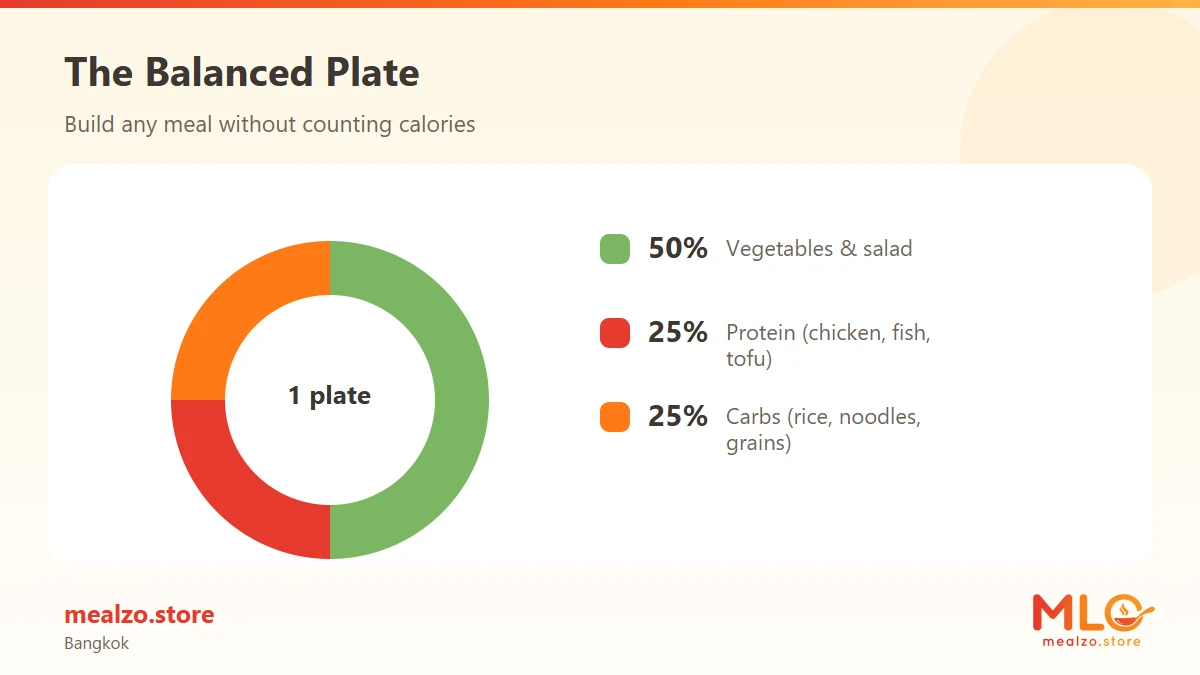
When possible, look for three components:
A protein source: chicken, fish, seafood, eggs, tofu, lean meat or legumes.
A carbohydrate source: rice, noodles, potatoes or another staple.
Vegetables or fruit: ideally enough that they are a visible part of the meal rather than a decorative garnish.
From there, adjust according to appetite and goals.
At a food court, you might choose rice with two dishes, making one a protein-focused option and one a vegetable dish. At a noodle shop, you might add an egg or extra meat. At a Japanese restaurant, rice, grilled fish, vegetables and miso soup can form a balanced combination.
When restaurant portions are large, you also do not have to finish everything automatically.
If you eat outside frequently and want more structure around the rest of your week, our complete guide to healthy meal delivery in Bangkok explains another way people in the city organise regular meals.
11. Clean Eating Myths vs Reality
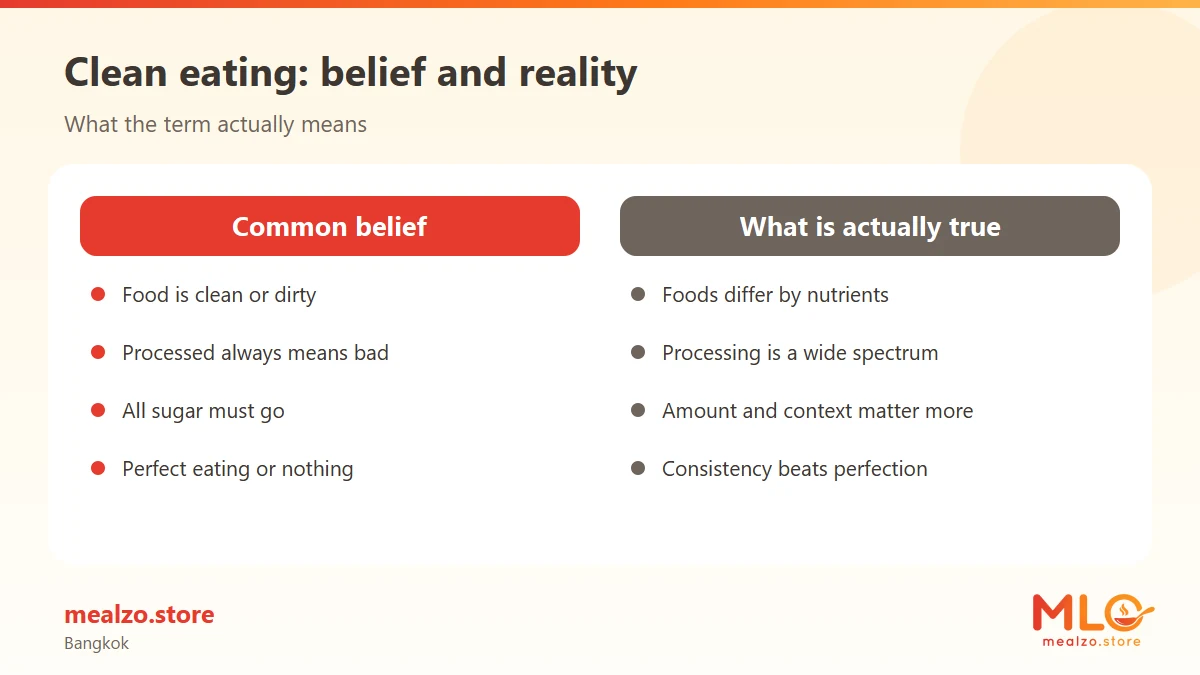
Clean eating becomes confusing when catchy claims replace basic nutrition principles.
| Common belief | What is actually true |
|---|---|
| Processed food is always unhealthy | Processing ranges from freezing vegetables to making highly refined snack foods; the type and overall nutritional value matter. |
| White rice is “dirty” food | White rice can fit perfectly well in a balanced meal, especially alongside protein and vegetables. |
| Sugar must be completely eliminated | Reducing excessive added sugar can help diet quality, but total elimination is unnecessary for most people. |
| You need detox juices to cleanse your body | No special drink is required for normal detoxification processes carried out by the body. |
| Organic food is always more nutritious | Organic and conventional foods can both contribute to a nutritious diet; overall food variety matters more. |
| A meal is unhealthy if it contains sauce or oil | Sauces and oils affect calories, sodium and flavour, but sensible amounts can easily fit into a balanced diet. |
Key takeaway: Nutritional quality is determined by your overall eating pattern, not by assigning individual foods to “clean” and “dirty” categories.
12. When Clean Eating Starts Becoming Too Restrictive
Wanting to improve your diet is reasonable. Problems can arise when food rules become so strict that they begin interfering with everyday life.
For example, someone might become increasingly anxious about eating food they did not prepare themselves, avoid social meals because ingredients cannot be controlled, or continually remove more foods from their diet despite having no clear reason to do so.
The term orthorexia is sometimes used to describe an unhealthy preoccupation with eating only foods perceived as healthy or pure. It is not a label to casually apply to yourself or someone else, and this article is not offering a diagnosis.
The useful point is simpler: healthy eating should generally support your life rather than steadily making your life smaller.
If a nutrition plan requires you to fear restaurants, birthdays, travel or meals with friends, greater flexibility may be more beneficial than another food rule.
A healthy relationship with eating can include both nutritious everyday meals and foods chosen purely because they are enjoyable.
13. Simple Everyday Swaps in Bangkok
You do not need to rebuild your diet overnight. Small, repeatable changes are often more useful.
| Instead of | Try | Why it helps |
|---|---|---|
| Sweet Thai iced tea every afternoon | Unsweetened tea most days, with Thai tea when you genuinely want it | Reduces routine added sugar without banning a favourite drink |
| Fried chicken over a large rice portion | Grilled chicken with rice and vegetables | Keeps the familiar meal structure while adding vegetables and reducing frying |
| Noodles with little protein | Noodle soup with extra egg, tofu, chicken or seafood | Adds protein and usually improves satiety |
| A pastry alone for breakfast | Yogurt with fruit and oats, or eggs with rice and vegetables | Gives breakfast more protein and nutritional variety |
| Curry plus a very large rice serving | Curry with a moderate rice portion and an extra vegetable dish | Maintains the flavours while creating a more balanced plate |
| Sweet bottled drink with lunch | Water or unsweetened tea | Removes calories that often add little fullness |
Plant-based eaters can use exactly the same logic, focusing on tofu, tempeh, legumes, vegetables, grains, nuts and other suitable foods. plant-based eating in Bangkok covers the practical side in more detail.
The goal of a swap is not to prove that one food is “clean” and another is bad. It is to create a version of the meal that better matches what you want from your diet while still tasting like something you actually want to eat.
14. How to Make Clean Eating Sustainable
A sustainable version of clean eating is deliberately imperfect.
You should be able to follow it on a normal Tuesday when you are busy, not only on Sunday afternoon when the fridge is organised and you have time to cook.
A useful foundation might look like this:
Eat vegetables and fruit regularly. Include protein across your main meals. Keep reasonable carbohydrate sources in your diet rather than fearing them. Use fats and sauces with some awareness of quantity. Drink mostly water or unsweetened beverages. Choose minimally processed foods frequently, while also using convenient foods when they help you eat better.
Then allow room for Bangkok life.
Have street food. Eat at restaurants. Order dessert sometimes. Drink Thai tea because you like Thai tea. Go out with friends without needing to optimise every plate.
Planning also helps. If breakfast and lunch are reasonably structured, dinner does not have to carry the entire burden of making your day nutritionally balanced.
Some people benefit from preparing meals themselves. Others use combinations of cooking, restaurant food and prepared meal services.
The best system is the one that reduces unnecessary decision-making without making food monotonous.
Key takeaway: A sustainable clean-eating routine should survive busy workdays, restaurant meals and social occasions, not require perfect control of every ingredient.
15. Where Structured Meal Planning Can Help
For people who understand the basics but struggle with the daily logistics, structured meals can remove some of the repeated decisions around shopping, portions, cooking and meal composition.
This is where MEALZO can fit into a Bangkok routine.
MEALZO provides chef-prepared meal-plan delivery in Bangkok, with balanced, calorie-controlled meals and flexible plan options. The point is not to label every meal “perfectly clean.” It is to make consistent meal structure easier when cooking everything yourself is unrealistic.
Depending on your routine, prepared meals can cover part of the week while you continue eating Thai food, restaurant meals and home-cooked food at other times.
A structured plan is most useful when it gives you a dependable baseline rather than another set of restrictive food rules.
Frequently Asked Questions
What is clean eating in simple terms?
Clean eating generally means building most of your diet around minimally processed, nutrient-dense foods such as vegetables, fruit, grains, protein foods, nuts and seeds. It does not require eliminating every packaged, restaurant or convenience food.
Is Thai food considered clean eating?
Many Thai meals can easily fit a clean-eating approach. Rice, vegetables, herbs, eggs, fish, chicken, tofu and fruit are all common ingredients; the overall balance, portion size and amount of frying, sauce or added sugar matter more than whether a dish is labelled “clean.”
Is white rice allowed when eating clean?
Yes. White rice is a normal carbohydrate source and can be part of a balanced diet. Combining it with protein, vegetables and appropriate portions usually matters more than replacing every serving with brown rice.
Do I have to stop eating processed food?
No. Processing exists on a spectrum, and many processed foods, such as yogurt, tofu, frozen vegetables, canned beans and whole-grain bread, can be useful nutritional choices. Focus on the overall quality of your diet rather than trying to eliminate every processed item.
Can clean eating help with weight management?
A diet based on filling, nutrient-dense foods may make calorie management easier for some people, but “clean” foods do not automatically cause weight loss. Overall energy intake still matters, along with portion sizes, activity, sleep and the consistency of your habits.
How strict should I be with clean eating?
For most people, strictness is not the goal. A flexible pattern that includes nutritious everyday meals alongside restaurant food, treats and social occasions is usually far easier to maintain than a long list of forbidden foods.
Find a Meal Plan That Fits
Compare Mealzo plans or use the calculator to explore meal options for your needs.