3-Meal vs 5-Meal Delivery Plans: Which Fits Your Daily Schedule?
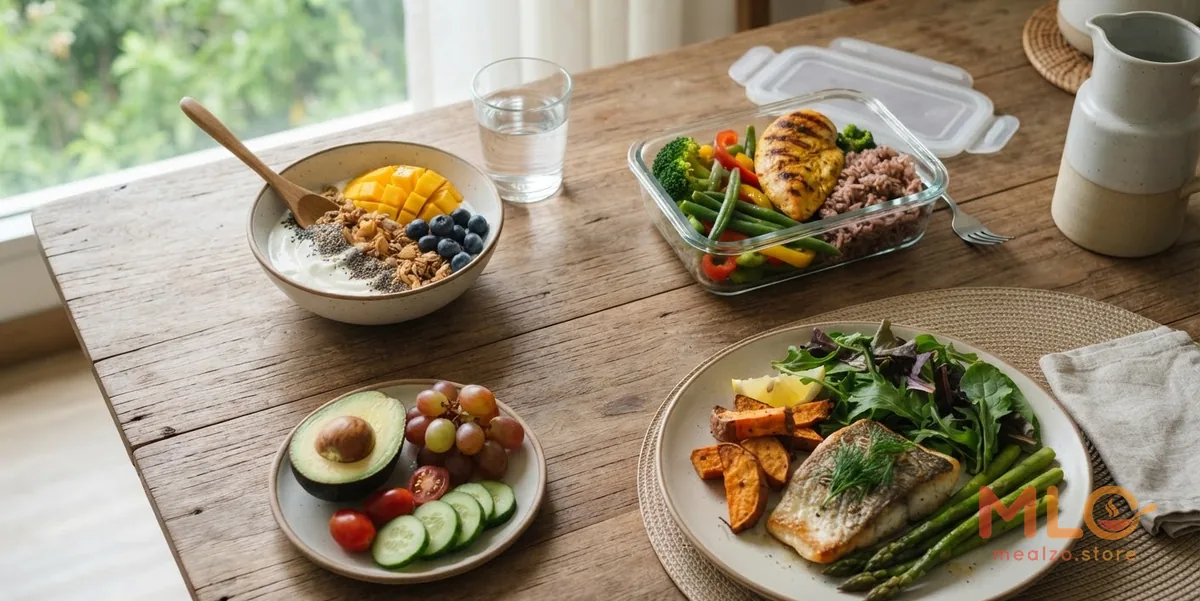
Choosing between three and five meals a day sounds like a nutrition question. In practice, it is often a calendar question. A plan that looks sensible on paper can become awkward when meetings run late, commuting takes longer than expected, or you simply do not want to stop what you are doing every few hours.
For meal delivery in Bangkok, the useful question is not whether three meals are universally better than five, or vice versa. It is whether the number of meals fits the way you actually live. Your total daily food intake matters, but so do timing, convenience, appetite and the amount of attention you want to give food during the day.
Mealzo offers both 3- and 5-meal options across its meal plans, with six daily calorie levels from 1200 to 2500 kcal. That creates flexibility, but it also means you need to make two separate decisions: how much food you want allocated across the day and how many eating occasions you want that food divided into.
The best 3 meal vs 5 meal delivery plan is therefore the one you can use consistently without reorganising your entire day around it.
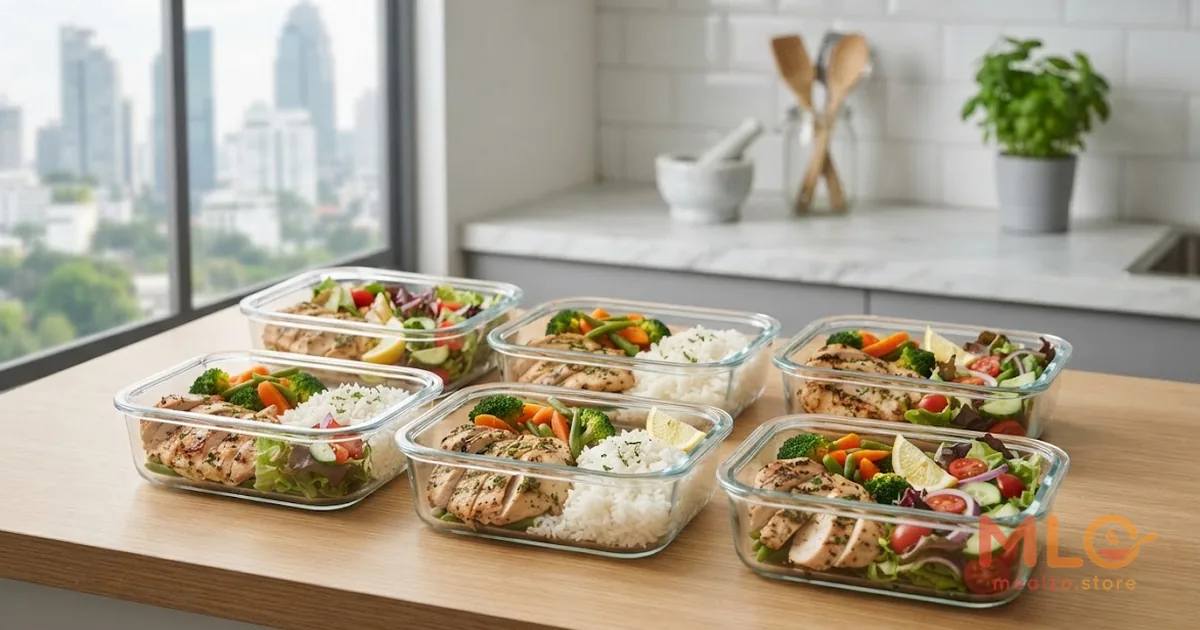
1. Start With Your Schedule, Not the Number of Meals
There is no reason to assume that eating five times a day is automatically more disciplined than eating three times. Five meals create more eating occasions. Three meals create fewer, usually larger ones. Neither arrangement tells you, by itself, whether the overall plan suits your needs.
A simple way to begin is to look at an ordinary weekday. Not an ideal Monday when every meeting starts on time, but the kind of day you normally experience.
Ask yourself:
- When do you realistically have time to sit down and eat?
- Do you prefer substantial meals or smaller portions spread through the day?
- Are you often away from your desk, condo or regular workplace?
- Do you dislike carrying food around?
- Are there long gaps between breakfast, lunch and dinner that regularly feel inconvenient?
- Would two additional eating occasions help your routine, or simply create two more things to remember?
Someone who naturally eats breakfast, lunch and dinner may find a three-meal plan almost invisible in daily life. Someone whose workday already includes a mid-morning and afternoon food break may find five meals just as natural.
Key takeaway: Choose the meal frequency that fits your existing day before trying to make your day fit the meal frequency.
2. What Actually Changes Between 3 and 5 Meals?
The main difference is distribution. If two plans provide the same daily calorie level, the five-meal version divides that day's food into more eating occasions.
That distinction matters because meal size and meal frequency affect how the day feels, even when the total daily allocation is similar.
| Question | 3 meals a day | 5 meals a day |
|---|---|---|
| Eating occasions | Fewer | More |
| Typical meal pattern | Larger main meals | Smaller meals spread across more occasions |
| Daily interruptions | Lower | Higher |
| Food to organise during the day | Three portions | Five portions |
| Useful for people who prefer | Clear breakfast-lunch-dinner structure | More frequent eating |
| Potential drawback | Longer gaps between meals | More timing and food handling during the day |
A five-meal structure can make sense if you dislike eating large portions at once or already eat several times during your working day. A three-meal structure can be easier if you want defined meals with minimal interruption.
Neither approach changes the basic need to choose an appropriate daily calorie level. Meal frequency and daily calories are separate settings rather than interchangeable ones.
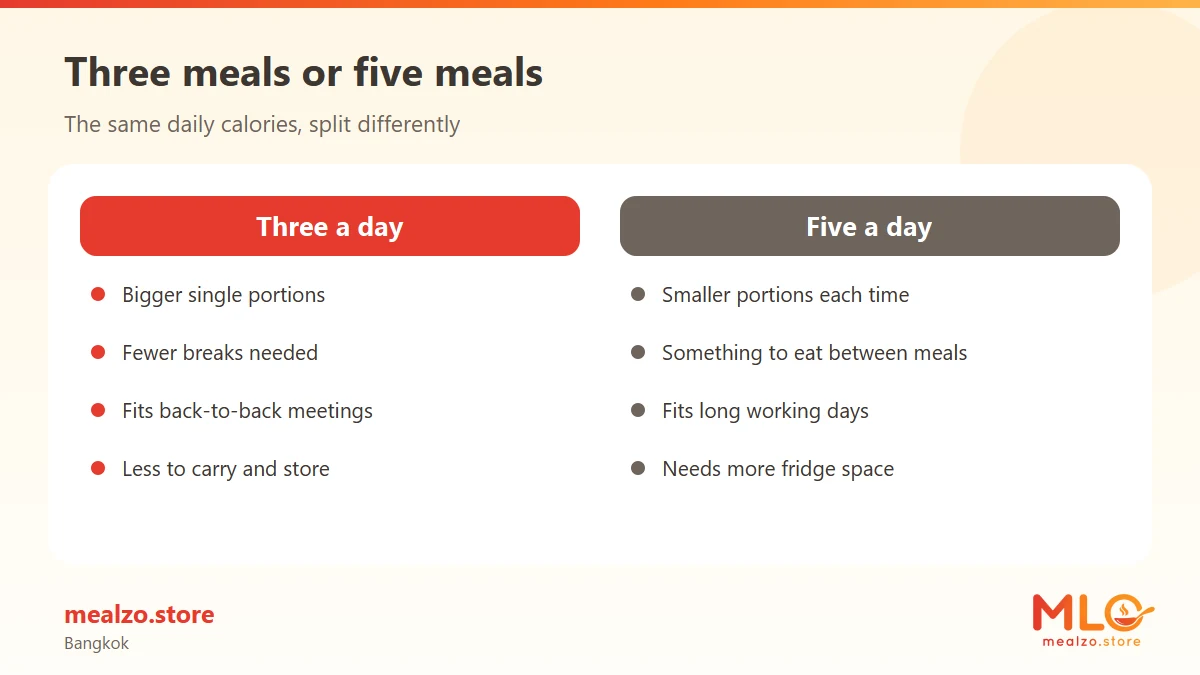
3. When a 3-Meal Plan Usually Fits Better
Three meals are often the simpler arrangement for people whose day already revolves around breakfast, lunch and dinner.
That could include someone who eats breakfast before leaving home, takes a normal lunch break, and eats dinner after work. There is little practical reason to add two more food breaks if the existing rhythm already works.
A three-meal plan may also be easier when you spend much of the day moving around Bangkok. Every additional meal needs a time and place to eat it, and possibly somewhere appropriate to keep it beforehand. Fewer eating occasions reduce that logistical burden.
Three meals may suit you if:
- you prefer proper sit-down meals;
- your job gives you one predictable lunch break rather than several short breaks;
- you often travel between meetings or locations;
- you do not enjoy thinking about food throughout the day;
- you already feel comfortable with breakfast, lunch and dinner as distinct parts of your routine.
There is a trade-off. Fewer meals normally mean each one carries more of the day's food. If you strongly prefer smaller portions, three meals can feel less comfortable even if the schedule itself looks convenient.
Mealzo's broader plan variables are explained in the guide to choosing your Mealzo plan, where meal type, calories, meal count and package duration can be considered together rather than as isolated choices.
4. When a 5-Meal Plan Can Make More Sense
Five meals work differently. Instead of concentrating the day into three larger eating occasions, they create a more distributed pattern.
That may suit people who already like eating smaller amounts more often. It can also fit a structured office day in which short breaks are easy to take and food can be kept nearby.
The practical question is whether those extra meals have somewhere to go in your schedule.
For example, someone working mainly at one desk may find it easy to eat breakfast, a smaller mid-morning meal, lunch, another meal later in the afternoon and dinner. Someone spending half the day in taxis, client meetings or site visits may find the same pattern irritating.

Five meals can also create more decisions about timing. You do not necessarily need to eat according to a rigid clock, but having more portions means keeping track of more eating occasions.
Key takeaway: Five meals are useful only when you have room for five meals in real life, not merely because five sounds more structured than three.
5. Meal Frequency Does Not Automatically Change Your Daily Calories
One common mistake is to treat meal frequency as if it determines total calorie intake. It does not.
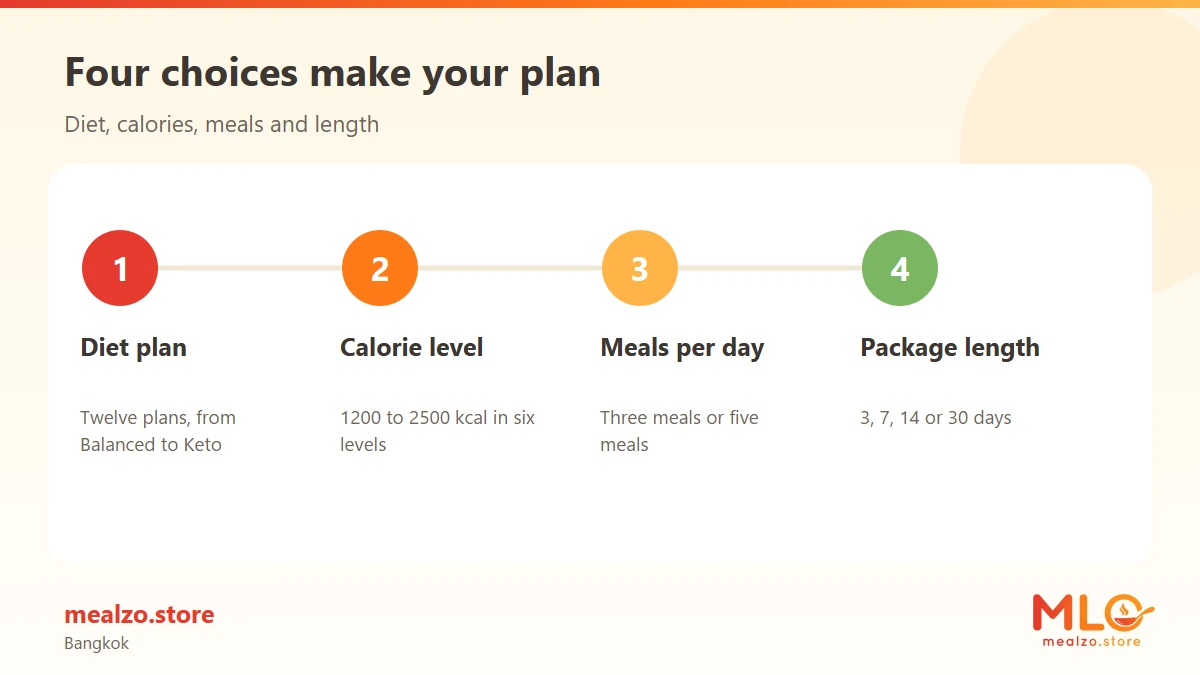
Mealzo separates these choices. Customers can choose from six daily calorie levels: 1200, 1500, 1800, 2000, 2200 or 2500 kcal, and can choose either three or five meals a day.
The calorie level describes the daily allocation. The meal count describes how that allocation is divided.
| Daily calorie level | Available with 3 meals | Available with 5 meals |
|---|---|---|
| 1200 kcal | Yes | Yes |
| 1500 kcal | Yes | Yes |
| 1800 kcal | Yes | Yes |
| 2000 kcal | Yes | Yes |
| 2200 kcal | Yes | Yes |
| 2500 kcal | Yes | Yes |
This distinction is worth keeping clear. Moving from three meals to five is not, by itself, a reason to assume you are eating more. Likewise, choosing three meals does not imply a lower-calorie plan.
Mealzo also provides a calorie calculator in the app using the Mifflin-St Jeor formula. It produces an estimate rather than medical advice, so it is better treated as a planning reference than as an exact personal prescription.
For a deeper discussion of the meal-frequency question itself, see whether eating more often changes weight-loss planning.
6. Think About What Happens Between Meals
The gaps between meals matter because they determine whether a plan feels natural or constantly requires adjustment.
With three meals, the gaps are usually longer. That may be perfectly comfortable for someone who likes substantial meals and does not normally think about food between them. For someone who prefers smaller quantities at once, the same gaps may be inconvenient.
With five meals, the gaps can be shorter, but the day becomes more food-focused. You need time to eat more often, and you need access to the food when each eating occasion arrives.
This is where lifestyle beats theory.
A Bangkok professional who works from one office may have a refrigerator, a predictable desk and a stable calendar. Five meals could be easy. A property agent, salesperson or consultant moving between Sukhumvit, Silom and other parts of the city may prefer having fewer containers to manage.
If your working routine is the bigger problem, meal planning for busy professionals in Bangkok looks at the wider question of fitting prepared food around work rather than treating every day as perfectly predictable.
7. Delivery Timing Matters, but It Does Not Decide Meal Frequency
Mealzo delivers across Bangkok in two windows: morning from 06:00-09:00 and evening from 17:00-20:00.
Those windows concern when the day's food reaches you. They do not mean you have to choose three or five meals based purely on delivery time.
A useful distinction is:
- Delivery schedule: when you receive the food.
- Eating schedule: when you decide to eat the individual meals.
For many people, the better choice is the delivery window that works with their home or office routine, followed by the meal frequency that fits the rest of the day.
Someone receiving meals in the morning might take food to work. Someone using evening delivery may prefer having the next meals already at home. The important part is not to confuse convenient delivery with convenient eating.
8. Match the Plan to Your Least Predictable Days
It is easy to choose a meal plan around your best-behaved weekday. That is usually the wrong test.
Look instead at the days when your schedule becomes messy.
If Tuesday regularly includes meetings outside the office, Thursday often runs late, and Saturday is spent away from home, ask which meal structure survives those days with the least friction.
Three meals have an advantage when portability and simplicity matter. Five meals have an advantage when smaller, more frequent portions match your normal appetite and you usually stay near somewhere convenient to eat.
A useful checklist is:
- Can I realistically stop five times?
- Will I routinely be carrying several meals with me?
- Do I already eat between the traditional main meals?
- Does a larger lunch make my day easier or less convenient?
- Am I choosing five meals because I genuinely prefer them, or because the number sounds more disciplined?
- Am I choosing three meals because they fit me, or simply because they involve less planning?
Key takeaway: Test your plan against difficult weekdays, not ideal ones.
9. Package Length Is a Separate Decision
Meal count is only one part of a delivery plan. Mealzo packages are available for 3, 7, 14 or 30 days.
A longer subscription is not automatically the better choice simply because you have already decided between three and five meals. Duration asks a different question: how long do you want to commit to the selected routine?
If you are unsure whether five eating occasions genuinely fit your workday, a shorter package gives you a smaller period in which to observe the practical details. You may discover that the structure feels natural. You may also discover that the fourth and fifth meals keep appearing at inconvenient times.
The same applies to three meals. If you usually prefer smaller portions, a three-meal structure might look simpler but feel less natural once you use it.
For the duration decision, compare 3-day, 7-day, 14-day and 30-day subscriptions rather than assuming that meal frequency and package length should be chosen together.
10. Do Diet Type or Allergens Change the 3-vs-5 Decision?
Mealzo offers 12 plans: Balanced, Weight Loss, High Protein, Vegetarian, Vegan, Keto, Low-Carb, Gluten Free, Easy-to-Digest, Pescatarian, No Fish & Seafood, and Dairy & Egg Free.
The number of meals is still a separate setting. A person choosing Vegetarian, for example, still needs to decide whether three or five eating occasions fit the day better.
Allergen handling is separate again. Customers declare from nine allergen groups, and dishes containing a declared allergen are not assigned to them. That describes the assignment mechanism; it is not a guarantee that a meal is allergen-free.
This separation is useful when comparing plans because it prevents several different decisions from becoming one vague idea of "the right plan."
You are really choosing several things:
- the type of meal plan;
- the daily calorie level;
- three or five meals;
- the package duration;
- the preferred delivery window;
- any allergen declarations relevant to dish assignment.
Meal frequency deserves attention, but it should not dominate all the other variables.
11. A Practical Way to Choose Between 3 and 5 Meals
If you are still undecided, ignore nutrition labels for a moment and map the plan onto tomorrow.
Suppose you choose three meals. Where would breakfast, lunch and dinner happen? Would the portions fit your preferences? Would there be any part of the day when the schedule becomes awkward?
Now repeat the exercise with five meals. Where do meals four and five actually go? Do you have breaks available? Are you usually somewhere you can eat? Would those extra portions solve a practical problem or create one?
| If this sounds like your day | Consider starting with |
|---|---|
| I like substantial breakfast, lunch and dinner | 3 meals |
| I want fewer interruptions while working | 3 meals |
| I move around Bangkok frequently | 3 meals |
| I naturally prefer smaller portions | 5 meals |
| I already eat several times during the workday | 5 meals |
| I work mainly in one location with easy food access | 5 meals |
| My schedule changes constantly | Choose based on the most difficult days, not the easiest |
These are starting points, not rules. Individual preference can easily override the pattern.
If you already know which structure suits your day, you can compare available Mealzo plans alongside calorie level, diet type and subscription duration.
Key takeaway: The better plan is the one whose containers, portions and eating occasions fit into your actual routine with the least unnecessary friction.
FAQ
Is a 5-meal delivery plan better than a 3-meal plan?
Not automatically. Five meals divide the day's food across more eating occasions, while three meals concentrate it into fewer meals. The better choice depends mainly on your appetite preferences, work pattern, access to food during the day and how often you want to stop to eat.
Does choosing five meals mean I get more calories?
Not necessarily. At Mealzo, daily calorie level and meal count are separate choices. The available daily levels are 1200, 1500, 1800, 2000, 2200 and 2500 kcal, and the food can be arranged as either three or five meals.
Are three meals better if I work outside the office?
They can be more convenient because there are fewer eating occasions and fewer portions to manage during the day. That does not make three meals universally better. If you prefer smaller meals and can comfortably carry and eat them, five meals may still suit you.
Can I choose three or five meals with different Mealzo plans?
Yes. Mealzo offers both three- and five-meal options alongside its 12 meal-plan types, six calorie levels and package durations of 3, 7, 14 or 30 days.
How should I choose if my schedule changes every day?
Base the decision on the days that cause the most difficulty. If five meals repeatedly collide with travel or meetings, three may be easier. If large meals feel inconvenient and you often have access to food throughout the day, five may fit better.
Does eating five times a day automatically help with weight loss?
No meal frequency automatically produces that outcome. Five meals simply distribute food across more eating occasions. Total intake, food selection and the broader eating pattern remain separate issues, which is why meal frequency should be treated as a practical scheduling choice rather than a guaranteed result.
Find a Meal Plan That Fits
Compare Mealzo plans or use the calculator to explore meal options for your needs.