Eating from a Bangkok Convenience Store: What to Pick When the Day Falls Apart
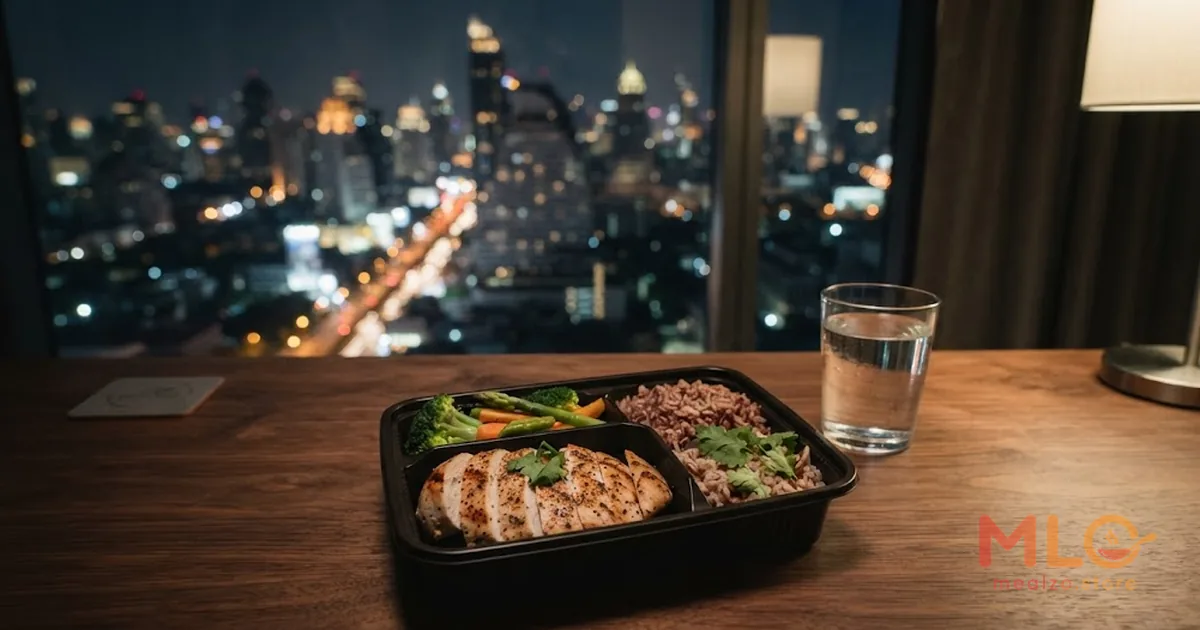
There is a particular kind of Bangkok evening when the convenience store becomes less of a shop and more of a piece of infrastructure. You leave the office late, get off the train, walk down the soi, and there it is. Air conditioning, bright lights, cold drinks, hot food, and a door that is still open.
You are hungry. The restaurant you might normally choose is farther away. Cooking is not happening tonight. The convenience store wins because it is the shortest path between being hungry and not being hungry.
That is not a discipline problem. It is a distance and time problem. If you live in Bangkok, eating from a convenience store several times a week can simply become part of how your week works.
The useful question is therefore not whether you should ever do it. It is what a better convenience store meal looks like when you are already standing in front of the fridge.
1. The convenience store is infrastructure, not a failure
Bangkok makes convenience stores unusually practical. They sit on busy streets, at the mouth of sois, near transport stops and on the ground floors of residential buildings. They are often open around the clock, which matters when your working day does not finish at a conventional hour.
A street cart can be excellent. A restaurant can give you a more complete meal. But neither necessarily solves the same problem.
At 11pm, when you are tired and hungry, convenience matters. You are not comparing menus for pleasure. You are trying to remove one problem from the end of a long day.
That distinction matters because guilt does not improve the meal. A practical approach does.
There is also no need to turn every convenience store visit into a perfect nutritional exercise. Sometimes you will buy what is there because it is 1am and you need something to eat. Sometimes you will have more time and can make a more deliberate choice.
The goal is to understand the options well enough that you can make the better decision when you have the capacity to do so.
Key takeaway: A convenience store meal is not automatically a nutritional failure, it is often simply the food option that best fits the time and distance available.
2. The one real advantage: almost everything is labelled
A Bangkok convenience store has one major advantage over many other food environments: the package usually tells you what you are buying.
That sounds basic, but it changes the decision completely.
At a street cart, you may know the dish and recognise the ingredients, but you generally cannot inspect a standardised nutrition panel before ordering. At a restaurant, the same applies unless the restaurant provides detailed nutritional information.
Inside a convenience store, packaged food gives you another layer of information. You can turn the packet around and read it before paying.
This is the spine of making better choices there. Do not try to memorise which individual products are supposedly good or bad. Read the package in front of you.
The useful information is not hidden in a complicated system. The nutrition panel gives you the basic facts. Energy is stated in kilocalories, and the panel provides information such as protein and sodium.
The catch is that the panel can describe a serving rather than the whole package. That is where the next problem starts.
3. How to read a Thai nutrition panel without reading Thai
You do not need to read fluent Thai to get useful information from a packaged food label.
The layout of nutrition information is sufficiently consistent to make the numbers useful. Look for the nutrition panel and work through it systematically rather than trying to translate every word.
Energy is expressed in kilocalories, which gives you the basic energy information. Protein helps you judge whether the food is likely to contribute meaningfully to the protein part of your meal. Sodium tells you more about the salt load.
The trick is to read the panel in an order that answers the questions you actually have.
Start with servings per package. Then look at energy, protein and sodium.
Why not simply start with calories? Because the calorie figure can be misleading if you do not know whether it applies to the entire package. A package that looks like one portion can declare more than one serving.
The numbers are useful only when you understand what they describe.
For more context on eating patterns when you are new to Bangkok, see a practical guide to your first 30 days eating in Bangkok.
4. The serving-size trap catches everyone
This is probably the easiest mistake to make in the entire store.
You pick up a package, see the nutrition panel, find the energy figure, and mentally record it as the amount you are about to eat. But the panel may be describing one serving while the package contains multiple servings.
That means the first question is not, "How many calories are in this?"
It is, "How many servings are in this package?"
Only after answering that question does the rest of the panel become useful.
The same principle applies to protein and sodium. If the package contains more than one serving and you eat the whole thing, the amount you consume may be different from the number printed beside each nutrient.
This is why the order below is more useful than simply scanning the panel from top to bottom.
| What to look at | Why it matters | What it changes about your choice |
|---|---|---|
| Servings per package | Tells you what the printed values actually describe | Stops you from treating one serving as the whole package |
| Energy | Shows the energy contribution of the food | Helps you decide how large this part of the meal should be |
| Protein | Shows how much protein the food contributes | Helps identify whether the meal needs another protein source |
| Sodium | Shows the sodium contribution | Helps you judge whether adding another salty item makes sense |
The package is giving you information. You just have to make sure you are reading the right unit.
Key takeaway: Always check servings per package before interpreting the energy, protein or sodium numbers printed underneath it.
5. What the hot counter actually gives you
The hot counter is where convenience store food starts looking like a meal, but the categories are quite different from one another.
There are steamed buns, sausages and other processed meats on rollers, fried items, and microwaved rice-and-topping boxes.
Their composition differs.
Steamed buns tend to centre on refined starch, with the filling determining how much protein and fat comes with them. Sausages and processed meats can contribute protein, but they also bring their own fat and sodium considerations. Fried foods add fat to an already convenient source of starch. Rice boxes combine starch with a topping, often with sauce providing much of the flavour.
There is no reason to label one category as universally acceptable and another as universally unacceptable. The useful question is what role each item plays in the meal.
If you buy a bun, you have bought a bun. If you buy a rice box, you have bought a rice box. The mistake is assuming that because something is hot and filling, it automatically covers every part of a meal.
That is particularly relevant to the rice box.
6. The microwaved rice box is close to a meal, but not quite the whole answer
The rice-and-topping box deserves its own category because it is probably the closest thing to a complete meal sitting in the convenience store.
It has the basic structure of a meal: a starch and something on top. That makes it more substantial than grabbing a single snack.
Its weak points are also fairly consistent.
The rice usually makes starch the largest part of the meal relative to the protein component. The vegetable portion, when present, is often small. And sodium can be high because the sauce is doing much of the flavour work.
None of that means you cannot eat a rice box. It means you should understand what the box is actually providing.
If the box already contains rice, you do not necessarily need another starch simply because it is easy to add one. Instead, look at what is missing.
A useful way to think about it is to separate the components. Rice is your starch. The topping contributes some protein and other ingredients. Then ask whether you can add something from the fresh shelf or another protein source.
That small change in thinking turns the convenience store from a place where you pick one packaged meal into a place where you assemble a meal.
For more detail on sodium in Thai food, see where salt and sodium hide in Thai food.
7. The protein problem is the one worth remembering
This is the most useful insight in the whole store.
Convenience store food is easy to buy in quantity and surprisingly difficult to buy as a deliberate protein-focused meal.
You can leave with a bag full of food, feel completely full, and still have built a meal where protein is a relatively small component. That can help explain why the meal may not feel particularly satisfying for very long.
Look for the actual protein options rather than assuming the food contains enough because it contains meat somewhere in the package.
Useful categories include:
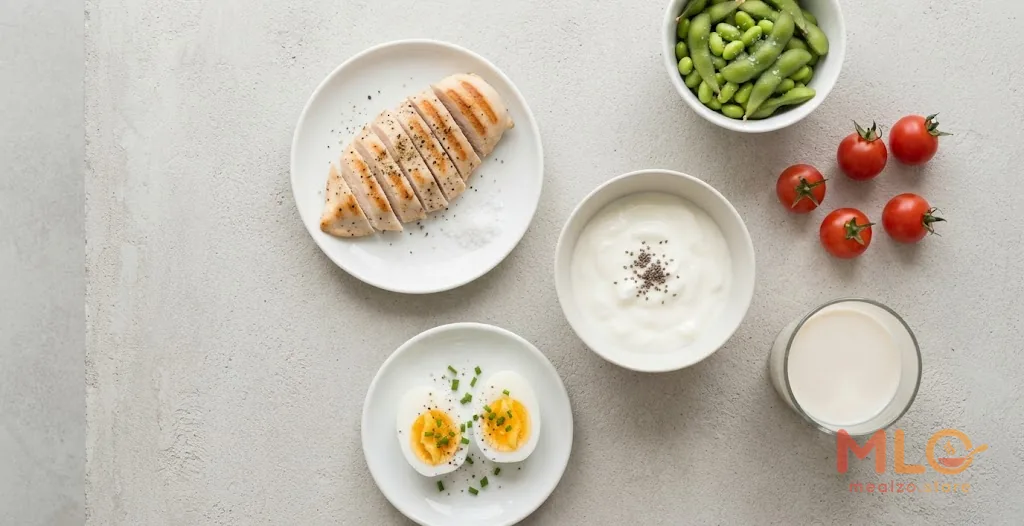
- Boiled eggs
- Plain grilled chicken breast
- Tuna
- Soy milk
- Plain yoghurt
There is another detail that matters. Several of these foods are available in both plain and sweetened versions. The sweetened version is often the default option on the shelf, so check the package rather than assuming that a product with the same basic ingredient has the same composition.
This is where the label becomes particularly useful. If you are deciding between two protein options, compare the protein information and the rest of the panel rather than relying on the product name.
You are not looking for a magic product. You are looking for a component that does the job you need it to do.
8. The fresh shelf: salads and fruit need two quick checks
The salad and fruit section gives you another way to change the structure of the meal without turning the visit into a complicated shopping trip.
A packaged salad can add vegetables to a rice-based or protein-based meal. Fruit can add another fresh food component. Both can be practical when you have no kitchen available.
There are two things worth checking.
First, look at the dressing sachet. The salad itself and the dressing are separate components, so treat them separately when you are deciding what you want from the meal.
Second, check whether the fruit is packed in syrup. The fruit may look like the obvious choice, but the packing liquid is part of what you are buying and should be considered.
The point is not to classify salads and fruit as automatically better foods. It is to understand what is actually in the package.
This same principle applies throughout the store. Read what you are buying.
9. Instant noodles are a realistic 2am food
Instant noodles deserve a fair assessment.
They are cheap, hot, comforting and available when it is 2am and most other options are closed. Pretending that you will never eat them is not particularly useful.
The basic composition is straightforward: refined starch, fat and salt. The more practical question is what you add to the cup.
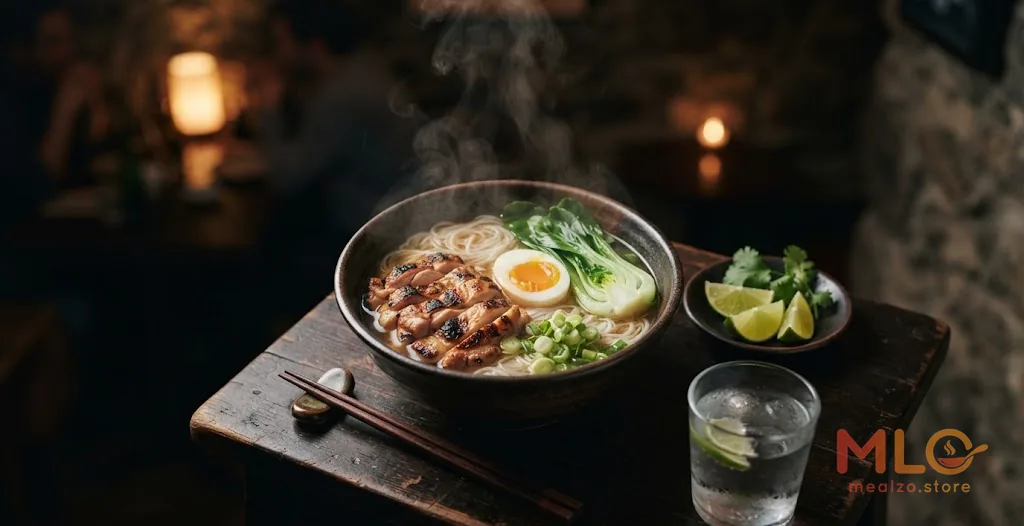
An egg changes the protein side of the meal. A piece of chicken can do the same. Something green adds another component that the noodles themselves do not provide.
There is also a simple decision over the seasoning sachet. Most of the sodium is in the sachet, so the amount you use is within your control.
You do not have to turn a cup of noodles into an entirely different meal. Just recognise what the noodles provide and add what is missing when you have suitable options available.
If you eat them at 2am because you have worked late, that is a different situation from eating them automatically every night because you have no plan. Frequency matters more than pretending the food does not exist.
10. The drinks fridge and the late-night problem
The drinks fridge is where labelled sugar can become very obvious.
Bottled drinks, milk-based drinks and other sweetened beverages can add a significant amount of energy without contributing much to the sense that you have actually eaten a meal. The useful habit is simple: pick the drink deliberately rather than treating it as an automatic part of the purchase.
The details of sugary drinks deserve their own discussion, so see how calories hide in Bangkok drinks.
The same principle of deliberate choice applies at 2am.
Eating late is not automatically a nutritional failure. Food does not become fundamentally different because the clock has passed a particular hour.
The more relevant problem is what happens around late eating.
A late convenience store meal is often the largest meal of the day because earlier meals were rushed or skipped. It is also often chosen while you are tired. Tired people have less patience for labels, comparisons and assembling a balanced combination.
That is why the 2am meal can go wrong. It is not because the clock has magical nutritional powers. It is because the decision is being made under the worst conditions for thoughtful choice.
Key takeaway: The late hour is not the main issue; a large, unplanned meal chosen while exhausted is the more useful thing to address.
11. Build the meal in ninety seconds
The simplest method is to stop asking, "Which product should I buy?" and start asking, "What job does each item do?"
Use four slots.
| Slot | What fits | Common mistake |
|---|---|---|
| Protein | Eggs, plain grilled chicken breast, tuna, soy milk, plain yoghurt | Buying several filling foods without a deliberate protein source |
| Starch | Rice, a bun, noodles or another starch you actually choose | Letting the attached starch determine the entire meal |
| Fresh component | Salad or fruit | Forgetting the fresh shelf exists |
| Drink | Water or a deliberately selected packaged drink | Adding a sweetened drink automatically |
The important part is that the starch should be something you actually chose rather than something that came attached to another item.
If you buy a rice box, the rice is already there. You do not need to add another starch simply because the store makes it easy. If you buy grilled chicken, you can decide separately whether you want rice, a bun or another starch.
The drink comes last because it is the easiest part to buy without thinking.
This is not a list of approved foods. It is a structure for making the decision quickly.
At 10pm, that distinction matters.
12. Make the decision earlier when you can
The best convenience store meal is often the one you do not have to design at the end of a twelve-hour day.
That is where the office fridge and desk drawer become useful.
The fridge can hold a few basic foods that make the 4pm decision easier. Think in components rather than a collection of emergency snacks. A protein option, something fresh and a simple addition you can combine with food bought later can reduce the number of decisions required when work runs long.
The desk drawer has a different job. It is for foods that can sit there and give you an option before you reach the point of being extremely hungry.
The goal is not to create a second kitchen at work. It is to make the transition from afternoon hunger to evening food less dependent on whatever is closest to the checkout.
A few useful categories to consider keeping available are:
- Shelf-stable foods that contribute protein
- Simple foods you can combine with something from the fresh shelf
- A basic backup option for days when meetings run late
- Water, so the drink decision is not automatically made by the fridge display
The earlier you make part of the decision, the less work is left for 9pm.
For a broader approach to healthy eating on long workdays, focus on structure, timing and portions before the day gets away from you.
13. Once a week is different from five nights a week
If you eat a convenience store meal once or twice a week, there is usually no need to turn that meal into a referendum on your entire diet.
The frequency changes the question.
Five nights a week is different because the convenience store is no longer a shortcut. It has become the baseline.
At that point, the issue is not that convenience stores are inherently problematic. It is that repeatedly making food decisions while tired can create a pattern you never consciously chose.
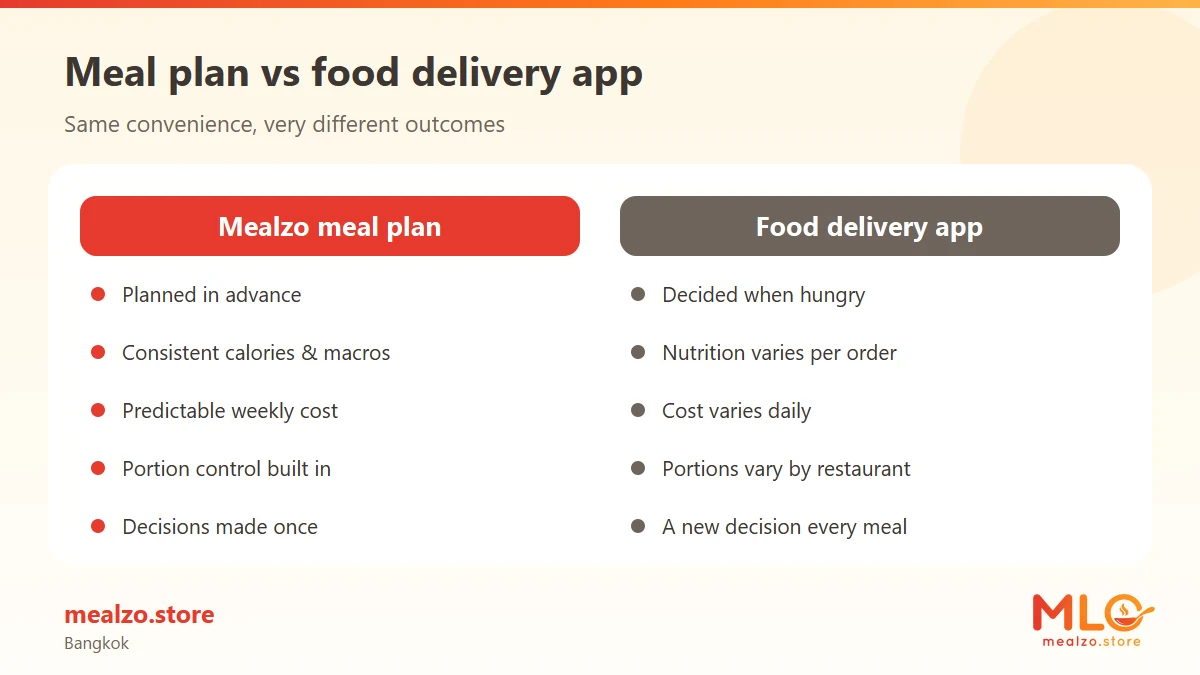
This is where structure can help. A planned meal setup is not competing with the convenience store on convenience. The convenience store will probably always win at 1am because it is physically there.
A planned meal setup competes on a different variable: decision-making.
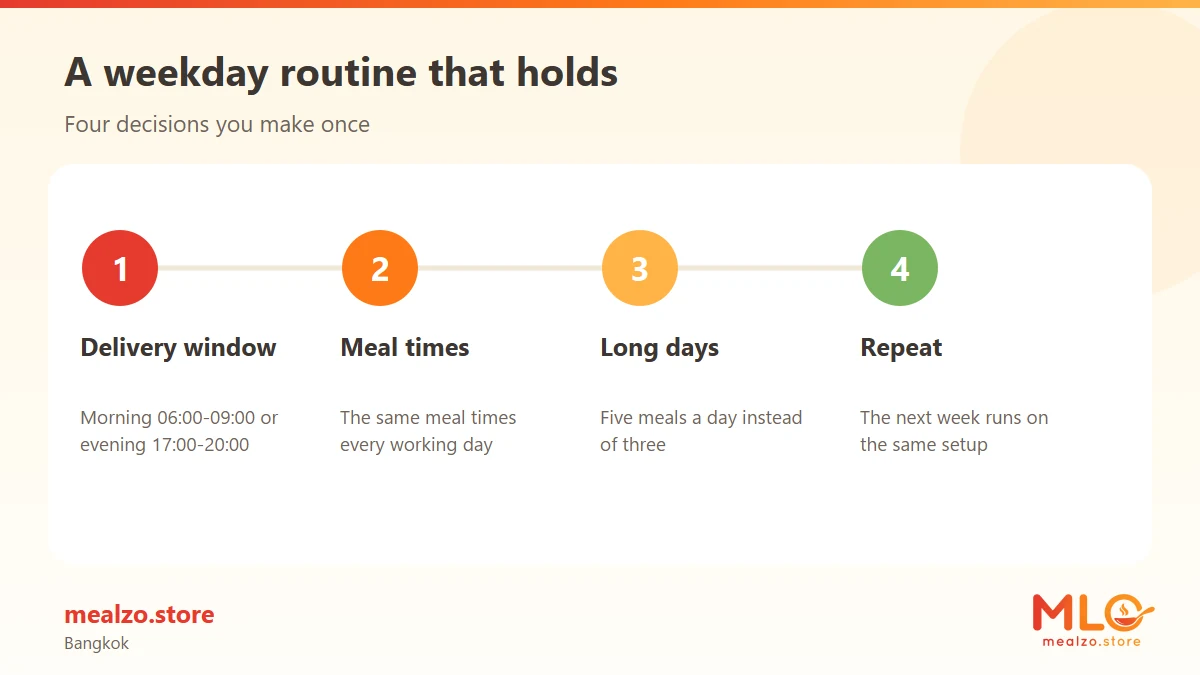
Mealzo Bangkok prepares meals in its kitchen in Bang Na, with meals prepared there and delivered across Bangkok. Customers choose either a morning delivery window from 06:00 to 09:00 or an evening window from 17:00 to 20:00.
That is the trade-off. A planned meal is delivered in a chosen window. It is not sitting in a convenience store waiting for you at 1am.
Mealzo Bangkok offers 12 meal plans, including Balanced, Weight Loss, High Protein, Vegetarian, Vegan, Keto, Low-Carb, Gluten Free, Easy-to-Digest, Pescatarian, No Fish & Seafood, and Dairy & Egg Free. Every plan uses one mixed cuisine, with Thai and international dishes together in the same plan.
There are six daily calorie levels from 1200 to 2500 kcal, with three or five meals per day and package lengths of 3, 7, 14 or 30 days.
The arithmetic is straightforward. The plan covers the meals it covers at the chosen calorie level. Anything you buy from a convenience store is an addition on top.
That does not make the store visit forbidden. It simply means that if your planned meals cover the main parts of your day, a late-night purchase is easier to understand as an extra decision rather than the entire day's food structure.
You can see the available plans here: Mealzo Bangkok meal plans.
Prices are in Thai baht. Payment is online through PromptPay via Thai QR, processed by a payment provider. The courier does not collect cash.
The website and mobile app are available in Thai, English, Polish, German, French, Russian, Simplified Chinese and Burmese.
Mealzo Bangkok also allows customers to declare allergens from nine allergen groups. Dishes containing a declared allergen are not assigned to the customer. This describes the assignment mechanism and should not be treated as a guarantee of an allergen-free meal.
The app includes a calorie calculator based on the Mifflin-St Jeor formula. It is an estimate, not medical advice.
For people trying to make weekday eating more structured, the useful question is not whether a meal plan eliminates convenience store visits. It does not.
The question is whether it reduces the number of nights when you arrive home hungry and have to solve the entire food problem from scratch.
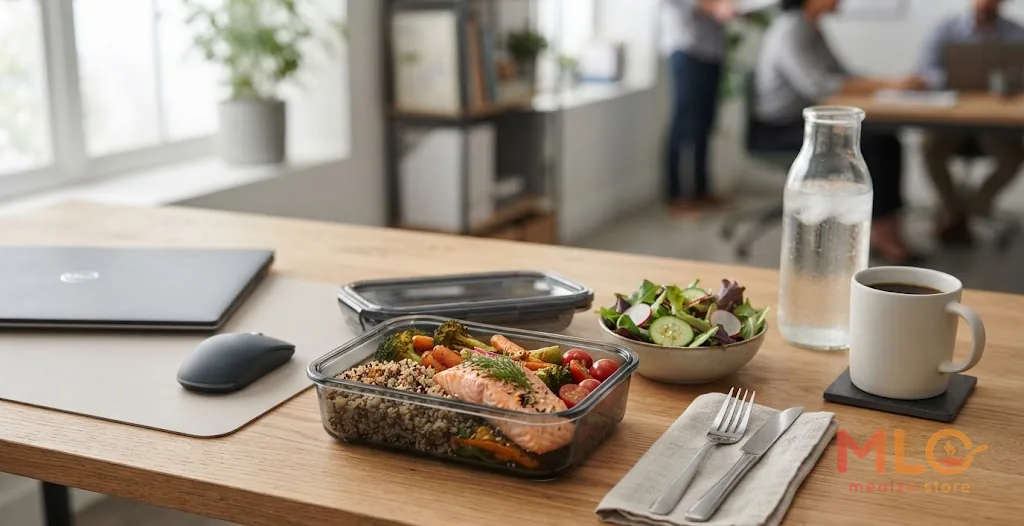
14. What to do when it is 1am and the store is genuinely your only option
Sometimes none of the ideal preparation applies.
You are hungry. It is 1am. You have no food at home, nothing in the office, and the convenience store is the only realistic option.
Then keep it simple.
Find a protein first. Look for eggs, plain grilled chicken breast, tuna, soy milk or plain yoghurt. Check whether the version you pick is sweetened when that distinction exists.
Add a starch you actually want rather than collecting several starch-heavy items by default.
Add something from the fresh shelf if it is available and practical. Check the salad dressing and whether fruit is packed in syrup.
Choose the drink last.
If instant noodles are what you are eating, add an egg, chicken or something green if those options are available, and decide how much of the seasoning sachet you want to use.
Then stop.
You do not need to reconstruct an ideal day's diet at 1am. You need to make a reasonable meal from what is actually available.
For people managing a medical condition, following a sodium-restricted diet, pregnant, or following specific dietary advice from a doctor, that medical advice should take priority over an article like this.
FAQ
Is convenience store food in Bangkok automatically unhealthy?
No useful answer comes from assigning the entire category one label. Convenience stores sell many different types of food, with different compositions, portions and preparation methods. The practical approach is to read the package, identify what the food contributes and build the rest of the meal around it.
What should I check first on a Thai nutrition label?
Check servings per package first. Then look at energy, protein and sodium. The serving information comes first because the rest of the numbers may describe only one serving rather than the entire package.
What is the easiest way to add more protein?
Look for practical protein options such as boiled eggs, plain grilled chicken breast, tuna, soy milk or plain yoghurt. Check the label, because several options exist in plain and sweetened versions.
Are instant noodles off the table?
No. They are cheap, hot and available late at night. Their basic composition is largely refined starch, fat and salt, so the practical move is to add something such as an egg, chicken or something green when available. You can also control how much of the seasoning sachet goes into the cup.
Does eating at 2am automatically cause a problem?
The time itself is not the useful explanation. A late meal is often larger and less planned because it follows a long day and is chosen while tired. Those are the factors worth paying attention to.
Does a meal plan replace convenience store food completely?
No. A planned meal is delivered in a chosen window, so it is not an option sitting in the store at 1am. Its role is different: it can cover planned meals in advance so fewer decisions are left for the end of a long day. Anything bought from the convenience store is then an addition to the meals the plan covers.
Mealzo Bangkok is a kitchen and meal delivery service operating exclusively in Bangkok, Thailand. We are not affiliated with similarly named services outside Thailand.
Find a Meal Plan That Fits
Compare Mealzo plans or use the calculator to explore meal options for your needs.