Eating Around Exercise in Bangkok: Gym, Running and Muay Thai in the Heat
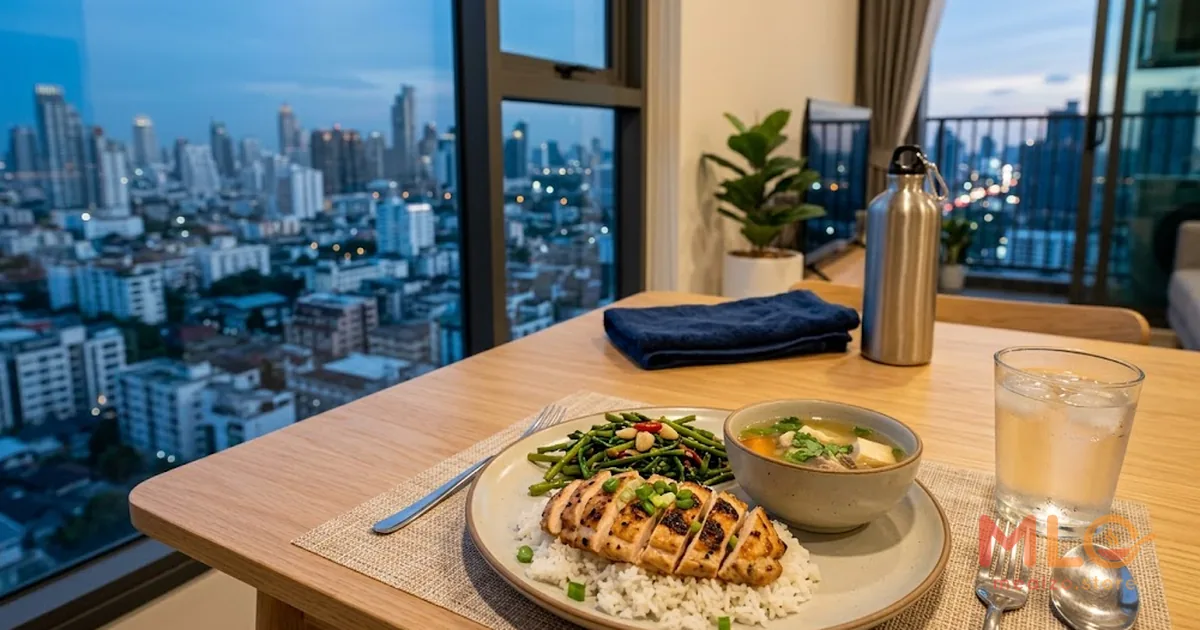
Eating around exercise in Bangkok is rarely just a question of what counts as the perfect pre-workout or post-workout meal. The city decides part of the schedule for you. Heat pushes runners toward dawn or evening, office hours squeeze gym sessions into lunch breaks, and traffic can turn a sensible dinner plan into a hungry commute followed by a hard class.
That is why eating before and after exercise Bangkok style is often about avoiding predictable problems rather than chasing an ideal routine. Training first thing can mean deciding whether to eat anything at all. Training after work can mean discovering that lunch was far too long ago. Finishing late can leave you wondering whether a proper dinner still makes sense.
For most people who exercise recreationally, ordinary food can do the job. Carbohydrate gives harder sessions useful fuel, protein belongs naturally across the day, and a normal meal after training is usually more practical than treating exercise as a reason to buy special products.
The useful question is not, "What should every active person eat?" It is, "What helps this session fit into the rest of my day without leaving me uncomfortable, ravenous or dependent on a reward meal afterwards?"
1. Bangkok changes the food problem before it changes the workout
Bangkok is hot and humid throughout the year, so training often settles into a few practical windows. Some people run or cycle very early, before work and before the streets feel hotter. Some office workers use a lunchtime gym because evenings are unpredictable. Others train after work, once the commute is finished or a muay thai, badminton or football class begins.
Each slot creates a different food problem.
Early training happens close to waking, when some people simply do not feel like eating. Lunchtime training can collide with meetings, an early lunch or a rushed return to the office. Evening training often begins after a long gap since lunch, especially when the journey from work takes longer than expected.
That means the food decision often needs to happen earlier than the workout itself. Someone heading to an evening class may think the important question is what to eat just before training. In practice, the more useful decision may have been what happened during the afternoon.
Key takeaway: The best food decision around a Bangkok workout often happens before you feel urgently hungry.
This also explains why copying somebody else's routine can be frustrating. A person who runs comfortably before breakfast does not prove that everybody should. Someone who prefers a small meal first is not doing it incorrectly either. The routine has to work with appetite, comfort, the type of session and the rest of the day.
2. The three common training slots and what usually goes wrong
The same food can feel completely different depending on when the session happens. A light snack may be useful before an early run but unnecessary before a gentle evening walk. A full meal may be welcome after a lunchtime gym session but uncomfortable immediately before muay thai.
Here is a practical way to look at common Bangkok training situations.
| Training situation | What commonly goes wrong, and a more practical approach |
|---|---|
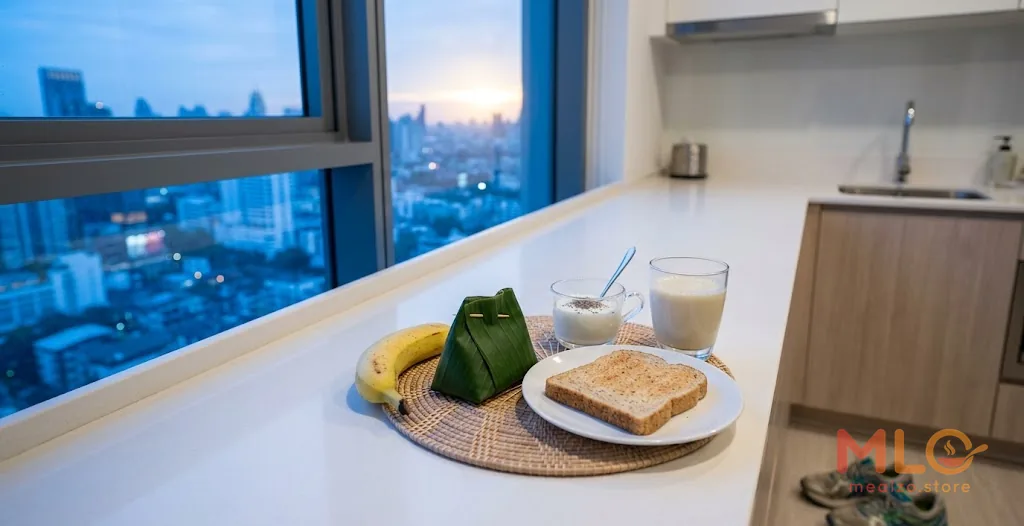
| Dawn run | Going out with nothing can feel perfectly fine for some people, while others feel flat or light-headed. If eating first feels better, keep it simple with a banana, a little sticky rice, toast, yoghurt, soy milk or a few bites of fruit. |
| Lunchtime gym | Work pushes lunch too early, too late or completely out of place. Keep the surrounding meals ordinary rather than trying to compensate with one very large meal. |
| Evening muay thai class | Lunch was the last real food of the day, so hunger arrives just as training starts. Put a real snack or small meal into the afternoon instead of waiting until the class is about to begin. |
| Weekend football | A relaxed morning turns into a heavy meal shortly before playing. Eating something simpler beforehand can be more comfortable, with the fuller meal afterwards. |
| Rest day | People either eat exactly as if they trained hard or start skipping meals to compensate for not exercising. Neither requires a special rule. Ordinary meals still work. |
| Training for weight loss | Exercise becomes permission for a large fried meal, sweet drink and dessert. Keep the meal satisfying, but do not assume the workout created an unlimited food budget. |
A busy schedule makes improvisation tempting. Sometimes that works. But when the same problem repeats every week, it usually helps to fix the earlier part of the day rather than relying on willpower at the gym door.
3. Training at dawn: empty stomach or something small?
Very early training creates a simple problem: appetite may not have arrived yet.
Some people wake up, drink something, train and feel completely normal. Others feel weak, distracted, shaky or simply less comfortable when they start moving without food. Both experiences are common enough that there is little value in turning either one into a universal rule.
If you feel fine without food, there is no need to invent a complicated pre-training meal. If you repeatedly feel flat, a small and familiar food can be easier than trying to force down a full breakfast.
Useful options that are easy to keep at home or pick up locally include:
- a banana
- a little sticky rice
- toast
- yoghurt
- soy milk
- a few bites of fruit
The aim is not to create the perfect sports meal. It is simply to avoid starting a session feeling worse because your stomach is empty when your body would rather have something in it.
Very rich, greasy or high-fibre meals can be uncomfortable before movement for many people. That matters more when the session involves running, skipping, kicks or repeated changes of direction.
Anyone with diabetes, a heart condition, a history of fainting or another medical reason affecting exercise or food should follow their own doctor's advice about eating around training. Bangkok heat also adds a real risk of heat illness, so feeling dizzy, confused or unwell means stopping rather than trying to push through.
4. Training after work: fix the afternoon, not the gym entrance
Evening training is where many otherwise sensible food routines break down.
Lunch happens during the working day. Then there are meetings, calls, traffic, errands and the trip to the gym or class. By the time training starts, the problem is not that dinner is late. The problem is that very little has been eaten since lunch.
Waiting until just before training often makes the choice worse. Hunger is high, time is short, and a heavy meal can sit badly during exercise. A better pattern for many people is an afternoon anchor: a real snack or small meal during the usual afternoon slump.
That might be yoghurt and fruit, soy milk with toast, rice with a simple protein, or another ordinary combination that is substantial enough to prevent the day from turning into "lunch, nothing, hard session, enormous dinner."
This is especially useful for office workers who know that the journey home or to training is unpredictable. You do not need to predict traffic perfectly if the afternoon meal has already prevented extreme hunger.
Key takeaway: If evening training regularly starts with strong hunger, the practical fix often belongs in the afternoon rather than immediately before the session.
Training heavily after barely eating all day is also different from simply choosing not to eat before a comfortable early session. One is a preference that may feel fine. The other can be the result of a disorganised day catching up with you.
5. What the body uses for fuel, without turning lunch into a science project
For harder exercise, carbohydrate is an important fuel source. That is one reason rice, noodles, bread, fruit and similar foods can fit naturally into meals around training.
Protein has a different role. It supports repair and is useful as part of ordinary eating across the day. Meat, fish, eggs, tofu, beans and dairy can all contribute. You do not need to turn every meal into a protein calculation.
Fat and fibre belong in a normal diet too. The practical issue is comfort. A very heavy, rich or bulky meal immediately before a hard session may not feel good, particularly with running, football or muay thai.
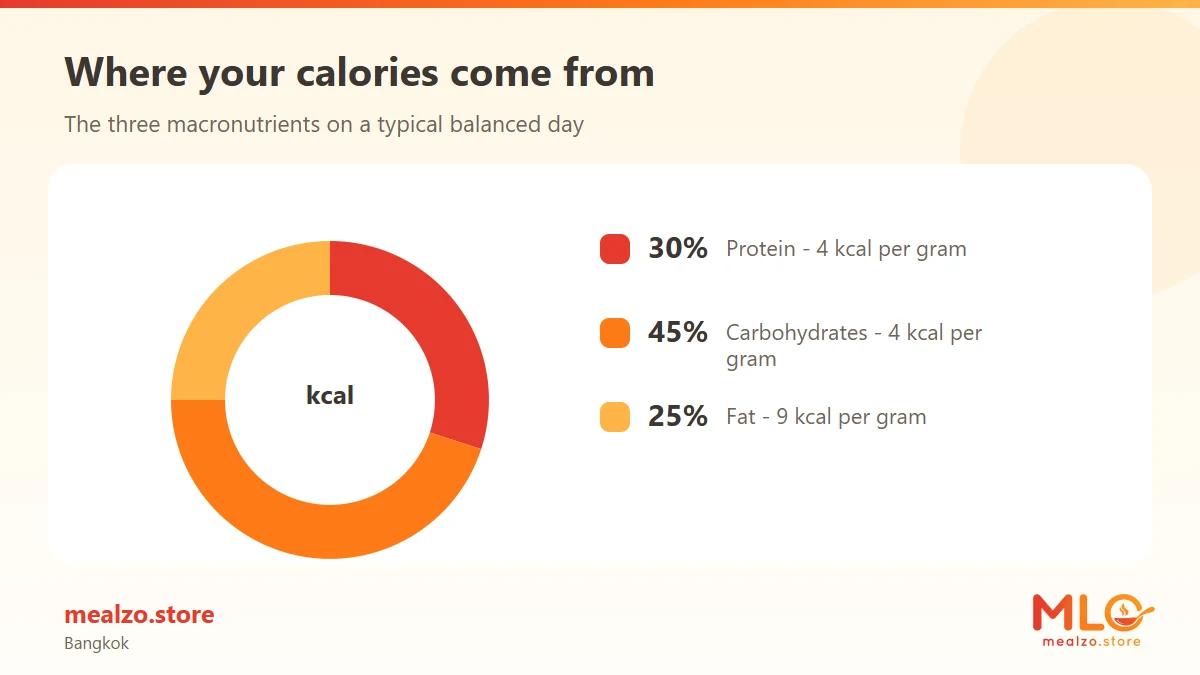
For a deeper look at how protein can fit into regular meals, see high-protein meals for everyday strength-focused eating. If you are trying to understand why your overall food needs change when activity changes, daily calorie needs by activity level explains that broader picture.
Rice is also easier to think about when it is treated as an ordinary part of the plate rather than as something that must always be removed or maximised. how different kinds of rice fit into everyday Bangkok meals covers that in more detail.
The useful principle is simple: harder sessions often feel better when the day contains enough ordinary food, while a huge meal immediately before training can create its own problem.
6. Heat, sweat and the appetite that disappears, then comes back
Training in Bangkok heat can scramble appetite.
You may finish a run or hard class sweating heavily and feel almost uninterested in food. Later, once you have cooled down, showered and travelled home, hunger can return suddenly and strongly.
That delayed appetite is easy to misread. People sometimes assume they do not need dinner because they are not hungry immediately after training. Then they become extremely hungry later and eat whatever is fastest.
The simplest response is to expect that appetite can change after a hot session. You do not have to force a large meal the second exercise ends, but it helps to know what you are going to eat when hunger returns.
Hydration matters here as well, but it deserves its own discussion rather than being reduced to a few generic rules. See hydration in Bangkok heat and what to drink through the day for the fuller explanation.
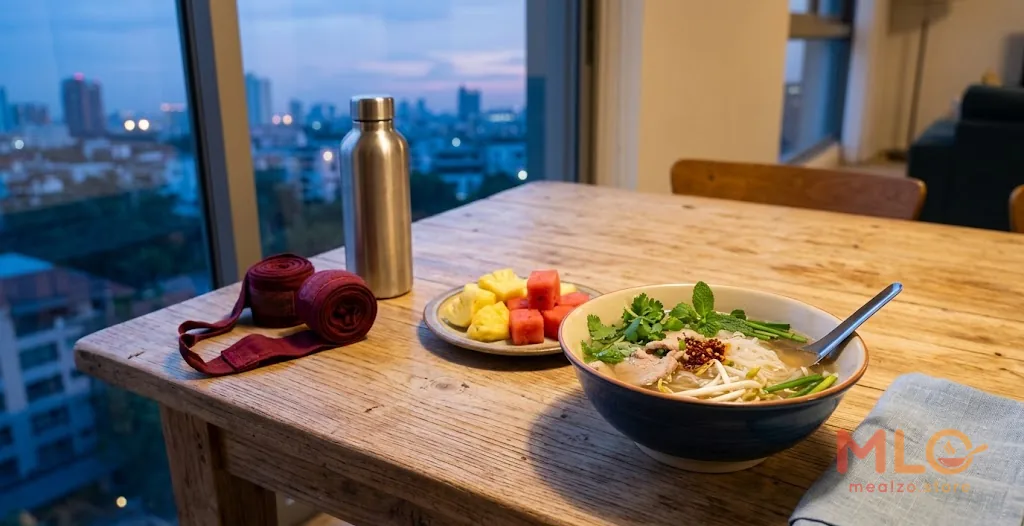
The same heat that changes appetite can also make heavy food feel less attractive straight after training. A soup, rice dish, yoghurt, fruit or a lighter meal may sound better at first, with a more substantial meal later if that suits the day.
7. Muay thai and hard classes: a full stomach is rarely pleasant
Muay thai makes the problem obvious because the session is physically demanding and involves repeated movement through the trunk. Many people find that a large meal beforehand feels uncomfortable.
That does not mean everybody should train empty. A common practical pattern is to eat something lighter earlier, train, then have a proper meal afterwards.
The same idea can apply to hard badminton sessions, football, fast cycling or intense group classes. The goal is not to create a rigid pre-training formula. It is to avoid two extremes that commonly feel bad: arriving heavily full or arriving after an entire day of inadequate food.
Some people tolerate food close to training easily. Others need much more space between a substantial meal and exercise. Personal comfort matters more than copying a schedule from somebody whose stomach behaves differently.
A few useful questions are:
- Do I usually start this session hungry?
- Does a heavy meal make the session uncomfortable?
- Am I eating because I need food, or because I am nervous that training requires something special?
- Would an earlier, smaller meal solve the problem more cleanly?
Those questions are often more useful than trying to categorise every food as either a "fitness food" or a "bad food."
8. Before and after training: ordinary Bangkok food is usually enough
Everyday food can cover a wide range of training situations. The main difference is often portion size, richness and whether the food feels comfortable before movement.
| Food | Better before, better after, or another occasion, and why |
|---|---|
| Banana | Often convenient before an early session because it is simple and easy to eat when appetite is low. |
| Sticky rice with a little moo ping | Can work before training when you want something more substantial without making it a large meal. |
| Toast with egg | Can suit either side of training depending on appetite and how heavy the rest of the meal is. |
| Yoghurt | Useful as a light option before training or part of a later meal. |
| Soy milk | An easy small option when solid food does not appeal before an early session. |
| Khao man gai | Usually more comfortable as a proper meal after training than immediately before a hard session. |
| Grilled chicken with rice | A straightforward post-training meal with protein and carbohydrate. |
| Kuay teow nam | Can be appealing after a hot session, especially when a heavy plate does not sound good. Extra meat can make it a more substantial meal. |
| Jok with egg | A gentle option after early training or when appetite has not fully returned. |
| Rice with omelette and vegetables | A practical complete meal after training, especially when you want familiar food rather than anything specialised. |
| Mango sticky rice | Better treated as a dessert or another-occasion food than as a recovery strategy simply because you exercised. |
| Sweet iced tea | Refreshing to many people, but it should not automatically become part of every workout just because training felt hard. |
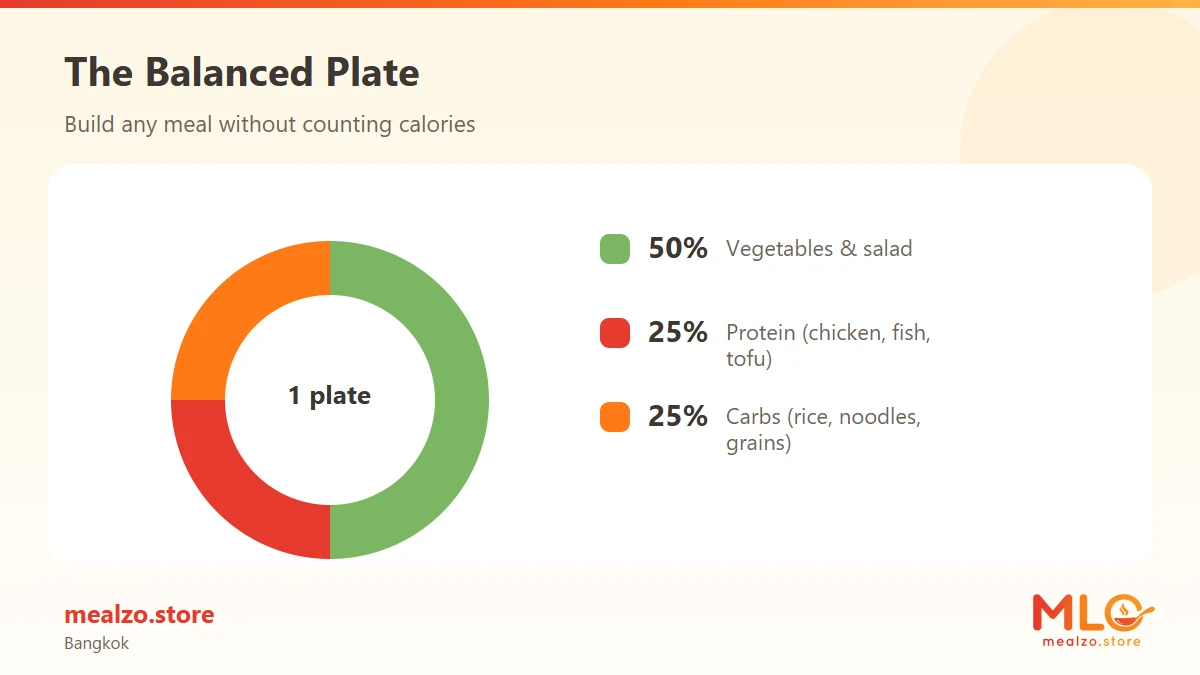
For most recreational training, a normal meal after exercise can be very ordinary: protein, a carbohydrate and vegetables.
Examples include grilled chicken or pork with rice, a fish or tofu dish with rice, noodle soup with extra meat, jok with egg, or rice with an omelette and stir-fried vegetables.
There is no need to make the post-training meal exotic. Familiar food that fits the rest of the day is usually easier to repeat.
9. Protein without powders, panic or turning every meal into a project
Protein attracts a lot of attention around exercise, but ordinary meals already contain it.
People who eat meat, fish, eggs, tofu, beans or dairy through the day often have several natural protein sources without needing to build their entire routine around one nutrient.
That is especially relevant for people who are beginning strength training. It is easy to assume that starting the gym requires a completely different way of eating. In reality, the first useful step may simply be making sure meals are complete rather than skipping them and then trying to compensate later.
Someone training with a strength focus may choose meals that contain a clear protein source more consistently. Someone exercising mainly for general activity or weight management can do the same without turning every plate into a specialist sports meal.
Key takeaway: Protein can come from normal food across the day, and exercise does not automatically require a separate category of products.
10. The reward meal: when exercise quietly becomes permission to overeat
This is one of the most ordinary patterns in recreational exercise.
You train hard. You are tired, hot and pleased that you showed up. Then dinner becomes a reward. A normal meal grows into a very large fried plate, a sweet iced drink and perhaps another dessert because the workout felt like it earned them.
There is nothing morally wrong with enjoying food after training. The problem is simply that the reward can become disconnected from hunger and from the original reason for exercising.
For someone training as part of weight management, that matters. Exercise does not make food "bad" or "good", but repeatedly treating every session as a licence for a much larger meal can work against the structure the person was trying to create.
A more practical approach is to decide what dinner is before hunger and fatigue make the decision. Eat a satisfying meal. Include the foods you actually like. If you want dessert sometimes, have dessert. Just avoid turning the workout itself into an automatic rule that says more exercise must always mean more treats.
For someone focused more on building strength, the priority may be different. Skipping meals and chronically arriving at training underfed can be just as unhelpful to the routine. Regular meals with enough food to support the day are generally more practical than swinging between restriction and reward.
The distinction is not about creating separate "diet food" and "muscle food." It is about matching the overall pattern to why you are training.
11. Rest days still look like ordinary days
Rest days cause unnecessary confusion because people feel that food must somehow change dramatically when there is no workout.
Some continue eating exactly as they do on training days. Others skip meals because they are not "earning" food through exercise. Neither approach needs to become a rule.
A rest day still contains work, walking, commuting, errands and ordinary hunger. Meals can stay normal.
If appetite happens to be lower, you may naturally eat a little differently. If you are hungry, you can eat. The important point is not to turn the absence of a workout into a reason to create another extreme.
This is also where routine can be useful. When breakfast, lunch, dinner and snacks are reasonably predictable, one missed or moved training session does not force a complete rewrite of the day.

12. How a Mealzo Bangkok plan can fit a training week
A meal plan can help with the organisational side of training, particularly when the real problem is not knowing what to eat but having nothing ready when the day becomes busy.
Mealzo Bangkok cooks fresh daily from its kitchen in Bang Na and delivers across Bangkok. Customers choose one of two delivery windows, morning 06:00-09:00 or evening 17:00-20:00, so the day's meals can already be waiting in the fridge when training has to fit around work.
There are 12 plans: Balanced, Weight Loss, High Protein, Vegetarian, Vegan, Keto, Low-Carb, Gluten Free, Easy-to-Digest, Pescatarian, No Fish & Seafood, and Dairy & Egg Free. Every plan uses one mixed cuisine that combines Thai and international dishes. There is no separate cuisine selection.
Customers can choose from 6 daily calorie levels from 1200 to 2500 kcal, with 3 or 5 meals per day and package lengths of 3, 7, 14 or 30 days. For some people who train regularly, 5 smaller meals can make it easier to have something available before or after a session without turning one meal into a very large event.
The app also includes a calorie calculator based on the Mifflin-St Jeor formula. It provides an estimate, not a prescription. view Mealzo Bangkok meal plans if you want to see how the available plans are structured.
The service can also account for declared allergens through its assignment system. Customers can declare from 9 allergen groups, and dishes containing a declared allergen are not assigned to that customer. This describes how meals are assigned and is not a guarantee that a meal is allergen-free.
The website and mobile app are available in 8 languages: Thai, English, Polish, German, French, Russian, Simplified Chinese and Burmese.
What a Mealzo Bangkok plan does not do is equally important. It is not a sports nutrition programme. It does not replace a coach, doctor or individual medical advice. It does not deliver meals to your gym. It simply makes regular meals easier to organise when training, work and Bangkok traffic are competing for the same part of the day.
For someone who repeatedly finishes a late session and then has nothing at home, having a meal ready can remove one decision. For an early trainer, it can make breakfast after the session more predictable. For an evening trainer, having smaller meals available can make the afternoon anchor easier to maintain.
That is the useful role of a meal plan in a training week: logistics, not magic.
FAQ
Should I eat before an early morning workout in Bangkok?
Not necessarily. Some people feel completely comfortable training before breakfast, while others feel flat or light-headed without food. If eating first feels better, choose something small and familiar such as a banana, toast, yoghurt, soy milk, a little sticky rice or a few bites of fruit.
What should I eat after an evening workout if it is already late?
A normal dinner is still a reasonable option. Keep it simple: a protein source, rice or another carbohydrate, and vegetables. Grilled chicken with rice, a fish or tofu dish, noodle soup, jok with egg, or rice with an omelette and vegetables can all fit. You do not need a special recovery product because the clock is later.
Is khao man gai a good post-workout meal?
It can be a perfectly ordinary meal after training. It contains rice and a protein source, and many people find it more comfortable after exercise than directly before a hard session. Whether it fits your day depends on the rest of what you eat and what you are training for.
What if I am not hungry after running or muay thai in the heat?
That can happen after hard training in Bangkok. Appetite may be low while you are still hot and then return later. You do not need to force a large meal immediately, but it helps to have a normal meal planned for when hunger comes back.
Is Mealzo Bangkok designed specifically for athletes?
No. Mealzo Bangkok is a regular meal-plan delivery service, not a sports nutrition programme. Plans such as High Protein, Balanced and Weight Loss may suit different preferences and routines, but they do not replace individual coaching or medical guidance.
Mealzo Bangkok is a kitchen and meal delivery service operating exclusively in Bangkok, Thailand. We are not affiliated with similarly named services outside Thailand.
Find a Meal Plan That Fits
Compare Mealzo plans or use the calculator to explore meal options for your needs.