Isaan Food in Bangkok: Som Tam, Larb, Grilled Chicken and Sticky Rice on a Balanced Day
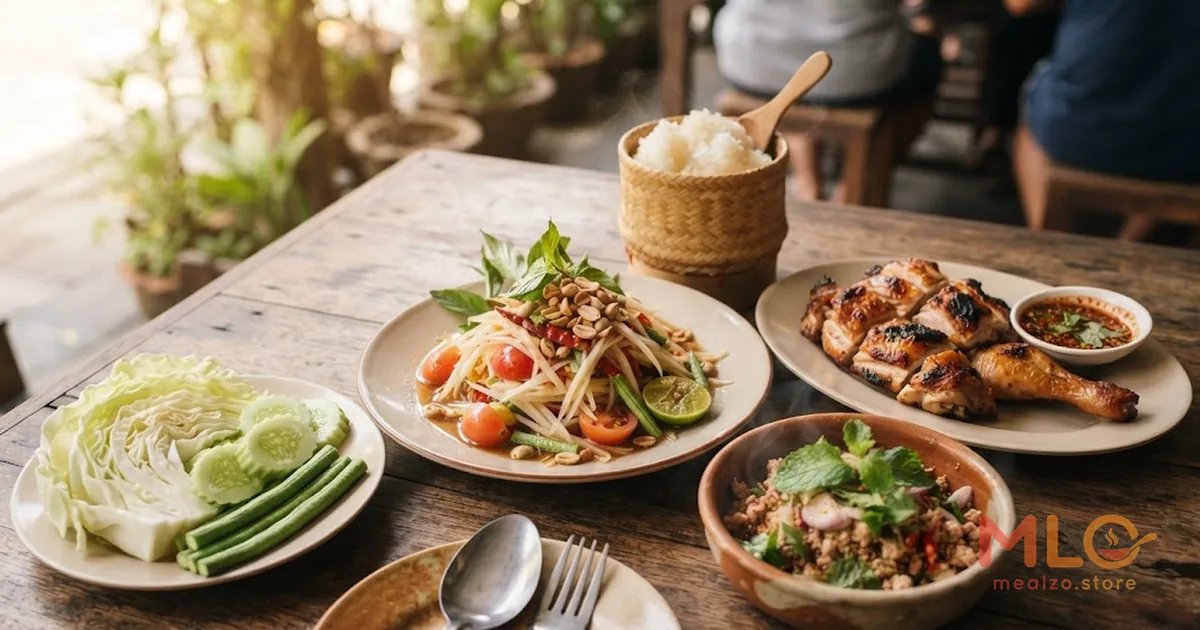
Som tam arrives sharp with lime, the chicken smells of the grill, and sticky rice keeps disappearing from the basket. An Isaan meal can feel light and substantial at the same time. That is part of its appeal, and part of why the complete order matters more than any dish name.
Across Bangkok, food from north-eastern Thailand fits easily into everyday life: lunch from a street stall or food court, dinner at an Isaan restaurant, or delivery after work. Keeping it in your routine does not require replacing everything with plain grilled meat.
There is plenty to work with. Vegetables, herbs and grilled proteins are already central to the meal. The adjustments usually concern the dressing, the cut of meat, the extras and the rice.
The practical question behind a search for “healthy Isaan food Bangkok” is not which dish deserves a health label. It is how to keep the flavours you enjoy while making room for protein, vegetables and a deliberate amount of rice.
1. Start with the whole Isaan order
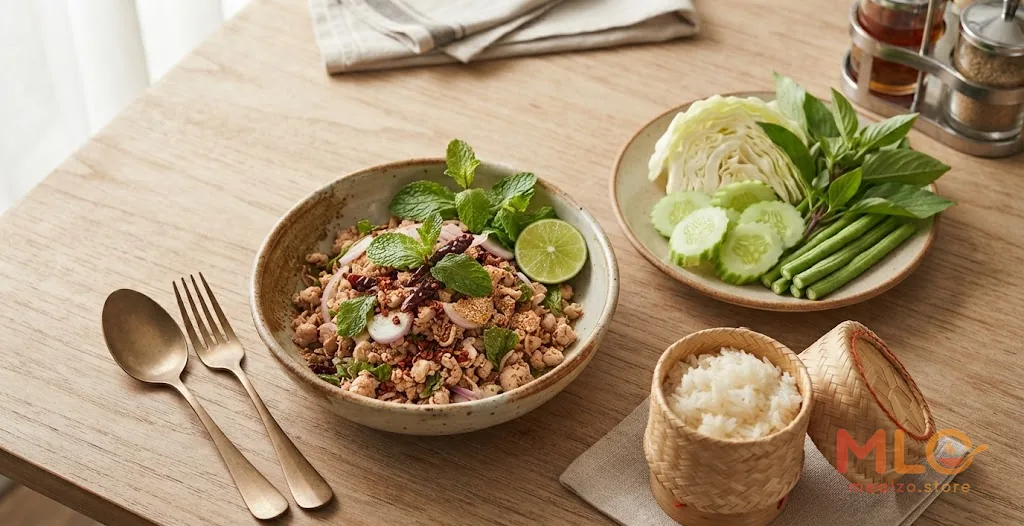
Grilled proteins give many Isaan meals a useful starting point without making deep-fried meat the default. Salads bring green papaya and herbs; lime and chilli supply flavour without requiring a creamy sauce. Raw cabbage, long beans and cucumber often arrive alongside the main dishes.
But grilled pork neck is still a fatty cut, and a crisp papaya salad can carry a generous dressing. The table below is an ordering guide, not a nutritional ranking. Recipes and serving sizes vary.
| Dish | Main base | What adds richness or salt | Practical adjustment |
|---|---|---|---|
| Som tam Thai | Vegetable salad | Sugar, fish sauce, dried shrimp and peanuts | Ask for less sugar and pair with a protein dish |
| Som tam pu pla ra | Vegetable salad | Fermented fish sauce and salted crab | Ask about cooked ingredients and lighter seasoning |
| Tam sua | Papaya salad with rice noodles | Dressing, with noodles alongside any rice ordered | Let the noodles influence how much sticky rice you take |
| Larb or nam tok | Minced or sliced meat salad | Meat fat and seasoning | Choose a cooked version and eat the side vegetables |
| Gai yang | Grilled chicken | Skin and accompanying sauces | Choose meatier pieces and dip to taste |
| Kor moo yang | Grilled pork neck | Fatty meat and dipping sauce | Share it and keep the accompanying dishes less rich |
| Sai krok Isaan | Fermented sausage | Fat and seasoning | Treat it as an extra, not the entire protein component |
| Fried chicken or crispy pork | Fried meat | Frying and fatty parts | Avoid automatically adding them to an already substantial order |
2. Som tam: choose the version, then adjust it
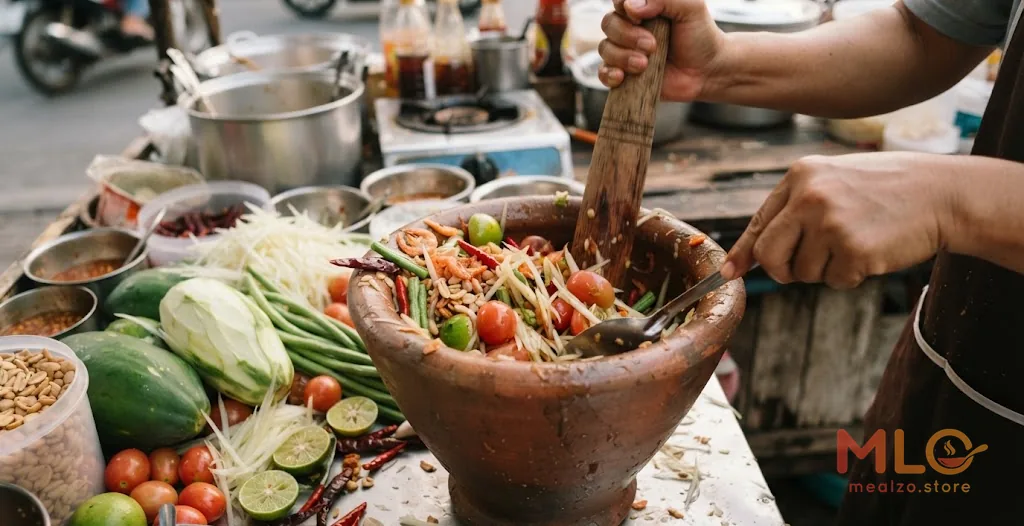
Som tam Thai usually includes peanuts and dried shrimp and tends to be sweeter than som tam Lao or som tam pu pla ra. These are tendencies, not fixed recipes. A vendor's default matters, so asking for less sugar is more useful than assuming the name tells you everything.
Som tam pu pla ra brings fermented fish sauce and salted crab into the dressing. Som tam Lao is often less sweet, but less sweetness does not mean less salt. Ask what goes into the version being prepared when the ingredients are unclear.
Green papaya gives the salad its vegetable base and crunch. Peanuts and dried shrimp contribute more than garnish, but som tam alone still provides little protein compared with a meat-based dish.
Tam sua changes the meal because rice noodles join the salad. You can still eat sticky rice with it; simply notice that noodles are already part of the order.
3. Let larb, nam tok or chicken supply the protein
Larb generally brings minced meat; nam tok brings sliced meat. Lime, chilli, herbs and toasted rice powder give both their familiar character. The meat supplies the substantial protein component, while the seasoning determines much of the salt and intensity.
That makes cooked larb or nam tok a useful partner for som tam. Grilled chicken can play the same role. You do not need every protein dish on the menu, especially when eating alone.
Look at what you are actually eating, rather than relying on the dish name. A plate dominated by fatty pieces is different from a meatier plate, even when both are grilled or dressed with herbs. Likewise, a few bites of sausage beside a large salad may not make the meal as complete as you intended.
Key takeaway: Pair som tam with cooked larb, nam tok or grilled chicken rather than expecting the papaya salad to supply the meal's protein.
4. Grilled does not tell you everything about the meat
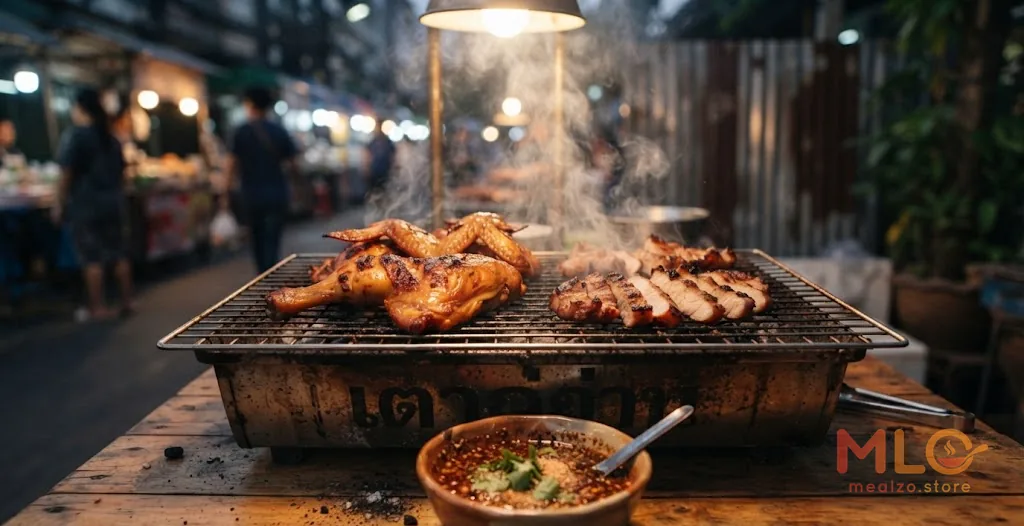
Gai yang offers chicken without the deep-fried coating of fried chicken. Choosing meatier pieces, and leaving some skin when you prefer less richness, changes what ends up on your plate without requiring a different meal.
Moo yang varies with the pork cut. Kor moo yang, grilled pork neck, is specifically a fatty choice. There is no need to pretend otherwise or to remove it from every order. Sharing it with vegetables and another dish is different from building dinner around pork neck, crispy pork and sausage together.
Sai krok Isaan adds fermented sausage to the spread. Consider whether you genuinely want it or are ordering it because it usually appears beside the chicken.
The same applies to fried sides. Keep an extra you particularly enjoy, but do not let every familiar accompaniment become automatic.
5. Dressing and dipping sauce deserve their own decision
Fish sauce, pla ra, salted crab, MSG and sugar can all appear in som tam seasoning. They do different jobs. Reducing sugar changes sweetness; it does not remove the salt supplied by fish sauce or fermented ingredients.
Asking only for no MSG also leaves the other salty ingredients untouched. A more useful conversation concerns the overall seasoning: less fish sauce, less sugar, or a lighter hand with the dressing, depending on the dish and what the vendor can accommodate.
If a dressing is premixed, the vendor may not be able to reduce an individual ingredient. Ask before the salad is mixed, or include a clear request with a delivery order. You can also leave excess dressing behind rather than pouring it onto rice.
Jaew deserves attention too. A grilled protein does not tell the whole story when every mouthful is heavily dipped. Having the sauce separately lets you taste the meat first and decide how much dipping sauce you enjoy.
For a broader look at these ingredients, see where sodium and salt enter Thai meals.
Key takeaway: Ask about sweetness and salt separately, because a less sweet som tam can still be strongly salted.
6. Make sticky rice visible before you start eating
Khao niao is easy to underestimate. It is compact, and eating it by hand in small balls makes the amount less obvious than a mound of rice on a plate. Reaching back into a shared basket can become part of the conversation rather than a conscious decision.
Put the rice you intend to eat beside your meal before getting absorbed in everything else. You can adjust according to your appetite, but you have a clearer starting point than an endlessly open basket.
There is no universal amount that suits every person or every day. Appetite, the rest of the meal and what you have already eaten all matter. Tam sua brings noodles; a rice-heavy lunch may change what you feel like at dinner.
You can reduce sticky rice or replace it with another rice on some days. A substitution still needs the same attention to quantity. The guide to jasmine, sticky and brown rice in Bangkok explores that part of the plate.
Key takeaway: Set out your sticky rice before eating so repeated trips to the basket do not hide how much accompanies the meal.
7. Eat the vegetables that arrive beside the meal
The cabbage, long beans, cucumber and herbs are not table decoration. They give you more vegetables without needing another richly dressed dish, and their crunch belongs naturally beside larb or grilled meat.
Green papaya counts as part of the vegetable component, but the side plate adds variety without carrying the same dressing. Eating the vegetables only after dipping them heavily in sauce changes that advantage.
Make them part of the meal from the beginning:
- Put the vegetable plate within reach rather than behind the shared dishes.
- Alternate meat and rice with the vegetables instead of leaving them until the end.
- When ordering delivery, check whether vegetables accompany the dishes rather than assuming they will.
When raw vegetables do not suit you, ask whether a cooked vegetable option is available. The point is to include vegetables, not to insist that they must be raw.
8. Order chilli heat you actually enjoy
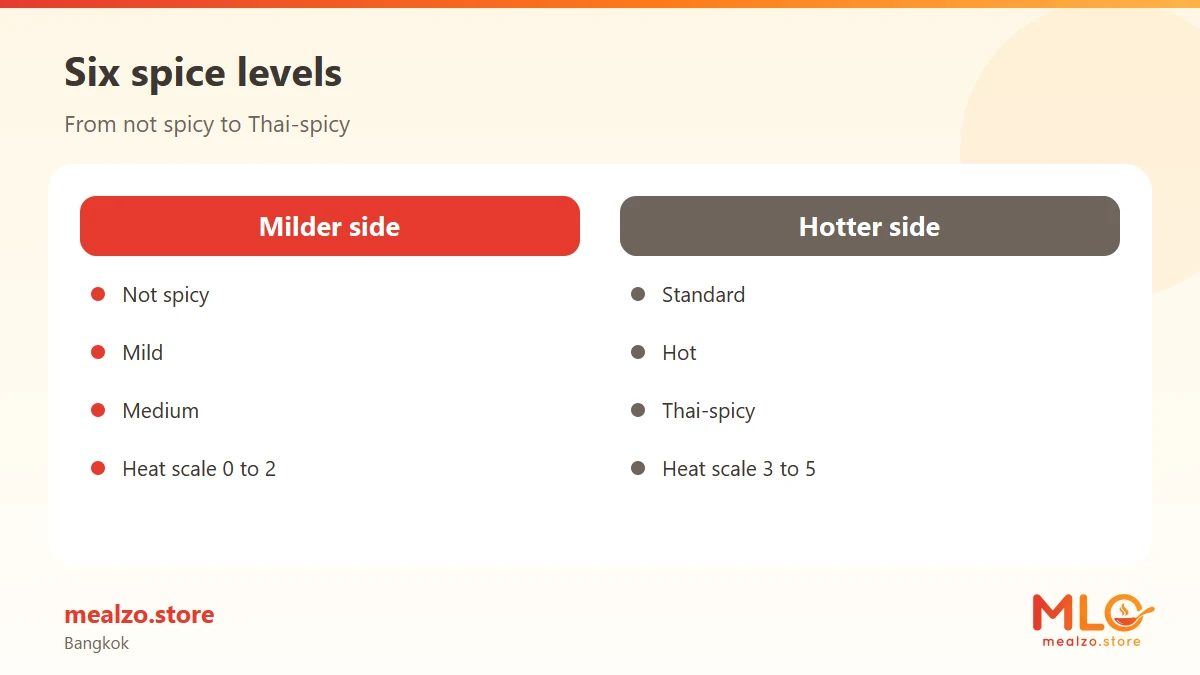
Phet noi is a useful request when you want fewer chillies. Explain that you prefer mild heat, rather than assuming your usual tolerance will translate directly from another restaurant. The same request can produce different results.
Very hot som tam can change the rest of the meal. You may find yourself eating more sticky rice simply to get through the heat. Ordering a manageable spice level gives you more freedom to eat according to appetite rather than reacting to each mouthful.
For a group, discuss heat before ordering. A shared salad made for the person who enjoys the most chilli may not work for everyone. Ask whether chilli can be kept separate where the preparation allows it; that cannot undo chillies already pounded into som tam.
Read more about chilli heat and eating comfortably in Bangkok.
9. Check how raw and fermented ingredients are prepared
Raw crab, raw beef larb and versions of koi made with raw ingredients carry more food-safety risk than cooked versions. When you are unsure what a dish contains, ask before ordering. Choosing cooked meat and cooked crab is a straightforward adjustment. Salted crab is not necessarily cooked crab.
Fermented fish needs a preparation check too. Fermentation is not the same as cooking, so ask whether the pla ra sauce has been cooked rather than assuming fermentation settles the question. A freshly assembled salad can still contain raw ingredients. With sai krok Isaan, choose sausage that has been cooked through rather than assuming fermentation makes cooking unnecessary.
In Bangkok's hot season, favour freshly made food and eat it promptly. With delivery, avoid leaving the meal sitting in the heat while finishing other tasks. Fresh preparation matters, but it does not replace checking ingredients.
Anyone with high blood pressure, heart or kidney issues, diabetes, pregnancy or another medical condition should follow their own doctor's guidance on salt, sugar, carbohydrates and raw foods.
10. Order differently when eating alone or sharing
A shared spread can centre on som tam, grilled chicken, larb, a communal basket of sticky rice and the vegetable plate. That does not mean each diner needs an individual serving of every dish.
When eating alone, choose between larb and a grilled protein according to appetite rather than recreating a group feast. These examples change the composition of the order, not guarantee a particular nutritional result.
| Heavier order for a solo meal | More balanced order for a solo meal |
|---|---|
| Som tam, pork neck, fried chicken and sticky rice repeatedly taken from the basket | Som tam with lighter seasoning, grilled chicken, side vegetables and rice set out before eating |
| Tam sua, sausage and additional sticky rice by habit | Tam sua with cooked larb and vegetables, adjusting sticky rice because noodles are already present |
| Grilled pork with crispy pork, little vegetable accompaniment and repeated dipping | A meatier grilled cut, papaya salad, side vegetables and jaew served separately |
For a group, make the shared order deliberate:
- Agree on a salad and protein dishes before adding sausages or fried extras.
- Keep sticky rice shared, while letting each person decide what to take.
- Ask about vegetables and chilli preferences when placing the order.
- Add more food in response to appetite, not simply because the table has space.
11. Let the rest of the day support dinner
A substantial Isaan dinner does not require skipping breakfast or making lunch a punishment. The more practical approach is to notice what dinner is likely to contain and give the other meals some variety.
When pork neck, sausage and sticky rice are already on the evening agenda, lunch can lean towards vegetables and a clear protein component rather than repeating a similar combination of rich meat and rice. This is not a precise calculation or a way to cancel dinner.
The same thinking applies when another meal involves Thai curries on a balanced day. Consider the rice, sauce, vegetables and protein together rather than deciding everything from the curry's name.
On a day when you are hungrier, making dinner smaller is not automatically the useful adjustment. You may want more food overall, with vegetables and protein still present. The aim is not to make every meal as small as possible. Plans change, and appetite does too. Adjust what is in front of you rather than treating a larger meal as a mistake.
12. Where Mealzo Bangkok fits around an Isaan meal
Mealzo Bangkok meals are planned and balanced in advance, then cooked fresh daily in the Bang Na kitchen and delivered across Bangkok. They can provide prepared meals around an evening when you choose to eat out, so consider what those meals contain before deciding on the restaurant order.
Every plan combines Thai and international dishes in the same mixed cuisine. There is no separate cuisine choice.
The Mealzo Bangkok meal plans include 12 plans, with 6 daily calorie levels from 1200 to 2500 kcal, 3 or 5 meals per day, and packages lasting 3, 7, 14 or 30 days. Customers choose a delivery window: morning 06:00-09:00 or evening 17:00-20:00.
Customers declare allergens from the available allergen groups, and dishes containing a declared allergen are not assigned to them. This is an assignment mechanism, not a guarantee of an allergen-free meal.
Prepared meals can reduce daily meal-planning work. An Isaan dinner still sits alongside what you actually eat that day, not outside it.
FAQ
Can som tam be a complete meal on its own?
Som tam provides a vegetable base, but little protein compared with larb or grilled chicken. Add a cooked protein dish and decide how much rice you want alongside it. Peanuts and dried shrimp do not make every som tam a substantial protein meal.
Is som tam pu pla ra always less sweet than som tam Thai?
It is often less sweet, but recipes vary. Ask for less sugar rather than relying entirely on the name. Pla ra and salted crab also bring salt into the picture, so sweetness is not a reliable guide to the overall seasoning.
Do I need to stop eating sticky rice?
No. Make the amount visible and consider it alongside noodles, other rice and the rest of the meal. Eating it by hand from a basket can make repeated additions easy to overlook. Reducing it sometimes is an option, not a requirement.
Should I choose grilled chicken instead of pork neck every time?
Not necessarily. Chicken offers a different starting point, while pork neck brings more fatty meat into the order. The practical decision also includes sides, vegetables, rice and sauces. Sharing pork neck without automatically adding fried extras is another way to arrange the meal.
Can I eat an Isaan dinner while using a Mealzo Bangkok plan?
A meal plan can sit alongside eating out, but an additional dinner still contributes to your day's food. Consider the prepared meals you actually eat and your appetite. Do not assume the plan's stated daily calorie level also covers food ordered separately.
Mealzo Bangkok is a kitchen and meal delivery service operating exclusively in Bangkok, Thailand. We are not affiliated with similarly named services outside Thailand.
Find a Meal Plan That Fits
Compare Mealzo plans or use the calculator to explore meal options for your needs.