Mealzo Bangkok: Spicy Food in Bangkok, Chilli Heat and Your Stomach
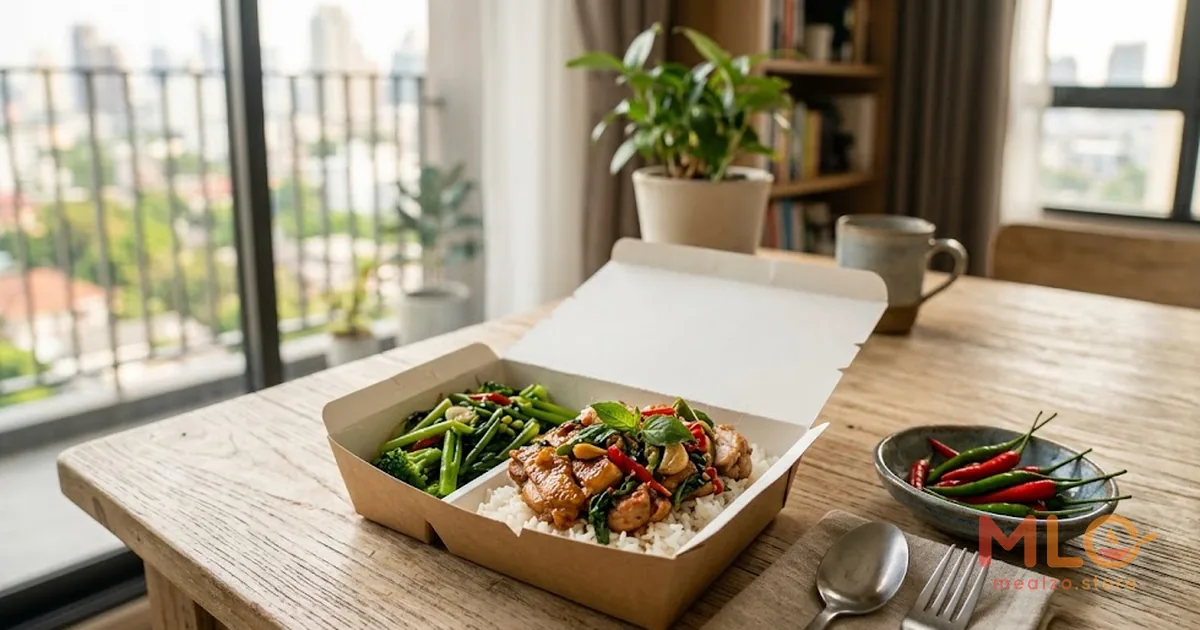
Mealzo Bangkok treats chilli heat as a preference to set, not a challenge to complete. Lunch should leave room for enjoying the food, not just enduring it.
Perhaps yesterday's basil stir-fry was comfortable and today's has stopped the conversation. Perhaps you have lived here for years, but your stomach no longer agrees with your usual order.
The spicy Thai food Bangkok cooks serve has no universal heat setting. A dish's name tells you much less than how its chilli is prepared, when it is added and whether the cook can still change it.
The useful skill is calibration: asking a better question, tasting before seasoning and recognising when a different dish would suit you better. Nobody needs to prove anything by finishing som tam.
1. Where the burn actually comes from
Chilli's burn begins with capsaicin, the compound that gives peppers their characteristic heat. It stimulates heat-sensitive pain receptors, so food need not be physically hot to feel hot in your mouth.
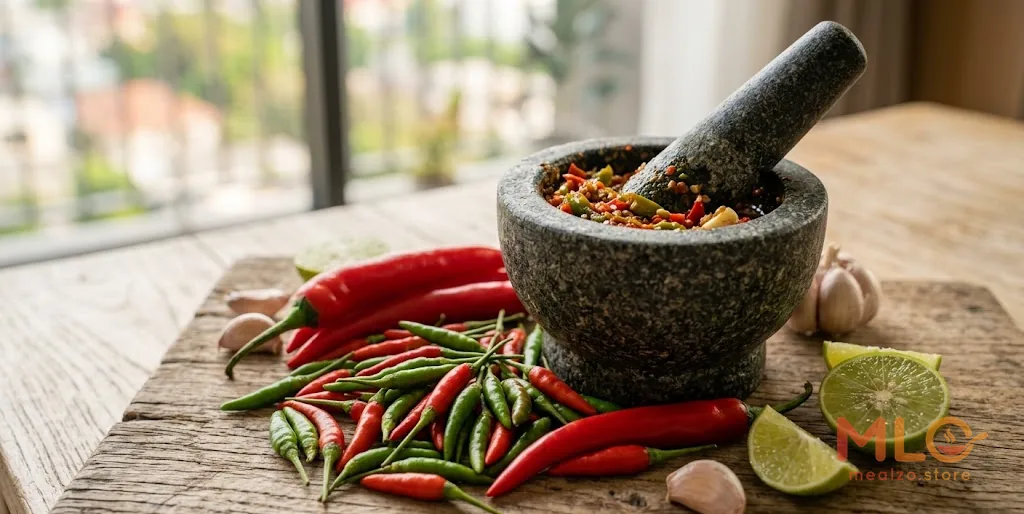
One correction matters: capsaicin is concentrated mainly in the pale inner tissue where the seeds attach, not produced by the seeds themselves. Seeds can carry it on their surfaces. Removing seeds alone therefore leaves plenty of potential heat behind.
Capsaicin dissolves much more readily in fat and alcohol than in water. That does not make alcohol a useful remedy. It explains why plain water struggles to carry the compound away, although cold water can briefly feel soothing.
A creamy curry and a clear soup also deliver heat differently. Coconut fat disperses capsaicin through the sauce and can soften its initial impression without removing it. A pale, velvety curry can still become uncomfortable as you continue eating. Neither creaminess nor colour tells you what the next spoonful will feel like.
2. Learn chilli characters, not a league table
Small prik kee noo, commonly called bird's-eye chillies, bring a pointed, lively burn that can catch you out in a dressing or an otherwise ordinary-looking stir-fry.
Larger prik chee fa are generally milder. They contribute colour, flesh and chilli flavour, including in curry pastes. That is a useful distinction, not a guarantee about every pepper.
Fresh chilli crushed in a mortar has a green, direct character. Dried chilli cooked in oil contributes a deeper flavour while carrying heat into the oil itself. Roasted flakes bring toasted, sometimes smoky notes rather than fresh sharpness, but roasting does not reliably make them mild.
This distinction between chillies chosen for heat and those chosen for flavour matters because a dish can need both. At the table, the practical lesson is simpler: dried, fresh and roasted are different experiences, not reliable rankings.
3. Find out whether the heat is built in
Curry paste, nam prik, mortar-pounded som tam and larb tossed with chilli powder distribute heat throughout the dish. Once mixed, removing visible fragments cannot undo that.
Other dishes offer a useful decision point. Noodle soups may receive chilli during assembly or at the table. Stir-fries can often be adjusted before cooking, although chilli frequently goes into the wok with garlic near the beginning, not at the end.
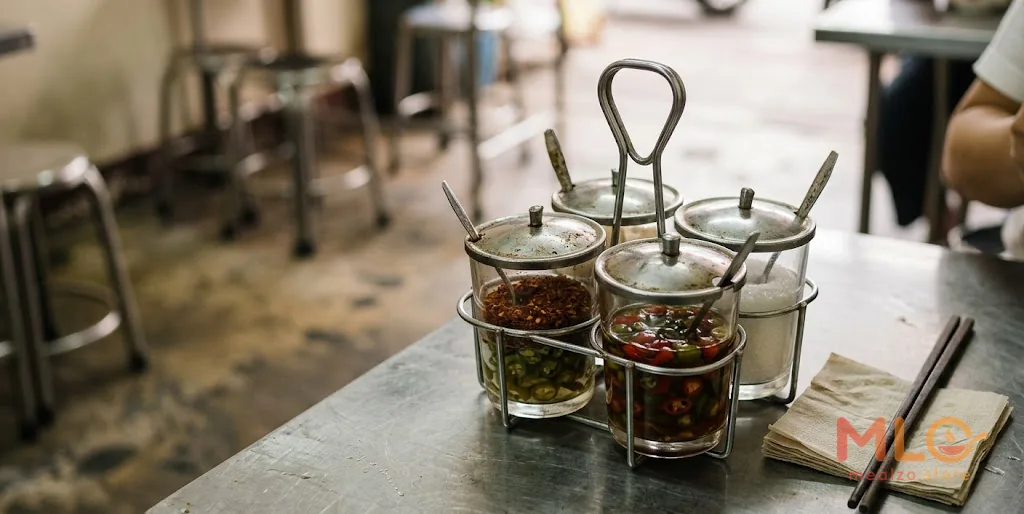
The condiment tray is your control panel. Prik nam som brings vinegar and chilli; prik nam pla brings fish sauce and chilli. Dried flakes and chilli pastes offer other kinds of heat. The selection varies, so do not assume every jar contains the same thing everywhere.
Order a mild base, taste it, then add a little condiment to your own portion. Start with one kind so you know what changed.
Salt often travels with the heat through fish sauce, shrimp paste or soy-based seasonings. More chilli sauce can mean more salt, although plain fresh chilli does not create that link. See where sodium hides in Thai food for the detail.
Key takeaway: Ask for less chilli before preparation, then use table condiments only after tasting the dish as served.
4. What mai phet will and will not achieve
Mai phet means not spicy, but it may be interpreted relative to the cook's usual preparation. The phrase is useful; it is not a universal specification.
These requests describe different things:
- Mai phet, ไม่เผ็ด: Not spicy. Useful for a made-to-order dish, but confirm whether its base already contains chilli.
- Phet nit noi, เผ็ดนิดหน่อย: A little spicy. Invites some heat, with the amount left to the cook.
- Mai sai prik, ไม่ใส่พริก: Do not add chilli. More concrete, but it does not remove chilli already in paste, sauce or broth.
- Yaek prik, แยกพริก: Chilli separately. Useful for optional additions, not for separating a finished curry.
Showing the Thai wording can help when pronunciation gets lost in a busy lunch queue. Follow it with the practical question: “Is chilli already in the sauce?”
There is a flavour trade-off. Simply deleting chilli can leave a dish noticeably flatter if nothing else is rebalanced. A naturally mild preparation may be more satisfying than a heavily altered dish built around chilli.
5. Order differently at a stall, counter and restaurant
At a street stall cooking to order, speak before ingredients reach the wok or mortar. Ask for no added chilli and check for a premixed sauce. With som tam, ask whether the mortar can be cleaned first if residual heat matters to you.
At a food court counter serving from trays, the decision is mostly about selection. Mai phet cannot change a curry cooked earlier that morning. Ask which dishes contain no chilli, request a small taste where practical and choose a mild protein dish plus vegetables. Our guide to building a balanced food court tray covers the wider lunch decision.
At a sit-down restaurant, ask which dishes are genuinely adjustable. Distinguish the base recipe from the garnish, and specify heat dish by dish rather than requesting “everything mild” for a mixed-tolerance table.
When an unfamiliar dish arrives, leave the condiment tray alone. Put a small amount on your plate with rice alongside. Taste some sauce as well as the solid ingredients, then pause before taking more. A comfortable first impression is useful information, not permission to season the whole bowl immediately.
6. The dishes that catch people out
Recipes vary between kitchens. These are preparation patterns to ask about, rather than promises attached to dish names.
| Dish | Where the heat sits | Can it be reduced afterwards? | The request that helps |
|---|---|---|---|
| Som tam, Thai-style papaya salad | Fresh chilli pounded into the dressing and mixed through the papaya. | Not by picking out fragments. | “No added chilli; please clean the mortar first.” |
| Green curry | Chilli in the curry paste, sometimes with extra fresh chilli. | Not removed; dilution changes the whole sauce. | “Is the paste already hot, and is a genuinely mild version possible?” |
| Larb | Chilli powder tossed through meat, herbs and dressing. | Not once thoroughly mixed. | “Chilli powder separately, please.” |
| Tom yum | Crushed fresh chilli and, in some versions, chilli paste. | Removing pieces leaves heat in the broth. | “Can you make it without added chilli or chilli paste?” |
| Pad kra pao | Chilli cooked with garlic and distributed through the stir-fry. | Picking out pieces will not clear the oil and sauce. | “No chilli in the wok, please.” |
| Boat noodles | Chilli may already be in the bowl's seasoning or broth. | Extra plain broth may dilute it, not remove it. | “No chilli seasoning; is the broth itself spicy?” |
| Nam prik with vegetables | Chilli is integral to the dip; vegetables may be plain. | The dip cannot be made chilli-free at the table. | “Keep the dip separate from the vegetables.” |
| Papaya salad with fermented fish, som tam pla ra | Chilli is pounded through the dressing; fermented fish adds a different intensity. | No, once combined. | “Keep the fermented-fish flavour, but add no chilli.” |
Fermented fish is not itself the source of capsaicin. Asking to remove it changes the salad's savoury character, not necessarily its heat.
Likewise, clear tom yum is not automatically mild, and coconut milk does not make green curry a safe prediction. Ask about preparation rather than judging appearance.
7. The first ninety seconds after an over-hot mouthful
Stop eating the spicy dish. Put the spoon down, breathe normally and give yourself a moment. There is no obligation to take another bite while deciding what to do.
Reach for a small sip of milk if you tolerate dairy, or a mouthful of plain rice. Let it contact your mouth rather than immediately chasing it with another spoonful of curry.
Milk proteins, including casein, help carry capsaicin away, while starch provides a physical buffer that can make the burn more manageable. This is different from simply making your mouth feel cold.
| What to reach for | What it does and why |
|---|---|
| Plain rice or bread | Adds bland bulk, reduces spicy food in each bite and provides a physical buffer. It does not chemically cancel capsaicin. |
| Dairy | Milk proteins help remove capsaicin from contact with the mouth; fat can also carry it. Use only dairy you tolerate. |
| Something fatty | A mild fatty food may help disperse capsaicin, but it is not an instant eraser or a reason to drink oil. |
| Something sweet | Sweetness can reduce perceived burn without removing the chilli. It can soothe while leaving the original dish just as hot. |
| Iced water | Offers temporary cooling but is poor at dissolving capsaicin; the burn may return between sips. |
| Beer | Mostly water, so it is not a useful capsaicin solvent at the table. Coldness can be misleading. |
| Waiting it out | Stopping further exposure lets the sensation gradually settle. Breathing calmly helps you pause, not neutralise chilli. |
Coconut milk contains fat but not dairy's casein; a creamy plant drink is not automatically equivalent to milk.
Ninety seconds is a pause, not a promised recovery time. Avoid any suggested food that conflicts with your allergies or usual tolerances.
8. Rescue the meal, not your reputation
First, keep the overly spicy food away from the rest of your rice. Add a plain egg, tofu, vegetables or another mild dish with enough substance to make lunch satisfying.
Treat a small portion of the hot dish as a condiment rather than the centre of every mouthful. Leave excess dressing or broth behind. This reduces what you eat, without pretending the remaining sauce has changed.
Ask whether the kitchen can dilute a soup with unseasoned broth or remake an adjustable dish. Extra coconut milk may soften a curry, but changes its richness and balance. Adding sugar or lime can alter perception; neither extracts the capsaicin.
Diluting a dish and then eating all of the larger portion still means consuming its original chilli. Smaller spicy portions matter more than just making the bowl bigger.
Sometimes a replacement is the sensible outcome. An enjoyable meal is worth more than clearing an unsuitable plate.
9. What your stomach may be telling you
For most healthy people eating ordinary food, chilli is more likely to cause discomfort than damage. Capsaicin can irritate the digestive tract, causing abdominal discomfort or looser stools without necessarily indicating an underlying injury.
The everyday pattern can include burning on the way in, burning on the way out and an unsettled morning afterwards. That does not make every digestive symptom a chilli problem.
Chilli does not cause ulcers. Triggering discomfort is different from causing ulcer disease, so a burning sensation after a spicy meal does not establish that connection.
Heartburn may be more noticeable when spicy food comes as a large, rich, late meal followed by lying down. The food itself and the timing of the meal can both matter; chilli is not the only factor.
Anyone with reflux, gastritis, IBS or another existing diagnosis should follow their doctor's guidance rather than this article, because chilli can genuinely aggravate symptoms. A persistent problem belongs with a doctor.
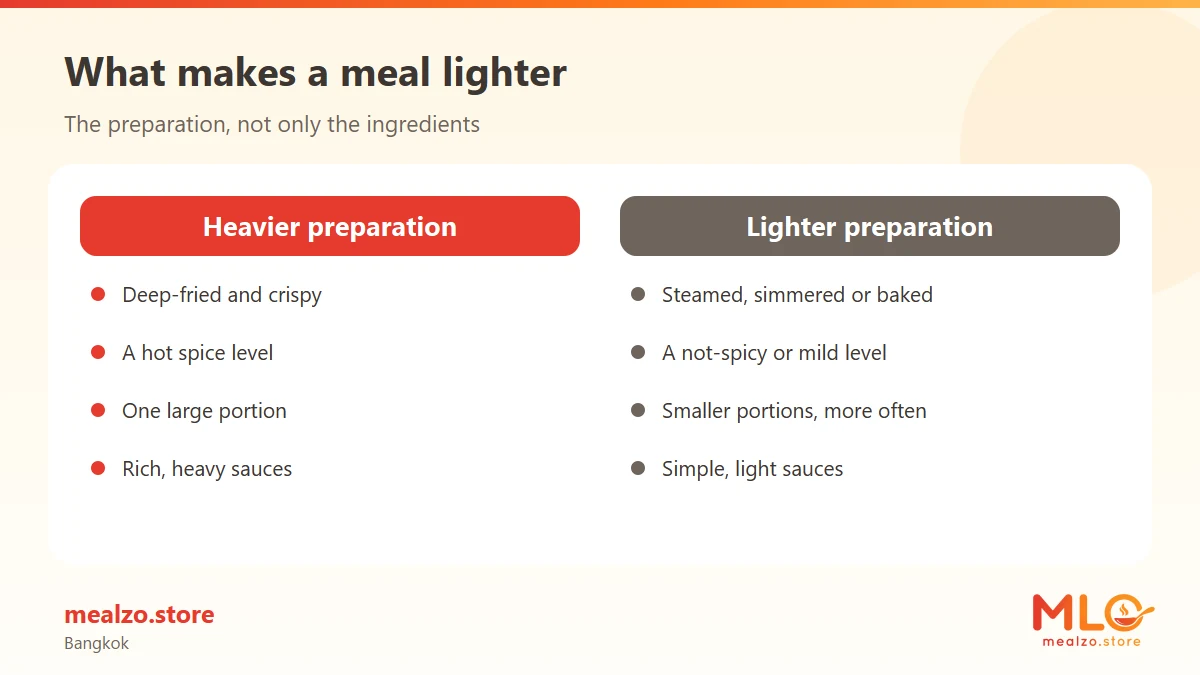
For everyday meal choices, what makes a meal gentler on digestion looks beyond chilli alone. “Not spicy” does not automatically mean light, comfortable or suitable for your particular stomach.
Key takeaway: A mouth that tolerates chilli comfortably does not guarantee a stomach that does.
10. Rebuild tolerance without ignoring discomfort
Regular exposure can reduce the perceived burn, as repeated contact with chilli gradually changes how strongly the heat registers. This is sensory adaptation, not proof that eating hotter food is better.
Tolerance can also fade during a break. A trip away may make your old order feel unexpectedly fierce when you return to Bangkok. There is no reliable personal timetable for losing or rebuilding it.
For deliberate, low-pressure calibration:
- Return to a familiar mild dish, with optional chilli on the side.
- Change the amount gradually only while the meal remains enjoyable and comfortable afterwards.
- Notice both mouth heat and later digestion; do not use one as a substitute for the other.
When your stomach objects, step back to less chilli or none. You do not need to preserve a former tolerance level. Consistency means learning what suits you now, not repeating yesterday's order regardless.
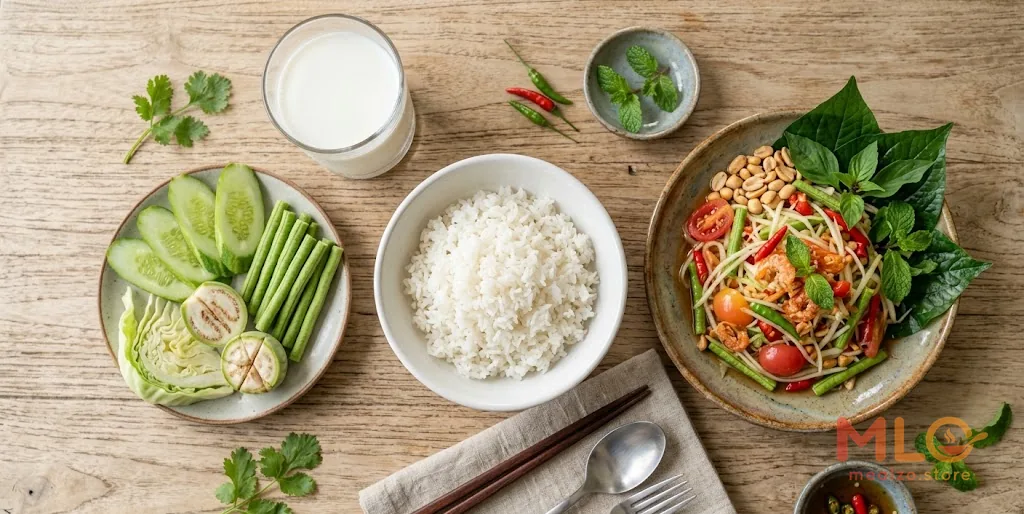
11. Account for the weather and the people at the table
A fiercely spicy lunch outdoors at midday can feel different from the same meal in air conditioning. Chilli-related sweating joins the discomfort of Bangkok's heat and humidity. Arriving already hot and eating quickly does not make calibration easier.
The cold, sweet drink afterwards is understandable, but mouth relief and hydration are different jobs. Our guides to hydration in Bangkok heat and sugar in Thai drinks cover those choices without turning every spicy lunch into a drinks calculation.
For family-style eating, build the shared meal around dishes everyone can finish: a mild vegetable dish, a protein dish and rice. Add spicy dishes separately for those who enjoy them. Keep hot dips and serving spoons from spreading chilli into the mild dishes. Nobody should discover that their only comfortable option is rice.
With children and older relatives, ask rather than assume. Familiar tastes, appetite and comfort matter more than age-based expectations. Offer something substantial without chilli, leave optional heat separate and accept a declined taste without commentary.
12. When a set spice level helps
A Mealzo Bangkok plan lets you set heat upfront across six levels: not spicy, mild, medium, standard, hot and Thai-spicy. That makes spice a stated preference rather than a fresh negotiation at every meal.
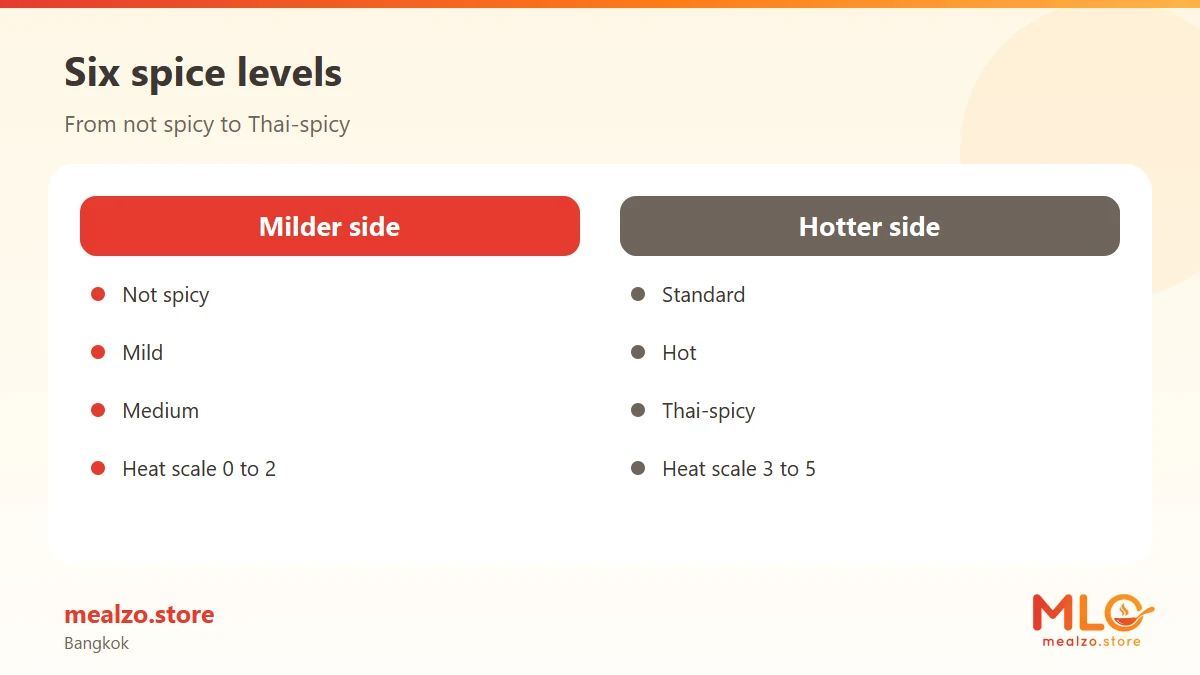
These labels organise preparation; they cannot promise identical sensations across different dishes. A curry and a stir-fry still carry heat differently.
The Easy-to-Digest plan exists for people seeking meals with digestive comfort in mind, including those who want the cuisine without the burn. It does not change how your own stomach responds, and it does not treat reflux.
Every plan uses one mixed cuisine, with Thai and international dishes together. Thai food remains part of the rotation, not a separate cuisine you opt out of. Read how Thai and international dishes share one plan before choosing.
The kitchen is in Bang Na, Bangkok. Meals are cooked fresh daily and delivered across Bangkok. Customers choose the morning window, 06:00-09:00, or the evening window, 17:00-20:00.
Explore Mealzo Bangkok meal plans and spice preferences when that kind of structure would simplify your week.
Key takeaway: A chosen spice setting reduces guesswork about preparation, not uncertainty about your individual digestive response.
FAQ
Does mai phet guarantee a dish contains no chilli?
No. It can be understood relative to the usual recipe, and chilli may already be in a prepared base. Ask whether the sauce contains chilli and request no added chilli separately.
Can I make a curry mild by removing visible chillies?
Not reliably. Most of its heat may already be distributed through the paste and sauce. Plain accompaniments can reduce the spicy portion of each mouthful, but cannot reverse preparation.
Why does milk help more than iced water?
Milk contains proteins that help carry capsaicin away. Iced water mainly supplies temporary cooling. Plain rice is a practical alternative when dairy is unsuitable, though it works differently.
Should I rebuild my old tolerance after a trip?
Only when you enjoy doing so and remain comfortable afterwards. Start below your previous order rather than assuming nothing changed. Staying at a lower level is equally reasonable.
Does Easy-to-Digest mean I can choose only international dishes?
No. Mealzo Bangkok uses one mixed cuisine across every plan. Thai and international dishes remain together, while the spice preference addresses heat rather than removing an entire cuisine.
Mealzo Bangkok is a kitchen and meal delivery service operating exclusively in Bangkok, Thailand. We are not affiliated with similarly named services outside Thailand.
Find a Meal Plan That Fits
Compare Mealzo plans or use the calculator to explore meal options for your needs.