Thai and International Food in One Mixed Meal Plan: How Mealzo Works
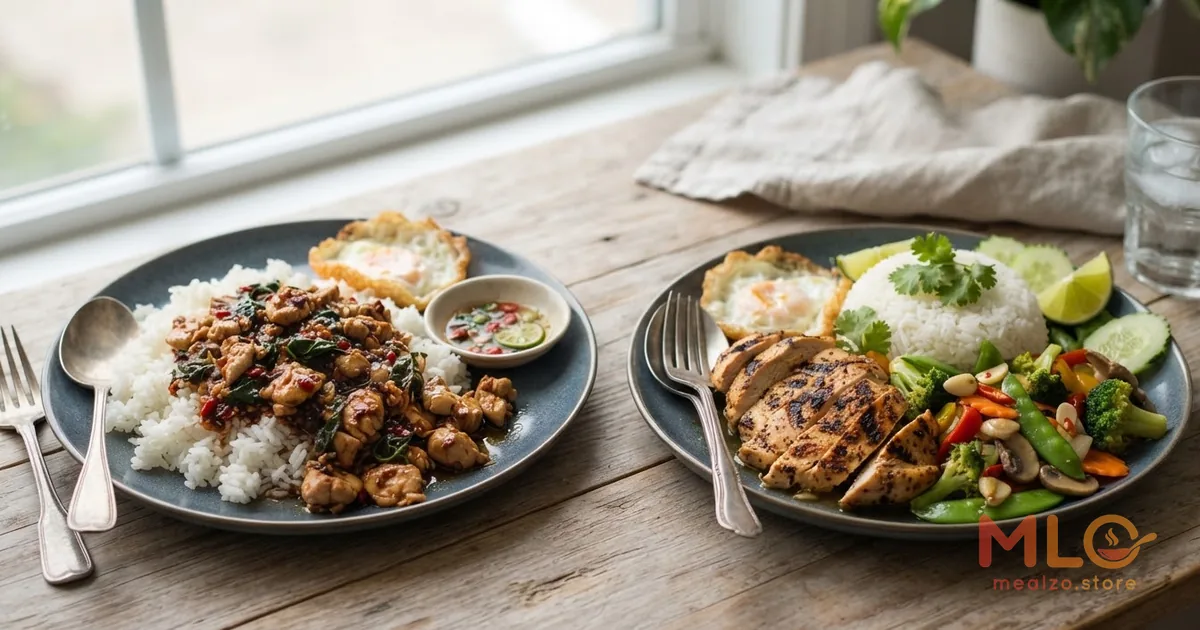
Mealzo does not offer separate Thai-only, international-only or mixed cuisine choices. Every plan uses one mixed menu that combines Thai and international dishes.
When people compare a Thai vs international meal plan in Bangkok, the obvious assumption is that they need to choose one cuisine or the other.
That is not how Mealzo works.
Every Mealzo plan uses one mixed menu that combines Thai and international dishes. Cuisine is not a separate option at checkout. The choices you make are the meal plan itself, your calorie level, whether you want 3 or 5 meals per day, and whether your package lasts 3, 7, 14 or 30 days.
This means the useful question is not whether you should select Thai, International or Mixed. The useful question is how Thai and international dishes fit together inside the same menu while you choose the other parts of your package.
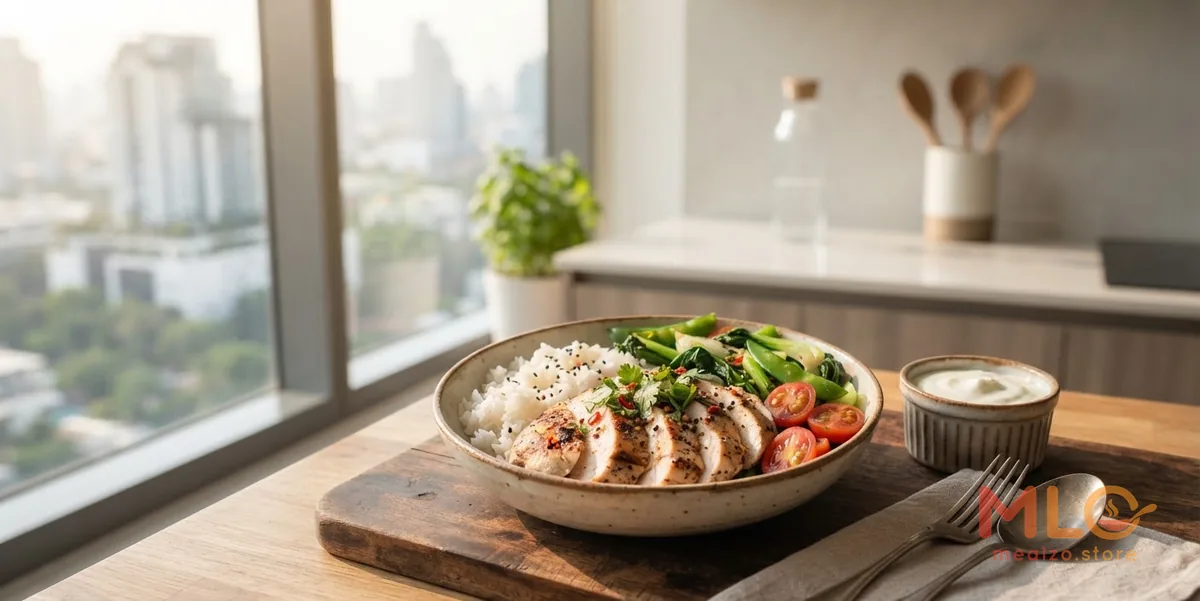
1. Start With the Actual Mealzo Model
Mealzo has one cuisine model across its plans: a mixed menu combining Thai and international dishes.
That matters because it changes the way you should think about choosing a package. Cuisine is already part of the menu structure, so there is no extra cuisine decision to make after selecting a plan.
Your practical choices are:
- which of the 12 meal plans you want,
- which calorie level you want,
- whether you want 3 or 5 meals per day,
- whether you want a package for 3, 7, 14 or 30 days,
- and which allergens you need to declare when ordering.
If you want to compare those choices in one place, see the guide to choosing your Mealzo plan.
Key takeaway: Thai and international food are already combined in the Mealzo menu. You do not choose a separate cuisine style.
2. What "Thai vs International" Means Here
The phrase Thai vs international meal plan can still be useful, but not as a checkout comparison.
It describes the two broad food directions that appear within the same mixed menu. Some dishes are Thai, while others are international. Together they form the cuisine format used across Mealzo plans.
That distinction is worth understanding because a meal plan in Bangkok does not have to sit entirely on one side of the comparison. A single package can include both kinds of food without asking the customer to commit to only one cuisine.
This is different from a system where Thai, International and Mixed are three selectable package settings. Mealzo does not use that model.
3. Why One Mixed Menu Is Different From Three Cuisine Options
A selectable cuisine system and a mixed-menu system may sound similar, but they create different customer decisions.
With three cuisine options, you would first choose a meal plan and then separately decide whether the package should be Thai, international or mixed.
With Mealzo, that second decision does not exist. The mixed cuisine format is already part of the plan structure.
| Question | How Mealzo works |
|---|---|
| Can I choose Thai-only cuisine? | No separate Thai-only cuisine option is offered |
| Can I choose international-only cuisine? | No separate international-only cuisine option is offered |
| Can I choose Mixed cuisine? | There is no separate cuisine selector because every plan already uses one mixed menu |
| What does the mixed menu include? | Thai and international dishes |
| What do I choose instead? | Plan, calorie level, 3 or 5 meals, and package duration |
This distinction keeps the package configuration simpler and prevents cuisine from being mistaken for another selectable plan setting.
4. The Mixed Menu Applies Across the 12 Plans
Mealzo offers 12 meal plans: Balanced, Weight Loss, High Protein, Vegetarian, Vegan, Keto, Low-Carb, Gluten Free, Easy-to-Digest, Pescatarian, No Fish & Seafood, and Dairy & Egg Free.
Those plan categories are separate from cuisine.
The plan tells you which Mealzo plan structure you are ordering. The cuisine format remains mixed, with Thai and international dishes used within that system.
This is especially important when comparing plan names. Choosing Vegan, High Protein or Keto does not mean you then choose a second Thai or International version of that plan.
The cuisine format is shared. The plan category is the part you choose.
If you are comparing plant-based categories, the guide to vegetarian, vegan and pescatarian meal plans explains those plan differences in more detail.
You can also read about plant-based eating in Bangkok if that is the main part of the plan you are considering.
Key takeaway: Diet-plan choice and cuisine format are not two separate selectors. You choose the plan, while the menu remains mixed.
5. Calories Are a Separate Choice
Once cuisine is understood as a fixed mixed-menu format, calorie level becomes one of the real package decisions.
Mealzo offers six daily calorie levels:
| Daily level | Available |
|---|---|
| 1200 kcal | Yes |
| 1500 kcal | Yes |
| 1800 kcal | Yes |
| 2000 kcal | Yes |
| 2200 kcal | Yes |
| 2500 kcal | Yes |
These calorie levels are independent of whether a particular dish is Thai or international.
Mealzo also has a calorie calculator based on the Mifflin-St Jeor formula. Its result is an estimate, not medical advice.
You can use the Mealzo calorie calculator when comparing the available calorie levels.
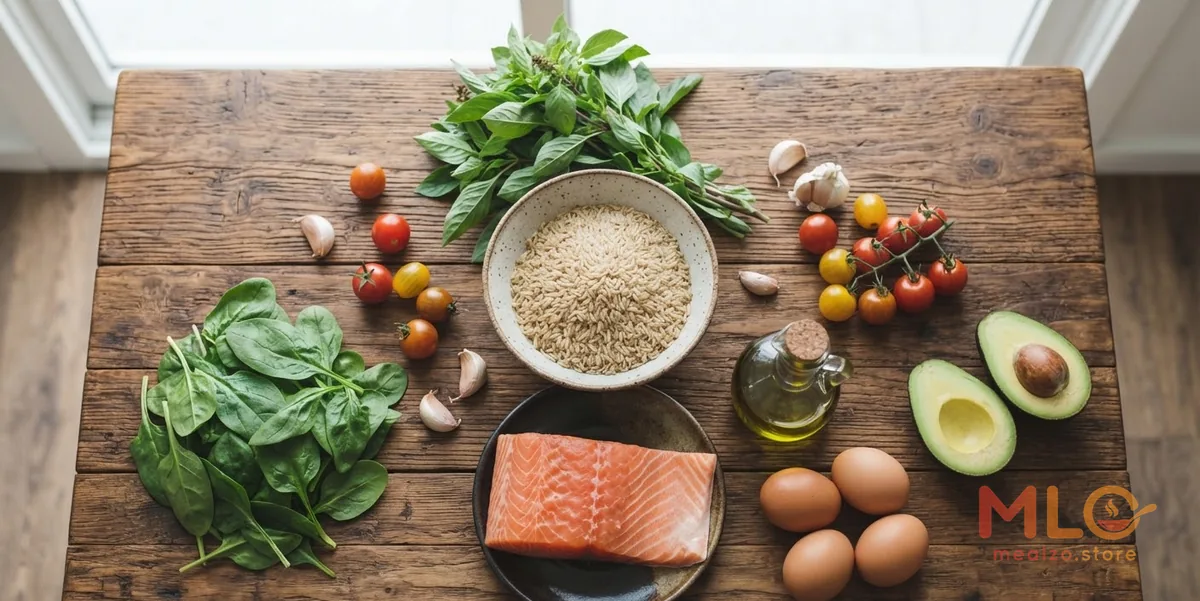
6. Choose 3 or 5 Meals Per Day
Mealzo also lets you choose between 3 and 5 meals per day.
This is another real package setting that should not be confused with cuisine.
Whether you select 3 meals or 5, the cuisine format remains the same mixed model combining Thai and international dishes.
A simple configuration therefore looks like this:
- choose one of the 12 plans,
- choose one of the six calorie levels,
- choose 3 or 5 meals per day,
- choose the package duration,
- declare relevant allergens.
There is no extra step where you select Thai, international or mixed cuisine.
7. Package Length Does Not Change the Cuisine Model
Mealzo packages are available for 3, 7, 14 or 30 days.
A longer package changes how long you use the selected configuration, but it does not create a different cuisine selector.
The same mixed-menu principle applies whether you choose 3 days or 30 days.
If you are deciding how long to order for, see the guide to choosing between 3, 7, 14 and 30 days.
You can also check current package options on the Mealzo pricing page.
Key takeaway: Package duration changes how long the plan runs, not whether the cuisine is Thai, international or mixed.
8. Allergens Are Handled Separately From Cuisine
Allergen declarations are another part of ordering, but they are not a cuisine preference.
Customers declare allergens when ordering. Dishes containing a declared allergen are automatically excluded from that customer's menu.
The kitchen is not allergen-free, so this filtering process is not a guarantee that meals are allergen-free.
This means the correct order of thinking is straightforward: choose the plan configuration you want, declare relevant allergens, and understand that the menu itself still follows the mixed Thai and international format.
Allergen filtering does not create a separate Thai or international menu choice.
9. The Menu Comes From One Kitchen in Bang Na
Mealzo operates from one kitchen in Bang Na and delivers meal plans across Bangkok.
The Thai and international dishes within the mixed menu come from that same Mealzo operation. They are not separate cuisine subscriptions running as different products.
That matters when reading plan descriptions because the mixed menu is part of one meal-plan system rather than a collection of separate Thai and international services.
For customers comparing options, it is therefore more accurate to think in terms of one Mealzo package with several selectable plan settings, not separate cuisine packages.
10. A Better Order for Choosing Your Mealzo Package
If cuisine is not a selectable setting, the package decision becomes easier to organise.
A practical order is:
- Choose the meal plan that matches how you want to eat.
- Choose one of the six calorie levels from 1200 to 2500 kcal.
- Choose 3 or 5 meals per day.
- Choose 3, 7, 14 or 30 days.
- Declare relevant allergens when ordering.
The cuisine question is already answered by the product model: every plan uses one mixed menu combining Thai and international dishes.
This is also the structure used in the Mealzo plan selection guide.
11. How to Think About Thai and International Dishes Without Treating Them as Options
You can still care about the balance between Thai and international food without pretending there is a cuisine selector.
The useful distinction is descriptive, not configurable.
When a Thai dish appears, it is part of the same mixed menu. When an international dish appears, it is also part of that same mixed menu. Neither one represents a separate package that the customer selected.
This makes the phrase Thai vs international useful for understanding the kinds of dishes that can appear, but not for describing the checkout process.
The checkout decision remains centred on plan type, calories, meal count, duration and allergen declarations.
12. Thai vs International Meal Plan: Practical Checklist
If you arrived here trying to decide between Thai and international cuisine, use this checklist instead:
| Question | Mealzo answer |
|---|---|
| Do I need to choose Thai cuisine? | No |
| Do I need to choose international cuisine? | No |
| Do I need to select Mixed? | No, every plan already uses one mixed menu |
| Will the menu contain Thai and international dishes? | Yes, the mixed menu combines both |
| Do I choose my meal plan? | Yes, from 12 plans |
| Do I choose calories? | Yes, from 1200 to 2500 kcal across six levels |
| Do I choose the number of meals? | Yes, 3 or 5 per day |
| Do I choose package length? | Yes, 3, 7, 14 or 30 days |
| Can I declare allergens? | Yes, when ordering |
Once those points are clear, you can compare the available Mealzo meal plans without looking for a cuisine selector that does not exist.
Key takeaway: Mealzo combines Thai and international dishes in one mixed menu. Your choices are the plan, calories, meal count, package duration and allergen declarations.
FAQ
Can I choose Thai-only cuisine?
No. Mealzo does not offer a separate Thai-only cuisine option. Every plan uses one mixed menu combining Thai and international dishes.
Can I choose international-only cuisine?
No. International cuisine is not a separate checkout option. International dishes appear as part of the mixed menu.
Do I need to select Mixed cuisine?
No. Mixed is not an extra setting you need to select. It is the cuisine format used across Mealzo plans.
Does cuisine change the calorie level I choose?
No separate cuisine selection is involved in choosing calories. Mealzo offers six daily calorie levels from 1200 to 2500 kcal, and the Mifflin-St Jeor calculator provides an estimate to help compare those levels.
Can I choose 3 or 5 meals per day?
Yes. Mealzo offers 3 or 5 meals per day. This is a separate package choice from the mixed cuisine format.
How long can I order a Mealzo package for?
Packages are available for 3, 7, 14 or 30 days.
How are declared allergens handled?
Dishes containing a declared allergen are automatically excluded from that customer's menu. The kitchen is not allergen-free, so this does not guarantee allergen-free meals.
Where are Mealzo meals prepared and delivered?
Mealzo operates from one kitchen in Bang Na and delivers meal plans across Bangkok.
Find a Meal Plan That Fits
Compare Mealzo plans or use the calculator to explore meal options for your needs.