Nam Prik, Dips and Thai Sauces in Bangkok: A Practical Guide by Mealzo Bangkok
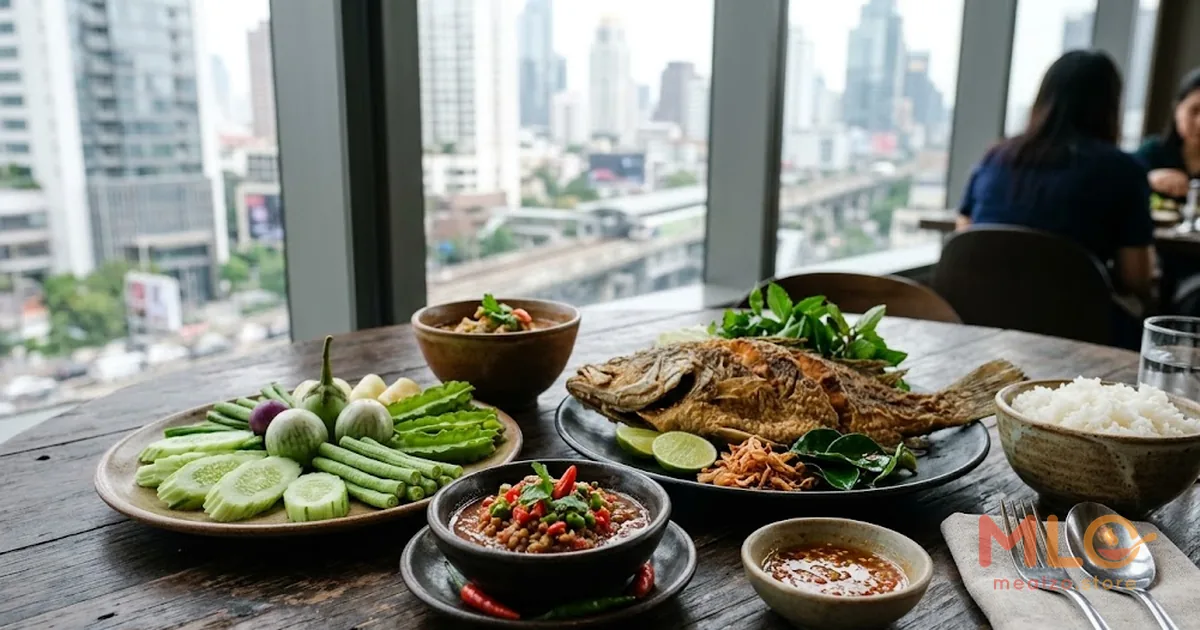
In Bangkok, the sauce often finishes the meal. A plate of rice, grilled meat or noodles may arrive from a street stall already seasoned, but the small bowl beside it, or the collection of condiments on the table, can change its character completely.
Fish sauce brings saltiness. Chilli vinegar adds sharpness and heat. Sweet chilli sauce changes the sweetness of fried food. A spoonful of nam prik can turn plain vegetables and rice into a meal with far more contrasting flavours than the ingredients suggest.
For people who eat Thai food regularly, understanding these condiments is more useful than avoiding them. The question is not whether nam prik, nam jim or table sauces belong in a balanced day. It is what they contribute, how much actually reaches the plate and what else is being eaten alongside them.
This guide to nam prik Thai sauces Bangkok eating habits covers familiar dips, chilli pastes and table condiments, from nam prik kapi and nam pla prik to Isaan jaew and noodle-shop seasoning caddies. It also explains how to enjoy their flavour while keeping the rest of the day's meals organised.
1. Why sauces sit at the centre of everyday Bangkok eating
Thai food often relies on contrast. Saltiness, sourness, sweetness, heat and aromatic ingredients work together, sometimes within the cooking itself and sometimes through condiments added at the table.
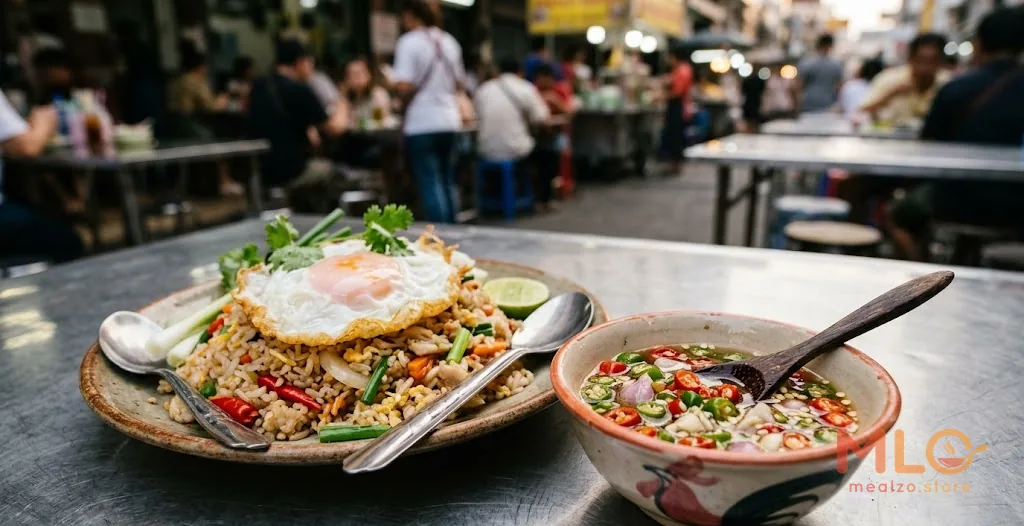
In Bangkok, that last adjustment is part of the eating experience. A noodle bowl might arrive with a relatively mild broth, leaving the customer to add fish sauce, dried chilli, vinegar or sugar. A plate of grilled meat may come with a sharp dipping sauce. Fried eggs and rice often invite a little nam pla prik.
The main dish does not always tell the complete nutritional story. The final seasoning matters because concentrated ingredients can change what the finished plate contains.
There is also an important distinction between nam prik and nam jim.
Nam prik commonly refers to chilli pastes or dips, often eaten with vegetables, rice and other accompaniments. Some are thick and substantial enough to function as a central part of the meal.
Nam jim generally refers to dipping sauces served alongside cooked food, such as grilled meat, seafood or fried snacks. These are often more liquid, although textures vary considerably.
Then there are table condiments, including fish sauce with chillies, soy-based sauces and the familiar noodle seasoning set.
None of these categories is completely rigid. Bangkok kitchens adapt recipes, and a sauce with the same name may taste noticeably different depending on who prepares it.
That variation is exactly why tasting before adding more seasoning is useful.
2. The main nam prik dips: shrimp paste, tomato and green chilli
Traditional nam prik deserves attention because it is not simply a seasoning poured over food. It can determine how the entire meal is assembled.
Nam prik kapi: shrimp paste with vegetables and fish
Nam prik kapi is built around fermented shrimp paste, chilli, garlic, lime and often a sweetening ingredient. The shrimp paste supplies an intense savoury and salty foundation, while lime and chilli create contrast.
It is commonly eaten with fresh or steamed vegetables, rice and fried fish. Some meals include other traditional accompaniments.
The vegetables are not an afterthought. Their fresh, mild flavours balance the concentrated dip, while rice and fish make the meal more substantial.
Because shrimp paste already contributes pronounced saltiness, a large coating of dip can change the final seasoning significantly.
Try a little with cucumber, long beans or steamed vegetables before deciding whether you want more.
Nam prik ong: minced pork and tomato
Nam prik ong is associated with northern Thai cooking but can also be found in Bangkok. It combines minced pork, tomatoes, chillies and aromatic ingredients into a soft, savoury dip.
Its texture is quite different from nam prik kapi. Tomato brings moisture and acidity, while minced pork gives the dip substance.
Some preparations are noticeably sweeter or saltier than others. That depends on the recipe and any additional seasoning.
Nam prik ong is often served with raw or lightly cooked vegetables. With rice alongside, it can become a satisfying everyday meal without needing an elaborate main dish.
Nam prik num: roasted green chilli
Nam prik num uses roasted green chillies, often combined with shallots, garlic and seasonings. Roasting gives the ingredients their distinctive aroma and softened texture.
It may be served with vegetables, sticky rice or other accompaniments. Some versions are quite fiery, while others are comparatively mild.
The roasted chilli flavour is the main attraction, but the saltiness depends on the additional ingredients.
These nam prik preparations illustrate why chilli dips cannot be judged by appearance alone. A thick green dip, a tomato-based dip and a shrimp paste dip can contribute very different things to the plate.
3. Nam pla prik, jaew, seafood dip and the sauces beside cooked food
Some of Bangkok's most familiar condiments are thin enough to spoon or pour directly over a meal.
Nam pla prik is a straightforward combination of fish sauce, sliced chillies and often lime juice. Garlic may also appear. It is especially familiar with rice dishes and fried eggs.
The fish sauce delivers concentrated saltiness. The chilli adds heat, while lime changes the acidity. Those contributions should be considered separately.
A little nam pla prik on an egg changes the flavour quickly. Covering the rice with it is a different use altogether.
For more context about the eggs commonly served with rice, see how Thai fried eggs and omelettes fit into everyday meals.
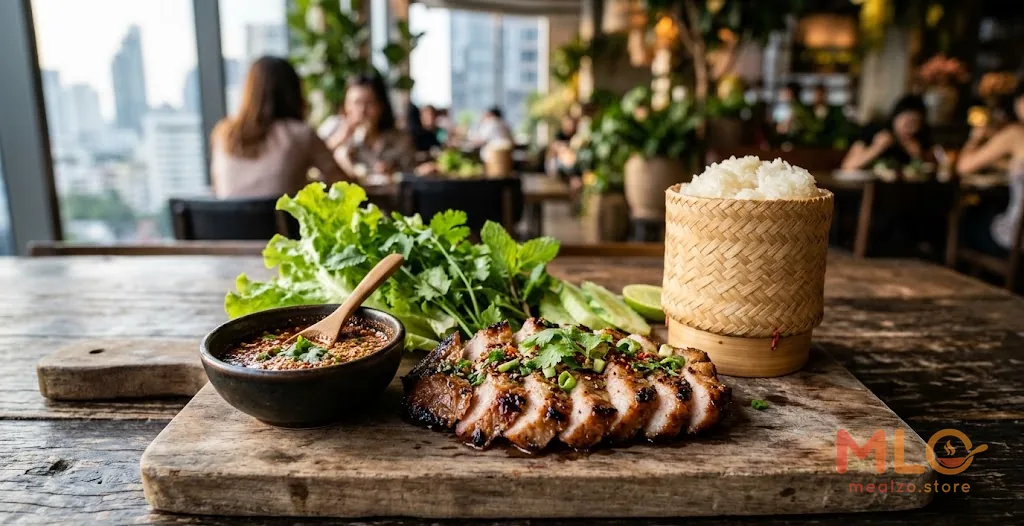
Nam jim jaew is closely associated with Isaan-style grilled meat. It typically combines fish sauce, lime or tamarind, chilli and toasted rice powder. Some versions contain added sugar and sliced shallots.
The toasted rice gives jaew its distinctive aroma and slightly grainy texture. Its sour and savoury character works particularly well with grilled pork or beef.
Nam jim seafood usually combines lime, garlic, fresh chillies and fish sauce, sometimes with sugar. It provides sharp acidity and fresh chilli heat against the relatively simple flavour of steamed or grilled seafood.
A small bowl may taste mostly sour and spicy, yet fish sauce and sugar can still be present.
The following table provides a practical comparison of common Bangkok condiments.
| Dip or sauce | Mostly made from | Where salt, sugar or heat comes from | Practical adjustment |
|---|---|---|---|
| Nam prik kapi | Shrimp paste, chilli, garlic, lime | Shrimp paste adds saltiness; chilli adds heat; sugar may be included | Use as a dip with vegetables rather than coating everything |
| Nam prik ong | Minced pork, tomato, chilli, aromatics | Seasonings determine saltiness and sweetness | Pair with fresh vegetables and rice |
| Nam prik num | Roasted green chilli, shallot, garlic | Chilli supplies heat; added seasonings supply salt | Taste before adding more seasoning |
| Nam pla prik | Fish sauce, sliced chilli, lime | Fish sauce supplies concentrated saltiness | Spoon onto selected bites instead of all the rice |
| Nam jim jaew | Fish sauce, lime or tamarind, chilli, toasted rice | Fish sauce adds salt; sugar may add sweetness | Dip grilled meat lightly |
| Nam jim seafood | Lime, garlic, chilli, fish sauce | Fish sauce adds salt; chilli adds heat; sugar may be included | Keep the sauce separate for dipping |
| Sweet chilli sauce | Chilli, sugar, vinegar, seasonings | Sweetness comes primarily from added sugar | Use a small side dish with fried food |
| Sriracha-style sauce | Chilli, vinegar, garlic, sugar, salt | Recipe-dependent salt, sugar and heat | Add gradually and taste |
| Soy-based dipping sauce | Soy sauce and possible additional seasonings | Soy sauce contributes concentrated saltiness; some blends contain sugar | Avoid automatically adding it to an already seasoned dish |
| Prik nam som | Chilli infused in vinegar | Vinegar adds acidity; chilli adds heat | Try it before reaching for fish sauce or sugar |
Key takeaway: The name of a sauce tells you its flavour direction, but the ingredients and the amount used determine what it adds to your meal.
4. Where the salt hides in Bangkok sauces
A plate does not need to taste overwhelmingly salty to contain several salty seasonings.
Consider a rice dish cooked with a savoury sauce, served with an egg and finished with nam pla prik. The cooking sauce and table condiment both contribute seasoning.
Fish sauce, fermented shrimp paste and soy sauce are concentrated ingredients. A spoonful can have a much greater effect than its size suggests.
This matters particularly when sauces are added without tasting the food first.
At a shophouse kitchen or food court, the cook has already made seasoning decisions. The condiment set allows the customer to make further adjustments, but it does not mean the dish needs them.
A practical approach is to separate the source of flavour from the desire for stronger flavour.
- If the food needs acidity, chilli vinegar or lime may achieve that without adding more fish sauce.
- If it needs heat, dried chilli can change the spiciness without automatically increasing saltiness.
- If the dish already tastes savoury, try eating it as served before reaching for soy sauce.
- If a salty dip accompanies grilled meat, use it for selected bites rather than every mouthful.
These adjustments will not remove the salt already present in cooked food. They simply give you more control over additional seasoning.
For a broader discussion of seasoning in rice plates, broths and cooked dishes, see salt and sodium in everyday Thai food.
5. Where the sugar hides: sweet chilli, sriracha and noodle caddies
Not every sweet ingredient appears in a dessert.
Sweet chilli sauce is a familiar accompaniment to fried chicken, spring rolls and other fried snacks. Sugar is central to its sweet, sticky character, alongside chilli and vinegar.
That sweetness can be easy to overlook because the sauce is served as a condiment rather than described as part of the dish.
Sriracha-style sauces are different. They are usually chilli-forward, with vinegar, garlic, salt and sugar contributing to the finished flavour. Some are sharper, some sweeter and some more intensely seasoned.
The noodle table caddy creates another opportunity for sugar to enter a meal almost unnoticed.
A typical set may contain:
- Sugar for sweetness.
- Dried chilli flakes for heat.
- Chilli vinegar, or prik nam som, for acidity.
- Fish sauce for saltiness.
Customers often adjust their noodles by habit, particularly when ordering a familiar dish. Sugar may go into the bowl before the broth or noodles have even been tasted.
There is nothing inherently unusual about wanting a sweet-sour balance. The distinction is whether the sweetness comes from the dish itself, the added condiment or both.
A practical experiment is to taste the broth first, then decide which flavour is actually missing.
For fried food, sweet chilli sauce can also be kept in a separate dish so the coating does not absorb more sauce than intended.
6. Chilli heat is not the same thing as salt or sugar
Spiciness is a sensation, not a reliable measure of how salty or sweet a sauce is.
The heat from chillies comes mainly from capsaicinoids, which activate heat-sensitive receptors in the mouth. Saltiness and sweetness come from different ingredients and sensory mechanisms.
A fiercely hot sauce may have relatively little sweetness, while a mild sauce may contain substantial added sugar. Likewise, a sour and spicy seafood dip may still contain concentrated fish sauce.
This distinction matters when asking a cook to adjust a dish.
Requesting less chilli does not necessarily reduce the fish sauce or sweetener used in the recipe. Asking for less seasoning may not reduce the chilli.
Chilli tolerance also varies. Some Bangkok residents enjoy fresh bird's eye chillies daily, while others find a small amount uncomfortable. Neither preference says anything definitive about the rest of a person's diet.
When ordering, it helps to be specific. Ask for less chilli if you want less heat, less fish sauce if that ingredient is being added separately, or sauce on the side if you want to control the finished seasoning yourself.
A similar distinction applies to drinking water in Bangkok's hot weather. Choosing how much chilli you enjoy and managing fluid intake are separate decisions, discussed further in hydration and water in Bangkok's heat.
7. Nam prik as a vehicle for vegetables and fibre
The most overlooked feature of nam prik is often what comes alongside it.
A traditional nam prik meal can include a generous assortment of raw, blanched or steamed vegetables. Cucumber, cabbage, long beans, eggplant and leafy vegetables all offer contrasting textures for the dip.
For someone whose usual lunch is mostly rice and meat, this is an accessible way to change the composition of a plate without abandoning Thai flavours.
Vegetables contribute fibre as well as variety. The chilli paste provides a strong flavour that makes plain steamed vegetables more interesting to eat.
This works especially well when the dip is treated as an accompaniment rather than the entire meal.
A practical plate might include rice, a selection of vegetables, a protein-containing dish and some nam prik for seasoning. The proportions can change depending on appetite, preferences and what is available.
For more ideas about ordinary vegetable dishes and fibre-containing ingredients, read vegetables and fibre in Bangkok meals.
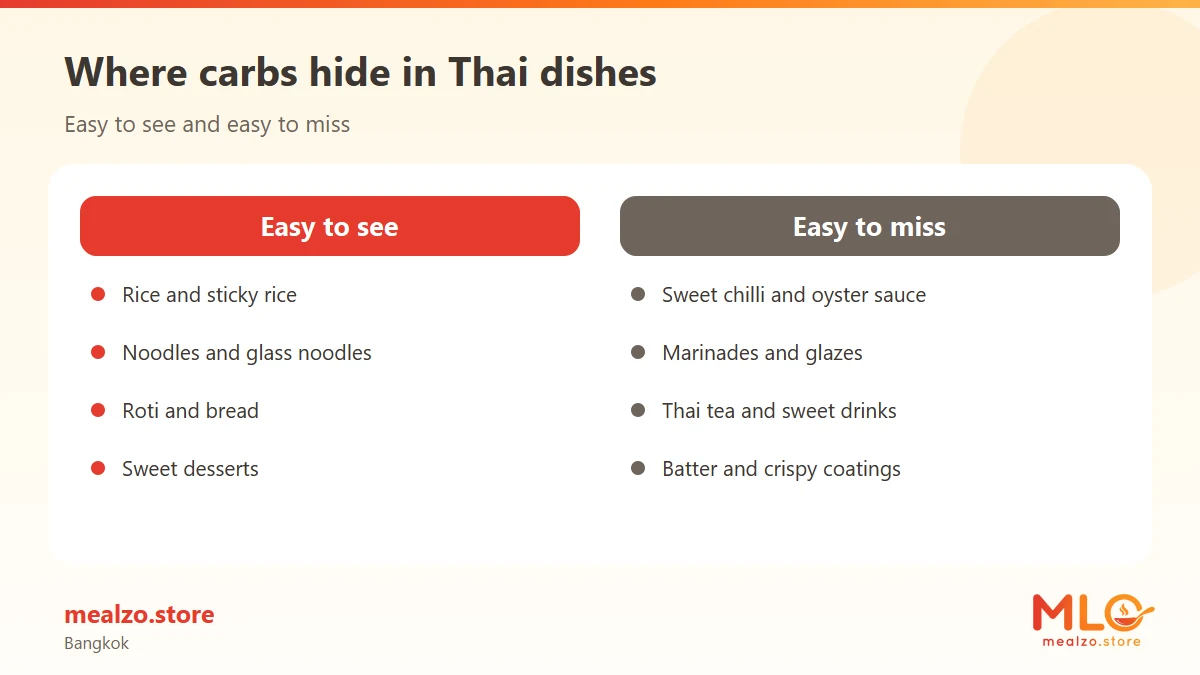
It is also useful to notice what accompanies the dip. Nam prik with vegetables and rice is different from nam prik served with fried items, sticky rice or sweetened accompaniments.
Rice and other carbohydrate-containing foods are not a problem simply because they accompany chilli paste. The useful question is what the complete plate contains, rather than treating the sauce as the whole meal.
Key takeaway: Nam prik can make vegetables a central part of a rice meal, especially when fresh or steamed vegetables are served alongside the dip.
8. Dipping versus pouring: why the method changes the meal
A sauce can be served in a bowl beside the food or spread across the entire plate. Those arrangements produce different eating experiences.
Dipping allows you to decide which bites need extra flavour. Pouring distributes the sauce more broadly and makes it harder to judge how much has been added.
Neither method is automatically wrong. Some dishes are intended to absorb their sauce, and certain noodle preparations depend on seasoning being mixed throughout.
The distinction becomes useful when the sauce is optional.
| Sauce used for dipping | Sauce poured over the whole plate |
|---|---|
| The eater chooses which bites receive extra seasoning | Most of the dish receives the additional seasoning |
| The remaining sauce stays separate | The sauce may soak into rice, noodles or a coating |
| Saltiness, sweetness and heat can vary between bites | The added flavour becomes more evenly distributed |
| The amount used is easier to observe | It can be difficult to judge how much was added |
| Works naturally with grilled meat, vegetables and fried snacks | May suit dishes intended to be mixed or coated |
A side dish of jaew beside grilled meat, for example, allows the toasted rice and sour chilli flavour to accompany selected bites without overwhelming the meat.
With nam pla prik, lightly seasoning the egg rather than pouring the sauce across the rice can create a similar contrast.
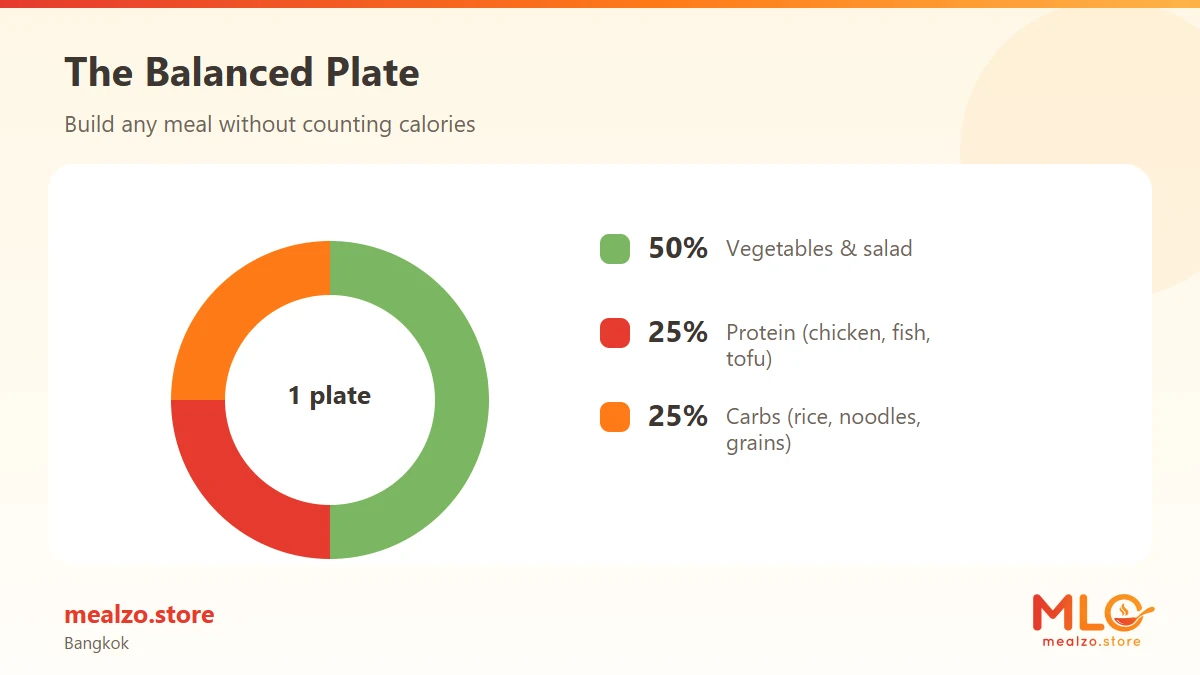
This is also where the overall plate matters. Rice, vegetables, protein-containing foods and sauce each have different roles. Adjusting the condiment does not replace considering the composition of the meal.
9. Fried foods, noodles and everyday rice plates
Bangkok offers countless variations on the rice plate: stir-fried meat with rice, fried rice, an egg over rice or grilled meat served with a dipping sauce.
Many dishes already contain sauces used during cooking. Adding more at the table changes the final flavour and seasoning.
With fried food, the coating and cooking method matter independently of the dipping sauce. Sweet chilli sauce adds sweetness to a dish that has already been fried, while jaew may contribute sourness, chilli and savoury seasoning.
With noodle soups, the broth is seasoned before the customer reaches for the condiment caddy. Sugar, fish sauce and chilli vinegar then alter the soup further.
Dry noodles are different again. Seasonings may cling directly to the noodles rather than being diluted throughout a broth.
For everyday rice plates, the simplest question is whether the dish actually needs another layer of sauce.
A fragrant plate of stir-fried basil with rice may already have substantial savoury flavour. A fried egg served beside plain rice might benefit from a little nam pla prik. Both situations are common, but they invite different decisions.
See everyday one-plate rice dishes in Bangkok for more about how the main ingredients and cooking sauces work together.
10. Fresh dips, food handling and Bangkok's hot weather
Freshly prepared dips containing chopped herbs, garlic, lime, cooked meat or seafood ingredients need sensible handling, particularly in Bangkok's heat.
Warm outdoor conditions can make storage and serving practices more important. A freshly mixed sauce is not automatically safe merely because it contains chilli, lime or vinegar.
At a street stall, look for sauces that are protected from contamination and handled with clean utensils. Busy stalls with rapid turnover may mean sauces spend less time waiting, although customer traffic alone cannot establish food safety.
Prepared dips containing perishable ingredients should be kept appropriately cool rather than left sitting in the heat.
The same applies at home. Refrigerate perishable leftovers promptly and do not assume that strong chilli or sourness makes storage conditions irrelevant.
Shrimp paste is made from shrimp, while fish sauce is made from fish, which matters for anyone avoiding seafood because of allergies or dietary restrictions.
Other sauces may contain soy, wheat or additional ingredients depending on the recipe. Names and appearance are not enough to confirm suitability for someone with dietary restrictions.
Anyone with high blood pressure, diabetes, an eating disorder or another medical condition affecting diet should follow their own doctor's guidance.
11. Simple adjustments when ordering at a Bangkok street stall
There is no need to turn every meal into an ingredient investigation. A few repeatable habits make it easier to enjoy familiar condiments without losing track of what they add.
Start by tasting the food. Then decide whether you want more acidity, heat, sweetness or saltiness. Those are different requests, even if a prepared sauce combines them.
When a sauce is optional, asking for it separately provides flexibility. This is especially useful with fried food, grilled meat and rice dishes served with nam pla prik.
The following habits work across many street stalls and food courts:
- Taste the noodles before adding sugar, fish sauce or chilli vinegar.
- Ask for a dipping sauce separately when the dish allows it.
- Try nam prik with the vegetables provided rather than concentrating it only on rice.
- Choose acidity or chilli separately when you want those flavours without additional salty sauce.
- Consider what is already in the meal before adding sweet chilli sauce or a soy-based condiment.
- Leave unused sauce in its side dish if the food already tastes right.
There are limits to these adjustments. A premixed sauce cannot always be separated into its components, and a dish whose sauce is cooked into the main ingredients cannot be changed at the table.
Some preparations also depend on their particular balance of flavours. Removing an ingredient may produce a noticeably different dish.
The aim is flexibility, not making every Thai meal taste restrained.
Key takeaway: Taste the finished dish before seasoning it, then adjust the specific flavour you want rather than adding every condiment by habit.
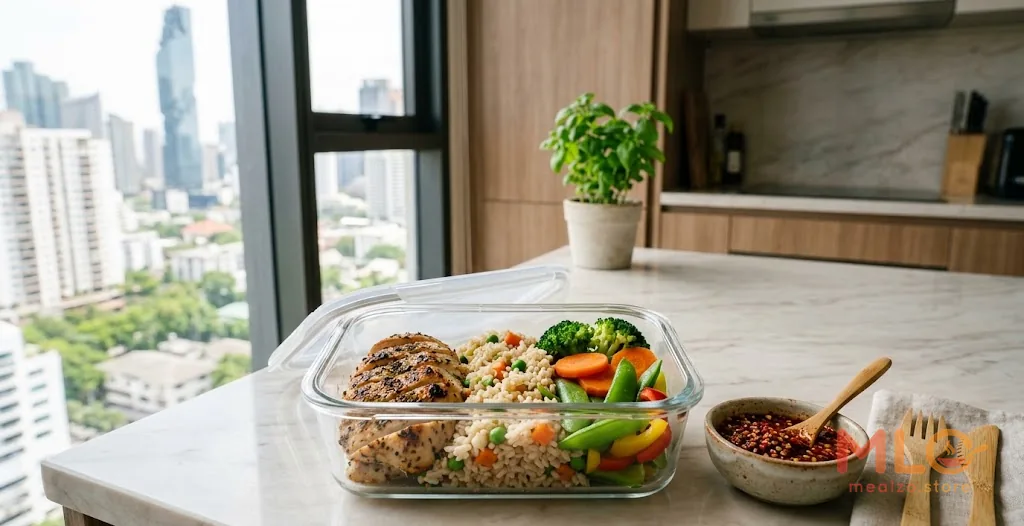
12. How Mealzo Bangkok meal plans fit around sauce-rich street food
For people living and working in Bangkok, eating is rarely identical from day to day. Lunch may come from a food court, dinner may be prepared at home and another meal may be built around grilled meat, rice and a strong dipping sauce.
Meal planning can provide structure without requiring every street meal to follow a fixed formula.
Mealzo Bangkok operates a kitchen in Bang Na, Bangkok, preparing meals fresh daily and delivering across Bangkok. Meals are organised through plans, so customers can have their main meals prepared in advance rather than making every food decision at the last moment.
The available selection includes 12 meal plans: Balanced, Weight Loss, High Protein, Vegetarian, Vegan, Keto, Low-Carb, Gluten Free, Easy-to-Digest, Pescatarian, No Fish & Seafood, and Dairy & Egg Free.
Every plan uses a mixed cuisine, combining Thai and international dishes within the same plan. There is no separate choice between Thai and international cuisines.
Customers can select from 6 daily calorie levels ranging from 1200 to 2500 kcal, choose 3 or 5 meals per day, and select a package lasting 3, 7, 14 or 30 days.
Meals are delivered through a customer-selected window: morning 06:00-09:00 or evening 17:00-20:00.
The website and mobile app support 8 languages: Thai, English, Polish, German, French, Russian, Simplified Chinese and Burmese.
The app also includes a calorie calculator using the Mifflin-St Jeor formula. Its calculation is an estimate, not medical advice.
For allergens, customers declare relevant ingredients from 9 allergen groups. Dishes containing a declared allergen are not assigned to that customer. This describes the assignment process, not a guarantee that a meal is allergen-free.
The practical connection to Bangkok sauces is straightforward. Having prepared meals organised in advance can make it easier to plan around occasional street meals with strong condiments. It does not require treating nam prik, jaew or chilli vinegar as foods to avoid.
It also does not mean that the plans necessarily contain the specific sauces discussed here.
Readers can explore Mealzo Bangkok meal plans to see how prepared meals might fit their routine.
Whether you prefer grilled pork with jaew, vegetables with nam prik kapi or noodles adjusted at the table, the most useful habit remains understanding what the sauce contributes and choosing the amount that suits the meal.
FAQ
Is nam prik always very spicy?
No. Nam prik recipes vary considerably. Nam prik num can have noticeable roasted chilli heat, while nam prik ong may be milder depending on the chillies and seasonings used. Nam prik kapi can also range in intensity. Taste a small amount before adding more, particularly when trying an unfamiliar preparation.
Is nam pla prik mainly a chilli sauce or a salty sauce?
Nam pla prik contains both chilli and fish sauce, but much of its saltiness comes from the fish sauce. Lime may add acidity, and sliced chillies provide heat. It is possible for the condiment to taste intensely spicy and salty at the same time. Adding more chilli alone does not create the same effect as adding more fish sauce.
Does eating nam prik with vegetables make the whole meal balanced?
Not automatically. Vegetables contribute fibre and variety, and nam prik can make them more appealing alongside rice. The overall composition still depends on the other foods served, including rice, protein-containing dishes, fried accompaniments and any additional sauces. The dip itself does not determine the balance of the meal.
Should I avoid sweet chilli sauce with fried food?
Avoidance is not necessary simply because a sauce tastes sweet. Sweet chilli sauce contains added sugar and is commonly paired with fried food. Keeping it separately allows you to decide how much sweetness you want. The amount used and the rest of the meal provide more useful context than labelling the condiment itself as acceptable or unacceptable.
Can I still eat Bangkok street food while using a Mealzo Bangkok meal plan?
Yes, as a matter of personal meal planning, although the overall arrangement depends on how you use your selected plan. Mealzo Bangkok provides prepared meals according to the plan and package chosen. A street meal can be considered within your wider eating routine, with attention to the main ingredients, cooking method and added sauces. The service does not control what you add to food purchased elsewhere.
Mealzo Bangkok is a kitchen and meal delivery service operating exclusively in Bangkok, Thailand. We are not affiliated with similarly named services outside Thailand.
Find a Meal Plan That Fits
Compare Mealzo plans or use the calculator to explore meal options for your needs.