Seafood in Bangkok: Grilled, Steamed and Fried on a Balanced Day
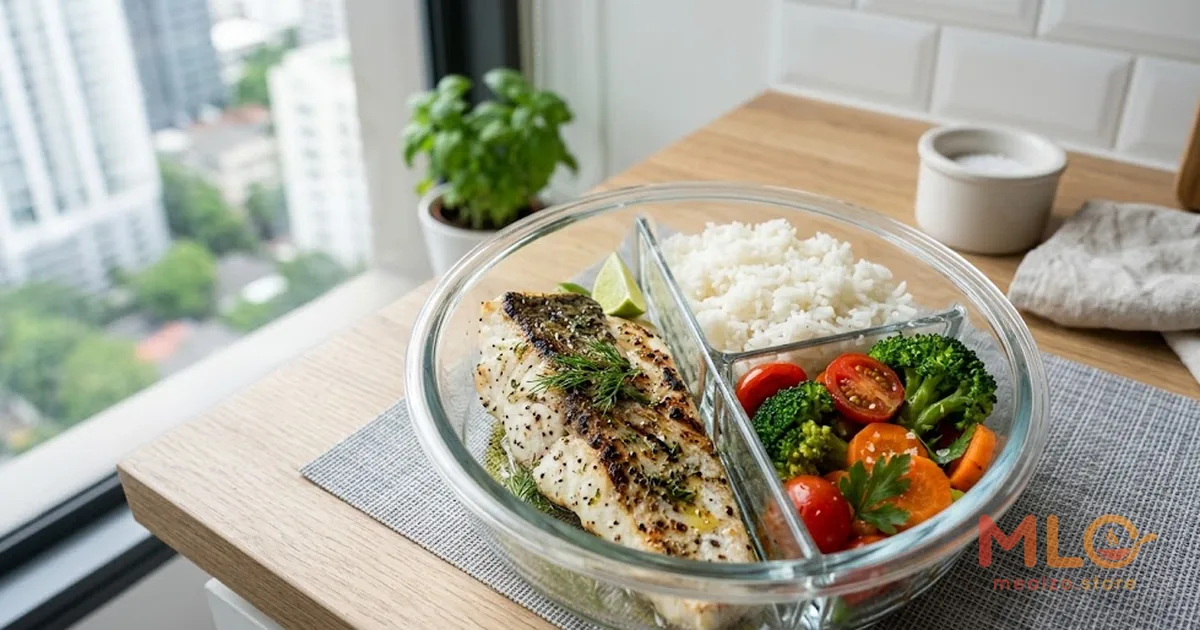
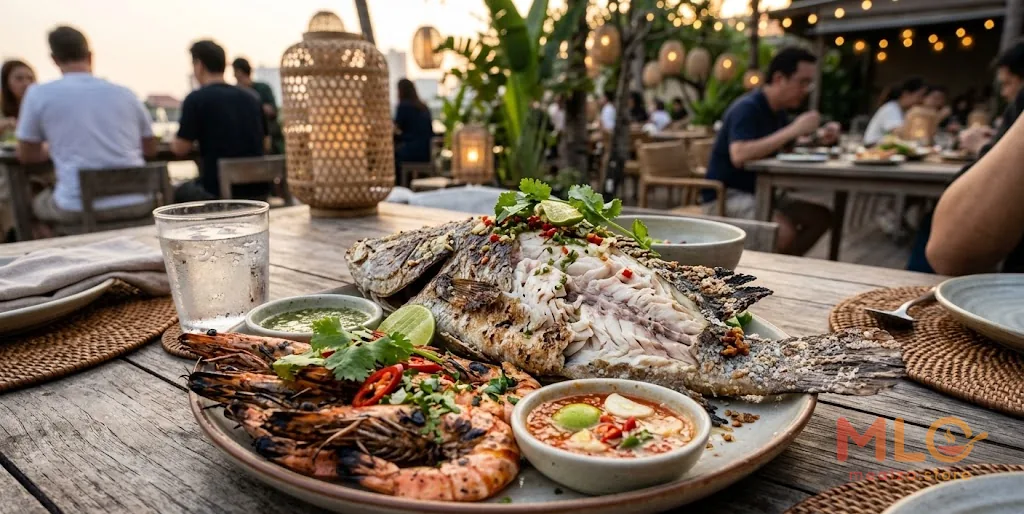
Bangkok has a way of making seafood difficult to resist. Grilled prawns arrive with smoky shells and a bowl of sharp green dipping sauce. Salt-crusted fish is opened at the table, revealing tender flesh beneath its thick outer coating. Steamed sea bass comes swimming in lime, garlic and chilli, while fried calamari and shrimp cakes appear whenever friends gather around a crowded restaurant table.
Seafood is part of everyday eating here, whether you live near a busy night market, order dinner to your condominium or meet family for a weekend seafood feast. The question is rarely whether seafood belongs in a balanced diet. It is what happens between choosing the fish and finishing the meal.
For anyone interested in seafood Bangkok balanced eating, the cooking method, sauces, side dishes and overall order make a greater difference than the seafood label alone. A plate of steamed fish and vegetables creates a different meal from battered fish with rich sauce and a large serving of rice, even when both begin with a similar ingredient.
At Mealzo Bangkok, the approach to balanced eating is built around planning meals in advance rather than treating restaurant food as something to avoid. You can enjoy a generous seafood dinner and still make thoughtful choices about what you eat during the rest of the day.
1. Why seafood works as a protein base in Bangkok
Fish, prawns, squid and crab provide protein and, in their natural state, many commonly eaten varieties contain comparatively little fat. That makes seafood a useful starting point when building meals around protein, vegetables and an appropriate amount of rice or noodles.
The variety available in Bangkok also makes seafood practical for regular meals. A street stall may serve grilled fish with herbs, while a seafood restaurant offers steamed prawns, squid with lime dressing or fish in a clear soup. Seafood delivery can bring similar dishes home without requiring much preparation.
The advantage is flexibility. Fish absorbs the character of its seasoning, prawns can be grilled or added to soup, and squid works in stir-fries and hotpot. Different preparations can deliver quite different eating experiences without changing the main protein source.
However, seafood does not automatically make the finished dish lighter. A lean piece of fish can be coated in flour and fried, covered in a creamy sauce or served alongside rich side dishes. The cooking process changes what eventually reaches the plate.
It also helps to remember that not every seafood choice is equally lean. Species differ naturally, and fish with richer flesh can contribute more fat than a lean white fish even before cooking. That is not a reason to avoid them, but it is a reason to consider the actual food rather than relying on the word "seafood".
When choosing a seafood-based meal, consider:
- The protein: grilled prawns, steamed fish, squid, crab or another seafood you enjoy.
- The preparation: steamed, grilled, simmered, stir-fried or deep-fried.
- The accompaniments: vegetables, herbs, rice, noodles, sauces and other shared dishes.
- The overall day: whether your other meals have already included plenty of vegetables or richer preparations.
Seafood provides the foundation. The completed meal depends on everything around it.
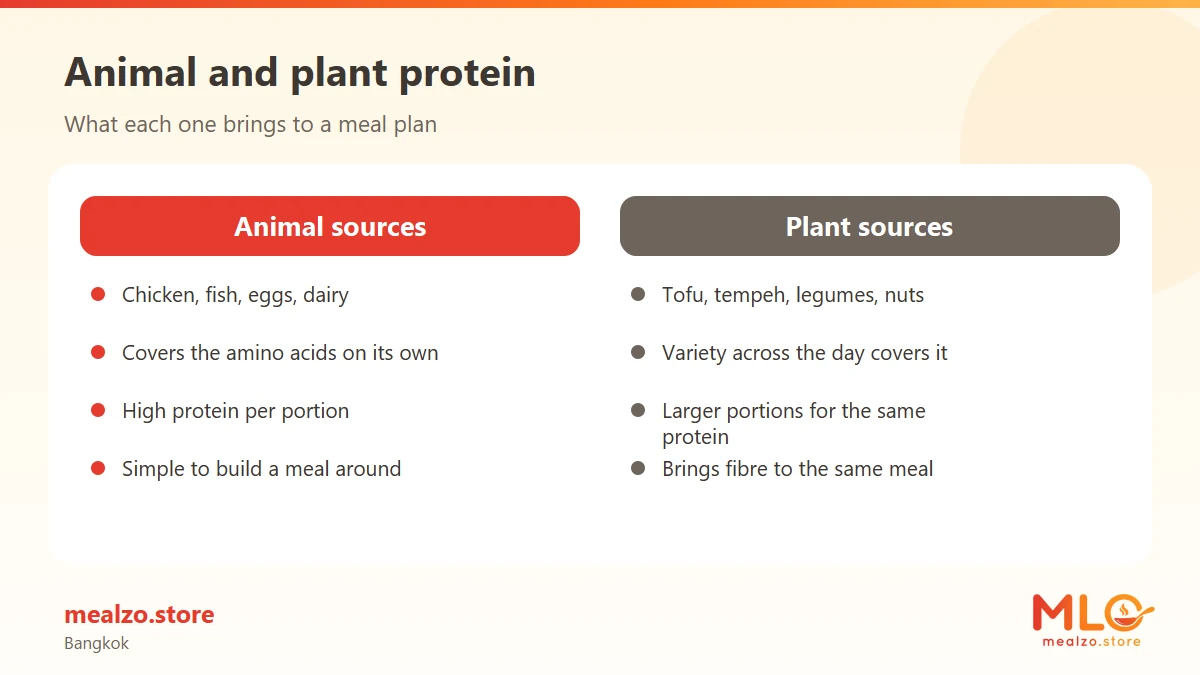
Key takeaway: Seafood can be a useful protein base, but cooking methods and accompaniments determine how light or rich the finished meal becomes.
2. Grilled seafood: smoky flavour without relying on heavy sauces
Grilled seafood is one of Bangkok's most appealing ways to enjoy fish and shellfish. The aroma of prawns cooking over charcoal is familiar at night markets, and seafood restaurants often display fresh fish and shellfish ready for the grill.
Goong phao, or grilled prawns, is a straightforward example. The prawns may need little more than heat and careful cooking to develop their distinctive flavour. Their natural juices provide richness without requiring a thick coating or creamy dressing.
Pla pao, the salt-crusted grilled fish, is another familiar choice. The crust helps protect the fish while it cooks, and diners usually pull apart the flesh and eat it with herbs, vegetables and dipping sauce.
Despite the name, the salt crust is not necessarily eaten. Still, salt and sauces can contribute to the finished meal, so it makes sense to consider what accompanies the fish.
Grilled scallops and oysters, often ordered as hoi shell, require a closer look. Some are served simply, while others arrive under melted butter, cheese, garlic butter or sweet seasoning. The shellfish itself may be relatively light, but the toppings can substantially change the dish.
A practical grilled seafood order could include prawns or fish, fresh vegetables and rice served separately. Keeping the dipping sauce in its bowl allows everyone to control how much they use.
If you prefer buttery scallops, order them because you enjoy them. Just recognize that they are a richer preparation, rather than treating all grilled seafood as interchangeable.
3. Steamed fish and seafood soups: lighter cooking, concentrated seasoning
Steaming preserves the natural texture of fish without requiring the oil used for frying. This is particularly noticeable with pla kapong neung manao, steamed sea bass with lime and chilli.
The fish usually arrives in an intensely aromatic mixture of lime juice, garlic, chilli and savoury seasoning. The sharpness makes it satisfying even without a creamy sauce.
But there is a distinction between the steamed fish and the liquid surrounding it. The seasoning may contain fish sauce and other salty ingredients. Eating the fish with some of the dressing is different from spooning the entire liquid over rice.
Seafood soups create a similar situation.
Tom yum goong combines prawns with fragrant ingredients such as lemongrass, galangal, lime leaves and chilli. Tom yum talay brings mixed seafood into the same general style of soup.
Clear versions may contain relatively little added fat, depending on their preparation. Creamier versions can include evaporated milk, chilli paste or other rich ingredients.
The broth is where much of the seasoning sits. Fish sauce, prepared pastes and concentrated stock can contribute considerable salt even when the bowl looks light.
This does not mean you need to leave every drop behind. It means the broth should be considered part of the meal rather than an unlimited accompaniment.
With seafood hotpot or shabu, you have a little more control. Fish, prawns, squid, mushrooms and leafy vegetables can cook directly in the broth. However, seasoning concentrates as broth reduces, and sauces used for dipping can add another layer of salt and sweetness.
A useful approach is to focus on the cooked ingredients, include plenty of vegetables and enjoy the broth according to its richness and seasoning.
4. Fried seafood and curries: where richness builds up
Fried calamari, garlic-fried fish and shrimp cakes are popular for good reason. Crispy surfaces, savoury aromas and contrasting textures make them particularly enjoyable in shared meals.
The difference begins with preparation.
Deep-fried calamari may be coated in batter or flour before entering hot oil. That coating absorbs some oil and forms the crisp outer layer. A similar process applies to fried fish and tod man goong, Thai shrimp cakes.
Pla kapong tod kratiam, fried sea bass with garlic, may be prepared in different ways. Some versions use extensive frying, while others involve less oil. The amount of garlic does not determine the richness. The frying method does.
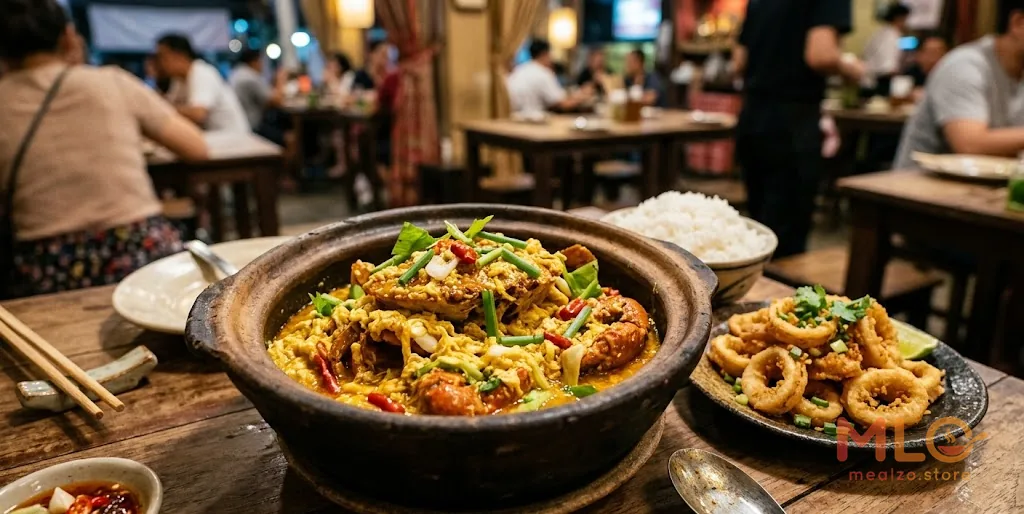
Curry crab, pu pad pong karee, is another example. The crab provides protein, but the finished sauce often includes curry powder, egg, milk or other creamy ingredients and cooking oil. The sauce can be particularly appealing with rice, encouraging diners to keep eating after most of the crab is gone.
Other seafood curries may use coconut milk, curry paste or shrimp paste, depending on the recipe. Coconut milk adds richness, while shrimp paste and prepared curry bases can contribute concentrated salt.
The table below shows why dish names alone do not tell the full story.
| Bangkok seafood dish | Cooking method | Where richness or salt comes from | Practical adjustment |
|---|---|---|---|
| Goong phao, grilled prawns | Grilling | Dipping sauce and optional butter | Keep the sauce separate and add vegetables |
| Pla pao, salt-crusted fish | Grilling | Salt crust and dipping sauce | Enjoy the flesh with herbs and vegetables |
| Grilled scallops or oysters | Grilling | Butter, cheese or sweet toppings | Choose simpler seasoning when preferred |
| Pla kapong neung manao | Steaming | Fish sauce and seasoned lime broth | Eat the fish without pouring all the liquid over rice |
| Tom yum goong or tom yum talay | Simmering | Stock, fish sauce, chilli paste and optional creamy ingredients | Focus on seafood and vegetables rather than finishing all the broth |
| Fried calamari | Deep-frying | Batter, absorbed oil and sauces | Share it alongside a steamed or grilled dish |
| Pla kapong tod kratiam | Frying | Cooking oil, fried garlic and seasoning | Pair with vegetables and moderate the accompanying rice |
| Tod man goong | Deep-frying | Oil, coating and sweet dipping sauce | Treat it as part of the shared order rather than the main protein |
| Pu pad pong karee | Stir-frying in curry sauce | Oil, egg, milk and seasoned sauce | Take crab with some sauce and serve rice separately |
For a broader explanation of frying methods, see how cooking oil changes fried food in Bangkok.
The aim is not to remove crispy seafood from the table. It is to recognize the extra ingredients and balance them with dishes prepared differently.
Key takeaway: Fried seafood and creamy curries can be substantially richer than steamed or simply grilled versions of the same protein.
5. Dipping sauces and seafood broth: small additions with a big influence
Nam jim seafood is central to Bangkok seafood eating. Its mixture of lime juice, chilli, garlic, fish sauce and sometimes sugar creates the sharp, salty, spicy flavour that makes grilled prawns and steamed fish so memorable.
Nam jim jaew offers a different character, with chilli, lime, fish sauce and often toasted rice powder. It is more commonly associated with grilled meats, but can also accompany seafood.
Both sauces may taste predominantly sour and spicy. Those strong flavours can disguise how much salt or sugar is present.
The way you use sauce matters. Dipping the edge of a prawn into nam jim is different from emptying a bowl over the entire seafood platter.
This becomes especially relevant when the seafood is already seasoned. A steamed fish might arrive with a salty lime dressing, while grilled shellfish may contain butter and seasoning before you add anything else.
At restaurants and street stalls, sauce recipes vary. Some are sharper, some sweeter, and others noticeably saltier. There is no reliable way to judge their composition from colour alone.
You can keep the flavour without making sauce the centre of the meal:
- Taste the seafood before adding dipping sauce.
- Dip individual bites rather than pouring sauce over the full dish.
- Use fresh lime, herbs or chilli when available to adjust flavour.
- Be aware of sauces already incorporated into curry, soup or stir-fry.
- Consider whether rice is absorbing large amounts of seasoned liquid.
Seafood hotpot deserves particular attention. The broth may taste mild at first, but dipping sauces, prepared soup bases and ingredients cooking together can create a heavily seasoned combination.
If you regularly eat soups and Thai restaurant dishes, where salt and sodium hide in Bangkok food explores the same issue across other meals.

There is no need to measure every dip. A simple change in how you use sauce can alter the overall meal while preserving the flavours that make Bangkok seafood distinctive.
6. Rice and noodles: the often-forgotten half of the meal
Seafood frequently gets all the attention, but rice and noodles shape the final meal just as much.
Consider curry crab. The crab may be the reason you ordered it, but the curry sauce almost invites extra rice. The same happens with fried fish covered in garlic sauce or a rich seafood stir-fry.
Rice is not the problem. It provides carbohydrate and works naturally alongside Thai food. The question is how much you eat relative to the seafood, vegetables and other dishes already on the table.
At a seafood restaurant, it is easy to order rice automatically, especially when everyone receives an individual serving before the shared dishes arrive.
You may then add noodles in seafood hotpot, eat fried shrimp cakes and continue taking rice to finish the curry sauce.
None of these decisions is unusual. Together, however, they produce a meal quite different from the seafood platter you originally imagined.
A practical approach is to look at the entire order before deciding how much rice or noodles you want. If the table contains several fried dishes and a thick curry, you might prefer a smaller accompaniment and more vegetables.
If the meal is based on steamed fish, clear soup and stir-fried greens, rice may have a more prominent place.
The same principle applies to seafood delivery. Before adding extra noodles or fried rice, consider what already comes with the main dish.
For more context on everyday Thai dishes, see how familiar Thai dishes differ by preparation.
The objective is not to eliminate carbohydrates. It is to make them an intentional part of the meal rather than something added repeatedly without noticing.
7. How to order a balanced shared seafood meal
Seafood restaurants in Bangkok are built around sharing. Friends and families order dishes for the table, and everyone reaches for whatever looks appealing.
This makes dining sociable, but it also makes portions difficult to judge. There is no clear boundary between your plate and the rest of the order.
A table might contain grilled prawns, fried calamari, curry crab, shrimp cakes, seafood soup, rice and several dipping sauces. Each dish contributes something different, but the richer preparations can dominate the meal.
A more balanced shared order does not have to be smaller or less interesting. It simply distributes the choices differently.
| Part of the shared order | Heavier version | More balanced version |
|---|---|---|
| Main seafood | Fried fish with rich sauce | Steamed sea bass with lime and chilli |
| Additional seafood | Fried calamari and shrimp cakes | Grilled prawns with sauce served separately |
| Soup | Creamy seafood soup with heavily seasoned broth | Clear tom yum talay with vegetables |
| Vegetables | Few vegetables beyond garnish | Leafy greens, mushrooms or fresh vegetable accompaniments |
| Rice and noodles | Large amounts added throughout the meal | Rice or noodles served according to appetite and the other dishes |
| Dipping sauces | Poured directly over seafood and rice | Used selectively with individual bites |
This is a flexible example, not a compulsory menu. You could retain the fried calamari and choose steamed fish instead of another fried main. Or keep curry crab while ordering grilled seafood and vegetables alongside it.
A useful shared-order strategy is to make a simply prepared seafood dish the centre, include a vegetable dish and select the richer preparations everyone genuinely wants.
It also helps to serve food onto your own plate rather than continuously eating from the middle of the table. That makes it easier to notice the combination of seafood, vegetables and rice you have actually eaten.
At a night market, the same idea can work across purchases. You might choose grilled prawns, a vegetable dish and rice rather than collecting several fried snacks simply because they are sold separately.
Key takeaway: A balanced shared seafood order depends on the combination of dishes, not whether every individual dish is light.
8. Seafood hotpot, shabu and delivery: making choices without cooking everything yourself
Seafood hotpot and shabu offer a particularly adaptable way to eat in Bangkok. Mixed seafood sets may include prawns, fish, squid and shellfish, while vegetables and mushrooms cook in the same broth.
Because the ingredients are often cooked directly at the table, you can see much of what goes into the meal.
The sauces and soup base require more attention. A spicy broth may contain concentrated seasoning, and creamy bases create a different result from a clear broth. Adding noodles, processed hotpot items and several dipping sauces changes the composition further.
You can build the meal around seafood and vegetables, then add noodles or rice according to appetite. There is no need to avoid a favourite broth, but it is useful to recognize what it contributes.
Seafood delivery involves a different trade-off. You gain convenience, but you may have less visibility into the cooking method, oil or seasoning.
A dish described as garlic seafood could be lightly stir-fried or prepared with considerably more oil. A grilled seafood platter may arrive with rich toppings already added.
Where ordering options permit, choosing sauces separately or requesting a simpler preparation can help. When those options are unavailable, balance can come from the rest of the meal instead.
For someone returning home late, the most practical decision may be to order the seafood dish they enjoy and add vegetables from food already available at home.
Balance does not depend on perfect control over restaurant cooking. It depends on reasonable choices within the options available.
9. Raw seafood, freshness and allergy considerations
Bangkok also has a strong culture of raw and lightly cooked seafood. Koong chae nam pla, raw prawns served with fish sauce, chilli and garlic, is a familiar example. Oysters on ice are another popular choice.
These dishes have a different food-safety profile from thoroughly cooked seafood.
Raw prawns can carry microorganisms that cooking would otherwise reduce. Lime juice, chilli and fish sauce provide flavour but do not reliably make raw seafood safe.
Raw oysters and undercooked shellfish can also carry pathogens. Bangkok's hot weather makes proper refrigeration, handling and time outside temperature-controlled storage especially relevant.
When assessing seafood, consider its smell, texture and storage conditions.
Fresh seafood should not have a strongly unpleasant or ammonia-like smell. Fish flesh should not appear unusually broken down or excessively slimy. Raw shellfish and prawns intended to be kept cold should be properly chilled rather than sitting exposed in the heat.
These are useful warning signs, not proof of safety. Seafood can look and smell normal while still carrying harmful microorganisms.
Cooking is generally the more cautious choice when handling or freshness is uncertain. A busy seafood restaurant or attractive night market display cannot, by itself, establish that raw seafood is safe.
Allergies are a separate issue. Crustaceans such as prawns and crab, molluscs such as oysters and squid, and finfish are not interchangeable from an allergy perspective. Someone may react to a particular group, and reactions can be serious.
Shared grills, cooking equipment, sauces and broths may also create cross-contact concerns. Fish sauce, shrimp paste and seafood stock can appear in dishes whose names do not clearly identify seafood ingredients.
Anyone with a shellfish or seafood allergy, who is pregnant, or who has a medical condition affecting diet should follow their own doctor's or allergist's guidance on seafood and raw food safety.
For diners who avoid seafood entirely, choosing a restaurant dish without visible prawns is not necessarily enough. Ingredient-based sauces and shared preparation equipment still deserve attention.
10. Variety matters more than repeatedly choosing the same seafood
Bangkok offers enough seafood variety that eating the same species every day is rarely necessary.
Fish, prawns, squid, crab, scallops and other shellfish differ in flavour, texture and natural nutritional composition. Their preparation methods also affect how they fit into a meal.
Rotating seafood choices is a reasonable general habit because it encourages variety rather than depending on a narrow set of ingredients.
There is also a broader reason not to rely exclusively on a particular fish species. Environmental contaminants, including mercury, can vary between species. This does not make all seafood equally concerning, nor does it justify avoiding seafood altogether.
For everyday eating, variety is a sensible starting point, while individual dietary restrictions may require a more specific approach.
The same variety principle applies beyond seafood. Poultry, eggs, tofu, beans and other foods can contribute protein across the week, with vegetables and other ingredients providing different nutrients and textures.
Someone who enjoys grilled prawns can continue enjoying them without making prawns the foundation of every meal.
Bangkok's mixed food culture makes this relatively easy. Thai seafood dishes can sit alongside international meals, vegetable-based dishes and other protein sources throughout the week.
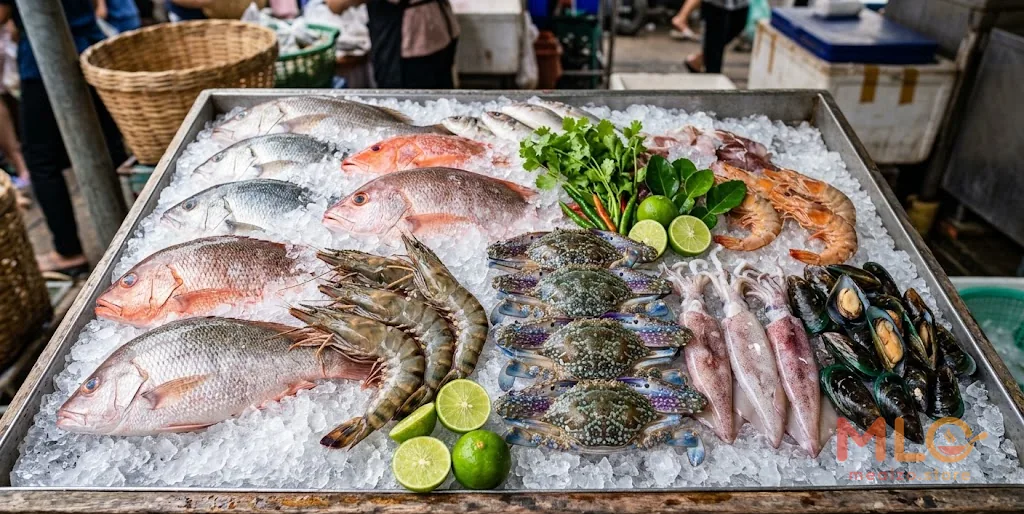
11. How Mealzo Bangkok fits around seafood dinners and dietary restrictions
A seafood dinner out can be a substantial meal, especially when the table includes curry crab, grilled shellfish, fried dishes, dipping sauces and rice. Trying to make every individual dish lighter is not always the most practical way to enjoy it.
An alternative is to plan the rest of the day with that dinner in mind.
Mealzo Bangkok prepares meals fresh daily at its kitchen in Bang Na and delivers across Bangkok. Meals are planned and balanced in advance, which can make the surrounding meals more predictable when dinner plans are less structured.
For example, if you expect a generous seafood restaurant dinner, you might choose meals earlier in the day that emphasize vegetables and simpler preparations. There is no need to skip meals to compensate, and the evening meal can still be enjoyed for what it is.
The service offers 12 meal plans: Balanced, Weight Loss, High Protein, Vegetarian, Vegan, Keto, Low-Carb, Gluten Free, Easy-to-Digest, Pescatarian, No Fish & Seafood, and Dairy & Egg Free.
Every plan uses a single mixed cuisine combining Thai and international dishes. Customers do not choose separate cuisine categories.
There are 6 daily calorie levels ranging from 1200 to 2500 kcal, with options for 3 or 5 meals per day. Packages are available for 3, 7, 14 or 30 days.
The app also provides a calorie calculator based on the Mifflin-St Jeor formula. Its result is an estimate rather than medical advice.
Delivery is offered across Bangkok through a customer-selected window: morning 06:00-09:00 or evening 17:00-20:00.
For people managing seafood avoidance, the distinction between preferences and allergens matters. Mealzo Bangkok allows customers to declare restrictions from 9 allergen groups. Dishes containing a declared allergen are not assigned to those customers.
This is an ingredient-assignment mechanism, not a guarantee that a meal is allergen-free.
The No Fish & Seafood plan also provides a relevant option for people seeking meals without fish or seafood. You can read more about the No Fish & Seafood meal plan.
Mealzo Bangkok's website and mobile app are available in 8 languages: Thai, English, Polish, German, French, Russian, Simplified Chinese and Burmese.
For those who prefer structured meals around their restaurant schedule, explore Mealzo Bangkok meal plans to see how the available plans fit different eating preferences.
The advantage of planning is consistency, not restriction. A meal plan can take care of routine eating while leaving room for the seafood restaurants, street stalls and shared dinners that make living in Bangkok enjoyable.
Key takeaway: Planning regular meals in advance can leave room for a richer seafood dinner without turning the entire day into a series of restrictions.
FAQ
Is grilled seafood always lighter than fried seafood?
Grilling generally requires less added oil than deep-frying, particularly when seafood is cooked simply. However, grilled scallops covered in butter or cheese may be richer than the word "grilled" suggests. Consider toppings, sauces and accompaniments rather than judging by the cooking method alone.
Can I eat curry crab with rice and still keep the meal balanced?
Yes, the combination can fit into a varied eating pattern. Curry crab often contains oil, egg, milk and seasoned sauce in addition to the crab. Serve rice according to appetite, enjoy the crab and sauce, and consider adding vegetables or a simply prepared seafood dish when ordering for a shared table.
Is tom yum seafood soup a light choice?
It depends on the recipe. Clear tom yum can contain seafood, aromatic herbs and relatively little added fat, but the broth may be heavily seasoned. Creamier versions can contain additional rich ingredients. Enjoying the seafood and vegetables without automatically finishing all the broth is a practical option.
Is raw seafood from a busy Bangkok night market safe?
A busy stall does not guarantee food safety. Raw prawns, oysters and other undercooked seafood can carry harmful microorganisms, and appearance alone cannot confirm safety. Cold storage and careful handling matter, particularly in hot weather. Thorough cooking reduces risks that lime juice, chilli or fish sauce cannot reliably eliminate.
Can Mealzo Bangkok accommodate someone avoiding fish or seafood?
Mealzo Bangkok offers a No Fish & Seafood plan and allows customers to declare restrictions from 9 allergen groups. Dishes containing a declared allergen are not assigned to that customer. This describes the dish-assignment process and does not guarantee an allergen-free meal.
Mealzo Bangkok is a kitchen and meal delivery service operating exclusively in Bangkok, Thailand. We are not affiliated with similarly named services outside Thailand.
Find a Meal Plan That Fits
Compare Mealzo plans or use the calculator to explore meal options for your needs.