Thai Desserts in Bangkok: Mango Sticky Rice, Sweet Treats and Where the Sugar Hides
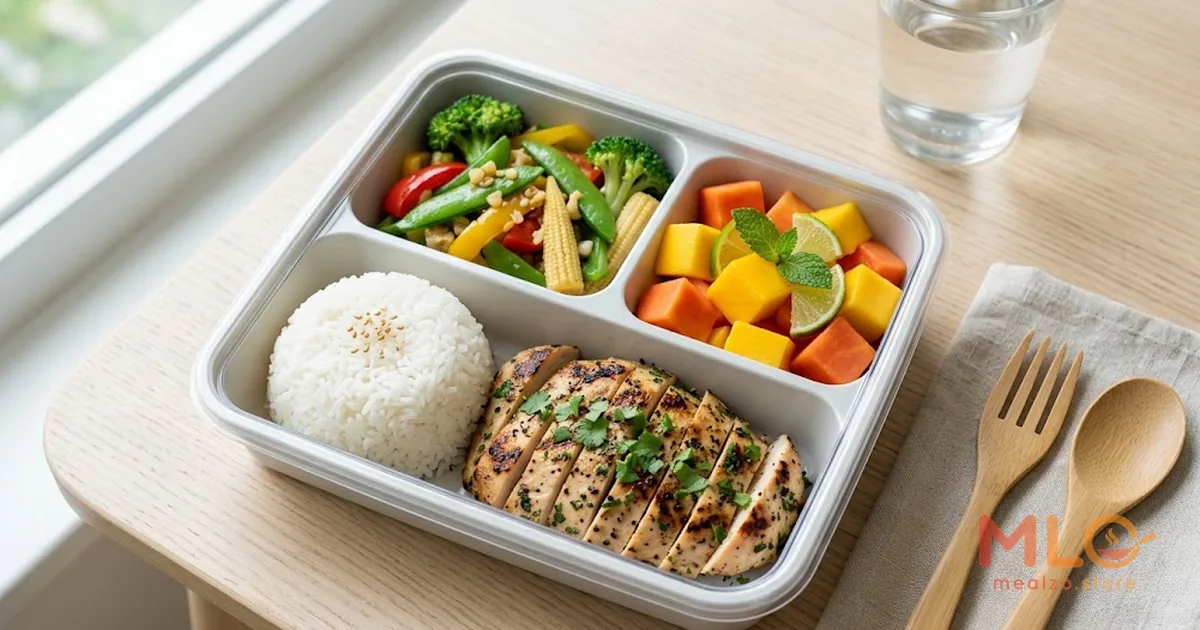
Bangkok has a way of making dessert part of ordinary life. Mango sticky rice appears at street stalls, coconut pancakes cook in small pans, and sweet drinks follow lunch almost automatically. At night markets, the choice gets wider: warm coconut milk desserts, crispy roti, colourful shaved ice and toast covered in condensed milk.
For people living in Bangkok, these are not necessarily special-occasion foods. A small sweet snack might accompany a morning coffee, follow lunch with colleagues or finish an evening out. The challenge is rarely a single dessert. It is how easily sweetness accumulates across an otherwise normal day.
Understanding Thai desserts in Bangkok and where their sugar comes from makes those choices easier. Sugar may be cooked into the dessert, poured over it, mixed into coconut cream or added through toppings. Sticky rice, flour-based batters and sweetened drinks contribute additional carbohydrates that are easy to overlook.
You can enjoy Bangkok's dessert culture without treating every sweet as a mistake. The practical approach is to recognise what is in your bowl, notice what you have already eaten and choose when a dessert is worth making room for.
1. Why Thai Desserts Are Part of Everyday Bangkok Life
Bangkok's dessert culture is built around convenience, variety and sharing. Street stalls sell sweets ready to carry home. Dessert cafes offer elaborate bowls designed for lingering over conversation. Convenience stores provide packaged treats for commuters, office workers and anyone wanting something sweet after dinner.
Traditional Thai desserts also have a social role. Sticky rice sweets are familiar comfort foods, while decorative egg-yolk desserts often appear at celebrations. Coconut-based snacks can be breakfast additions, afternoon treats or something picked up while walking through a neighbourhood.
There is no reason to remove these foods from everyday life just because you want a more organised eating routine.
What matters is recognising how often dessert appears.
A portion of khanom krok on the way to work may seem unrelated to sweet iced coffee after lunch. An evening visit to a night market feels like another occasion entirely. Yet all these choices belong to the same day's food intake.
This is where awareness helps more than rigid rules. You do not need to reject a dessert offered by a friend. You can simply consider whether you want another sweet item later.
Key takeaway: The sweetness that matters is not only in an individual dessert, but also in the combination of desserts, snacks and drinks throughout the day.
2. Sticky Rice, Mango and Coconut Custard
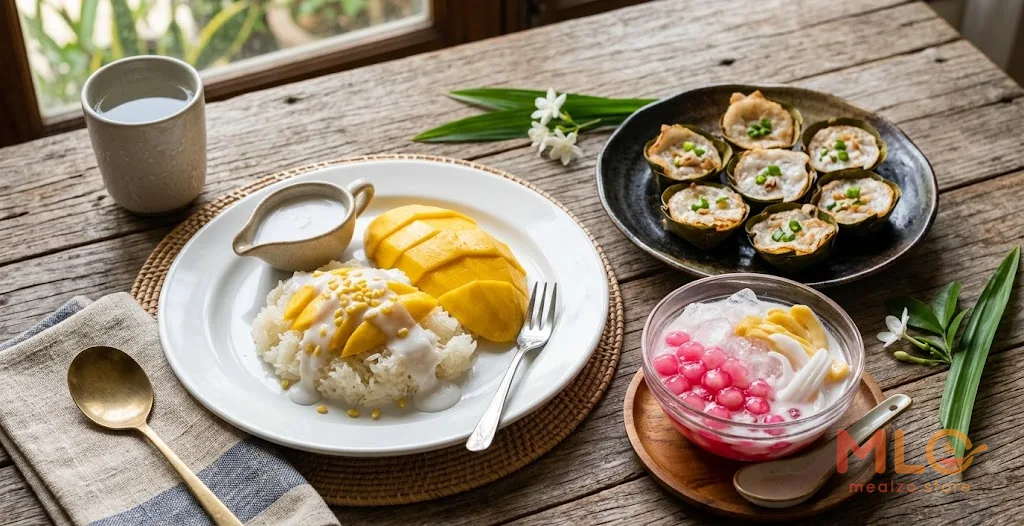
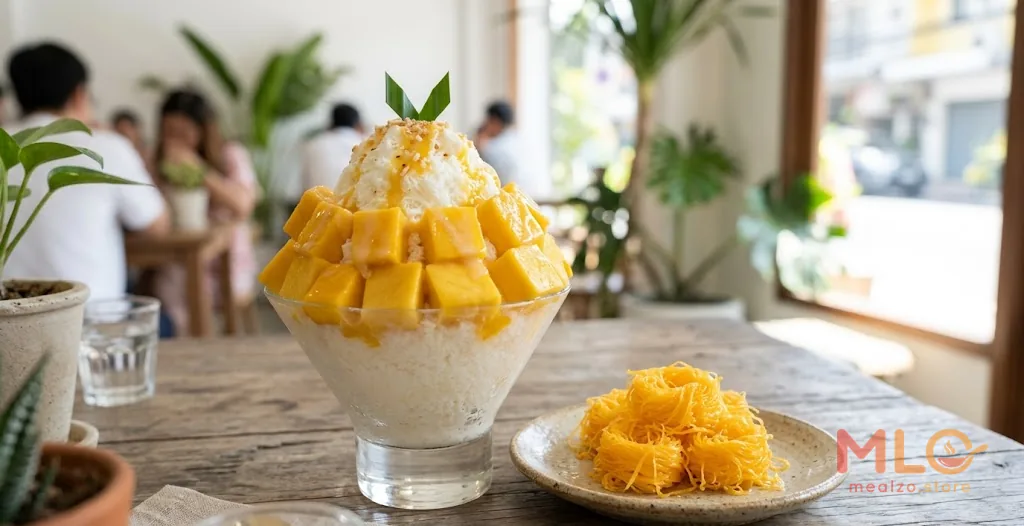
Mango sticky rice, or khao niao mamuang, is perhaps the most recognisable Thai dessert. It combines ripe mango with sticky rice, coconut sauce and often crispy mung beans.
The mango contributes natural sweetness. The rice provides a dense starchy base, while the coconut sauce is commonly sweetened during preparation. Depending on the seller, extra coconut cream may be poured over everything just before serving.
That combination is what makes the dessert satisfying, but it also explains why calling it simply a fruit dessert misses much of the picture.
Sticky rice with coconut custard, known as khao niao sangkhaya, follows a similar pattern. The rice provides starch, while the custard brings coconut richness and sweetness. The custard is generally made with eggs, coconut milk and sugar.
Both desserts combine substantial ingredients rather than functioning like a small taste of fresh fruit.
If you have already eaten a large rice-based meal, finishing with sticky rice adds another concentrated source of starch. That may be exactly what you want on a particular day. It is simply useful to recognise the combination.
For a more detailed look at how different rice varieties fit into Bangkok meals, see the practical guide to jasmine rice, sticky rice and rice portions.
A few adjustments work without changing the character of the dessert:
- Share mango sticky rice when you want the flavour but not the entire serving.
- Ask for coconut sauce on the side if the seller can accommodate that.
- Choose a smaller prepared portion when available.
- Treat sticky rice desserts as a substantial addition to a meal, rather than assuming they are equivalent to plain fruit.
The same thinking applies to sweet sticky rice sold in banana leaves or small takeaway containers. The packaging may be compact, but the rice and sweet coconut mixture are still central ingredients.
3. Coconut Pancakes, Crispy Batters and Egg-Yolk Sweets
Some Bangkok desserts seem especially light because they come in small pieces. Their size can make their ingredients less obvious.
Khanom krok are small coconut pancakes cooked in a pan with round depressions. Their familiar contrast of lightly crisp edges and soft centres comes from the batter and coconut mixture. Sugar contributes sweetness, while coconut milk or cream adds richness.
Khanom buang are crisp Thai-style pancakes filled with sweet toppings. Fillings vary, but sweet cream and fine strands of egg-yolk sweets are common. The thin, crisp pancake can make the overall snack feel delicate, even though the filling supplies much of its sweetness.
Luk chup are colourful sweets made from mung bean paste shaped into miniature fruits and vegetables. They look like produce, but their appearance should not be confused with their ingredients. The paste is sweetened, shaped and coated to create the glossy finish.
Then there are foi thong and thong yip, traditional egg-yolk sweets prepared with sugar syrup. Foi thong takes the form of fine golden strands, while thong yip is shaped into small folded cups.
These sweets are often enjoyed in small pieces, which can be convenient when sharing. However, a selection of different items can become a much larger dessert experience than any individual piece suggests.
The relevant distinction is not whether something is traditional, handmade or sold at a street stall. It is how the dessert is prepared and how much of it you end up eating.
A crispy batter cooked with fat and served with sweet filling has a different composition from plain steamed ingredients. Neither needs a moral label. They are simply different foods.
4. Coconut Milk Bowls, Shaved Ice and Bingsu
Coconut milk is central to many Thai desserts, but it appears in several forms.
Bua loi consists of soft rice-flour balls served in warm coconut milk. The chewy balls contribute starch, and the coconut mixture is commonly sweetened.
Kluay buat chi features bananas simmered in coconut milk with sugar. The bananas bring their own natural sweetness, while the liquid adds further sweetness and richness.
Tub tim grob combines crunchy water chestnut pieces coated in starch with coconut milk and ice. It is especially appealing in Bangkok's heat. Although the ice makes the dessert refreshing, the syrup and sweetened coconut milk remain part of the serving.
Modern dessert cafes add another format: bingsu and elaborate shaved ice bowls.
A base of finely shaved ice may be topped with fruit, condensed milk, syrup, sweet cream, ice cream or other sweet additions. Some versions use sweetened milk-based ice rather than plain water ice, so sweetness may already be present before toppings are added.
The visual size can be misleading in either direction. A large bowl might be designed for sharing, while a seemingly simple cup can contain several layers of syrup and sweet toppings.
The most useful question is not whether the dessert contains ice. It is what accompanies the ice.
For instance, plain shaved ice with fresh fruit is quite different from shaved ice with syrup, condensed milk and sweetened toppings. The final ingredients determine the character of the dessert.
5. Where the Sugar Actually Comes From
When considering Thai desserts Bangkok sugar habits, the obvious sweetness is only part of the story.
Palm sugar and cane sugar are common ingredients in traditional preparations. They can be dissolved into coconut milk, cooked into fillings or used in syrups.
Then comes sweetness added during serving.
Sweetened condensed milk is often drizzled over roti, toast, banana desserts or shaved ice. Syrups add flavour, colour and sweetness. Sweet coconut cream can be poured over sticky rice, and toppings may themselves contain sugar.
This means the total sweetness does not necessarily come from one ingredient.
| Common Bangkok dessert | Main ingredients | Where sugar and richness come from | Practical adjustment |
|---|---|---|---|
| Mango sticky rice | Mango, sticky rice, coconut sauce, crispy mung beans | Sweetened rice, coconut sauce, added sugar | Share or request sauce on the side |
| Khanom krok | Rice-based batter, coconut milk, sugar | Sweet batter, coconut richness, cooking fat | Choose a smaller serving |
| Khao niao sangkhaya | Sticky rice, coconut custard | Sweetened custard, coconut milk, starchy rice | Enjoy after a lighter main meal |
| Luk chup | Mung bean paste, sugar, coating | Sweetened paste and glaze | Choose the pieces you particularly want |
| Tub tim grob | Water chestnuts, starch, coconut milk, ice | Syrup, sweet coconut milk, starchy coating | Ask whether syrup can be reduced |
| Bua loi | Rice-flour balls, coconut milk | Sweet coconut liquid and rice-flour balls | Avoid adding another sweet drink |
| Roti with banana | Flour dough, banana, cooking fat | Condensed milk, sugar, fried dough | Request less condensed milk |
| Foi thong and thong yip | Egg yolks, sugar syrup | Syrup absorbed during preparation | Share a small selection |
| Bingsu | Shaved ice, milk or ice, toppings | Sweetened ice, syrup, cream, condensed milk | Select fewer sweet toppings |
| Bread toast | Bread, butter or other spread, custard or condensed milk | Sweet spreads, toppings and bread | Order a simpler version |
This table explains why judging a dessert by appearance alone rarely works.
A small piece of an egg-yolk sweet may be intensely sweet because syrup is integral to its preparation. Mango sticky rice looks fruit-forward, but the rice and coconut sauce are substantial parts of the dish.
A coconut milk dessert can be refreshing when chilled, yet still contain added sugar in its liquid base.
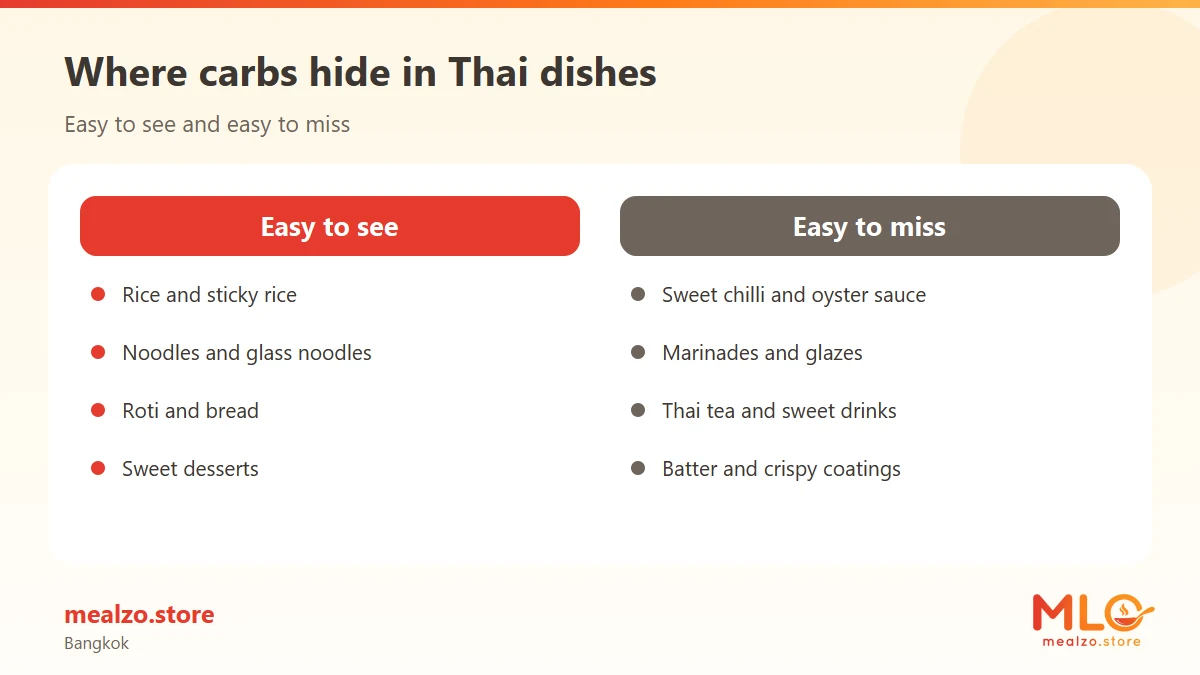
There is also a difference between sugar and total carbohydrates. Sugar is a carbohydrate, but the rice, flour, bread and starch coatings in many desserts contribute carbohydrates even when they are not especially sweet.
That is why looking only for visible syrup misses part of the picture.
Key takeaway: In Thai desserts, carbohydrates can come from both added sugar and starchy ingredients, while coconut cream and cooking fat contribute richness.
6. Roti, Bread Toast and Street-Cart Ice Cream
Bangkok's dessert options also include foods built around familiar bread and pastry ingredients.
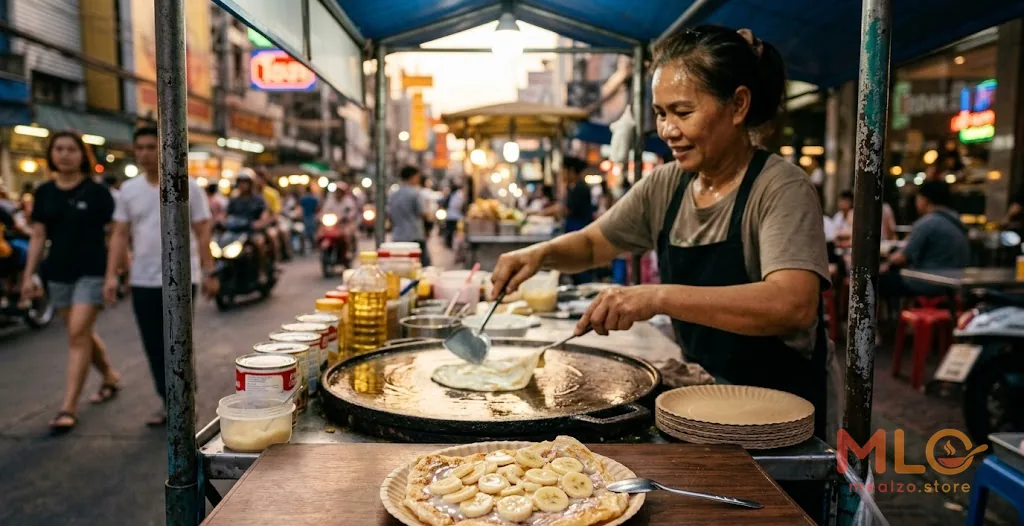
Roti with banana and condensed milk is prepared from dough cooked on a hot surface, often with oil or another cooking fat. Banana is folded into the roti, which may then be finished with condensed milk, sugar or both.
The sweetness of the banana is only part of the final dessert. The dough, cooking fat and added toppings change what you are eating.
Kanom pang bread toast is another common cafe or street snack. Thick or thin bread may be toasted with butter and served with condensed milk, sweet custard or other spreads.
A similar layering happens with street-cart ice cream. Scoops may be served in a bun with sticky rice or other toppings, creating an ice cream sandwich that combines sweet frozen dessert with bread and sometimes additional starch.
There is nothing especially complicated about adjusting these choices. The difficulty is often that toppings are added automatically.
When ordering, it can help to ask:
- Can the condensed milk be reduced?
- Is the sauce available separately?
- Is there a simpler topping combination?
- Could we share this instead of ordering individual desserts?
Not every vendor offers customisation. A preassembled sweet cannot always be changed, and traditional recipes may depend on sugar for their texture.
When that happens, choosing the dessert as prepared and adjusting another part of the day is perfectly reasonable.
Convenience stores offer similar decisions with packaged cakes, sweet breads, puddings and chilled desserts. Ingredient lists can help distinguish products with added syrups, sweet fillings or condensed milk, although packaging does not tell you how satisfying a particular snack will feel.
7. Sweet Drinks Can Turn a Dessert Stop Into Another Dessert
Dessert in Bangkok is often accompanied by something cold and sweet.
Cha yen, Thai iced tea, commonly contains sweetened condensed milk, sugar or other sweetening ingredients. Iced coffee can also include condensed milk, sweetened creamer or syrup.
Bubble tea adds another format, with sweetened tea or milk, tapioca pearls, jellies and flavoured toppings. Even when the drink is ordered with reduced sweetness, some ingredients may already be sweetened.
This creates an easy-to-miss combination: a sweet dessert plus a drink that functions much like a liquid dessert.
Imagine finishing lunch with mango sticky rice and a sweet iced tea. The mango sticky rice brings fruit, starch and sweet coconut sauce. The tea adds another source of sugar.
Each item may feel like a normal Bangkok food choice. Together, they make the occasion sweeter than either would alone.
For more ordering considerations, read how sweetness builds up in Bangkok's iced tea, coffee and other drinks.
Choosing water, unsweetened tea or a less-sweet drink can leave room for the dessert you actually came to enjoy.
This does not mean every drink needs to be unsweetened. If cha yen is the treat you want, perhaps dessert is unnecessary on that occasion.
The aim is to make a deliberate choice rather than letting food and drinks accumulate by habit.
8. Fresh Fruit Is Different From Fruit in Syrup
Bangkok makes fresh fruit easy to find. Mango, watermelon, pineapple, papaya and other fruits are sold ready to eat at stalls and in convenience stores.
Fresh fruit contains naturally occurring sugars, along with water and other components of the fruit. Fruit desserts may combine that fruit with added sugar, syrup, condensed milk, sticky rice or sweet cream.
These are different eating experiences.
A portion of ripe mango is not the same preparation as mango sticky rice. Nor is fresh fruit equivalent to canned fruit served in heavy syrup or fruit piled onto a shaved ice dessert with sweet toppings.
Sometimes the distinction is obvious. A mango slice looks different from a bowl of bingsu.
Other times, the presentation emphasises fruit while the sweetened ingredients sit underneath it.
A fruit-topped dessert cafe bowl may have fresh fruit on the surface, sweetened ice beneath it and sauce distributed throughout. The fruit is real, but it does not cancel the other ingredients.
For a closer look at Bangkok fruit stalls and everyday fruit choices, see the guide to Thai fruit in Bangkok.
Fresh fruit is an option when you want the taste of fruit without the accompanying dessert ingredients. When you specifically want mango sticky rice, however, plain mango is not an identical substitute. Enjoying the intended dish is a legitimate choice.
Key takeaway: Fruit in a dessert does not erase the sugar, syrup or starch added to it, and plain fruit is not nutritionally identical to fruit served with sweet toppings.
9. Portions, Sharing and Grazing Across the Day
Many Thai sweets are sold in compact portions. That can make them convenient, but it does not automatically tell you how much you have eaten over the day.
Consider a typical pattern: coconut pancakes during a morning walk, a packaged sweet after lunch, bubble tea in the afternoon and roti at a night market.
None of those choices necessarily feels like a major dessert occasion. The total comes from repetition.
The reverse also happens. A large shaved ice bowl at a dessert cafe might look substantial, but if it is shared and replaces several separate snacks, the overall pattern can be quite different.
| Same dessert stop | Grazing version | Planned version |
|---|---|---|
| Before leaving home | No thought about later sweets | Decide whether dessert is part of the outing |
| Main meal | Large rice-based meal without considering dessert | Choose a lighter main meal if dessert is expected |
| Dessert order | Add sweets because several look appealing | Pick the dessert you most want |
| Toppings | Accept every extra syrup or sweet sauce | Ask for less sauce when possible |
| Drink | Order a sweet iced drink automatically | Choose water or a less-sweet drink |
| Sharing | Everyone orders separately despite wanting tastes | Share a dessert when that suits the group |
| Later in the evening | Continue buying snacks while walking | Decide whether another snack is actually wanted |
The planned version is not a strict rulebook. It illustrates how the same outing can involve fewer automatic additions without removing dessert.
At a night market, eating is also entertainment. Sampling different flavours may be the entire reason you went. On such occasions, sharing smaller selections can be more practical than expecting everyone to choose only one item.
For more on this particular environment, see making sense of late-night eating at Bangkok markets.
The main point is to distinguish intentional tasting from habitual grazing.
10. Planning Dessert Into a Balanced Day
A flexible routine leaves space for pleasure as well as ordinary meals.
If you know you want mango sticky rice in the evening, consider how lunch and dinner fit around it. A large rice-based lunch followed by another rice-heavy meal and then sticky rice dessert creates a different pattern from a lighter meal followed by the same dessert.
This is not about compensating for food or earning permission to eat something sweet. It is about noticing the composition of meals.
A practical approach might look like this:
- Decide which dessert you are genuinely looking forward to.
- Keep your main meals varied rather than building every meal around a large starch portion.
- Include foods that provide protein, vegetables and other satisfying components.
- Avoid adding a sweet drink automatically when dessert is already planned.
- Share a serving when sharing fits the occasion.
- Return to your usual eating routine afterwards instead of making the dessert the focus of the entire day.
A planned dessert after a lighter meal may fit more comfortably into your eating pattern than the same dessert added after a very large meal. Appetite, preferences and individual needs still matter.
There is no universal meal arrangement that suits everyone, and reducing one ingredient does not automatically make the overall meal more balanced.
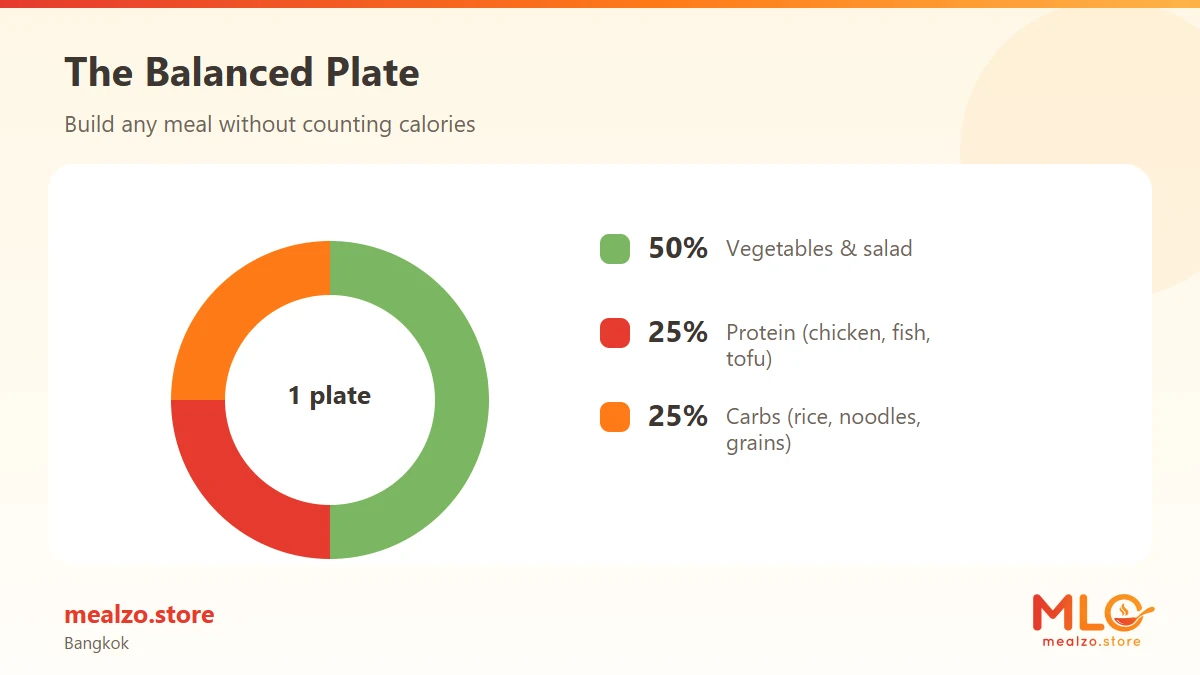
Bangkok's everyday savoury dishes also vary considerably in ingredients and preparation. A meal centred on noodles, rice, vegetables or protein will create a different context for dessert.
Our guide to familiar Thai dishes and their calorie considerations explores how everyday Thai meals differ.
People with diabetes, blood sugar concerns, an eating disorder or another medical condition affecting diet should follow their own doctor's guidance on sugar.
Key takeaway: Planning a dessert works best when it changes automatic choices around the dessert, not when it turns an enjoyable food into something to feel guilty about.
11. How Mealzo Bangkok Fits Around a Planned Dessert
One difficulty with balancing desserts in Bangkok is that the main meals can be unplanned too. A rushed lunch, a takeaway dinner and several snacks can leave you making food decisions throughout the day.
Mealzo Bangkok offers a way to organise the main meals in advance. Meals are cooked fresh daily at the kitchen in Bang Na and delivered across Bangkok.
The meals are prepared ahead of your eating day, with the selected plan providing a defined structure. That can make it easier to enjoy a dessert intentionally because you already know how your main meals are organised.
Mealzo Bangkok offers 12 meal plans: Balanced, Weight Loss, High Protein, Vegetarian, Vegan, Keto, Low-Carb, Gluten Free, Easy-to-Digest, Pescatarian, No Fish & Seafood, and Dairy & Egg Free.
Each plan uses a mixed cuisine combining Thai and international dishes. These are not separate cuisine options.
Customers can select from 6 daily calorie levels, ranging from 1200 to 2500 kcal, with 3 or 5 meals per day. Package lengths are 3, 7, 14 or 30 days.
The app also includes a calorie calculator using the Mifflin-St Jeor formula. It provides an estimate rather than medical advice.
For dietary restrictions, customers declare allergens from 9 allergen groups. Dishes containing a declared allergen are not assigned to that customer. This describes the assignment mechanism, not a guarantee that meals are allergen-free.
Delivery is available in a customer-selected window: morning 06:00-09:00 or evening 17:00-20:00.
The website and mobile app are available in Thai, English, Polish, German, French, Russian, Simplified Chinese and Burmese.
You can explore the Mealzo Bangkok meal plans and available meal structures to see which arrangement suits your routine.
A meal plan does not mean dessert becomes irrelevant. A rich bowl of bingsu or a serving of mango sticky rice still contributes to what you eat that day. Nor does a prepared meal plan guarantee a particular health result.
The advantage is organisational. When the main meals are already arranged, there may be less need to improvise every food decision, leaving you free to make a more conscious choice about occasional sweets.
For questions about plans or meal arrangements, Mealzo Bangkok can be contacted at contact@mealzo.store.
FAQ
Is mango sticky rice mostly fruit or mostly dessert?
Mango sticky rice is a dessert combining fresh mango, starchy sticky rice and sweetened coconut sauce, often finished with crispy mung beans. The fruit contributes natural sweetness, but the rice and sauce are substantial ingredients. Treating it as a dessert rather than a plain fruit serving gives a more accurate picture of its composition.
Which Thai desserts contain sugar that is easy to overlook?
Khanom krok, bua loi, tub tim grob, khao niao sangkhaya and shaved ice desserts may contain sugar mixed into coconut milk, batters, custards or syrups. Roti and bread toast can receive additional sweetness from condensed milk. The sugar is not always visible on the surface because it may already be incorporated during preparation.
Can I ask Bangkok dessert vendors to use less sugar?
Sometimes. At a street stall, you may be able to request less syrup, condensed milk or coconut sauce, particularly when those ingredients are added during serving. However, sugar cooked into sticky rice, egg-yolk sweets or prepared custard generally cannot be removed afterwards. For ready-made desserts, choosing a smaller serving or sharing may be more practical.
Is it better to eat dessert after a meal or as a separate snack?
There is no single answer for every person. What matters is how the dessert fits into the rest of your eating pattern. A substantial sticky rice dessert after a large rice-based meal adds more starch to that occasion. A smaller dessert after a lighter meal may suit some routines better. Eating dessert separately can also work, provided it is considered part of the day's overall food intake rather than forgotten between meals.
How can I enjoy Bangkok night-market desserts without constant tracking?
Choose the sweets you most want to try, consider sharing, and notice whether sweet drinks or additional toppings are being added automatically. Planning your main meals before the outing can reduce last-minute decisions. You do not need to calculate every bite to recognise the difference between an intentional dessert and an evening of repeated, unplanned snacking.
Mealzo Bangkok is a kitchen and meal delivery service operating exclusively in Bangkok, Thailand. We are not affiliated with similarly named services outside Thailand.
Find a Meal Plan That Fits
Compare Mealzo plans or use the calculator to explore meal options for your needs.