Thai Noodles in Bangkok: Boat Noodles, Pad See Ew and Khao Soi on a Balanced Day with Mealzo Bangkok
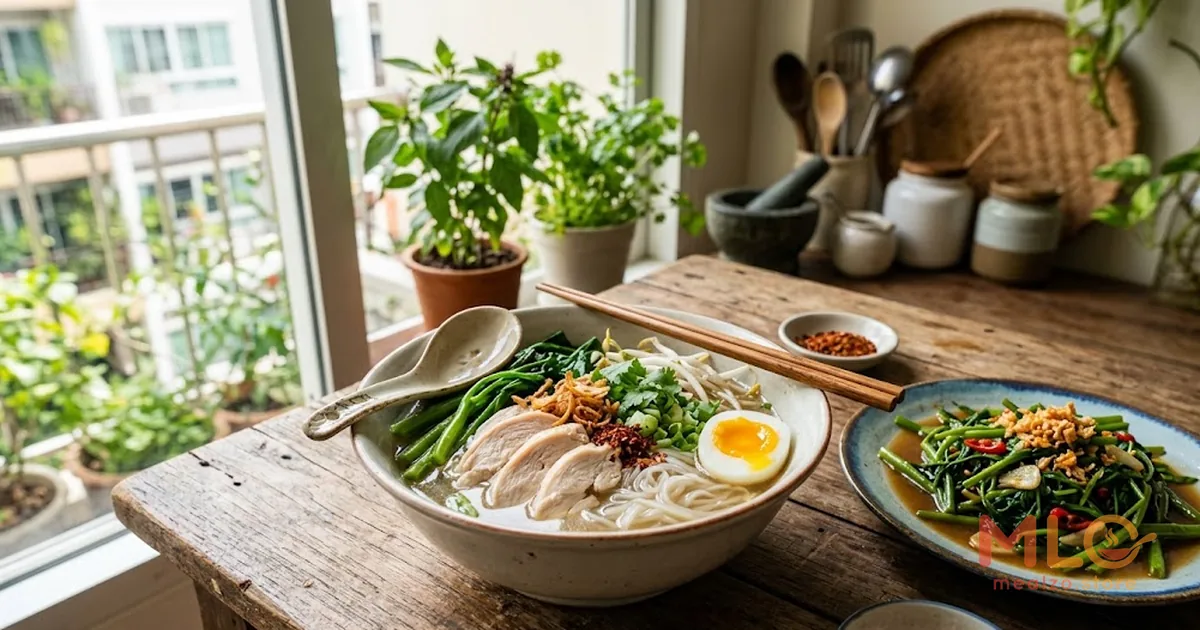
Noodles are part of everyday Bangkok eating. A bowl of kuay teow from a street stall can be a quick lunch, pad see ew is easy to find in food courts, boat noodles turn into a casual meal with friends, and instant noodles are always there when cooking feels like too much effort.
Trying to eat in a more balanced way does not require removing noodles from that routine. What matters more is understanding what is actually in the bowl: the noodles themselves, the cooking method, the broth or sauce, the amount of protein and vegetables, and what else you eat alongside it.
People searching for healthy Thai noodles Bangkok often expect a list of dishes that are automatically better than others. Bangkok food does not work that neatly. A clear noodle soup, a plate of pad thai and a bowl of khao soi are built differently, but any of them can fit into an overall way of eating when the rest of the meal and the rest of the day make sense.
The practical goal is not to turn street food into diet food. It is to enjoy familiar Thai noodle dishes while noticing the choices that make the biggest difference.
1. Why noodles are such an everyday Bangkok meal
Bangkok makes noodles unusually easy to eat often. Noodle stalls prepare bowls quickly, food courts offer several styles within the same lunch queue, and dry or soup noodles can be customised without turning the order into a complicated conversation.
Kuay teow may come with pork, chicken, beef, fish balls, tofu, wontons, greens or bean sprouts. Elsewhere you find boat noodles, yen ta fo, ba mee, pad see ew, rad na, pad thai, glass noodle dishes and northern-style khao soi. At home, instant noodles fill the same role when convenience matters more than cooking.
The challenge is that "noodles" describes a very broad category. A clear soup with thin rice noodles is quite different from flat noodles stir-fried in oil and sauce, even though both begin with a carbohydrate-rich noodle base.
That is why it is more useful to look at the construction of the meal than to ask whether noodles as a category are good or bad.
If you regularly eat lunch in a mall or office-area food court, the same principle applies to the whole tray. building a balanced Bangkok food-court meal can help when noodles are only one of several available options.
Key takeaway: The noodle itself is only one part of the meal, so cooking method, broth, toppings, protein, vegetables and side dishes matter just as much.
2. Sen yai, sen lek, sen mee, ba mee and woon sen
Bangkok noodle menus can look complicated because changing the noodle changes the texture of the dish, but it does not transform the basic nutritional role of the meal. Rice noodles, egg noodles and glass noodles are all mainly carbohydrate foods.
Glass noodles deserve particular attention because they are sometimes treated as a special "diet" alternative. They are not a low-carbohydrate shortcut. Their texture and ingredients differ from rice noodles, but they still contribute carbohydrates to the meal.
| Noodle type | What it is made from | Common Bangkok uses |
|---|---|---|
| Sen yai | Wide rice noodles | Pad see ew, rad na, stir-fried noodle dishes |
| Sen lek | Thin rice noodles | Kuay teow soups, boat noodles, dry noodle bowls |
| Sen mee | Fine rice vermicelli | Clear soups, stir-fried dishes, some yen ta fo bowls |
| Ba mee | Wheat and egg noodles | Soup noodles, dry noodles, wonton-style bowls |
| Woon sen | Starch-based glass noodles | Soups, salads, stir-fried glass noodle dishes |
The practical difference is often what happens after the noodles leave the pot. Sen yai stir-fried with oil and sauce produces a very different meal from sen lek served in a clear broth. Ba mee served dry may be mixed with oil and seasoning before toppings are added.
If noodles and rice both appear regularly in your day, understanding rice portions in Bangkok meals provides useful context for thinking about them as carbohydrate foods rather than competing "good" and "bad" choices.
3. Soup, dry or stir-fried: the cooking method changes the meal
A clear noodle soup is usually lighter on added cooking oil than a stir-fried noodle plate. That does not automatically make it the better order, but it changes where the richness comes from.
With soup noodles, much of the flavour sits in the broth. The noodles may be blanched separately and combined with meat, vegetables and broth at serving.
Dry noodles, often ordered as haeng, can look deceptively simple because there is no broth. The noodles are commonly tossed with oil and seasoning so they do not arrive plain.
Stir-fried noodles work differently again. Pad see ew, pad thai and similar dishes are cooked directly in the wok with oil, sauces, seasoning and other ingredients. Rad na usually combines noodles with a thick gravy, adding another layer of sauce to the dish.
Useful questions to think about are:
- Is the dish boiled and served in broth, tossed dry with seasoning, or cooked in a wok?
- Is there enough protein to make the meal satisfying?
- Are vegetables a meaningful part of the dish or mainly a garnish?
- Are there additional fried sides, rice dishes or sweet drinks turning a noodle meal into a much larger meal?
These questions are more useful than trying to identify a single noodle variety as the "best" one.
4. Broth, salt and the condiment caddy
Noodle soup can feel light because it contains plenty of liquid, but the broth may also be strongly seasoned. Fish sauce, soy-based seasonings, stock ingredients and other flavourings contribute salt before the bowl reaches the table.
Then comes the condiment caddy. Sugar, fish sauce, chilli flakes and chilli vinegar let you adjust the flavour, but they can also change the bowl considerably.
A practical approach is to taste first. The broth may already have enough seasoning. If you add fish sauce automatically before tasting, you are seasoning something that may not need it.
You can also enjoy the noodles and toppings without treating every spoonful of broth as something that must be finished. Leaving some broth behind is simply another way to moderate the amount of salty liquid you consume.
For a wider look at how seasoning builds up across Thai meals, see where salt hides in Thai food.
Anyone with high blood pressure, kidney issues, diabetes or another medical condition should follow their own doctor's guidance on salt and carbohydrates.
Key takeaway: With soup noodles, taste the broth before reaching for the condiment caddy, because much of the seasoning may already be in the bowl.
5. Boat noodles: when small bowls add up quietly
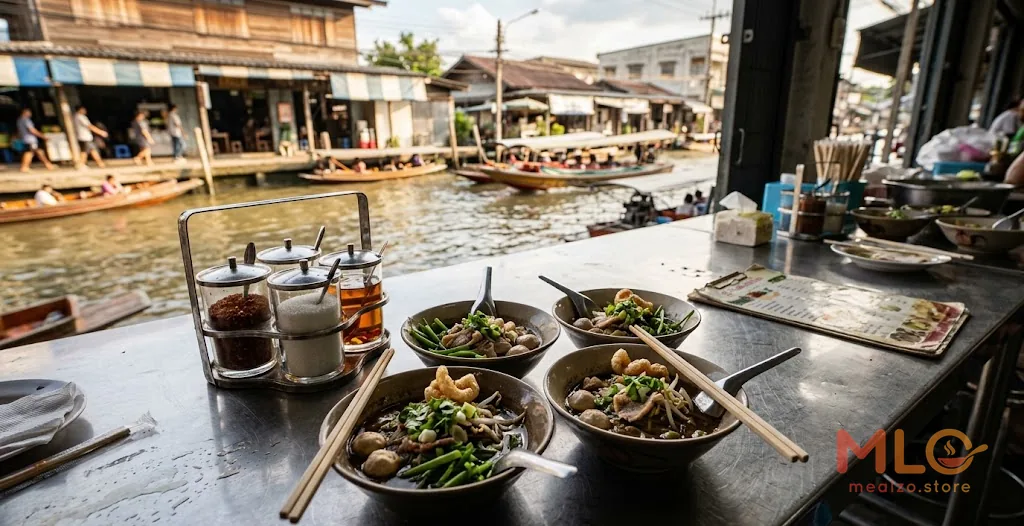
Boat noodles are a good example of how presentation changes the way we eat. The bowls are traditionally small, the broth is dark and intensely flavoured, and ordering more can become part of the experience.
That makes them enjoyable, but it also makes it easy to stop thinking in terms of a meal. Several small bowls can feel like casual tasting even when they collectively become a substantial amount of noodles, broth and seasoning.
There is no need to turn boat noodles into a controlled exercise. Just keep track of whether you are still hungry or simply continuing because another small bowl seems insignificant.
Protein can also vary. Some bowls contain only a modest amount of sliced meat or meatballs, while vegetables may be limited to sprouts or greens.
A more balanced boat noodle meal might involve slowing the pace, choosing extra meat or another protein source when available, and adding vegetables elsewhere in the meal rather than stacking fried sides beside several bowls.
6. Khao soi and richer curry noodle bowls
Khao soi sits in a different category from clear kuay teow. The base is a rich coconut curry broth, usually combined with soft noodles and topped with fried noodles for texture.
That combination brings together noodles, coconut-based broth and a fried topping in one bowl. None of those ingredients needs to be treated as forbidden, but the dish is naturally richer than a clear soup.
For someone who eats noodles frequently, khao soi may make more sense as the richer noodle meal of the day rather than something paired automatically with several fried sides. The pickled vegetables, herbs and other accompaniments can provide contrast without needing to build a much larger meal around the bowl.
If you are eating with other people and ordering several dishes for the table, you can also let khao soi be one part of the meal rather than treating every dish as a separate full serving.
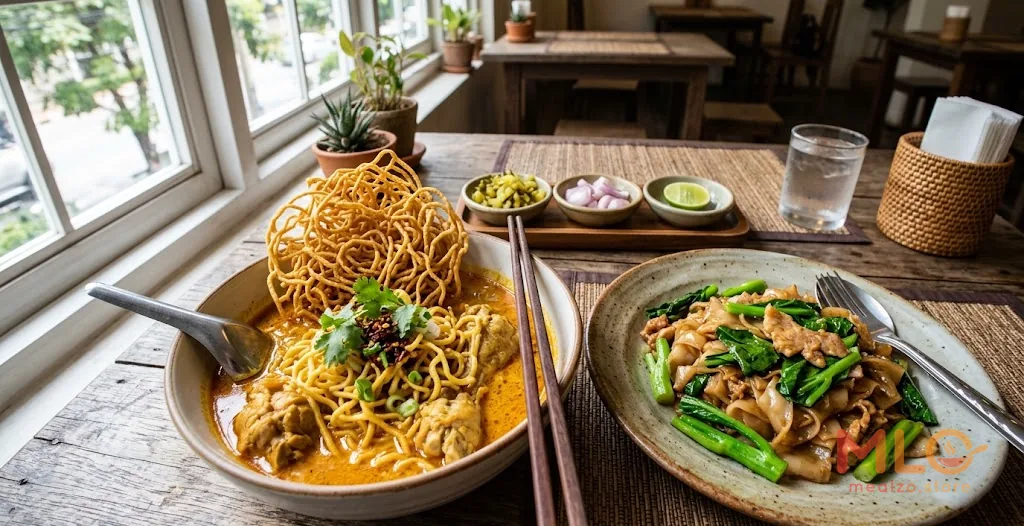
The point is not to dilute what makes khao soi enjoyable. It is to recognise that coconut curry broth and fried noodles make it a different kind of meal from a bowl of clear soup.
7. Pad see ew, rad na and pad thai
Stir-fried noodles are some of Bangkok's most convenient meals. They are quick, filling and easy to find from street stalls to food courts.
They also illustrate why looking only at the noodle type misses much of the picture. Wide rice noodles in pad see ew are stir-fried with oil, sauce, protein and vegetables. Pad thai combines noodles with oil, seasoning, sweetness and savoury ingredients. Rad na often uses noodles together with a thick seasoned gravy.
| Dish | How it is usually cooked | One practical adjustment |
|---|---|---|
| Pad see ew | Wide rice noodles stir-fried with oil, sauce, protein and greens | Ask for extra greens if available |
| Pad thai | Rice noodles stir-fried with oil, seasoning and other ingredients | Let the dish be the meal rather than adding several fried sides |
| Rad na | Noodles served with thick seasoned gravy | Add more vegetables or a protein side |
| Clear kuay teow | Noodles and toppings served in broth | Taste before adding extra fish sauce |
| Dry ba mee | Egg noodles tossed with oil and seasoning | Add protein and greens if the bowl is sparse |
| Khao soi | Noodles in coconut curry broth with fried noodle topping | Keep other parts of the meal simpler |
| Boat noodles | Noodles in a rich, dark broth | Pay attention to how many small bowls become the meal |
Oil is part of wok cooking, and the amount absorbed by noodles depends on the preparation. If you want to understand that part of Bangkok meals more clearly, how cooking oil changes fried and stir-fried food explains the mechanism without treating all fried food as identical.
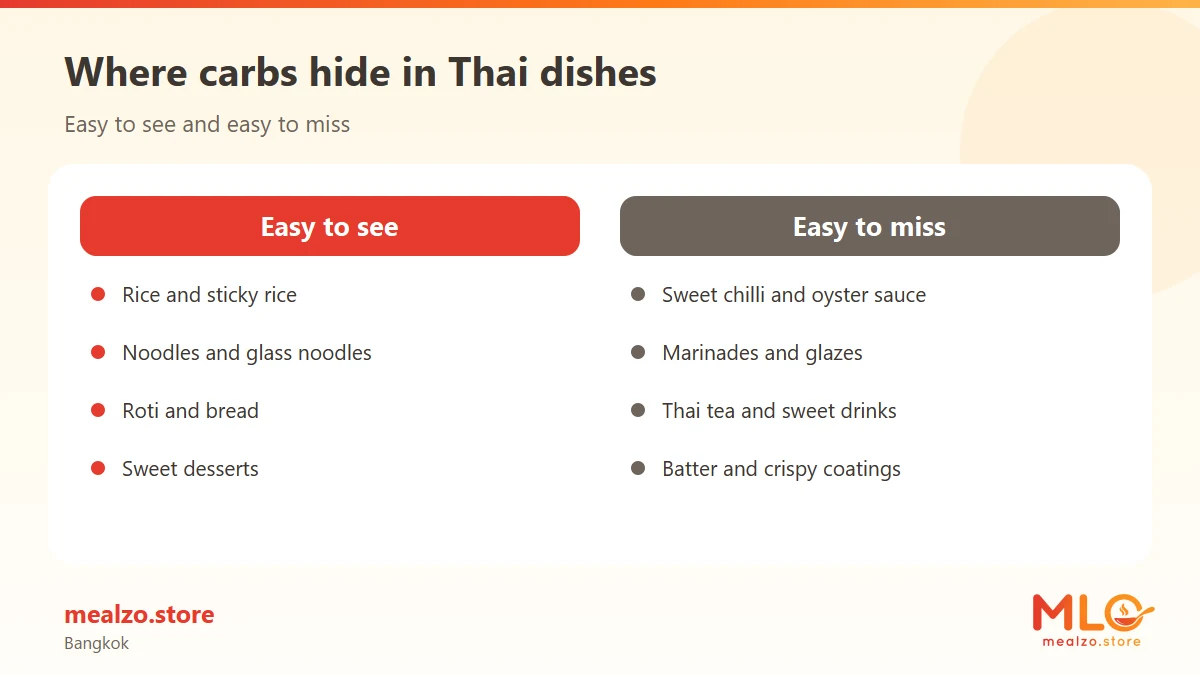
Sauces and sweet drinks can also add carbohydrates that are less obvious than the noodles themselves. This is especially relevant when a stir-fried noodle plate comes with a sweet beverage and additional snacks.
8. Add protein when the noodle bowl is mostly noodles
A common Bangkok noodle bowl contains plenty of noodles but only a few slices of meat, several meatballs or a small amount of tofu. That can leave the meal centred heavily on carbohydrate with relatively little protein.
Protein changes how satisfying the meal feels and can make a noodle lunch easier to carry through the afternoon without immediately looking for another snack.
Depending on the stall or food court, useful additions may include:
- Extra chicken, pork, beef or fish where available
- An egg
- Tofu
- Additional meatballs or fish balls
- A separate protein dish shared with the table
The exact choice matters less than the basic idea. Look at the bowl and ask whether protein is a real component of the meal or merely a topping.
This also works at home. If leftover noodles are mostly starch and sauce, adding an egg, tofu or another protein source changes the structure of the meal without requiring a completely different dish.
9. Vegetables are often present, but not always in meaningful amounts
Noodle dishes frequently contain vegetables, but sometimes "vegetables" means a small handful of bean sprouts, a few pieces of Chinese kale or some chopped herbs.
That is better than nothing, but it may not be enough to make vegetables a major part of the meal.
Simple ways to increase them include:
- Asking for more greens when the stall can provide them
- Adding a separate plate of stir-fried vegetables
- Pairing noodles with a vegetable-heavy salad
- Adding cabbage, leafy greens, mushrooms or bean sprouts when preparing noodles at home
- Choosing vegetable sides when sharing food with other people
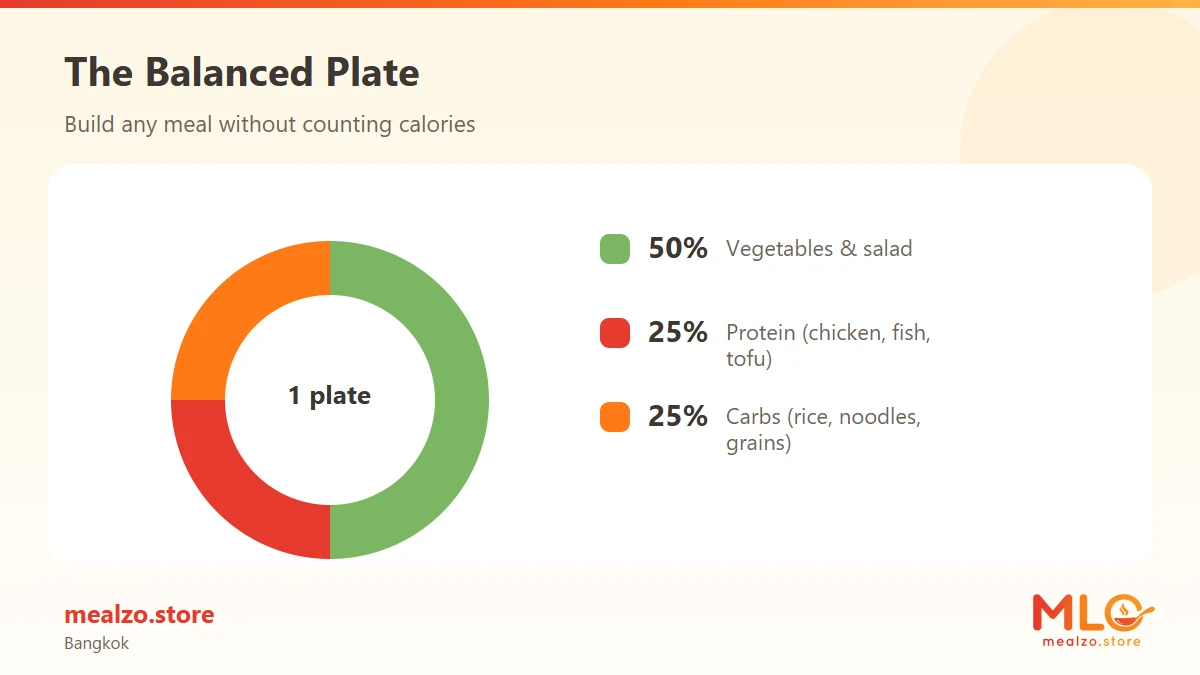
You do not need to recreate a textbook plate at every street stall. The more practical approach is to notice what the noodle dish is missing and let another part of the meal provide it.
Key takeaway: If noodles dominate the bowl, use protein and vegetables to complete the meal rather than trying to replace the noodles themselves.
10. Instant noodles at home can be upgraded easily
Instant noodles are convenient, especially after a long day when shopping and cooking are not appealing. The main limitation is that the basic packet is usually little more than noodles and strongly seasoned flavouring.
On its own, that means very little protein and very few vegetables.
A more complete bowl can be made with ingredients that require almost no extra preparation. Add an egg while the noodles cook. Drop in leafy greens, cabbage or mushrooms. Add tofu, leftover meat or another protein that is already in the refrigerator.
You also do not have to use the entire seasoning packet. Using part of it and tasting before adding more gives you more control over how salty the finished broth becomes.
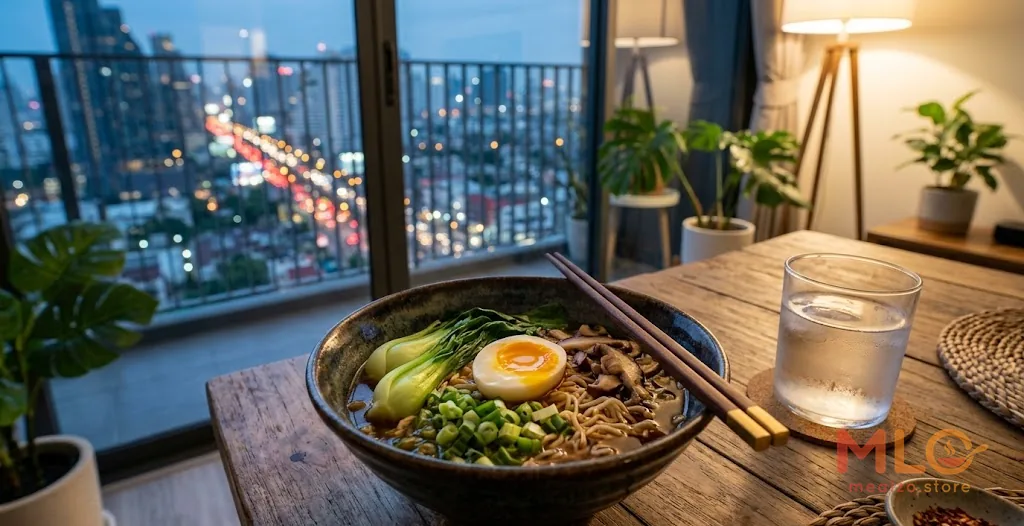
The same logic applies to instant noodles bought ready to eat from a convenience store. Convenience is the reason for choosing them, so the goal is not to turn them into an elaborate recipe. Even one or two simple additions can make the meal less dependent on noodles and seasoning alone.
11. Noodles late at night
Bangkok makes late-night food easy to find, and noodles are one of the simplest choices after work, travel or an evening out.
There is nothing uniquely problematic about eating noodles late. The more useful question is what the entire late meal looks like.
A bowl of noodles because you are genuinely hungry is different from noodles added after a full dinner, fried snacks and drinks. Likewise, a late meal built around noodles, protein and some vegetables is different from stacking several carbohydrate-heavy dishes because everything looks good at once.
If late-night noodles are part of your normal routine, consider keeping the meal straightforward. Choose the noodle dish you actually want, add protein if it is sparse, include vegetables when practical, and avoid feeling that a noodle order automatically needs rice, fried snacks and dessert beside it.
Routine matters more than a single late meal. Bangkok eating is flexible enough that the next meal can simply return to your usual structure.
12. How Mealzo Bangkok can fit around noodle days
A meal plan does not have to replace the street food and local dishes you enjoy. It can provide structure around them.
Mealzo Bangkok operates a kitchen in Bang Na, Bangkok. Meals are cooked fresh daily and delivered across Bangkok. Customers choose between a morning delivery window from 06:00 to 09:00 and an evening delivery window from 17:00 to 20:00.
There are 12 meal plans: Balanced, Weight Loss, High Protein, Vegetarian, Vegan, Keto, Low-Carb, Gluten Free, Easy-to-Digest, Pescatarian, No Fish & Seafood, and Dairy & Egg Free. Every plan uses one mixed cuisine that combines Thai and international dishes within the same plan. There is no separate cuisine selection.
Customers can choose from 6 daily calorie levels from 1200 to 2500 kcal, with 3 or 5 meals per day and package lengths of 3, 7, 14 or 30 days.
That structure can be useful when noodles are part of your normal Bangkok routine. If lunch is a noodle bowl, other prepared meals that day can carry more of the protein and vegetables without requiring you to calculate every street-food ingredient yourself. This does not mean that any particular noodle dish is included in a Mealzo Bangkok plan.
The website and mobile app are available in 8 languages: Thai, English, Polish, German, French, Russian, Simplified Chinese and Burmese. The app also includes a calorie calculator using the Mifflin-St Jeor formula as an estimate, not medical advice.
For allergens, customers declare from 9 allergen groups. Dishes containing a declared allergen are not assigned to that customer. This describes the assignment mechanism and is not a guarantee of an allergen-free meal.
You can explore Mealzo Bangkok meal plans if you want prepared meals to provide more structure on days when you eat street noodles, food-court noodles or instant noodles at another meal.
Key takeaway: A noodle meal does not need to be "fixed" in isolation if the rest of the day already provides enough variety, protein and vegetables.
FAQ
Are rice noodles better than egg noodles?
Not automatically. Sen yai, sen lek and sen mee are rice-based, while ba mee is made from wheat and egg, but all are primarily carbohydrate foods. The cooking method, amount of oil and sauce, protein, vegetables and side dishes usually tell you more about the overall meal than the noodle type alone.
Are glass noodles a low-carb alternative?
No. Woon sen has a different texture and is made from starch rather than rice or wheat, but it still contributes carbohydrates. Treating glass noodles as a low-carb or diet food can be misleading. Choose them because you enjoy the dish, not because the noodles are assumed to have a fundamentally different role.
Is noodle soup always lighter than stir-fried noodles?
A clear noodle soup is usually prepared with less cooking oil than wok-fried noodles, but the broth can be salty and toppings vary. Dry noodle bowls can also contain oil and seasoning even though they look less rich. It is better to consider the complete bowl rather than judging it only by whether broth is present.
What should I add to a noodle meal if it does not keep me full?
Look first at protein and vegetables. A bowl dominated by noodles with only a few slices of meat may be less satisfying than one with a more substantial protein component. Extra meat, fish, egg or tofu can help build a more complete meal, while additional greens or a vegetable side adds volume and variety.
Can I still eat boat noodles, pad see ew or khao soi while trying to eat in a balanced way?
Yes. Balance does not require choosing only clear soup noodles. Boat noodles, pad see ew and khao soi are prepared differently and bring different amounts of broth, oil, sauce and richness. You can account for those differences through portion awareness, protein, vegetables, simpler sides and the way the rest of your day is structured.
Mealzo Bangkok is a kitchen and meal delivery service operating exclusively in Bangkok, Thailand. We are not affiliated with similarly named services outside Thailand.
Find a Meal Plan That Fits
Compare Mealzo plans or use the calculator to explore meal options for your needs.