Thai Soups in Bangkok: Tom Yum, Tom Kha, Clear Soups and How to Fit Them Into a Balanced Day
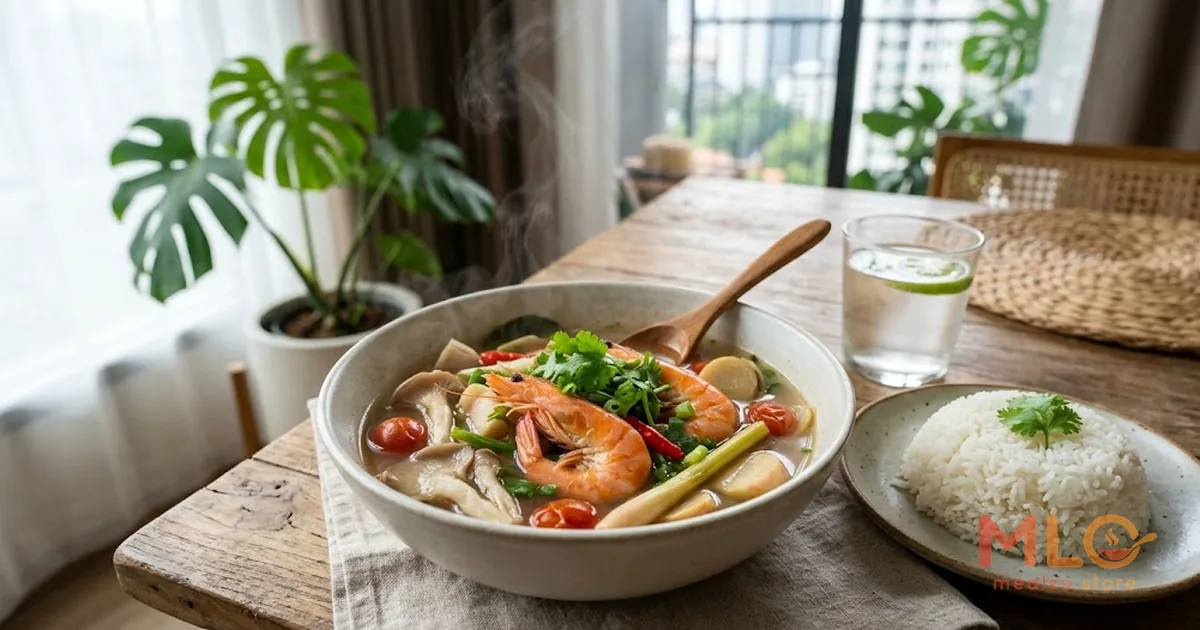
Bangkok has a soup for almost every appetite. There is sharp, fragrant tom yum with prawns, gentle gaeng jued with tofu and minced pork, coconut-rich tom kha gai, and peppery noodle soups served in busy shophouse kitchens. Some arrive as a complete meal. Others appear beside a plate of rice without anyone ordering them separately.
For people who eat Thai soups in Bangkok several times a week, the question is rarely whether soup belongs in their routine. It already does. The more useful question is what each bowl contributes to the meal, and what might still be missing.
A clear broth can carry vegetables and pieces of chicken, while a creamy soup brings additional richness from coconut milk or other ingredients. Rice, noodles, seasoning and the amount of broth you drink change the picture further.
Understanding these differences makes it easier to enjoy familiar soups without turning lunch into a nutrition calculation. You can still order what tastes right, while arranging the rest of your day around what is actually in the bowl.
1. Why Soup Is Part of Everyday Bangkok Eating
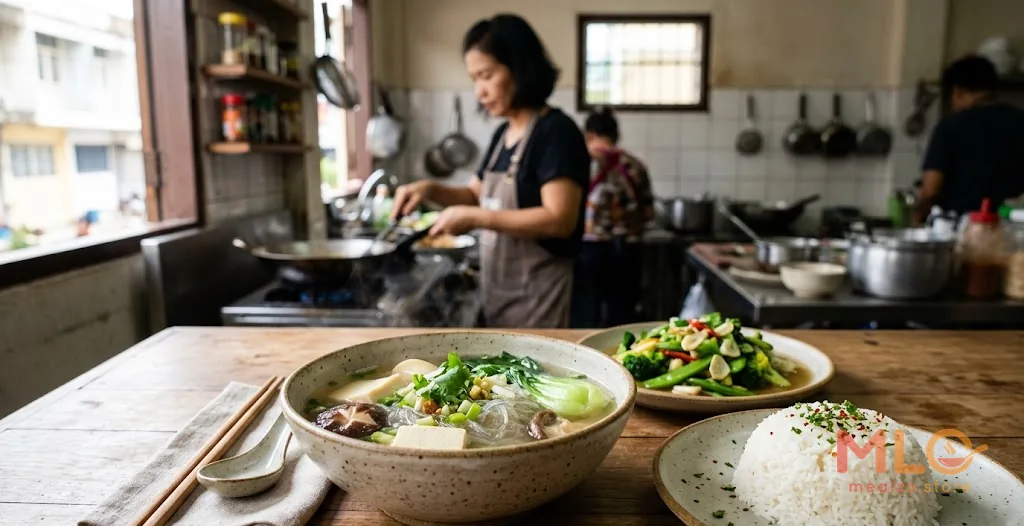
Soup in Bangkok is not limited to rainy evenings or moments when someone feels unwell. It is everyday food, available in street stalls, food courts, office lunch areas and neighbourhood shophouse kitchens.
A worker might eat rice with stir-fried meat and receive a small bowl of clear broth alongside it. Someone else might order tom yum seafood with rice for lunch. Later, a family could share tom kha gai and several other dishes around the dinner table.
These are different ways of eating soup, and they matter when considering how the meal fits together.
Thai meals are frequently assembled from dishes that complement each other. A soup may bring moisture, acidity and aromatic herbs to a meal otherwise built around rice and a fried or stir-fried dish. It may also be the main attraction, particularly when filled with noodles, rice or substantial pieces of meat.
That versatility is one reason soup is so practical in Bangkok. It is comforting, familiar, widely available and often inexpensive compared with more elaborate meals.
The difficulty begins when all soups are treated as nutritionally interchangeable simply because they arrive in bowls.
A light-looking broth with little solid food may leave someone wanting another meal soon afterward. A coconut-based soup served with rice has a different composition. A large noodle soup may already contain much of the starch that another person would normally eat separately.
The useful habit is to look beyond the name of the dish and identify its main components.
2. The Main Thai Soup Families You Will Find in Bangkok
Bangkok's soup culture includes central Thai classics, northeastern influences, Chinese-Thai noodle dishes and simple home-style preparations.
The names offer clues, but recipes change between kitchens. Even familiar dishes can vary in seasoning, ingredients and consistency.
Tom yum: hot, sour and aromatic
Tom yum is built around an aromatic broth, typically using lemongrass, galangal, makrut lime leaves, chilli and mushrooms. Tomato may also appear, while lime juice and fish sauce contribute sourness and saltiness.
Tom yum goong contains prawns, tom yum gai uses chicken, and tom yum pla is prepared with fish.
The distinction worth recognising is between nam sai and nam khon.
Tom yum nam sai has a clear broth. Tom yum nam khon is richer and cloudier, often using evaporated milk, chilli paste or oil from the paste.
The creamy appearance does not automatically mean coconut milk has been added. That is a common misunderstanding, particularly among people unfamiliar with Thai cooking.
Tom kha: galangal and coconut milk
Tom kha has a different character. Coconut milk gives the broth a rounded, rich texture, while galangal, lemongrass, lime leaves, chilli and lime provide aromatic contrast.
Tom kha gai, made with chicken, is especially familiar. Mushrooms often appear in the same bowl.
The coconut milk is part of the dish's identity, not an unnecessary ingredient to remove. If you want something less rich on a particular day, ordering another soup may make more sense than asking the kitchen to fundamentally change tom kha.
For a broader comparison of coconut-based Thai dishes, see how coconut milk changes Thai curries and other dishes.
Gaeng jued: mild clear soup
Gaeng jued is a common everyday choice when someone wants a mild broth rather than an intensely spicy or sour soup.
It may contain soft tofu, minced pork, glass noodles, Chinese cabbage, leafy vegetables or winter melon and other gourds.
It often appears in home cooking and as part of a shared meal. The ingredients are usually easy to recognise, although the broth may still contain substantial seasoning.
Tom saep and tom khlong
Tom saep is associated with Isaan-style sour and spicy cooking. It often features pork bones or ribs, herbs, chilli and lime.
The bones contribute flavour, but a bowl with several bones may contain less edible meat than its appearance suggests.
Tom khlong is another sour-spicy soup, often distinguished by deeper smoky or roasted aromas. Depending on the kitchen, it can include fish, dried ingredients, roasted chilli and aromatic herbs.
Both demonstrate why soup should be judged by its actual contents rather than simply by whether its broth is clear.
Noodle soups, rice soups and Chinese-Thai favourites
Kuay jap is a peppery soup with rolled rice noodles, often accompanied by pork, offal or egg.
Rice soups include khao tom, where rice is served in broth, and jok, a thicker rice porridge that may contain minced pork, ginger and egg.
These are commonly eaten as meals in their own right.
Bamboo-shoot soups, tofu soups and vegetable broths complete the picture, with preparations that range from delicate to heavily seasoned.
3. What Is Actually in the Bowl: Broth, Solids and Hidden Starch
A soup is not simply flavoured water. It is broth plus the ingredients suspended in it, and sometimes a separate plate of rice.
The broth provides fluid, aromatic compounds and seasonings. The solids supply varying combinations of protein, vegetables, starch and fat.
This distinction becomes particularly useful with noodle and rice soups.
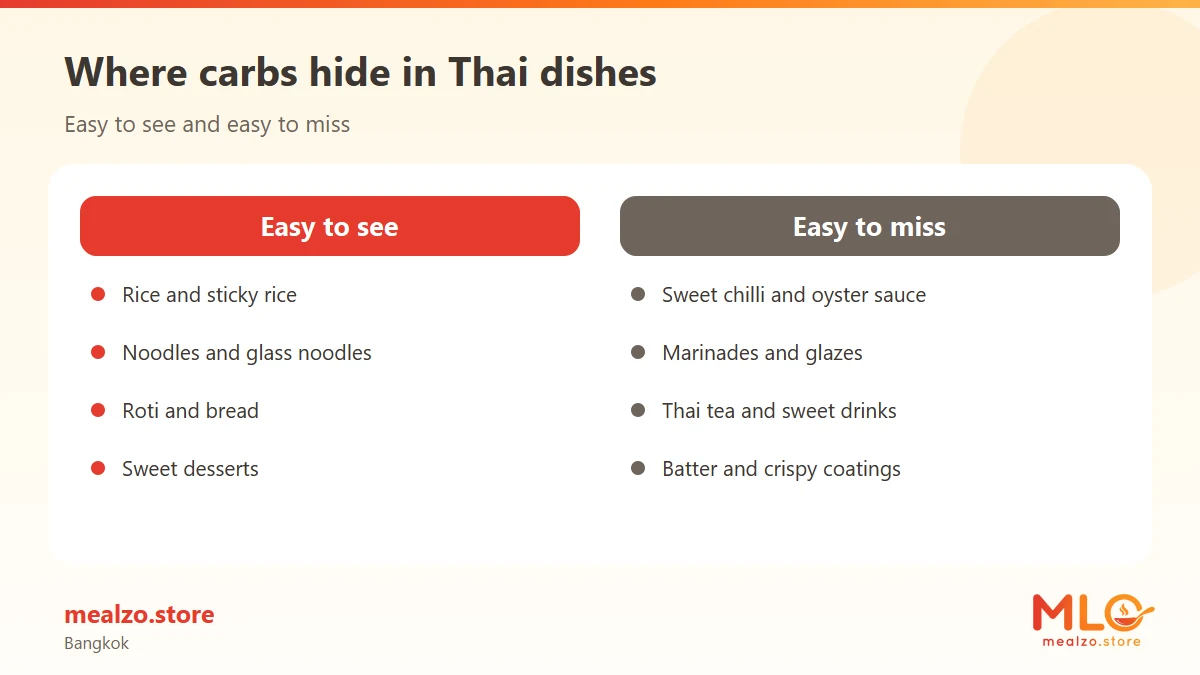
A bowl of kuay jap may look like a light soup from above, but the rolled rice noodles form a significant part of what you are eating. Jok can appear almost entirely liquid while actually being built around cooked rice.
Glass noodles in gaeng jued are another detail people sometimes overlook because they become translucent in the broth.
When examining a bowl, ask yourself:
- Is the main substance broth, vegetables, meat, tofu, noodles or rice?
- Are there visible sources of protein, or mostly small pieces used for flavour?
- Is the texture coming from coconut milk, evaporated milk, chilli paste or starch?
- Is the bowl already substantial, or will it be eaten alongside other dishes?
The answers determine how the soup fits into the rest of the meal.
| Common Bangkok soup | What the bowl is mostly made of | Where extra salt or richness comes from | Practical adjustment |
|---|---|---|---|
| Tom yum nam sai | Clear aromatic broth, mushrooms and seafood, fish or chicken | Fish sauce, stock and table seasoning | Leave some broth if the seasoning is strong |
| Tom yum nam khon | Aromatic broth, protein, mushrooms and creamy additions | Chilli paste, evaporated milk, paste oil and seasoning | Choose nam sai when you prefer less richness |
| Tom kha gai | Coconut broth, chicken, galangal and mushrooms | Coconut milk, fish sauce and stock | Pair with vegetables rather than automatically adding another rich dish |
| Gaeng jued | Clear broth, vegetables, tofu or minced pork | Seasoned stock and fish sauce | Ask for additional vegetables or tofu |
| Tom saep | Sour-spicy broth, herbs and meat on bones | Seasoned stock and fish sauce | Check how much edible meat is present |
| Tom khlong | Sour-spicy broth with roasted aromatics and often fish | Seasoned stock, fish sauce and chilli seasoning | Taste before adding table condiments |
| Kuay jap | Rolled rice noodles, peppery broth and pork ingredients | Seasoned broth, meat components and condiments | Treat the noodles as part of the main meal |
| Khao tom or jok | Rice in broth or thick rice porridge with toppings | Seasoned broth, sauces and added toppings | Add egg or another protein source if needed |
| Bamboo-shoot or tofu soup | Broth, bamboo shoots, tofu and vegetables | Stock, fish sauce or preserved ingredients | Look for enough tofu or vegetables to make the bowl satisfying |
Key takeaway: Judge a soup by its broth, solid ingredients and accompanying rice or noodles, not by how light it looks.
4. Clear, Creamy and Coconut Soups: What Changes?
Clear soup and creamy soup can share many of the same herbs while having noticeably different compositions.
Tom yum nam sai is a useful example. The fragrance comes from lemongrass, galangal, lime leaves and chilli, while mushrooms and the chosen protein provide substance.
The broth stays relatively clear because it does not depend on a substantial creamy addition for its texture.
Tom yum nam khon introduces another layer. Evaporated milk can soften the sharpness of the sour-spicy broth, while chilli paste and its oil can contribute body, colour and richness.
Tom kha goes further in a different direction, using coconut milk as an essential part of the soup.
Coconut milk brings fat and a fuller mouthfeel. Evaporated milk and chilli paste also change the composition of creamy tom yum, although the effect depends on the recipe.
None of these differences makes a soup inherently preferable for everyone.
Some people specifically want the deep flavour of tom kha alongside plain rice. Others prefer the sharper taste of clear tom yum, particularly when the rest of the meal already includes rich dishes.
The practical choice is contextual.
If lunch includes a substantial fried dish, clear gaeng jued or tom yum nam sai may provide a contrasting texture and flavour. If coconut-based tom kha is the centre of dinner, a simpler accompanying vegetable dish may be enough.
The broth also varies between kitchens. A clear soup can be heavily seasoned, while a creamy soup might taste gentle but still contain plenty of fish sauce.
Appearance tells you something about richness. It does not tell you everything about salt.
5. The Seasoning Is Mostly in the Broth
A fragrant soup broth is a concentrated mixture of seasonings.
Fish sauce supplies saltiness and savoury depth. Chilli paste may add salt, sugar and oil. Stock, salt and other seasonings can intensify the flavour further.
When the soup arrives at your table, you may also find lime, fish sauce, chilli flakes, sugar or chilli vinegar nearby.
These condiments give diners control over taste, but they also make it easy to add seasoning before knowing how much the kitchen has already used.
In Bangkok, a practical sequence is to taste the soup first, then decide whether it needs anything.
Lime can brighten the flavour without adding the same saltiness as fish sauce. Chilli changes heat and aroma. Extra fish sauce changes the salt content as well as the taste.
Another useful adjustment involves the broth itself.
Eating the mushrooms, vegetables, tofu or meat while leaving some heavily seasoned liquid is different from drinking the entire bowl. A substantial share of the dissolved salt remains in the broth you leave behind.
This does not mean broth should always be discarded. For many people, sipping it is central to enjoying soup.
The point is simply that finishing every drop is optional.
A small clear soup served beside rice may also contribute seasoning to a meal that already contains sauce, marinated meat or salty condiments.
For a closer look at where seasoning accumulates across common meals, read salt and sodium in everyday Bangkok food.
Key takeaway: Leaving some strongly seasoned broth is a simple way to change how much dissolved salt you consume without changing the whole meal.
6. Protein in Soup: What You Can See and What You Cannot
Soup names often identify their main protein ingredient.
Goong means prawns, gai means chicken, and pla means fish. Tofu and minced pork are also common, particularly in gaeng jued.
But a soup containing protein is not necessarily a substantial protein meal.
A tom yum goong bowl may contain several visible prawns, yet much of its volume can still be broth and mushrooms. A tom saep bowl can look generous because of large pork bones, although the edible meat may be limited.
A few minced pork pieces floating in rice soup are different from a larger serving of meat, egg or tofu.
When soup is a side, this may not matter. The rice dish beside it might already provide the main protein.
When soup is the entire lunch, however, it is worth checking whether there is enough solid food to make the meal satisfying.
Simple additions include:
- An egg in a rice soup or noodle soup, where available.
- Extra tofu in a mild vegetable broth.
- A separate chicken, fish or tofu dish with rice.
- Additional vegetables when the soup is dominated by broth and a small amount of meat.
The goal is not to make every soup unusually heavy. It is to recognise what the soup contributes, then use the rest of the meal to fill the gaps.
This is especially relevant when ordering delivery, since the size and distribution of ingredients may not be obvious until the container is opened.
7. Vegetables, Mushrooms and the Fibre in the Bowl
Bangkok offers an enormous variety of vegetable dishes, yet a typical quick street meal can still be relatively light on vegetables.
A plate of rice with meat may include little more than basil, chilli or a few slices of cucumber. A noodle bowl may have a small handful of greens.
Soup can help close that gap.
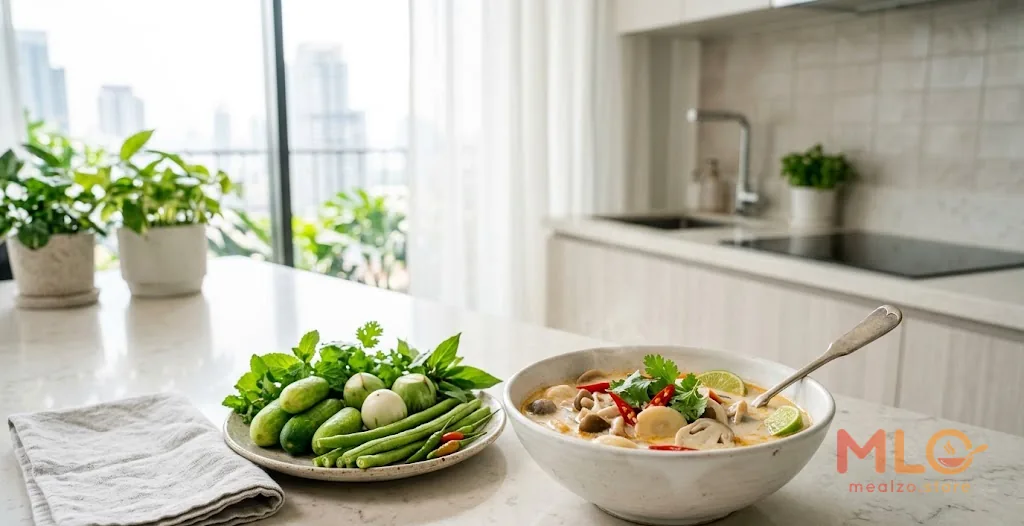
Gaeng jued may contain Chinese cabbage, leafy greens, winter melon and tofu. Tom yum commonly includes mushrooms and sometimes tomato. Bamboo-shoot soups add another plant ingredient with a distinct texture.
These ingredients contribute fibre as well as substance. Mushrooms, greens, gourds and bamboo shoots are not simply decorative additions to flavoured water.
However, a few mushroom pieces in tom yum are not equivalent to a vegetable-rich bowl.
Look at the amount actually served.
If most of the bowl is liquid, it may be more useful to ask for extra vegetables, where the kitchen can accommodate the request, or to order a vegetable dish alongside it.
The form of the vegetables also matters to the eating experience. Soft gourd, tender leafy greens and mushrooms are easy to incorporate into a mild soup, while bamboo shoots add a firmer bite.
A soup with generous vegetables can complement a rice plate that would otherwise contain relatively few plant foods.
For further ideas beyond soups, see practical ways to eat more vegetables and fibre in Bangkok.
There is no need to force vegetables into every soup that traditionally contains very little. Sometimes it is simpler to enjoy the original dish and include vegetables elsewhere in the day.
8. Soup as a Side Versus Soup as a Main Meal
The same bowl can play different roles depending on what surrounds it.
A complimentary clear soup served with a rice plate is usually intended as an accompaniment. It adds moisture and flavour, sometimes with a few pieces of vegetable or tofu.
It is not necessarily supposed to provide everything the meal needs.
A large bowl of noodle soup, on the other hand, is commonly eaten as lunch or dinner without another dish.
That makes the distinction between side and main more useful than simply asking whether a soup is filling.
| What to consider | Soup served as a side | Soup eaten as the main meal |
|---|---|---|
| Main purpose | Complement rice and the main dish | Provide most of the meal |
| Broth | Adds flavour and moisture | May make up much of the bowl |
| Protein | May be supplied by the rice dish | Check the amount of meat, fish, egg or tofu |
| Rice or noodles | Usually already present on the plate | May be inside the bowl or needed separately |
| Vegetables | Can complement the main dish | May need increasing or adding alongside |
| Seasoning | Adds to the seasoning of the full meal | Concentrated in the soup broth and condiments |
| Practical approach | Consider the whole plate and soup together | Check for sufficient protein, vegetables and starch |
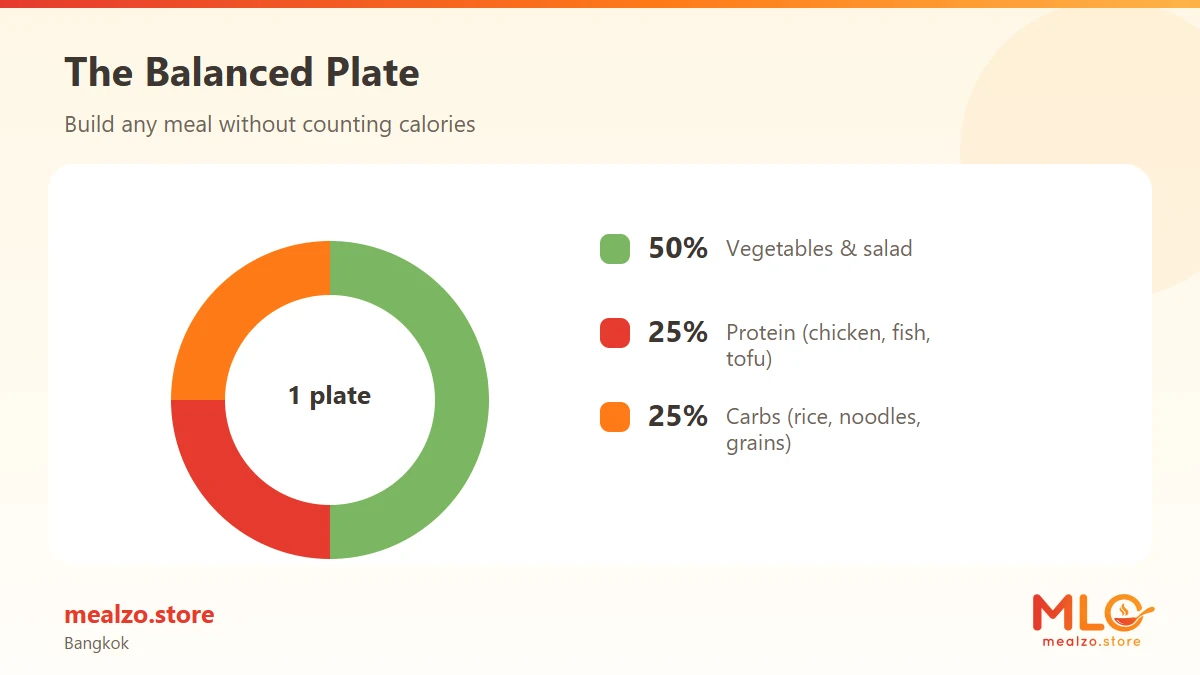
Imagine a lunch built around rice, stir-fried chicken and a small bowl of gaeng jued with cabbage. The soup complements the other components. There may be no need to add anything.
Now consider a bowl of clear tom yum with mushrooms and a small amount of fish, eaten alone. It brings flavour, fluid and some solid ingredients, but the person eating it may want rice or a separate protein dish.
A bowl of jok presents a different situation. Rice is already its foundation, so adding another large rice dish may not be what the meal needs. Egg, tofu or another suitable topping might be more relevant.
The same logic applies to familiar Bangkok rice plates. Our guide to one-plate dishes such as pad kra pao and khao pad explains how the main dish and its accompaniments work together.
Key takeaway: When soup is a side, assess the whole meal; when soup is the main, check what the bowl itself is missing.
9. Hot Soup in Hot Bangkok Weather
There is something unmistakably Bangkok about sitting beneath a fan, eating steaming noodle soup while the afternoon air remains humid.
Hot soup is not treated as seasonal food here. People eat it at breakfast, lunch, dinner and late in the evening.
The temperature changes the pace of eating. A hot broth encourages smaller sips and pauses between mouthfuls. Sharp lime, chilli and fresh herbs can make the experience particularly vivid.
Hot soup also contributes fluid because broth contains water.
But it is not interchangeable with plain drinking water.
Broths may contain considerable dissolved salt, particularly when they have been seasoned heavily or additional fish sauce has been added at the table.
In warm weather, sweating also changes how thirsty someone feels. A strongly seasoned bowl can be comforting without satisfying the desire for plain water.
The straightforward approach is to enjoy the soup and drink water separately according to thirst and personal needs.
Some people prefer allowing the bowl to cool before eating. Others enjoy the heat and spice exactly as served. Neither preference needs to become a rule about what everyone should eat in Bangkok's climate.
For more everyday context, see hydration and drinking water in the Bangkok heat.
Soup can be part of a comfortable meal routine in a hot city, but it does not need to carry the responsibility for all your hydration.
10. Simple Adjustments You Can Make at a Bangkok Soup Stall
You do not need a complicated ordering strategy to make Thai soup fit the rest of your day.
Often, a small decision at the stall is enough.
Consider what you have eaten already and what kind of meal you want now. If breakfast was substantial and lunch is mainly about something warm and savoury, a clear soup may be appealing.
If lunch needs to sustain you through a busy afternoon, a bowl containing substantial noodles, rice or protein might be more appropriate.
A few adjustments are particularly practical:
- Choose tom yum nam sai rather than nam khon when you want the flavour of tom yum with less creamy richness.
- Ask for extra vegetables or mushrooms when the kitchen offers that option.
- Taste before adding fish sauce, sugar or chilli paste.
- Leave some broth when it tastes heavily seasoned.
- Add rice, egg, tofu or a separate protein dish when the soup alone lacks substance.
- Recognise rice and noodles already present in the bowl before ordering additional starch.
These are choices, not compulsory rules.
A street stall may prepare a large batch of soup base and have limited flexibility. A busy food court may not offer ingredient substitutions. A traditional dish may lose its intended character if too many components are removed.
In those situations, choose a different dish if it better suits your preferences, or simply balance the remaining meals differently.
For an ordinary week in Bangkok, flexibility is more useful than trying to perfect every bowl.
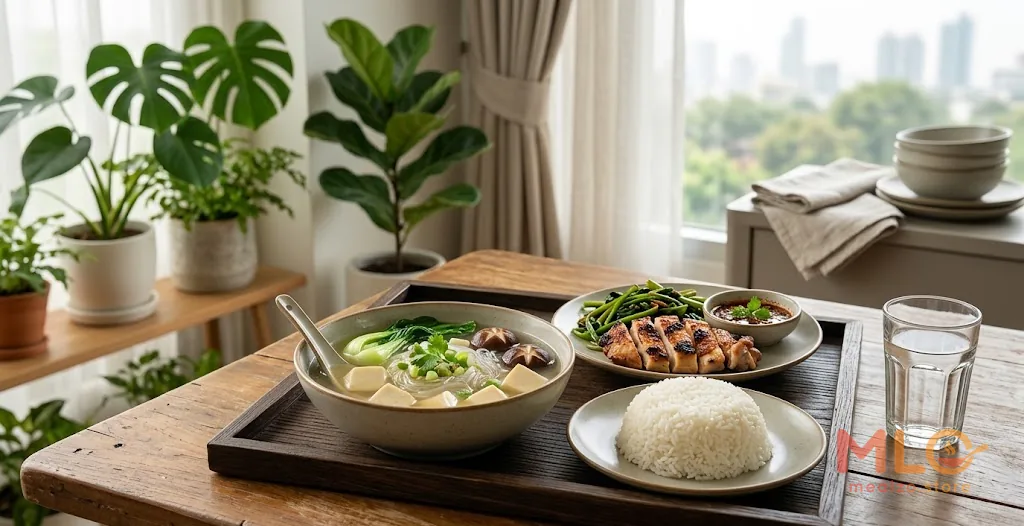
11. How a Meal Plan Fits Around Your Favourite Street Soups
People who enjoy street food do not necessarily want to stop eating it. The attraction is obvious: familiar flavours, neighbourhood routines, affordable meals and the pleasure of ordering something freshly prepared in front of you.
The challenge is often the rest of the day.
A quick soup lunch may contain little protein. A noodle soup may already supply a substantial starch component. A rich tom kha dinner may call for a different type of meal earlier.
When every meal is improvised, it can be difficult to maintain a consistent structure around those differences.
Mealzo Bangkok offers another way to organise regular meals without treating local soup as something to avoid.
The kitchen is located in Bang Na, Bangkok. Meals are cooked fresh daily and delivered across Bangkok, providing prepared meals that can form the organised part of a person's eating routine.
Mealzo Bangkok offers 12 meal plans: Balanced, Weight Loss, High Protein, Vegetarian, Vegan, Keto, Low-Carb, Gluten Free, Easy-to-Digest, Pescatarian, No Fish & Seafood, and Dairy & Egg Free.
Every plan uses a single mixed cuisine, combining Thai and international dishes within the same plan. Customers do not select separate cuisines.
There are 6 daily calorie levels from 1200 to 2500 kcal, options for 3 or 5 meals per day, and package lengths of 3, 7, 14 or 30 days.
Customers choose a delivery window: morning 06:00-09:00 or evening 17:00-20:00.
The website and mobile app are available in 8 languages: Thai, English, Polish, German, French, Russian, Simplified Chinese and Burmese.
The app also includes a calorie calculator based on the Mifflin-St Jeor formula. Its result is an estimate, not medical advice.
For allergen handling, customers declare relevant allergens from 9 allergen groups. Dishes containing a declared allergen are not assigned to that customer. This describes the dish-assignment mechanism, rather than a guarantee that a meal is allergen-free.
You can explore the available options through Mealzo Bangkok meal plans.
The sensible way to combine a meal plan with street soup is to consider how that soup fits your chosen meal schedule. A soup eaten in addition to the planned meals is extra food, not an automatic replacement for one of them.
If you intend to substitute a street soup for a planned meal, compare what it actually contains rather than assuming the two meals are equivalent.
For example, a clear vegetable broth with a few tofu pieces differs considerably from a bowl of rice porridge with egg, and both differ from coconut-based chicken soup served with rice.
A prepared meal plan can make the regular part of your day more predictable. It does not make an independently purchased street meal nutritionally identical to a planned meal.
Anyone with high blood pressure, diabetes, an eating disorder or another medical condition affecting diet should follow their own doctor's guidance.
The practical benefit is organisation. Bangkok's street soups can remain part of the week, while the other meals are less dependent on last-minute decisions.
Key takeaway: A prepared meal plan gives the day structure, while street soup can remain a flexible choice when its ingredients and role in the meal are considered.
FAQ
Is clear tom yum always lighter than creamy tom yum?
Clear tom yum nam sai does not usually include the evaporated milk, creamy additions or chilli paste oil associated with many nam khon versions. That changes the richness and fat composition of the broth. However, the overall meal also depends on the seafood, meat, vegetables, rice and other ingredients served with it. Clear does not automatically mean lightly seasoned.
Can I eat tom kha gai as a complete lunch?
You can, but whether it feels like a complete meal depends on the amount of chicken, mushrooms, coconut broth and any accompanying rice or vegetables. A bowl dominated by coconut broth with relatively little chicken has a different composition from one containing substantial solids. Consider adding vegetables or another protein source when the meal needs more substance.
Why does gaeng jued sometimes taste salty even though it looks clear?
The broth may contain stock, fish sauce, salt and other seasoning that dissolves completely into the liquid. Clear appearance tells you very little about sodium. Taste the soup before adding table condiments, and remember that you do not have to drink every drop of broth.
Are kuay jap, jok and other rice soups really substantial meals?
They can be. Kuay jap contains rolled rice noodles, while jok is based on cooked rice formed into a thick porridge. The starch may be less visually obvious than on a separate plate, but it is still part of the dish. Check the toppings as well, particularly whether the bowl contains enough egg, meat or tofu for the meal you want.
Can I eat street soup while following a Mealzo Bangkok meal plan?
Street soup can fit into your overall routine, but it is not automatically interchangeable with a prepared plan meal. Consider whether the soup is an additional side, a snack or a replacement for a main meal, and look at its broth, starch, protein and vegetables. Mealzo Bangkok provides organised prepared meals; street dishes remain separate choices whose ingredients and serving sizes vary between kitchens.
Mealzo Bangkok is a kitchen and meal delivery service operating exclusively in Bangkok, Thailand. We are not affiliated with similarly named services outside Thailand.
Find a Meal Plan That Fits
Compare Mealzo plans or use the calculator to explore meal options for your needs.