Bangkok's Vegetarian Festival: Eating Jay Food Well Through the Nine Days
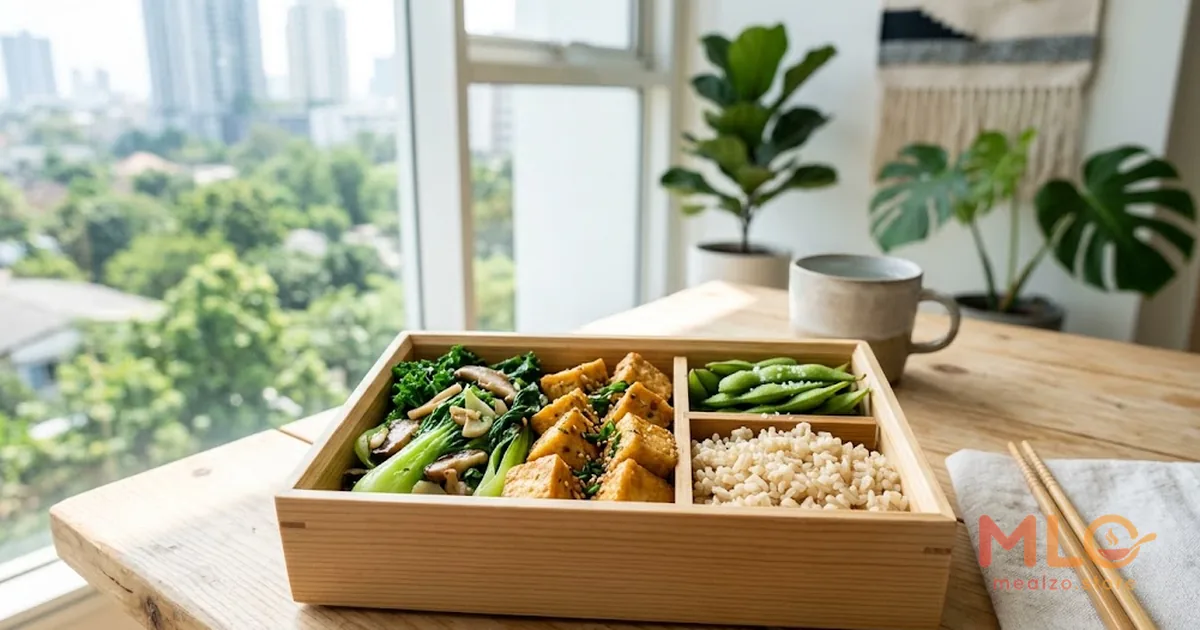
Bangkok changes noticeably during the Vegetarian Festival. Yellow flags appear outside market stalls, food courts set aside jay sections, supermarkets expand their plant-based shelves, and packaged foods begin carrying familiar festival labels. In Yaowarat, the tradition is especially visible, but you do not need to be in Chinatown to come across jay food.
The festival, known in Thai as thetsakan kin je, takes place during the first nine days of the ninth Chinese lunar month, usually in late September or October. It comes from Chinese-Thai tradition, although people take part for different reasons. Some follow it closely for cultural, family or merit-making reasons. Others participate for only part of the festival, and some simply enjoy the temporary abundance of plant-based food.
For someone approaching the Vegetarian Festival in Bangkok through food rather than ceremony, the main challenge is not finding something labelled jay. Bangkok makes that relatively easy. The harder part is eating in a way that still feels balanced after several days of noodles, fried tofu, mock meat and sweet soy drinks.
This vegetarian festival Bangkok jay food guide is therefore about the practical side: what jay actually excludes, how it differs from ordinary vegan food, what to look for at stalls, and how to build satisfying meals through the nine days without pretending that every plant-based dish is automatically light or nutritionally complete.
1. What the Vegetarian Festival looks like in Bangkok
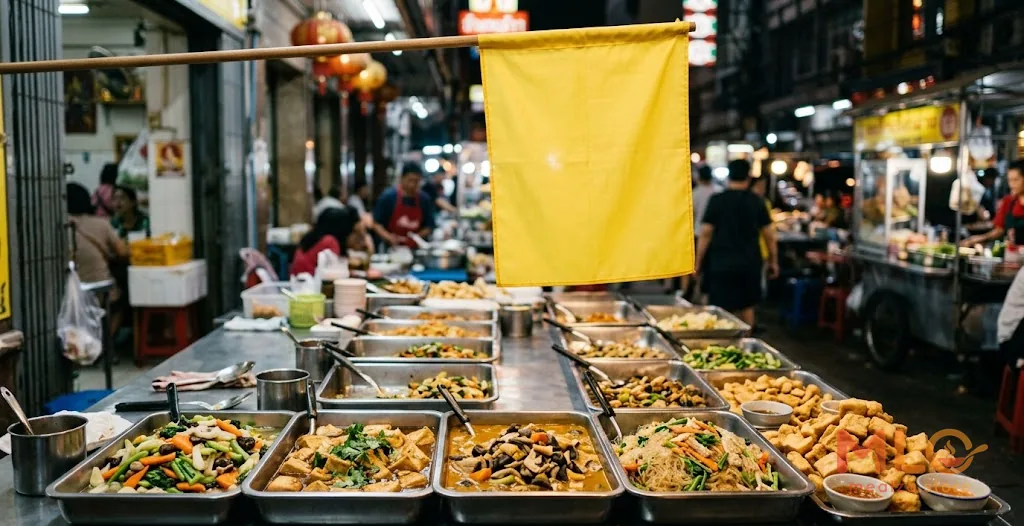
During the festival, jay food becomes unusually visible. Yaowarat is the most obvious focal point, but yellow festival flags appear far beyond Chinatown. You will see them at neighborhood markets, street-food stalls, food courts, supermarkets and convenience stores throughout Bangkok.
The yellow flag normally carries the red Thai character associated with jay food. Some places create a separate jay counter or section, while packaged foods may carry a jay label during the festival period.
That visibility is useful because ordinary Thai dishes can contain animal-derived ingredients even when no obvious meat is present. Fish sauce, oyster sauce, shrimp paste and meat-based seasonings are common enough that simply ordering vegetables does not necessarily produce a jay dish.
Festival labelling creates a clearer distinction. When a stall is genuinely operating as a jay stall, the recipe is supposed to follow the festival's food restrictions rather than merely remove visible pieces of meat.
There is still room for sensible checking, especially with packaged products or mixed food counters. A yellow sign tells you what the food is intended to be, but if strict observance matters to you, reading the label or asking the seller remains reasonable.
Key takeaway: Jay food is defined by what goes into the dish, not simply by whether you can see meat on the plate.
2. What jay food excludes, and why it is not the same as everyday vegan food
Jay food is plant-based, but the traditional rules are more specific than the rules followed by many people who simply eat vegan food.
It excludes meat, fish, seafood, eggs and dairy. It also excludes animal-derived seasonings such as fish sauce, shrimp paste and oyster sauce. In the stricter version of the custom, pungent vegetables including garlic, onion, shallot and chives are also avoided.
That last point creates one of the biggest practical differences between jay and everyday vegan cooking. A vegan curry, pasta sauce, stir-fry or vegetable dish may contain no animal products at all and still use garlic or onion heavily. It can be perfectly vegan while not being suitable for someone following strict jay rules.
Vegetarian food is broader still because it may contain egg, dairy or both.
| Eating style | What it excludes | Practical difference during the festival |
|---|---|---|
| Jay | Meat, fish, seafood, eggs, dairy, animal-based sauces and, in stricter practice, pungent vegetables such as garlic and onion | Designed around festival rules rather than ordinary plant-based cooking |
| Everyday vegan | Animal products and animal-derived ingredients | Garlic, onion, shallot and chives may still be used |
| Vegetarian | Meat, fish and seafood | Egg and dairy may still be present, depending on the dish |
This distinction matters whenever food comes from outside a dedicated jay stall. A dish being described as vegetarian or vegan is useful information, but it does not automatically confirm festival compliance.
For a broader look at keeping plant-based eating workable in the city outside festival season, see practical plant-based eating in Bangkok.
3. How to recognise jay food without overcomplicating it
Bangkok makes festival food easier to identify than ordinary plant-based eating because businesses tend to label it quite clearly during the festival.
Useful signs include:
- A yellow flag with the red jay character at a food stall.
- A clearly marked jay section in a food court.
- A dedicated jay counter in a supermarket.
- Jay wording or symbols on packaged foods.
- A temporary festival menu offered alongside a business's normal menu.
The label is especially useful for dishes that look familiar but have been reformulated. A noodle dish that normally relies on fish sauce may be made with soy-based seasoning. A curry may omit animal-derived pastes. A bun or snack that would ordinarily contain egg may be prepared differently for the festival.
Do not assume, however, that every generic vegetable dish on sale nearby follows the same rules. A vegetable stir-fry from a normal stall can still contain oyster sauce or fish sauce. The festival creates plenty of jay options, but it does not transform every kitchen in Bangkok into a jay kitchen.
If you are following the tradition strictly, dedicated jay preparation is generally easier to navigate than repeatedly trying to modify ordinary dishes.
4. Plant-based does not automatically mean light
One of the easiest mistakes during the Vegetarian Festival is to treat the jay label as a nutritional shortcut. It tells you something important about ingredients, but it does not tell you how the food was cooked.
A large part of Bangkok's festival food is designed to be convenient, filling and enjoyable. That can mean deep-fried tofu, battered vegetables, fried gluten, oily noodle dishes, rich curries and stir-fries that rely heavily on oil and seasoning.
Removing fish sauce, shrimp paste and other familiar Thai seasonings also changes how cooks build flavour. Soy sauce, sugar, salt and concentrated vegetarian seasonings may become more prominent.
None of that makes the food somehow "bad". It simply means plant-based and light are not synonyms.
A practical way to think about a jay meal is to look beyond the label and ask three ordinary food questions:
- What is the main protein source?
- Where are the vegetables?
- Is most of the meal fried starch, noodles or processed mock meat?
If lunch is largely fried food, dinner can be based around tofu, vegetables and rice with a lighter cooking method. If breakfast is sweet and carbohydrate-heavy, lunch can include more beans, tofu or soy.
The same logic applies outside the festival. understanding where fat from fried food and cooking oil comes from can help when comparing dishes that are all technically plant-based but prepared very differently.
Key takeaway: The jay label tells you about festival ingredients and restrictions. It does not tell you whether a dish is fried, sugary, salty or built around vegetables.
5. Mock meat is convenient, but it should not become the whole menu
Mock meat is part of the character of festival eating in Bangkok. It allows familiar dishes to be recreated without meat, fish or seafood, and it gives food stalls a practical ingredient that works in stir-fries, curries, rice dishes and noodle bowls.
Depending on the product, mock meat may be built from soy protein, wheat gluten, starch, flavourings or a combination of these ingredients.
There is nothing unusual about using processed foods during the festival. The issue is repetition. Eating a mock-meat dish occasionally is different from allowing mock meat to become the main protein source at breakfast, lunch and dinner throughout the nine days.
Whole tofu, beans, lentils, nuts, seeds and less processed soy foods bring different textures and ingredients to the diet. Mushrooms are also useful for body and flavour, although mushrooms should not automatically be treated as a replacement for protein-rich foods simply because they are substantial on the plate.
| Common jay food type | What it is mainly built from | One practical adjustment |
|---|---|---|
| Fried mock meat | Soy protein, wheat gluten, starch and seasoning | Pair it with vegetables instead of ordering several fried mock-meat sides |
| Jay noodles | Noodles, sauce, vegetables and sometimes tofu or mock meat | Look for tofu and greens rather than making noodles the entire meal |
| Tofu stir-fry | Tofu, sauce and vegetables | Choose one with plenty of vegetables and less visible oil when available |
| Rice with mixed jay dishes | Rice plus prepared curries and stir-fries | Combine a protein-based dish with a vegetable dish |
| Clear vegetable soup | Vegetables, mushrooms, tofu or soy-based ingredients | Use it alongside a more substantial protein source |
| Sweet soy drink | Soy drink and sweetener | Treat it as a drink or snack, not automatically as the main protein of a meal |
6. Keeping protein steady through the nine days
When meat, fish, seafood, eggs and dairy disappear at the same time, the structure of the meal changes. Someone accustomed to building meals around chicken, fish, eggs or yogurt can easily end up replacing those foods with more rice and noodles simply because those are abundant.
A more useful approach is to identify the protein source before deciding that the meal is complete.
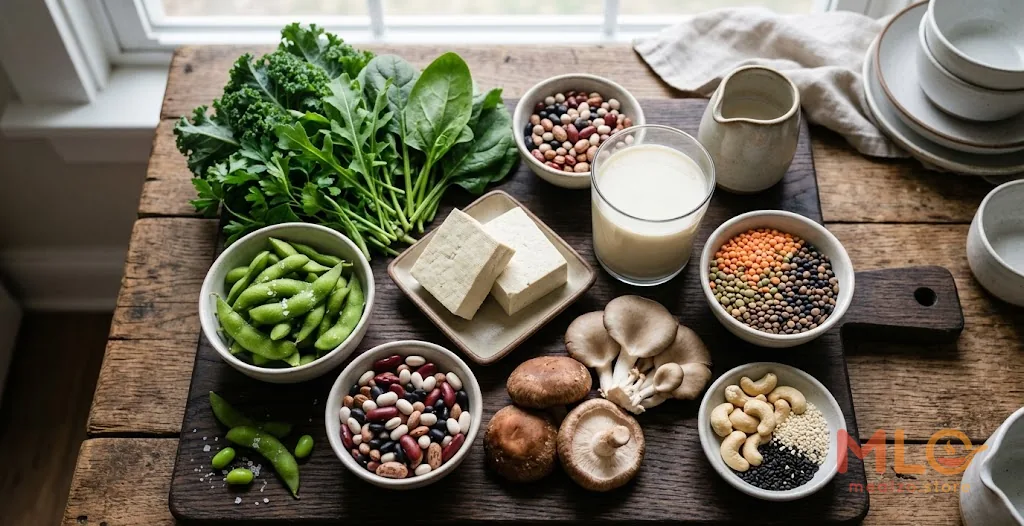
Good jay-compatible possibilities can include:
- Tofu and other suitable soy foods.
- Unsweetened or less sweet soy drinks where available.
- Beans and lentils.
- Nuts and seeds.
- Dishes combining legumes, tofu and vegetables.
- Mushrooms as a complementary ingredient for texture and variety.
You do not need to turn every meal into a nutritional calculation. The practical habit is simply to notice whether a recognizable protein source is present.
At a food court, that might mean choosing tofu with vegetables alongside rice rather than rice with two primarily starchy dishes. At a market, it might mean combining a bean-based item with vegetable soup instead of buying several pieces of fried festival food.
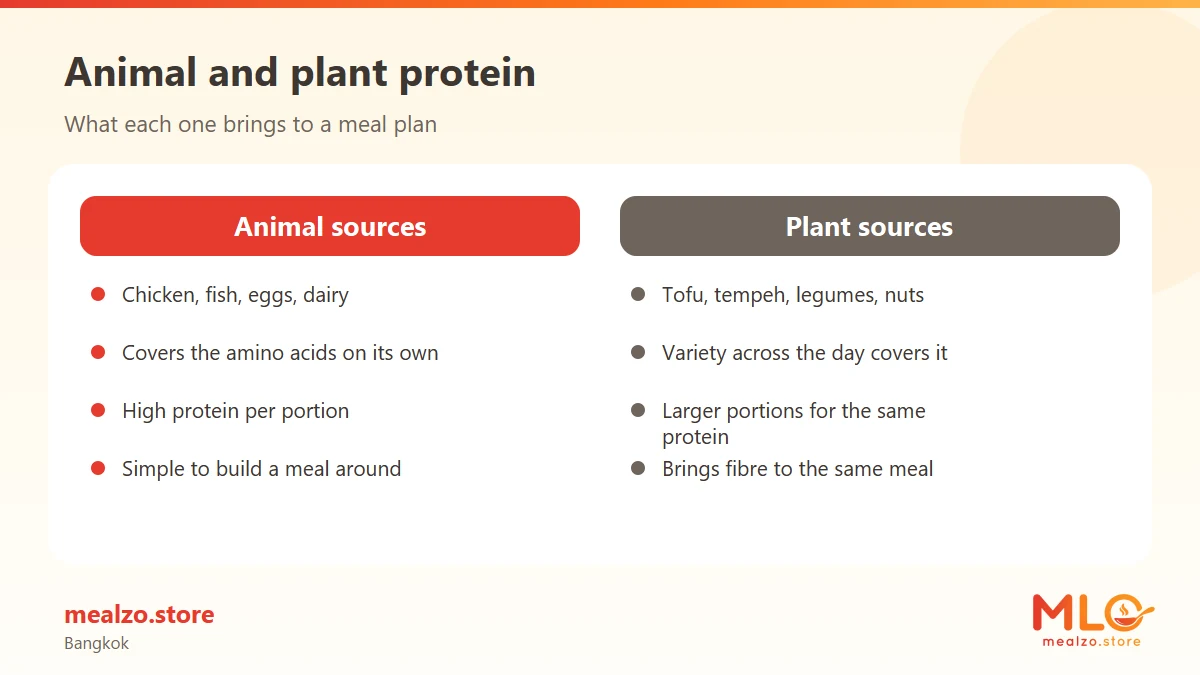
Variety also matters. Soy can be extremely practical during the festival, but eating different plant protein sources gives the week more variety in both food and texture. For more detail on planning vegan meals beyond the festival, vegan meal planning for protein and other nutrients covers the same issue in a broader context. A comparison of plant and animal protein in everyday meal planning is also useful when your normal diet includes animal foods and you are temporarily removing them.
Key takeaway: Before adding another noodle or rice dish, check whether the meal already contains a clear protein source.
7. The strange vegetable problem at a vegetarian festival
It sounds contradictory, but it is possible to eat vegetarian festival food all day and still eat relatively few vegetables.
Festival stalls understandably sell foods that are popular, easy to serve and easy to carry. Fried gluten, mock meat, noodles, rice dishes, buns and snacks all fit that model. Vegetables may appear in them, but sometimes only in modest supporting roles.
If vegetables matter to how you normally like to eat, look for them deliberately rather than assuming they will appear automatically.
Useful choices include stir-fried leafy greens, mixed vegetables, tofu with vegetables, clear soups and simple salads prepared without fish sauce. At a rice-and-curry style jay counter, choosing one vegetable-heavy dish alongside a tofu or bean dish can create a more balanced plate than choosing several fried or starch-heavy options.
The restriction on garlic, onion, shallot and chives in stricter jay cooking also means the flavour profile may differ from the vegetable dishes you normally order. Cooks often work around those restrictions with soy-based seasoning, herbs, spices and other ingredients.
That is part of what makes festival food distinctive. It is not merely normal Bangkok food with the meat removed.
8. Noodles and rice are everywhere, so build around them rather than fighting them
Trying to avoid rice and noodles during Bangkok's Vegetarian Festival would miss much of the food culture surrounding it. They are practical, familiar and widely available.
The issue is not their presence. The issue is when almost every meal becomes mostly noodles, rice, fried starch or sweet bakery food because those are the easiest jay-labelled options to spot.
A straightforward plate can still include rice or noodles while making room for protein and vegetables. Think of the carbohydrate as one part of the meal rather than the definition of the meal.
For lunch at a jay stall or food court:
- Start by finding tofu, beans or another clear protein source.
- Add a vegetable dish or soup.
- Choose rice or noodles according to the meal rather than automatically adding several starch-based sides.
- Decide whether you also want fried festival food, rather than allowing fried items to replace the rest of the meal.
For dinner, especially after a heavier lunch, a simpler combination can work well: tofu, vegetables, soup and rice, or another meal where the ingredients are easy to identify.
This is not a rule that every plate has to look identical. Bangkok's festival is temporary, and enjoying foods that appear only seasonally is part of why many people look forward to it.
9. Breakfast, snacks, sweets and drinks deserve the same attention
Festival eating is not limited to lunch and dinner. Breakfast can quickly become the meal where planning disappears.
A bun, fried dough, sweet soy drink or packaged jay snack may be convenient on the way to work, but a breakfast built entirely around sweet or fried items can feel very different from one that includes tofu, beans, soy or another more substantial food.
Practical breakfast combinations might involve a savory rice or noodle dish with tofu, a soy-based drink with a more substantial food alongside it, or leftovers from a balanced jay dinner.
Snacks can be simpler. Nuts, seeds, suitable fruit and clearly labelled jay foods can all fit, depending on personal preference and availability.
Jay sweets are still sweets. A dessert does not become something different merely because no egg or dairy was used. The same applies to sweet soy drinks. They can be part of the festival without needing to carry the nutritional job of a complete meal.
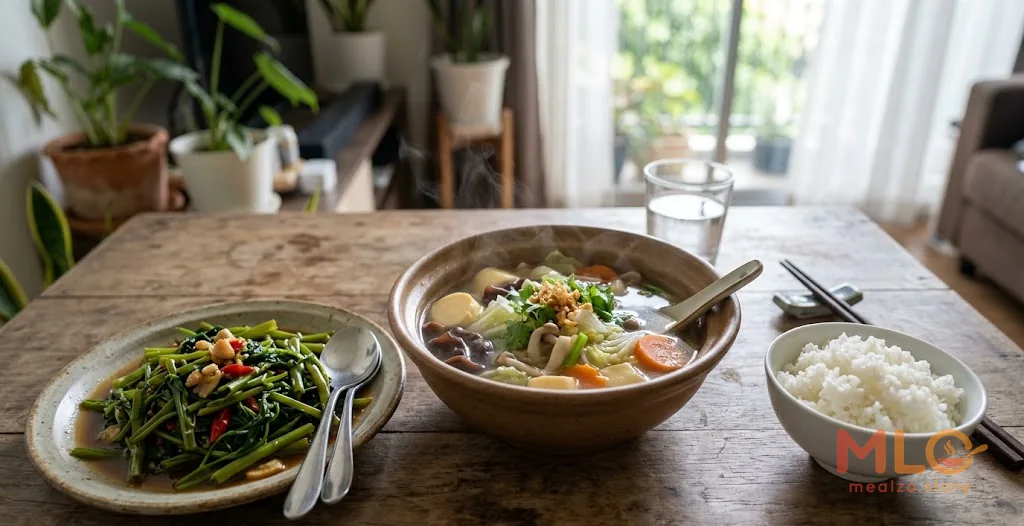
10. You do not have to participate in exactly the same way as everyone else
Some people observe all nine days closely. Some participate for a few days. Others eat jay for one meal a day, follow the custom with family when practical, or simply choose jay dishes occasionally because they enjoy them.
Those are different forms of participation, and the practical food strategy can be different too.
If you are joining for the full nine days, variety and meal structure become more relevant because the change is sustained across many meals. Depending almost entirely on fried mock meat and noodles is much easier to notice by the end of the festival than after a single lunch.
If you are participating for only part of the festival, there is less need to redesign your entire routine. You can simply choose the jay meal that fits the part of the day you are observing.
And if you are not observing the festival at all, there is nothing wrong with trying jay food because Bangkok suddenly offers far more plant-based choices than usual.
The point is to understand what the label means and make choices that match your own reason for participating, rather than turning the festival into a contest over who follows it most perfectly.
Anyone with a medical condition, pregnancy or a history of disordered eating should ask their own doctor before changing their diet sharply for a week or more.
11. Where a Mealzo Bangkok vegetarian or vegan plan can fit, and where it cannot
Mealzo Bangkok offers Vegetarian and Vegan plans among its 12 meal plans, but neither should be presented as a Vegetarian Festival menu.
They are not certified jay plans and are not prepared according to festival rules. Standard vegetarian or vegan dishes may contain garlic or onion. The Vegetarian plan may also contain egg or dairy. For someone following strict jay requirements, that distinction is decisive.
A Vegan plan may still be useful as partial support for someone who is reducing animal products during the festival, but it should not be treated as automatic jay compliance. If strict observance matters, the ingredients and preparation requirements need to be checked rather than inferred from the word "vegan".
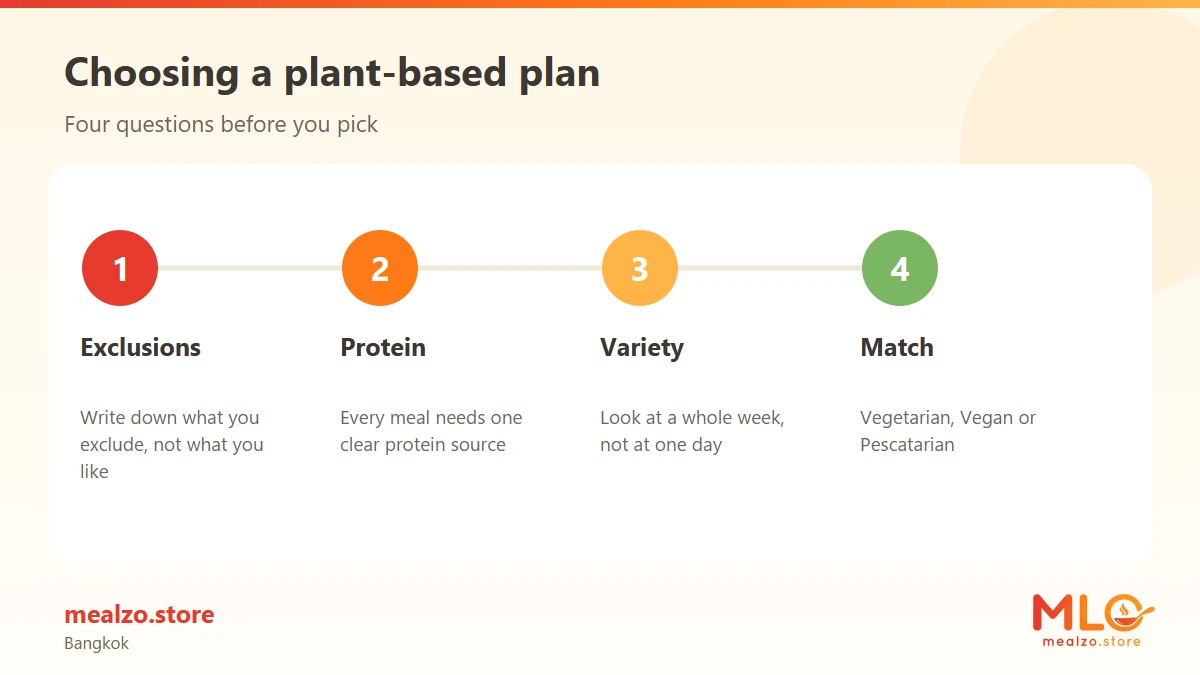
For people who are not following strict jay rules, or who participate only in selected festival meals, Mealzo Bangkok meal plans can provide a structured option around the rest of the day.
Mealzo Bangkok operates from a kitchen in Bang Na, Bangkok. Meals are cooked fresh daily and delivered across Bangkok. Customers choose either the morning delivery window of 06:00-09:00 or the evening window of 17:00-20:00.
The service has 12 plans: Balanced, Weight Loss, High Protein, Vegetarian, Vegan, Keto, Low-Carb, Gluten Free, Easy-to-Digest, Pescatarian, No Fish & Seafood, and Dairy & Egg Free. Every plan uses one mixed cuisine combining Thai and international dishes. There is no choice between separate cuisines.
Customers can select from 6 daily calorie levels from 1200 to 2500 kcal, with 3 or 5 meals per day and package lengths of 3, 7, 14 or 30 days. The calorie calculator in the app uses the Mifflin-St Jeor formula as an estimate, not as medical advice.
The website and mobile app operate in 8 languages: Thai, English, Polish, German, French, Russian, Simplified Chinese and Burmese. The Android app is available through Google Play.
For allergen handling, customers declare from 9 allergen groups. Dishes containing a declared allergen are then not assigned to that customer. This describes the assignment mechanism and should not be read as a guarantee that a meal is allergen-free.
The practical distinction during the Vegetarian Festival is simple: Mealzo Bangkok's Vegetarian and Vegan plans are ordinary meal-plan categories, not festival-certified jay food. For strict jay eating, dedicated jay food remains the clearer option.
Key takeaway: Vegan and jay overlap, but they are not interchangeable. Garlic, onion and other festival restrictions can make an otherwise vegan dish unsuitable for strict jay observance.
FAQ
Is all vegan food suitable for the Bangkok Vegetarian Festival?
No. Vegan food excludes animal products, but strict jay practice also avoids certain pungent vegetables such as garlic, onion, shallot and chives. A completely vegan dish can therefore still fall outside jay rules.
How can I recognise jay food in Bangkok?
Look for the characteristic yellow flag with the red jay character, designated jay sections in food courts and supermarkets, and jay labelling on packaged foods. Dedicated festival stalls are generally easier to navigate than trying to modify ordinary dishes.
Is jay food always healthier or lighter than ordinary food?
No. Jay describes the ingredients and festival restrictions, not the cooking method. A dish can be fully jay and still be deep-fried, oily, sweet, salty or based largely on processed mock meat and refined carbohydrates.
What should I look for if I am eating jay for all nine days?
Try to include a recognizable protein source such as tofu, beans, suitable soy foods, nuts or seeds, and look deliberately for vegetable dishes rather than relying only on noodles, rice and fried festival foods. Variety becomes more useful when the change lasts across the full festival.
Are Mealzo Bangkok's Vegetarian or Vegan plans jay?
No. They are not certified jay plans and are not prepared specifically to Vegetarian Festival rules. Vegan dishes may contain garlic or onion, while Vegetarian dishes may also contain egg or dairy. Someone observing strict jay rules should not assume either plan complies automatically.
Mealzo Bangkok is a kitchen and meal delivery service operating exclusively in Bangkok, Thailand. We are not affiliated with similarly named services outside Thailand.
Find a Meal Plan That Fits
Compare Mealzo plans or use the calculator to explore meal options for your needs.