Vegetarian Meal Plans: How to Get Enough Protein and Variety
A vegetarian meal plan can be straightforward on paper and oddly repetitive in practice. Remove meat and fish, keep the vegetables, then discover three days later that most meals have become some variation of rice, noodles and tofu.
The better approach is to build meals around several useful protein sources rather than treating protein as something that has to come from one dominant ingredient. Tofu, tempeh, beans, lentils, eggs and dairy can all play different roles, particularly when meals borrow from Thai and wider Southeast Asian cooking.
Variety matters for another reason: food still has to be enjoyable. A technically organised plan that repeats the same textures and flavours every day quickly becomes something to work around rather than something that fits normal life.
For people in Bangkok, the practical question is therefore not simply whether vegetarian eating is possible. It is how to make a vegetarian routine varied, satisfying and manageable around work, commuting, eating out and unpredictable schedules.

1. Start With the Structure of the Meal
A useful vegetarian meal usually has more structure than "vegetables plus carbohydrates." Start by identifying the protein component, then add the carbohydrate, vegetables, sauce, herbs and other elements around it.
That might mean tofu with jasmine rice and stir-fried morning glory, a lentil curry with rice and cucumber, or eggs with vegetables and a rice-based side. The point is not to make every plate look identical. It is to know what each part of the meal is doing.
One simple way to think about it is:
- Choose one clear protein source, or combine two smaller ones.
- Add rice, noodles, potatoes or another carbohydrate according to the meal.
- Use vegetables for volume, texture and contrast rather than as decoration.
- Change sauces, herbs, spices and cooking methods across the week.
- Include eggs or dairy when they fit your version of vegetarian eating.
That structure is useful whether you cook at home, order prepared food or mix both approaches during the week.
Key takeaway: Build a vegetarian meal around an identifiable protein source instead of simply removing meat from an existing dish.
2. Know What the Main Vegetarian Protein Sources Bring
Protein sources are not interchangeable from a cooking perspective. Firm tofu can be browned in a wok, silken tofu works in softer dishes, tempeh has a dense texture, lentils disappear into curries and soups, while eggs and dairy create completely different meals.
The table below is more useful as a planning tool than as a ranking.
| Protein source | What it brings to a meal |
|---|---|
| Firm tofu | Neutral flavour, firm texture and good ability to absorb sauces in stir-fries, curries and rice dishes |
| Silken tofu | Soft texture for soups, bowls, sauces and gentler dishes |
| Tempeh | Dense, chewy texture that works well grilled, pan-fried or coated in strongly flavoured sauces |
| Lentils | Easy base for curries, dals, soups and thick sauces |
| Chickpeas | Firm texture for curries, salads, bowls and roasted preparations |
| Other beans | Useful for stews, soups, chilli-style dishes and mixed grain bowls |
| Eggs | Flexible option for omelettes, fried rice, noodle dishes, curries and breakfast meals |
| Greek-style or strained yoghurt | Creamy component for breakfasts, snacks, sauces and savoury bowls |
| Milk | Convenient addition to breakfast dishes, drinks and some sauces |
| Cheese | Concentrated savoury ingredient for sandwiches, pasta, baked dishes and salads |
There is no need to use every source every week. What helps is avoiding a plan in which tofu has to perform every job.
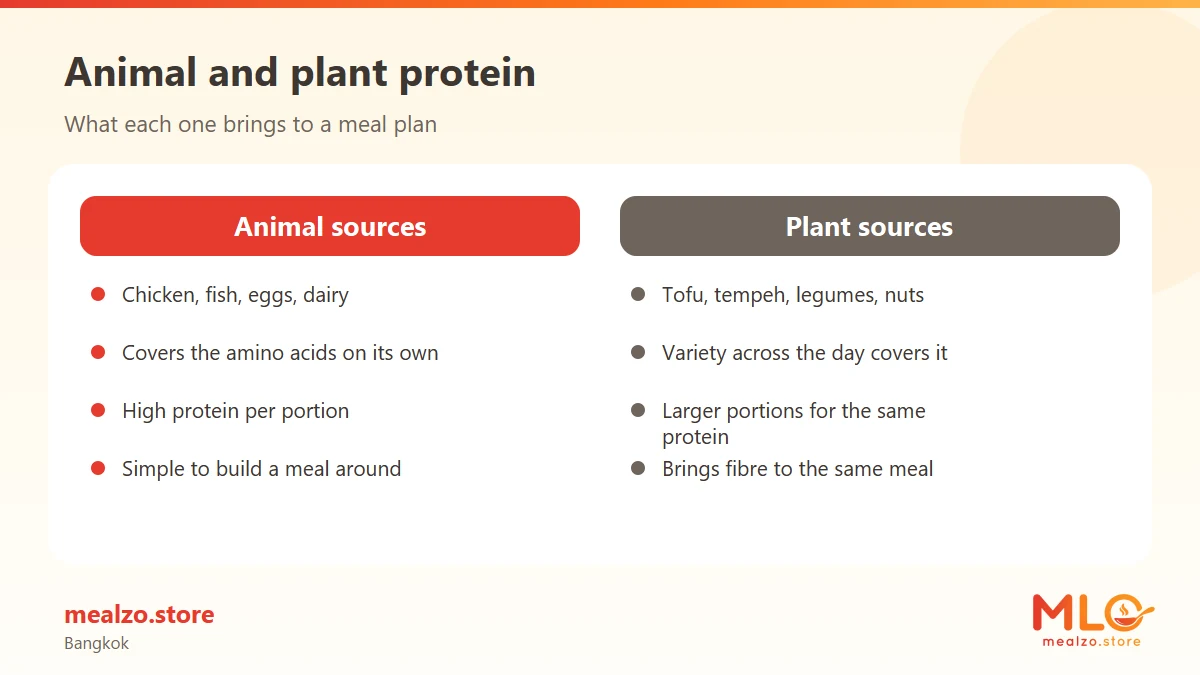
If you want a closer look at how different proteins behave in a meal, the guide to animal and plant protein for practical meal planning goes into the differences in quality, variety and menu construction without turning food into a competition.
3. Tofu Works Best When You Stop Treating It as One Ingredient
"Tofu" can describe very different eating experiences. A soft tofu soup is not much like crisp wok-fried tofu, even though the base ingredient is the same.
In Bangkok, tofu also fits naturally into meals that already use soy products rather than being inserted as a special substitute. Firm tofu can take on garlic, chilli, basil, black pepper or curry sauces. Fried tofu works with rice and vegetables. Softer tofu can sit in broths or lighter dishes where a dense fried protein would feel too heavy.
Change the cooking method before changing the ingredient
Before deciding you are bored with tofu, consider whether you are actually bored with one preparation. The same ingredient can be:
- seared until the edges brown;
- simmered in a curry;
- added to a vegetable stir-fry;
- served in soup;
- paired with noodles;
- used cold or lightly dressed in a bowl.
That is a practical lesson for vegetarian meal planning generally. Variety often comes from technique and seasoning, not from buying an entirely new set of ingredients every day.
4. Tempeh, Beans and Lentils Prevent the Menu Becoming Tofu-Only
Tempeh deserves a different role from tofu. It is firmer, more textured and has a stronger flavour of its own. It can work particularly well when sliced, browned and paired with spicy, sweet, sour or deeply savoury sauces.
Beans and lentils move the menu in another direction. They suit Indian-style dals, chickpea curries, tomato-based stews, soups and mixed bowls. They also make it easier to create vegetarian meals that do not feel like modified versions of meat dishes.
A week might therefore move from Thai basil tofu to lentil curry, then to tempeh with rice and vegetables, followed by chickpeas in a tomato-based dish. The protein source changes, but so do the texture, cuisine and overall character of the meal.
Key takeaway: Rotating tofu, tempeh, beans and lentils changes texture as well as flavour, which is one of the simplest ways to prevent repetition.
5. Eggs and Dairy Can Make Vegetarian Planning More Flexible
Vegetarian does not automatically mean vegan. For people who eat eggs and dairy, those foods can make meal planning considerably more flexible.
Eggs are particularly easy to place into ordinary food. Thai-style omelettes, egg fried rice, vegetable noodle dishes with egg, boiled eggs alongside rice and vegetables, and egg-based breakfasts all create different meals without requiring unusual ingredients.
Dairy can play a quieter supporting role. Yoghurt works with fruit or oats at breakfast and can also become a savoury sauce. Cheese can make a sandwich, pasta dish or baked vegetable meal feel completely different from a tofu-based lunch.
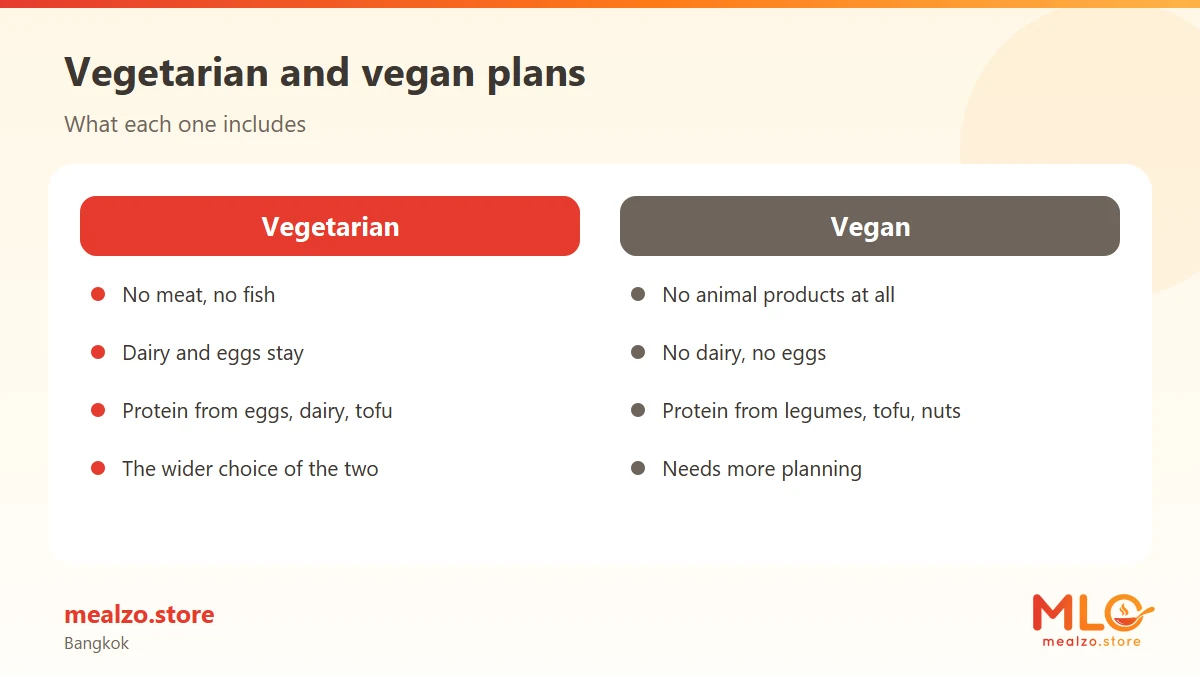
The distinction matters when choosing a meal plan. Someone deciding between vegetarian, vegan and pescatarian eating is choosing between genuinely different ingredient frameworks, not three labels for essentially the same menu. Our guide to vegetarian, vegan and pescatarian meal plans explains those differences in more detail.
6. Variety Is Easier When You Rotate Meal Types
Many people try to create variety by finding a long list of ingredients. A simpler method is to rotate the kind of meal you eat.
Consider how different these formats feel even when some ingredients overlap:
| Meal format | Example vegetarian direction |
|---|---|
| Stir-fry with rice | Tofu, Thai basil, vegetables and jasmine rice |
| Curry | Chickpea curry, vegetable curry with tofu, or lentil dal with rice |
| Noodle dish | Vegetable noodles with tofu and egg where appropriate |
| Soup | Clear vegetable and tofu soup or a thicker lentil soup |
| Grain or rice bowl | Rice with tempeh, vegetables, herbs and sauce |
| Breakfast meal | Eggs with vegetables, yoghurt with oats, or another dairy-and-grain combination |
| Pasta or baked meal | Tomato-based pasta with cheese or baked vegetables with a dairy component |
A seven-day plan does not need seven unrelated cuisines. It simply needs enough movement in texture, temperature, seasoning and format that lunch on Wednesday does not feel like a rearranged version of lunch on Monday.

Think in rotations, not isolated dishes
It helps to plan groups rather than individual meals. For example, use one stir-fry, one curry, one noodle meal, one soup, one bowl and one egg- or dairy-based meal before repeating the same format.
That approach also makes shopping and preparation more realistic because ingredients can overlap without the finished meals becoming identical.
7. Thai Food Offers Plenty of Useful Building Blocks, but Check the Details
Bangkok makes vegetarian eating convenient in some situations and less obvious in others. The city has tofu, eggs, vegetables, rice, noodles, soy products and legumes everywhere. The complication is that a dish that looks vegetable-based may still be made with fish sauce, oyster sauce, shrimp paste, meat stock or another animal-derived ingredient.
That does not make Thai food difficult. It simply means the visible ingredients do not always tell the whole story.
Vegetarian versions of familiar dishes can include pad krapao with tofu, vegetable fried rice with egg, tofu and mixed vegetables, vegetarian curries, noodle dishes made with vegetarian seasoning, and tofu soups prepared without meat or seafood stock.
When eating out, asking what goes into the sauce and broth is often more useful than asking only whether the dish contains visible meat.
For people whose schedules make regular planning difficult, staying consistent with plant-based eating in Bangkok covers the practical side of managing workdays, delivery, restaurants and other interruptions.
8. Protein Distribution Matters More Than Saving It for Dinner
A common planning mistake is to eat a light breakfast and carbohydrate-heavy lunch, then expect dinner to carry nearly all the day's protein.
A more practical pattern is to give each main meal a defined protein component. Breakfast could contain eggs or yoghurt. Lunch might use tofu or tempeh. Dinner could revolve around lentils, beans, eggs or another soy-based dish.
This does not require obsessively calculating every ingredient. It means noticing when an entire meal has almost no substantial protein source.
For example:
- Rice with vegetables becomes more complete when tofu, tempeh or egg is part of the dish.
- Noodles can include tofu and egg rather than relying only on noodles and vegetables.
- A breakfast built around yoghurt or eggs has a different composition from fruit alone.
- A curry can use lentils or chickpeas as a central ingredient rather than as a garnish.
Key takeaway: Giving several meals their own protein component is usually easier to organise than trying to compensate with one unusually protein-heavy meal.
9. Choose the Calorie Level and Meal Count Separately From the Diet Label
"Vegetarian" tells you what type of ingredients belong in the plan. It does not tell you how much food you personally need or how many times you prefer to eat.
Mealzo separates these choices. The Vegetarian plan can be configured at 1200, 1500, 1800, 2000, 2200 or 2500 kcal per day, with either 3 or 5 meals. Packages are available for 3, 7, 14 or 30 days. The menu for a package is assembled automatically from the plan, calorie level and meal count selected.
The calorie calculator in the app uses the Mifflin-St Jeor formula to provide an estimate. It is a planning tool rather than medical advice, and an estimate is best treated as a starting point rather than an instruction.
This separation is useful because two people can both prefer vegetarian food and still choose very different package structures.
10. Convenience Should Reduce Decisions, Not Remove Variety
Prepared meal plans are most useful when they remove recurring logistical decisions: what to buy, what to cook, how many meals to arrange and whether there is food ready during a busy part of the day.
Mealzo delivers across Bangkok from its kitchen in Bang Na. Delivery windows are 06:00-09:00 in the morning or 17:00-20:00 in the evening.
That does not mean every meal needs to come from a service. Some people may use a package during demanding work periods and cook or eat out at other times. The practical value is having a defined structure when the alternative is making the same food decision repeatedly.
You can compare the available combinations through the Mealzo meal plans and package options when deciding which plan, calorie level, meal count and package length fit your routine.
11. Dietary Restrictions Need More Precision Than the Word Vegetarian
Vegetarian describes one dimension of a diet. It does not automatically tell you whether a meal contains dairy, eggs, gluten, nuts or another ingredient someone may need to avoid.
Mealzo therefore handles declared allergens separately from the plan choice. Customers declare from nine allergen groups, and dishes containing a declared allergen are not assigned to them. This is a menu-assignment mechanism, not a guarantee that a meal or kitchen environment is allergen-free.
Someone who excludes both dairy and eggs may also find that a standard vegetarian framework is no longer the most accurate description of what they need. Mealzo has separate Vegan and Dairy & Egg Free plans among its 12 available plans.
For people considering a fully vegan approach, practical vegan meal planning for protein, iron and B12 looks at the additional planning questions that appear once eggs and dairy are removed as well.
12. A Good Vegetarian Plan Should Still Feel Like Normal Food
The most sustainable structure is often the least theatrical one. Breakfast, lunch and dinner should still look like meals you would reasonably want to eat: rice with a fragrant stir-fry, a proper curry, noodles with tofu and vegetables, an omelette, a lentil dish, a bowl with tempeh, or yoghurt and grains.
Vegetarian variety does not require chasing unusual ingredients or turning every plate into a nutritional project. It comes from combining several dependable protein sources with different vegetables, carbohydrates, sauces and cooking methods.
A useful vegetarian meal plan therefore has two jobs. It needs enough structure that protein is not an afterthought, and enough rotation that eating from the plan does not become monotonous.
Key takeaway: The most practical vegetarian routine combines a small group of dependable protein sources with regular changes in cooking method, flavour and meal format.
FAQ
Can a vegetarian meal plan provide enough protein?
It can include substantial protein sources when meals are deliberately built around foods such as tofu, tempeh, beans, lentils, eggs and dairy. The useful question is not whether a diet has a vegetarian label, but whether those foods appear consistently across the day's meals in appropriate amounts for the individual.
Do I need tofu every day on a vegetarian diet?
No. Tofu is convenient, especially in Bangkok, but it does not need to appear in every meal or even every day. Tempeh, lentils, chickpeas, other beans, eggs and dairy can all help create a more varied rotation.
Is vegetarian food the same as vegan food?
No. Vegetarian eating can include eggs and dairy, while vegan eating excludes animal-derived foods. That difference changes the available protein sources and affects how the menu needs to be planned.
How can I stop vegetarian meals becoming repetitive?
Rotate protein sources, meal formats and cooking methods. A tofu stir-fry, lentil curry, tempeh rice bowl, egg-based meal and chickpea dish can share some vegetables or carbohydrates without tasting or feeling like the same meal.
What Vegetarian plan options does Mealzo offer?
Mealzo's Vegetarian plan can be combined with one of six daily calorie levels: 1200, 1500, 1800, 2000, 2200 or 2500 kcal. Customers can select 3 or 5 meals per day and packages lasting 3, 7, 14 or 30 days.
Does declaring an allergen guarantee an allergen-free vegetarian meal?
No. Customers can declare from nine allergen groups, and dishes containing a declared allergen are not assigned to them. That mechanism should not be interpreted as a guarantee that a meal is allergen-free.
Find a Meal Plan That Fits
Compare Mealzo plans or use the calculator to explore meal options for your needs.