Japanese Food in Bangkok: Sushi, Ramen, Donburi, Bento and a Balanced Week
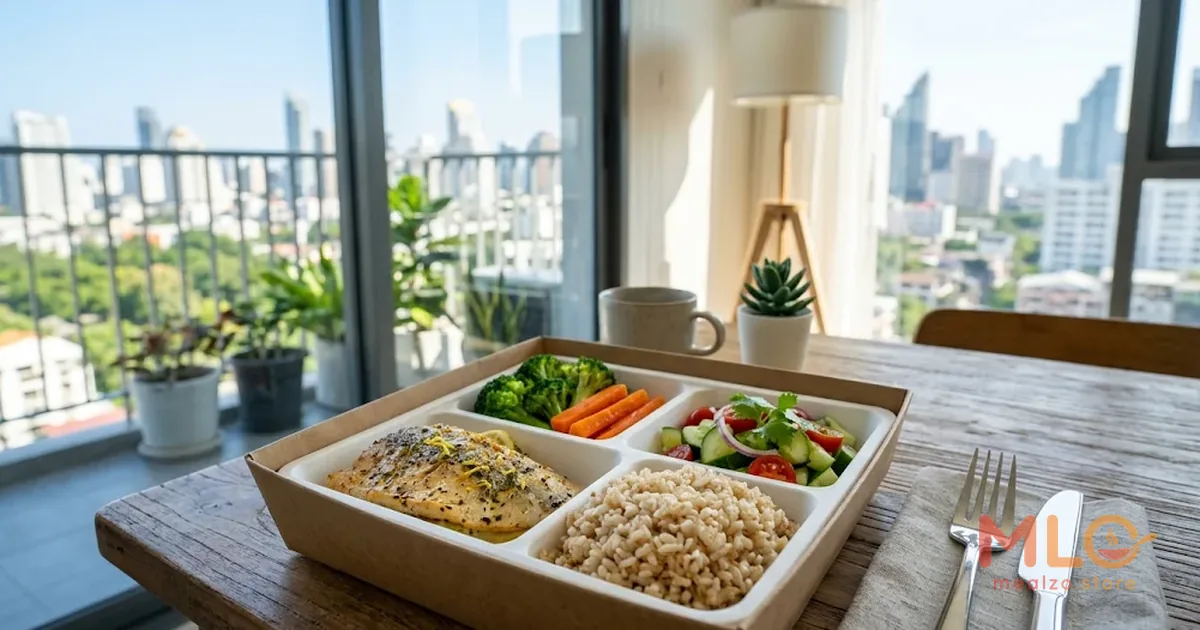
Japanese food in Bangkok is easy to find, whether you are picking up a few pieces of sushi at a market, ordering ramen in a shopping mall or sitting down for a long izakaya dinner around Phrom Phong or Thonglor. It has become part of everyday eating in the city, with options ranging from inexpensive convenience store onigiri to elaborate sashimi platters.
There is also a common assumption that Japanese food is naturally light. Sometimes it is. Grilled fish, steamed egg custard and simple rice bowls can be relatively straightforward meals. But deep-fried pork cutlets, creamy ramen, mayonnaise-covered sushi and oversized curry rice plates tell a different story.
The useful question is not whether Japanese food is healthy or unhealthy. It is what goes into a particular dish, how it is prepared, how much rice or noodles come with it, and what sauces, sides and drinks you add.
This guide looks at the Japanese dishes people actually eat in Bangkok, including Thai-style adaptations, and explains how to enjoy them while keeping the rest of the week varied and balanced.
1. Why Japanese Food Is Everywhere in Bangkok
Japanese restaurants occupy a broad place in Bangkok's food culture. You can find sushi counters in mall food courts, ramen shops in commercial districts, Japanese restaurants along Sukhumvit and market stalls selling colourful sushi pieces for a quick snack.
Around Phrom Phong and Thonglor, Japanese dining is especially visible. The choice includes specialist ramen shops, restaurants serving grilled skewers, sushi counters and izakaya establishments where friends share several small dishes over drinks.
Elsewhere, Japanese food is just as practical. A rice bowl can be a convenient lunch near the office. A supermarket bento can solve dinner on a busy evening. A few onigiri from a convenience store can become breakfast when there is no time to cook.
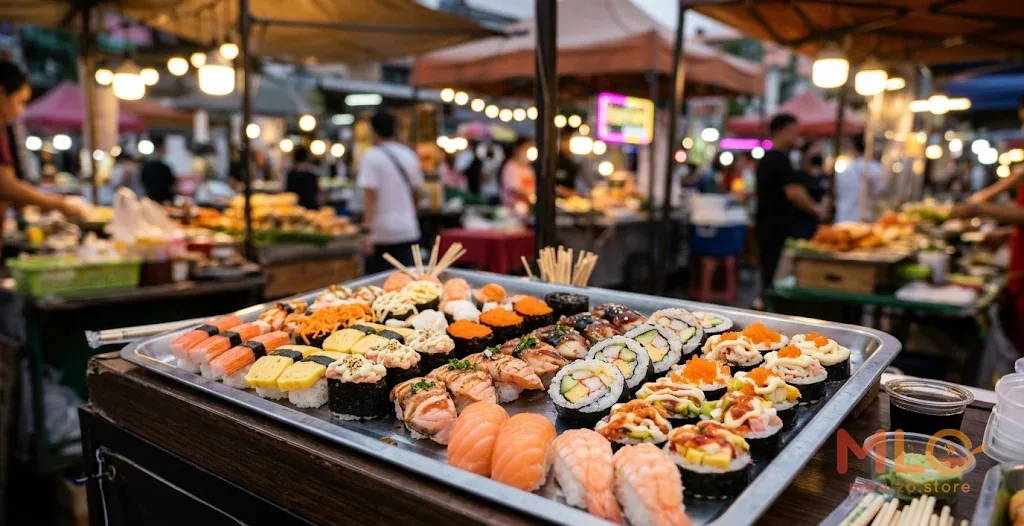
Bangkok also has its own interpretations of Japanese dishes. Market sushi is often generously decorated with mayonnaise, imitation crab, shredded egg, bright sauces and fried toppings. These versions are not necessarily trying to reproduce a traditional Japanese sushi counter.
Understanding this variety matters because two dishes carrying the same name may have very different ingredients and portions.
A simple salmon nigiri, a fried salmon roll with mayonnaise and a salmon rice bowl are three different meals, even though salmon appears in all of them.
2. Why Japanese Food Is Not Automatically Light
Japanese cooking uses several methods that produce very different nutritional profiles.
Steaming generally requires little added oil. Grilling allows fish or meat to cook without a thick coating of batter. Simmering can produce tender meat and vegetables, although the liquid may contain soy sauce, sugar or other seasonings.
Deep-frying changes the equation. Tonkatsu, karaage and tempura take up oil during cooking, adding fat and energy to the food. The quantity depends on the coating, preparation, oil absorption and portion size.
The main differences are easier to see side by side.
| Common dish in Bangkok | Cooking method | Main component | Generally lighter or heavier | Practical approach |
|---|---|---|---|---|
| Salmon sashimi | Raw | Fish, protein and fat | No added frying oil | Add vegetables and rice if making a complete meal |
| Salmon nigiri | Raw fish on seasoned rice | Fish and refined rice | Usually simpler than fried rolls | Decide how many pieces you want |
| Tonkotsu ramen | Noodles in rich broth | Noodles, pork broth and toppings | Often rich, especially when broth is consumed | Leave some broth and skip a fried side |
| Shoyu ramen | Noodles in soy-seasoned broth | Noodles, broth and protein | Often less creamy than tonkotsu | Watch broth consumption |
| Katsudon | Fried pork over rice | Pork cutlet, egg, rice and sauce | Substantial | Choose less rice if available |
| Gyudon | Simmered beef over rice | Beef, onions and rice | Depends on beef fat and rice size | Add a vegetable side |
| Katsu curry | Fried cutlet with curry and rice | Fried meat, sauce and rice | Usually substantial | Reduce rice or share a large serving |
| Yakitori | Grilled skewers | Chicken, sometimes skin or organs | Varies by cut and sauce | Choose salt seasoning and add vegetables |
| Grilled fish teishoku | Grilled with set-meal sides | Fish, rice, soup and vegetables | Often relatively balanced | Keep the rice portion comfortable |
| Convenience store onigiri | Prepared rice snack | Rice and filling | Varies by filling | Read the label and add a protein or vegetable item |
This is not a ranking of good and bad foods. A grilled dish can still contain considerable salt, and a fried dish can fit comfortably into an otherwise varied week.
Portion size, frequency and the rest of the meal matter as much as the cooking method.
Key takeaway: The cooking method and added sauces often tell you more about a Japanese meal than the dish name alone.
3. Street Sushi, Conveyor-Belt Sushi and Sashimi
Bangkok offers several styles of sushi eating, each with its own habits.
Street sushi at markets
Thai-style street sushi is often sold individually from trays or carts. Customers select pieces based on appearance, toppings and price, rather than ordering a fixed platter.
You might see rice topped with crab stick, shredded egg, salmon, seaweed, mayonnaise or sweet sauces. Some pieces include fried ingredients or a creamy topping that covers most of the rice.
The individual pieces can look small, which makes it easy to keep adding more to the tray.
A practical method is to decide approximately how many pieces you want before choosing them. Pick a mixture rather than filling the entire tray with mayonnaise-heavy or fried varieties.
Street sushi can be enjoyable as an occasional snack, but its nutritional composition depends heavily on how the stall prepares it.
Conveyor-belt sushi
At conveyor-belt restaurants, plates are commonly priced by colour or another visible pricing system. Customers take small portions as dishes circulate or order directly.
This makes variety easy. It also means that a meal can gradually become larger than intended.
Nigiri with fish, cucumber rolls and simpler seafood options generally contain fewer added sauces than deep-fried rolls covered in mayonnaise.
However, even plain sushi contains seasoned rice. Taking several plates still means eating a considerable amount of rice.
Sashimi
Salmon sashimi is particularly popular in Bangkok, often appearing on restaurant menus alongside tuna and other seafood.
Sashimi contains no sushi rice, which makes it useful when you want fish without another large serving of carbohydrates. But sashimi alone does not automatically form a balanced meal.
A small serving of rice, vegetables or another suitable side may make it more satisfying.
Raw fish also requires careful storage and handling, something worth considering before choosing where to eat.
4. The Hidden Extras: Mayonnaise, Sweet Sauce and Fried Toppings
One of the biggest differences between simple sushi and many fusion-style rolls is what gets added after the main ingredients.
Mayonnaise contributes fat, while sweet sauces contribute sugar. Fried toppings add oil and sometimes another layer of starch through batter or crumbs.
A roll combining seasoned rice, fried seafood, mayonnaise and sweet sauce contains several sources of energy within one small-looking serving.
That does not make the dish unacceptable. It means the appearance of a few neat pieces can be misleading.
Consider these common ordering choices:
- Choose some plain nigiri or simple rolls alongside richer speciality rolls.
- Ask for mayonnaise or sweet sauce separately when the restaurant can accommodate it.
- Avoid automatically adding a fried starter to an already substantial sushi order.
- Use soy sauce as a dip rather than soaking the rice.
- Consider whether you are ordering sushi as a snack, a light lunch or a full dinner.
The goal is not to remove everything enjoyable. It is to distinguish the main food from the additions that change its composition.
A salmon roll with a little mayonnaise is not the same as one covered with sauce, crispy crumbs and fried toppings.
And sometimes the richer roll is exactly what you want. Choosing it deliberately is more useful than treating it as nutritionally identical to plain sushi.
5. Rice Portions: Sushi, Donburi and Japanese Curry
Rice is central to many Japanese meals in Bangkok.
Sushi rice is generally seasoned with vinegar, sugar and salt. This creates the familiar slightly sweet flavour and sticky texture. The rice may look modest in an individual piece, but several pieces can add up.
Donburi is a different experience. These are rice bowls with toppings placed over a substantial base of rice.
Common choices include:
- Katsudon: fried pork cutlet, usually with egg, onions and a savoury-sweet sauce.
- Gyudon: thinly sliced beef and onions simmered in a seasoned sauce.
- Oyakodon: chicken and egg cooked together over rice.
- Salmon don: salmon served over rice, sometimes raw and sometimes prepared differently.
- Tuna don: tuna over rice, with ingredients and sauces varying by restaurant.
Japanese curry rice is another familiar choice. The curry sauce is usually thick, mildly spiced and served with a large amount of rice. Katsu curry adds a breaded, fried cutlet.
The rice itself is not the problem. The question is how much of the plate it occupies compared with protein and vegetables.
A donburi with a very large rice base and only a small amount of meat or fish can feel filling without offering much vegetable variety.
Asking for less rice, choosing a smaller bowl or adding a side salad changes that balance.
For a broader explanation of how rice portions differ across Bangkok meals, see our guide to jasmine, sticky and brown rice portions.
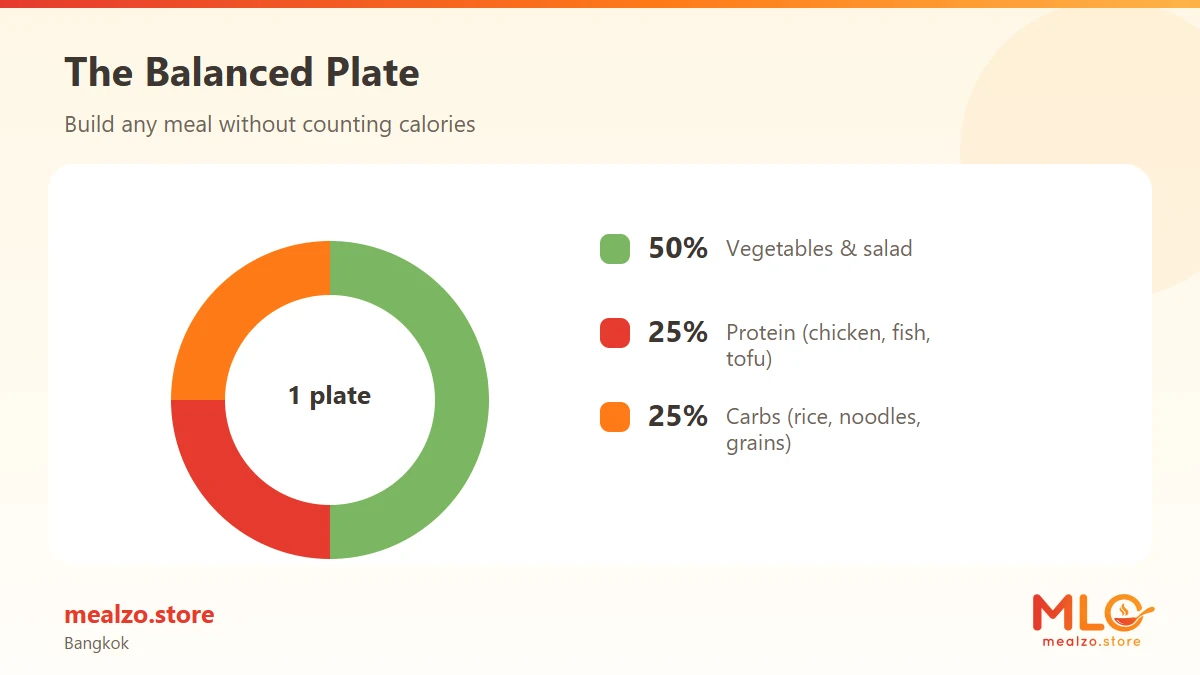
A practical plate does not need to follow exact measurements at every restaurant. Think about including vegetables, enough protein for the meal and a rice portion that suits your appetite.
Key takeaway: When ordering donburi or curry rice, adjusting the rice scoop and adding vegetables often makes more sense than avoiding rice completely.
6. Ramen: The Difference Between Tonkotsu, Shoyu, Shio and Miso
Ramen is one of Bangkok's most recognisable Japanese restaurant meals. A bowl may contain noodles, sliced pork, egg, spring onions, seaweed and a broth with considerable depth of flavour.
But ramen broths are not interchangeable.
Tonkotsu is made using pork bones, often cooked for an extended period to produce a rich, opaque broth. Depending on its preparation, it can contain substantial fat as well as salt.
Shoyu ramen uses soy sauce as a major seasoning. Its broth can be relatively clear, but that does not automatically make it low in sodium.
Shio ramen is seasoned primarily with salt and often has a lighter appearance. Again, a clear broth may still be salty.
Miso ramen uses fermented soybean paste for a deep, savoury flavour. The result can be rich, with sodium coming from the miso and other seasonings.
Broth choice matters, but so does what accompanies the bowl.
A ramen lunch with fried gyoza or karaage on the side combines noodles with another substantial item, often containing additional oil and starch. Some gyoza are pan-fried rather than deep-fried, so preparation varies.
One useful adjustment is to leave some of the broth. Much of a ramen bowl's sodium is dissolved in that liquid, although noodles, meat and other toppings can contain sodium too.
You can still enjoy the flavour without drinking every drop.
7. Tonkatsu, Karaage and Tempura: What Frying Changes
Deep-fried Japanese dishes are popular for good reasons. Crisp coatings, tender interiors and sauces make them satisfying, especially alongside rice.
Tonkatsu is a breaded pork cutlet. Karaage is commonly made from seasoned chicken coated in starch or flour before frying. Tempura uses a lighter batter around seafood or vegetables.
These dishes differ in texture and coating, but all involve oil during cooking.
The amount absorbed varies. A thick, crumb-coated cutlet is different from lightly battered shrimp, and the cooking technique matters too.
Deep-frying also changes how a meal fits together. Tonkatsu served with rice, cabbage and soup is quite different from tonkatsu placed over a large rice bowl with curry sauce.
A vegetable tempura platter still contains vegetables, but the batter and oil remain part of the meal.
For more on how cooking methods affect fried dishes, read how frying oil changes the food on your plate.
There is room for these foods without treating them as everyday defaults.
If you order tonkatsu, the shredded cabbage is worth eating rather than leaving untouched. If you choose karaage at an izakaya, grilled vegetables or edamame can bring variety to the shared dishes.
And if fried food is the central part of dinner, there is no particular reason to add several more fried sides merely because they appear on the menu.
8. Yakitori, Simmered Dishes and Balanced Japanese Set Meals
Japanese restaurants also offer plenty of dishes that are grilled, steamed or simmered.
Yakitori skewers are commonly served with either salt seasoning or a tare glaze. Tare is usually a savoury-sweet sauce containing ingredients such as soy sauce and sugar.
Salt-seasoned skewers avoid the sweet glaze, although they are not necessarily low in sodium.
An izakaya meal might include grilled chicken, edamame, seaweed salad, chilled tofu, grilled fish or chawanmushi, a delicate steamed egg custard.
These choices give diners several textures and food groups without relying entirely on fried dishes.
Teishoku, the Japanese set meal, is particularly practical for a regular lunch or dinner.
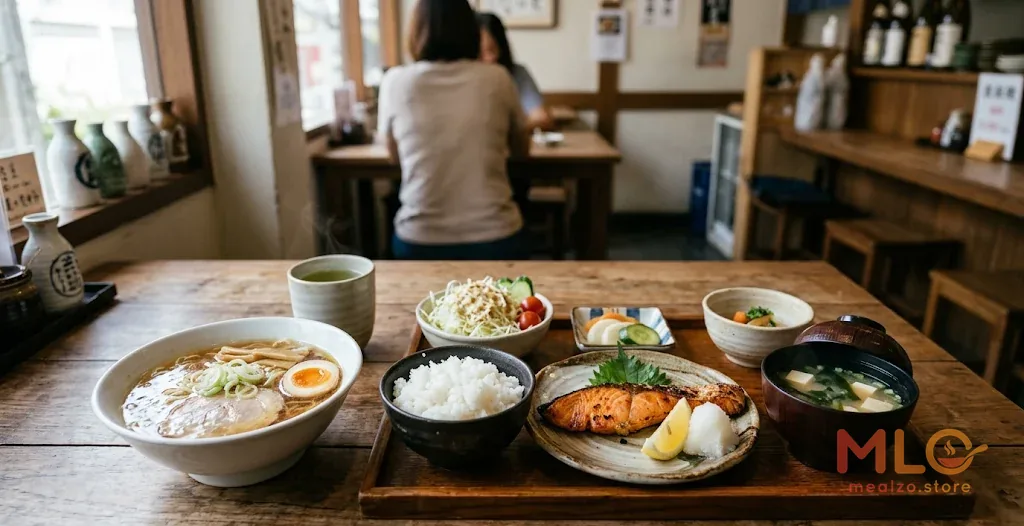
A typical set may include a main dish, rice, miso soup, pickles and a small salad or vegetable side. The precise arrangement varies by restaurant.
A grilled fish teishoku gives you a recognisable protein source, rice and some vegetable variety. It is not automatically low in calories or salt, especially when sauces and soup are included, but the components are easy to understand.
| Ordering option | What you can choose | What changes | When it suits |
|---|---|---|---|
| Grilled fish teishoku | Fish, rice portion and available sides | Provides several meal components | A regular lunch or dinner |
| Yakitori with salt | Skewer type and seasoning | Avoids sweet tare glaze | Sharing several izakaya dishes |
| Donburi with less rice | Rice quantity where available | Reduces the rice portion | When the standard bowl is oversized |
| Sushi with sauce on the side | Roll type and sauce quantity | Gives more control over mayonnaise or glaze | A mixed sushi order |
| Ramen without a fried side | Broth and accompaniments | Avoids adding another fried dish | A substantial noodle meal |
| Sashimi with vegetables and rice | Fish and side dishes | Builds a more complete meal | When sashimi is the main course |
| Curry rice without katsu | Curry topping | Removes the fried cutlet | When you want curry but not fried meat |
A set meal is often easier to judge than a collection of unrelated small plates. But if your appetite is small, a full set might be more food than you need.
The appropriate choice is the one that matches the occasion and the rest of your day.
9. Soy Sauce, Miso, Tare and the Salt You Do Not See
Japanese food often uses fermented and seasoned ingredients to build flavour.
Soy sauce, miso, teriyaki sauce and tare contribute savoury depth. They can also introduce considerable sodium, and some preparations include sugar.
The issue is not only how much sauce arrives with the food. It is how much you actually consume.
Dipping the fish side of a nigiri lightly in soy sauce is different from soaking the entire piece. Adding extra soy sauce to a rice bowl that already contains a seasoned topping may be unnecessary.
Miso soup is a familiar part of teishoku, but it also contributes sodium to the meal.
For a more detailed look at why seasoning can matter even when food does not taste excessively salty, see understanding salt and sodium in everyday Thai meals.
Sugar can be less obvious. It appears in sushi rice seasoning, teriyaki glaze, sweet tare, some curry preparations and bottled drinks.
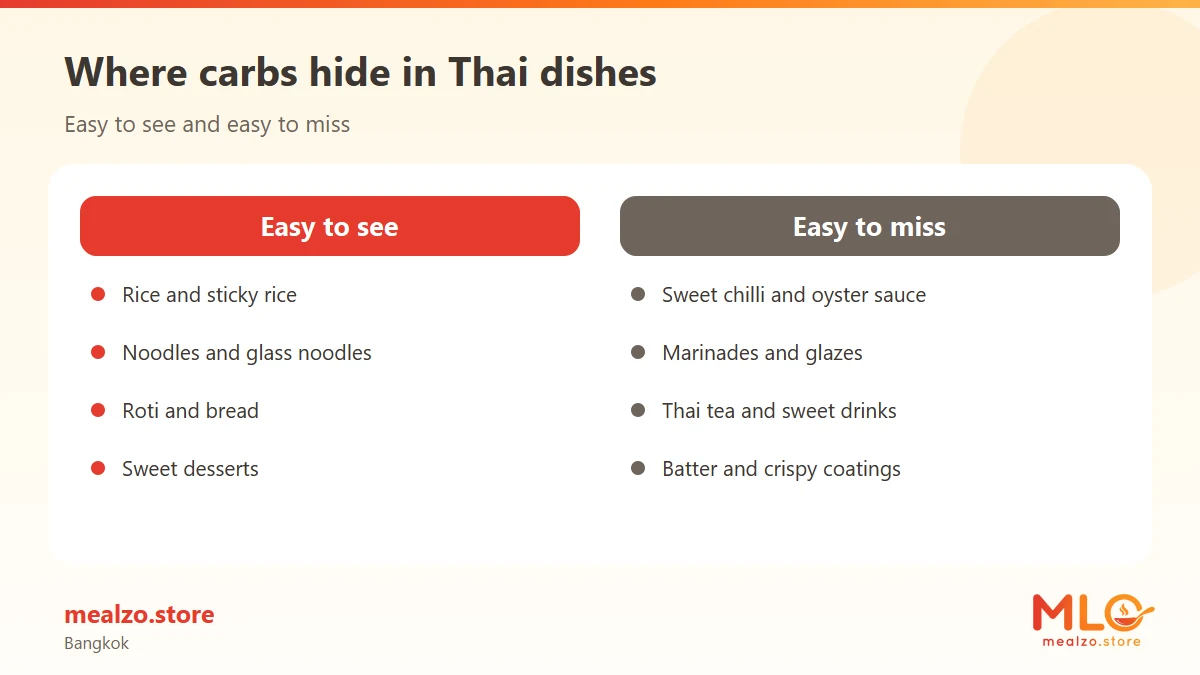
The infographic is a useful reminder that carbohydrates and sugars do not come only from obvious rice and noodle portions.
There is no need to avoid every sauce. Instead, consider which condiments are already part of the dish before adding more.
If your meal includes ramen broth, soy-marinated eggs and seasoned pork, a generous additional pour of soy sauce may contribute little beyond extra salt.
Key takeaway: Sauce quantity and broth consumption are two of the easiest adjustments to make without changing the main Japanese dish.
10. Raw Fish Safety and Allergens in Bangkok
Raw seafood deserves particular attention in Bangkok's hot climate.
Sashimi and raw-fish sushi depend on appropriate sourcing, refrigeration, hygienic preparation and a reliable cold chain. Appearance and smell alone cannot confirm that raw fish is safe.
A restaurant serving raw fish should keep it properly chilled and handle it separately from sources of contamination.
Market stalls present more uncertainty, especially when trays are exposed to direct sunlight or displayed without adequate cooling.
A stall that looks attractive is not necessarily handling its seafood correctly.
If you cannot establish how the fish has been stored, choosing cooked toppings is a reasonable alternative.
Pregnant people and those with weakened immune systems are generally advised to avoid raw fish because of foodborne infection risks.
Allergens can also be difficult to identify in Japanese dishes, particularly fish, shellfish, soy, sesame, egg and gluten found in ingredients such as conventional soy sauce and tempura batter.
Surimi, commonly called crab stick, may contain fish and other ingredients that are not obvious from its appearance.
Restaurant staff may be able to explain individual ingredients, but shared preparation areas and incomplete ingredient information can make allergen assessment difficult.
For people with food allergies, a vague assurance that a dish is safe is not sufficient. Clear ingredient information and preparation practices matter.
Mealzo Bangkok uses a different ordering mechanism: customers declare allergens from nine allergen groups, and dishes containing a declared allergen are not assigned to them. This describes the dish-assignment process, not a guarantee that meals are allergen-free.
11. Convenience Store Bento, Drinks and Making Japanese Food Fit Your Week
Not every Japanese meal in Bangkok involves a restaurant.
Convenience stores carry onigiri, rice-based meals, sandwiches and bento-style products that can be useful when work, commuting or other commitments disrupt normal mealtimes.
An onigiri may contain salmon, tuna mayonnaise or another filling. The rice portion, seasoning and filling can vary considerably.
A bento might combine rice with chicken, fish, egg, vegetables or fried items. Some are more substantial than they first appear.
Where a nutrition label is available, check the serving size, energy, sodium and ingredients. Do not assume products with similar packaging contain the same amount of food.
If you are regularly eating convenience store meals, our practical Bangkok convenience store eating guide offers additional ways to compare everyday choices.
What you drink matters too
Unsweetened green tea is a traditional pairing with Japanese food and provides flavour without the sugar found in sweetened drinks.
Sweet milk teas, flavoured teas and regular sodas add sugar and energy to the overall meal.
That does not mean every dinner needs an unsweetened drink. It simply means the drink belongs in the same assessment as the food, particularly when the meal already includes sweet sauces or a substantial rice portion.
Planning around Japanese dinners out
A balanced week does not require eating the same type of meal every day.
Suppose you have a sushi dinner with friends on Friday. Earlier meals can be ordinary, varied food rather than an attempt to compensate for dinner. On Saturday, you might choose a grilled fish set meal. Another evening may involve Thai food at home.
The point is consistency across the week, not making every restaurant meal meet an exact formula.
Japanese dining can also be social. An izakaya dinner may involve sharing skewers, fried dishes, salads and drinks over several hours. Trying to turn that occasion into a rigid meal plan can defeat its purpose.
For another perspective on shared Bangkok meals, see how to build a balanced mookata or suki meal.
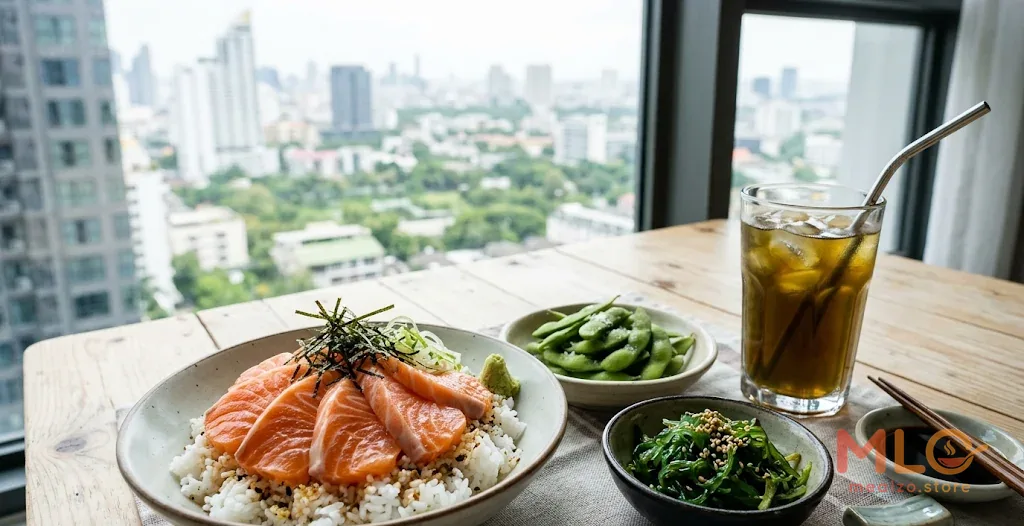
Meal planning is useful for the ordinary days around these occasions.
Mealzo Bangkok prepares meals fresh daily at its kitchen in Bang Na and delivers in Bangkok. Customers select a morning delivery window of 06:00-09:00 or an evening window of 17:00-20:00.
The service offers 12 meal plans: Balanced, Weight Loss, High Protein, Vegetarian, Vegan, Keto, Low-Carb, Gluten Free, Easy-to-Digest, Pescatarian, No Fish & Seafood, and Dairy & Egg Free.
Each plan contains one mixed cuisine combining Thai and international dishes. Customers do not select separate cuisines, and a particular Japanese dish should not be assumed to appear on the menu.
There are six daily calorie levels from 1200 to 2500 kcal, with three or five meals per day and packages lasting 3, 7, 14 or 30 days.
The calorie calculator in the mobile app uses the Mifflin-St Jeor formula to estimate calorie needs. It provides an estimate rather than personalised medical advice.
The website and app are available in Thai, English, Polish, German, French, Russian, Simplified Chinese and Burmese. The Android app is available on Google Play.
You can explore Mealzo Bangkok meal plans and package options if you want planned meals for part of your week, while keeping the freedom to enjoy Japanese restaurants whenever you choose.
Key takeaway: A Japanese dinner out does not need to be replaced or compensated for; varied, planned meals on other days can provide structure without making dining restrictive.
FAQ
Is Japanese food in Bangkok generally healthy?
It depends on the dish, portion and preparation. Grilled fish, steamed dishes, sashimi with suitable sides and vegetable-containing set meals can offer a useful mixture of food groups. Fried cutlets, mayonnaise-heavy rolls and large curry rice portions contain more added oil, sauce or rice. The cuisine itself does not determine the nutritional balance.
Is sushi a lighter choice than ramen?
Not necessarily. Simple nigiri or sashimi may contain less added fat than a rich tonkotsu ramen, but several plates of sushi with seasoned rice and sauces can become a substantial meal. Ramen also varies by broth, toppings and how much liquid you consume. Compare the full order rather than the dish names.
What is a practical Japanese lunch to order in Bangkok?
A grilled fish teishoku with rice, miso soup and vegetable sides is one practical choice. Oyakodon or gyudon with a smaller rice portion and an added salad can also work. The most suitable option depends on appetite, dietary requirements and what the restaurant actually serves.
Can I eat Japanese curry, tonkatsu or tempura regularly?
These foods can be part of a varied diet, but their fried coatings, sauces and portions affect how substantial the meals become. If you eat them frequently, consider changing the accompaniments, adding vegetables and alternating them with grilled, steamed or simmered dishes. There is no single frequency that suits everyone.
How can I fit Japanese restaurant meals around a Mealzo Bangkok plan?
Treat restaurant meals as part of normal life. You might use a Mealzo Bangkok package for planned meals on working days and enjoy sushi, ramen or an izakaya dinner on another day. Customers can select a package length, meal frequency, daily calorie level and one of two delivery windows. The meal plan provides structure without requiring you to stop eating out.
Mealzo Bangkok is a kitchen and meal delivery service operating exclusively in Bangkok, Thailand. We are not affiliated with similarly named services outside Thailand.
Find a Meal Plan That Fits
Compare Mealzo plans or use the calculator to explore meal options for your needs.